Share
Non-Conductive Die Attach Adhesive Sensor Solutions in the United States
Quick Answer

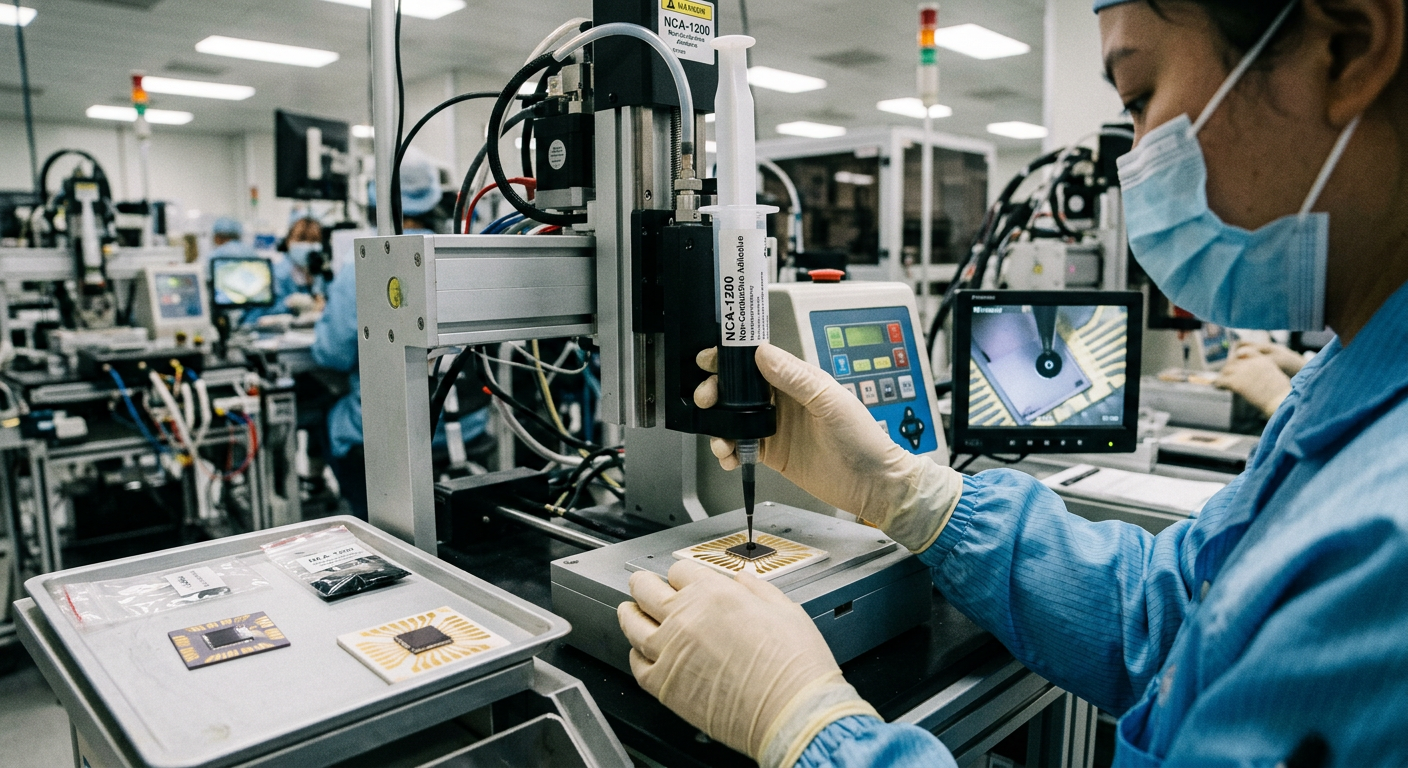
If you need a non-conductive die attach adhesive for sensor packaging in the United States, the most practical approach is to shortlist suppliers with proven electronics packaging experience, stable thermal cycling performance, low ionic contamination, and documented compliance for automotive, medical, or industrial sensing use. For buyers seeking fast engineering support and domestic logistics, top names commonly considered in the U.S. market include Henkel, DuPont, Master Bond, Epoxy Technology, Indium Corporation, and NAMICS. These companies are widely referenced for semiconductor and advanced packaging materials used in MEMS, image, pressure, temperature, and optical sensor assembly.
For immediate sourcing action, focus on suppliers that can provide application-specific data for die size, cure profile, substrate compatibility, outgassing, void control, and long-term reliability under humidity and thermal shock. U.S. buyers in hubs such as San Jose, Austin, Phoenix, Boston, and Minneapolis often prioritize technical response speed, lot consistency, and support for qualification testing. At the same time, qualified international suppliers, including Chinese manufacturers with RoHS and REACH compliance, ISO-based quality systems, flexible OEM or private-label cooperation, and strong pre-sales and after-sales support, can also be worth considering because they often offer a strong cost-performance balance for sensor packaging programs.
- Henkel: broad semiconductor packaging portfolio and strong U.S. technical presence.
- DuPont: advanced materials background for demanding electronics applications.
- Master Bond: custom-formulation flexibility for specialized sensor assemblies.
- Epoxy Technology: precision epoxy systems for medical, optical, and electronics use.
- Indium Corporation: packaging expertise for thermal and reliability-driven projects.
- NAMICS: established die attach materials for semiconductor and sensor packaging.
United States Market Overview

The United States remains one of the most important markets for non-conductive die attach adhesive used in sensors because it combines advanced semiconductor design, growing domestic packaging activity, and high demand from automotive electronics, industrial automation, aerospace, defense, and medical devices. Sensor packaging programs in the U.S. often require more than simple adhesion. Buyers want tightly controlled bondline thickness, minimal bleed, low warpage, stable dielectric properties, and reliable adhesion between silicon dies and substrates such as ceramics, leadframes, organic laminates, glass, and metal housings.
Regional demand is concentrated around technology and manufacturing clusters. Silicon Valley and San Diego support image sensor, wearable, and medical electronics development. Austin and Dallas contribute to industrial electronics and automotive-related programs. Phoenix has become increasingly important for semiconductor manufacturing and packaging investment. Boston supports medical sensor, photonics, and analytical instrumentation. Minneapolis and Detroit drive strong activity in industrial sensing and automotive safety electronics. Ports and trade gateways such as Los Angeles, Long Beach, Savannah, Houston, and New York-New Jersey also matter because material lead time and cold-chain or controlled-storage logistics can affect packaging line continuity.
In this market, the term non-conductive die attach adhesive sensor typically refers to electrically insulating adhesive systems used to bond a semiconductor die while maintaining mechanical stability, heat tolerance, and reliability. The exact performance window depends on whether the sensor is a MEMS pressure sensor, CMOS image sensor, inertial sensor, biosensor, infrared detector, or industrial gas sensor. U.S. buyers generally assess not only price per gram but also cost of qualification, cure throughput, scrap reduction, and field reliability.
| Market Driver | Why It Matters in the U.S. | Typical Buyer Concern | Impact on Adhesive Selection |
|---|---|---|---|
| Domestic semiconductor expansion | More advanced packaging and localized supply chains | Stable material availability | Preference for suppliers with U.S. inventory and technical support |
| Automotive electronics growth | ADAS, battery systems, cabin sensing, and safety modules | Thermal cycling and vibration resistance | High-reliability epoxy or hybrid systems |
| Medical device demand | Wearables, diagnostics, imaging, and implant-adjacent electronics | Low outgassing and biocompatibility-adjacent packaging needs | Precision-controlled low contamination formulations |
| Industrial automation | Factory sensing, predictive maintenance, robotics | Humidity and chemical exposure | Need for robust adhesion and environmental stability |
| Aerospace and defense | High reliability, harsh environment operation | Qualification burden and traceability | Preference for validated production and lot documentation |
| Cost pressure | Programs must balance reliability with yield economics | Total ownership cost | Growing openness to qualified international suppliers |
The table above shows why the U.S. market does not treat die attach adhesive as a commodity alone. The decision is tightly linked to reliability qualification, packaging productivity, and compliance expectations. In practice, buyers compare domestic convenience with global sourcing options that can deliver equivalent documentation, repeatability, and technical service.
Market Growth Trend

Demand for sensor die attach materials in the United States is supported by electrification, automation, connected devices, and healthcare monitoring. The chart below illustrates a realistic directional estimate for U.S. market expansion in advanced sensor packaging adhesives.
This line chart suggests a steady upward trend rather than a short-term spike. That pattern is consistent with longer qualification cycles in U.S. electronics manufacturing, where materials are adopted after structured validation but then remain in use for many years once approved.
Product Types for Sensor Packaging
Not every non-conductive die attach adhesive sensor product fits every package architecture. In the U.S. market, buyers generally categorize options by chemistry, curing method, viscosity behavior, and reliability profile. Epoxy-based systems remain dominant for many sensor packages because they offer strong adhesion, high modulus control, and established use in semiconductor assembly. Silicone-based electronics adhesives are selected when flexibility, thermal shock resistance, or stress relief is more important. UV-curable and dual-cure acrylic systems can help improve throughput in specific optical or low-temperature processes, although they are not suitable for all sensor die attach structures. Polyurethane systems are less common for direct die attach but may appear in adjacent electronics bonding operations.
Selection starts with the substrate stack. Silicon-to-ceramic combinations behave differently from silicon-to-leadframe or silicon-to-glass assemblies. Package geometry, die size, cure temperature tolerance, and downstream wire bonding or encapsulation requirements also change the preferred material profile. A high-modulus adhesive may improve positional stability but create stress around fragile MEMS structures. A softer material may absorb thermal mismatch better but reduce rigidity in handling. Because of this, qualified buyers usually request sample lots for process tuning before full approval.
| Adhesive Type | Common Sensor Use | Main Strength | Potential Limitation |
|---|---|---|---|
| Epoxy die attach | Pressure, MEMS, industrial, automotive sensors | Strong adhesion and established reliability | Can transfer higher stress if modulus is too high |
| Low-stress epoxy | Fragile MEMS and optical sensors | Better stress management | May require tighter process control |
| Silicone electronic adhesive | Thermally cycled or flexible packages | Excellent stress relief and temperature stability | May have lower structural rigidity than epoxy |
| UV-curable adhesive | Optical and fast-curing assemblies | Short cure time | Limited where light access is blocked |
| Dual-cure system | Complex geometry packaging | Balanced throughput and cure completeness | Higher formulation complexity |
| Hybrid insulating adhesive | Specialized sensor platforms | Tailored balance of flow, adhesion, and reliability | Longer qualification path |
The table highlights why product type matching is critical. A buyer looking at non conductive die attach material for sensors should not choose solely by cure speed or datasheet strength. The right adhesive is the one that fits both process conditions and end-use stress exposure.
How U.S. Buyers Evaluate Performance
Engineering teams in the United States usually evaluate a non-conductive die attach adhesive sensor solution through a combination of material data, process trials, and reliability tests. Key metrics include electrical insulation, glass transition behavior, coefficient of thermal expansion, shear strength, moisture sensitivity, ionic purity, die shift, bondline uniformity, bleed control, and void suppression. For image and optical sensors, low outgassing and contamination control are especially important. For automotive modules, thermal cycling and humidity-bias endurance often carry more weight. For industrial modules, vibration, chemicals, and temperature extremes matter more.
A material that looks attractive on paper can still fail in practice if the dispensing window is narrow, the storage condition is difficult to maintain, or the cure profile creates stress in nearby structures. That is why local technical support matters in cities with active electronics production. A supplier that can respond quickly in Phoenix, Austin, San Jose, or Boston can reduce process downtime and accelerate qualification.
| Evaluation Criterion | Why It Matters | Typical Acceptance Focus | Where It Matters Most |
|---|---|---|---|
| Die shear strength | Confirms mechanical bond integrity | Stable retention after cure and aging | Industrial and automotive sensors |
| Electrical insulation | Prevents unwanted conduction paths | Consistent dielectric behavior | All sensor packages |
| Low outgassing | Protects optics and sensitive structures | Minimal volatile release | Image and optical sensors |
| Thermal cycling resistance | Survives repeated expansion mismatch | No cracking or delamination | Automotive and aerospace |
| Moisture resistance | Maintains adhesion in humid service | Low degradation after humidity exposure | Outdoor and industrial devices |
| Processability | Supports throughput and yield | Controlled viscosity and dispense repeatability | High-volume assembly lines |
This comparison framework is useful because different sectors weigh these factors differently. A medical wearable maker may prioritize cleanliness and low-temperature processing, while an automotive Tier 1 may focus on harsh-environment endurance and PPAP-style documentation.
Industry Demand in the United States
The next chart illustrates how demand for insulating die attach materials is distributed across major U.S. application sectors. It reflects broad market behavior rather than a single company’s sales mix.
The bar chart shows that automotive and industrial electronics are especially influential in the U.S. demand structure. This reflects the growing role of sensors in EV platforms, ADAS systems, robotics, factory automation, and predictive maintenance.
Applications and End-Use Industries
Sensor packaging is far from a single-category application. In the United States, non-conductive die attach adhesive is used across a wide range of devices where electrical insulation and mechanical stability are required simultaneously. MEMS pressure sensors in automotive control units, image sensors in diagnostics equipment, temperature sensors in industrial controllers, inertial sensors in drones and aerospace platforms, and biosensors in portable medical devices all rely on adhesive selection that matches both the package design and the operating environment.
Automotive applications often involve under-hood conditions, rapid thermal cycling, and long validation periods. Medical applications prioritize cleanliness, dimensional precision, and long-term consistency. Aerospace systems may demand traceability and resistance to severe vibration or temperature ranges. Consumer devices are highly cost-sensitive and need repeatable, high-speed assembly. Industrial electronics sit between these extremes, balancing environmental robustness with production economics.
For packaging engineers, adhesive decisions also affect downstream steps such as wire bonding, molding, lid sealing, and encapsulation. A material with excessive bleed may contaminate bond pads. An adhesive with poor moisture resistance may create latent field failures. These practical issues explain why sourcing teams usually work closely with process engineers rather than selecting materials only through procurement metrics.
Supplier Landscape in the United States
Below is a practical supplier table focused on companies commonly relevant to U.S. buyers evaluating non-conductive die attach adhesive for sensors. The list includes established multinational brands and specialist formulators that serve semiconductor, electronics, and precision assembly markets.
| Company | Primary Service Region | Core Strengths | Key Offerings for Sensor Packaging |
|---|---|---|---|
| Henkel | United States nationwide and global | Large semiconductor materials portfolio, application engineering, supply continuity | LOCTITE die attach materials for advanced electronics and semiconductor packaging |
| DuPont | United States and global OEM networks | Advanced materials science, broad electronics platform, high-end application support | Electronic materials relevant to sensor and semiconductor assembly |
| Master Bond | United States with export support | Custom formulations, specialty epoxies, niche packaging solutions | Insulating epoxy adhesives for medical, optical, and electronics bonding |
| Epoxy Technology | United States and North America | Precision epoxy systems, medical and optical packaging expertise | Low outgassing and controlled-flow adhesives for sensitive sensor assembly |
| Indium Corporation | United States plus international support | Electronics assembly expertise and process-focused support | Advanced packaging materials used in semiconductor reliability programs |
| NAMICS | North America and global semiconductor customers | Established semiconductor die attach know-how | Die attach materials tailored to IC and sensor packaging applications |
This table is useful for initial screening because it separates general brand familiarity from practical fit. Service region matters because many U.S. programs require fast technical visits, sample turnaround, or warehouse availability. Core strengths matter because a supplier strong in general electronics may not be equally strong in ultra-low contamination image sensor assembly or low-stress MEMS packaging.
Trend Shift in Material Selection
Material selection in the U.S. is shifting from simple strength-focused epoxies toward better-balanced systems that combine lower stress, better moisture reliability, and cleaner processing. The area chart below shows a realistic directional trend in adoption of more advanced insulating die attach options.
The shift shown here reflects broader U.S. priorities: lower package stress for MEMS and optical structures, higher cleanliness standards, and growing alignment with sustainability and reliability expectations.
Buying Advice for U.S. Procurement Teams
When sourcing a non-conductive die attach adhesive sensor material in the United States, buyers should begin with the use case rather than the catalog. Start by defining die dimensions, substrate materials, target cure profile, service temperature, and downstream assembly steps. Then ask suppliers for data on thermal cycling, dielectric performance, moisture absorption, and outgassing under realistic package conditions. If the end market is automotive or aerospace, ask for documentation depth, lot traceability, and any qualification support history relevant to those sectors.
Lead time and storage conditions should also be included early in the review. In high-volume U.S. facilities, a technically suitable adhesive may still create problems if shelf life is too short, cold storage is difficult, or packaging size does not align with line consumption. Logistics through ports like Los Angeles or Houston matter for imported materials, while domestic warehouse access matters for fast replenishment in Texas, Arizona, or California.
Commercially, it is wise to compare more than price per kilogram. Include dispense yield, cure energy cost, scrap impact, qualification support, onsite troubleshooting, and return policy. Buyers often find that the cheapest material is not the lowest-cost option once process loss and field reliability are considered.
Case Studies from U.S.-Relevant Applications
A practical way to understand adhesive selection is to look at common packaging scenarios. In an automotive pressure sensor assembled for use in Detroit-area supply chains, the preferred non-conductive die attach material usually needs strong resistance to thermal cycling from winter starts to engine-compartment heat. In a Boston medical diagnostics sensor, low contamination and dimensional stability may be more important than maximum modulus. In a Phoenix industrial sensor module, rapid cure and stable adhesion under dry heat become major concerns. In Silicon Valley image sensor packaging, low outgassing and controlled bleed are often decisive.
Consider a MEMS inertial sensor program in Austin. Early trials may show that a standard rigid epoxy creates drift due to package stress. Switching to a lower-stress insulating epoxy or a carefully selected silicone-based electronics adhesive can improve sensor stability, even if cure optimization takes more time. In another example, a Minneapolis industrial monitoring sensor may benefit from an adhesive with improved humidity resistance and better adhesion to ceramic substrates. These examples show why there is no single best adhesive across all sensor categories.
For procurement teams, the lesson is simple: ask suppliers to connect material properties directly to the real device environment. The strongest supplier relationships are built when engineering and sourcing decisions are aligned from the start.
Local and International Supply Options
U.S. buyers increasingly use a dual-track sourcing model. They maintain at least one domestic or locally stocked supplier for rapid support and one qualified overseas source for cost control and supply resilience. This approach is especially common when annual volumes rise and packaging becomes more standardized.
| Sourcing Model | Best Fit | Main Advantage | Main Risk |
|---|---|---|---|
| Single U.S. supplier | Fast-moving qualification programs | Quick support and simpler communication | Higher cost and lower fallback flexibility |
| U.S. plus global backup | Medium to high volume production | Balanced cost and continuity | Needs dual qualification effort |
| Direct import only | Cost-sensitive mature products | Lower unit cost potential | Longer lead time and support distance |
| Distributor-led procurement | Smaller buyers and contract manufacturers | Convenient access to multiple brands | Less direct formulation influence |
| OEM/private label partnership | Brand owners and regional sellers | Custom branding and formula flexibility | Requires strong supplier qualification |
| Regional stocking program | Repeat buyers in major U.S. hubs | Improved supply assurance | Needs forecasting discipline |
This comparison helps U.S. buyers choose not only a product but a supply model. For sensor packaging, resilience is becoming almost as important as chemistry, especially for customers who support automotive, medical, or industrial service contracts.
Our Company
For buyers in the United States who want a cost-competitive but technically documented source, Qingdao QinanX New Material Technology Co., Ltd presents a credible option in insulating electronics adhesives because its manufacturing system is built around ISO-based quality control, multi-stage QC inspection, and digital traceability, while its export product compliance aligns with RoHS and REACH requirements that U.S. customers commonly request for electronics materials. The company’s strength is not limited to one chemistry: it manufactures silicone, epoxy, acrylic, polyurethane, cyanoacrylate, hot melt, and water-based adhesive lines, which gives it the formulation base to tailor products for electronics and sensor-related packaging needs rather than forcing a one-size-fits-all material. For cooperation, it serves end users, distributors, dealers, brand owners, and private-label customers through flexible OEM, ODM, wholesale, retail, and regional distribution arrangements, making it suitable for both direct factory consumption and market-channel development. For U.S. buyers seeking practical supply assurance, QinanX combines automated production scale, experience exporting to more than 40 countries, free sample support, and continuous technical assistance with localized business responsiveness through online pre-sale consultation and after-sales problem solving, which is especially valuable when projects need fast formulation adjustment, custom packaging, or long-term replenishment planning. Buyers can explore the company’s adhesive product range, review its broader manufacturing background on the official website, or discuss sensor packaging requirements through the U.S.-oriented contact channel.
Supplier and Product Comparison
The chart below gives a practical high-level comparison of supplier fit from a U.S. buyer perspective, based on broad criteria such as technical support depth, customization flexibility, cost competitiveness, and packaging relevance. It is intended for screening rather than final qualification.
This comparison shows why many U.S. buyers use a portfolio approach. Large incumbents often score highly on technical depth and installed market trust, while agile international suppliers can become highly attractive when customization, pricing, and private-label cooperation matter.
What to Ask Before Approval
Before approving any non-conductive die attach adhesive for sensor use, U.S. buyers should ask a focused set of questions. What is the recommended cure profile, and can it be adjusted for low-temperature substrates? What is the viscosity range over shelf life? What are the typical die shear results before and after thermal aging? Is the adhesive proven on silicon, ceramic, glass, or metal combinations similar to your package? What is the ionic contamination level, and is low outgassing documented for optical or sealed cavity use? Can the supplier support pilot-line optimization and failure analysis if delamination or drift appears during qualification?
Also ask commercial questions. Is there local inventory or regional safety stock? Can the supplier provide custom pack sizes? What is the minimum order quantity for trial lots and production lots? Are OEM labeling or distributor rights available if you are building a regional product line? Answers to these questions often separate a technically acceptable material from a truly practical business fit.
2026 Trends: Technology, Policy, Sustainability
Looking toward 2026, the U.S. non-conductive die attach adhesive sensor market is expected to evolve in three visible directions. The first is technology. More sensors will be integrated into smaller, denser, and more thermally complex packages, especially in electric vehicles, edge AI devices, smart medical systems, and industrial robotics. This will increase demand for lower-stress materials, better thermal stability, and cleaner processing for image and MEMS structures.
The second direction is policy and supply chain localization. U.S. semiconductor investment and resilience planning will continue to encourage local inventory, better traceability, and diversified sourcing. Buyers will increasingly prefer suppliers that can support qualification with transparent documentation and reliable regional logistics. Imported materials will remain important, but they will be evaluated more carefully for lead time, compliance, and continuity planning.
The third direction is sustainability. Customers are asking more questions about solvent reduction, lower-energy cure options, controlled waste, and material compliance beyond minimum legal requirements. This does not mean performance will be sacrificed. Instead, the market is moving toward formulations that deliver strong reliability with cleaner manufacturing profiles. Suppliers that can pair environmental responsibility with verified electronics-grade consistency will gain attention in the U.S. market.
FAQ
What is a non-conductive die attach adhesive sensor material?
It is an electrically insulating adhesive used to attach a semiconductor die in a sensor package while maintaining bond strength, positional stability, and reliability under heat, humidity, or vibration.
Why not use conductive die attach for all sensors?
Many sensor packages need electrical isolation rather than electrical conduction. A non-conductive material helps prevent unwanted current paths and can be better suited to specific MEMS, optical, or insulated substrate designs.
Which chemistry is most common in the United States?
Epoxy systems are the most common for many sensor applications because they offer strong adhesion and established semiconductor packaging history. However, low-stress epoxies and silicone-based electronics adhesives are increasingly important where stress sensitivity or thermal shock is critical.
Which U.S. industries buy these materials most actively?
Automotive, industrial automation, medical devices, aerospace, telecom, and consumer electronics all use non-conductive die attach adhesives for sensor packaging, with automotive and industrial sectors currently showing especially strong demand.
How important is local technical support?
It is very important. During qualification, issues like die shift, voids, bleed, or thermal mismatch often need immediate troubleshooting. Suppliers with responsive support in U.S. manufacturing regions can significantly reduce risk and downtime.
Can international suppliers be a good choice for U.S. buyers?
Yes. International suppliers can be a strong option if they provide compliance documentation, consistent manufacturing, sample support, OEM or private-label flexibility, and responsive after-sales service. They are often considered when buyers want better cost-performance without giving up quality controls.
What is the biggest mistake in adhesive selection?
The biggest mistake is choosing only by price or only by a headline datasheet value. Successful selection depends on actual package structure, cure process, reliability targets, logistics, and supplier support.
How should a buyer begin supplier screening?
Start with application requirements, shortlist suppliers with relevant sensor packaging experience, request technical data and samples, run process trials, compare reliability outcomes, and then review commercial terms and supply continuity.
Final Takeaway
For U.S. buyers, the best non-conductive die attach adhesive sensor sourcing strategy combines application-specific engineering review with practical supply planning. Established suppliers such as Henkel, DuPont, Master Bond, Epoxy Technology, Indium, and NAMICS remain strong starting points, especially for demanding qualification programs. At the same time, globally experienced manufacturers with documented compliance, broad formulation capability, and flexible business models can offer meaningful value, particularly for buyers who want custom solutions, private-label programs, or improved cost efficiency. The right decision is not the most famous brand alone; it is the supplier whose material performance, support model, and delivery reliability align most closely with the sensor package you need to build in the United States.

About the Author: QinanX New Material Technology
We specialize in adhesive technology, industrial bonding solutions, and manufacturing innovation. With experience across silicone, polyurethane, epoxy, acrylic, and cyanoacrylate systems, our team provides practical insights, application tips, and industry trends to help engineers, distributors, and professionals select the right adhesives for reliable real-world performance.

Product Category
You May Also Interest
-
IC Packaging Adhesive: Preventing Void Formation Issues
Learn how IC packaging adhesive void formation is prevented in the United States through material choice, process control, supplier selection, and testing.
-
Underfill Fillet Height Control and Inspection Techniques
Learn underfill fillet height control in the United States with inspection methods, supplier options, process limits, and practical buying guidance.
-
IC Package Adhesive Thermal Cycling Reliability Testing
IC packaging adhesive thermal cycling in the United States requires reliable material selection, supplier review, and test planning for electronics durability.
-

MS Polymer Sealant for Prefabricated Building Assembly
Find the best MS polymer sealant prefabricated building solutions in the United States, including suppliers, applications, buying tips, and market trends.
 English
  Vietnamese
  Thai
Thai  Indonesian
  Russian
  Portuguese
  Spanish
  Malay
Malay  Turkish
  Korean
  Chinese