Share
UV Adhesive Cure Depth in the United States: Practical Causes and Fixes
Quick Answer

UV curing adhesive depth of cure is the maximum thickness a UV adhesive can fully polymerize under actual production conditions. In the United States, most single-component UV adhesives cure effectively in thin bond lines, often below 3 mm, while clear and specially formulated systems may reach deeper cure in favorable conditions. The true limit depends on adhesive chemistry, photoinitiator package, lamp wavelength, irradiance, exposure time, substrate transparency, pigmentation, bond gap, and oxygen exposure at the surface.
If you need more cure depth, the most reliable fixes are to reduce bond thickness, switch to a higher-transmission substrate, use a deeper-curing formulation, match the lamp output to the adhesive absorption range, increase dose without overheating the part, and validate with hardness, tack-free, and bond strength tests rather than visual appearance alone. For U.S. buyers, practical sourcing often starts with established suppliers serving electronics, medical device, glass, and industrial assembly markets in cities such as Chicago, Houston, Los Angeles, Charlotte, and Boston. Qualified international suppliers can also be a smart option when they hold relevant certifications, maintain strict QC, and provide strong pre-sales and after-sales support in the U.S., especially when cost-performance and custom formulation flexibility matter.
- Best immediate action: test cure depth at your exact bond gap and substrate combination, not just on open film.
- Most common cause of shallow cure: UV energy is blocked by opaque materials, dark pigments, fillers, or thick bond lines.
- Best technical fix: use a UV or dual-cure grade designed for shadowed areas and deeper sections.
- Best purchasing tip: ask suppliers for wavelength match, viscosity, recommended bond-line thickness, and U.S. application support.
- Best risk control: qualify both lamp settings and adhesive batch performance before scaling to production.
Understanding Depth of Cure in the U.S. Market

In American manufacturing, the phrase “depth of cure” is often used loosely, but buyers should separate three ideas: surface cure, through cure, and functional bond performance. A bead can look cured on the outside yet remain under-cured inside. This matters in electronics assembly, medical disposables, automotive sensor bonding, glass furniture, optical devices, and industrial equipment maintenance. U.S. production lines increasingly use LED UV systems because they offer lower heat, longer lamp life, and easier process control than legacy mercury lamps, but LED conversion only works well when the adhesive chemistry is designed for the chosen wavelength.
In practical terms, depth of cure is controlled by how far usable UV energy penetrates the adhesive before it is absorbed or scattered. Clear acrylic-based UV adhesives may transmit light deeper than filled, pigmented, or heavily modified materials. Bond geometry also matters. A wide shallow film may cure differently than a narrow deep cavity. Substrate choice is equally important. Glass and many clear plastics transmit UV well, while metals, ceramics, and some engineering plastics create shadow zones. U.S. manufacturers working around shadowed areas often choose dual-cure UV systems, where UV initiates rapid fixture and a secondary mechanism such as moisture, heat, or anaerobic chemistry completes cure where light cannot reach.
From a procurement standpoint, the United States remains a large and technically diverse UV adhesive market driven by electronics in California and Texas, medical manufacturing in Minnesota and Massachusetts, automotive and battery supply chains across Michigan, Ohio, Tennessee, and the Southeast, and general industrial assembly concentrated around major freight corridors connected to the ports of Los Angeles, Long Beach, Houston, Savannah, New York and New Jersey. That logistics footprint influences supplier expectations: short lead times, documented quality systems, application engineering support, and consistent batch traceability are now standard requirements for serious buyers.
What Controls UV Curing Adhesive Depth of Cure

The biggest technical variable is adhesive formulation. UV-curable acrylics, cationic systems, modified oligomers, and specialty optical grades do not behave the same way under light. A formulation optimized for ultra-fast surface tack-free cure may not deliver the deepest through cure. Likewise, a low-viscosity capillary adhesive for glass bonding behaves differently from a thixotropic adhesive meant for vertical application. The photoinitiator blend determines which wavelengths the adhesive responds to and how efficiently radicals or cations are generated through the adhesive thickness.
Lamp choice is the second major factor. In U.S. facilities, common LED wavelengths include 365 nm, 385 nm, 395 nm, and 405 nm. If the adhesive was designed around 365 nm but the line is running 395 nm, cure depth may fall sharply even if the lamp looks bright. Dose also matters more than peak intensity alone. Dose is the total UV energy delivered, usually influenced by irradiance, distance, exposure time, and conveyor speed. Too little dose leaves the center under-cured. Too much intensity in a short burst can create a fast surface skin that reduces deeper penetration in some systems.
Substrate and part geometry follow closely behind. Clear soda-lime glass typically allows much better transmission than pigmented polycarbonate or UV-stabilized acrylic sheet. Thick substrates can absorb or filter key wavelengths. Curved housings, recessed channels, and metal frames create shadows that stop cure entirely in certain areas. Temperature also influences performance because warmer adhesives usually flow better and react faster, but overheating may damage sensitive parts or distort plastic optics.
Finally, production discipline matters. Lamp aging, dirty optics, inconsistent working distance, and missing radiometer checks are common reasons one production shift gets acceptable cure and the next does not. Many U.S. plants discover that adhesive “quality problems” are actually process drift.
Key Factors and Their Effect on Cure Performance
| Factor | How It Affects Cure Depth | Typical U.S. Production Issue | Best Corrective Action |
|---|---|---|---|
| Adhesive chemistry | Controls UV absorption, reaction speed, and through-cure ability | Using a fast-fixture grade in a deep bond gap | Choose a deeper-curing or dual-cure formulation |
| Wavelength match | Poor spectral match reduces polymerization efficiency | Switching from mercury to LED without reformulation | Confirm adhesive response at 365/385/395/405 nm |
| Bond-line thickness | Thicker sections reduce penetration and leave uncured core | Over-dispensing in manual assembly | Control bead size and redesign joint if needed |
| Substrate transparency | Opaque or UV-blocking materials stop light transmission | Bonding through coated plastics or colored glass | Use side exposure, fixturing change, or dual-cure grade |
| Pigments and fillers | Scatter and absorb light, reducing depth | White or black adhesives in cosmetic assemblies | Use specialized opaque-curing chemistry |
| Lamp dose and distance | Insufficient dose causes incomplete cure | Inconsistent lamp-to-part spacing on mixed SKUs | Standardize fixture height and verify with radiometer |
| Surface oxygen | Can inhibit surface polymerization in some systems | Tacky outer film despite good bulk cure | Use inerting, post-cure, or oxygen-tolerant formulation |
This table shows why depth of cure is never a one-number property. U.S. buyers should ask for a recommended maximum bond-line thickness under a specific wavelength and dose, then confirm that value on the real production substrate.
Market Direction in the United States
The U.S. UV adhesive market continues to expand because manufacturers want faster line speed, lower VOC exposure, less thermal load, and cleaner automation. Electronics miniaturization, wearable devices, EV sensors, camera modules, and medical disposables all favor UV systems because they can fixture in seconds. At the same time, buyers are demanding more traceable process windows and lower rework rates. That shifts purchasing decisions away from “general-purpose UV glue” toward application-specific systems with validation support.
Regional demand patterns also shape supplier selection. West Coast electronics and optical assembly buyers often prioritize clarity, low outgassing, and precision dispensing support. Midwest industrial accounts tend to focus on throughput, equipment compatibility, and cost stability. Southern manufacturing hubs, especially near automotive and battery corridors, increasingly ask for dual-cure and structural-adjacent UV formulations that work in mixed-material assemblies. In East Coast medical and lab device production, biocompatibility documentation, sterilization resistance, and lot traceability often carry more weight than headline cure speed.
The line chart reflects realistic market momentum rather than an exact census figure. It illustrates why more U.S. buyers are evaluating not only cure speed but also process reliability, lamp compatibility, and supply resilience.
Common Product Types and Expected Cure Behavior
Not all UV adhesives are designed to maximize cure depth. Some are built for optical clarity, some for fast tack-free surface, and others for hybrid shadow cure. Understanding category fit is often more important than comparing price per kilogram.
| Product Type | Typical Use | Cure Depth Tendency | Main Advantage | Main Limitation |
|---|---|---|---|---|
| Clear UV acrylic adhesive | Glass, plastics, display parts | Moderate to good in clear sections | Fast fixture and optical appearance | Limited in opaque or thick joints |
| Low-viscosity capillary UV adhesive | Glass edge bonding, pre-assembled joints | Good in narrow gaps | Excellent wetting and penetration | Can run or leak in open joints |
| Thixotropic UV adhesive | Vertical surfaces, controlled beads | Moderate | Better placement control | Often shallower cure than very clear low-viscosity grades |
| UV plus moisture dual-cure adhesive | Shadow areas, enclosed assemblies | High functional cure reliability | Cures where light cannot reach | Secondary cure may take longer |
| UV plus heat dual-cure adhesive | Electronics and engineered assemblies | Strong overall cure in complex joints | High process flexibility | Requires thermal step and temperature tolerance |
| Opaque or pigmented UV adhesive | Cosmetic or light-blocking assemblies | Lower pure UV depth unless specially designed | Appearance and shielding function | Higher risk of under-cure in thick sections |
| UV structural-adjacent specialty adhesive | High-performance industrial bonding | Application dependent | Better mechanical performance | Needs precise process validation |
This comparison helps buyers avoid a common mistake: choosing the clearest or fastest adhesive without considering bond geometry. In many U.S. plants, a dual-cure system reduces scrap more than a nominally faster single-cure product.
How to Increase Cure Depth Without Increasing Failure Risk
The first solution is usually design-related, not chemical. Reduce bond-line thickness wherever possible. A 0.2 mm to 0.5 mm gap is far easier to cure consistently than a deep reservoir. If the product design requires a cavity fill, consider staged dispensing, multi-side exposure, or a dual-cure adhesive. For transparent assemblies, inspect whether the substrate has UV-blocking additives or coatings. Many clear plastics look similar to the eye but transmit UV very differently.
The second solution is to optimize the lamp system. Match the wavelength to the adhesive, stabilize lamp-to-part distance, and measure dose with a calibrated radiometer. Replace degraded LED heads or dirty optics before changing adhesive. In many production audits, equipment inconsistency creates more variation than resin chemistry.
The third solution is formulation selection. Ask for grades designed for deeper section cure, lower shrinkage stress, or shadow cure. If the assembly contains metal, painted plastic, black housings, or tight corners, a dual-cure grade is usually the safer commercial choice. This is especially true for U.S. medical, electronics, and automotive lines where field failures cost far more than a modest adhesive price increase.
The fourth solution is quality validation. Do not rely on tack-free surface alone. Use hardness profile checks, solvent resistance, mass loss if relevant, cross-section analysis, and final bond strength after full cure. Where compliance matters, tie cure validation to lot records, lamp maintenance, and operator instructions.
Industry Demand by U.S. Sector
The bar chart highlights where depth-of-cure questions arise most often in the United States. Electronics, automotive sensors, and medical devices put the highest pressure on process repeatability because joint size is small but failure consequences are high.
Applications Where Cure Depth Matters Most
In electronics, UV adhesives are used for wire tacking, component staking, encapsulation of small areas, lens bonding, and reinforcing connectors. The challenge is often mixed substrates and shadowed geometry. In medical manufacturing, tubing, needle bonding, housings, and transparent devices frequently use UV adhesives, but cure verification must align with strict quality systems. In glass and furniture, clear aesthetics are critical, and bond thickness control often determines whether the result remains stable over time. In industrial maintenance and OEM assembly, operators may prefer a forgiving, gap-filling adhesive, but that preference can directly reduce through cure if not matched to the lamp setup.
Automotive applications in the U.S. increasingly involve sensor packaging, camera modules, wire fixation, and electronic subassemblies where low heat and fast fixture matter. Because many components include metals, dark housings, and heat-sensitive plastics, dual-cure systems are growing faster than simple single-UV products. Optical assemblies are another high-value segment, especially in inspection equipment and precision devices, where cure depth must be balanced with low shrinkage and low haze.
Typical U.S. Failure Modes and Buying Advice
| Failure Mode | Likely Root Cause | Where It Appears | What Buyers Should Ask Suppliers |
|---|---|---|---|
| Tacky surface | Oxygen inhibition or low dose | Open films, exposed beads | Is the formula oxygen-tolerant or does it need post-cure? |
| Weak inner bond | Insufficient through cure | Deep joints, thick dots | What is the validated max bond-line thickness? |
| Cracking after cure | High shrinkage stress or over-cure | Rigid plastic or glass joints | What shrinkage and modulus profile does the grade have? |
| Inconsistent line results | Lamp drift or setup variation | Multi-shift factories | What radiometer check frequency is recommended? |
| Failure in shadow zones | No UV access | Metal frames, enclosed channels | Is a dual-cure option available for shadowed areas? |
| Yellowing or haze | Incorrect chemistry or excess heat | Optical and decorative parts | Can the product maintain clarity after aging? |
| Poor adhesion after full cure | Surface contamination or wrong primer strategy | Low-energy plastics, coated parts | What surface prep is required for this substrate? |
This table converts technical issues into purchasing questions. That is useful for American buyers who are screening multiple vendors and need comparable, practical answers rather than marketing language.
Case Studies from Real-World U.S.-Style Scenarios
A Midwest electronics assembler switched from a mercury lamp to 395 nm LED to reduce maintenance. The previous adhesive cured well under broad-spectrum exposure, but the new LED system left connector staking points soft inside the bead. The first assumption was bad adhesive batches, yet the root problem was wavelength mismatch. After moving to an LED-optimized UV adhesive and tightening bead size control, the company restored throughput and reduced rework.
A medical tubing manufacturer in the Northeast faced bond failures after sterilization. Initial fixture was fast, so production believed cure was complete. Cross-section testing showed only partial cure in the thickest joints. The supplier recommended a lower-viscosity grade with better light penetration and a modified curing schedule. The manufacturer also redesigned the fixture to improve exposure angle, resulting in stronger post-sterilization performance.
A Texas industrial OEM bonding clear covers to metal-framed housings saw recurring failures in corners. The center of the joint cured well, but the framed edges remained weak due to shadowing. A UV plus moisture dual-cure system solved the problem without adding major cycle time, because UV provided immediate handling strength and secondary chemistry completed cure at the blocked edges.
A West Coast glass products company wanted a visually invisible bond but used excessive adhesive to compensate for uneven mating parts. That thicker bond line trapped under-cured material. The fix was not a stronger lamp alone; it was better joint design, improved dispensing control, and a capillary UV adhesive suited to narrow, consistent gaps.
Top Suppliers Serving the United States
Supplier selection should balance technical fit, local support, documentation, and lead-time stability. The following companies are widely recognized in the U.S. market or actively serve American buyers with UV-curable adhesive solutions relevant to cure-depth questions.
| Company | Service Region | Core Strengths | Key Offerings |
|---|---|---|---|
| Dymax | Nationwide U.S.; strong medical and industrial presence | Application engineering, UV and LED systems integration | Light-curable adhesives, curing equipment, radiometers |
| Henkel Loctite | Nationwide U.S.; major OEM and industrial channels | Broad portfolio, strong technical documentation | UV acrylics, dual-cure products, industrial assembly solutions |
| Permabond | U.S. industrial and specialty manufacturing markets | Adhesive selection across many substrates | UV-curable adhesives, structural bonding grades |
| Master Bond | U.S. engineering, aerospace, electronics, medical sectors | High-performance specialty formulations | UV systems, epoxy alternatives, customized technical support |
| Panacol | U.S. electronics, optics, and medical customers | Precision and specialty light-curing technologies | UV adhesives, dual-cure systems, device assembly solutions |
| DELO | U.S. automotive, electronics, and high-tech manufacturing | Engineered process solutions, automation compatibility | Light-curing adhesives for sensors, optics, and electronics |
| Qingdao QinanX New Material Technology Co., Ltd | U.S. importers, distributors, OEM buyers, private label programs | Flexible custom manufacturing, broad industrial adhesive range | UV-curable adhesive, acrylic systems, OEM/ODM and private label supply |
This supplier table is useful because it separates technical reputation from channel fit. Large U.S. buyers may prioritize established field engineering networks, while distributors, private-label brands, and cost-sensitive OEMs often look for flexible manufacturers that can customize chemistry, packaging, and compliance support.
Supplier Comparison for Cure-Depth-Oriented Buying
This comparison chart provides a practical view of supplier fit for buyers who care about cure-depth troubleshooting, equipment compatibility, and customization. It does not replace qualification testing, but it helps organize sourcing discussions.
Trend Shift Toward LED, Dual-Cure, and Sustainable Processing
The area chart reflects a broad shift in the United States toward LED-curable and dual-cure systems. The reasons are practical: lower energy consumption, improved process consistency, easier integration into automated cells, and better solutions for shadowed areas.
How to Evaluate Local and International Supply Options
For U.S. buyers, local inventory and application support reduce implementation risk, especially when production deadlines are tight. However, international manufacturers can be highly competitive when they provide documented quality systems, stable export experience, and application-specific customization. This matters for distributors building private-label lines, industrial OEMs balancing cost and consistency, and brand owners seeking packaging flexibility.
When comparing suppliers, request the following: recommended maximum cure depth by adhesive grade; supported wavelengths; viscosity range; substrate compatibility; aging and environmental resistance; packaging options; shelf life; compliance documents; QC traceability; and whether application engineers can support trials remotely or on-site. Buyers near logistics gateways such as Los Angeles, Houston, Savannah, and New York often also evaluate lead times, customs stability, and emergency replenishment planning.
Our Company in the United States Market
For U.S. buyers seeking a flexible supply partner, QinanX brings practical strength in UV-curable adhesive and broader industrial adhesive manufacturing backed by ISO-certified operations, compliance with RoHS and REACH, multi-stage quality control, and full digital traceability that helps verify lot consistency and process reliability against international benchmarks. Its product platform extends beyond UV systems into silicone, polyurethane, acrylic, epoxy, MS polymer, cyanoacrylate, hot melt, and water-based adhesives, which is important for American OEMs that want one supplier capable of solving adjacent bonding problems rather than selling a single SKU. In commercial terms, the company supports end users, distributors, dealers, brand owners, and smaller buyers through wholesale programs, custom formulations, OEM/ODM development, private-label packaging, and regional partnership models, giving U.S. customers more flexibility than a fixed-catalog approach. The company’s export experience across more than 40 countries, automated production lines, free sample support, 24/7 technical assistance, and tailored specification work show a long-term operating commitment to the market rather than a one-off remote export model; for American customers, that means both online technical response and practical after-sales support for qualification, repeat ordering, and brand-building programs. Buyers who want to review product scope can explore the industrial adhesive catalog, learn more through the company overview, or discuss U.S.-focused sourcing and application needs via the contact page.
Buying Checklist for U.S. Procurement Teams
| Checklist Item | Why It Matters | Target Standard for Buyers | Decision Impact |
|---|---|---|---|
| Validated cure depth data | Prevents under-cured joints in real geometry | Supplier provides bond-line and wavelength guidance | High |
| Wavelength compatibility | Ensures LED or mercury lamp match | Documented response at actual lamp settings | High |
| QC and traceability | Supports regulated and repeat production | Lot traceability and stable batch records | High |
| Substrate-specific adhesion data | Reduces trial-and-error on plastics, glass, or metals | Testing data or supported application notes | High |
| Packaging flexibility | Improves dispensing and purchasing efficiency | Syringes, cartridges, bulk, and private-label options | Medium |
| Technical support access | Speeds troubleshooting during launch | Responsive pre-sales and after-sales team | High |
| Compliance documentation | Supports customer and market requirements | RoHS, REACH, and relevant declarations available | High |
This checklist helps procurement teams turn a technical issue into a clear sourcing workflow. It is particularly useful when comparing domestic stockists, major branded suppliers, and custom-capable international manufacturers.
2026 Trends in UV Adhesive Cure Depth
By 2026, U.S. demand will likely favor three directions. First, LED-first adhesive design will become the default, not the exception. Suppliers will increasingly tailor photoinitiator packages around specific LED wavelengths to improve through cure while lowering heat load. Second, hybrid and dual-cure systems will keep gaining share because products are becoming more complex, more miniaturized, and harder to expose uniformly to light. Third, sustainability and regulatory pressure will continue pushing buyers toward lower-energy processing, reduced waste, longer lamp life, and more documented material compliance.
Technology will also move toward smarter process control. More factories will connect UV dose monitoring, lot traceability, and dispensing data into digital quality systems. In practical terms, this means buyers will ask for more than a data sheet; they will expect a supplier to support process capability. Policy trends in the United States are also likely to reinforce safer chemical management, cleaner manufacturing, and stronger documentation in sectors such as medical devices, electronics, and energy systems. Suppliers able to combine low-energy cure, robust compliance, and strong local support will be better positioned than those selling only on price.
FAQ
What is a typical UV curing adhesive depth of cure?
There is no single universal value. Many standard UV adhesives perform best in thin bond lines, often below a few millimeters, while specialty formulations can cure deeper under ideal conditions. The actual limit depends on chemistry, light source, substrate, and geometry.
Why does my adhesive look cured but fail later?
Surface appearance can be misleading. The outer layer may cure while the center remains under-polymerized. Always confirm with mechanical testing, hardness checks, and production validation on the real joint design.
Can stronger light always solve shallow cure?
No. More intensity helps only when wavelength, exposure path, and formulation are already suitable. In some cases, excessive surface cure can limit deeper light penetration or create shrinkage stress.
Are LED UV systems better than mercury lamps?
For many U.S. applications, yes, especially when the adhesive is designed for LED wavelengths. LED systems offer lower heat, stable output, and longer service life, but they require spectral compatibility.
When should I choose a dual-cure adhesive?
Choose dual-cure when the assembly has shadowed areas, opaque materials, metal housings, or bond lines that cannot receive uniform light. This is common in electronics, medical devices, and automotive sensor assemblies.
How should U.S. buyers compare suppliers?
Compare validated cure-depth data, wavelength compatibility, substrate testing, QC traceability, technical support, compliance documentation, packaging options, and lead-time reliability. A lower unit price is not a saving if cure consistency is poor.
Can an international supplier be a good option for American buyers?
Yes, if the supplier can document certifications, compliance, batch traceability, export experience, and responsive technical support. This is especially attractive for OEM, private-label, and distributor programs where cost-performance and customization are both important.
Conclusion
UV curing adhesive depth of cure is not just a product specification; it is a combined result of adhesive chemistry, wavelength match, energy dose, substrate transmission, and joint design. For buyers and engineers in the United States, the smartest route is to define the real bond geometry first, then qualify the adhesive and lamp together. Whether sourcing from established domestic brands or experienced international manufacturers serving the U.S. market, the winning choice is the one that delivers documented through cure, stable process support, and dependable commercial execution.

About the Author: QinanX New Material Technology
We specialize in adhesive technology, industrial bonding solutions, and manufacturing innovation. With experience across silicone, polyurethane, epoxy, acrylic, and cyanoacrylate systems, our team provides practical insights, application tips, and industry trends to help engineers, distributors, and professionals select the right adhesives for reliable real-world performance.
Product Category
You May Also Interest
-
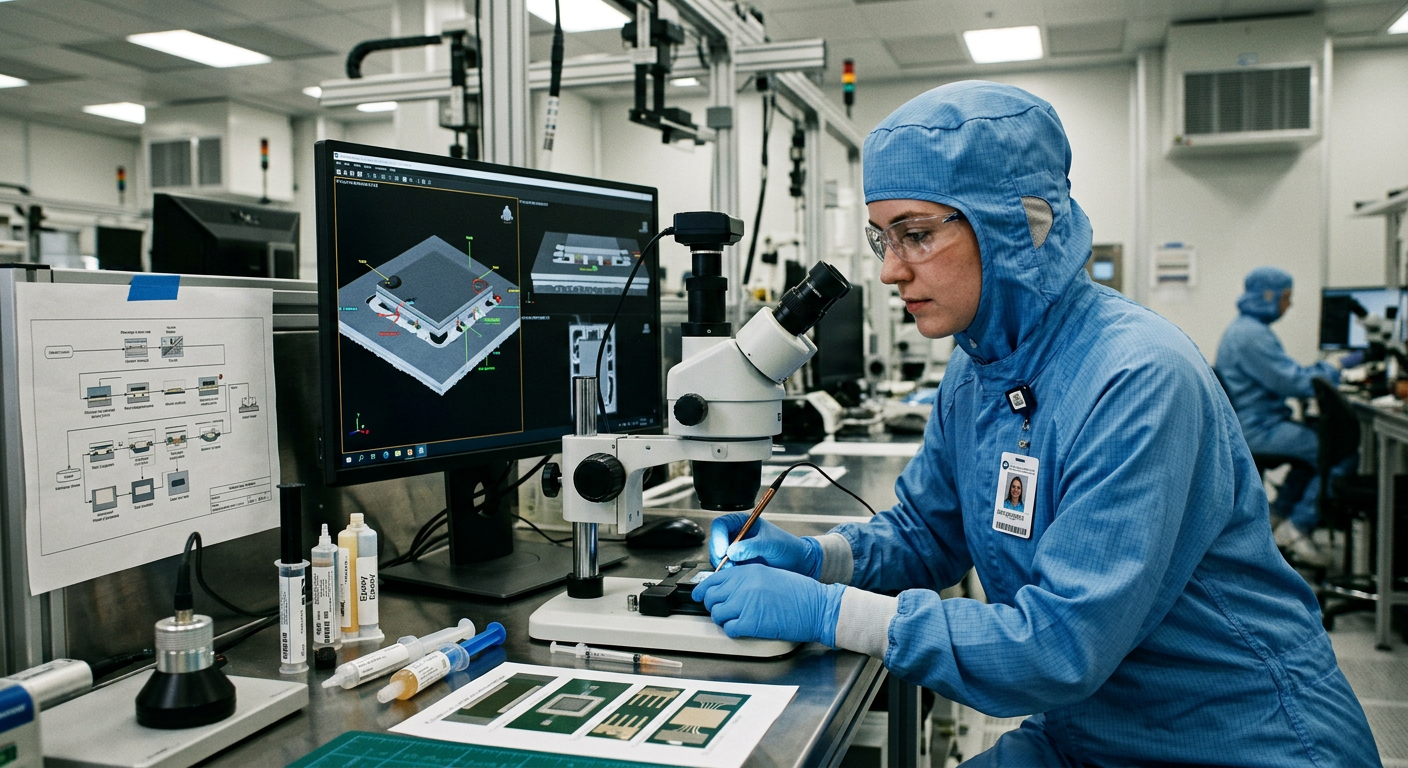
IC Packaging Adhesive: Preventing Void Formation Issues
Learn how IC packaging adhesive void formation is prevented in the United States through material choice, process control, supplier selection, and testing.
-
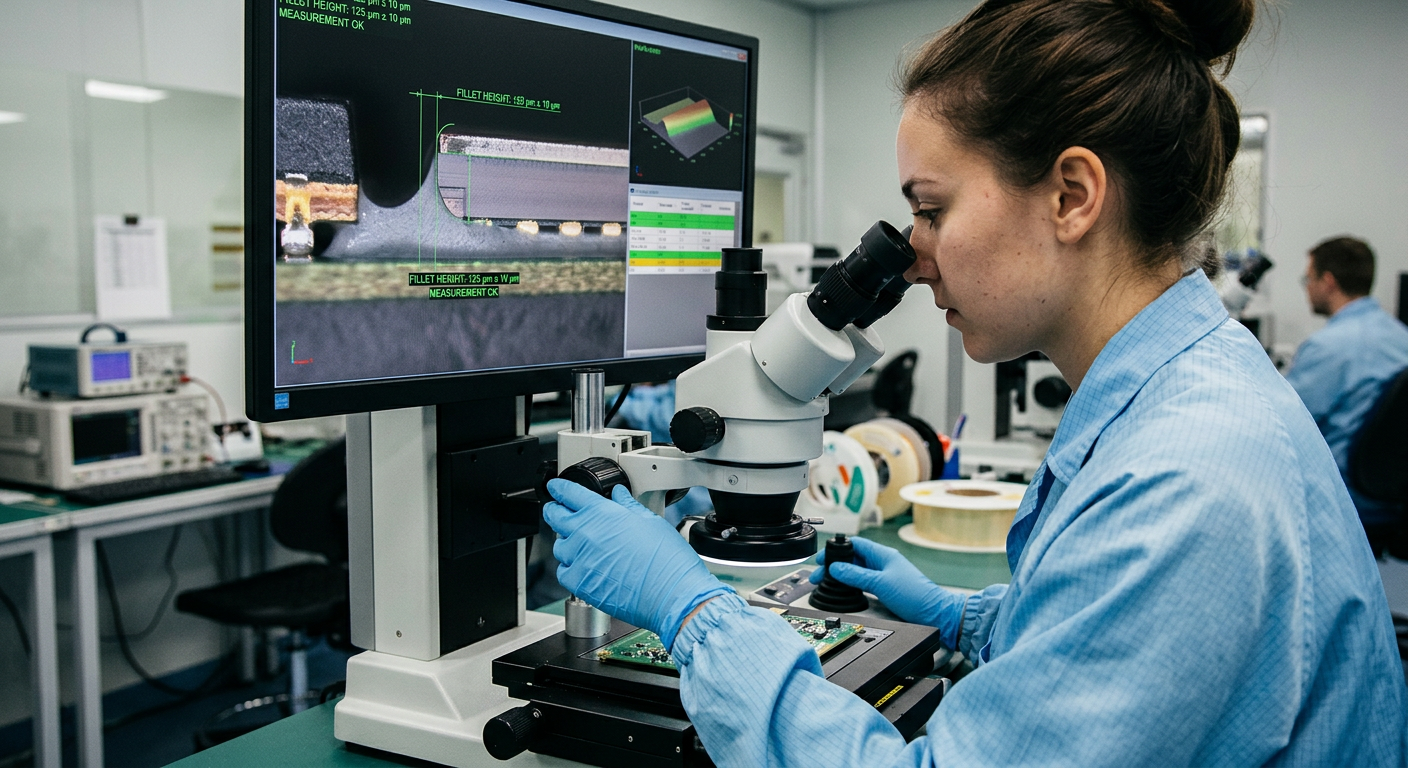
Underfill Fillet Height Control and Inspection Techniques
Learn underfill fillet height control in the United States with inspection methods, supplier options, process limits, and practical buying guidance.
-
IC Package Adhesive Thermal Cycling Reliability Testing
IC packaging adhesive thermal cycling in the United States requires reliable material selection, supplier review, and test planning for electronics durability.
-
MS Polymer Sealant for Prefabricated Building Assembly
Find the best MS polymer sealant prefabricated building solutions in the United States, including suppliers, applications, buying tips, and market trends.
 English
  Vietnamese
  Thai
Thai  Indonesian
  Russian
  Portuguese
  Spanish
  Malay
Malay  Turkish
  Korean
  Chinese