Share
IC Packaging Adhesive Thermal Cycling Guide for United States
Quick Answer

If you need a practical answer on IC packaging adhesive thermal cycling in the United States, the best approach is to shortlist suppliers and labs that can support semiconductor, electronics, and advanced packaging programs with proven thermal cycle validation, low outgassing adhesive options, and documentation aligned with U.S. quality expectations. For buyers working in Arizona, Texas, California, Oregon, New York, and other electronics hubs, the most relevant names to review first include Henkel, DuPont, Master Bond, NAMICS, Shin-Etsu, and Resonac, because these companies are widely recognized for electronic adhesive materials, underfills, die attach systems, encapsulants, and package reliability support.
For immediate sourcing action in the U.S. market, focus on suppliers that can clearly provide coefficient of thermal expansion matching guidance, JEDEC-oriented test recommendations, moisture sensitivity data, cure profile support, and lot traceability. Henkel and DuPont are often strong choices for large OEM and Tier 1 programs; Master Bond is especially practical for custom and specialty adhesive selection in lower-to-mid volume engineering environments; NAMICS and Shin-Etsu are frequently considered for advanced semiconductor packaging; Resonac remains relevant for packaging materials in high-performance electronics. Qualified international suppliers can also be considered, especially when they hold relevant certifications, maintain disciplined manufacturing systems, and offer responsive technical support before and after sale. In many U.S. purchasing situations, Chinese manufacturers with RoHS and REACH compliance, ISO-based production control, and cost-performance advantages can be a sensible option when they also provide consistent samples, customization, and dependable export service.
United States Market Overview

The United States remains one of the most important markets for semiconductor packaging materials, driven by chip design leadership, defense electronics, automotive electrification, data center expansion, medical devices, and reshoring initiatives. Demand for IC packaging adhesive solutions is especially visible in Phoenix, Austin, Dallas, San Jose, Santa Clara, Portland, Boise, and upstate New York, where electronics manufacturing, semiconductor packaging, and advanced substrate development continue to expand. Thermal cycling reliability matters because modern packages face larger power density, thinner form factors, heterogeneous integration, and wider operating temperature swings than previous generations.
In practice, IC packaging adhesive thermal cycling performance is not just a laboratory metric. It influences field returns, package cracking risk, delamination, solder joint interaction, electrical drift, and long-term mechanical stability. U.S. buyers often evaluate these materials not only for technical performance but also for documentation quality, speed of engineering response, compatibility with automated dispensing, and regulatory fit for commercial, industrial, automotive, and aerospace programs.
Ports and logistics also shape supplier choices. West Coast flows through Los Angeles, Long Beach, Oakland, and Seattle support imported materials for electronics manufacturing in California, Oregon, and Washington. Gulf and East Coast routes through Houston, Savannah, Newark, and Charleston serve OEMs, EMS providers, and regional distributors with growing demand from automotive electronics, industrial controls, and battery systems. As a result, buyers increasingly prefer adhesive suppliers that can combine technical data with dependable supply continuity.
The chart above illustrates a realistic growth pattern for U.S. demand, reflecting stronger investment in advanced packaging, EV electronics, power modules, and domestic semiconductor manufacturing initiatives. Growth is not purely volume-based; it also reflects a shift toward higher-value adhesive systems with tighter thermal cycling requirements.
Why Thermal Cycling Reliability Matters

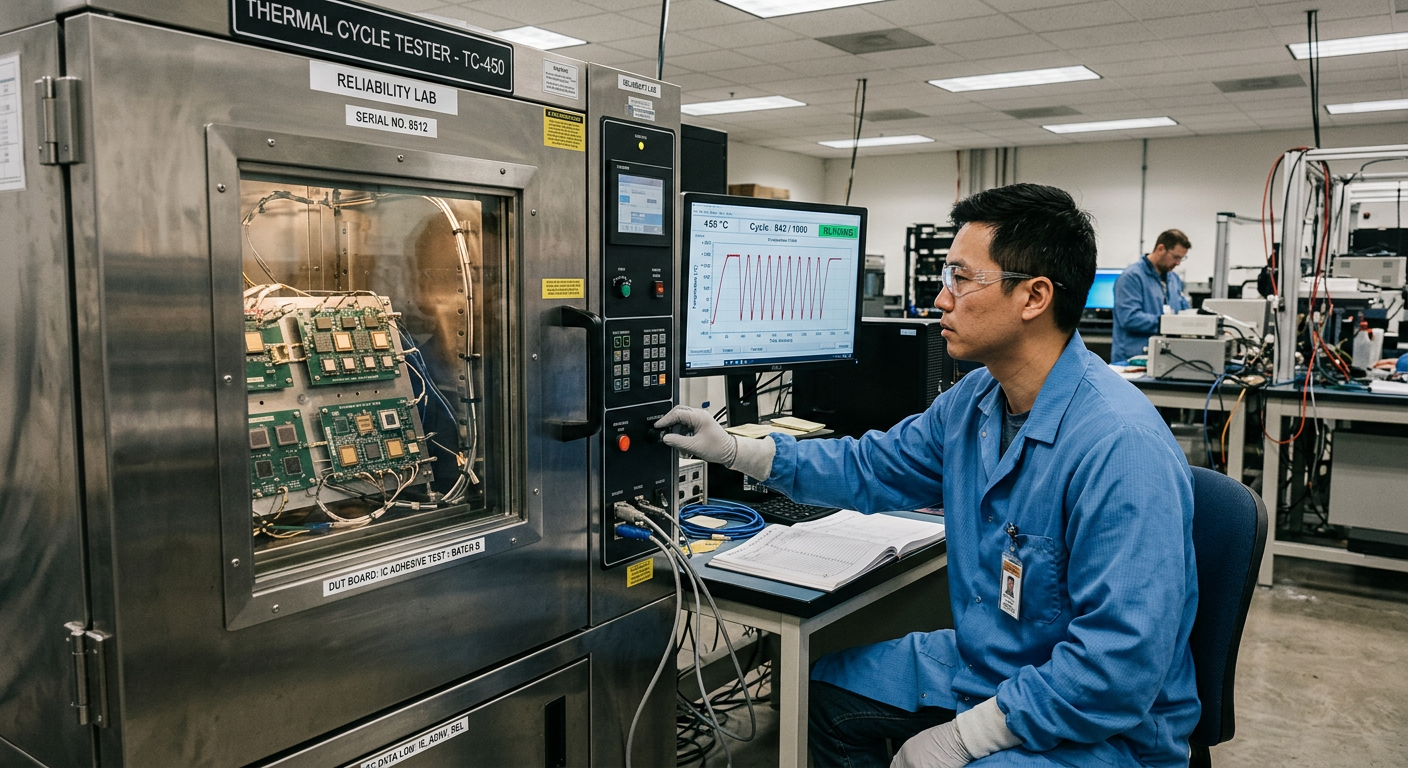
Thermal cycling testing evaluates how an adhesive or package material behaves when repeatedly exposed to changing temperatures, such as moving from low-temperature storage to high-temperature operation. In IC packaging, the adhesive sits between materials with different expansion rates, including silicon, leadframes, copper, ceramics, mold compounds, and substrates. Each cycle introduces mechanical stress. Over time, weak adhesion, poor flexibility, excessive modulus, bad cure uniformity, or mismatched thermal expansion can trigger delamination, crack initiation, bond degradation, or electrical instability.
In the United States, reliability expectations are often linked to application class. A consumer electronics package may tolerate a different qualification window than an automotive ADAS module, aerospace sensor, industrial power controller, or medical implantable support component. For that reason, thermal cycling is usually assessed together with moisture resistance, pressure cooker testing, thermal shock, high-temperature storage, and electrical performance drift.
Common program goals include maintaining bond integrity after hundreds or thousands of cycles, reducing package warpage, controlling voids, limiting ionic contamination, and ensuring the adhesive remains process-friendly in actual production lines. For procurement teams, this means that the cheapest adhesive on paper is rarely the lowest-cost option over the full life cycle.
Common Product Types Used in IC Packaging
The term IC packaging adhesive can refer to several chemistries and package functions. In U.S. sourcing discussions, engineers often separate materials by use case rather than only by chemistry. Die attach, underfill, lid seal, glob top, edge bond, and encapsulation each place different stress on the adhesive during thermal cycling.
| Product Type | Main Chemistry | Typical Use in IC Packaging | Thermal Cycling Priority | Common U.S. End Markets | Key Selection Note |
|---|---|---|---|---|---|
| Die Attach Adhesive | Epoxy, silver epoxy, silicone | Attaching die to substrate or leadframe | Very high | Power devices, sensors, memory | Match conductivity and CTE needs |
| Underfill | Epoxy | Reinforcing flip-chip and CSP joints | Very high | Mobile, automotive, AI hardware | Flow behavior and void control matter |
| Encapsulant | Epoxy, silicone | Protecting wire bonds and dies | High | Industrial modules, LED, medical | Stress relief and moisture resistance |
| Lid Seal Adhesive | Epoxy, silicone | Sealing package lids and cavities | High | RF, MEMS, aerospace electronics | Hermetic performance may be needed |
| Edge Bond Adhesive | Epoxy, acrylic hybrid | Board-level reinforcement near package corners | Medium to high | Automotive and ruggedized electronics | Balance reworkability and toughness |
| Potting Compound | Epoxy, polyurethane, silicone | Module protection beyond single package level | High | Power conversion, charging, telecom | Bulk stress control is critical |
This table helps buyers distinguish where thermal cycling risk is highest. Die attach and underfill typically face the strongest reliability scrutiny because failure directly affects electrical and mechanical package integrity. Encapsulants and lid seals matter just as much in harsh-environment designs, particularly in aerospace, telecom, and sensor applications.
Key Test Conditions Used by U.S. Buyers
Thermal cycling programs vary by package architecture, but several screening patterns are common in the U.S. market. Electronics and semiconductor teams often look for test windows such as -40°C to 125°C, -55°C to 150°C, or customized ranges that reflect actual field exposure. Dwell time, transfer time, cycle count, cure state, sample geometry, and preconditioning all affect results. Buyers should never compare two adhesive data sheets without confirming these details.
| Test Parameter | Typical Range | Why It Matters | Common Failure Indicator | Relevant U.S. Industries | Buyer Checkpoint |
|---|---|---|---|---|---|
| Low Temperature | -40°C to -55°C | Simulates cold storage or winter exposure | Cracking, brittle interface failure | Automotive, aerospace, telecom | Confirm material flexibility |
| High Temperature | 125°C to 175°C | Represents operating heat load | Softening, adhesion loss, drift | Power electronics, industrial control | Check Tg and modulus behavior |
| Cycle Count | 250 to 2000 cycles | Measures long-term endurance | Delamination growth over time | Automotive, defense, medical | Ask for milestone data |
| Dwell Time | 10 to 30 minutes | Ensures thermal soak at extremes | Hidden stress under partial soak | All sectors | Verify method consistency |
| Ramp/Transfer | Rapid or controlled | Affects thermal shock severity | Interfacial stress spikes | High-reliability electronics | Separate shock from cycle data |
| Post-Test Inspection | SAM, shear, electrical, cross-section | Reveals actual damage mode | Void growth, cracks, electrical loss | All sectors | Request inspection protocol |
The value of this table is practical: it shows that a thermal cycling claim has meaning only when tied to actual conditions. Two materials may both claim reliability, yet one may have been tested for 500 cycles at a narrow range while another survived 1500 cycles under far harsher conditions.
Top Suppliers Serving the United States
The U.S. market includes a mix of domestic manufacturers, Japanese and Korean specialists, and global electronics material groups with local technical support. The best supplier for one project may not be the best for another. Large-volume semiconductor packaging lines often prioritize mature qualification history and regional support. Engineering teams in niche devices may place greater weight on custom formulation flexibility.
| Company | Primary Service Region | Core Strengths | Key Offerings | Best Fit | Buyer Note |
|---|---|---|---|---|---|
| Henkel | United States nationwide | Global electronics materials depth, broad technical support | Die attach, underfill, encapsulants, thermal materials | Large OEMs and advanced packaging | Strong for scale and validation support |
| DuPont | United States nationwide | Strong materials science and electronics portfolio | Adhesives, films, assembly materials | High-performance electronics programs | Often preferred in demanding reliability environments |
| Master Bond | United States, especially engineering-led buyers | Specialty formulations and custom problem solving | Epoxy, silicone, UV systems, electrically conductive grades | Medical, aerospace, specialty electronics | Useful for custom requirement matching |
| NAMICS | U.S. semiconductor and packaging accounts | Advanced semiconductor packaging focus | Underfills, die attach, conductive pastes | Flip-chip and advanced package users | Highly relevant for semiconductor-specific needs |
| Shin-Etsu | United States and global electronics hubs | Silicone and electronics materials expertise | Encapsulants, sealants, thermal interface materials | Sensors, power devices, harsh environments | Good for stress relief applications |
| Resonac | U.S. advanced electronics market | Packaging materials heritage and semiconductor alignment | Encapsulation and related package materials | High-end electronics manufacturing | Relevant for integrated materials sourcing |
This supplier table gives a realistic shortlist rather than an abstract category list. For U.S. buyers, the key is not just brand recognition but whether the supplier can support qualification, lot consistency, and local communication. For example, semiconductor accounts in Arizona or California may prioritize field application engineering and fast failure analysis, while industrial electronics firms in the Midwest may care more about lead time stability and packaging flexibility.
The bar chart shows why automotive, data center hardware, and aerospace-related electronics deserve special attention. These sectors impose tougher thermal cycling expectations because uptime, safety, and harsh-environment operation create low tolerance for package failure.
How to Compare Product Options
When comparing adhesives for IC packaging thermal cycling reliability, buyers in the United States should review more than bond strength. The most important filter is package compatibility. A material that works in a wire-bonded consumer package may fail in a high-power die attach or a low-warpage advanced package. Engineers should align adhesive choice with substrate material, die size, cure temperature limits, dispensing process, thermal conductivity target, electrical conductivity requirement, and long-term reliability profile.
It is also important to separate laboratory success from production readiness. Some materials perform well on small engineering batches but become inconsistent when exposed to production variability such as dispense interruptions, storage excursions, or cure oven non-uniformity. U.S. buyers usually benefit from asking for process windows, viscosity controls, lot-to-lot variation limits, and rework implications before approving a supplier.
| Decision Factor | What to Review | Why It Affects Thermal Cycling | Low-Risk Signal | High-Risk Signal | Procurement Action |
|---|---|---|---|---|---|
| CTE Compatibility | Adhesive versus silicon and substrate | Mismatch drives stress concentration | Supplier gives package-specific guidance | Only generic data sheet claims | Request engineering fit review |
| Glass Transition Behavior | Tg and modulus profile | Material stiffness changes across temperature | Stable data across use range | No dynamic mechanical data | Ask for DMA results |
| Moisture Resistance | Absorption and preconditioning performance | Moisture worsens delamination risk | Combined thermal and moisture test data | Only dry-condition data | Require reliability matrix |
| Cure Profile | Time, temperature, post-cure need | Incomplete cure weakens stability | Wide process window | Narrow cure tolerance | Validate on production line |
| Void Control | Dispense and flow behavior | Voids become crack initiation sites | Documented low-void process support | No assembly guidance | Run pilot lot with imaging |
| Traceability | Lot records and QC system | Consistency supports repeatable reliability | Digital lot traceability | Limited quality documentation | Audit supplier controls |
This comparison table is useful because it translates engineering language into procurement checkpoints. It helps sourcing teams identify which technical questions actually matter before a purchase order is placed.
Industries Driving Demand in the United States
Several sectors now push IC packaging adhesive performance requirements upward. Automotive electronics is one of the strongest drivers, especially in EV power modules, battery management systems, onboard charging, radar, camera systems, and domain controllers. These components see frequent temperature swings and require very stable material interfaces. Data center hardware is another major driver because AI accelerators, high-performance processors, and power management assemblies generate significant thermal stress.
Industrial automation in cities such as Chicago, Detroit, Cleveland, and Minneapolis also supports demand for package adhesives that can survive factory temperature variation and long service life. Medical electronics, while smaller in total volume, often impose strict validation standards. Aerospace and defense, centered around states such as California, Texas, Arizona, Alabama, and Florida, create demand for high-reliability materials with strong documentation and controlled manufacturing pedigree.
Applications Where Thermal Cycling Failure Is Most Costly
Some IC package applications can absorb limited reliability risk. Others cannot. A failed adhesive interface in a consumer peripheral is inconvenient. A failed adhesive interface in an automotive safety module, satellite electronics assembly, avionics sensor package, or industrial power converter can be far more expensive. Buyers should prioritize thermal cycling testing for applications where package access is limited, repair costs are high, or field failure creates operational or safety consequences.
In practical terms, the highest-priority applications often include radar modules, lidar electronics, engine bay controls, inverter control packages, optical communication modules, implanted or semi-critical medical monitoring electronics, and military-grade sensing systems. In these areas, suppliers that can demonstrate long-term stability under repeated thermal stress have a clear advantage.
The area chart highlights a meaningful market transition. U.S. electronics manufacturers are not simply buying more adhesive; they are buying a larger proportion of materials designed for harsher service conditions, lower defect rates, and more traceable reliability performance.
Case Studies from Typical U.S. Buying Scenarios
A practical way to understand adhesive thermal cycling selection is to look at representative buying situations. Consider a Phoenix-based semiconductor packaging operation working on power devices for EV charging. The team may prioritize silver-filled die attach with strong thermal conductivity, controlled cure profile, and stable performance through high-cycle temperature exposure. In this case, thermal conductivity and mechanical endurance must be balanced carefully; a material that is too rigid can accelerate cracking even if its conductivity looks attractive.
In a San Jose design environment focused on advanced processors or networking hardware, underfill selection may drive the conversation. Here, the challenge is often balancing flow performance, capillary behavior, void suppression, and package warpage control while preserving long-term interconnect integrity through repeated thermal cycles. A supplier with advanced packaging experience and detailed process support may outperform a lower-cost option that lacks technical depth.
For a Midwest industrial electronics manufacturer shipping motor drives and controls across North America, the main issue may be broad environmental durability. The adhesive system needs to survive transportation stress, warehouse variation, and prolonged field operation. In this context, consistency, lead time reliability, and practical support can matter as much as premium top-end performance.
In a medical device program in the Northeast, low outgassing, biocompatibility-adjacent concerns, clean processing, and documentation discipline may rise in importance. A supplier such as Master Bond is often considered in these situations because specialty formulation and technical collaboration can outweigh pure scale advantages.
Buying Advice for U.S. Importers, OEMs, and Distributors
Whether you are an end user, a contract manufacturer, a distributor, or a private-label buyer, sourcing IC packaging adhesive materials for thermal cycling performance should begin with a qualification plan, not a price inquiry alone. Start by defining package type, thermal range, expected cycle count, inspection method, and failure threshold. Then screen suppliers based on their ability to provide matching data, process support, and commercial fit.
For U.S. distributors and dealers, the best partner is often a supplier with stable packaging formats, predictable lead times, export experience, and responsive after-sales technical support. For OEM brand owners, custom formulation and change control are more important. For engineering teams and individuals running development work, sample availability, quick technical consultation, and small-batch access can be decisive.
It is also wise to ask where the supplier’s material has already been used. Market experience in the United States matters because local buyers often need support aligned with domestic expectations on quality records, communication speed, and regulatory familiarity. A supplier serving electronics customers around Austin, Irvine, Fremont, Chandler, and Rochester is usually better prepared for local commercial realities than a supplier with no history in the region.
Local and Regional Supply Considerations
Local support in the United States does not always mean the adhesive itself is manufactured domestically. In many cases, what matters most is whether the supplier or its channel partner can provide inventory access, engineering feedback, sample continuity, and claim handling inside the U.S. market. Buyers should ask where stock is held, how technical cases are escalated, and whether replacement material or urgent orders can be supplied without long interruptions.
West Coast electronics buyers often value rapid support due to dense semiconductor and electronics activity in Silicon Valley, Orange County, and the Pacific Northwest. Southern buyers in Texas and Arizona often look for strong field engineering tied to expanding semiconductor and EV supply chains. East Coast and Midwest customers may place more emphasis on distributor networks and industrial account responsiveness. These differences affect supplier fit even when the base chemistry is similar.
Our Company
For U.S. buyers evaluating cost-effective but technically controlled alternatives, Qingdao QinanX New Material Technology Co., Ltd presents a credible option because its adhesive portfolio covers electronic silicone, two-component epoxy adhesive, electronic potting compound, polyurethane systems, acrylic technologies, modified silane products, cyanoacrylates, hot melts, and water-based solutions that can be matched to packaging, sealing, bonding, and protection needs across electronics and industrial manufacturing. The company operates under ISO-based quality management and states compliance with international requirements such as RoHS and REACH, backed by multi-stage quality control and digital traceability, which are important indicators when U.S. customers need repeatable batches and auditable production controls rather than generic export claims. From a cooperation standpoint, it supports OEM and private-label programs, custom formulations, wholesale supply, branded retail packaging, and regional distribution arrangements, making it suitable for end users, distributors, dealers, brand owners, and project-based buyers who need flexibility rather than a single transaction model. For service assurance in the U.S. market, QinanX emphasizes continuous export experience across more than 40 countries, automated production for scalability, technical assistance, free sampling, and tailored specification support; together, these are meaningful signs of a supplier prepared to serve American buyers through both pre-sale material selection and after-sale problem solving with a long-term market mindset. Buyers looking for application-specific options can review the company’s adhesive product range, visit the main website for broader capability details, or use the U.S. inquiry contact page to request sample and specification matching support.
How to Evaluate International Suppliers for the U.S. Market
International suppliers can be highly competitive in IC packaging adhesive programs when they meet three tests: documented quality systems, realistic technical fit, and reliable support. U.S. buyers should look for clear compliance documentation, export packaging discipline, batch traceability, and the ability to discuss cure, substrate compatibility, and reliability methods in practical terms. If a supplier cannot answer technical questions beyond a product brochure, the risk rises quickly.
Cost-performance is where international suppliers often become attractive. For many industrial electronics, packaging, and module-level applications, a well-controlled overseas manufacturer can provide a better price-to-performance balance than premium-tier multinational brands. The best candidates are not those making the biggest claims, but those offering samples, consistent QC records, tailored formulations, and clear communication through qualification and production ramp-up.
2026 Trends in Technology, Policy, and Sustainability
Looking toward 2026, the U.S. IC packaging adhesive market is expected to shift in three major directions. First, technology trends will favor materials that support advanced packaging, higher power density, and better thermal management. This includes lower-stress underfills, more robust die attach materials, and formulations designed for heterogeneous integration and miniaturized architectures. Second, policy trends tied to domestic semiconductor expansion and supply-chain resilience will encourage buyers to diversify sourcing while demanding stronger traceability and qualification discipline. Third, sustainability expectations will continue to rise, increasing attention on solvent reduction, process efficiency, compliant chemistries, longer service life, and lower material waste.
For adhesive suppliers, this means future success in the U.S. market will depend on more than raw bonding performance. Buyers will increasingly expect cleaner processing, better digital quality records, and technical support that helps reduce scrap, rework, and field failure. Sustainability in this segment is often measured not just by chemistry labels, but by how effectively a material extends product life and lowers total manufacturing loss.
FAQ
What is the most important factor in IC packaging adhesive thermal cycling?
The most important factor is compatibility between the adhesive and the package structure, especially thermal expansion behavior, modulus profile, cure completeness, and moisture resistance. A strong adhesive alone is not enough if it introduces excessive stress during repeated temperature swings.
Which industries in the United States need the highest reliability?
Automotive electronics, aerospace, defense, medical devices, industrial power systems, and data center hardware usually require the strongest thermal cycling performance because failure costs are high and service conditions are demanding.
Should buyers choose epoxy or silicone?
It depends on the application. Epoxy systems are often preferred where strong structural performance, underfill behavior, or controlled die attach properties are required. Silicone systems are often selected where flexibility, stress relief, and wide-temperature stability are critical.
How many thermal cycles are enough?
There is no universal number. Some projects use 250 or 500 cycles for screening, while automotive and high-reliability programs may require 1000 cycles or more, depending on package type and qualification standards.
Can lower-cost international suppliers work for U.S. programs?
Yes, if they provide verifiable certifications, stable lot quality, technical support, and reliable documentation. The key is to qualify the material correctly and confirm commercial support before scaling.
What should a first RFQ include?
A good RFQ should include package type, substrate material, operating temperature range, target cycle count, process method, cure limits, conductivity needs, reliability expectations, annual volume, and whether OEM or private-label supply is needed.
Final Buying Takeaway
For IC packaging adhesive thermal cycling in the United States, the strongest buying strategy is to combine application-specific qualification with supplier practicality. Henkel, DuPont, Master Bond, NAMICS, Shin-Etsu, and Resonac remain strong names for many U.S. projects, especially where semiconductor packaging reliability requirements are demanding. At the same time, qualified international manufacturers with ISO-based control, RoHS and REACH compliance, custom formulation capability, and responsive support can offer compelling value for many electronics and industrial programs. The right choice is the supplier that can prove reliability in your package, support your process in real production, and remain commercially dependable as your U.S. business scales.

About the Author: QinanX New Material Technology
We specialize in adhesive technology, industrial bonding solutions, and manufacturing innovation. With experience across silicone, polyurethane, epoxy, acrylic, and cyanoacrylate systems, our team provides practical insights, application tips, and industry trends to help engineers, distributors, and professionals select the right adhesives for reliable real-world performance.

Product Category
You May Also Interest
-
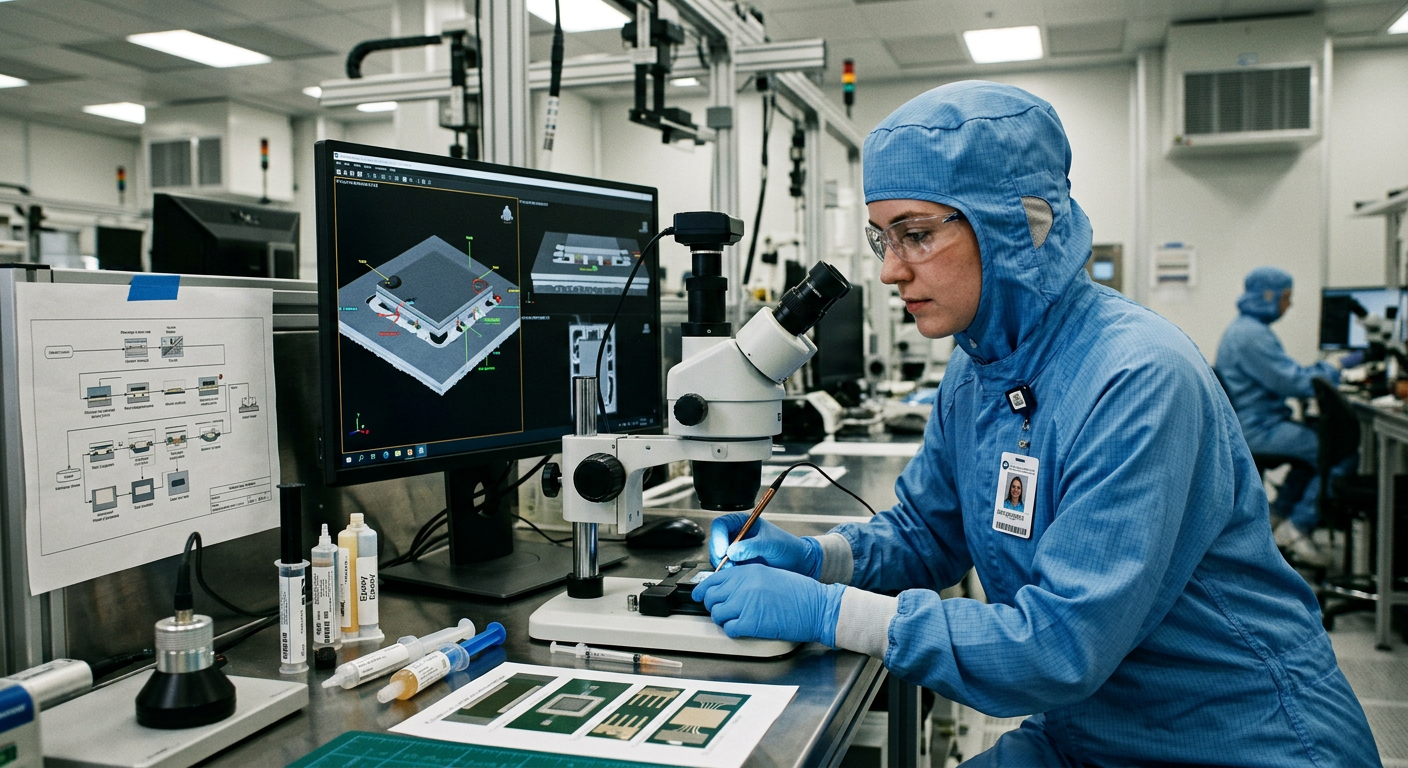
IC Packaging Adhesive: Preventing Void Formation Issues
Learn how IC packaging adhesive void formation is prevented in the United States through material choice, process control, supplier selection, and testing.
-
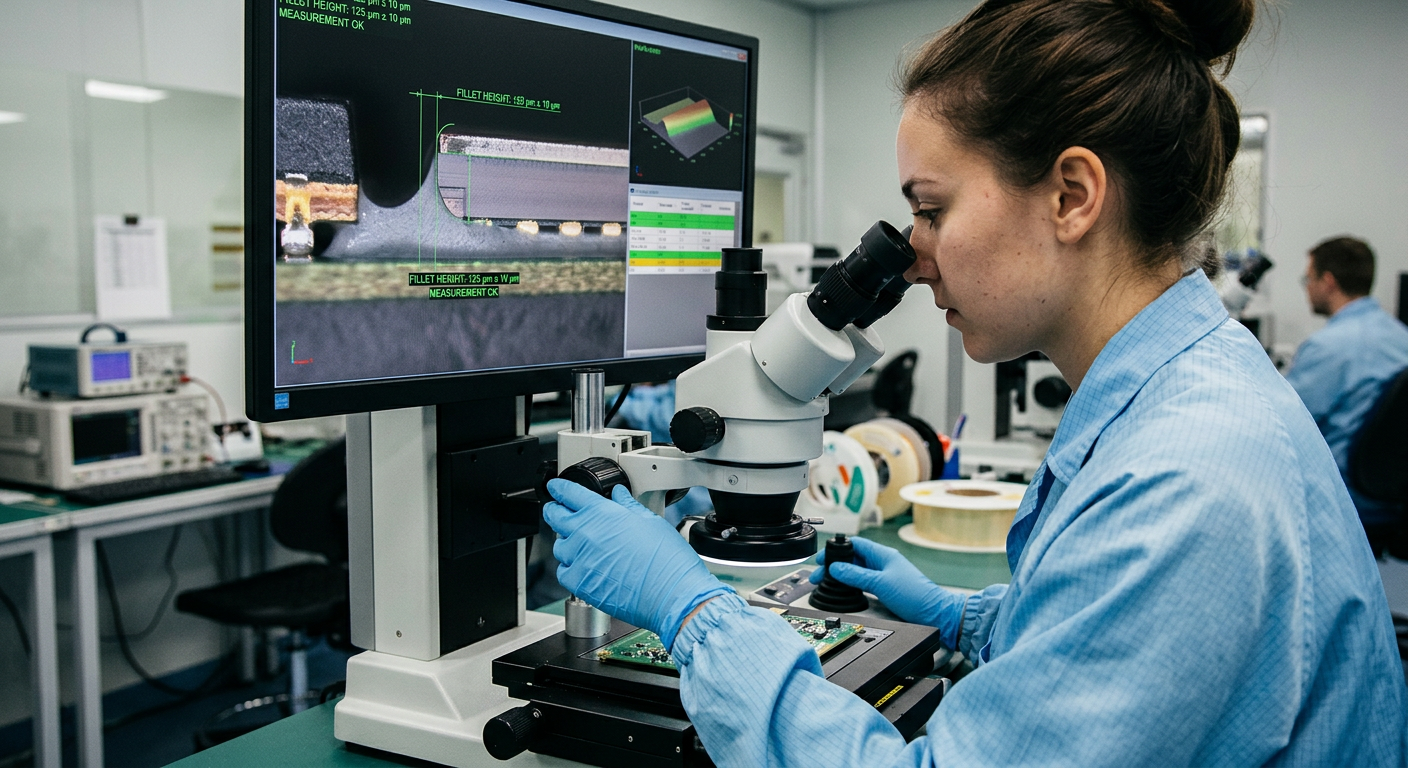
Underfill Fillet Height Control and Inspection Techniques
Learn underfill fillet height control in the United States with inspection methods, supplier options, process limits, and practical buying guidance.
-

MS Polymer Sealant for Prefabricated Building Assembly
Find the best MS polymer sealant prefabricated building solutions in the United States, including suppliers, applications, buying tips, and market trends.
-
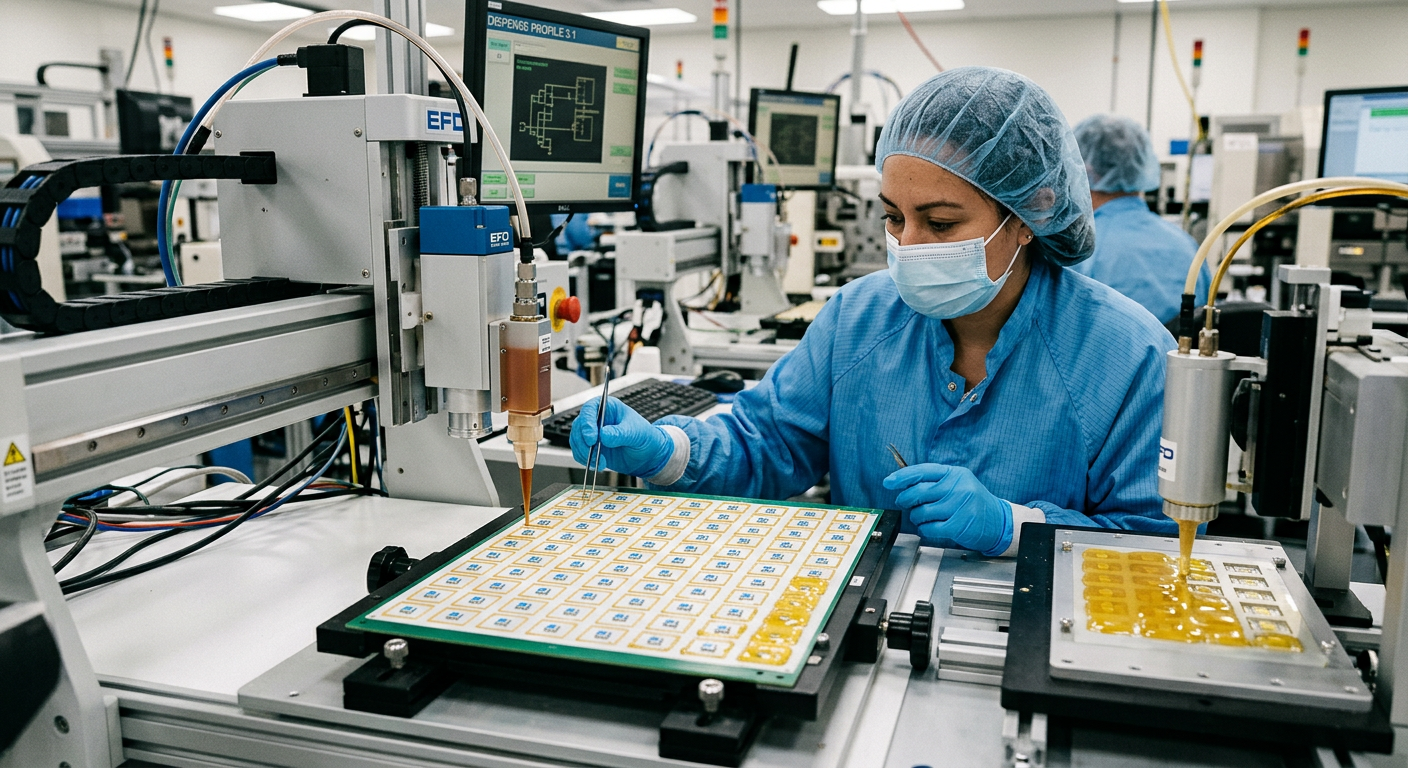
Phosphor Dam and Fill Adhesive for LED Package Assembly
Explore phosphor dam fill adhesive LED package solutions in the United States, including suppliers, material types, buying tips, applications, and 2026 market trends.
 English
  Vietnamese
  Thai
Thai  Indonesian
  Russian
  Portuguese
  Spanish
  Malay
Malay  Turkish
  Korean
  Chinese