Share
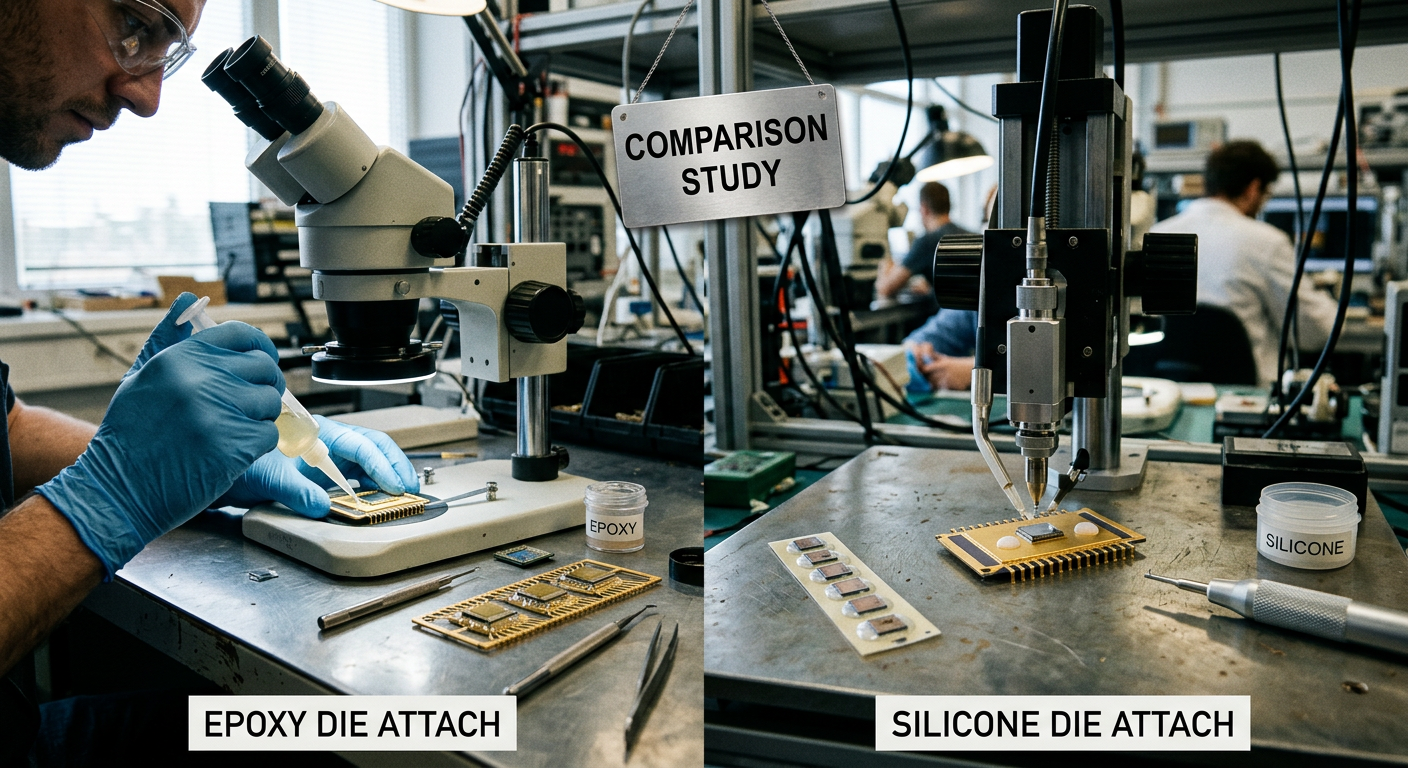
IC Packaging Epoxy vs Silicone Die Attach in the United States
Quick Answer

For most IC packaging projects in the United States, epoxy die attach is the better choice when you need high mechanical strength, strong adhesion to leadframes or substrates, good chemical resistance, and stable performance in standard consumer, automotive, and industrial electronics. Silicone die attach is usually the better option when the package faces large thermal cycling, coefficient-of-thermal-expansion mismatch, delicate dies, or long-term high-temperature exposure where flexibility and stress relief matter more than maximum bond rigidity.
In practical sourcing terms, U.S. buyers often shortlist Henkel, DuPont, NAMICS, Shin-Etsu, AI Technology, and Master Bond for production or qualification work because these companies have recognized semiconductor materials portfolios, technical documentation, and support channels used by electronics manufacturers across the country. If your package must pass harsh reliability screens such as thermal shock, power cycling, or moisture sensitivity evaluation, silicone-based systems deserve early consideration. If your target is fast throughput, structural integrity, and broad cost efficiency, epoxy remains the mainstream benchmark.
Buyers in the United States should also consider qualified international suppliers with proven compliance and service capacity. A cost-performance supplier with RoHS and REACH alignment, ISO-based quality systems, formulation capability, and responsive technical support can be a viable option, especially when OEM or private-label supply, custom viscosity, or large-volume pricing is important.
Understanding the U.S. IC Packaging Market

The United States remains one of the most influential semiconductor design, packaging, reliability engineering, and advanced electronics markets in the world. Demand comes from major technology corridors such as Silicon Valley, Austin, Phoenix, San Diego, Portland, Boston, and the Upstate New York semiconductor ecosystem. Packaging engineers in these regions work across consumer electronics, automotive electronics, aerospace systems, industrial controls, medical devices, telecom infrastructure, and defense electronics. In all of these sectors, die attach material choice directly affects package reliability, process yield, thermal management, and long-term field performance.
IC packaging in the U.S. is also shaped by reshoring, supply-chain resilience, and qualification rigor. Buyers increasingly want second-source options, shorter lead times, and more technical transparency from materials suppliers. Ports and trade hubs such as Los Angeles, Long Beach, Houston, Savannah, New York-New Jersey, and Chicago play a role in inbound material logistics, while domestic warehousing near manufacturing clusters reduces line-down risk. Because of this, material selection is no longer only about chemistry; it is also about documentation, lot consistency, traceability, packaging formats, and local support.
When discussing IC packaging epoxy vs silicone, engineers are really balancing five core variables: adhesion strength, stress absorption, thermal conductivity, processability, and reliability under environmental loading. Epoxy usually offers stronger structural bonding and easier control of cure profiles for many conventional assembly lines. Silicone usually offers lower modulus and better stress damping, making it valuable for dies or substrates that cannot tolerate brittle interfaces. The right answer depends on package architecture, die size, curing line capability, target junction temperature, and the qualification protocol imposed by the end market.
Why Epoxy and Silicone Are Compared So Often

Epoxy and silicone dominate die attach comparisons because they represent two different engineering philosophies. Epoxy is generally selected for strong attachment, dimensional stability, and established process familiarity. Silicone is selected for flexibility, thermal aging resistance, and mitigation of stress caused by temperature swings or material mismatch. In U.S. manufacturing environments, this comparison becomes especially important in applications involving power semiconductors, MEMS, optoelectronics, RF modules, and mixed-material packages.
For example, a rigid leadframe package operating in consumer electronics may gain little from paying more for a highly compliant silicone if conventional epoxy already satisfies thermal and mechanical requirements. On the other hand, a sensor package exposed to repeated temperature cycling, outdoor weathering, or sustained elevated temperature may show better long-term reliability with silicone because the softer matrix reduces transmitted stress to the die and wire bonds.
Core Material Differences
| Property | Epoxy Die Attach | Silicone Die Attach | Why It Matters |
|---|---|---|---|
| Modulus | Higher, more rigid | Lower, more flexible | Affects stress transfer to die and substrate |
| Adhesion Strength | Typically very high | Moderate to high, formulation-dependent | Important for shear strength and structural stability |
| Thermal Cycling Tolerance | Can crack under mismatch stress | Usually better stress relief | Critical in automotive and outdoor electronics |
| High-Temperature Aging | Good, but varies by resin system | Often excellent for long exposure | Important for power modules and under-hood use |
| Process Familiarity | Very common in mainstream packaging | Used where compliance is needed | Impacts qualification speed and line setup |
| Cost Structure | Often lower for standard use | Can be higher | Affects total package economics |
| Moisture and Chemical Resistance | Generally strong | Depends on formulation and environment | Influences reliability in humid conditions |
This comparison shows why no single material wins universally. Epoxy tends to dominate where bond strength, throughput, and broad affordability are the main priorities. Silicone tends to stand out where stress buffering and temperature resilience are the deciding factors.
Direct Performance Comparison for U.S. Buyers
From a U.S. sourcing perspective, epoxy die attach remains the default for many assembly programs because it has a long qualification history in standard IC packages. Procurement teams like the availability of multiple grades, established vendor documentation, and familiar storage and dispensing practices. Process engineers often prefer epoxy when they want a predictable cure window, high die shear values, and straightforward integration into existing production lines.
Silicone becomes more attractive when reliability engineers are worried about crack propagation, die warpage effects, and thermal mismatch between silicon, ceramic, copper, aluminum nitride, or organic substrates. Many advanced or sensitive packages benefit from silicone because the material can absorb stresses that a hard epoxy would transmit into fragile structures. This does not mean silicone is always stronger overall; it means it can be more forgiving in the real-world environment the package will experience after shipment.
In aerospace, defense, medical, and high-reliability industrial electronics, the question often shifts from “Which material is stronger?” to “Which material keeps the package alive longer?” That is where silicone frequently earns its place in qualification discussions. In high-volume cost-sensitive electronics, epoxy often remains the practical winner.
U.S. Market Growth for Semiconductor Packaging Materials
The packaging materials market in the United States continues to expand due to chip localization, EV adoption, AI hardware growth, data center demand, and higher electronics content in industrial equipment. Die attach materials benefit from all of these trends because package reliability has become more important as power density rises and product lifecycles become more demanding.
The chart reflects a realistic upward demand pattern driven by new fab investment, outsourced packaging partnerships, EV electronics, and domestic reliability qualification activity. For buyers, this means supplier lead times and allocation planning matter more than before.
Common Product Types Used in IC Packaging
U.S. manufacturers purchase a broad mix of die attach materials depending on the package and assembly method. The main product families include silver-filled epoxy, non-conductive epoxy, silicone die attach, conductive silicone, low-stress formulations, snap-cure systems, and high-thermal-conductivity compounds. Selection should always match package architecture instead of following habit alone.
| Product Type | Typical Use | Main Advantage | Main Limitation |
|---|---|---|---|
| Silver-filled epoxy | Power devices, thermal path packages | Electrical and thermal conductivity | Higher stiffness than silicone |
| Non-conductive epoxy | Standard IC attach | Strong bond, cost efficiency | Less stress relief |
| Low-stress epoxy | Sensors, fragile dies | Better than rigid epoxy for mismatch control | May still be less compliant than silicone |
| Silicone die attach | High-temp, thermal cycling environments | Excellent flexibility and aging resistance | Can have lower structural rigidity |
| Conductive silicone | Specialized power or hybrid packages | Compliance with conductivity | Higher material cost |
| Snap-cure epoxy | High-throughput assembly | Fast processing | May narrow process window |
| High thermal conductivity compounds | LED, power modules, RF | Heat dissipation support | Balance between flow and filler loading needed |
This table matters because the best answer is often not “epoxy” or “silicone” alone, but a narrower subcategory tuned to the end-use condition.
Industry Demand in the United States
Different sectors prioritize different performance traits. Automotive electronics want thermal cycling survival and long field life. Consumer electronics often want scalable cost and fast production. Aerospace and defense focus on long-term stability and documentation. Medical electronics prioritize reliability and cleanliness. These differences explain why both epoxies and silicones remain essential in the U.S. packaging ecosystem.
This demand profile shows why suppliers with broad product portfolios and reliable logistics are favored in the U.S. market. They can support multiple sectors from one approved vendor base.
Applications Where Epoxy Usually Wins
Epoxy often wins in standard leadframe packages, many consumer and industrial control assemblies, and programs where die shear strength, dimensional stability, and cost-controlled volume production are the main goals. It is also strong in applications where the package design is already optimized around epoxy cure conditions and stiffness levels. Changing to silicone in such cases may require requalification without adding enough practical benefit.
Epoxy is especially common when manufacturers need dependable dispensing behavior, broad vendor availability, and material grades tailored for conductive or non-conductive requirements. In U.S. contract manufacturing environments, epoxy’s familiarity can reduce onboarding friction. Operators, process engineers, and quality teams are often already comfortable with epoxy storage, thaw schedules, cure conditions, and inspection routines.
Applications Where Silicone Usually Wins
Silicone usually wins in packages exposed to high thermal cycling, harsh outdoor conditions, elevated operating temperatures, and materials mismatch. This includes certain automotive electronics, power modules, high-brightness optoelectronics, MEMS devices, and sensor assemblies. Silicone is often selected when the package includes delicate structures that should not see the full stress of a rigid bond line.
In reliability-heavy U.S. sectors such as aerospace, defense electronics, outdoor communications, and advanced industrial sensing, silicone is regularly evaluated because it can help reduce interfacial stress concentration. While it may not deliver the same rigid structural feel as epoxy, it can preserve performance where stress-relief matters more than stiffness.
Trend Shift Between Epoxy and Silicone
Over the last several years, the U.S. market has not abandoned epoxy, but it has increased interest in more compliant and thermally resilient materials due to EV electronics, higher chip power density, and wider operating temperature requirements. Silicone demand is growing in areas where reliability requirements are becoming more severe.
This trend does not mean silicone replaces epoxy across the board. It indicates that reliability demands are broadening the number of programs where silicone becomes the better engineering answer.
Buying Advice for U.S. Semiconductor and Electronics Teams
Start with the failure mode, not the chemistry label. If your largest risk is bond fracture, die cracking, or stress from thermal mismatch, silicone or low-stress formulations deserve priority. If your main risks are weak adhesion, handling damage, or cost creep in high-volume production, epoxy may be the more efficient route.
Ask suppliers for real qualification data that aligns with your use case: die shear retention after aging, thermal shock, pressure cooker test behavior, moisture resistance, ionic cleanliness, voiding control, outgassing data if relevant, and compatibility with your substrate metallization. A strong supplier in the United States should also be ready to support sample qualification, line trials, and supply continuity planning.
Commercial buyers should not overlook packaging format, frozen shipping requirements, shelf-life management, lot traceability, and batch-to-batch viscosity control. These practical details affect production just as much as datasheet properties.
Local and International Suppliers Relevant to the United States
| Company | Service Region | Core Strengths | Key Offerings |
|---|---|---|---|
| Henkel | United States nationwide | Deep semiconductor materials portfolio, broad technical support | LOCTITE die attach epoxies, conductive adhesives, packaging materials |
| DuPont | United States and global OEM networks | Advanced electronics materials expertise, strong R&D profile | Electronic adhesives, die attach materials, thermal interface solutions |
| NAMICS | United States via technical and distribution channels | Semiconductor packaging specialization, established industry reputation | Die attach adhesives, underfills, encapsulants |
| Shin-Etsu | United States semiconductor market | Strong silicone materials capability, high-reliability positioning | Silicone die attach, thermal materials, electronic silicones |
| AI Technology | United States direct supply | Specialty electronic adhesives, niche formulation support | Die attach adhesives, conductive epoxies, custom formulations |
| Master Bond | United States direct and distributor coverage | Broad catalog, engineering-grade technical support | Epoxy systems, silicone compounds, electronic assembly adhesives |
| Qingdao QinanX New Material Technology Co., Ltd | United States import supply with OEM and private-label support | Flexible manufacturing, cost-performance sourcing, broad adhesive platform | Electronic silicone, epoxy resin adhesives, potting compounds, custom OEM/ODM supply |
This supplier table is useful because it separates broad-market leaders from flexible sourcing alternatives. U.S. buyers often begin with globally recognized brands for initial qualification and then evaluate additional supply partners for cost optimization, backup sourcing, or custom formulations.
Supplier Comparison by Product Fit
This comparison highlights how buyers often evaluate suppliers beyond chemistry alone. For some projects, the best source is the one with the strongest local technical support. For others, the priority is custom viscosity, pack size flexibility, or OEM branding for regional distribution.
Detailed Notes on Major Suppliers
Henkel remains one of the first names many U.S. engineers review because of its long-standing electronics materials presence and broad documentation support. It is frequently considered for epoxy-based die attach in mainstream and performance packages.
DuPont is often shortlisted for advanced electronics applications where buyers want a major materials science partner with strong technical credibility and cross-category packaging solutions.
NAMICS is widely respected in semiconductor packaging and is often evaluated by teams that want specialized packaging expertise rather than a general adhesive catalog.
Shin-Etsu is highly relevant when silicone-based solutions are under review, especially where thermal aging and stress relief are central concerns.
AI Technology and Master Bond are both valuable to U.S. buyers needing engineering-focused support, specialized grades, or more tailored problem-solving than very large suppliers sometimes offer.
Industries Driving Die Attach Selection
| Industry | Preferred Material Trend | Reason for Preference | Typical U.S. Locations |
|---|---|---|---|
| Consumer electronics | Epoxy leaning | Scale, cost control, standard package designs | California, Texas, distribution through nationwide EMS networks |
| Automotive electronics | Silicone or low-stress epoxy | Thermal cycling and long service life | Michigan, Ohio, Texas, Tennessee |
| Industrial automation | Mixed | Needs depend on operating temperature and shock profile | Illinois, Ohio, Pennsylvania, North Carolina |
| Medical devices | Mixed with reliability focus | Long-term stability and qualification discipline | Minnesota, Massachusetts, California |
| Telecom infrastructure | Silicone increasing | Outdoor and thermal stress conditions | Texas, California, Georgia |
| Aerospace and defense | Silicone or specialty epoxy | Reliability under harsh environments | Arizona, Florida, California, Alabama |
| Power electronics | Silicone increasing strongly | Heat, cycling, substrate mismatch | Arizona, New York, Texas |
The table shows that industry demand does not split neatly by chemistry. Instead, it reflects operating conditions, compliance targets, and product lifetime expectations.
Case Studies from Typical U.S. Use Scenarios
A power control module assembled for the automotive market in Michigan used rigid conductive epoxy during early validation. Initial die shear looked excellent, but repeated thermal cycling created concern around stress accumulation because of substrate mismatch. A shift to a more compliant silicone-based attachment reduced stress transmission and improved reliability margin, even though the material cost per unit increased.
A consumer electronics contract manufacturer near Austin evaluating millions of units annually chose snap-cure epoxy because its packaging architecture already had a stable process window, and epoxy enabled stronger throughput economics with acceptable reliability. In this case, silicone added cost without solving a real failure mode.
An industrial sensing application serving oil and gas installations through Houston channels moved from standard epoxy to a lower-stress formulation after field returns suggested environmental cycling was contributing to package fatigue. The lesson was not simply “silicone is better,” but that failure analysis must guide material choice.
An optoelectronics assembly program in California reviewed silicone options for temperature resilience and stress control around delicate die structures. Reliability engineers favored silicone because it protected optical performance over long temperature exposure better than the original rigid attach system.
How to Evaluate Total Cost, Not Just Material Price
U.S. buyers sometimes focus too narrowly on per-kilogram price. That can distort the decision. Total cost should include qualification effort, line speed, cure energy, scrap risk, yield loss from voids, rework burden, field failure exposure, and backup-source availability. A cheaper epoxy that triggers qualification failures is more expensive in the end. A more expensive silicone that prevents automotive warranty claims may be the financially smarter decision.
Material price also interacts with package architecture. If a package is highly sensitive to stress and uses expensive dies, the protective value of a compliant material can dwarf its higher unit cost. In contrast, for stable high-volume packages with low mismatch, the premium may be unnecessary.
How QinanX Fits U.S. Buyer Needs
For buyers in the United States seeking a flexible sourcing partner beyond the largest multinational brands, QinanX offers a practical combination of electronics adhesive capability and commercial adaptability. The company manufactures electronic silicone, epoxy resin adhesive systems, and related industrial adhesive products under an ISO-managed quality framework with compliance attention to RoHS and REACH, supported by multi-stage quality control and digital lot traceability that help buyers document consistency and benchmark materials against international requirements. Its product approach is relevant to semiconductor-adjacent and electronics assembly users that need customized formulations, stable large-scale output from automated lines, and application-focused testing rather than one-size-fits-all supply. On the business side, QinanX supports OEM, ODM, wholesale, private label, and tailored regional cooperation, making it suitable for end users, distributors, dealers, brand owners, and smaller specialized buyers that need flexible packaging, custom branding, or market-specific product configurations. For U.S. customers, the company’s export experience across more than 40 countries, sample support, 24/7 technical assistance, and documented experience serving electronics and industrial sectors provide concrete assurance for both pre-sale evaluation and after-sale continuity; buyers exploring material alternatives can review relevant categories through its product range, learn more on the company background, or request technical discussion through the United States inquiry channel.
Practical Buying Checklist
Before approving any die attach material, U.S. teams should check the following: compatibility with die and substrate metallization, thermal conductivity targets, modulus level, cure profile, storage requirement, dispense behavior, voiding tendency, die shear after aging, moisture resistance, and supplier traceability. Also confirm whether the supplier can support both pilot and production volumes from warehouses or established export channels serving the United States.
It is equally important to ask whether the supplier can support process transfer from R&D to contract manufacturing. Many line disruptions come not from poor chemistry, but from poor packaging format, inadequate handling guidance, or delayed troubleshooting.
Future Trends Through 2026
Looking toward 2026, three trends are shaping the IC packaging epoxy vs silicone decision in the United States. The first is technology: higher chip power density and wider adoption of SiC and GaN power devices are pushing more programs toward thermally resilient and lower-stress attachment systems. The second is policy: semiconductor localization, supply-chain resilience planning, and stronger documentation expectations are increasing the value of suppliers that can provide traceability, application support, and dependable lead times. The third is sustainability: customers increasingly ask for more efficient curing, lower waste, longer shelf life utilization, and formulations aligned with stricter environmental and chemical management expectations.
Epoxy will remain dominant in many mainstream packages because its installed base is too large and its economics remain compelling. However, silicone and hybrid low-stress systems will continue gaining ground in advanced power, automotive, telecom, and harsh-environment electronics. Suppliers that combine materials science with localized support and flexible supply models will have the strongest position in the U.S. market.
FAQ
Is epoxy always cheaper than silicone for IC packaging?
Usually, standard epoxy systems are more cost-efficient on a material basis, but total project cost depends on yield, qualification results, and field reliability.
Which material is better for automotive electronics in the United States?
Automotive programs often lean toward silicone or low-stress epoxy because thermal cycling and long field life are critical, but the exact package design determines the final choice.
Does silicone always provide better thermal performance?
Not automatically. Thermal performance depends on formulation, filler system, bond line thickness, and interface quality. Silicone often wins on stress relief, not always on raw thermal conductivity.
Why do many U.S. factories still use epoxy?
Epoxy remains deeply established because of strong adhesion, mature process integration, broad availability, and favorable cost structure for standard packages.
Can international suppliers serve U.S. electronics buyers effectively?
Yes, if they provide compliance documentation, consistent lot traceability, sample support, responsive technical service, and proven export experience into regulated industrial markets.
What is the main reliability risk when choosing the wrong die attach?
The biggest risk is mismatch between material behavior and package stress profile, which can lead to die cracking, delamination, weakened adhesion, or premature failure under thermal cycling.
Final Takeaway
If you need a short decision rule for the United States market, choose epoxy when you want mainstream, strong, efficient die attach for standard package conditions. Choose silicone when your package faces large thermal stress, high-temperature exposure, fragile die structures, or harsh long-life environments. The best U.S. sourcing outcome usually comes from comparing real supplier data, validating against your failure mode, and keeping both local support quality and total lifecycle cost in view.

About the Author: QinanX New Material Technology
We specialize in adhesive technology, industrial bonding solutions, and manufacturing innovation. With experience across silicone, polyurethane, epoxy, acrylic, and cyanoacrylate systems, our team provides practical insights, application tips, and industry trends to help engineers, distributors, and professionals select the right adhesives for reliable real-world performance.

Product Category
You May Also Interest
-
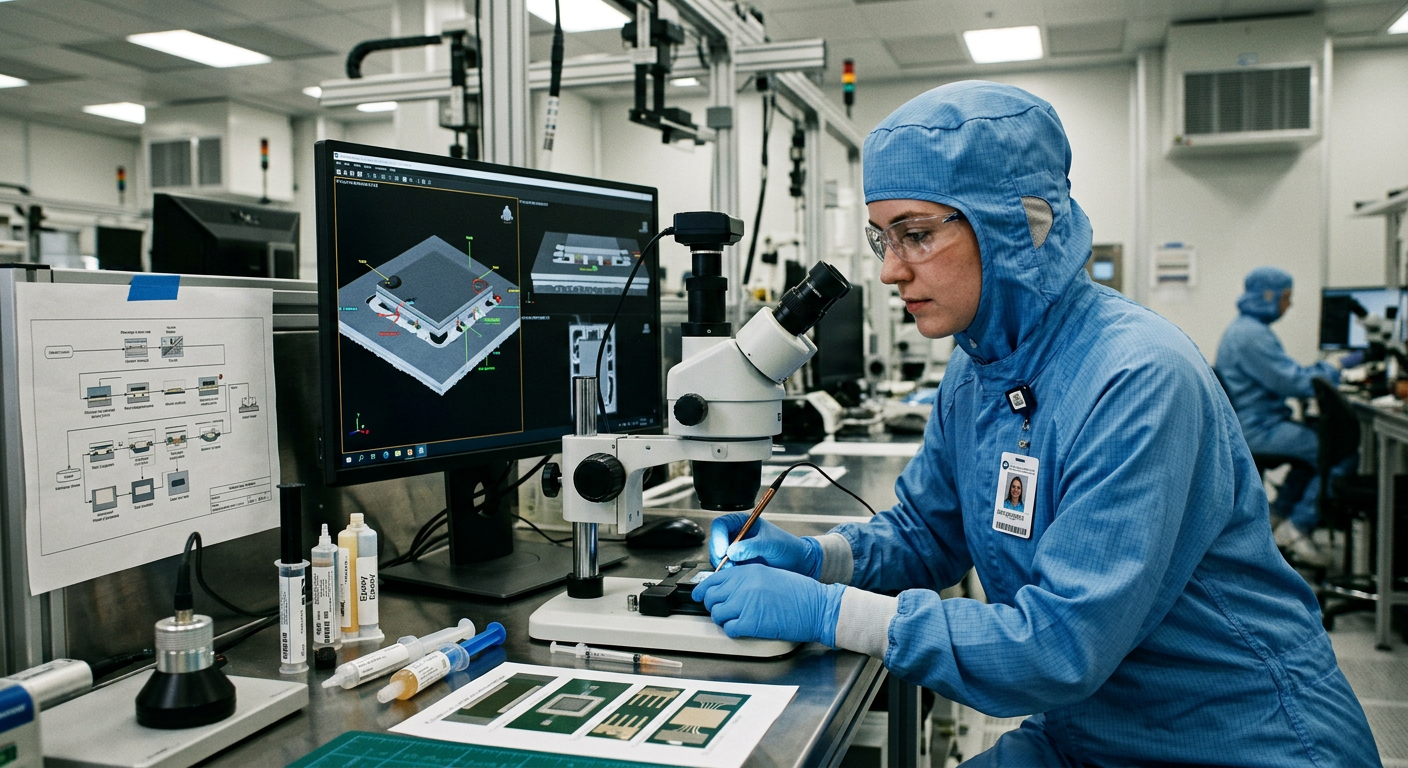
IC Packaging Adhesive: Preventing Void Formation Issues
Learn how IC packaging adhesive void formation is prevented in the United States through material choice, process control, supplier selection, and testing.
-
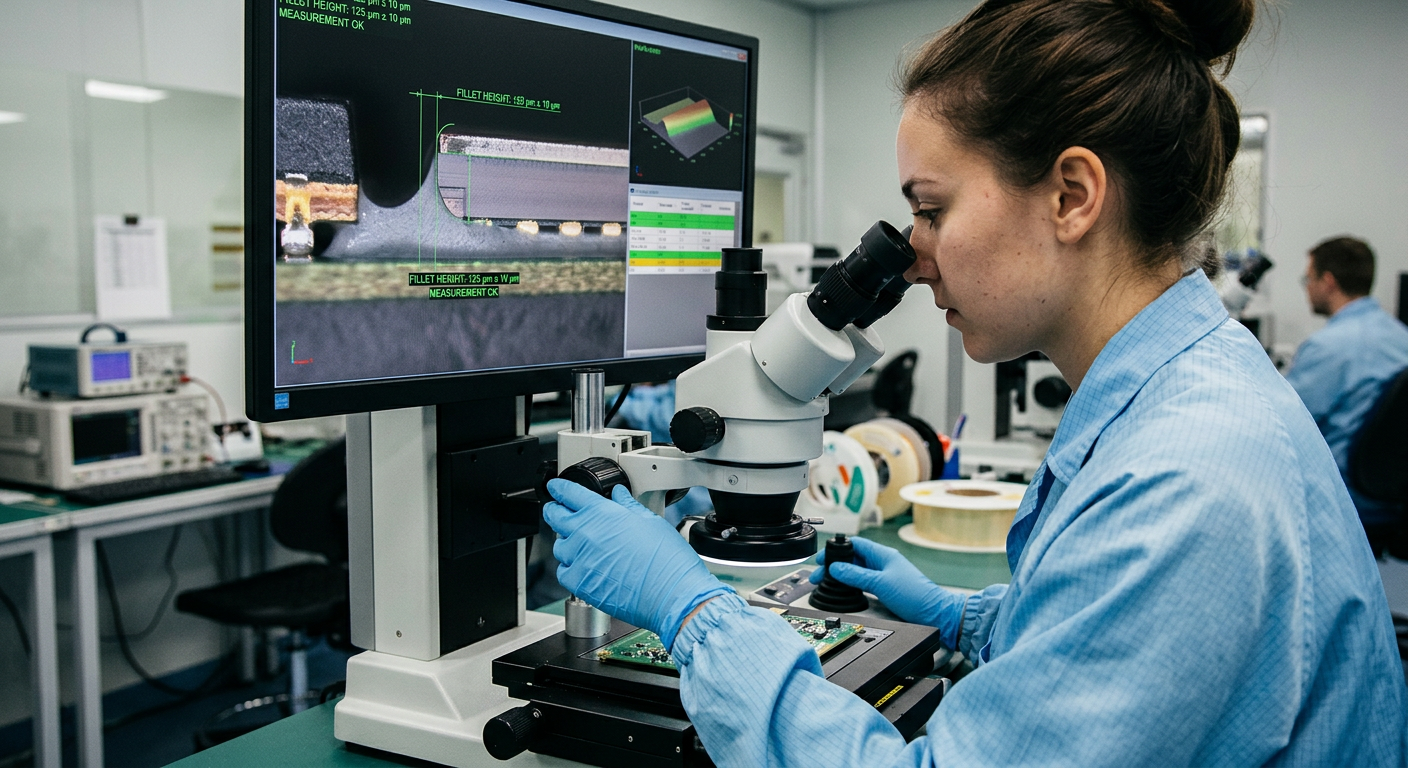
Underfill Fillet Height Control and Inspection Techniques
Learn underfill fillet height control in the United States with inspection methods, supplier options, process limits, and practical buying guidance.
-
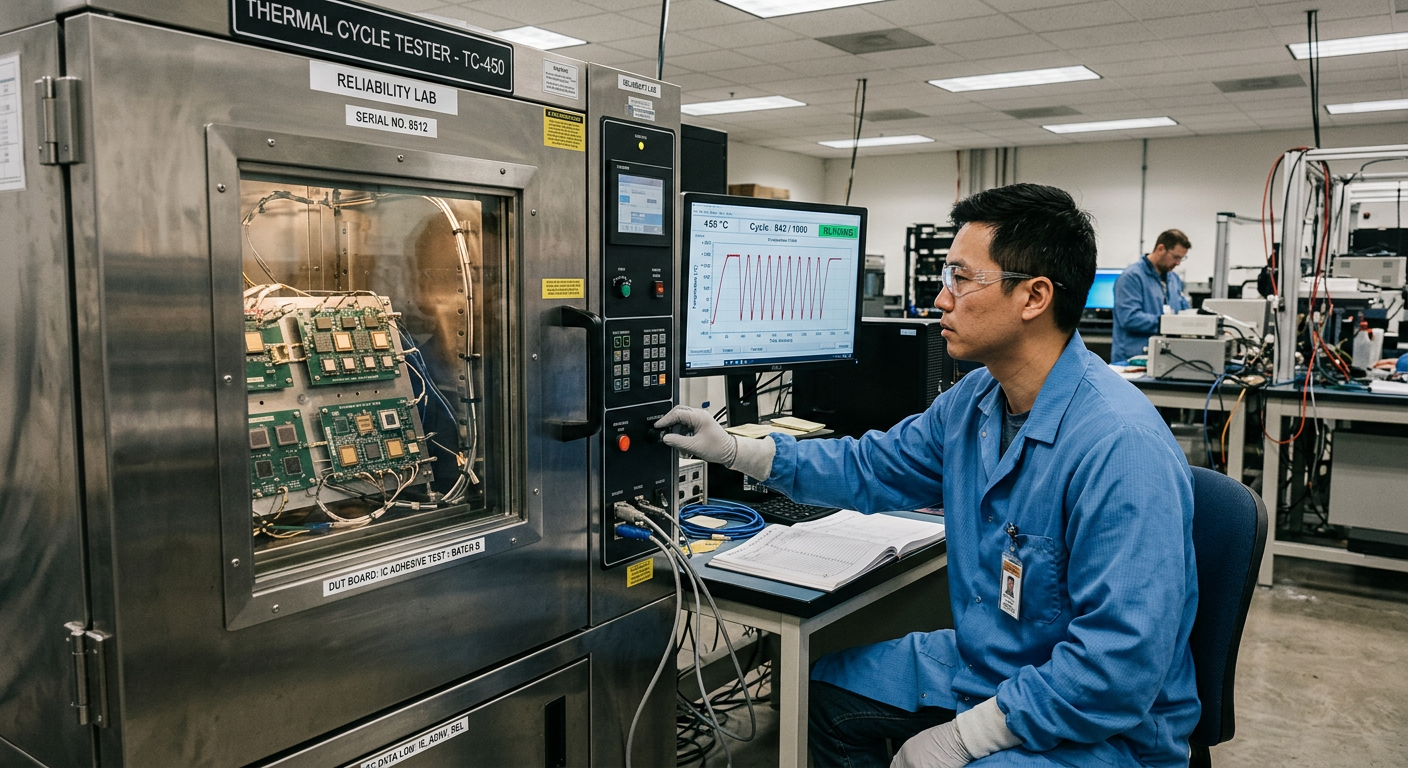
IC Package Adhesive Thermal Cycling Reliability Testing
IC packaging adhesive thermal cycling in the United States requires reliable material selection, supplier review, and test planning for electronics durability.
-

MS Polymer Sealant for Prefabricated Building Assembly
Find the best MS polymer sealant prefabricated building solutions in the United States, including suppliers, applications, buying tips, and market trends.
 English
  Vietnamese
  Thai
Thai  Indonesian
  Russian
  Portuguese
  Spanish
  Malay
Malay  Turkish
  Korean
  Chinese