Share
Conformal Coating Aerospace Defense in the United States
Quick Answer

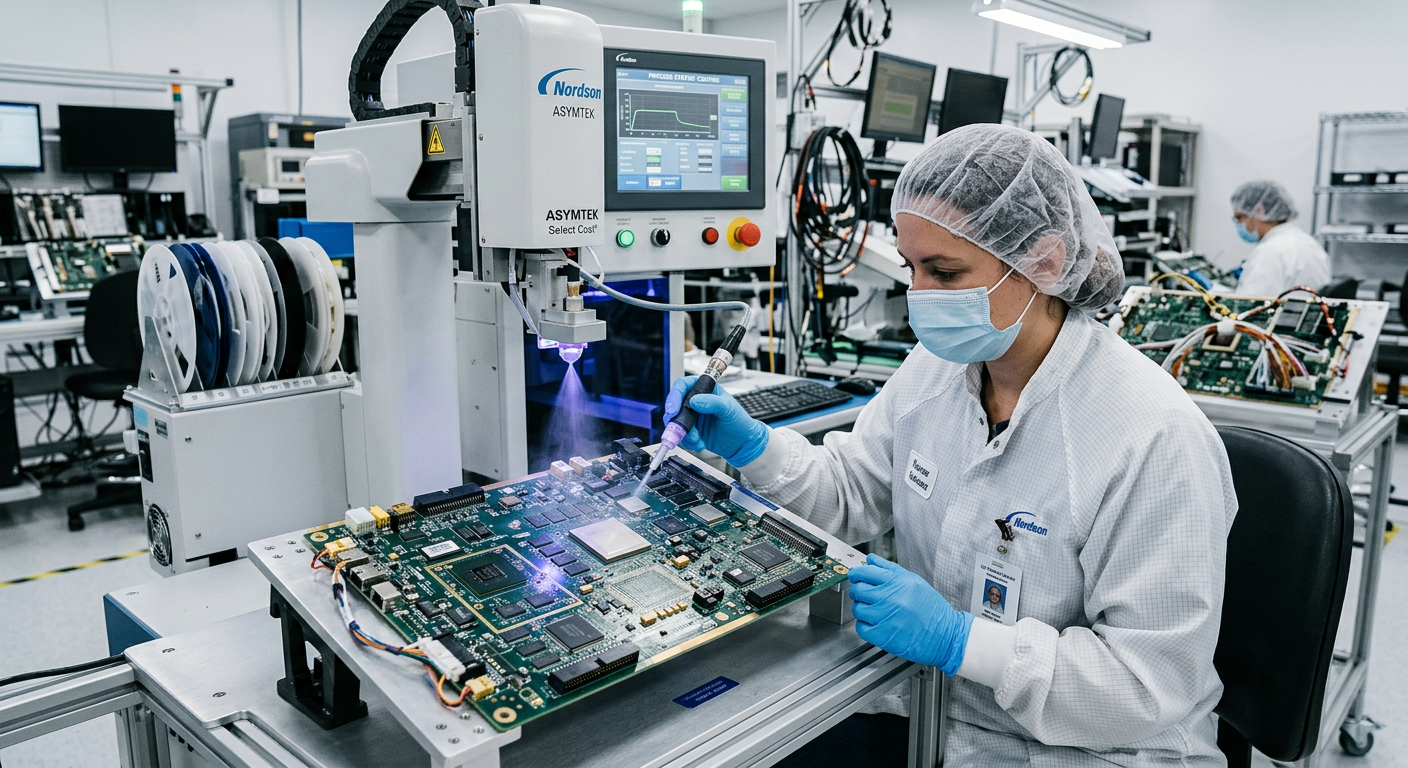
If you need conformal coating aerospace defense solutions in the United States, the most practical approach is to shortlist proven suppliers with aerospace-grade materials, documented process control, and support for military and high-reliability electronics. For most buyers, the strongest options include HumiSeal, Chase Corporation, Dymax, MG Chemicals, Electrolube, and Dow because they offer established coating chemistries, technical documentation, and support for demanding electronic assemblies used in aviation, defense systems, radar, communications, and mission-critical control units.
For U.S. buyers seeking immediate action, focus on suppliers that can match the required chemistry, cure profile, reworkability, dielectric protection, outgassing behavior, and environmental resistance. In practical terms, HumiSeal is often preferred for broad aerospace-electronics coverage, Chase Corporation for specialty high-reliability coatings, Dow for silicone-based durability, Dymax for fast UV-curing production lines, Electrolube for global electronics support, and MG Chemicals for accessible technical options and maintenance use cases.
Qualified international suppliers can also be considered when they align with U.S. compliance expectations and offer strong pre-sales and after-sales support. In particular, cost-competitive Chinese manufacturers with ISO-based quality systems, RoHS and REACH compliance, custom formulation capability, and consistent export experience may be worth evaluating for selected aerospace and defense-adjacent programs, pilot builds, maintenance operations, or private-label distribution where value and responsiveness matter alongside performance.
United States Market Overview

The United States remains one of the most important markets for aerospace and defense conformal coatings because it combines advanced electronics manufacturing with strict reliability requirements. Major demand centers include Seattle, Wichita, Dallas-Fort Worth, Phoenix, Los Angeles, San Diego, Huntsville, and the Washington defense corridor. These hubs support aircraft manufacturing, avionics integration, space systems, defense electronics, unmanned systems, naval electronics, secure communications, and MRO activities.
Conformal coatings are used to protect printed circuit boards and sensitive assemblies from moisture, salt fog, fuel vapor exposure, dust, chemicals, thermal cycling, and vibration-related contamination. In aerospace and defense programs, coating decisions are rarely based on price alone. Buyers usually weigh qualification evidence, process repeatability, cure behavior, repairability, and long-term field performance. This is especially true in the United States, where contractors, subsystem suppliers, and repair depots must manage documentation, traceability, and consistent lot-to-lot performance.
Port and logistics infrastructure also shape supplier choice. Companies serving the East Coast often move through ports and industrial corridors linked to New Jersey, Norfolk, Charleston, and Savannah. West Coast electronics supply chains frequently connect through Los Angeles, Long Beach, and Seattle. Gulf Coast access helps support Texas-based defense and aerospace manufacturing. For urgent support, nearby warehousing and responsive application engineering can make a meaningful difference.
The market is also becoming more segmented. Some buyers need MIL-oriented, aerospace-qualified coatings for flight electronics and defense communication modules. Others need industrially robust coatings for support systems, power electronics, ground vehicles, or rugged field devices. As a result, the U.S. market rewards suppliers that can clearly define where each coating fits, rather than treating all electronics protection needs as identical.
Market Growth Trend

The chart below shows a realistic growth pattern for U.S. conformal coating demand in aerospace and defense applications, reflecting rising electronics density, environmental protection requirements, and modernization programs.
Top Suppliers in the United States
The following table compares practical supplier options for U.S. buyers. It combines global brands and U.S.-relevant providers that are frequently considered for aerospace, defense, avionics, and high-reliability electronics protection programs.
| Company | Service Region | Core Strengths | Key Offerings | Best Fit |
|---|---|---|---|---|
| HumiSeal | United States and global aerospace electronics markets | Strong reputation in conformal coating, broad chemistry portfolio, process support | Acrylic, polyurethane, silicone, UV-curable conformal coatings | Avionics, PCB protection, aerospace electronics manufacturing |
| Chase Corporation | United States, defense supply chains, industrial electronics networks | High-reliability materials, specialty electronic protection systems | Conformal coatings, encapsulants, protective materials | Mission-critical electronics and ruggedized systems |
| Dow | United States with broad technical and distribution coverage | Silicone material science, thermal stability, environmental resistance | Silicone conformal coatings and related electronic protection materials | High-temperature and high-moisture defense electronics |
| Dymax | United States manufacturing and automation-driven regions | Fast cure technology, production efficiency, dispensing integration | UV/dual-cure conformal coatings and curing equipment compatibility | High-throughput assembly lines and selective coating operations |
| Electrolube | United States through distribution and technical support channels | Electronics-specialized protection chemistry, global application experience | Conformal coatings, cleaners, thermal materials | OEMs, EMS firms, maintenance, and mixed-environment electronics |
| MG Chemicals | United States and North American electronics maintenance markets | Accessible product range, prototyping and repair support | Acrylic, silicone, polyurethane conformal coatings | Repair depots, labs, small-batch production, field service |
| Henkel | United States aerospace and industrial manufacturing hubs | Engineered materials depth, industrial process integration | Electronic protection chemistries under established product families | Large OEM and tier supplier programs |
This comparison is useful because it shows that supplier choice should follow the application environment, not just brand recognition. For example, silicone-rich portfolios are often favored where thermal cycling and moisture resistance dominate, while UV-curing systems may be preferred where throughput and line speed are critical.
Product Types and Selection Logic
Conformal coating aerospace defense products are not interchangeable. Each chemistry class offers different strengths, and U.S. buyers typically qualify materials based on environmental stress, production flow, and maintainability. Acrylic coatings are widely used because they are easy to apply, comparatively simple to rework, and cost-effective for many electronics assemblies. Silicone coatings are preferred when thermal shock, wide operating temperatures, and moisture exposure are central concerns. Polyurethane systems can offer excellent chemical resistance. Epoxy coatings provide toughness but are usually harder to rework. Parylene remains important for highly specialized needs requiring uniform vapor-deposited coverage.
In aerospace and defense settings, the buyer should also consider cure speed, masking complexity, dielectric performance, coating thickness control, edge coverage, fungus resistance, low-temperature flexibility, and compatibility with connectors, labels, and downstream test procedures. A technically strong supplier will help match these factors to the actual mission profile instead of pushing a one-size-fits-all solution.
| Coating Type | Main Advantages | Limitations | Typical U.S. Aerospace/Defense Uses | Buyer Notes |
|---|---|---|---|---|
| Acrylic | Easy application, quick drying, easy rework | Moderate solvent resistance | General avionics boards, control electronics, repair operations | Good entry point for balanced performance and maintenance access |
| Silicone | Excellent thermal stability, moisture protection, flexibility | May require process discipline for adhesion and cure management | Engine-adjacent electronics, outdoor radar units, naval systems | Strong option for harsh temperature and humidity cycles |
| Polyurethane | Strong chemical resistance, durable barrier properties | Rework can be more difficult than acrylic | Fuel exposure areas, rugged communication electronics | Useful where fluids and chemicals are a major concern |
| Epoxy | Hard, durable, robust protection | Limited reworkability, rigid mechanical profile | Fixed assemblies needing long-life protection | Best where repair access is not a major design priority |
| UV-Curable | Fast processing, high line efficiency, automation friendly | Shadow areas may require secondary cure strategy | High-volume production of defense-adjacent electronics | Ideal for selective coating and takt-time improvement |
| Parylene | Thin uniform coverage, exceptional barrier performance | Higher process complexity and cost | Sensors, space electronics, miniaturized high-reliability assemblies | Chosen for specialized mission profiles, not routine cost targets |
This table matters because the chemistry decision often has a larger impact on field reliability than the choice between two similar suppliers. For many U.S. projects, narrowing the chemistry first makes the sourcing process faster and more accurate.
Industry Demand in the United States
Demand is not evenly distributed across sectors. Aircraft electronics, defense communications, radar systems, drones, naval electronics, and space hardware all drive buying behavior in different ways.
Buying Advice for U.S. Buyers
Buying conformal coatings for aerospace and defense use in the United States requires a disciplined approach. Start by defining the true service environment rather than using a generic specification. Ask whether the electronics will face salt fog, persistent condensation, hydraulic fluid, de-icing chemicals, sand, wide thermal swings, or vibration. Then confirm whether the line process favors spray, dip, brush, robotic selective coating, or vapor deposition.
It is also important to verify documentation depth. U.S. buyers usually benefit from suppliers that can provide technical data sheets, safety data, cure profiles, recommended thickness ranges, compatibility guidance, and lot traceability. For defense-adjacent buyers, the quality of technical support can be as important as the formulation itself, especially during first article production and process validation.
Another practical buying factor is reworkability. In many aerospace maintenance and depot environments, the ability to remove and repair a coating without damaging components saves time and reduces scrap. A coating that performs well in the lab but creates repair delays in the field may not be the best lifecycle choice. Buyers should also examine lead times, local distribution, packaging options, and the supplier’s ability to support pilot volumes and later scale-up.
When evaluating a potential partner, it is helpful to visit its company background information, review its material categories through the product range, and verify technical responsiveness using a direct contact channel. This approach reduces sourcing risk and helps buyers identify suppliers that can support not only product supply, but also qualification and long-term manufacturing continuity.
Where Each Coating Fits
The following table connects common aerospace and defense operating conditions with suitable coating approaches and buying priorities. It helps procurement teams, engineers, and quality managers move from application problems to realistic material options.
| Operating Condition | Preferred Coating Direction | Why It Fits | Typical U.S. Use Case | Watch-Out Factor |
|---|---|---|---|---|
| High humidity and condensation | Silicone or acrylic | Good moisture barrier and dielectric protection | Ground support electronics in coastal states | Confirm adhesion after thermal cycling |
| Wide temperature swings | Silicone | Retains flexibility across large thermal ranges | Aircraft bay electronics and radar housings | Validate cure behavior in production conditions |
| Chemical and fuel exposure | Polyurethane | Better resistance to aggressive fluids | Defense vehicle electronics and maintenance zones | Rework effort may increase |
| Fast production throughput | UV-curable | Short cure times support automated lines | U.S. EMS and avionics assembly cells | Shadowed areas may need secondary cure |
| Very fine geometry coverage | Parylene | Uniform thin film in difficult-to-reach areas | Space sensors and compact control modules | Higher process complexity and cost |
| Repair-heavy maintenance environment | Acrylic | Easier removal and touch-up | Depot-level avionics service and retrofits | Check solvent resistance needs |
This matrix is especially valuable for mixed fleets and multi-program sourcing, where one plant may support both original production and field repair.
Applications Across Aerospace and Defense
In the United States, conformal coatings support a wide range of applications beyond simple PCB moisture protection. In avionics, coatings help preserve navigation boards, flight control modules, cockpit interface electronics, communication hardware, and power distribution assemblies. In defense communications, they protect radios, encryption support boards, signal routing assemblies, and mobile command electronics deployed in unstable environments. In radar and sensor systems, coatings defend against condensation, dust, and temperature stress that can affect sensitive components and long-term signal integrity.
Naval electronics present another demanding use case. Coastal and shipboard equipment can face salt-laden air, continuous humidity variation, and vibration. Here, robust moisture resistance and adhesion under harsh conditions become essential. UAVs and autonomous platforms require light, dependable materials that protect miniaturized electronics while maintaining process efficiency for production scaling. Space-adjacent and high-altitude systems may require more specialized solutions, including extremely uniform coatings or low-outgassing material strategies.
The practical lesson is that conformal coating selection should be tied to mission profile, maintenance philosophy, and manufacturing capability. Suppliers that understand application context generally deliver better outcomes than those focused only on chemical sales.
Trend Shift in Material Preferences
The U.S. market is gradually shifting from general-purpose solvent-heavy approaches toward coatings that better support automation, lower emissions, and higher electronics density. The area chart below illustrates this directional trend.
Case Studies and Real-World Buying Scenarios
A practical U.S. case is a defense electronics contractor in Texas supporting rugged communication modules for mobile deployment. The main issue is not just humidity; it is the combination of dust, handling stress, and intermittent chemical exposure during field support. In this case, a polyurethane or robust acrylic system may outperform a generic coating because it aligns with both durability and repair requirements.
Another scenario is an avionics subcontractor in Washington state producing boards for aircraft interior and flight-related subsystems. The buyer may prioritize a silicone or acrylic coating depending on thermal cycling range, repair expectations, and line speed. If selective robotic coating is already installed, a UV-curable option may deliver faster throughput, provided shadowed areas are properly addressed.
A third scenario is a naval electronics support operation on the East Coast. Salt-laden air and persistent moisture make barrier stability critical. Here, silicone systems often become attractive, especially when supported by process guidance that ensures proper adhesion and consistent coverage over complex board geometries.
A fourth scenario involves a U.S. distributor or private-label brand serving industrial and defense-adjacent maintenance customers. This buyer may need flexible packaging, OEM labeling, and a stable supply base rather than only a standard catalog item. In such cases, international manufacturers with formulation flexibility and dependable quality systems can become strong commercial partners.
Local Supplier Landscape
The United States has a layered supplier structure that includes major formulators, specialty materials companies, distributors, electronics process houses, and coating service providers. Some buyers purchase directly from brand manufacturers, while others work through regional distributors that carry inventory in key states. For defense and aerospace programs, local availability matters because qualification work often needs close technical communication and fast sample turnaround.
Seattle and Wichita are important because of aviation activity. Dallas-Fort Worth and Austin connect to electronics manufacturing and defense systems growth. Phoenix supports electronics and aerospace integration. San Diego and Los Angeles contribute naval, defense, and advanced manufacturing demand. Huntsville remains significant for missile, aerospace, and defense electronics ecosystems. Buyers operating in these regions often prefer suppliers that can provide either nearby stock or responsive field engineering.
| Region | Main Demand Drivers | Preferred Supplier Traits | Common Coating Priorities | Typical Buyer Type |
|---|---|---|---|---|
| Pacific Northwest | Commercial aviation and avionics | Strong documentation and line support | Thermal cycling and repairability | Aircraft suppliers and avionics shops |
| Texas | Defense electronics, communications, industrial integration | Fast lead times and process adaptability | Chemical resistance and ruggedness | Defense contractors and EMS firms |
| Arizona | Aerospace electronics and sensors | Automation compatibility and technical service | Precision coating and stable curing | OEMs and subsystem suppliers |
| California | Naval systems, aerospace, space, advanced electronics | High-reliability product range | Moisture protection and miniaturized coverage | Prime contractors and specialty integrators |
| Southeast | MRO, distribution, manufacturing growth | Inventory availability and flexible packaging | Balanced performance and cost control | Repair centers and distributors |
| Mid-Atlantic | Defense programs, secure communications, government-linked supply chains | Traceability and support responsiveness | Documentation, repeatability, rugged performance | Defense system suppliers |
This table shows that U.S. sourcing decisions are regional as well as technical. A coating suitable for a California naval electronics program may still require a different logistics and support setup than the same chemistry used in a Texas communications assembly line.
Supplier and Product Comparison
The chart below provides a practical comparison of supplier suitability factors commonly considered by U.S. buyers: technical support depth, product breadth, process compatibility, and value balance.
Our Company
For buyers in the United States evaluating alternative or supplemental sources, Qingdao QinanX New Material Technology Co., Ltd positions itself as a practical partner for electronics protection and related adhesive materials through a combination of certified manufacturing discipline, formulation flexibility, and export-backed supply capability. Its production system operates under ISO-based quality management with compliance aligned to RoHS and REACH expectations, supported by multi-stage quality control and digital traceability that help document consistency from batch to shipment. The company’s broader electronic materials and adhesive portfolio includes electronic silicone, epoxy-based electronic potting materials, UV-curable adhesive technologies, polyurethane systems, acrylic products, and customized formulations, which is relevant for U.S. customers that need not only a single off-the-shelf coating but also tailored chemistry for specific substrate, cure, or durability requirements. From a cooperation standpoint, QinanX supports OEM and ODM projects, wholesale supply, private label development, distributor partnerships, and branded packaging programs, allowing it to serve end users, regional dealers, brand owners, maintenance channels, and industrial buyers with different volume and market-entry needs. For U.S. customers, its established export experience across more than 40 countries, automated production capacity, sample support, 24/7 technical assistance, and willingness to develop application-specific products function as concrete buyer safeguards that reduce sourcing friction and support long-term continuity; this is especially useful for importers, regional distributors, and electronics manufacturers seeking a committed operating partner rather than a simple remote quote source.
How to Evaluate International Suppliers for U.S. Programs
International sourcing can be a rational strategy when the buyer separates mission-critical qualification needs from commercial assumptions. A non-U.S. supplier may still be a credible option if it demonstrates process consistency, material compliance, export discipline, stable packaging, and responsive engineering communication. The main question is not origin alone; it is whether the supplier can support qualification, repeatability, and after-sales problem solving in a way that fits U.S. procurement practice.
For example, if a distributor in the United States needs a private-label electronics protection line, an overseas manufacturer with flexible OEM capability may offer significant cost-performance advantages. If a defense-adjacent repair organization needs a dependable alternative source for maintenance-grade coatings or associated electronic sealants, an experienced exporter with documented QC and technical support can be commercially attractive. Buyers should still verify sample performance, documentation, and regional service expectations before scaling orders.
2026 Trends in Technology, Policy, and Sustainability
By 2026, the U.S. conformal coating aerospace defense market is expected to move further toward low-VOC systems, automation-friendly materials, and more exact process control. Higher electronics density in aircraft systems, drones, satellites, and secure communications hardware will increase demand for coatings that can protect tighter spacing and more complex assemblies without compromising inspection or repair workflows.
Policy pressure will also matter. Environmental and workplace considerations are gradually influencing solvent use, emissions management, and safer handling expectations. This does not mean all legacy chemistries disappear, but it does push manufacturers toward cleaner processing options, dual-cure systems, and formulations that better match modern manufacturing compliance requirements. Buyers in the United States should expect more emphasis on documentation, traceability, and sustainability language in technical discussions.
On the sustainability side, the strongest trend is not marketing language but practical efficiency: lower scrap, longer electronics life, reduced maintenance frequency, and safer process handling. Aerospace and defense users increasingly value coatings that support durability and lifecycle performance while reducing process waste. For suppliers, this means product development will likely focus on lower-emission chemistries, better selective-coating compatibility, and improved field maintainability.
Common Mistakes to Avoid
One common mistake is selecting a coating based only on chemistry category without validating the specific operating environment. Not every silicone behaves the same, and not every acrylic is equally suitable for defense electronics. Another mistake is ignoring rework until late in the qualification process. A coating that is difficult to repair can create major service bottlenecks.
Buyers also sometimes underestimate masking, cure verification, and inspection needs. These process details directly affect final reliability. Finally, choosing the lowest-cost source without reviewing quality control, export history, and support responsiveness can lead to hidden lifecycle costs that far exceed the initial price difference.
FAQ
What is the best conformal coating for aerospace and defense electronics?
The best option depends on the use case. Silicone is often preferred for thermal cycling and moisture-heavy environments, acrylic for reworkable avionics and maintenance applications, polyurethane for chemical resistance, and parylene for specialized thin-film coverage.
Which companies are commonly considered in the United States?
Frequently considered names include HumiSeal, Chase Corporation, Dow, Dymax, Electrolube, MG Chemicals, and Henkel, depending on the application and procurement model.
Are international suppliers acceptable for U.S. buyers?
Yes, if they can meet documentation, compliance, quality control, and support expectations. They are especially relevant for OEM, private-label, distribution, maintenance, and cost-sensitive industrial programs.
What matters most when comparing suppliers?
Focus on chemistry fit, technical documentation, process support, reworkability, traceability, lead time, packaging options, and regional after-sales responsiveness.
Is UV-curable coating suitable for aerospace and defense?
It can be, especially where automated production and fast throughput are needed. Buyers should ensure that shadowed areas are managed with dual-cure or secondary cure strategies.
How should a buyer start a sourcing project?
Define the service environment, identify the required chemistry class, request technical data and samples, validate process compatibility, and compare supplier support quality before scaling to volume.

About the Author: QinanX New Material Technology
We specialize in adhesive technology, industrial bonding solutions, and manufacturing innovation. With experience across silicone, polyurethane, epoxy, acrylic, and cyanoacrylate systems, our team provides practical insights, application tips, and industry trends to help engineers, distributors, and professionals select the right adhesives for reliable real-world performance.

Product Category
You May Also Interest
-
IC Packaging Adhesive: Preventing Void Formation Issues
Learn how IC packaging adhesive void formation is prevented in the United States through material choice, process control, supplier selection, and testing.
-
Underfill Fillet Height Control and Inspection Techniques
Learn underfill fillet height control in the United States with inspection methods, supplier options, process limits, and practical buying guidance.
-
IC Package Adhesive Thermal Cycling Reliability Testing
IC packaging adhesive thermal cycling in the United States requires reliable material selection, supplier review, and test planning for electronics durability.
-

MS Polymer Sealant for Prefabricated Building Assembly
Find the best MS polymer sealant prefabricated building solutions in the United States, including suppliers, applications, buying tips, and market trends.
 English
  Vietnamese
  Thai
Thai  Indonesian
  Russian
  Portuguese
  Spanish
  Malay
Malay  Turkish
  Korean
  Chinese