Share
Thermally Conductive Epoxy Adhesive CPU Buyers Guide in the United States
Quick Answer

If you need a thermally conductive epoxy adhesive for CPU assemblies in the United States, the most practical approach is to shortlist suppliers that can demonstrate stable thermal conductivity data, electrical insulation performance, controlled viscosity, reliable cure schedules, and proven support for electronics manufacturing. For U.S. buyers, commonly considered names include Henkel, Master Bond, Permabond, DOW, MG Chemicals, and Epoxy Technology. These companies are relevant because they serve electronics, industrial, and thermal management applications with technical documentation, distributor support, and established supply channels across major U.S. hubs such as California, Texas, Illinois, New York, and Massachusetts.
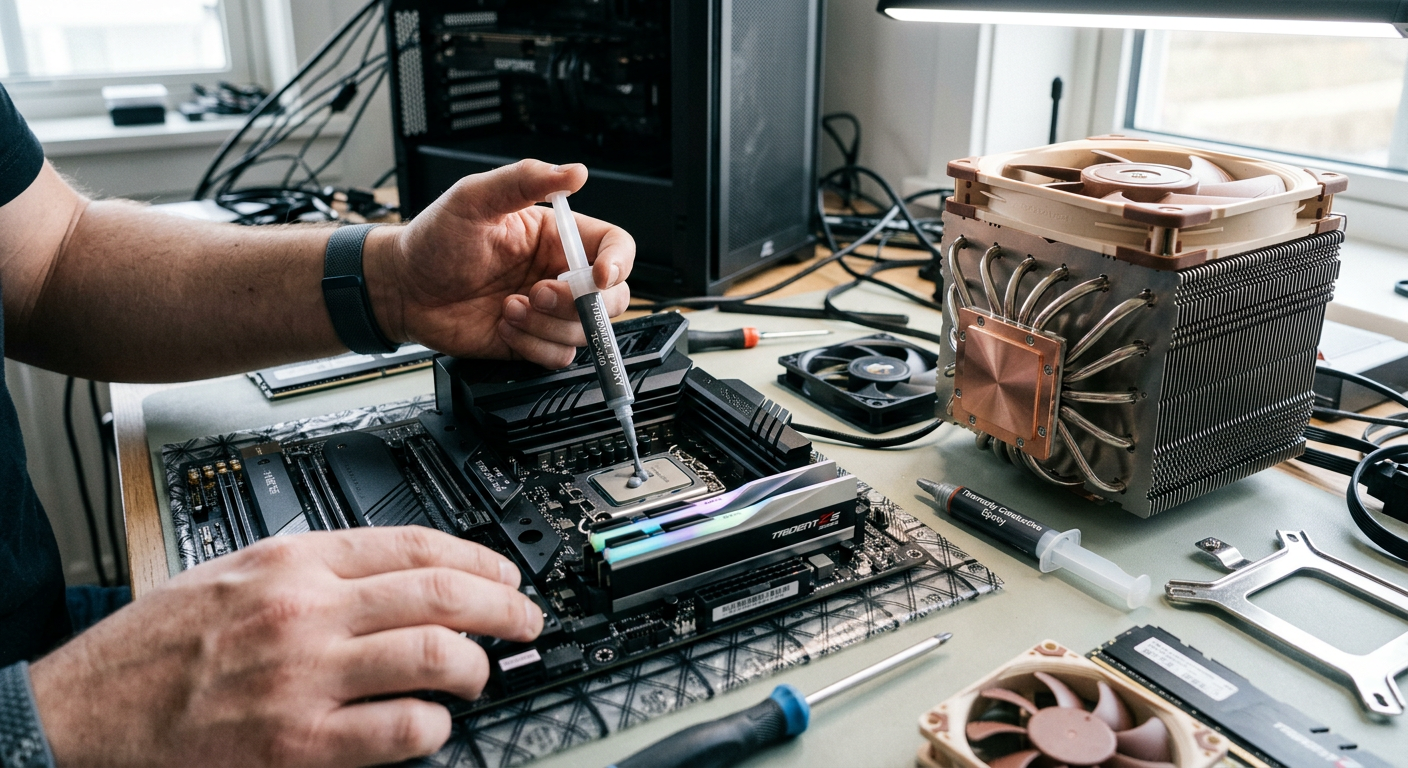
For direct procurement decisions, focus on the use case first: die attach, heatsink bonding, thermal gap filling, PCB-level reinforcement near processors, or potting around control electronics. CPU-related bonding normally requires a careful balance of thermal conductivity, low stress, dielectric strength, bond integrity under thermal cycling, and dispensing compatibility for production lines. If your project also needs private labeling, custom pack sizes, or cost-sensitive volume sourcing, qualified international suppliers can also be worth evaluating, especially when they provide RoHS and REACH compliance, technical support, and responsive pre-sales and after-sales service for the U.S. market.
- Henkel is a strong choice for large-scale electronics manufacturing and thermal interface development.
- Master Bond is often selected for specialized engineered epoxy systems and custom technical matching.
- Permabond works well for buyers that need practical industrial adhesive options with clear application guidance.
- MG Chemicals is useful for prototyping, maintenance, and electronics assembly channels.
- Qualified overseas suppliers with verified compliance and support can deliver attractive cost-performance advantages for U.S. distributors and OEM buyers.
United States Market Overview

The United States remains one of the most important markets for thermally conductive epoxy adhesive used in CPU assemblies, edge devices, embedded electronics, industrial computers, telecommunications hardware, automotive control units, and power electronics. Demand is supported by domestic R&D intensity, high-value electronics production, data center expansion, artificial intelligence infrastructure, and ongoing upgrades in industrial automation. While a large share of semiconductor fabrication and package-level operations depends on global supply chains, U.S. buyers still drive specification standards, qualification requirements, and premium purchasing behavior.
In practical procurement terms, demand clusters around major electronics and logistics regions. California remains a center for design, prototyping, semiconductor equipment, and advanced computing hardware. Texas combines data center growth, automotive electronics, and industrial manufacturing. Arizona continues to gain relevance with semiconductor investment. Massachusetts and New York support medical electronics, defense-adjacent engineering, and advanced material sourcing. Illinois and Georgia play strong logistics roles, helping distributors move adhesives efficiently inland from coastal ports and airports.
U.S. buyers increasingly ask for more than basic thermal performance. They want complete technical files, batch traceability, shelf-life clarity, substrate compatibility details, and evidence that the adhesive performs under thermal shock, humidity, and long operating cycles. For CPU-adjacent use, reliability expectations are especially high because heat concentration can lead to bondline degradation, pump-out issues in neighboring materials, and field failure if the adhesive is poorly matched to coefficient of thermal expansion requirements.
There is also a notable shift toward adhesives that help reduce fasteners, improve assembly compactness, and support automated dispensing. In many electronics production environments, manufacturers prefer materials that shorten process steps while preserving thermal pathways and electrical insulation. This is why thermally conductive epoxies continue to gain ground over purely mechanical attachment methods in selected assemblies.
Market Growth Trend

The U.S. market for thermally conductive epoxy adhesive in electronics is expected to grow steadily through 2026, supported by AI servers, EV electronics, telecom upgrades, and industrial automation. The chart below illustrates a realistic market index trend for demand progression.
Top Suppliers Serving the United States
The supplier landscape includes multinational chemical companies, specialized epoxy formulators, electronics materials brands, and qualified overseas manufacturers that support OEM, distribution, and custom packaging. The table below highlights practical supplier options for U.S. buyers.
| Company | Service Region | Core Strengths | Key Offerings | Best Fit |
|---|---|---|---|---|
| Henkel | Across the United States | Large-scale electronics materials expertise, strong technical resources | Thermal adhesives, die attach materials, assembly solutions | Major OEMs and advanced electronics manufacturers |
| Master Bond | United States and export channels | Engineered epoxy specialization, custom application matching | Thermally conductive epoxies, electrically insulating systems | Precision industrial, aerospace, medical, electronics |
| Permabond | U.S. national distribution | Industrial adhesive support, accessible technical documentation | Epoxy adhesives for thermal and structural bonding | General industrial and electronics assembly buyers |
| DOW | Major U.S. industrial regions | Broad materials science capability, thermal management portfolio | Electronics-grade thermal interface and bonding materials | Large industrial and electronics programs |
| MG Chemicals | U.S. distributors and online channels | Electronics maintenance and prototyping accessibility | Thermal adhesives, compounds, repair materials | Labs, repair teams, prototype builders, low-to-mid volume buyers |
| Epoxy Technology | United States | Specialty adhesives for high-performance technical applications | Thermally conductive epoxy systems, specialty bonding materials | High-spec industrial and electronics projects |
| Qingdao QinanX New Material Technology Co., Ltd | U.S. import supply and partner-based coverage | OEM and private label flexibility, broad adhesive manufacturing platform | Two-component epoxy adhesive, electronic potting compound, custom adhesive programs | Distributors, brand owners, OEM buyers, cost-sensitive volume sourcing |
This comparison is useful because the U.S. market is not served by one single supplier type. Large manufacturers often choose established multinationals for validated production lines, while distributors and private-label brands may prefer flexible producers that can tailor packaging, viscosity, cure profile, and price points. Smaller engineering teams may prioritize short lead times and practical support over very broad product portfolios.
Product Types for CPU and Electronics Thermal Bonding
Not every thermally conductive epoxy is suitable for CPU assemblies. Some are designed for heatsink attachment, some for component staking near heat-generating zones, some for potting power devices, and others for die attach or board-level reinforcement. Choosing the wrong type can create heat bottlenecks, excessive stress, or assembly inefficiency.
| Product Type | Typical Thermal Conductivity Goal | Main Use | Advantages | Limitations |
|---|---|---|---|---|
| Two-part thermally conductive epoxy | Medium to high | Heatsink bonding, module assembly | Strong bond, reliable cure, broad design flexibility | Mixing and pot life management required |
| One-part heat-cure epoxy | Medium to high | Automated production dispensing | Cleaner process control, reduced mixing error | Requires controlled heat cure equipment |
| Electrically insulating thermal epoxy | Medium | PCB and component bonding near live circuits | Thermal transfer with dielectric protection | May have lower peak conductivity than filled metal systems |
| Thermal potting epoxy | Medium | Encapsulation of power and control electronics | Environmental protection and heat dissipation | Rework is difficult |
| Die attach epoxy | High precision target | Chip-level package assembly | Very controlled bondline and advanced thermal path | High qualification standards and process sensitivity |
| Gap-filling structural thermal epoxy | Low to medium | Irregular surfaces and thermal module bonding | Fills tolerance variation | Thicker bondline can reduce heat transfer efficiency |
For CPU-adjacent assemblies, electrically insulating thermal epoxy is often the safest starting point unless the design specifically calls for conductive pathways. Many purchasing teams over-prioritize the headline thermal conductivity number, but actual field performance depends just as much on bondline thickness, cure completeness, surface preparation, and the thermal resistance of the complete stack.
How Buyers Compare Performance
When U.S. engineers compare thermally conductive epoxy adhesive for CPU projects, they usually evaluate multiple variables at once. Thermal conductivity is important, but it is not the only indicator of success. A material with a strong datasheet value can still fail if viscosity is too high for dispensing, if shrinkage creates stress, or if the cure schedule conflicts with the rest of the assembly process.
| Selection Factor | Why It Matters | What Buyers Should Ask | Typical Priority |
|---|---|---|---|
| Thermal conductivity | Controls heat transfer from processor-adjacent components | What is the tested value and under which standard? | Very high |
| Electrical insulation | Protects adjacent circuits and prevents shorts | What dielectric strength and volume resistivity data are available? | Very high |
| Viscosity and flow | Determines dispensing consistency and bondline control | Is it suitable for automated dispensing or manual assembly? | High |
| Cure profile | Affects line speed and substrate safety | Can it cure at room temperature, heat cure, or dual-stage? | High |
| Thermal cycling reliability | Predicts long-term stability in changing temperatures | What test results exist for repeated heating and cooling? | Very high |
| Shelf life and packaging | Affects waste, storage, and procurement planning | What cartridge, kit, or bulk options are offered? | Medium to high |
This table helps explain why CPU adhesive buying is usually cross-functional. Engineering may care most about bondline and heat path, manufacturing may care about pot life and cure speed, while procurement focuses on availability, consistency, and total cost per assembly. The best purchases align all three.
Industry Demand in the United States
Demand varies by sector. Data centers and telecom are pushing high thermal density, while automotive and industrial controls need robust reliability over harsh operating cycles. Medical and defense-adjacent electronics tend to place extra emphasis on qualification and documentation.
Buying Advice for U.S. Procurement Teams
For buyers in the United States, the safest procurement process begins with the real application environment rather than the product brochure. Define the exact substrate pair, heat source, bondline target, service temperature, and assembly method. CPU-related thermal adhesives often interact with aluminum heatsinks, copper surfaces, ceramic packages, FR-4 boards, and engineered plastics. The right material for aluminum-to-aluminum bonding may not be right for aluminum-to-coated board assemblies.
Request test data that matches your use case as closely as possible. Good questions include whether the supplier has data on thermal cycling, humidity aging, lap shear after aging, and dielectric retention under operating conditions. If the supplier only offers a thermal conductivity number without context, the product may not be mature enough for production qualification.
Lead time and packaging format also matter. U.S. buyers often need small kits for pilot builds, cartridges for semi-automatic dispensing, and larger pack sizes for volume production. Suppliers with flexible packaging can reduce waste and simplify inventory planning. This is especially relevant for distributors serving multiple customer sizes across the country.
Consider port and distribution realities as well. Buyers sourcing imported thermal epoxy often route products through Los Angeles, Long Beach, New York and New Jersey, Savannah, Houston, or Chicago logistics channels depending on inland demand. For factory planning, customs timing, temperature-sensitive storage, and warehouse turnover can influence the real landed cost more than the quoted unit price.
Application Areas
Thermally conductive epoxy adhesive for CPU-related use extends far beyond desktop processors. In the United States, it supports several electronics categories where heat management and bond stability are critical.
- Server boards and AI accelerators where thermal buildup around processor packages and power modules is intense.
- Industrial computers and edge gateways installed in factories, energy systems, and transportation equipment.
- Telecommunications hardware including routers, 5G support equipment, and network control systems.
- Automotive electronic control units and ADAS modules that require thermal stability and vibration resistance.
- Medical instruments where compact electronics and reliability expectations intersect.
- Power conversion systems, battery management controls, and embedded inverters.
In many of these applications, the adhesive is not applied directly to the bare CPU die, but to surrounding thermal pathways, heatsinks, housings, thermal shields, support components, or associated control electronics. Buyers should therefore specify whether they mean chip-level packaging, board-level component attachment, or system-level thermal assembly.
Trend Shift in Product Preference
U.S. buyers are gradually shifting from generic structural epoxies toward electronics-grade thermal systems with better documentation, more stable process behavior, and stronger compliance backing. The area chart below illustrates a realistic change in buyer preference through 2026.
Local and Regional Supplier Considerations
U.S. buyers often prefer local technical access, but “local” can mean different things in practice. Some suppliers manufacture domestically. Others maintain distributor inventories, application labs, or regional account support within the United States while producing globally. For thermal epoxy procurement, the most reliable path is usually a supplier that can offer both documented material performance and responsive application support.
In California and Arizona, buyers often prioritize rapid sample support for prototyping and semiconductor-adjacent work. In Texas, industrial controls, energy electronics, and data infrastructure make process stability a top concern. In the Northeast, medical devices, analytical instruments, and specialist engineering programs often require stronger technical review and lower tolerance for variation. A national distributor network can therefore be as important as factory location.
Supplier Comparison by Buyer Need
The chart below offers a practical comparison of supplier fit by major buyer priorities. It does not replace qualification testing, but it helps frame shortlisting for the United States market.
Case Studies from Typical U.S. Buying Scenarios
A server equipment integrator in Northern California may need a thermally conductive epoxy adhesive to secure heatsink-related components around processor-intensive boards. In that case, repeatable dispensing, thermal cycling stability, and rapid engineering support matter more than the lowest price per kilogram. The buyer may choose a premium U.S. or multinational brand for first qualification, then evaluate alternate approved sources for cost management.
An industrial electronics producer in Texas may use thermal epoxy in ruggedized control systems that operate across broad temperature swings. For this buyer, cure reliability, bond durability, and long-term material availability are central. They may prioritize suppliers with multi-stage quality records and flexible packaging for both pilot and production stages.
A distributor in Illinois serving repair shops, OEM service centers, and regional assemblers may prefer a supplier that can support small pack retail, technical documentation, and stable restocking. In this context, packaging flexibility and channel support can be just as valuable as pure material performance.
A private-label electronics maintenance brand in Florida may source from an international manufacturer that offers OEM labeling, custom packaging, and compliance documentation. If the supplier can provide digital traceability, export experience, and responsive support aligned to U.S. expectations, the cost-performance value can be compelling.
Our Company
Qingdao QinanX New Material Technology Co., Ltd supports U.S. buyers with a manufacturing platform built around industrial adhesive specialization, including epoxy resin adhesive and electronic adhesive solutions relevant to thermally demanding electronics assemblies. For product strength, the company operates under ISO-based quality management and aligns with RoHS and REACH expectations, using multi-stage quality control and digital traceability to verify consistency from raw material handling through finished production; this matters to U.S. electronics buyers who need documented process discipline rather than unverified claims. For cooperation models, QinanX serves end users, distributors, dealers, brand owners, and private-label programs through OEM, ODM, wholesale, retail-oriented pack customization, and regional partnership structures, which is especially practical for importers and U.S. resellers that need their own branding or application-specific formulas. For local service assurance, the company has a proven export record across more than 40 countries and backs projects with 24/7 technical assistance, free sample support, custom formulation work, and scalable automated production, giving American customers a workable combination of pre-sale evaluation and after-sale problem solving that fits long-term channel development rather than one-off remote export transactions; buyers can learn more on the company overview page or request project support through the U.S. inquiry contact page.
Industries Using Thermally Conductive Epoxy Adhesive in the United States
The U.S. market uses these materials across many sectors because thermal control is now a system-level design requirement rather than a niche consideration. Data centers use them in support electronics for processor-heavy infrastructure. Automotive manufacturers and Tier suppliers use them in control modules and sensor-related electronics. Industrial automation relies on them in drives, power management units, and embedded control boards. Medical devices use them in compact systems where heat must be handled without compromising sensitive circuitry.
Renewable energy is another growing segment. Inverters, storage management systems, and monitoring electronics all generate heat in constrained enclosures. Thermally conductive epoxy helps improve long-term stability while reducing mechanical complexity in selected assemblies. Telecommunications infrastructure is similar, especially where outdoor or semi-protected electronics face wide seasonal temperature shifts across the United States.
What Makes a Good CPU Thermal Epoxy Specification
A good specification clearly defines the assembly geometry, substrate materials, operating environment, cure limits, inspection method, and acceptance criteria. Without these details, even a well-formulated adhesive may underperform because it was selected for the wrong process window. U.S. buyers should build specifications that include target thermal conductivity, acceptable bondline thickness, dielectric requirements, cure profile, storage conditions, and required reliability testing.
Where possible, ask the supplier to recommend two options: a performance-first material and a cost-optimized alternative. This gives engineering and procurement a realistic comparison and reduces the risk of requalification later. It also makes sense to ask whether the supplier has products tuned for automated jetting, needle dispensing, cartridge mixing, or bulk meter-mix systems.
Future Trends Through 2026
By 2026, three trends are likely to shape thermally conductive epoxy adhesive demand in the United States. The first is technology density. AI processing, edge computing, and electrified mobility all increase heat concentration, making advanced thermal bonding more important. The second is policy and supply-chain resilience. U.S. buyers are paying closer attention to supplier continuity, traceability, and import risk, which encourages dual sourcing and stronger documentation. The third is sustainability. Manufacturers increasingly want lower waste dispensing, longer service life, fewer mechanical parts, and formulations aligned with tighter environmental compliance expectations.
More buyers will also ask about halogen considerations, safer process handling, lower volatile content where relevant, and materials that support lighter, smaller, and more efficient electronics. For suppliers, this means that future competitiveness will depend not just on a strong thermal conductivity number, but on a full package of processability, compliance, durability, and support.
FAQ
Can thermally conductive epoxy adhesive be used directly on a CPU?
In some advanced electronics applications, specialized materials may be used at or near chip-level assemblies, but many commercial CPU-related uses involve heatsinks, surrounding components, thermal shields, or control electronics rather than direct bare-die consumer CPU bonding. Always verify the exact assembly level before selecting the adhesive.
What thermal conductivity value is best for CPU assemblies?
There is no universal best number. Higher thermal conductivity is useful, but overall system thermal resistance, bondline thickness, and substrate contact quality are equally important. A balanced material that fits the real process often performs better than a theoretically higher-value product that is difficult to apply correctly.
Is electrically insulating thermal epoxy important?
Yes. In most electronics assemblies, electrical insulation is critical because the adhesive may sit close to live circuits or conductive metal parts. Many U.S. buyers prioritize insulating thermal epoxy unless the design specifically calls for electrical conductivity.
How do U.S. buyers qualify a new supplier?
They usually review technical datasheets, compliance documents, sample performance, dispensing behavior, cure repeatability, aging results, and supply consistency. For production use, pilot validation under real operating conditions is strongly recommended.
Are overseas suppliers suitable for the United States market?
Yes, provided they offer credible compliance documentation, stable production quality, export experience, responsive support, and practical supply arrangements. For distributors, OEMs, and private-label buyers, a qualified overseas supplier can offer strong value if technical and commercial support match U.S. expectations.
What packaging formats are common?
Common formats include dual cartridges, two-part kits, syringes, pails, and bulk containers for automated dispensing. The best option depends on whether the buyer is prototyping, performing repair work, or running continuous production.

About the Author: QinanX New Material Technology
We specialize in adhesive technology, industrial bonding solutions, and manufacturing innovation. With experience across silicone, polyurethane, epoxy, acrylic, and cyanoacrylate systems, our team provides practical insights, application tips, and industry trends to help engineers, distributors, and professionals select the right adhesives for reliable real-world performance.

Product Category
You May Also Interest
-
IC Packaging Adhesive: Preventing Void Formation Issues
Learn how IC packaging adhesive void formation is prevented in the United States through material choice, process control, supplier selection, and testing.
-
Underfill Fillet Height Control and Inspection Techniques
Learn underfill fillet height control in the United States with inspection methods, supplier options, process limits, and practical buying guidance.
-
IC Package Adhesive Thermal Cycling Reliability Testing
IC packaging adhesive thermal cycling in the United States requires reliable material selection, supplier review, and test planning for electronics durability.
-

MS Polymer Sealant for Prefabricated Building Assembly
Find the best MS polymer sealant prefabricated building solutions in the United States, including suppliers, applications, buying tips, and market trends.
 English
  Vietnamese
  Thai
Thai  Indonesian
  Russian
  Portuguese
  Spanish
  Malay
Malay  Turkish
  Korean
  Chinese