Share
Best PU Adhesive Insulation Board Suppliers in the United States
Quick Answer

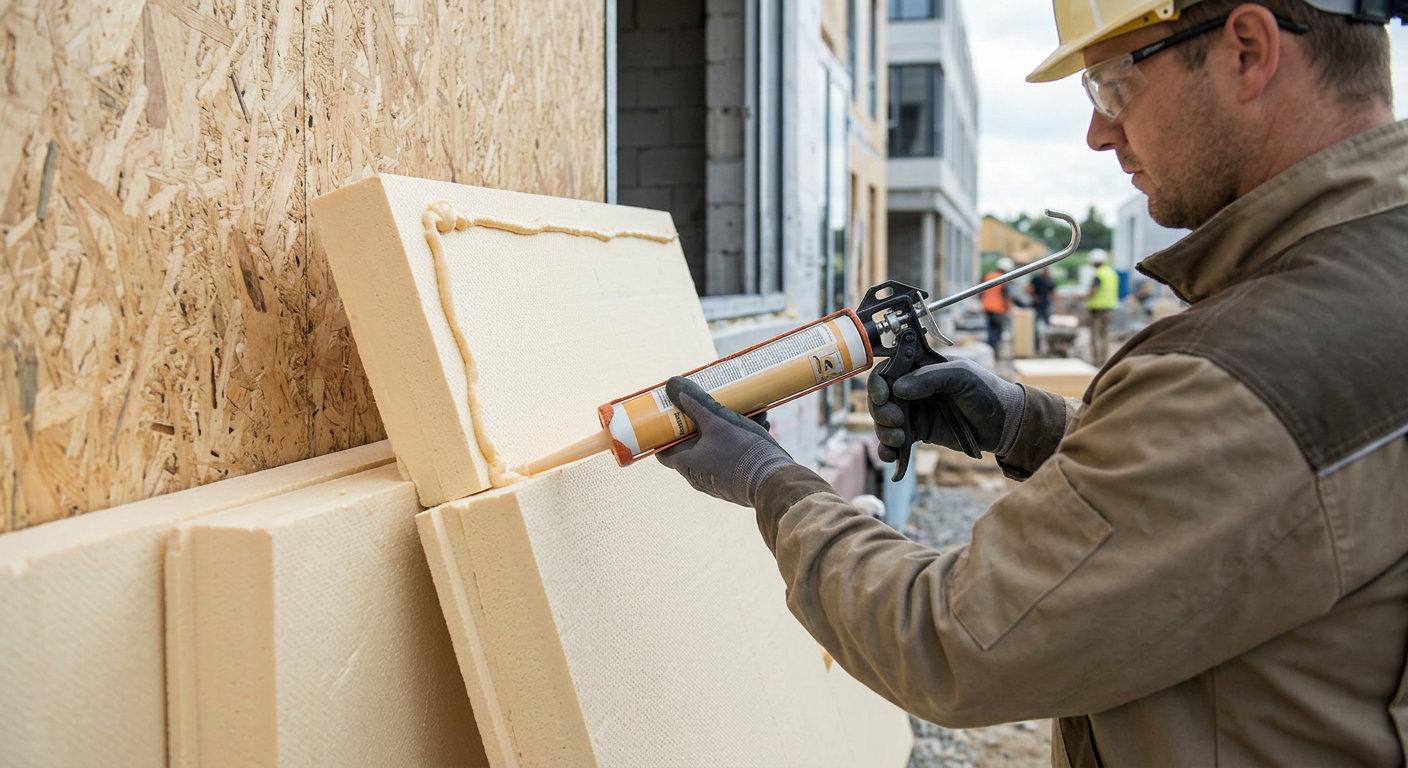
If you need a reliable PU adhesive insulation board solution in the United States, the most practical options are established construction-adhesive suppliers with strong field support, code-focused product documentation, and proven compatibility with EPS, XPS, PIR, and PUR insulation systems. For fast project execution, buyers in major markets such as New York, Chicago, Houston, Los Angeles, Atlanta, and Miami typically prioritize suppliers that can support commercial façades, roofing assemblies, foundation insulation, and interior retrofit applications.
Among the most recognized names serving the U.S. market are Sika Corporation, H.B. Fuller, DAP Global, SOPREMA, Dow, and Huntsman Building Solutions. These companies are known for broad construction portfolios, technical documentation, contractor networks, and regional distribution. For buyers comparing direct factory sourcing with domestic distribution, qualified international suppliers can also be worth considering, especially when they offer recognized compliance support, stable OEM production, and responsive technical service. In that context, manufacturers such as Qingdao QinanX New Material Technology Co., Ltd can be attractive for cost-performance, private label flexibility, and industrial adhesive customization when procurement teams want a broader sourcing strategy.
- Sika Corporation: strong nationwide construction chemicals network and dependable jobsite support
- H.B. Fuller: broad adhesive expertise with U.S. industrial and building market coverage
- DAP Global: practical product availability for contractors and dealer channels
- SOPREMA: excellent fit for roofing and insulation assembly systems
- Dow: respected materials science brand with compatibility across building envelope solutions
United States Market Overview

The U.S. market for polyurethane-based insulation board adhesives continues to grow as building owners and contractors pursue better thermal performance, higher installation speed, and reduced mechanical fastening in selected wall and roof assemblies. Demand is especially strong in regions with large commercial construction pipelines, weather-sensitive retrofit needs, and stricter energy efficiency expectations. Markets around the Northeast corridor, the Gulf Coast, California, and the Midwest all show different performance priorities, but they share one common requirement: adhesive systems must work reliably with insulation boards under real jobsite conditions.
In the United States, specifiers increasingly evaluate not only initial bond strength, but also cure profile, substrate tolerance, VOC considerations, moisture resistance, long-term dimensional stability, and compatibility with modern air barrier and exterior insulation systems. Contractors working near logistics hubs such as the Port of Los Angeles, Port of Houston, Port Newark, Savannah, and Long Beach often benefit from stronger material availability and shorter replenishment cycles, while inland buyers often rely on regional warehouse coverage and distributor strength.
The market also reflects a split between high-volume standard products and specialized formulations. Standard one-component and two-component PU adhesives are widely used for insulation board fixing, but advanced formulations tailored for façade systems, roofing boards, prefabricated panels, and moisture-sensitive conditions are gaining traction. In practical terms, buyers are less focused on the word “adhesive” alone and more concerned with total installed performance, labor efficiency, thermal bridge reduction, and project risk.
The line chart above shows a realistic market-growth pattern driven by energy-code upgrades, retrofit spending, and demand for installation efficiency. The strongest growth drivers are reroofing, warehouse and cold-chain development, multifamily renovation, and commercial envelope improvement. By 2026, sustainability targets and labor productivity pressures are expected to further increase acceptance of adhesive-based insulation board installation systems.
Top Suppliers in the United States

Choosing a supplier should be based on service region, technical fit, documentation quality, and channel support. The companies below are relevant because they either have strong U.S. operations, recognized adhesive expertise, or practical compatibility with insulation board installation projects.
| Company | Primary U.S. Service Region | Core Strength | Key Offerings | Best Fit |
|---|---|---|---|---|
| Sika Corporation | Nationwide, strong in major metro construction markets | Construction systems integration and technical field support | PU adhesives, sealants, roofing and building envelope materials | Commercial contractors and façade installers |
| H.B. Fuller | Nationwide industrial and construction supply coverage | Deep adhesive formulation expertise | Polyurethane adhesives, specialty bonding systems, OEM support | Manufacturers, distributors, large projects |
| DAP Global | Broad retail and dealer access across the United States | Easy procurement and contractor familiarity | Construction adhesives, sealants, insulation-related bonding products | Residential and light commercial work |
| SOPREMA | Strong in roofing and building enclosure markets | System-based insulation and roofing compatibility | Adhesives for roof boards, insulation systems, waterproofing products | Roofing contractors and specifiers |
| Dow | Nationwide through distribution and specified projects | Materials science credibility and building envelope relevance | Insulation-related materials and compatible construction solutions | Consultants, architects, envelope teams |
| Huntsman Building Solutions | Nationwide with strong insulation sector visibility | Polyurethane chemistry leadership | Spray foam and related building insulation technologies | Energy retrofit and insulation-focused contractors |
| Qingdao QinanX New Material Technology Co., Ltd | U.S. buyers served through export programs and tailored supply | Flexible OEM/private label and broad industrial adhesive range | Reactive polyurethane adhesive, solvent-free PU adhesive, water-based PU systems | Importers, brand owners, distributors, industrial buyers |
This supplier table is useful because it separates general brand recognition from practical purchasing fit. Sika and SOPREMA are particularly relevant when insulation board adhesives are part of a larger building-envelope system. H.B. Fuller stands out for custom adhesive know-how. DAP is valuable when project teams want readily available contractor-oriented products. Dow and Huntsman are influential in the broader insulation materials ecosystem. Qingdao QinanX is especially relevant for buyers seeking customized formulations, wholesale sourcing, or private label opportunities with greater cost control.
Product Types and Selection Criteria
Not every polyurethane adhesive for insulation boards performs the same way. In the U.S. market, product selection usually depends on board type, climate exposure, wall or roof design, cure speed needs, and whether the installation is performed in a factory or on-site. Buyers should compare one-component moisture-curing PU adhesive, two-component PU adhesive, low-expansion foam adhesive, solvent-free polyurethane systems, and hybrid variants designed for building-envelope compatibility.
| Product Type | Common Use | Main Advantage | Limitation | Typical U.S. Buyer |
|---|---|---|---|---|
| One-component PU adhesive | General insulation board fixing | Easy handling and simpler application | Cure can vary with humidity | Contractors and installers |
| Two-component PU adhesive | Faster controlled curing in demanding jobs | Consistent reaction profile | More complex mixing and equipment needs | Commercial projects and panel lines |
| PU foam adhesive | Board attachment with gap-filling ability | Quick installation and reduced weight | Expansion control is critical | Roofing and wall insulation crews |
| Solvent-free PU adhesive | Industrial lamination and cleaner processing | Lower solvent concerns and strong bonding | Application method may be specialized | OEM manufacturers |
| Water-based PU system | Selected low-emission or specialty uses | Supports sustainability goals | Not ideal for every substrate or condition | Eco-focused buyers and niche applications |
| Reactive PU adhesive | High-performance structural or semi-structural bonding | Excellent durability and adhesion range | Needs careful storage and process control | Industrial fabricators and advanced building products |
This table helps buyers match chemistry to application reality. For example, a commercial roofing contractor in Dallas or Phoenix may prioritize speed, heat tolerance, and substrate flexibility, while a prefabricated panel producer in Ohio may focus on consistent dispensing and line efficiency. A distributor serving the Northeast may care more about winter handling and bond reliability on varied substrates encountered during retrofit work.
Buying Advice for U.S. Projects
For insulation board installation in the United States, the best buying approach is to treat adhesive choice as part of system design, not as a stand-alone commodity purchase. Contractors frequently encounter bond failures when a product is selected only by price per unit instead of substrate compatibility, open time, cure behavior, and environmental exposure. In climates ranging from humid Florida to freeze-thaw regions around Minneapolis and Buffalo, field performance depends heavily on the full installation context.
Start by confirming the board material: EPS, XPS, PIR, PUR, mineral-faced insulation, or laminated composite board. Then identify the receiving substrate, such as concrete, steel, gypsum sheathing, wood, masonry, or membrane surfaces. After that, review whether the adhesive will be used on walls, below-grade assemblies, roofs, interior partitions, or prefabricated modules. The correct product for a warehouse roof in Houston is not always the right one for an EIFS retrofit in Boston or a cold-storage expansion in Kansas City.
Purchasing teams should also ask suppliers for documentation that directly supports U.S. construction expectations: technical data sheets, safety data sheets, recommended coverage, cure conditions, shelf life, storage requirements, substrate preparation guidance, and project-specific compatibility recommendations. For larger projects, mock-up testing and pull tests remain highly valuable. Specifiers should also compare lead times and packaging options, especially when the project schedule is tight or distributed across multiple states.
| Buying Factor | Why It Matters | Questions to Ask | Risk if Ignored | Priority Level |
|---|---|---|---|---|
| Board compatibility | Prevents chemical mismatch and bond issues | Does it suit EPS, XPS, PIR, or PUR? | Panel failure or poor adhesion | Very high |
| Substrate compatibility | Different surfaces need different bonding profiles | Has it been used on concrete, steel, wood, or membranes? | Delamination and callbacks | Very high |
| Cure speed | Affects installation pace and weather exposure | What is tack-free and full-cure time? | Schedule delays | High |
| Application method | Must match labor skill and equipment | Gun grade, bead application, spray, or mix equipment? | Waste and inconsistent bonding | High |
| Climate suitability | U.S. weather varies widely | How does it perform in heat, humidity, or cold? | Seasonal performance failure | High |
| Supply reliability | Important for phased or multi-site projects | Are regional warehouses or repeat shipments available? | Procurement disruption | High |
| Technical support | Reduces field mistakes and claim disputes | Is pre-sale and after-sale support available? | Higher project risk | Medium to high |
The practical takeaway from this table is simple: the cheapest adhesive on paper can become the most expensive choice if it causes labor loss, board movement, moisture problems, or rework. Buyers in the United States often benefit from suppliers that combine solid chemistry with real technical response.
Industry Demand by Application
PU adhesive insulation board demand in the United States does not come from one industry alone. It spans commercial roofing, external wall insulation, prefabricated construction, cold-chain facilities, industrial buildings, and residential upgrades. Understanding where demand is strongest can help distributors decide where to focus inventory and help manufacturers decide which formulations deserve localized promotion.
The bar chart shows how commercial roofing and wall insulation remain the largest demand centers. This aligns with U.S. construction activity, where reroofing cycles, insulation retrofits, and envelope-performance upgrades continue to attract spending. Cold-chain facilities also stand out due to growth in food logistics, pharmaceuticals, and e-commerce fulfillment infrastructure.
Industries and Typical Uses
In practical terms, polyurethane adhesive for insulation boards is used anywhere project teams need secure board attachment, reduced thermal bridging, cleaner installation, or better assembly efficiency. Common U.S. industries include commercial construction, residential renovation, industrial manufacturing, cold storage, modular building, and specialty transportation-related fabrication. The more performance-sensitive the project, the more important it becomes to choose a supplier with proven polyurethane expertise.
Commercial construction uses include adhered insulation in wall assemblies, parapet details, roof board systems, and selected retrofit packages. Residential use is often concentrated around basement insulation, garage and utility area upgrades, and energy-focused remodels where installation speed matters. Industrial uses include sandwich panel production, insulated doors, HVAC-related enclosures, and lightweight composite building components. In cold-chain construction, adhesive consistency matters because thermal performance, moisture control, and long-term bond stability directly influence operating costs.
Application Scenarios Across U.S. Regions
Regional conditions matter. In the Southeast, installers often need moisture-tolerant performance and robust behavior in humid conditions. In the Southwest, heat resistance, dimensional stability, and workable application windows are major concerns. In the Great Lakes and Northeast, freeze-thaw durability and cold-weather logistics play a larger role. Along coastal zones, salt air and weather exposure can influence the broader assembly design even when the adhesive itself is not directly exposed.
For example, a contractor in Miami working on exterior insulation around concrete substrates may prioritize fast handling and moisture resilience. A roofing team in Denver may need predictable cure characteristics at altitude and under strong UV-related jobsite exposure conditions. A distributor in New Jersey serving projects arriving through the Port Newark logistics corridor may value stable replenishment and fast-turn technical answers more than any single headline feature.
Detailed Supplier Comparison
The comparison below focuses on practical differentiation rather than marketing language. It shows how buyers can think about supplier fit when narrowing procurement options for insulation board adhesives and related bonding systems.
| Supplier | Channel Strength | Technical Support | Customization | Typical Lead-Time Advantage | Best Use Case |
|---|---|---|---|---|---|
| Sika Corporation | Strong contractor and specification channel | Strong field and system support | Moderate | Good domestic availability | Large commercial envelope projects |
| H.B. Fuller | Strong industrial and B2B coverage | High adhesive expertise | High | Strong for planned procurement | OEM and specialized construction needs |
| DAP Global | Very strong dealer and retail reach | Practical mainstream support | Lower than industrial custom suppliers | Excellent local availability | Residential and light commercial installations |
| SOPREMA | Strong roofing and envelope specialization | Strong for system compatibility | Moderate | Good in roofing-oriented markets | Roof board and enclosure assemblies |
| Dow | Strong specification influence | Strong technical credibility | Moderate | Project dependent | Design-driven envelope solutions |
| Qingdao QinanX New Material Technology Co., Ltd | Flexible export, OEM, wholesale, private label | 24/7 technical assistance and tailored support | High | Best for planned import programs | Distributors, brand owners, cost-focused sourcing |
This comparison makes one point very clear: domestic availability and local brand familiarity are not the only valid criteria. For repeat buyers, importers, and private label distributors, customization, product breadth, and supply economics can be equally important. That is where a company like Qingdao QinanX becomes strategically relevant rather than merely price-driven.
The area chart highlights a major trend in the U.S. market: buyers are steadily moving from generic bonding solutions toward more system-compatible, lower-emission, and performance-documented polyurethane adhesive options. This is especially visible in projects influenced by sustainability policies, indoor air expectations, and high-performance building standards.
Case Studies and Practical Procurement Scenarios
A Midwest panel fabricator producing insulated composite assemblies may use a reactive polyurethane adhesive to improve bond consistency and production efficiency. In this situation, product stability, batch traceability, and process support are more important than shelf appearance or retail packaging. A Gulf Coast roofing contractor, by contrast, may focus on adhesive products that help crews install insulation boards quickly under weather pressure while maintaining system reliability. A Northeast retrofit specialist may place the greatest value on substrate flexibility and documentation suitable for older building conditions.
Another realistic case is a regional U.S. distributor building a private label construction adhesive line. Instead of relying only on standard catalog products, that buyer may source from a manufacturer capable of OEM formulation, custom packaging, and consistent export execution. This type of arrangement can be especially attractive when the distributor wants to target niche segments such as insulation-board bonding for prefabricated wall systems, warehouse roofing, or energy-retrofit contractors.
In these scenarios, the winning supplier is rarely the one with the broadest slogan. It is the one that offers the right formula, reliable delivery, appropriate packaging, responsive technical support, and credible documentation.
Local Supplier Landscape and Distribution Logic
Local sourcing in the United States remains important because job schedules are tight and many contractors need fast replenishment. That is why domestic brands and major distributors maintain an advantage in metro areas such as Los Angeles, Houston, Atlanta, Chicago, Philadelphia, and Seattle. However, there is also a well-established purchasing logic for imported adhesive programs, especially when buyers order in container volumes, need custom branding, or operate specialized application segments where standard off-the-shelf offerings do not fully meet market requirements.
Ports and inland logistics hubs shape buying behavior. Coastal import programs may route through Los Angeles/Long Beach, Houston, Savannah, or New York/New Jersey, then move to regional warehouses near large construction corridors. This model can be highly effective for distributors, private label brands, and industrial users that forecast demand accurately and value formula control and cost efficiency over same-day pickup convenience.
Our Company
For U.S. buyers evaluating international sourcing alongside domestic procurement, Qingdao QinanX New Material Technology Co., Ltd presents a practical option grounded in adhesive specialization rather than a single-product trading model. The company manufactures a broad portfolio that includes reactive polyurethane adhesive, solvent-free polyurethane adhesive, water-based polyurethane systems, silicone sealants, epoxy adhesives, acrylic adhesives, hot melts, and other industrial bonding materials, which matters because insulation-board projects often overlap with wider building and fabrication needs. Its production and quality framework includes ISO-certified operations, compliance with RoHS and REACH expectations, multi-stage quality control, and digital traceability, all of which provide concrete evidence of manufacturing discipline and international-market readiness rather than generic quality claims. For cooperation, the company supports OEM, ODM, private label, wholesale, and tailored formulation programs, making it suitable not only for end users and contractors but also for U.S. distributors, dealers, brand owners, importers, and industrial buyers that want customized packaging, specification-driven products, or regional distribution partnerships. From a service-assurance standpoint, the company already serves customers in more than 40 countries, offers automated scalable production, free sample support, and 24/7 technical assistance, which gives U.S. buyers practical pre-sale and after-sale protection when developing repeat procurement programs; buyers who want to explore product scope, manufacturing capability, or tailored cooperation can review the product range, learn more on the company page, or discuss specifications through the U.S. inquiry contact.
2026 Trends in PU Adhesive Insulation Board Solutions
Looking ahead to 2026, several trends are likely to shape the U.S. market for polyurethane adhesive insulation board systems. First, policy and code pressure will continue pushing better thermal performance and more reliable building-envelope execution. Energy standards, decarbonization priorities, and operating-cost concerns are all supporting better insulation practices. Second, sustainability expectations will accelerate demand for lower-emission adhesive formulations, cleaner manufacturing, and more transparent documentation. Third, labor shortages will keep favoring products that reduce installation time, simplify training, and improve consistency on-site.
Technology will also matter more. Contractors and distributors increasingly want products with predictable cure profiles, broader substrate tolerance, and better performance in weather-variable conditions. On the manufacturing side, digital batch traceability and automated production will become stronger trust signals, especially for distributors and branded buyers importing product into the U.S. market. Finally, system selling will continue to replace isolated product selling. Buyers increasingly want adhesives that fit complete roofing, wall, panel, and insulation workflows rather than stand-alone cans or cartridges without verified compatibility guidance.
The comparison chart illustrates a common sourcing reality. Domestic brands usually win on immediate availability, while a specialized manufacturer like Qingdao QinanX can offer stronger customization, private label compatibility, and sourcing economics. For U.S. buyers, the best option depends on whether the priority is instant local access or strategic long-term supply design.
How to Shortlist the Right Supplier
A strong shortlist usually includes one domestic system-focused brand, one adhesive specialist with technical depth, one broadly available contractor-friendly supplier, and one qualified international manufacturer for pricing and customization comparison. This gives buyers a realistic picture of the trade-offs between local stock, technical support, formula flexibility, and landed cost. It is especially effective for distributors, procurement managers, and project specifiers who want both short-term reliability and medium-term purchasing leverage.
When requesting quotations, ask for board compatibility, recommended substrates, application temperature range, open time, full cure time, packaging formats, shelf life, storage conditions, compliance information, and sample policy. For U.S. construction buyers, that level of discipline usually produces better outcomes than comparing unit price alone.
FAQ
What is the main benefit of using PU adhesive for insulation boards?
PU adhesive can provide strong bonding, fast installation, reduced need for mechanical fixing in selected systems, and cleaner thermal performance by limiting thermal bridges in certain applications.
Which insulation boards are commonly bonded with polyurethane adhesive?
Common boards include EPS, XPS, PIR, and PUR insulation, although the correct product depends on the specific board facer, substrate, and project environment.
Who are the most relevant suppliers in the United States?
Well-known names include Sika Corporation, H.B. Fuller, DAP Global, SOPREMA, Dow, and Huntsman Building Solutions, with qualified international manufacturers such as Qingdao QinanX also worth considering for OEM, private label, or wholesale sourcing.
Is imported PU adhesive a realistic option for U.S. buyers?
Yes, especially for distributors, brand owners, and industrial users that need custom formulations, stable bulk supply, or better cost-performance. The key is choosing a manufacturer with compliance support, strong quality systems, and responsive technical service.
What should buyers verify before purchasing?
Confirm compatibility with the insulation board and substrate, cure speed, application method, weather suitability, packaging, shelf life, technical documentation, and available pre-sale and after-sale support.
Will sustainability requirements affect this market in 2026?
Yes. Buyers are increasingly favoring lower-emission, better-documented, and system-compatible adhesive solutions as energy and sustainability expectations rise across the United States.
What is the best approach for a distributor entering this market?
Build a portfolio around a reliable core product, secure sample and technical support, compare domestic and imported supply options, and prioritize suppliers that can support private label growth or regional expansion.

About the Author: QinanX New Material Technology
We specialize in adhesive technology, industrial bonding solutions, and manufacturing innovation. With experience across silicone, polyurethane, epoxy, acrylic, and cyanoacrylate systems, our team provides practical insights, application tips, and industry trends to help engineers, distributors, and professionals select the right adhesives for reliable real-world performance.

Product Category
You May Also Interest
-
IC Packaging Adhesive: Preventing Void Formation Issues
Learn how IC packaging adhesive void formation is prevented in the United States through material choice, process control, supplier selection, and testing.
-
Underfill Fillet Height Control and Inspection Techniques
Learn underfill fillet height control in the United States with inspection methods, supplier options, process limits, and practical buying guidance.
-
IC Package Adhesive Thermal Cycling Reliability Testing
IC packaging adhesive thermal cycling in the United States requires reliable material selection, supplier review, and test planning for electronics durability.
-
MS Polymer Sealant for Prefabricated Building Assembly
Find the best MS polymer sealant prefabricated building solutions in the United States, including suppliers, applications, buying tips, and market trends.
 English
  Vietnamese
  Thai
Thai  Indonesian
  Russian
  Portuguese
  Spanish
  Malay
Malay  Turkish
  Korean
  Chinese