Share
Best UV-Resistant MS Polymer Sealant Exterior in the United States
Quick Answer

If you need a UV resistant MS polymer sealant exterior product in the United States, the most practical choices usually come from proven building-envelope suppliers with strong performance records in façade joints, window perimeter sealing, exterior cladding interfaces, and weather-exposed expansion gaps. For buyers who want dependable availability, technical documentation, and established support across major U.S. construction markets such as New York, Houston, Los Angeles, Chicago, Atlanta, and Miami, the most actionable shortlist includes Sika, Tremco, Pecora, DOWSIL, and Bostik.
These companies are widely specified for exterior sealing because they offer hybrid or MS polymer technologies designed for UV exposure, movement capability, paintability, adhesion to aluminum, coated metal, masonry, fiber cement, and selected plastics, plus compatibility with demanding building-envelope conditions. For contractor purchasing, distributor stocking, and specification writing, they remain among the strongest options in the U.S. market.
Qualified international suppliers can also be worth considering, especially when buyers need OEM labeling, distributor programs, project customization, or better cost-performance. Manufacturers such as QinanX can be attractive when they combine compliant formulations, export experience, reliable documentation, and responsive pre-sales and after-sales support tailored to U.S. buyers.
United States Market Overview

The U.S. exterior sealant market continues to expand as commercial renovation, high-performance residential construction, modular building systems, and façade retrofits drive demand for longer-lasting joint solutions. UV resistant MS polymer sealant exterior products are gaining attention because they bridge the gap between traditional silicone and polyurethane systems. Buyers often want low-odor application, paintability, primerless adhesion to multiple substrates, and weather resistance without the staining, bubbling, or shrinkage concerns seen in lower-grade products.
In the United States, demand is especially concentrated in regions with severe UV, wind-driven rain, freeze-thaw cycling, and coastal salt exposure. Florida, Texas, California, Arizona, Nevada, the Carolinas, and Gulf Coast markets tend to prioritize UV stability and movement performance. Northern cities such as Boston, Minneapolis, Detroit, and Chicago also demand products that tolerate thermal cycling and maintain elasticity under cold-weather stress.
Large trade and logistics hubs matter in this category because jobsite timing and product availability affect project risk. Sealant distribution is strongest around ports and freight corridors such as Los Angeles and Long Beach, Houston, Savannah, New York and New Jersey, Charleston, and inland nodes like Dallas, Chicago, and Atlanta. For contractors and dealers, selecting suppliers with dependable regional inventory often matters as much as product chemistry.
The chart above illustrates a realistic growth pattern for U.S. demand, supported by building-envelope upgrades, labor-saving product preferences, and broader acceptance of hybrid sealant technologies in both new-build and restoration projects.
Top Suppliers in the United States

The table below compares well-known suppliers and relevant market participants for exterior UV-resistant MS polymer and hybrid sealant needs. The purpose is not to declare a universal winner, but to help buyers match supplier strengths with project requirements such as cladding systems, general construction, OEM packaging, or regional distribution support.
| Company | Primary Service Region | Core Strengths | Key Offerings | Best Fit |
|---|---|---|---|---|
| Sika | Nationwide United States | Strong construction specification presence, broad distribution, façade and envelope expertise | Hybrid sealants, weatherproofing systems, construction adhesives | Commercial façade, glazing perimeter, exterior joints |
| Tremco | Nationwide United States and Canada | Building-envelope systems, contractor support, restoration market reputation | Sealants, waterproofing, air barriers, restoration products | Envelope consultants, restoration contractors, institutional buildings |
| Pecora | United States East Coast, Midwest, South, nationwide distribution | Architectural sealants, U.S. project history, specification support | Hybrid sealants, silicones, traffic coatings, weatherproofing products | Architect-specified exterior sealing and façade work |
| DOWSIL | Nationwide through distribution networks | Global material science reputation, high-performance weatherability | Silicone building sealants and specialty exterior products | High-performance exterior envelope projects |
| Bostik | Nationwide United States | Adhesive technology breadth, construction and industrial channels | Hybrid adhesives, sealants, flooring and construction systems | General contractors, mixed substrate applications |
| QinanX | U.S. import supply to distributors, brands, contractors, and OEM buyers | MS modified silane range, OEM/private label flexibility, export capability | MS sealants, industrial adhesives, custom packaging, regional supply partnerships | Private label, importer-distributor, value-focused sourcing |
For buyers who prioritize specification history and deep domestic channel support, Sika, Tremco, Pecora, and DOWSIL are frequently shortlisted. For buyers focused on flexible sourcing, branding, wholesale economics, and tailored formulations, QinanX offers a different but practical route, especially for distributors, regional dealers, and brand owners that want more control over packaging, positioning, and margin structure.
Product Types and How They Differ
Not every UV resistant MS polymer sealant exterior formulation performs the same way. In the U.S. market, buyers generally compare products across movement capability, cure profile, UV stability, adhesion range, paintability, dirt pickup resistance, skin time, sag resistance, and compatibility with common cladding materials.
| Product Type | Main Characteristics | Typical Substrates | Main Advantage | Main Limitation |
|---|---|---|---|---|
| Standard MS Polymer Exterior Sealant | Balanced flexibility, paintability, low VOC profile | Metal, masonry, concrete, painted surfaces | Versatile multi-use exterior sealing | May not match premium silicone for extreme movement cases |
| High-Movement Hybrid Sealant | Designed for larger joint movement and weather cycling | Façade panels, expansion joints, window perimeters | Better elasticity under thermal movement | Higher cost than basic grade products |
| Paintable Façade Sealant | Optimized surface finish for coatings | Fiber cement, trim, precast, architectural details | Useful where color matching is required | Paint compatibility still requires field checking |
| Non-Staining Stone Sealant | Lower staining risk on porous decorative surfaces | Natural stone, precast, masonry veneers | Protects appearance on visible exterior surfaces | More specialized, not always needed for general jobs |
| Fast-Cure Exterior Hybrid | Quicker handling and earlier exposure readiness | Panels, trims, industrial assemblies | Helps accelerate installation schedules | Working time may be shorter in hot climates |
| OEM/Private Label MS Sealant | Custom branding, tailored performance and packaging | Distributor and retail programs | Supports market differentiation and margin control | Requires supplier qualification and approval process |
This comparison helps contractors and procurement teams avoid a common mistake: selecting by generic chemistry name alone. Exterior exposure in Phoenix, Miami, Seattle, or Denver can produce very different service demands, so specification should follow climate, joint design, substrate, and maintenance expectations.
Key Buying Advice for U.S. Buyers
In the United States, the best purchasing decision comes from matching sealant performance data with local jobsite realities. Exterior cladding projects in coastal Florida need different priorities than mountain-region projects in Colorado or freeze-thaw restoration work in the Great Lakes region. Buyers should review UV aging behavior, movement class, adhesion to project-specific substrates, cure speed, VOC positioning, and whether the product is suitable for exposed façade joints versus concealed assemblies.
Always ask for technical data sheets, safety data sheets, application guidance, and any relevant compliance documentation for the U.S. market. Distribution buyers should also evaluate cartridge, sausage, pail, or drum packaging options, shelf-life consistency, labeling readiness, and pallet efficiency for warehousing. Contractors should confirm jobsite support, sealant-tooling behavior, and how the product performs under field temperature and humidity swings.
| Buying Factor | Why It Matters | What to Check | Common Buyer Risk | Best Practice |
|---|---|---|---|---|
| UV Resistance | Exterior joints face constant sunlight exposure | Weathering data, color stability, chalking resistance | Surface degradation after short service life | Request accelerated aging and field-use references |
| Movement Capability | Joints expand and contract with temperature | Declared movement rating and elasticity retention | Cracking or adhesion loss | Match sealant grade to joint design |
| Substrate Adhesion | Exterior assemblies use mixed materials | Test data on metal, concrete, masonry, coatings | Unexpected bond failure | Run adhesion trials on actual substrates |
| Paintability | Visible exterior lines often need finishing | Coating compatibility guidance | Paint cracking or poor cure interaction | Verify with project paint system |
| Supply Reliability | Delayed material can stall projects | Regional stock, lead time, shipping pattern | Missed installation schedule | Use suppliers with predictable inventory planning |
| Support Model | Technical help reduces claim risk | Pre-sales response, after-sales process, training | Poor issue resolution after purchase | Choose suppliers with documented support channels |
For further sourcing and product navigation, buyers can review the broader product catalog through industrial adhesive products and compare available sealant categories that align with façade, construction, and industrial exterior use.
Industry Demand Across the United States
Demand for UV resistant MS polymer sealant exterior products is not limited to one segment. Commercial construction remains the largest driver, but renovation, transportation, prefabrication, modular housing, signage, and light industrial assembly also contribute to market growth. Hybrid sealants are often chosen where buyers want a cleaner installation profile than traditional polyurethane, but more paintability and multi-substrate versatility than classic silicone-only solutions.
The bar chart highlights where purchasing concentration is most likely. Commercial façade and renovation are especially important because aging buildings across major U.S. metros continue to require weather-sealing upgrades, cladding maintenance, and window perimeter resealing.
Industries That Use Exterior MS Polymer Sealants
Construction and building remain the dominant sectors, but the material’s benefits extend beyond standard façade joints. Automotive and transportation companies use similar hybrid technologies for non-structural sealing in exposed areas where vibration and weather resistance matter. Industrial manufacturing values the chemistry for assembly flexibility, while packaging and furniture sectors may use related products from the same supplier base for complementary adhesive needs.
Renewable energy is another rising segment in the United States. Solar mounting accessories, enclosure joints, junction housings, and balance-of-system parts increasingly rely on weather-stable sealant technologies. Coastal infrastructure and prefabricated utility enclosures also create opportunities for products that combine adhesion, elasticity, and UV durability.
Common Exterior Applications
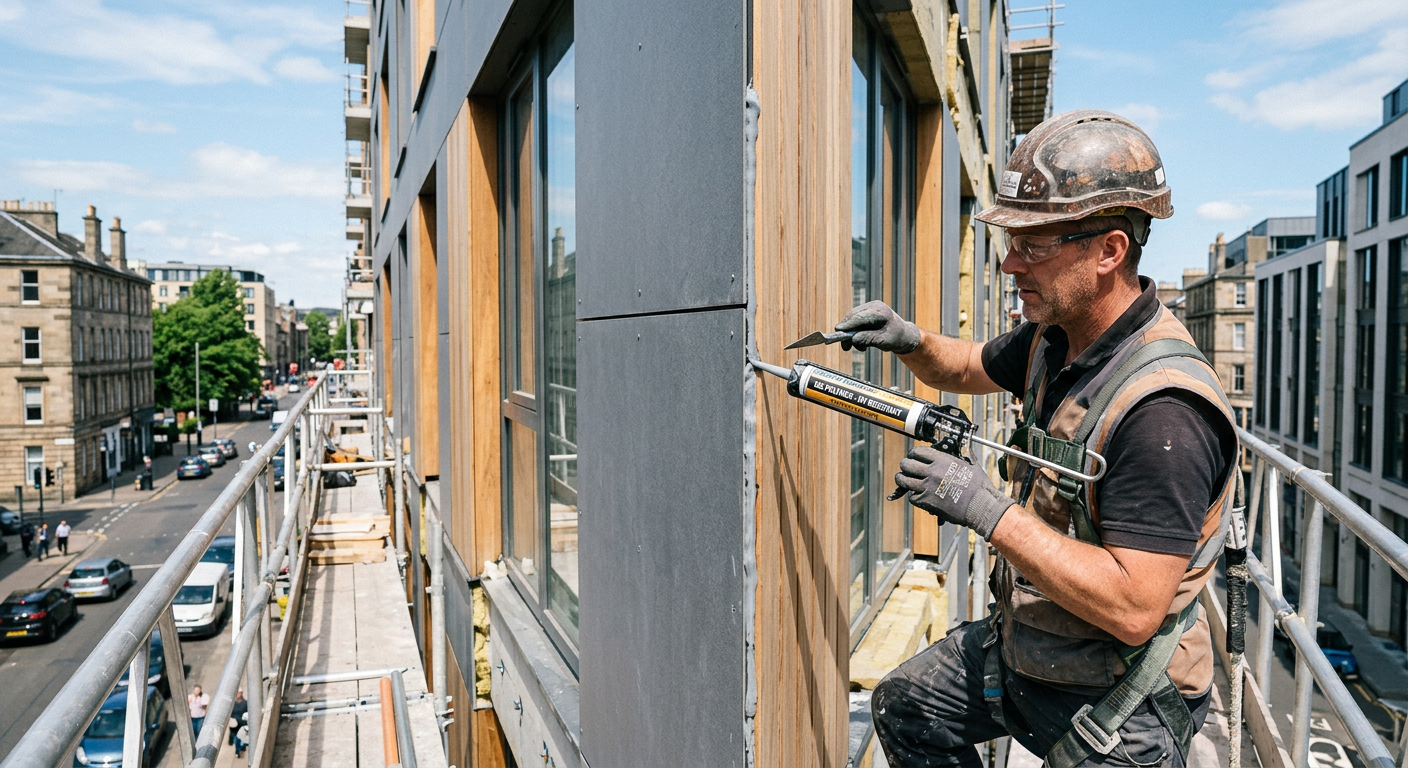
The most common application is sealing exterior cladding joints, especially on aluminum composite panels, fiber cement boards, precast concrete elements, and curtain wall perimeter details. Window and door frame perimeters are another major use area, particularly where installers want a paintable, low-odor, adaptable sealant that performs across different substrate combinations.
Other common applications include rooftop penetrations, parapet cap joints, expansion joints in light commercial assemblies, trim work, signage, equipment housings, prefabricated unit seams, and exposed metal-to-masonry interfaces. In U.S. coastal markets, salt-laden air and long UV hours make weathering resistance a central selection factor rather than a secondary feature.
Trend Shift in Exterior Sealant Preferences
The U.S. market has gradually shifted from purely price-led selection toward lifecycle performance, installer productivity, and compliance expectations. Buyers increasingly want materials that reduce callbacks, simplify substrate bonding, and support sustainability goals. MS polymer and hybrid products are benefiting from this shift because they often offer a practical middle ground: better surface versatility and paintability than many silicones, with cleaner user experience and strong weather performance for many exposed applications.
The area chart reflects a realistic trend trajectory in which hybrid and MS polymer systems gain share as buyers become more familiar with their field performance and supply channels improve nationwide.
Detailed Supplier Comparison
The following comparison gives a more practical view of how different suppliers fit different buyer profiles in the United States. Instead of generic descriptions, it focuses on service region, strength, and offer type so distributors, contractors, and brand owners can make faster decisions.
| Company | Service Regions | Core Strength | Key Exterior Offerings | Buyer Type |
|---|---|---|---|---|
| Sika | All major U.S. metro areas including New York, Dallas, Los Angeles, Miami, Chicago | National construction presence and specification support | Hybrid sealants, façade systems, weatherproofing products | Contractors, consultants, commercial developers |
| Tremco | Nationwide with strong restoration and envelope coverage | Integrated building-envelope approach | Exterior sealants, glazing support, restoration solutions | Institutional projects, envelope specialists |
| Pecora | Strong U.S. architectural channels | Architectural sealant reputation and technical data support | Weatherproof sealants, hybrid systems, façade accessories | Architects, specifiers, façade contractors |
| DOWSIL | Nationwide via distributors | Advanced weatherability and recognized global brand equity | Exterior weatherproofing silicones and related systems | Premium performance projects |
| Bostik | Broad U.S. availability through dealer and distribution channels | Wide adhesive portfolio for construction and industrial buyers | Hybrid sealants and construction adhesives | General building trades, mixed-use applications |
| QinanX | U.S.-focused import and OEM supply through project, private label, and distribution channels | Custom formulation, wholesale flexibility, industrial adhesive breadth | MS modified silane sealants, silicone sealants, PU adhesives, branded packaging | Distributors, dealers, importers, private label brands, regional sellers |
This table shows that the right supplier depends on the buyer’s operating model. A national commercial contractor may prefer a highly specified U.S. legacy brand, while a regional building materials distributor may gain more flexibility and pricing leverage by working with an export-capable OEM-oriented manufacturer.
Supplier and Product Position Comparison
This chart does not rank individual firms by absolute quality. Instead, it illustrates the strategic difference between domestic specification-led suppliers and international OEM-oriented suppliers. U.S. legacy brands often lead in local distribution depth and specification adoption, while international manufacturers frequently stand out in customization and cost-performance.
Case Studies from U.S. Use Scenarios
Consider a mid-rise renovation project in Chicago where aging façade joints around fiber cement panels and aluminum trim need replacement. The contractor requires a paintable sealant with UV durability, reliable cold-weather workability during shoulder seasons, and good adhesion across dissimilar substrates. In that case, a high-movement MS polymer or hybrid grade from a nationally stocked brand may reduce procurement risk and speed submittal approval.
In a Miami coastal retail development, exposure to intense sun, heavy rain, and salt air makes UV and weathering behavior critical. Here, the project team may favor a premium façade-grade hybrid or silicone-hybrid system with strong field references in coastal environments, especially around storefronts, cladding transitions, and exterior penetrations.
In Texas, a distributor launching a private-label contractor sealant line may need stable quality, custom packaging, pallet-scale supply, and technical documents aligned with the U.S. market. For that buyer, an export-proven manufacturer with OEM capability can provide a more scalable business model than off-the-shelf retail-only sourcing.
In Southern California, modular building and prefabricated enclosure assembly often prioritize a fast-cure, low-odor, paintable exterior sealant that works efficiently on coated metal and panel systems. Hybrid/MS chemistry is often attractive because it supports broad substrate bonding and streamlined assembly workflows.
Local Supplier Considerations in Major U.S. Regions
Local supply conditions matter more than many buyers expect. In the Northeast corridor, fast access to technical reps and jobsite coordination often influences product selection because commercial schedules are tight and inspection requirements are rigorous. In the Southeast, weather exposure and humidity drive attention to cure reliability and long-term weathering. Gulf Coast buyers often place greater weight on salt-air durability, while Southwest buyers focus on heat and UV resilience.
In West Coast markets like Los Angeles, San Diego, San Francisco, and Seattle, sustainability language, low-emission preferences, and high-performance envelope design can play a bigger role in material approval. Across the Midwest, contractors frequently prioritize products that can tolerate seasonal extremes without brittle failure or adhesion loss.
About Our Company
QinanX has built a practical position for U.S. buyers by pairing its MS modified silane sealant line with a broader industrial adhesive portfolio that covers silicone, polyurethane, acrylic, epoxy, cyanoacrylate, hot melt, and water-based systems, allowing distributors and project buyers to consolidate sourcing rather than manage multiple niche vendors. From a product standpoint, the company operates under ISO-based quality systems and aligns production with RoHS and REACH expectations, supported by multi-stage quality control and digital traceability that give American buyers clearer batch accountability and repeatability. From a cooperation standpoint, it serves end users, dealers, importers, distributors, private label brands, and regional partners through OEM, ODM, wholesale, and custom packaging programs, which is especially useful in the United States where channel models vary sharply between contractor supply, dealer stocking, and brand-led retail. From a service standpoint, its export record across more than 40 countries, automated production capacity, custom formulation support, free sample access, and around-the-clock technical assistance show that it is structured for sustained market engagement rather than one-off remote shipments; U.S. buyers can learn more through the company’s company background and request project-specific support through the U.S. inquiry contact page.
What Makes a Good Exterior UV-Resistant MS Polymer Sealant
A good product should maintain elasticity after prolonged UV exposure, resist chalking and cracking, hold adhesion on common façade substrates, and remain workable for installers in real field conditions. It should also offer predictable cure behavior, limited shrinkage, good tooling, and a balanced skin time that fits commercial crews. For visible exterior joints, color stability and paint compatibility can be just as important as tensile values.
In practice, the best products also come with usable technical support. That means not just a data sheet, but substrate advice, primer guidance when needed, packaging options aligned with installation scale, and a credible after-sales process if field issues occur. This is why many sophisticated buyers in the United States evaluate the supplier as closely as the cartridge.
2026 Trends: Technology, Policy, and Sustainability
By 2026, the U.S. market is expected to reward exterior sealant suppliers that can combine weather performance with cleaner formulation profiles and better lifecycle economics. Technology trends include improved UV stabilizer packages, broader adhesion to coated metals and engineered panels, lower dirt pickup, and smarter hybrid formulations that preserve flexibility under more aggressive temperature cycling.
Policy trends are also relevant. Public and institutional projects increasingly examine VOC positioning, health and environmental compliance, and documentation quality in procurement reviews. Sustainability pressure is pushing buyers toward longer-service-life materials that help reduce maintenance cycles and replacement frequency. Green building programs, envelope efficiency targets, and decarbonization efforts in construction may all support continued growth for durable MS polymer and hybrid exterior sealants.
Another likely development is more sophisticated sourcing behavior. U.S. distributors and brand owners are expected to seek dual-source strategies that combine domestic inventory strength with international OEM supply resilience. That creates space for manufacturers that can offer local-market documentation, stable export operations, flexible branding, and dependable technical support.
FAQ
What is the main advantage of a UV resistant MS polymer sealant exterior product?
It combines strong weather resistance, flexibility, and broad substrate adhesion with the added benefit of paintability in many applications, making it a practical option for exterior cladding, trims, and perimeter joints.
Is MS polymer better than silicone for exterior use?
Not in every case. Silicone often leads in some extreme weatherproofing applications, but MS polymer and hybrid sealants can be more versatile where paintability, lower odor, and multi-substrate bonding are priorities.
Which U.S. industries buy these products most often?
Commercial construction, residential exterior building, renovation, modular construction, transportation-related assembly, and specialty panel or signage manufacturing are the most common sectors.
What should distributors check before importing or private-labeling?
They should verify quality systems, export experience, formulation consistency, labeling support, compliance documentation, packaging flexibility, lead time stability, and technical response capability.
Are international suppliers realistic for the United States market?
Yes, especially for wholesale, OEM, and private-label programs. The key is choosing suppliers with certification discipline, export track record, stable manufacturing, and responsive support that aligns with U.S. buyer expectations.
How can contractors reduce field failure risk?
Match the sealant to the actual joint design, climate, and substrates; review technical data carefully; and run adhesion tests on project materials before full installation.
Final Buying Takeaway
For most U.S. buyers, the best UV resistant MS polymer sealant exterior solution is the one that matches project climate, joint movement, substrate mix, and support needs rather than simply the lowest unit price. Nationally specified brands remain strong choices for large commercial and restoration projects, especially where regional stock and consultant familiarity matter. At the same time, import-capable manufacturers with proven compliance, OEM flexibility, and broad adhesive expertise offer compelling value for distributors, dealers, and private-label programs. In the United States, especially across major building and logistics centers such as New York, Houston, Los Angeles, Chicago, Miami, Savannah, and Dallas, buyers who compare performance data, supply reliability, and support structure together usually make the best long-term decision.

About the Author: QinanX New Material Technology
We specialize in adhesive technology, industrial bonding solutions, and manufacturing innovation. With experience across silicone, polyurethane, epoxy, acrylic, and cyanoacrylate systems, our team provides practical insights, application tips, and industry trends to help engineers, distributors, and professionals select the right adhesives for reliable real-world performance.

Product Category
You May Also Interest
-
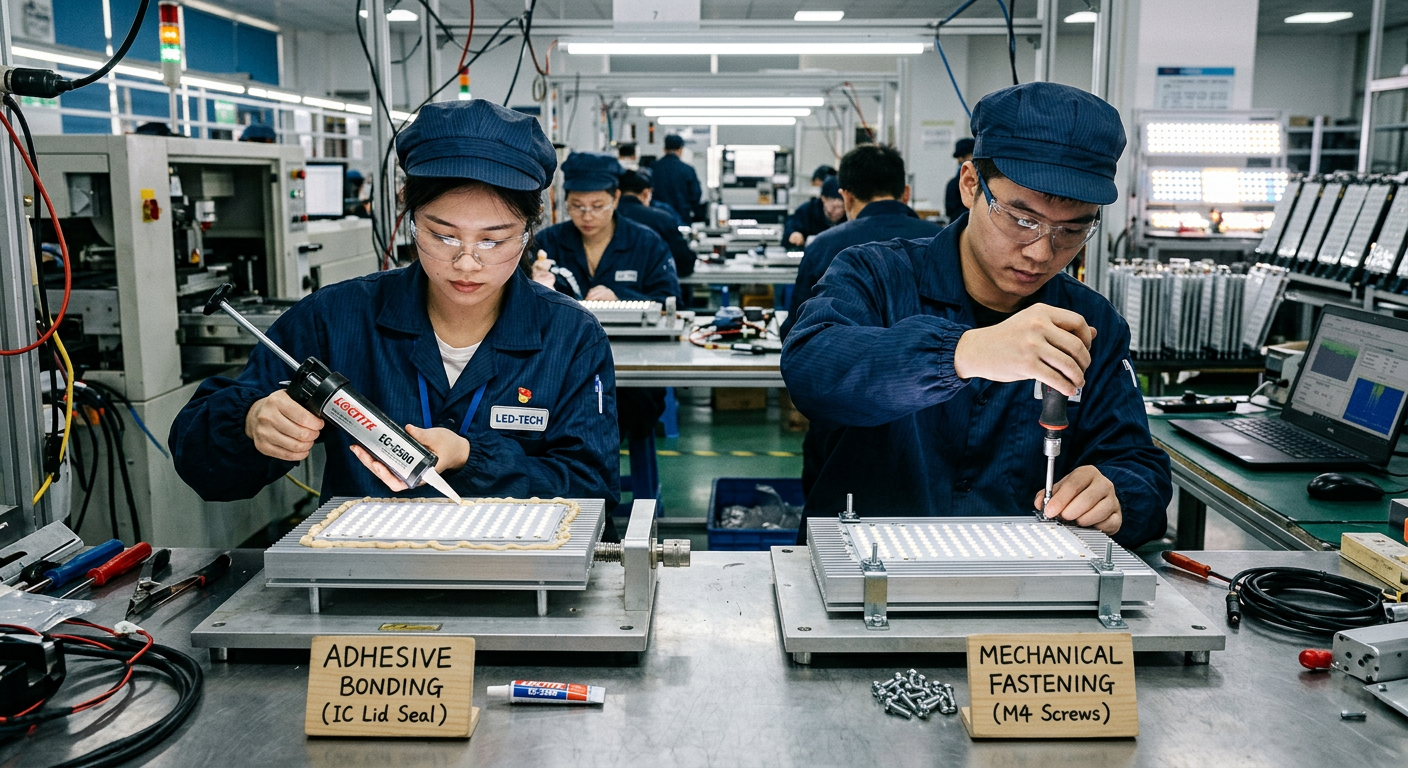
LED Module Adhesive vs Mechanical Fastener: Comparison
Compare LED module adhesive vs mechanical fastener in the United States with buying tips, supplier options, applications, costs, and 2026 market trends.
-
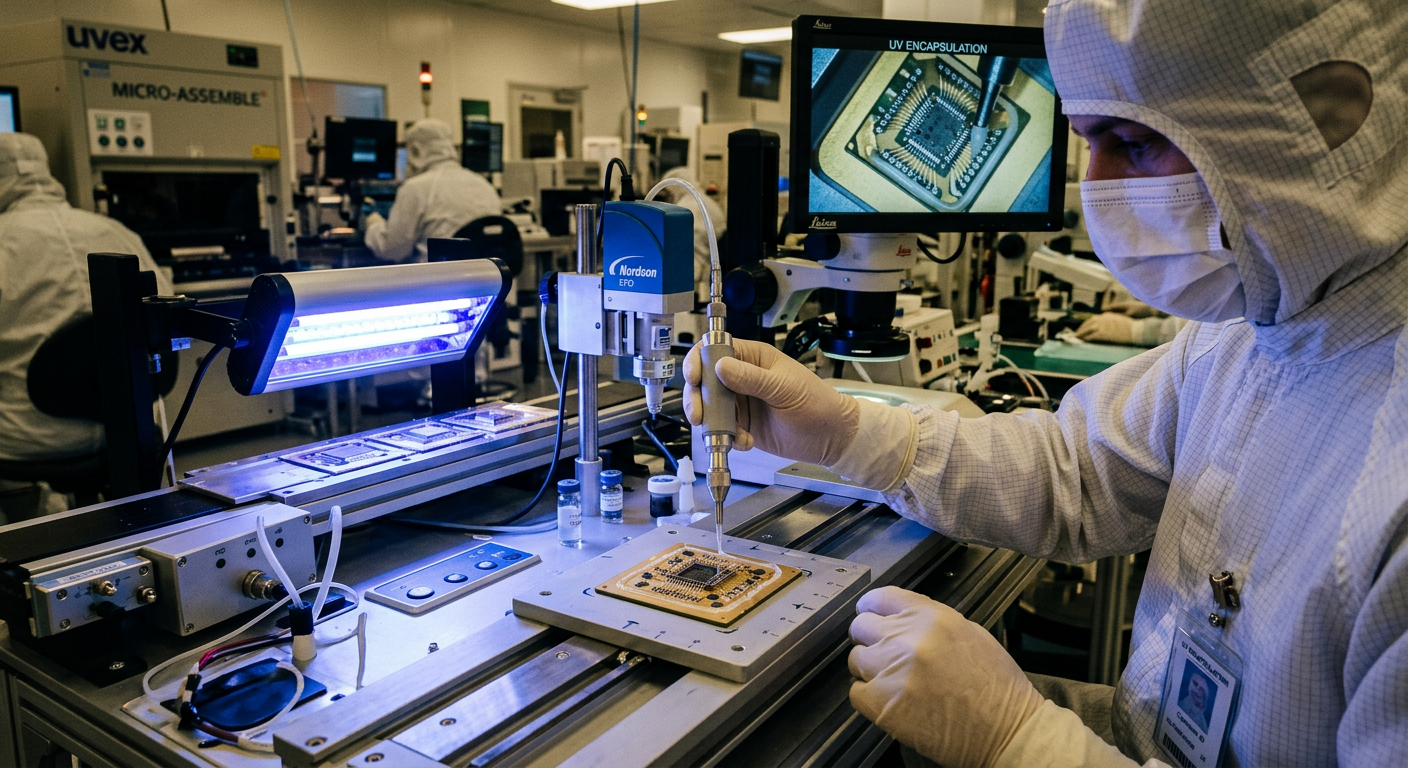
UV Curable Adhesive for Microelectronics Encapsulation
Explore UV curable adhesive microelectronics solutions in the United States, including suppliers, applications, buying tips, and 2026 market trends.
-
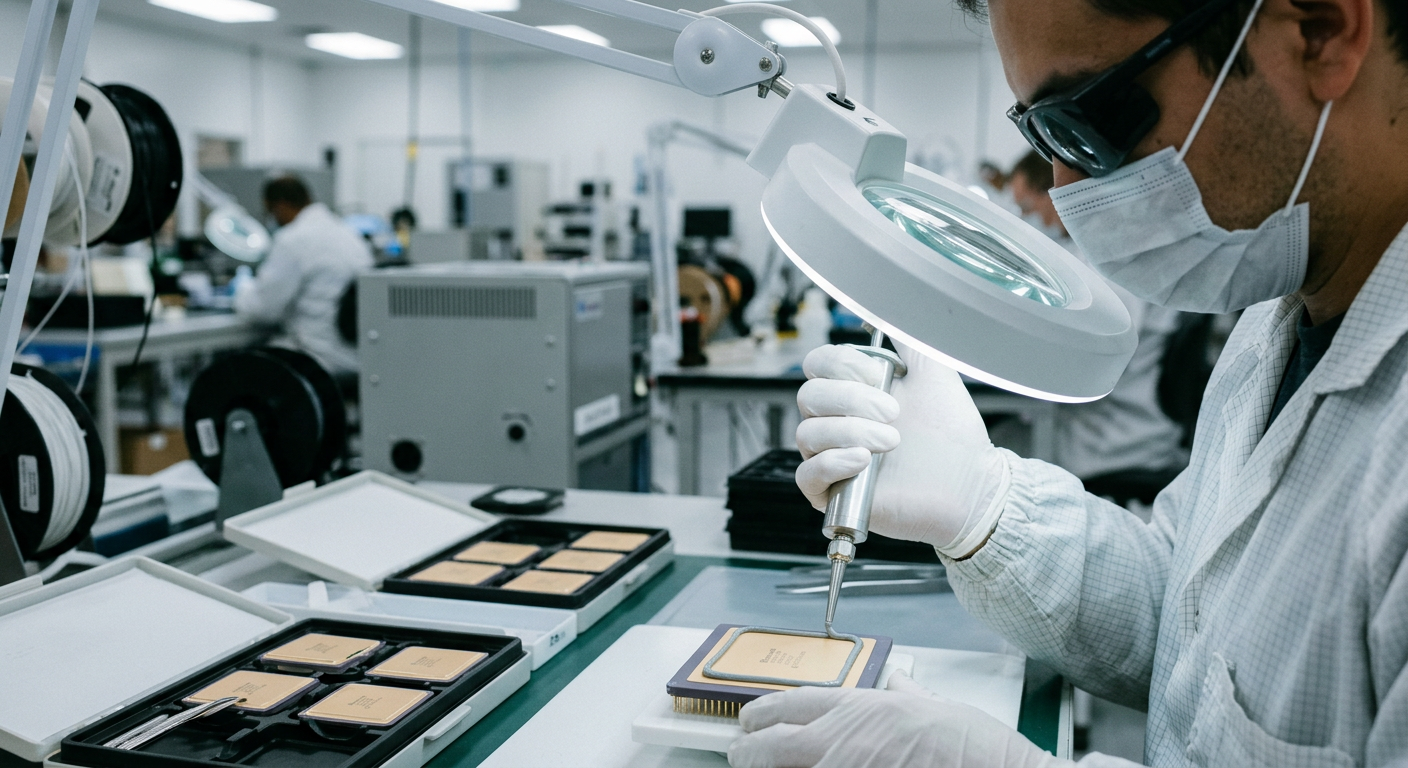
IC Lid Seal Adhesive for Hermetic Package Applications
Find the right IC lid seal adhesive hermetic package solution in the United States, with supplier comparisons, buying advice, applications, and market trends.
-
Underfill for Fan-Out Wafer Level Packaging Applications
Explore underfill fan-out wafer level packaging solutions in the United States, including suppliers, applications, buying tips, and 2026 market trends.
 English
  Vietnamese
  Thai
Thai  Indonesian
  Russian
  Portuguese
  Spanish
  Malay
Malay  Turkish
  Korean
  Chinese