Share
Best UV Resistant Adhesive for Outdoor LED Modules in the United States
Quick Answer

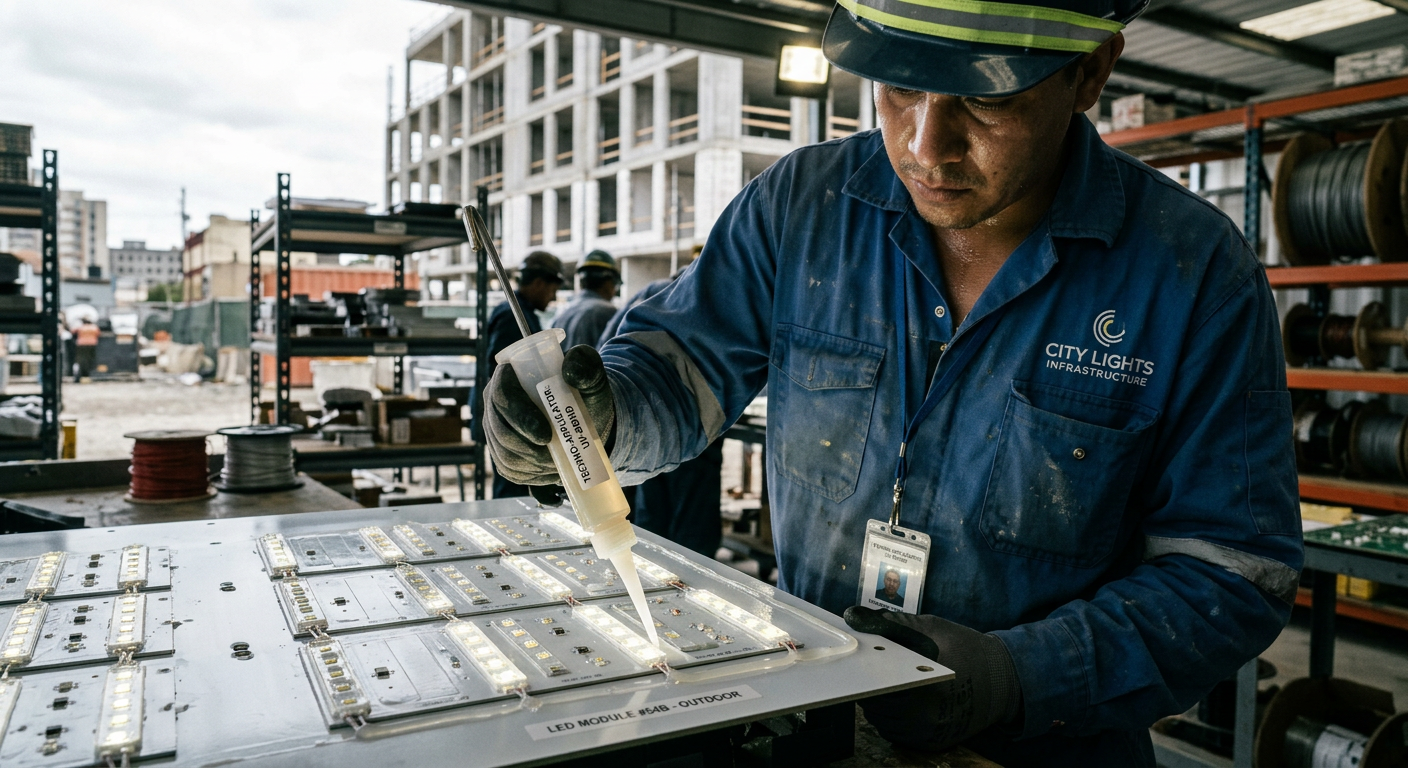
If you need a UV resistant adhesive LED module outdoor solution in the United States, the most practical choice is usually a neutral-cure silicone, MS polymer, or electronics-grade polyurethane designed for long-term exposure to sunlight, rain, heat, freeze-thaw cycles, and vibration. For channel letters, cabinet signs, architectural accents, and outdoor display housings, the best products are those that combine UV stability, waterproof sealing, strong adhesion to plastics and metals, and compatibility with LED module backing materials.
For buyers in the United States, several reliable suppliers and brands are frequently considered for outdoor LED assembly and sealing work: Dow, Momentive, 3M, Henkel, Ellsworth Adhesives, and Beacon Adhesives. These companies are widely used across major sign and electronics markets such as Los Angeles, Chicago, Houston, Atlanta, New York, and Miami because they support industrial customers with technical documentation, distributor access, and proven product lines for weather-exposed bonding. Qualified international suppliers can also be worth considering, especially when they offer RoHS and REACH compliant products, OEM support, stable manufacturing quality, and responsive pre-sales and after-sales service. This is particularly important for importers, private-label buyers, and regional distributors seeking strong cost-performance for outdoor LED projects.
Market Overview in the United States

The United States market for outdoor LED modules continues to expand as cities modernize commercial signage, transportation displays, architectural lighting, gas station canopies, quick-service restaurant branding, retail storefronts, and smart infrastructure. In all of these applications, adhesive performance matters because LED modules are no longer used only in sheltered interiors. They are installed in desert climates in Arizona and Nevada, humid coastal zones such as Florida and the Gulf Coast, snowy northern states, and high-UV regions across California, Texas, and the Southwest.
That climate diversity drives demand for outdoor-grade adhesive systems that can resist UV degradation, maintain bond strength over time, and avoid yellowing, cracking, chalking, shrinkage, or substrate damage. Buyers also expect adhesives to support efficient assembly in high-volume sign fabrication shops and OEM production lines. This means the ideal product is not just weather resistant; it must also offer manageable curing speed, good gap filling, low corrosion risk, and compatibility with common substrates such as aluminum, powder-coated steel, ABS, polycarbonate, PVC, and acrylic.
The strongest regional demand clusters are often found around logistics and manufacturing corridors. Los Angeles and Long Beach support imports and West Coast sign manufacturing. Houston and Dallas serve energy, retail, and commercial construction markets. Chicago remains central for national sign networks. Savannah, Newark, and Miami are important for East Coast distribution. These trade hubs influence how buyers compare lead time, freight cost, local warehousing, and technical service when sourcing UV resistant adhesive for LED module outdoor assemblies.
United States Market Growth Trend

The chart below illustrates a realistic market growth pattern for outdoor LED module adhesive demand in the United States, driven by retrofit signage, digital display expansion, and weather-resistant electronics assembly.
Product Types for Outdoor LED Module Bonding
Not all adhesive chemistries perform equally outdoors. The right choice depends on module design, substrate combination, ingress protection target, production speed, and maintenance expectations. In the United States, the most frequently evaluated categories include silicone sealants, silicone adhesives, polyurethane adhesives, acrylic structural adhesives, pressure-sensitive tapes, and hybrid MS polymer systems.
Silicone products are often preferred where UV resistance and temperature cycling are critical. They generally maintain elasticity better than rigid chemistries and are popular in outdoor signs, LED potting, and enclosure sealing. Polyurethane systems can provide stronger structural bonding and impact resistance, though UV stability varies by formulation and may require top protection. Acrylic adhesives can offer fast strength build and high bond strength, but some formulations are less suitable for prolonged exposed sunlight unless specifically engineered for outdoor use. Pressure-sensitive tapes are useful for fast module mounting, but they should be selected carefully for heat, UV, and moisture durability. Hybrid MS polymers often occupy a practical middle ground for installers who want weather resistance, paintability, and broad substrate adhesion.
Outdoor Adhesive Type Comparison
The table below compares the main adhesive categories used in outdoor LED module work. It helps buyers match chemistry to climate, assembly process, and substrate combination.
| Adhesive Type | UV Resistance | Typical Substrates | Flexibility | Best Use | U.S. Buyer Note |
|---|---|---|---|---|---|
| Neutral-Cure Silicone | Excellent | Aluminum, glass, PC, ABS | High | Outdoor LED module bonding and sealing | Strong all-weather option for signs and housings |
| Electronic Silicone | Excellent | PCB areas, plastic shells, metal frames | High | Potting, insulation, environmental sealing | Good for moisture protection around electronics |
| Polyurethane Adhesive | Good to very good | Metal, coated metal, composites | Medium to high | Stronger outdoor assembly bonds | Check sunlight exposure rating carefully |
| MS Polymer | Very good | Metal, PVC, painted surfaces | High | Weatherproof mounting and sealing | Useful for installers needing broad adhesion |
| Acrylic Structural Adhesive | Moderate to good | Metal, composites, some plastics | Low to medium | Fast high-strength structural bonding | Better for protected assemblies unless outdoor-rated |
| Outdoor Acrylic Foam Tape | Good | Metal, painted surfaces, plastics | Medium | Rapid LED module attachment | Use only where heat and moisture testing are verified |
For most exposed LED module installations, silicone remains the safest starting point because it combines UV durability, flexibility, and sealing performance. Hybrid solutions that pair tape for positioning with silicone for perimeter sealing are also common in U.S. sign shops.
Industry Demand by Application Segment
Demand does not come from one single vertical. Signage still leads, but transportation, construction, industrial display manufacturing, and renewable energy support substantial consumption of UV-stable bonding and sealing materials.
Buying Advice for U.S. Buyers
When sourcing a UV resistant adhesive LED module outdoor product in the United States, buyers should begin with actual environmental conditions rather than marketing claims. A product that works in a sheltered shopping mall sign may fail on a west-facing monument sign in Phoenix. A material that survives mild California conditions may struggle in the freeze-thaw cycles of Minneapolis or Buffalo. Proper buying decisions therefore depend on a practical checklist.
First, confirm UV resistance and weatherability through technical data, not just product naming. Look for long-term outdoor use language, accelerated aging results, or industry references to façade, sign, or electronics sealing applications. Second, verify substrate compatibility. Polycarbonate, acrylic, ABS, powder-coated aluminum, and flexible LED module backings can behave very differently, so adhesion testing is essential. Third, ask whether the adhesive is neutral-cure and non-corrosive for electronics-sensitive assemblies. Fourth, review cure profile and workability. Fast line speed matters for production shops, but skin time, full cure, and humidity dependence affect throughput. Fifth, check compliance requirements. Many U.S. buyers need RoHS, REACH, VOC, or customer-specific documentation. Sixth, consider packaging format. Cartridges may suit installation crews, while drums and pails support automated OEM dosing.
For buyers comparing domestic and imported sourcing, freight reliability, local stock availability, and after-sales problem solving are just as important as unit price. Adhesive cost is only a fraction of total failure cost. A module falling out of a sign in Orlando or a lighting strip delaminating in a Chicago winter can trigger expensive warranty work, labor replacement, and brand damage.
Selection Checklist for Outdoor LED Adhesives
This table gives a field-oriented purchasing framework that U.S. distributors, OEMs, and sign fabricators can apply before approving a product.
| Decision Factor | What to Check | Why It Matters | Common Risk if Ignored | Best Practice | Who Should Prioritize It |
|---|---|---|---|---|---|
| UV Stability | Outdoor exposure rating and aging data | Prevents cracking and chalking | Bond failure after sun exposure | Request weathering data and samples | Sign makers and OEMs |
| Substrate Compatibility | Adhesion to ABS, PC, acrylic, aluminum | Avoids delamination | Unexpected peeling from plastic backs | Run adhesion tests on actual parts | Assemblers and installers |
| Moisture Resistance | Waterproof sealing and humidity tolerance | Critical for outdoor electronics | Water ingress and corrosion | Test under wet and temperature cycle conditions | LED module brands |
| Thermal Cycling | Hot-cold expansion tolerance | Preserves long-term elasticity | Joint fatigue and separation | Choose flexible formulations | National sign networks |
| Cure Behavior | Skin time, tack-free time, full cure | Affects line speed and handling | Slow production or premature movement | Match cure speed to process needs | Factories and contract manufacturers |
| Compliance Documents | RoHS, REACH, SDS, technical data | Supports procurement and audits | Delayed approval or project rejection | Collect documents before scale-up | Procurement and quality teams |
The best buying process includes small-batch validation, accelerated testing, and line trials. That reduces field failure risk far more effectively than buying by price alone.
Industries That Depend on UV-Resistant Outdoor LED Adhesives
Outdoor LED adhesives are used far beyond illuminated retail signs. Construction and building projects use them in façade lighting, canopy systems, and wayfinding installations. Automotive and transportation sectors use them in station indicators, roadside displays, and specialty lighting enclosures. Electronics and electrical manufacturers rely on them to protect modules from moisture and dust. Industrial manufacturing uses them in warning displays, status panels, and machine-area indicators. Packaging and furniture brands use compact outdoor illuminated branding elements. Renewable energy projects use similar weather-resistant bonding approaches for peripheral lighting and control housings near exposed infrastructure.
The broad industry footprint is one reason suppliers with diverse technical portfolios often perform better. A company familiar with electronics-grade silicone, structural sealants, and polyurethane systems can recommend a more precise formulation than a vendor offering only one chemistry family.
Applications in Real U.S. Outdoor Environments
Outdoor LED modules are exposed to very different conditions depending on geography and installation method. In coastal Florida and along the Gulf Coast, salt-laden humidity accelerates corrosion risk and makes sealing quality especially important. In California, Arizona, and inland Texas, intense UV and high surface temperatures challenge adhesive stability. In the Midwest and Northeast, freeze-thaw cycles, snow, road salt exposure, and wind-driven rain test joint flexibility. In dense urban centers such as New York City and Chicago, vibration, maintenance access difficulty, and liability concerns increase the value of proven long-life bonding systems.
Common applications include channel letters, cabinet signs, pylon signs, monument signs, gas price signs, transit displays, sports venue perimeter signage, parking guidance systems, outdoor vending displays, and smart city wayfinding units. In many of these applications, the adhesive serves both bonding and sealing functions. That means it must keep the module in place while also limiting water ingress and protecting electrical integrity.
Trend Shift in Adhesive Selection
The U.S. market is gradually shifting from simple fast-bond choices toward performance-led materials with longer service life, better compliance profiles, and easier process control.
Case Studies and Practical Scenarios
A sign fabricator in Southern California producing channel letters for retail chains may prioritize neutral-cure silicone that adheres well to aluminum returns and polycarbonate faces without discoloration. The main requirement is high UV resistance because signs often face direct sun for years. A transit display integrator in the Northeast may place greater emphasis on thermal cycling and moisture sealing because units must survive sub-freezing winters and wet spring conditions. A Gulf Coast petroleum branding contractor may need broad chemical and weather resistance for canopy and price display environments. In each scenario, the adhesive decision changes based on service environment, maintenance interval, substrate mix, and liability exposure.
Another common scenario involves LED retrofit projects. An installer replacing old fluorescent or neon lighting inside outdoor cabinets may discover that the original mounting surface has oxidation, paint residue, or uneven geometry. In these cases, the adhesive must accommodate imperfect surfaces and sustain bond integrity after seasonal expansion and contraction. This is where flexible weatherproof systems usually outperform rigid fast-bond products.
Top Suppliers Relevant to the United States
U.S. buyers generally source from a mix of major manufacturers, specialized distributors, and private-label capable international producers. The table below focuses on well-known companies with practical relevance for outdoor LED module adhesives in the United States.
| Company | Service Region | Core Strengths | Key Offerings | Best Fit Customer | Practical Note |
|---|---|---|---|---|---|
| Dow | United States nationwide | Strong silicone technology and outdoor durability | Silicone sealants and electronics protection materials | OEMs, sign manufacturers, electronics firms | Widely trusted for weather-exposed silicone applications |
| Momentive Performance Materials | United States and global | Advanced silicone formulations for harsh conditions | RTV silicone adhesives, sealants, encapsulants | Industrial users and lighting manufacturers | Good choice where thermal cycling is severe |
| 3M | United States nationwide | Tape and bonding systems with broad industrial support | Outdoor tapes, VHB solutions, specialty adhesives | Installers, fabricators, assembly lines | Useful for fast mounting with validated design methods |
| Henkel | United States and North America | Diverse industrial adhesive portfolio | Loctite structural, electronic, and sealing products | Manufacturers needing multiple chemistries | Strong documentation and process integration support |
| Ellsworth Adhesives | United States nationwide | Technical distribution and application guidance | Multi-brand industrial adhesive supply | Buyers wanting product comparison support | Helpful when evaluating several approved brands |
| Beacon Adhesives | United States | Specialty adhesive supply for niche assembly needs | Industrial and specialty bonding products | Smaller fabricators and specialty users | Can be useful for custom or lower-volume requirements |
| Qingdao QinanX New Material Technology Co., Ltd | United States import supply and international distribution | Broad adhesive manufacturing across silicone, PU, acrylic, epoxy, MS polymer, hot melt, and water-based systems | Electronic silicone, weatherproof sealants, PU adhesives, OEM/private label solutions | Importers, distributors, brand owners, OEM buyers | Attractive for buyers seeking cost-performance and custom formulation |
This supplier landscape matters because outdoor LED module programs often begin with a technical test and then expand into recurring procurement. Buyers therefore benefit from suppliers that combine formulation depth, documentation support, and reliable delivery.
Supplier and Product Comparison
This comparison chart shows a realistic relative scoring across key buyer priorities such as UV resistance depth, product breadth, technical support, and customization flexibility.
How to Evaluate Local and Imported Supply Options
For local U.S. supply, advantages usually include faster delivery, easier sample access, familiar compliance documentation, and domestic technical communication. This is especially useful for contractors working on urgent sign maintenance or short production cycles. However, local supply may come at a premium, especially for buyers seeking private label programs or custom packaging.
For imported supply, the strongest advantages are often cost-performance, flexible MOQ structures, broader private-label capability, and the ability to develop custom formulas around real field issues such as stronger UV stability, substrate-specific adhesion, or application-speed optimization. The tradeoff is that buyers should evaluate shipping time, stocking strategy, and problem-resolution responsiveness. The best international suppliers close this gap by building reliable export routines, maintaining stable QC systems, and supporting customers with professional documentation and rapid technical response.
Local Supplier and Channel Considerations
The table below helps buyers decide which type of supplier relationship fits their purchasing model in the United States.
| Channel Type | Typical Region | Main Advantage | Main Limitation | Best For | Buying Tip |
|---|---|---|---|---|---|
| Direct U.S. Manufacturer | Nationwide | Strong documentation and brand confidence | Higher pricing in some categories | Large OEMs and compliance-heavy projects | Negotiate annual pricing on volume |
| Industrial Distributor | Major metros and regional hubs | Fast access to multiple brands | Less formulation customization | Maintenance teams and smaller factories | Ask for alternate equivalent products |
| Sign Supply Dealer | Urban sign markets | Practical familiarity with installation work | Limited deep technical testing support | Sign shops and installers | Verify long-term UV rating independently |
| Electronics Materials Distributor | Tech and industrial corridors | Better fit for module protection and potting | May not focus on signage economics | LED module makers and electronics assemblers | Check compatibility with heat-sensitive parts |
| Imported OEM Supplier | Port-linked national distribution | Cost-performance and private label flexibility | Longer replenishment cycles if not stocked locally | Brand owners and distributors | Set safety stock around port lead times |
| Hybrid U.S.-Import Program | Nationwide | Balances cost and availability | Requires stronger planning discipline | Growing multi-state buyers | Use domestic backup stock for peak seasons |
For many buyers, the best structure is a hybrid model: domestic stock for urgent jobs, imported supply for planned recurring demand, and dual qualification to reduce single-source risk.
Our Company
Qingdao QinanX New Material Technology Co., Ltd supports U.S. buyers as a specialized adhesive manufacturer with practical strength in outdoor and electronics-related bonding systems, including weatherproof silicone sealants, electronic silicone, polyurethane adhesives, acrylic products, epoxy systems, MS modified silane sealants, hot melts, and water-based technologies. For customers in the United States, this matters because procurement teams often need one source capable of supporting different outdoor LED module designs, from flexible sealing solutions to substrate-specific bonding systems. QinanX operates under ISO-based quality management and provides products aligned with RoHS and REACH expectations, backed by multi-stage QC and digital traceability that help importers and OEM customers document consistency across batches. Its manufacturing model is built for OEM, private label, wholesale, retail, and regional distribution partnerships, which makes it suitable not only for end users and sign fabricators but also for distributors, dealers, brand owners, and project-based buyers who need tailored packaging or formulation adjustments. The company already serves customers in more than 40 countries, which demonstrates export experience relevant to the U.S. market, and it pairs that scale with 24/7 technical assistance, free sample support, and custom development capabilities so buyers can validate adhesion, weatherability, and processing before rollout. For U.S. customers looking for a long-term supply partner rather than a one-time remote exporter, QinanX positions itself through responsive pre-sale consultation, after-sale technical follow-up, scalable automated production, and product programs that can be aligned with local purchasing cycles and distributor growth plans. Buyers can review its broader portfolio through the product center, learn more about its manufacturing background on the company page, or request project support through the U.S. inquiry contact page.
Product Categories Most Relevant to Outdoor LED Modules
Among QinanX product families, the most relevant categories for outdoor LED module use are electronic silicone, weatherproof silicone sealants, polyurethane adhesives, UV-curable products for selective protected applications, epoxy potting compounds, and MS modified silane sealants. Electronic silicone and weatherproof silicone products are particularly important where UV exposure, waterproofing, and flexibility are required. Polyurethane systems can be useful where stronger structural bonding is needed, especially if exposure conditions are validated in advance. MS polymer products are attractive for installers who need broad adhesion to mixed substrates. Epoxy potting compounds may support protected electronic sections where rigid environmental protection is beneficial, but exposed UV use should be matched carefully to formulation.
Common Failure Modes and How to Prevent Them
Outdoor LED module adhesive failures typically come from a small set of preventable causes. The first is poor surface preparation. Oils, release agents, oxidation, dust, and moisture reduce bond reliability. The second is chemistry mismatch, such as using a product that lacks enough UV resistance for exposed service or one that becomes too rigid under temperature cycling. The third is design error, where the adhesive is expected to compensate for excessive mechanical stress or poor module placement. The fourth is insufficient cure control, especially when humidity-cure materials are handled before full strength develops. The fifth is untested material interaction, such as stress cracking on certain plastics.
Prevention begins with substrate cleaning and qualification testing. It continues with selecting a chemistry that stays elastic in outdoor conditions and is proven on the actual combination of plastic and metal used in the assembly. In critical projects, pilot testing under accelerated UV, moisture, and thermal cycling conditions is far cheaper than post-installation warranty repair.
Future Trends Through 2026
Looking toward 2026, several trends are shaping how the United States market will buy UV resistant adhesive LED module outdoor products. The first is greater demand for sustainability and lower-emission materials, especially in large corporate procurement programs and public-facing construction work. Buyers increasingly ask about VOC profile, regulatory alignment, and long service life because sustainability is tied not only to chemistry but also to reduced replacement frequency.
The second trend is wider adoption of smart signage and connected infrastructure. As modules become more integrated with sensors, controls, and compact electronics, adhesives must do more than bond. They must protect delicate components against moisture, dust, vibration, and thermal stress. The third trend is higher documentation standards. More purchasers want traceability, batch consistency, and compliance records that can move smoothly through procurement and quality systems.
The fourth trend is supply-chain diversification. Many U.S. buyers now want both domestic options and qualified international alternatives to reduce cost pressure and supply disruptions. The fifth trend is custom formulation. Rather than accepting off-the-shelf compromise products, medium and large buyers increasingly ask suppliers to adjust viscosity, cure profile, color, or adhesion balance to better suit real production environments.
Policy and sustainability pressures are also likely to support materials that align with global chemical compliance expectations while helping installers reduce failure-driven waste. In practical terms, the winning suppliers will be those that can combine performance, compliance, process efficiency, and responsive technical support.
Frequently Asked Questions
What is the best adhesive type for outdoor LED modules?
In many U.S. outdoor applications, neutral-cure silicone is the safest and most versatile starting point because it offers strong UV resistance, flexibility, and moisture protection. Final selection still depends on substrate and assembly design.
Can double-sided tape alone hold outdoor LED modules?
It can in some controlled designs, especially with high-performance outdoor acrylic foam tapes, but many buyers use tape for positioning and silicone for long-term sealing and bond security. This is especially common in exposed signs.
Why does UV resistance matter so much?
Sunlight can degrade many adhesives over time, causing embrittlement, chalking, discoloration, or reduced bond strength. In sunny regions such as California, Arizona, Texas, and Florida, UV resistance directly affects service life.
Is polyurethane better than silicone for outdoor LED modules?
Not universally. Polyurethane can offer strong structural bonding, but silicone usually performs better for long-term UV exposure and flexibility. The correct answer depends on the design and whether sealing is as important as strength.
Should imported adhesive suppliers be considered for U.S. projects?
Yes, if they can provide consistent quality, compliance documentation, technical support, and a clear service model for U.S. buyers. This is especially attractive for distributors, OEMs, and private-label brands seeking cost-performance advantages.
What documents should I request before buying?
Ask for technical data sheets, safety data sheets, compliance documents such as RoHS or REACH where applicable, recommended substrate information, and sample support for testing.
How can I reduce field failures?
Use the actual production substrates for adhesion testing, evaluate UV and moisture durability, verify cure time in your process, and avoid choosing a product solely on low price.
Final Recommendation
For most buyers in the United States, the best UV resistant adhesive LED module outdoor strategy is to start with a proven neutral-cure or electronic-grade silicone system, validate it on actual module materials, and compare domestic and international supply options based on technical fit, service, compliance, and total lifecycle cost. Domestic brands such as Dow, Momentive, 3M, and Henkel remain strong choices for widely documented performance and local access. At the same time, qualified manufacturers such as Qingdao QinanX New Material Technology Co., Ltd can be valuable partners for importers, distributors, private-label programs, and OEMs that need broader formulation flexibility and better cost-performance without giving up quality controls, certification alignment, or technical support. In a market where outdoor reliability drives warranty cost and brand reputation, the best purchase is the one that survives real climate conditions, not just the one with the lowest price on paper.

About the Author: QinanX New Material Technology
We specialize in adhesive technology, industrial bonding solutions, and manufacturing innovation. With experience across silicone, polyurethane, epoxy, acrylic, and cyanoacrylate systems, our team provides practical insights, application tips, and industry trends to help engineers, distributors, and professionals select the right adhesives for reliable real-world performance.

Product Category
You May Also Interest
-
IC Packaging Adhesive: Preventing Void Formation Issues
Learn how IC packaging adhesive void formation is prevented in the United States through material choice, process control, supplier selection, and testing.
-
Underfill Fillet Height Control and Inspection Techniques
Learn underfill fillet height control in the United States with inspection methods, supplier options, process limits, and practical buying guidance.
-
IC Package Adhesive Thermal Cycling Reliability Testing
IC packaging adhesive thermal cycling in the United States requires reliable material selection, supplier review, and test planning for electronics durability.
-
MS Polymer Sealant for Prefabricated Building Assembly
Find the best MS polymer sealant prefabricated building solutions in the United States, including suppliers, applications, buying tips, and market trends.
 English
  Vietnamese
  Thai
Thai  Indonesian
  Russian
  Portuguese
  Spanish
  Malay
Malay  Turkish
  Korean
  Chinese