Share
UV Optical Adhesives With Strong Yellowing Resistance in USA
Quick Answer

If you need UV-curable optical adhesive with strong yellowing resistance in the United States, the most practical approach is to shortlist suppliers that already serve precision optics, display, medical device, and electronics assembly markets and can provide aging data for UV exposure, heat-humidity cycling, and transmittance retention. For U.S. buyers, well-known options worth evaluating include Dymax, Master Bond, Norland Products, DELO Industrial Adhesives, and Henkel LOCTITE, each with established experience in optical bonding and light-curing assembly. These companies are commonly selected for lens bonding, glass-to-glass joining, camera module assembly, display lamination, and sensor packaging because they can support requirements such as low haze, low shrinkage, stable refractive properties, and reduced post-cure discoloration.
For buyers in manufacturing hubs such as California, Texas, Arizona, Massachusetts, and the Great Lakes electronics corridor, the best supplier is usually the one that can match your substrate pair, curing window, and reliability target rather than the one with the broadest catalog. Ask for accelerated aging results, yellowing index performance, adhesion on glass, PMMA, PC, and coated optical plastics, and production support for dispensing and curing. Qualified international suppliers can also be a strong option when they combine RoHS and REACH compliance, stable QC, OEM or private-label flexibility, and responsive technical support. Cost-performance focused buyers in the United States often also consider capable Chinese manufacturers with export experience and local market support when scaling programs that need dependable quality at a more competitive total landed cost.
United States Market Overview

The United States remains one of the most important markets for UV-curable optical adhesives because it combines high-value demand across medical technology, defense optics, industrial automation, consumer electronics, and automotive sensing. In cities such as San Jose, Austin, Boston, Rochester, San Diego, and Phoenix, manufacturers are under pressure to improve throughput while maintaining optical clarity and long-term reliability. That makes yellowing resistance a purchasing priority rather than a secondary specification. In practical terms, buyers are not only asking whether an adhesive cures quickly under UVA light; they are asking whether it stays clear after prolonged UV exposure, heat aging, and environmental stress.
Optical assembly programs in the United States frequently involve harsh validation conditions. A camera module integrated into ADAS systems, for example, may face intense sunlight, temperature cycling, and outdoor humidity. A wearable medical sensor may require biocompatibility-adjacent cleanliness, precise light transmission, and stable bond lines over time. Display and touch module integrators need clarity, minimal haze, and color stability under LED backlighting. These realities are why yellowing resistance has become a defining criterion for UV optical adhesives sold into the U.S. market.
Procurement decisions are also shaped by supply chain geography. Many buyers prefer suppliers with technical representation near major manufacturing corridors and logistics access through ports and freight gateways such as Los Angeles, Long Beach, Houston, Savannah, Newark, and Chicago. Fast sample turnaround, on-site process support, and reliable lot traceability increasingly influence sourcing outcomes. Buyers in the United States also expect documentation discipline, including certificate support, shelf-life control, and batch-level quality records.
The market is expanding not only in volume but also in complexity. Higher-resolution optics, thinner form factors, more sensitive sensors, and miniaturized bonding geometries all demand adhesives that can cure with less heat input and lower stress. That trend favors advanced UV optical adhesive chemistries engineered for transparency retention, low outgassing, controlled viscosity, and resistance to yellow shift. As a result, product selection is becoming a technical sourcing exercise rather than a commodity purchase.
Market Growth Trend

The following chart illustrates a realistic estimate of U.S. demand growth for UV optical adhesives used in applications where yellowing resistance matters, including consumer optics, industrial sensors, and medical assemblies.
The trend reflects several converging drivers: more optical components in vehicles, broader use of machine vision in factories, higher replacement rates in consumer devices, and increased demand for clear, fast-curing adhesives in medical assembly. For U.S. manufacturers, the critical takeaway is that sourcing risk rises when demand rises. Buyers that lock in validated materials and alternate suppliers earlier tend to manage both costs and qualification timelines more effectively.
Product Types for Optical Yellowing Resistance
Not all UV-curable adhesives perform equally under optical aging conditions. Adhesives sold for general electronics may bond well at first but discolor under prolonged sunlight or elevated temperature. In optical systems, that discoloration can reduce light transmission, shift color perception, or create visible defects near bond lines. U.S. buyers should categorize products by chemistry, substrate compatibility, and end-use environment before requesting samples.
| Product Type | Typical Substrates | Main Strength | Yellowing Resistance Level | Typical U.S. Uses | Key Buying Note |
|---|---|---|---|---|---|
| Acrylate UV optical adhesive | Glass, metal, some plastics | Fast cure and easy dispensing | Moderate to high depending on formulation | Consumer electronics and lens assembly | Check plastic compatibility and shrinkage |
| Low-yellowing UV acrylic | Glass, PMMA, PC, coated lenses | Clarity retention under light exposure | High | Displays, optical modules, covers | Request accelerated UV aging data |
| Dual-cure UV and moisture system | Shadowed or complex geometries | More complete cure in hidden areas | Moderate to high | Sensor housings and framed optics | Confirm full-cure schedule |
| UV epoxy optical adhesive | Glass, metal, ceramic | Higher structural strength | Moderate | Industrial optics and ruggedized devices | Review optical clarity and stress levels |
| Flexible UV adhesive | Plastic and mixed-material assemblies | Stress absorption and impact tolerance | Moderate to high | Wearables and compact modules | Balance flexibility with transmittance |
| Medical-grade optical adhesive | Glass, polymer optics, device plastics | Clean processing and documentation | High | Diagnostic cartridges and imaging tools | Check extractables and validation package |
For optical work, the most valuable product category is usually the low-yellowing UV acrylic engineered specifically for light transmission stability. These grades are designed to resist chromatic shift while also maintaining workable viscosity and rapid cure. When bonding plastics such as PMMA or PC, buyers should be especially careful because the wrong adhesive can create stress cracking, edge whitening, or long-term discoloration at the bond line.
How Yellowing Resistance Is Evaluated
Yellowing resistance in optical adhesives is not a single laboratory number. In practice, U.S. manufacturers evaluate a combination of accelerated UV exposure, thermal aging, humidity exposure, haze change, transmittance retention, and visual appearance under end-use lighting. Some projects also require color difference values or yellow index changes before and after exposure. The right test matrix depends on whether the product will be used indoors, outdoors, near LEDs, or under direct sunlight.
For precision buyers, asking only for “non-yellowing” performance is not enough. A better supplier conversation includes questions such as: What wavelength and irradiance were used during aging? How many hours was the sample exposed? Was the data collected on cured bulk adhesive or on a bonded assembly? Were glass and polymer substrates included? Did the test compare initial and aged optical transmission? These details help buyers compare products on a fair basis.
Reliable suppliers serving the United States usually also understand production-side factors that can worsen yellowing. Overcuring, contamination, residual monomer, excessive bond thickness, or poor storage conditions may all accelerate visible discoloration. That is why the best technical partners discuss not only product data sheets but also dispensing volumes, lamp intensity, substrate cleanliness, fixture design, and post-cure controls.
Industry Demand by End Use
Demand varies by industry, but the strongest growth in the United States comes from applications where optical clarity is directly tied to product performance or user safety.
Automotive optics and consumer electronics lead the pack because they combine high-volume demand with strict appearance standards. Medical devices and industrial machine vision also represent durable opportunities because assembly quality affects diagnostic accuracy and sensor reliability. Even where the bonded area is small, buyers still pay attention to yellowing because minor discoloration can scatter light or interfere with optical calibration.
Applications in the United States
UV optical adhesives with strong resistance to yellowing are used across a wide range of U.S. manufacturing sectors. In camera and imaging modules, they join lens barrels, cover glass, and sensor-adjacent components where clarity and alignment matter. In display systems, they support bonding of transparent parts, edge components, and light-management structures. In medical products, they are used for optical windows, housings, microfluidic observation zones, and compact imaging assemblies.
Industrial machine vision systems used in warehouses, robotics cells, and semiconductor lines also rely on clear adhesives for filters, protective windows, and sensor enclosures. In automotive manufacturing clusters around Michigan, Ohio, Tennessee, and Texas, yellowing resistance matters in driver monitoring systems, LiDAR-adjacent assemblies, and forward-facing camera modules exposed to long-term sunlight. In aerospace and defense, even lower-volume optical programs often prioritize stable transparency because maintenance cycles are long and field conditions are severe.
For buyers near logistics and technology hubs, product availability and engineering support can vary. Companies sourcing through California may favor suppliers that can move samples quickly through West Coast distribution. Buyers in New England often value rapid custom formulation support for medical and analytical devices. Midwest manufacturers may prioritize consistent lot-to-lot performance for scaled industrial production. The same adhesive category can therefore be evaluated very differently depending on the program’s validation path and production geography.
Trend Shift in Material Preferences
The market is gradually shifting from general-purpose UV bonding products toward specialized optical systems with better clarity retention, lower VOC concerns, and more stable long-term appearance.
This shift is driven by tighter product aesthetics, more demanding sensor performance, and stronger sustainability pressure. Buyers increasingly want adhesives that cure efficiently, reduce rework, and maintain visual quality longer in the field. By 2026, this trend is expected to accelerate as electronics miniaturization, EV sensing platforms, and smart medical devices increase the value of reliability-tested optical bonding materials.
Top Suppliers Serving the United States
The supplier landscape includes domestic U.S. specialists, global adhesive leaders with local operations, and international manufacturers that support OEM and private-label growth. The table below focuses on practical sourcing criteria rather than generic brand recognition.
| Company | Primary Service Region | Core Strengths | Key Offerings | Best Fit Applications | Buyer Considerations |
|---|---|---|---|---|---|
| Dymax | United States and North America | Light-curing expertise, process equipment integration | UV and LED-curable adhesives, dispensing and curing systems | Medical devices, optics, electronics | Strong for buyers needing process-line support |
| Master Bond | United States | Broad engineered adhesive portfolio, custom technical support | Optical-grade UV systems, epoxy and specialty formulations | Precision optics, aerospace, electronics | Useful for niche performance requirements |
| Norland Products | United States and export markets | Longstanding reputation in optical adhesive applications | Optical adhesives for lens and glass bonding | Laboratory optics, photonics, lenses | Well suited for optical clarity-focused programs |
| DELO Industrial Adhesives | United States, Europe, global OEM accounts | High-end industrial bonding and automation compatibility | Light-curing adhesives for electronics and optical assembly | Automotive sensors, camera modules, displays | Strong fit for advanced industrial assembly lines |
| Henkel LOCTITE | United States and global | Global scale, validation resources, broad channel access | UV-curable and specialty assembly adhesives | Automotive, electronics, industrial devices | Good for large multi-site sourcing strategies |
| Qingdao QinanX New Material Technology Co., Ltd | United States export supply and international OEM support | Flexible manufacturing, OEM and private label, broad industrial adhesive range | UV-curable adhesive, acrylic systems, epoxy, silicone, PU, CA, hot melt | Private label, cost-sensitive industrial and optical-adjacent programs | Best for buyers balancing technical compliance and value |
This comparison shows that supplier selection in the United States often depends on the maturity of the customer’s assembly line. High-complexity programs may favor suppliers with integrated curing equipment and validation resources, while distributors and brand owners may prioritize packaging flexibility, lead time, and custom labeling. International suppliers become more relevant where U.S. buyers need scalable manufacturing and competitive pricing without sacrificing compliance and traceability.
Supplier and Product Comparison
The following chart provides a simplified comparison score across technical support, optical specialization, scalability, and cost-performance for leading supplier types active in the U.S. market.
No single supplier leads in every category. U.S. buyers that prioritize advanced engineering support may rank DELO or Dymax highly, while niche optical users may gravitate toward Norland or Master Bond. Large procurement teams managing multiple plants may prefer Henkel for portfolio breadth. Buyers focused on OEM, wholesale, or private-label opportunities often consider adaptable manufacturers such as UV adhesive product partners that can support broader commercial models.
Buying Advice for U.S. Buyers
When sourcing UV optical adhesives for yellowing resistance in the United States, start with the end-use environment. Indoor consumer device assemblies, outdoor automotive optics, and sterilization-adjacent medical devices may all require very different material balances. Your adhesive must fit the substrate, bond gap, lamp system, and lifetime target. A fast cure is valuable only if the material also retains clarity over the product’s expected service life.
Ask suppliers for practical validation packages. The strongest data sets usually include optical transmission, haze, color stability or yellow index, adhesion before and after aging, and recommended cure windows. If your assembly includes coated glass, polycarbonate, acrylic, or specialty films, request substrate-specific testing rather than relying on generic brochure claims. In the United States, many qualification delays happen because an adhesive performs well on glass but behaves differently on a hard-coated polymer or treated film.
Commercial terms matter too. Buyers should review minimum order quantities, lot traceability, shelf-life conditions, and return or replacement procedures for off-spec material. For contract manufacturers and distributors, packaging options such as syringes, cartridges, pails, or customized branding can materially affect downstream operations. Regional warehousing and customer support are especially important when production lines cannot tolerate long replacement lead times.
| Buying Factor | Why It Matters | What to Ask | Risk If Ignored | Best Buyer Type | Practical Tip |
|---|---|---|---|---|---|
| Yellowing test data | Shows long-term optical stability | Which UV and heat-aging protocol was used? | Visible discoloration in field use | All buyers | Request side-by-side aged samples |
| Substrate compatibility | Prevents cracking and poor adhesion | Has it been validated on our exact material? | Bond failure or stress whitening | OEMs and device makers | Test coated and uncoated variants |
| Cure profile | Affects throughput and full conversion | What lamp intensity and wavelength are recommended? | Residual tack or premature aging | Manufacturers | Match adhesive to current equipment |
| Packaging options | Supports line efficiency | Can you supply syringes, cartridges, or bulk? | Dispensing inconsistency | CMs and distributors | Validate dispensing stability early |
| Compliance documents | Supports market and customer requirements | Are RoHS and REACH documents available? | Approval delays | Exporters and regulated sectors | Store latest revision records internally |
| Technical support | Speeds troubleshooting | Who supports cure and process optimization? | Longer downtime and more scrap | Scaling production teams | Prefer suppliers with response commitments |
This table highlights a simple truth: the best adhesive is the one that survives your validation process, not the one with the most aggressive headline claims. Buyers that structure supplier evaluations around application data, process fit, and post-sale responsiveness usually make better long-term decisions.
Case Studies and Real-World Use Scenarios
A U.S. electronics assembler in California producing compact imaging modules may need a UV-curable adhesive for glass-to-metal bonding around a sensor window. The initial priority is rapid cycle time, but field returns begin appearing after extended outdoor use. Investigation shows slight yellowing near the edge bond, causing visual inconsistency and mild light scatter. By switching to a low-yellowing optical-grade formulation and refining cure intensity to reduce thermal stress, the assembler improves both appearance retention and yield consistency.
In another example, a medical device contract manufacturer in Massachusetts may assemble transparent housings for an optical monitoring cartridge. The original adhesive bonds quickly but develops color shift after combined UV and humidity exposure. The replacement material does not simply need stronger adhesion; it must also preserve clarity under analytical lighting conditions and maintain documentation readiness for customer audits. Here, the supplier with the best fit is the one that can support validation data, lot traceability, and process troubleshooting, not merely fast sample delivery.
An automotive supplier in Texas or Michigan may use UV optical adhesive in a camera subsystem where sunlight exposure is prolonged and thermal cycling is severe. The adhesive must resist yellowing while maintaining mechanical integrity and dimensional stability. In this case, the buyer often values a supplier with global automotive support, robust quality systems, and clear aging benchmarks. A lower-cost option may still be attractive, but only if it can demonstrate repeatable compliance and process consistency.
These scenarios show that yellowing resistance is rarely an isolated specification. It interacts with cure quality, substrate selection, geometry, and operating environment. The most effective sourcing strategy is therefore application-led rather than catalog-led.
Local Supplier Landscape and Service Regions
U.S. buyers often narrow suppliers based on technical capability first, then compare logistics and service. Domestic suppliers usually provide faster engineering access and easier communication for qualifications. Global suppliers with U.S. subsidiaries may offer broader product platforms and stronger automotive or electronics program support. International suppliers can be highly competitive when they provide export discipline, compliance records, and responsive account management tailored to the United States.
| Company | Likely U.S. Service Focus | Typical Customer Types | Notable Strength | Possible Limitation | Best Regional Fit |
|---|---|---|---|---|---|
| Dymax | Nationwide technical and industrial support | OEMs, CMs, medical manufacturers | Adhesive plus equipment integration | May be more process-oriented than price-driven | Northeast, Midwest, national accounts |
| Master Bond | Specialty engineered applications | Labs, aerospace, precision manufacturers | Deep technical portfolio | Selection may require close technical screening | Northeast and high-spec projects |
| Norland Products | Optical and photonics applications | Optics firms, research users, lens assemblers | Strong optical adhesive identity | Narrower brand perception outside optics | Rochester, Boston, California photonics users |
| DELO Industrial Adhesives | Advanced industrial and automotive programs | Tier suppliers, electronics manufacturers | High-end automation compatibility | Best value often in technically demanding projects | Midwest, South, major OEM corridors |
| Henkel LOCTITE | Broad national distribution | Large manufacturers, maintenance buyers, OEMs | Scale and documentation resources | Portfolio breadth can require careful product filtering | Nationwide |
| Qingdao QinanX New Material Technology Co., Ltd | Export-based support for U.S. distributors and brands | Distributors, dealers, brand owners, industrial users | OEM, ODM, private label, wide adhesive family | Requires buyer review of program-specific validation | Import-driven accounts near major ports |
For U.S. procurement teams, service region is not only about geography. It also includes how quickly a supplier can answer cure-related questions, replace a lot, adjust packaging, or support a custom requirement. In markets such as California and Texas where product launches move quickly, supplier responsiveness can carry as much weight as raw product pricing.
Our Company
As a manufacturer already serving buyers in the United States, Qingdao QinanX New Material Technology Co., Ltd positions its UV-curable and acrylic adhesive solutions around verified industrial compliance and scalable manufacturing discipline rather than simple price competition. The company operates under ISO-certified quality management and supplies products aligned with RoHS and REACH requirements, supported by multi-stage QC controls and full digital traceability, which gives U.S. buyers stronger evidence for lot consistency and documentation readiness. Its product platform extends beyond UV-curable adhesives into silicone, polyurethane, epoxy, cyanoacrylate, hot melt, and water-based systems, allowing end users and private brands to consolidate sourcing across related assembly needs while still requesting custom formulations for specific optical, viscosity, curing, or packaging targets. In the U.S. market, the company works through flexible cooperation models that fit end users, distributors, dealers, brand owners, and individual buyers, including OEM, ODM, wholesale, retail, and private-label programs backed by automated production lines for stable output and scalability. For local buyer assurance, its established export track record across more than 40 countries, 24/7 technical assistance, sample support, and tailored pre-sale and after-sale coordination function as practical market commitment rather than distant transactional exporting; for American customers sourcing through major gateways such as Los Angeles, Houston, and New York-area logistics channels, that combination of traceable manufacturing, compliance support, and responsive service creates a dependable path for long-term supply partnerships. Buyers can learn more through the company background page, browse the main website, and discuss project requirements through the United States inquiry contact page.
2026 Trends: Technology, Policy, Sustainability
By 2026, the United States market for UV optical adhesives is expected to move further toward lower-yellowing, lower-emission, and better-documented systems. On the technology side, the biggest shifts will come from LED-curing optimization, improved photo-initiator packages, lower-shrink optical formulations, and greater compatibility with advanced coated plastics and compact sensor modules. Adhesives will increasingly be selected as part of a full process window that includes dispensing, light source calibration, and automated inspection.
Policy and compliance trends will also shape demand. Buyers in the United States are under growing pressure to document material content, restricted substances, and traceability. While not every optical assembly faces the same regulatory burden, documentation expectations continue to rise across electronics, medical, and automotive channels. Suppliers that can quickly provide updated declarations, batch traceability, and consistent revision control will gain an advantage.
Sustainability is becoming a more visible sourcing criterion as well. That does not always mean a buyer chooses the “greenest” product at any cost, but it does mean reduced waste, lower rework, efficient cure energy use, and safer formulation profiles matter more than before. LED-compatible curing and longer-lasting clarity can both support sustainability goals because they reduce scrap, maintenance, and field replacement. In practical terms, the future belongs to adhesives that combine optical performance, productivity, and compliance clarity.
FAQ
What makes a UV optical adhesive resistant to yellowing?
It usually comes down to formulation design, including the resin system, photo-initiators, stabilizers, and impurity control. Good yellowing resistance also depends on proper curing and realistic use conditions.
Is yellowing resistance only important for outdoor products?
No. Indoor displays, medical devices, and imaging modules can also suffer from discoloration caused by LEDs, ambient light, heat, and time. Even a small color shift can affect appearance or optical performance.
Can I use a general-purpose UV adhesive for optical bonding?
Sometimes for low-risk uses, but it is usually not the best choice when clarity, haze, color stability, or precise refractive behavior matter. Optical-grade products are designed for tighter performance control.
Which U.S. industries care most about this property?
Automotive optics, consumer electronics, medical devices, industrial vision, photonics, and defense-related optical systems all value yellowing resistance because visual stability directly affects function and quality perception.
What data should I request from suppliers?
Ask for UV aging results, heat-humidity aging, adhesion before and after aging, optical transmission, haze, yellowing index or color-change data, and substrate-specific recommendations for your parts.
Are international suppliers a realistic option for U.S. buyers?
Yes, especially when they provide compliance documents, traceability, custom packaging, stable export operations, and responsive support. They are often attractive for OEM, distributor, and private-label programs seeking cost-performance balance.
How important is local support in the United States?
Very important. Fast answers on curing, dispensing, contamination control, and lot replacement can reduce downtime and qualification risk, especially for scaled manufacturing programs.
What should I do before approving a production order?
Run a structured validation plan on your actual substrates, cure equipment, and environmental profile. Include accelerated aging and visual inspection under real-use lighting to confirm long-term appearance.

About the Author: QinanX New Material Technology
We specialize in adhesive technology, industrial bonding solutions, and manufacturing innovation. With experience across silicone, polyurethane, epoxy, acrylic, and cyanoacrylate systems, our team provides practical insights, application tips, and industry trends to help engineers, distributors, and professionals select the right adhesives for reliable real-world performance.
Product Category
You May Also Interest
-
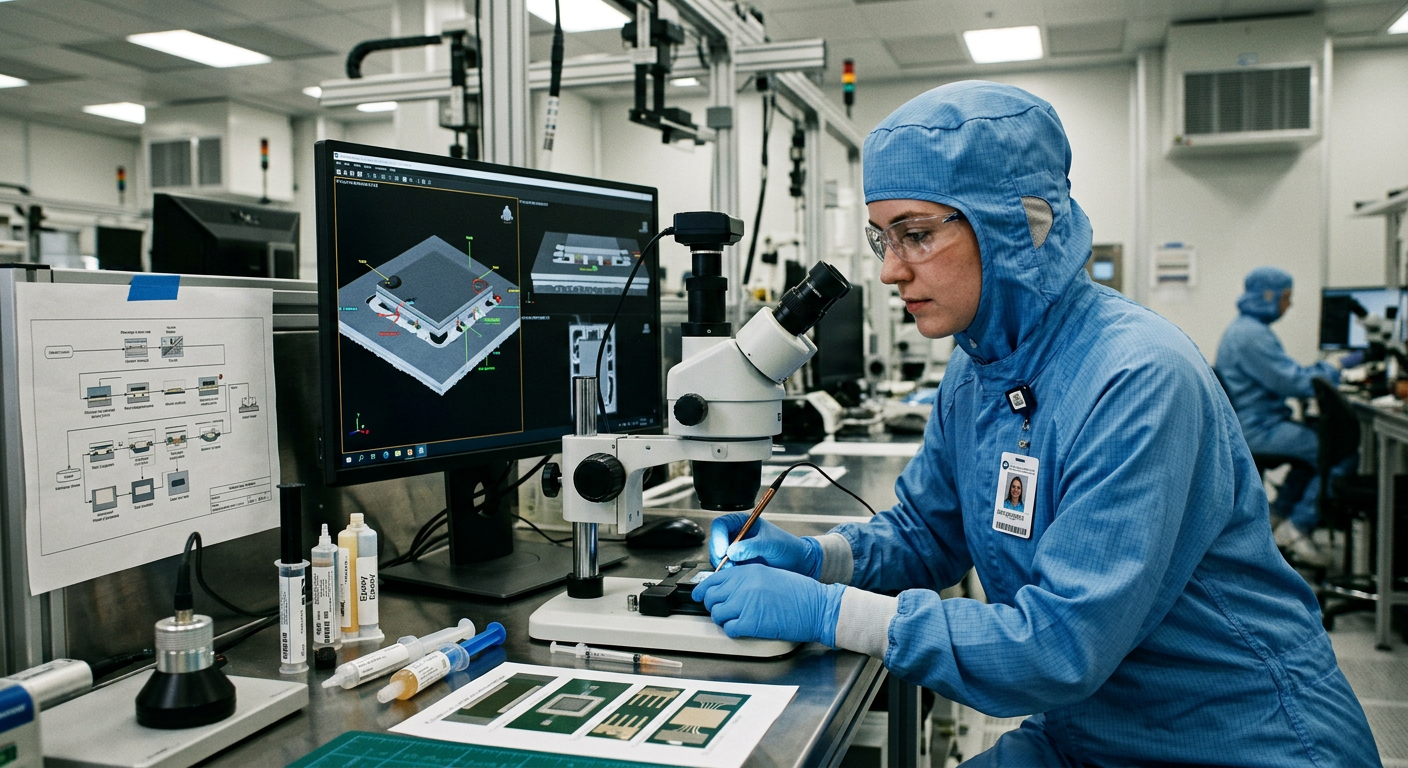
IC Packaging Adhesive: Preventing Void Formation Issues
Learn how IC packaging adhesive void formation is prevented in the United States through material choice, process control, supplier selection, and testing.
-
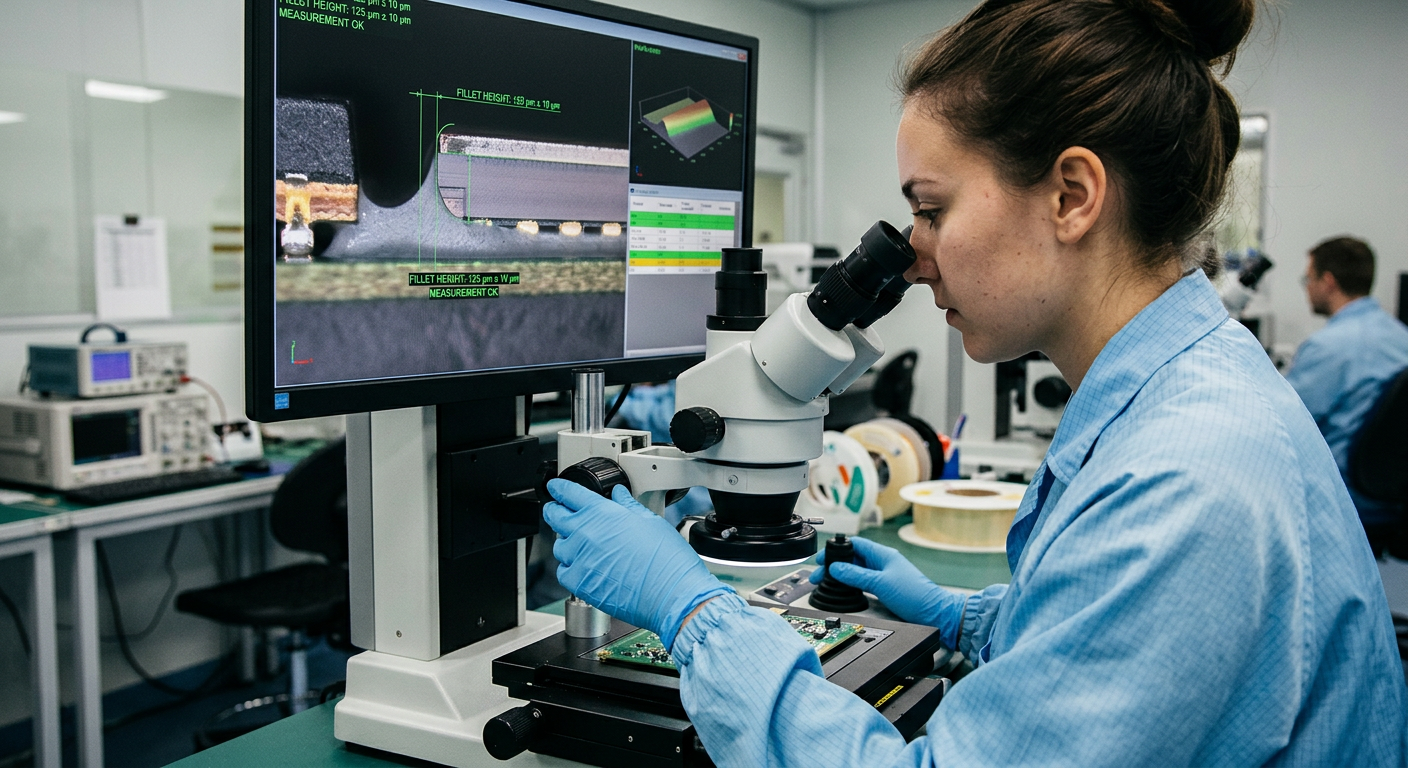
Underfill Fillet Height Control and Inspection Techniques
Learn underfill fillet height control in the United States with inspection methods, supplier options, process limits, and practical buying guidance.
-
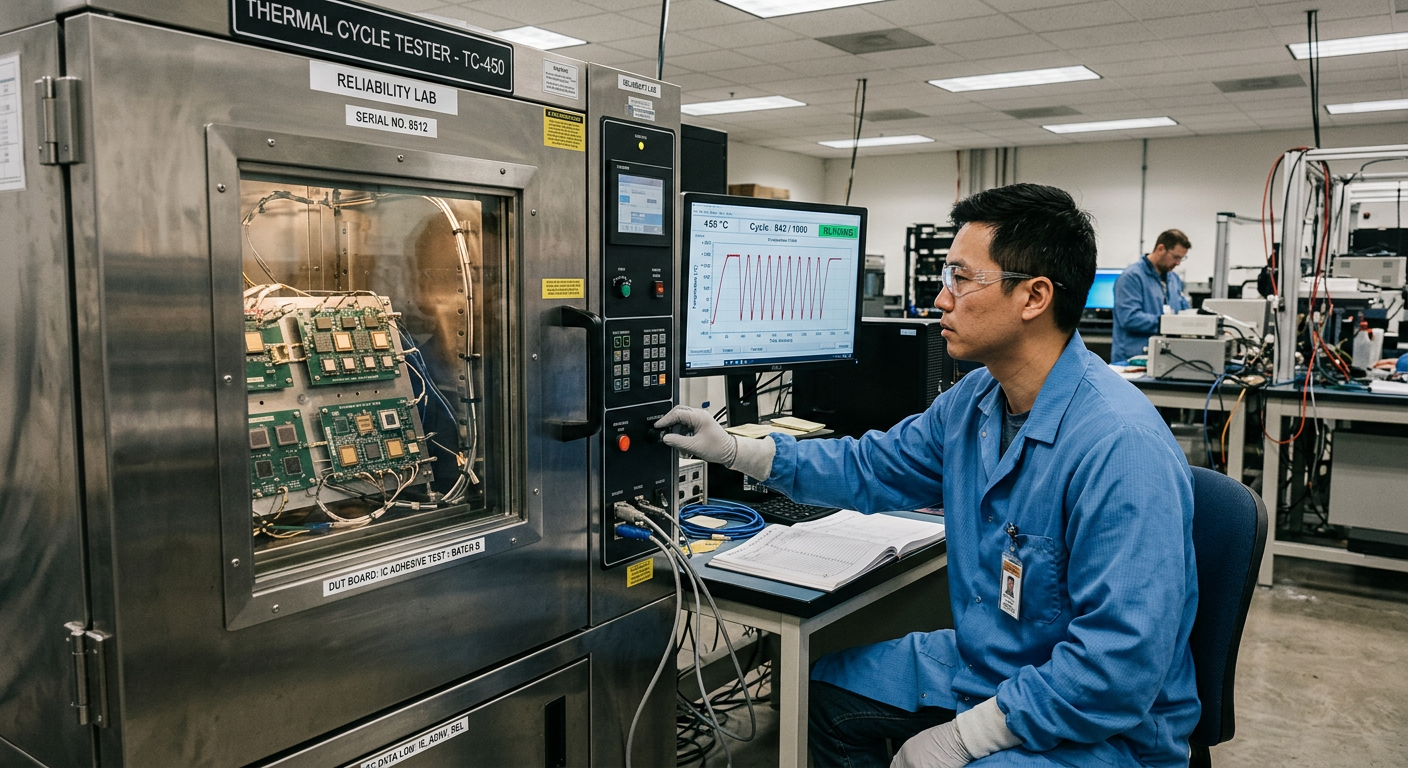
IC Package Adhesive Thermal Cycling Reliability Testing
IC packaging adhesive thermal cycling in the United States requires reliable material selection, supplier review, and test planning for electronics durability.
-

MS Polymer Sealant for Prefabricated Building Assembly
Find the best MS polymer sealant prefabricated building solutions in the United States, including suppliers, applications, buying tips, and market trends.
 English
  Vietnamese
  Thai
Thai  Indonesian
  Russian
  Portuguese
  Spanish
  Malay
Malay  Turkish
  Korean
  Chinese