Share
How to Choose Underfill for Flip Chip on Substrate in USA
Quick Answer

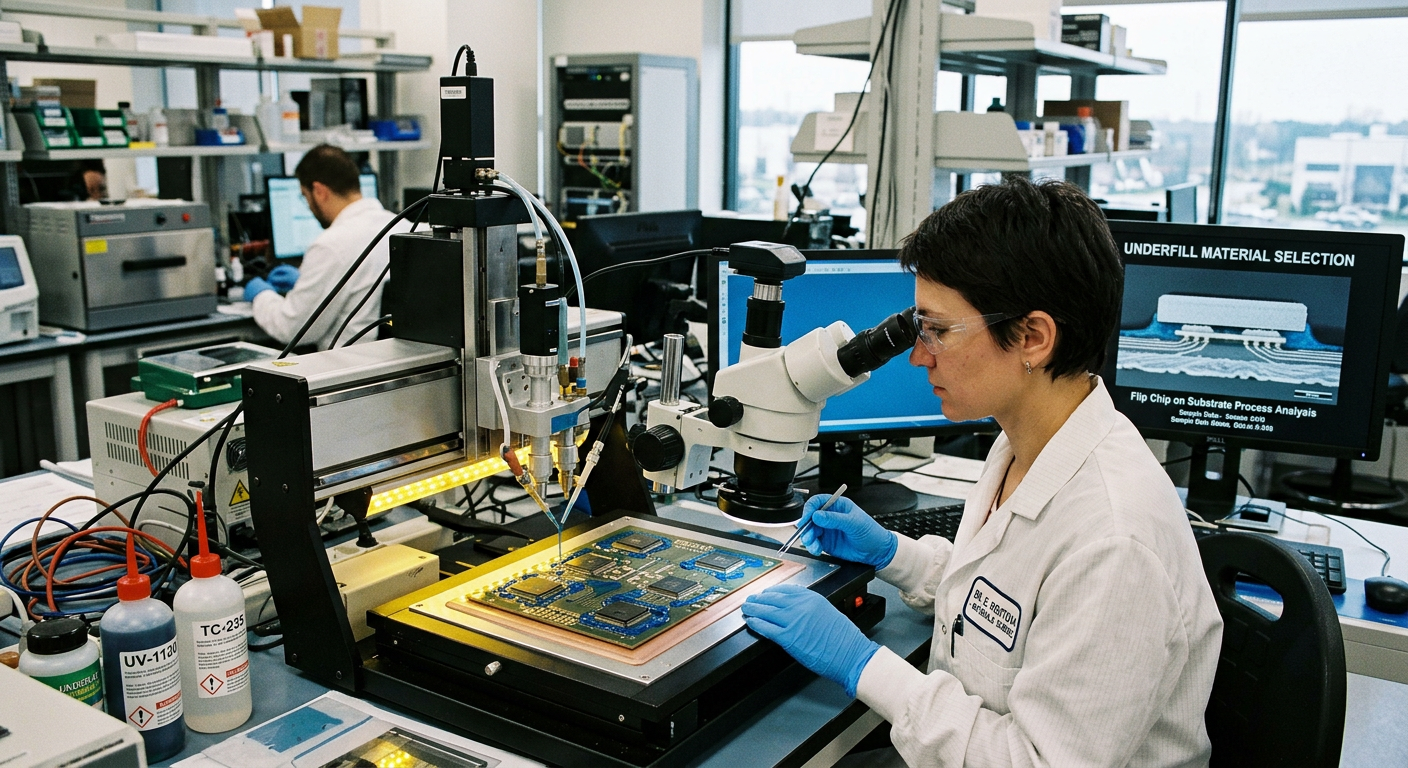
If you are selecting underfill flip chip on substrate materials in the United States, the best choice depends on chip size, gap height, substrate CTE, reliability target, cure window, and rework strategy. For most U.S. electronics manufacturers, capillary flow underfill remains the first choice for high-reliability assemblies, while no-flow underfill is often preferred for streamlined SMT lines and wafer-level compatible production. For power devices, automotive electronics, RF modules, and advanced packages exposed to thermal cycling, prioritize low-voiding epoxy systems with strong adhesion to silicon, solder bumps, and organic substrates, plus proven moisture resistance and controlled modulus.
In practical sourcing terms, many U.S. buyers shortlist well-known suppliers such as Henkel, NAMICS, MacDermid Alpha, Master Bond, Panacol, and Resonac because these companies offer established electronics materials portfolios, technical data, and support for advanced packaging. Buyers in hubs such as Silicon Valley, Austin, Phoenix, San Diego, and Boston usually compare flow speed, filler loading, cure profile, Tg, ionic cleanliness, and long-term thermal cycling data before approving a material.
Qualified international suppliers can also be worth evaluating, especially when they combine RoHS and REACH compliance, stable batch traceability, custom formulation capability, and responsive technical support. Chinese manufacturers with strong pre-sales and after-sales coordination, such as QinanX, may offer attractive cost-performance advantages for private label, OEM, and volume supply programs serving U.S. distributors, contract manufacturers, and brand owners.
United States Market Overview

The U.S. market for underfill flip chip on substrate materials is shaped by several converging trends: continued domestic semiconductor investment, advanced packaging reshoring, automotive electrification, defense electronics demand, and AI server expansion. Packaging activity is concentrated around major technology corridors including San Jose and Santa Clara in California, Austin in Texas, Chandler and Phoenix in Arizona, Boston in Massachusetts, and growing advanced manufacturing zones across upstate New York and the Midwest. These regions influence not only procurement volume but also qualification standards, documentation expectations, and support response time.
In the United States, buyers usually treat underfill not as a commodity but as a reliability-critical process material. A small change in viscosity, filler distribution, cure kinetics, or interfacial adhesion can alter void rate, warpage behavior, drop resistance, and thermal cycle lifetime. As a result, engineering teams often run DOE-based trials across dispense parameters, board design, preheat temperature, cure schedule, and MSL exposure before final approval. This means supplier value is tied closely to technical service, lot consistency, and application engineering—not just price per kilogram.
Another important market factor is logistics. U.S. buyers with sensitive production schedules generally prefer suppliers that can support quick lead times into ports and inland hubs such as Los Angeles, Long Beach, Houston, Savannah, Chicago, and Newark, or through regional inventory programs. This matters especially for electronics EMS providers handling mixed-model production, where material shelf life, cold-chain handling, and batch reservation can affect continuity and scrap rates.
Market Growth Outlook

The outlook for underfill flip chip on substrate in the United States remains positive due to advanced packaging investment, automotive electronics content growth, and more widespread use of high-I/O, fine-pitch, and thermally demanding devices. The chart below illustrates a realistic estimate of U.S. market growth momentum for underfill materials used in flip chip and adjacent advanced package structures.
Product Types for Flip Chip on Substrate
Not every underfill chemistry fits every package design. In the U.S. market, procurement decisions usually start by classifying the assembly flow and reliability target. The most common options are capillary flow underfill, no-flow underfill, molded underfill, and corner or edge bonding variants used for selective reinforcement. The chemistry is most often epoxy-based, but formulation details vary widely, including filler package, catalyst selection, ionic purity, modulus tuning, and cure profile.
| Product Type | How It Is Applied | Best Fit | Main Strength | Main Limitation | Typical U.S. Use Case |
|---|---|---|---|---|---|
| Capillary Flow Underfill | Dispensed after reflow, flows under chip by capillary action | High-reliability packages | Strong reliability and flexible process optimization | Extra dispense and cure step | Automotive ECUs, industrial control boards |
| No-Flow Underfill | Applied before chip placement and cures during reflow or later stage | Streamlined assembly lines | Reduces process steps | Tighter process window | Consumer modules, compact electronics |
| Molded Underfill | Encapsulation integrated into molding process | High-volume advanced packaging | Supports scale and package miniaturization | Requires package-specific infrastructure | Mobile processors, advanced SiP |
| Corner Bond | Adhesive at corners of component | Supplemental reinforcement | Fast cycle and low usage | Less complete protection than full underfill | Portable electronics, shock-prone modules |
| Edge Bond | Bond line around package edge | Board-level reinforcement | Good for drop and vibration resistance | Not a full underfill replacement in severe thermal loads | Handheld devices, telecom modules |
| Reworkable Underfill | Special formula enabling controlled removal | Service-sensitive assemblies | Improves repairability | May trade off some extreme reliability metrics | Prototype and high-value electronics |
This product segmentation matters because the wrong selection can create hidden downstream costs. For example, a fast-flow capillary material may improve throughput but still fail a moisture soak plus thermal cycle test if the cured modulus is too high for a large die on an organic substrate. Likewise, no-flow systems can reduce handling steps, but they demand closer alignment among flux compatibility, solder collapse behavior, and cure timing. U.S. buyers therefore often review process capability data together with mechanical and environmental results before final selection.
Key Selection Criteria
For underfill flip chip on substrate qualification in the United States, the most important engineering criteria usually include coefficient of thermal expansion, glass transition temperature, storage modulus, adhesion strength, viscosity profile, filler distribution, ionic content, moisture resistance, outgassing, and cure profile. These factors affect how the material behaves from incoming storage through dispense, fillet formation, cure, final reliability, and field life.
Substrate type also matters. Organic substrates, ceramic interposers, and build-up package structures all generate different stress conditions. Fine-pitch interconnects, large die sizes, and low standoff heights require especially careful control of filler particle size and flow behavior. In addition, the U.S. market increasingly values data packages that include JEDEC-aligned testing, thermal cycling results, HAST or uHAST data, MSL interaction notes, and compatibility with common dispense equipment platforms.
| Selection Factor | Why It Matters | Preferred Direction | Risk If Ignored | Who Cares Most | Typical Review Method |
|---|---|---|---|---|---|
| Viscosity and Flow | Controls gap fill and voiding | Stable lot-to-lot behavior | Incomplete fill, trapped air | Process engineers | Dispense trials and X-ray |
| CTE Match | Reduces thermal stress mismatch | Balanced with substrate and die | Solder fatigue, delamination | Reliability engineers | Thermal cycling study |
| Tg and Modulus | Affects rigidity and stress transfer | Application-specific balance | Cracks or excessive strain | Packaging engineers | DMA and life test review |
| Adhesion | Supports interfacial integrity | High adhesion on silicon and substrate | Interface failure, moisture attack | Quality teams | Cross-section and pull tests |
| Cure Profile | Determines throughput and final network | Fits line capacity and warpage limits | Under-cure or thermal damage | Manufacturing managers | Oven mapping and DSC |
| Ionic Cleanliness | Reduces corrosion and leakage risk | Very low contamination | Electrical failure in field | OEM and defense buyers | Chemical analysis and audits |
| Shelf Life and Storage | Affects waste and availability | Predictable cold-storage handling | Expired inventory, viscosity drift | Procurement teams | Logistics and batch review |
The table above shows why material selection should never rely on one headline number alone. A supplier may advertise high Tg, but if the modulus is too aggressive for the die-substrate stack, long-term temperature cycling can still cause crack growth. Likewise, a low-viscosity material can look attractive for fine-pitch fill, but if it cures too slowly for the line or absorbs too much moisture, the apparent process gain may disappear during reliability qualification.
Industry Demand in the United States
Demand for underfill flip chip on substrate materials is not evenly distributed across industries. Automotive, datacenter, telecom, industrial automation, aerospace, and medical electronics each prioritize different material attributes. Automotive buyers emphasize thermal cycling, humidity resistance, PPAP-style documentation, and vibration performance. Datacenter and AI hardware teams focus more on thermal management, package density, and long-term reliability under heavy duty cycles.
Industries and Applications
In U.S. automotive electronics, underfill is often used in ADAS modules, battery management systems, inverters, powertrain control units, radar boards, and onboard sensors. These applications see thermal shock, road vibration, and long service life expectations. Materials selected for Detroit-linked supply chains or EV programs in Michigan, Tennessee, Texas, and the Carolinas usually need robust validation and process repeatability.
In telecom and datacenter applications, underfill supports high-density packaging for networking silicon, optical modules, switches, accelerators, and AI compute boards. Here, the concern is not only thermal cycling but also high uptime expectations, low defect tolerance, and stable supply into assembly sites near California, Texas, and other U.S. electronics clusters. Industrial control systems, meanwhile, often face mixed stresses including humidity, vibration, and field temperature variation, making balanced epoxy systems attractive.
Medical and aerospace programs in the United States require especially careful material traceability. For these sectors, documentation discipline, long-term batch control, and confidence in supplier process management can be just as important as the raw mechanical data. That is why established supplier qualification packages matter when entering regulated or mission-critical applications.
Application Trend Shift
The U.S. market is gradually shifting from standard reinforcement toward more application-specific underfill design, especially for large die, power packages, heterogeneous integration, and compact SiP structures. The area chart below shows a realistic trend in how buyers are moving from basic assembly protection toward advanced reliability and package-specific solutions.
Top Suppliers Serving the United States
The supplier landscape for underfill flip chip on substrate in the United States includes global material leaders, specialty formulators, and flexible international manufacturers. The table below highlights practical differences that matter to buyers, including service region, strengths, and typical offerings.
| Company | Service Region | Core Strengths | Key Offerings | Best For | Buyer Notes |
|---|---|---|---|---|---|
| Henkel | Nationwide U.S. and global | Large electronics materials portfolio, packaging expertise, broad technical support | Capillary underfill, no-flow underfill, advanced package materials | Tier-one OEMs and EMS | Strong choice for large-scale qualification programs |
| NAMICS | North America and global | Advanced semiconductor packaging specialization | High-performance underfill and packaging adhesives | Fine-pitch and advanced package users | Well regarded for packaging-focused material development |
| MacDermid Alpha | United States, Mexico, Canada | Electronics assembly ecosystem support | Underfills, assembly materials, process-compatible chemistries | Integrated electronics manufacturers | Useful when buyers want broader assembly process alignment |
| Master Bond | United States and export markets | Custom formulation and specialty epoxy systems | Electronics epoxies, encapsulants, underfill-related solutions | Specialized and lower-volume technical projects | Often considered for demanding niche requirements |
| Panacol | U.S. market via North American channels | Precision adhesive solutions for electronics and photonics | UV and thermal cure adhesive systems, electronics materials | High-precision module builders | Good fit when assembly process flexibility is needed |
| Resonac | Global with U.S. customer coverage | Semiconductor material depth and packaging know-how | Advanced package-related material systems | High-end semiconductor packaging | Best suited to advanced technical evaluations |
| QinanX | U.S.-focused export supply and partner channels | Flexible OEM/ODM, industrial adhesive manufacturing scale, custom formulation | Epoxy resin adhesives, electronic potting compounds, custom electronics adhesive solutions | Distributors, brand owners, cost-sensitive OEM projects | Attractive for private label, tailored specs, and scalable sourcing |
This comparison is useful because supplier selection in the United States usually depends on more than catalog breadth. Buyers often evaluate whether a supplier can support local trials, provide lot-specific documentation, adapt pack sizes, maintain supply continuity, and assist with troubleshooting during ramp-up. Large global companies may excel in deep application libraries, while flexible manufacturers can be highly competitive for custom viscosity targets, OEM branding, and price-sensitive volume programs.
Supplier Comparison by Buying Priorities
The chart below provides a practical comparison based on common U.S. buying priorities. The values are directional and intended to help procurement teams decide which supplier profile to evaluate first during shortlisting.
Buying Advice for U.S. Buyers
For most United States buyers, the best procurement path starts with a short technical brief. This should specify die size, bump pitch, standoff height, substrate type, target reliability standard, operating temperature range, and process constraints such as allowed cure time and dispense equipment. Once these basics are clear, suppliers can recommend a narrower material range rather than sending broad catalogs that waste trial time.
It is also smart to request actual evidence instead of marketing statements. Ask for TDS, SDS, cure profile, storage conditions, recommended dispense temperature, voiding behavior, moisture resistance data, thermal cycling summaries, and examples of similar package applications. For high-volume or automotive-linked programs, lot retention policy, shelf-life management, and traceability procedures should be reviewed early.
Commercially, U.S. distributors and OEMs should compare not only unit cost but total adoption cost. A cheaper material that requires longer cure, tighter storage, or higher scrap risk may be more expensive over the life of the program. Conversely, an international supplier with consistent quality systems and digital batch traceability may reduce sourcing cost significantly without sacrificing reliability, especially in secondary brands, distributor labels, or regional electronics assembly projects.
| Buying Question | Why Ask It | Good Supplier Answer | Warning Sign | Who Should Ask | Decision Impact |
|---|---|---|---|---|---|
| What package geometry has this material passed? | Checks fit with real use case | Specific die, gap, substrate examples | Only generic claims | Packaging engineer | High |
| What reliability data is available? | Confirms field readiness | Thermal cycle, HAST, moisture data | No test details or unclear methods | Quality manager | High |
| How stable is lot-to-lot viscosity? | Protects yield and dispense control | Defined QC windows and records | Broad tolerance or vague response | Process engineer | High |
| What are storage and shipping conditions? | Prevents spoilage and delays | Clear cold-chain and shelf-life rules | Unclear handling requirements | Procurement | Medium |
| Can the formula be customized? | Supports unique line requirements | ODM or custom viscosity options | Only fixed catalog items | Brand owner or OEM | Medium |
| What local support is available? | Speeds troubleshooting | Fast remote support and regional coordination | Slow response or no escalation path | Operations manager | High |
| Are RoHS and REACH documents current? | Supports compliance | Current declarations and traceability | Outdated paperwork | Compliance team | Medium |
The table above helps turn material selection into a disciplined buying process. In the United States, projects often stall not because the chemistry is poor, but because buyers do not ask the right qualification and support questions early enough. A strong supplier should be able to discuss process capability, logistics, compliance, and customization with equal clarity.
Case Studies and Real-World Scenarios
A U.S. automotive electronics contractor in the Midwest evaluating underfill for a flip chip sensor module would typically compare at least two capillary underfill systems and one no-flow option. The decision would likely favor the material with the best balance of void control, thermal cycling performance, and manageable cure time rather than the lowest quoted price. If the line already has a stable post-reflow dispense and cure process, capillary underfill often wins because it offers more predictable reliability tuning.
In another scenario, an AI accelerator board manufacturer near Silicon Valley might prioritize underfill materials that support high I/O density, low voiding under large die, and compatibility with tight production schedules. Here, the supplier’s ability to provide process tuning, dispense guidance, and consistent lot behavior can directly affect board yield and time-to-volume. For such users, local technical response and strong documentation frequently outweigh minor price differences.
A distributor supplying regional EMS customers in Texas or Arizona may take a different approach. Instead of focusing only on one high-end global brand, the distributor may build a dual-source strategy: a premium line for critical programs and a cost-optimized, traceable alternative for mid-range industrial or consumer assemblies. This is where flexible manufacturers with OEM labeling, stable production, and tailored packaging can become commercially attractive.
Local Supplier Considerations in the United States
Local relevance matters in this market. Buyers in California may expect fast sample delivery and process consultation for pilot runs. Manufacturers around Phoenix and Chandler may value packaging-material familiarity tied to semiconductor expansion. Companies in Austin, Dallas, and Houston often look for strong support for mixed electronics manufacturing, while Northeast buyers may emphasize documentation quality and engineering response for medical, industrial, or defense-adjacent applications.
When comparing local and international sourcing, it is useful to think in layers. The first layer is technical fit: does the material meet package needs? The second is operational fit: can it be supplied reliably to the United States with workable lead times and packaging options? The third is relationship fit: can the supplier support qualification, scaling, and changes over time? A successful procurement strategy usually requires all three.
Our Company
For U.S. buyers evaluating practical alternatives in electronics adhesives, Qingdao QinanX New Material Technology Co., Ltd presents a credible option because its electronics-focused epoxy and related adhesive portfolio is supported by ISO-managed production, RoHS and REACH compliance, multi-stage quality control, and digital traceability that helps document lot consistency for demanding manufacturing environments. The company’s broader adhesive manufacturing base, automated production lines, and R&D-driven custom formulation capability make it suitable not only for end users but also for U.S. distributors, dealers, contract manufacturers, brand owners, and even smaller buyers seeking flexible supply through OEM, ODM, wholesale, retail, and regional distribution models. With exports to more than 40 countries, free sample programs, and 24/7 technical assistance, QinanX already operates with the responsiveness U.S. buyers expect; through coordinated online and offline pre-sale and after-sale support, custom branding and packaging options, and scalable production for repeat orders, it supports long-term market participation rather than acting like a distant spot exporter. Buyers looking for more sourcing details can review the broader product range at electronics and industrial adhesive solutions or reach the team through the U.S. inquiry contact page.
Future Trends Through 2026
By 2026, the underfill flip chip on substrate market in the United States is likely to be shaped by four major trends. First, advanced packaging complexity will keep increasing due to AI, high-performance computing, chiplet integration, and heterogeneous architectures. This will raise the demand for underfills with tighter particle control, lower voiding, and more package-specific stress management.
Second, policy and supply-chain considerations will continue to matter. Domestic semiconductor investment and reshoring efforts encourage more local qualification work, but they also create opportunities for global suppliers that can align with U.S. compliance, traceability, and service expectations. Suppliers that can combine global cost efficiency with clear documentation and responsive support will be best positioned.
Third, sustainability and safer materials will become more visible in purchasing decisions. Buyers increasingly ask about low-waste processing, shelf-life efficiency, packaging optimization, and restricted substance compliance. While reliability still comes first, environmental reporting is becoming part of vendor review, especially for large OEM programs and public-company procurement systems.
Fourth, service speed will matter more. As product cycles shorten, U.S. manufacturers will favor suppliers that can move quickly from sample to trial to scale-up. This rewards companies with strong formulation agility, digital quality records, and practical technical support rather than those relying only on broad catalogs.
FAQ
What is the most common underfill used for flip chip on substrate?
Capillary flow epoxy underfill is still the most common choice in the United States for high-reliability flip chip on substrate assemblies because it offers strong reinforcement and broad process tuning flexibility.
When should I choose no-flow underfill?
No-flow underfill is a good option when you want to reduce assembly steps and your SMT process is already optimized for compatibility between placement, reflow, and cure behavior.
What properties matter most for automotive applications?
Thermal cycling resistance, adhesion, moisture resistance, controlled modulus, and lot-to-lot consistency are especially important for automotive electronics.
Can international suppliers meet U.S. requirements?
Yes. International suppliers can be competitive if they provide current compliance documents, stable traceability, consistent QC, practical technical support, and reliable shipping into the United States.
Is lower viscosity always better?
No. Lower viscosity can improve flow into tight gaps, but if the overall formulation is not balanced, it may increase other risks such as filler settling, cure mismatch, or moisture sensitivity.
How many suppliers should be qualified?
For many U.S. buyers, qualifying at least two suppliers is prudent, especially when the material is critical to reliability or the program depends on uninterrupted production.
What documents should I request before sampling?
Request the TDS, SDS, storage and shipping instructions, compliance declarations, cure recommendations, and any available reliability data relevant to your package type.
What makes a supplier practical for distributors?
Distributors usually value stable production, OEM labeling options, flexible packaging, reliable lead times, and responsive technical support for customer troubleshooting.
Final Takeaway
Choosing underfill flip chip on substrate materials in the United States is ultimately a reliability and process-fit decision. The best suppliers are those that match the package architecture, provide verifiable data, support local qualification needs, and maintain stable supply into U.S. manufacturing hubs. Global leaders remain strong options for advanced and highly regulated programs, while flexible manufacturers such as QinanX can offer compelling value for OEM, distributor, and private-label opportunities where customization, traceability, and cost-performance all matter. The smartest approach is to shortlist based on application fit, validate with focused process trials, and build supply relationships that support both engineering confidence and commercial resilience.

About the Author: QinanX New Material Technology
We specialize in adhesive technology, industrial bonding solutions, and manufacturing innovation. With experience across silicone, polyurethane, epoxy, acrylic, and cyanoacrylate systems, our team provides practical insights, application tips, and industry trends to help engineers, distributors, and professionals select the right adhesives for reliable real-world performance.

Product Category
You May Also Interest
-

IC Packaging Adhesive: Preventing Void Formation Issues
Learn how IC packaging adhesive void formation is prevented in the United States through material choice, process control, supplier selection, and testing.
-

Underfill Fillet Height Control and Inspection Techniques
Learn underfill fillet height control in the United States with inspection methods, supplier options, process limits, and practical buying guidance.
-
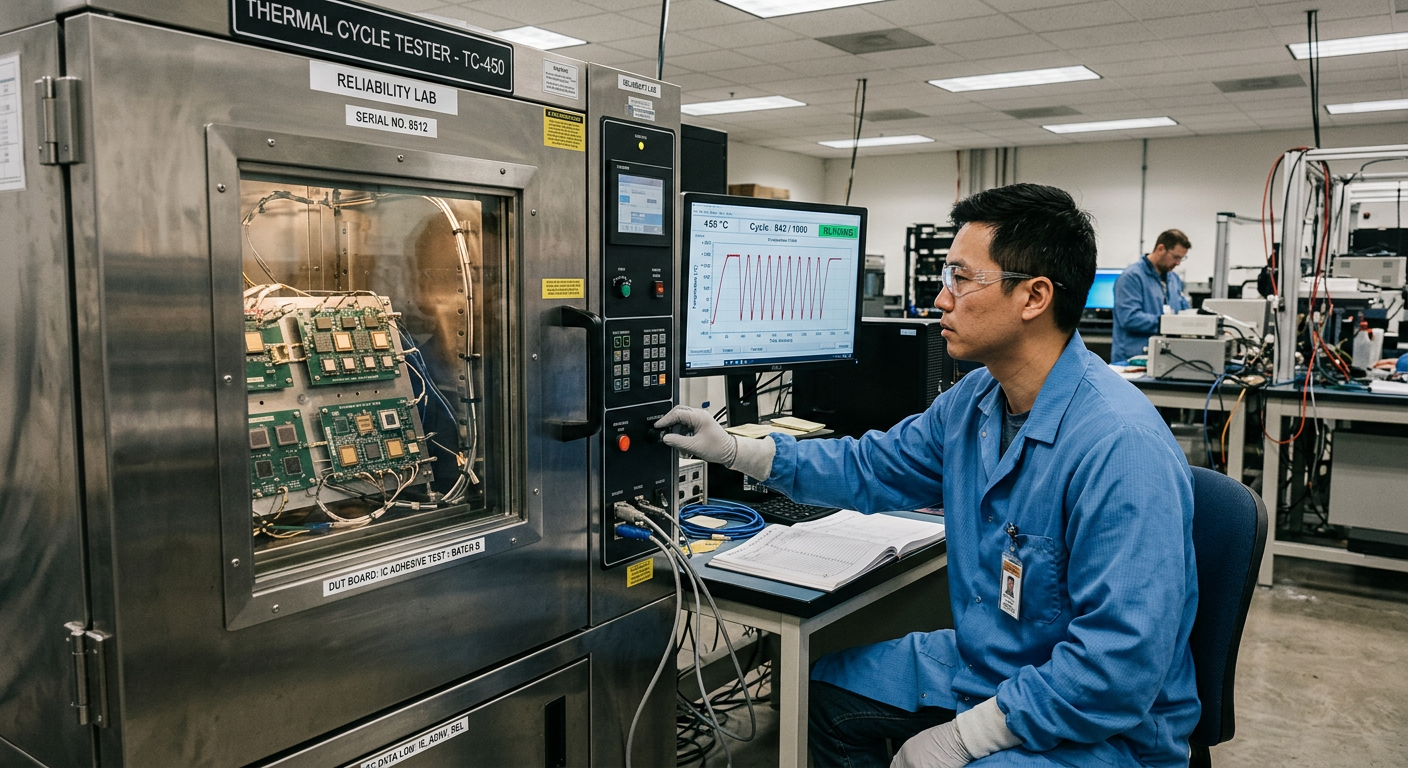
IC Package Adhesive Thermal Cycling Reliability Testing
IC packaging adhesive thermal cycling in the United States requires reliable material selection, supplier review, and test planning for electronics durability.
-

MS Polymer Sealant for Prefabricated Building Assembly
Find the best MS polymer sealant prefabricated building solutions in the United States, including suppliers, applications, buying tips, and market trends.
 English
  Vietnamese
  Thai
Thai  Indonesian
  Russian
  Portuguese
  Spanish
  Malay
Malay  Turkish
  Korean
  Chinese