Share
Thermal Interface Material Pump-Out and Dry-Out in the United States
Quick Answer

In the United States, thermal interface material pump-out dry-out problems are most common in high-cycling electronics, automotive power modules, telecom hardware, LED systems, and industrial controls where repeated heat expansion and contraction gradually displaces or degrades the interface layer. The most practical solution is to select a TIM that matches real operating stress: low-bleed silicone gap fillers for uneven assemblies, phase change materials for controlled bond lines, non-silicone options where contamination is a risk, and high-reliability greases only when maintenance intervals are acceptable. For buyers needing established supply in the U.S., real companies commonly considered include Henkel, Parker Chomerics, Laird Thermal Systems, DuPont, Shin-Etsu Silicones of America, and Momentive. Buyers in cities such as San Jose, Austin, Detroit, Phoenix, and Boston typically compare thermal stability, pump-out resistance, dry-out resistance, dielectric performance, and dispensing consistency before price. Qualified international suppliers can also be worth considering when they hold certifications such as ISO, RoHS, and REACH compliance and provide strong technical support, customized formulations, and dependable after-sales coordination, especially when cost-performance and private label flexibility matter.
Understanding the U.S. Market for TIM Reliability

The U.S. market for thermal management materials is shaped by a mix of data center growth, electric vehicle electrification, aerospace electronics, industrial automation, and compact consumer electronics. Across these sectors, one recurring failure mode continues to drive engineering reviews: thermal interface material pump-out dry-out. Although the phrase is often used broadly, it actually covers two different but related reliability concerns. Pump-out refers to the physical migration of the TIM away from the interface because of pressure, vibration, thermal cycling, or repeated expansion mismatch between components. Dry-out refers to a change in material condition over time, often involving volatilization, oil separation, hardening, or reduced wetting that increases thermal resistance.
In the United States, this topic matters most in regions with concentrated electronics and advanced manufacturing clusters. Silicon Valley and the wider San Jose corridor focus on servers, AI hardware, and semiconductor tools. Austin, Texas is a major hub for electronics manufacturing and EV-related systems. Detroit and the broader Midwest remain central to automotive power electronics and battery systems. Phoenix and Chandler support semiconductor fabrication and power device supply chains. Boston and the Northeast have strong medical, defense, and telecom electronics ecosystems. In these regions, engineers are not only comparing thermal conductivity numbers on datasheets; they are evaluating how a material behaves after thousands of thermal cycles and years of field exposure.
U.S. procurement teams also tend to balance performance with logistics resilience. Domestic stocking, technical documentation, clean regulatory paperwork, and engineering response time are often just as important as the nominal thermal performance figure. That is why many buyers combine domestic sourcing with approved international alternatives. For broader product research, some buyers start by reviewing available material categories on the product portfolio and then compare those options against local application requirements.
What Pump-Out and Dry-Out Actually Mean

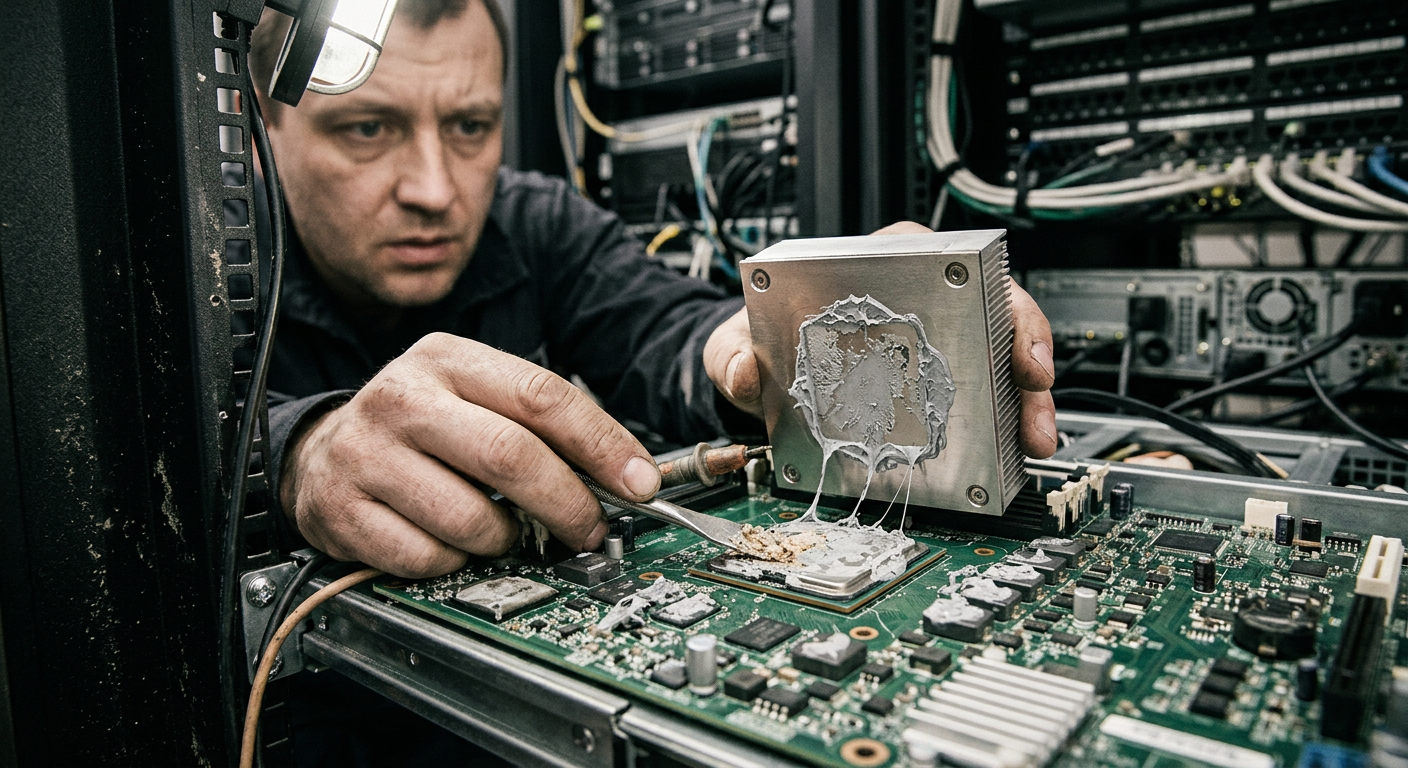
Thermal interface material pump-out happens when a grease, paste, or other soft TIM is gradually pushed away from the heat-generating component and the mating heat sink surface. This usually occurs because the two surfaces expand and contract at different rates during heating and cooling. Over time, the interface thickness changes, local voids form, and thermal resistance rises. In severe cases, the center of the die or hot spot becomes underfilled while material accumulates at the edges.
Dry-out is different. It describes the loss of the original rheological and wetting characteristics of a TIM. A grease may become stiffer, separate, crust, or lose its lighter carrier fractions. When that happens, contact quality drops even if the material has not fully migrated. Dry-out may be accelerated by elevated temperature, long dwell times at heat, poor formulation stability, or environmental contamination. In practical reliability analysis, pump-out and dry-out often occur together, especially in CPU, GPU, inverter, and power conversion applications.
Key Causes in Real U.S. Applications
Most field failures linked to thermal interface material pump-out dry-out are not caused by one factor alone. Instead, they emerge from a stack of conditions: high heat flux, surface roughness, assembly stress, vertical mounting, power cycling, vibration, and insufficient material selection for the real duty cycle. In U.S. automotive electronics, the shift toward higher power density in onboard chargers, DC-DC converters, and traction inverter modules has increased concern over interface reliability. In data centers, higher rack densities mean more sustained thermal load and less tolerance for performance drift. In industrial manufacturing plants across Ohio, Illinois, and Texas, motor drives and control cabinets may experience frequent on-off cycling combined with dust and ambient temperature variation.
| Cause | How It Triggers Failure | Typical U.S. Application | Primary Warning Sign | Most Affected TIM Types | Recommended Countermeasure |
|---|---|---|---|---|---|
| Thermal cycling | Repeated expansion mismatch displaces material | Automotive power modules in Detroit | Rising hotspot temperature over time | Greases and soft pastes | Use pump-out resistant formulation or PCM |
| High continuous temperature | Volatile fractions evaporate or separate | Server CPUs in Northern Virginia data centers | Long-term thermal resistance increase | Greases and low-stability compounds | Select low-bleed, high-temperature stable TIM |
| Vibration and shock | Mechanical motion shifts the interface layer | Transportation electronics and rail systems | Edge squeeze-out | Low-viscosity greases | Use pad, gel, or cured gap filler where suitable |
| Poor surface flatness | Uneven pressure creates local voids and flow paths | Industrial heat sinks in Midwest factories | Inconsistent thermal mapping | Thin bond line materials | Choose conformable gap filler or improve machining |
| Overclamping or underclamping | Pressure imbalance pushes TIM away or leaves gaps | Consumer electronics assembly lines | Premature field variation between units | Grease, PCM, pads | Control torque and compression design |
| Contamination exposure | Dust, flux residue, or oils reduce adhesion and wetting | Repair or retrofit environments | Localized dry spots | Most uncured TIMs | Improve cleaning and handling standards |
The table above shows that pump-out and dry-out are usually design-system issues, not just material issues. U.S. buyers who reduce failure rates most effectively tend to validate TIM performance under real thermal cycling and assembly conditions rather than relying only on thermal conductivity values from marketing sheets.
Product Types Used to Reduce Pump-Out and Dry-Out
Different TIM categories respond differently to reliability stress. Traditional thermal grease remains common because it wets surfaces well and offers low initial thermal resistance. However, it is often the material class most scrutinized for pump-out and dry-out in harsh cycling environments. Phase change materials offer improved bond-line control and reduced migration once they transition at operating temperature. Gap pads and dispensable gap fillers work well when there is a larger interface gap or uneven surface geometry. Adhesive TIMs can provide better positional stability but may complicate serviceability and rework. Non-silicone TIMs are often selected in optics, sensors, and contamination-sensitive assemblies.
| TIM Type | Pump-Out Resistance | Dry-Out Resistance | Best Use Case | Main Trade-Off | Typical U.S. Buyer |
|---|---|---|---|---|---|
| Thermal grease | Moderate to low | Moderate | CPUs, lab prototypes, serviceable assemblies | Can migrate or age under cycling | PC builders, industrial maintenance teams |
| Phase change material | High | High | Power modules, controlled bond lines | Needs proper activation temperature | Automotive and telecom OEMs |
| Thermal pad | Very high | Very high | Uneven surfaces and easy assembly | Higher interface resistance than premium grease | Contract manufacturers and EV pack assemblers |
| Dispensable gap filler | High | High | Large gaps, battery systems, power electronics | May require curing profile control | Battery, inverter, and charger manufacturers |
| Thermally conductive adhesive | Very high | High | Permanent attachment with thermal path | Lower reworkability | LED, sensor, and compact electronics makers |
| Non-silicone TIM | Varies by chemistry | High in suitable formulations | Contamination-sensitive devices | May cost more and offer narrower options | Optics, medical, and precision electronics firms |
This table is useful because it translates material categories into actual purchasing logic. In the U.S. market, no single TIM type is best for every interface. The right choice depends on maintenance interval, assembly tolerance, contamination sensitivity, and expected thermal cycling profile.
Top Suppliers Serving the United States
When buyers in the United States assess suppliers for thermal interface material pump-out dry-out control, they usually prioritize technical support, local inventory, validation data, and range depth across greases, pads, gels, phase change materials, and adhesives. The following companies are widely recognized in the market.
| Company | Service Region | Core Strengths | Key Offerings | Typical Industries | Practical Buying Notes |
|---|---|---|---|---|---|
| Henkel | United States nationwide | Broad electronics materials portfolio, strong OEM support | BERGQUIST gap pads, gels, phase change, dispensables | EV, industrial, telecom, computing | Strong for large OEM programs and engineered support |
| Parker Chomerics | United States and North America | EMI plus thermal integration expertise | Thermal greases, pads, gels, interface solutions | Aerospace, defense, telecom, industrial | Well suited for regulated and demanding environments |
| DuPont | United States, global support | Materials science depth and electronics reach | Thermal management materials and specialty formulations | Electronics, transportation, industrial | Often selected for advanced engineering programs |
| Momentive | United States with global channels | Silicone formulation expertise | Thermal greases, gels, silicone-based TIM systems | Electronics, automotive, LED, industrial | Useful for buyers focused on silicone reliability |
| Shin-Etsu Silicones of America | United States nationwide | Long-standing TIM reputation, stable silicone compounds | Thermal compounds and interface materials | Semiconductor, computing, electronics assembly | Frequently considered for CPU and device cooling needs |
| Laird Thermal Systems | United States and North America | Thermal management system knowledge | TIMs, pads, assemblies, thermal solution components | Medical, telecom, industrial, electronics | Helpful where system-level thermal design matters |
| 3M | United States nationwide | Engineered materials and converter network | Thermally conductive tapes and interface materials | Consumer electronics, industrial, automotive | Strong where assembly speed and process consistency matter |
This supplier table gives U.S. buyers a practical short list. Some companies are strongest in premium engineered programs, while others are preferred for high-volume manufacturing, contamination-sensitive designs, or integrated EMI and thermal requirements.
Comparison of Supplier Positioning
The comparison chart highlights a market reality in the United States: supplier selection is rarely based on conductivity alone. Engineering support, qualification data, and portfolio breadth often determine whether a supplier can reduce field issues tied to pump-out and dry-out.
Buying Advice for U.S. Engineers and Purchasing Teams
For U.S. buyers, the most effective procurement approach is to start with the failure mechanism rather than the catalog category. If a design sees daily thermal cycling, choose TIMs with documented resistance to migration and bond-line instability. If the environment is contamination-sensitive, evaluate non-silicone alternatives. If surfaces are uneven, do not force a grease to solve a gap problem that should be handled by a gap filler or pad. Buyers near major manufacturing centers such as Chicago, Dallas, and Los Angeles also often benefit from choosing suppliers with regional warehousing to reduce downtime and lot-to-lot variability risk.
When comparing offers, ask for thermal impedance after cycling, oil bleed behavior, outgassing profile if relevant, dielectric properties, compression set for pads, dispense repeatability, and actual validation methods. It is also wise to ask for application-specific recommendations rather than general-purpose material suggestions. U.S. quality teams increasingly prefer suppliers that can support PPAP-style documentation for automotive projects or equivalent traceability for industrial and electronics assembly programs.
Industries Most Affected
Thermal interface material pump-out dry-out concerns span multiple industries in the United States, but the level of urgency varies. EVs and hybrid systems experience aggressive thermal cycling and vibration. Data centers run high sustained power with limited tolerance for degradation. Aerospace and defense applications need long-term reliability under strict qualification standards. Telecom infrastructure faces outdoor temperature variation and long service intervals. Industrial automation equipment deals with cyclical loads and mixed environments. LED lighting and medical devices each have their own thermal stability requirements tied to light output consistency and device safety.
| Industry | Main Heat Source | Why Pump-Out/Dry-Out Matters | Preferred TIM Direction | Important Qualification Focus | U.S. Demand Outlook |
|---|---|---|---|---|---|
| Electric vehicles | Inverters, OBCs, battery electronics | High cycling and vibration accelerate migration | Gap fillers, PCM, stable gels | Thermal cycling and vibration resistance | Very strong |
| Data centers | CPUs, GPUs, power supplies | Performance drift raises energy and cooling costs | High-stability grease or PCM | Long-duration thermal resistance stability | Very strong |
| Telecom | Base stations, power modules | Outdoor service intervals demand long life | Pads, gels, weather-stable materials | Temperature endurance and field longevity | Strong |
| Industrial automation | Drives, PLC power sections | Frequent start-stop cycles stress the interface | Gap fillers and durable pads | Assembly consistency and maintenance life | Strong |
| Aerospace and defense | Avionics and rugged electronics | Reliability margins are tight | Qualified high-reliability TIM systems | Traceability and environmental testing | Stable to strong |
| Medical and LED | Imaging electronics, LED packages | Heat drift affects output and safety | Clean low-bleed materials | Contamination and thermal aging control | Moderate to strong |
This table helps translate the general failure mode into sector-specific buying decisions. A U.S. telecom buyer and a Detroit EV module engineer may both worry about thermal interface material pump-out dry-out, but the most suitable material platform can be very different.
Applications Where Material Choice Changes the Outcome
Application details matter. In CPU and GPU cooling, extremely thin bond lines and repeated temperature swings favor formulations proven for low migration over time. In EV battery packs, dispensable gap fillers often outperform grease because large tolerances and complex geometries require conformability and positional stability. In LED modules, low bleed and optical cleanliness may be more important than peak conductivity. In motor drives and industrial inverters, balance among dielectric performance, thermal endurance, and assembly repeatability becomes critical.
Another practical point for U.S. teams is repair strategy. If a field-replaceable assembly needs periodic service, grease may still be preferred despite its aging risks because rework is easier. If the assembly is sealed and designed for years of unattended operation, phase change materials, gels, or engineered pads may be more cost-effective over the total lifecycle even if unit price is higher.
Market Growth Trend in the United States
The line chart shows a realistic upward trend driven by AI servers, EV power electronics, and more demanding uptime expectations. In the United States, demand growth is not just for thermal materials in general, but for materials specifically validated against pump-out, dry-out, and long-cycle degradation.
Industry Demand by Sector
This chart reflects where U.S. buyer attention is strongest. EV and data center applications are currently the two most active demand centers because thermal density, uptime requirements, and warranty pressure are all increasing at once.
Trend Shift in Material Preference
The area chart illustrates a structural shift in the market. U.S. engineers are gradually moving away from selecting grease by default and toward materials chosen for lifecycle stability, automation compatibility, and lower field-maintenance risk.
Case Studies from Common U.S. Scenarios
A server integrator in Northern California may observe a gradual rise in processor temperatures after six to twelve months of sustained high-load operation. Investigation often reveals that the original grease has thinned, redistributed, or dried relative to the initial assembly condition. In such a case, a move to a better pump-out resistant grease or a carefully validated phase change material can reduce maintenance frequency and improve temperature consistency.
An automotive electronics supplier in Michigan may test a traction inverter interface through repeated thermal shock and vibration. Standard grease performs well at the start but shows edge migration and hotspot formation after cycling. A dispensable gap filler or PCM with more stable bond-line control may produce better lifetime results even if initial conductivity is similar on paper.
A telecom cabinet builder in Texas may prioritize outdoor reliability. Here, extended heat soak and day-night temperature swings can accelerate dry-out. A stable gel or pad may provide lower service risk than a high-performance grease that looks better in a short lab test but degrades faster over time.
An LED manufacturer in the Southeast may discover that silicone bleed near optics creates secondary quality problems. In that case, a non-silicone TIM or lower-bleed formulation may be more appropriate even if it requires a different application method.
Local Supplier Considerations Across U.S. Regions
Regional logistics matter more than many first-time buyers expect. West Coast buyers near Long Beach, Oakland, and Seattle often manage imports efficiently and may be more open to combining domestic and international sources. Midwest buyers serving automotive and industrial plants often prefer suppliers with fast engineering support and traceability discipline. East Coast electronics and medical firms may prioritize documentation, compliance files, and stable reorder cycles. Gulf Coast and Texas buyers commonly emphasize speed, inventory resilience, and support for large-scale production ramps.
If you are comparing supplier responsiveness, it is useful to ask where material is stocked, whether technical support is based in North America, what the sample-to-production lead time looks like, and how changes in raw material batches are controlled. These factors directly affect whether a promising TIM can become a reliable approved source.
Our Company
For U.S. buyers looking beyond established domestic brands, Qingdao QinanX New Material Technology Co., Ltd is relevant as a practical supply partner because it combines adhesive manufacturing scale with application-specific flexibility across silicone, polyurethane, acrylic, epoxy, cyanoacrylate, hot melt, and water-based systems used in industrial assembly and electronics-related environments. Its manufacturing system is backed by ISO certification and compliance with RoHS and REACH, while multi-stage quality control and full digital traceability strengthen consistency for buyers who need documented process discipline rather than generic export claims. The company supports multiple cooperation models for the U.S. market, including OEM, ODM, private label, wholesale supply, distributor partnerships, and customized formulations for end users, brand owners, dealers, and regional resellers, which is useful for companies that want either factory-direct supply or localized brand development. Just as important for long-term purchasing confidence, the company already serves clients in more than 40 countries and pairs automated production capacity with 24/7 technical assistance, free sample programs, tailored packaging, and coordinated pre-sale and after-sale support that help U.S. customers evaluate, launch, and maintain supply programs with less risk. Buyers exploring project fit can start from the official website and move to direct technical discussion through the U.S.-focused contact channel for sampling, formulation review, and commercial coordination.
How to Choose the Right TIM for Pump-Out and Dry-Out Resistance
The best buying method is to create a short qualification matrix before asking for samples. Define interface gap, thermal load, peak temperature, cycling profile, mounting orientation, service life, contamination restrictions, electrical insulation needs, and rework requirements. Then screen candidate materials by rheology stability, bleed behavior, and test history under thermal cycling. In many U.S. procurement projects, the winning material is not the one with the highest published thermal conductivity. It is the one with the lowest performance drift after environmental stress.
It is also wise to verify process compatibility. A material that performs well in the lab may become a problem if it is too difficult to dispense accurately at production speed or if it requires curing conditions incompatible with your line. This is why engineering trials should include not only thermal testing but also assembly repeatability, cleanliness review, and supplier documentation quality.
Future Trends Through 2026
By 2026, the United States market is expected to place even greater emphasis on reliability-tested thermal interface materials rather than generic thermal compounds. Several trends are driving this shift. First, AI servers and advanced accelerators continue to increase chip heat flux, making long-term interface stability more critical. Second, EV growth is pushing more suppliers to validate materials under combined thermal cycling, shock, and vibration. Third, sustainability expectations are affecting packaging, solvent profiles, and manufacturing efficiency. Fourth, policy and regulatory attention around product traceability, safer chemistry choices, and supply chain resilience is encouraging buyers to favor vendors with documented compliance and dependable regional support.
Technology-wise, more buyers are likely to move toward dispensable gap fillers, hybrid gels, lower-bleed silicone systems, and non-silicone alternatives for contamination-sensitive applications. We also expect wider use of digital traceability data in material qualification, especially where automotive, renewable energy, and high-value industrial electronics overlap. In practical terms, future U.S. sourcing decisions will reward suppliers that can show not just a datasheet, but a complete lifecycle reliability case.
FAQ
What is the difference between pump-out and dry-out?
Pump-out is physical movement of the thermal interface material away from the contact zone, while dry-out is aging or loss of the material’s original wetting and flow characteristics over time.
Which TIM type is least likely to suffer pump-out?
In many applications, pads, cured gap fillers, and well-designed phase change materials are less prone to pump-out than traditional grease, although each must still be matched to the actual interface geometry and temperature profile.
Is higher thermal conductivity always better?
No. In the United States market, many engineers now prioritize stability after cycling over headline conductivity because a slightly lower-conductivity material with better long-term integrity can deliver lower real operating temperatures over the product lifecycle.
Are silicone TIMs always a problem for dry-out?
No. Silicone systems vary widely. Many are highly reliable, but some applications involving optics or contamination-sensitive surfaces may still prefer non-silicone alternatives.
How should U.S. buyers validate a TIM?
Run tests that reflect real service conditions: thermal cycling, high-temperature aging, vibration if relevant, pressure consistency, and thermal resistance measurement before and after stress exposure.
Can international suppliers compete in this category?
Yes. International suppliers can be competitive when they provide verified certifications, stable quality control, traceability, customized formulations, and responsive technical and after-sales support aligned with U.S. buyer expectations.
For buyers in the United States, thermal interface material pump-out dry-out is not a minor maintenance issue but a design, reliability, and sourcing decision that directly affects product temperature, field life, and warranty cost. The most successful strategy is to select materials by real application stress, validate them under realistic test conditions, and work with suppliers that can support both engineering qualification and long-term supply continuity.

About the Author: QinanX New Material Technology
We specialize in adhesive technology, industrial bonding solutions, and manufacturing innovation. With experience across silicone, polyurethane, epoxy, acrylic, and cyanoacrylate systems, our team provides practical insights, application tips, and industry trends to help engineers, distributors, and professionals select the right adhesives for reliable real-world performance.

Product Category
You May Also Interest
-

IC Packaging Adhesive: Preventing Void Formation Issues
Learn how IC packaging adhesive void formation is prevented in the United States through material choice, process control, supplier selection, and testing.
-

Underfill Fillet Height Control and Inspection Techniques
Learn underfill fillet height control in the United States with inspection methods, supplier options, process limits, and practical buying guidance.
-
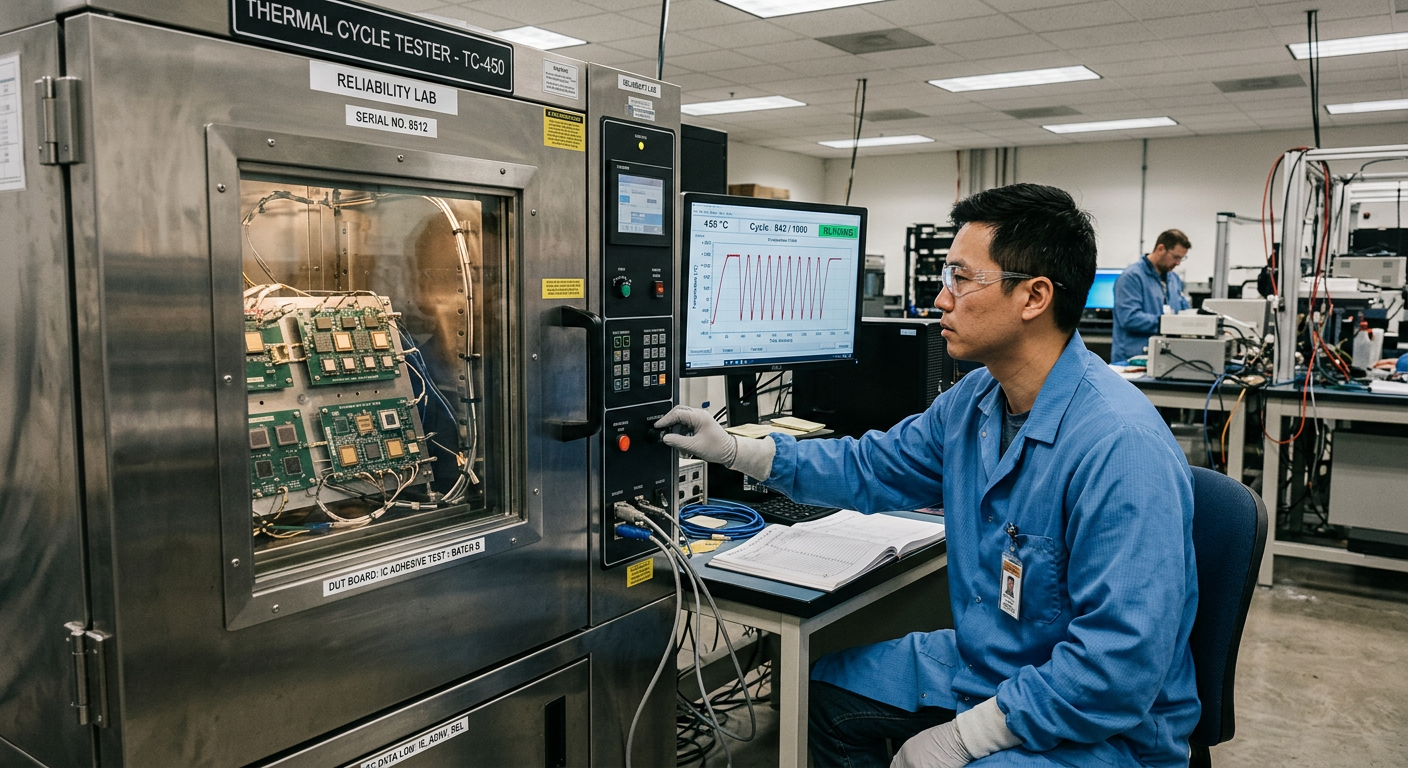
IC Package Adhesive Thermal Cycling Reliability Testing
IC packaging adhesive thermal cycling in the United States requires reliable material selection, supplier review, and test planning for electronics durability.
-

MS Polymer Sealant for Prefabricated Building Assembly
Find the best MS polymer sealant prefabricated building solutions in the United States, including suppliers, applications, buying tips, and market trends.
 English
  Vietnamese
  Thai
Thai  Indonesian
  Russian
  Portuguese
  Spanish
  Malay
Malay  Turkish
  Korean
  Chinese