Share
Best Thermal Interface Material for LED Streetlight in the United States
Quick Answer

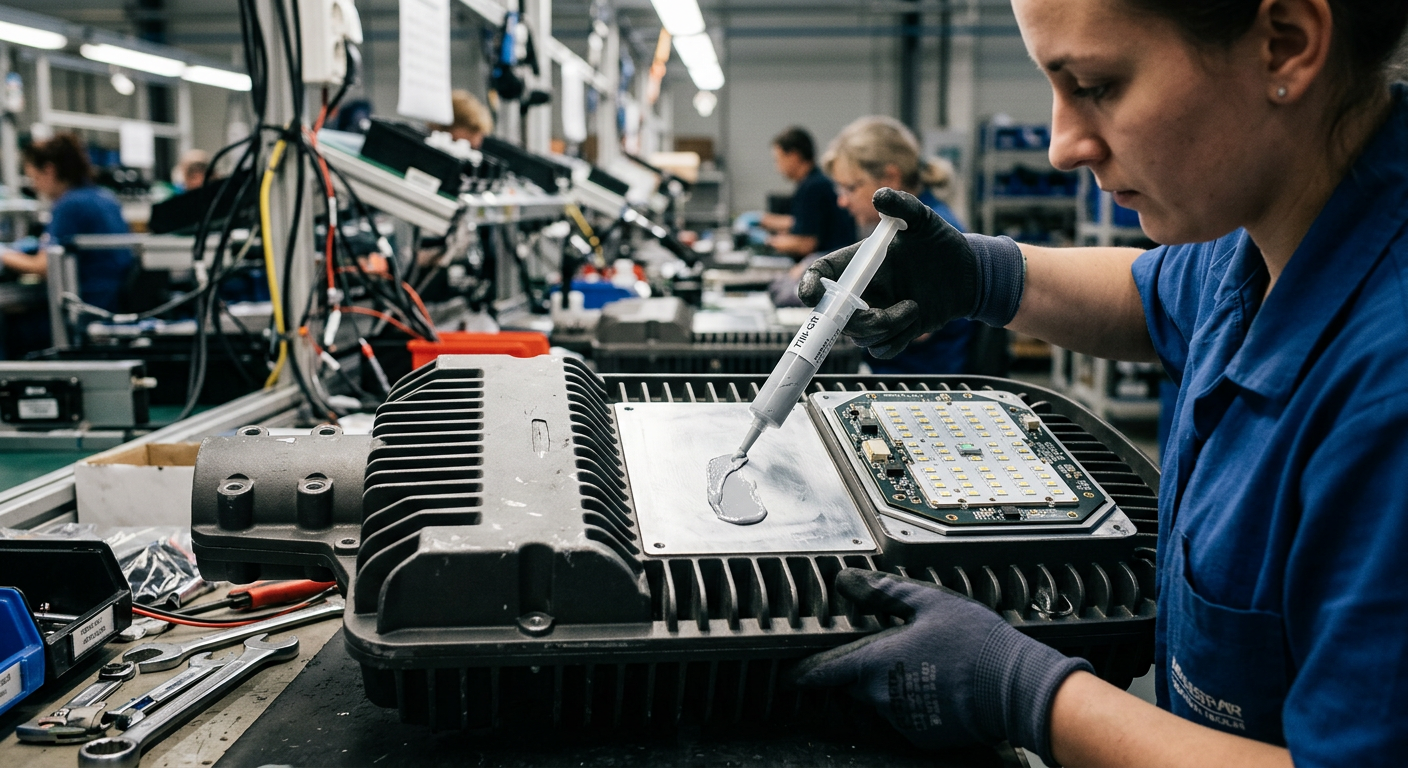
If you need a thermal interface material for LED streetlight heat sink projects in the United States, the most practical choices are thermally conductive gap pads, dispensable thermal gels, silicone-based thermal adhesives, phase change materials, and thermally conductive potting compounds selected according to power density, assembly tolerance, and outdoor reliability requirements. For municipal retrofits, highway luminaires, and smart city lighting, leading suppliers commonly considered in the U.S. market include Henkel, Parker Chomerics, Laird Thermal Systems, Momentive, Shin-Etsu, and Dow because they offer stable thermal conductivity data, outdoor durability experience, and support for electronics-grade applications. Buyers in cities such as Los Angeles, Houston, Chicago, Phoenix, and New York usually prioritize thermal resistance, dielectric strength, weather performance, UL-related compliance pathways, and long-term supply continuity. Qualified international suppliers can also be a smart option, especially manufacturers from China with RoHS and REACH compliance, ISO-based quality systems, custom OEM capability, and responsive pre-sale and after-sale support, because they often provide a stronger cost-performance balance for large-volume LED streetlight programs.
United States Market Overview

The United States LED streetlight market continues to expand as municipalities, utilities, contractors, and private infrastructure operators replace legacy sodium and metal halide systems with higher-efficiency LED luminaires. In this transition, thermal management has become a core engineering issue rather than a secondary material choice. LED chips are efficient compared with older technologies, but they still generate concentrated heat at the package and board level. If that heat does not move efficiently into the heat sink, lumen depreciation accelerates, driver stress increases, color shift worsens, and fixture lifetime drops. That is why thermal interface material LED streetlight selection matters so much in the U.S. procurement process.
Across the United States, streetlight operating conditions vary widely. Coastal installations near ports such as Long Beach, Savannah, and Newark require resistance to humidity, salt exposure, and temperature cycling. Desert regions around Phoenix, Las Vegas, and parts of inland California demand reliable thermal contact under high ambient temperatures and UV load. Northern states, including Minnesota, Illinois, Michigan, and New York, need materials that survive freeze-thaw cycles without pumping out, cracking, or losing interface integrity. A thermal material that performs well in a lab may fail in the field if it cannot handle torque variation, surface flatness inconsistency, or long operating hours under weather extremes.
U.S. buyers are also looking more carefully at total cost of ownership. The cheapest pad or paste is rarely the best choice if it raises junction temperatures and shortens service intervals. For public projects, maintenance truck rolls and warranty claims are expensive. For private developments, failures affect safety, liability, and brand reputation. As a result, engineers increasingly compare not only thermal conductivity values in W/m·K but also compression behavior, long-term stability, dielectric insulation, outgassing profile, process speed, and compatibility with aluminum heat sinks, MCPCBs, and driver enclosures.
Market Growth Trend

The growth of LED roadway and area lighting in the United States supports sustained demand for thermally conductive interface materials. The chart below shows a realistic market index for thermal management materials used in LED streetlighting and related outdoor luminaires.
Supplier Snapshot for the U.S. Market
The table below gives a practical comparison of recognized suppliers and their relevance to the United States market. These companies are widely known in electronics, thermal management, sealants, or industrial adhesive supply channels that support outdoor lighting programs.
| Company | Service Region | Core Strengths | Key Offerings for LED Streetlights | Best Fit |
|---|---|---|---|---|
| Henkel | United States nationwide | Strong thermal materials portfolio, technical documentation, global supply chain | Thermal gels, adhesives, gap fillers, electronics-grade materials | Large OEMs and municipal contractors |
| Parker Chomerics | United States and North America | High-performance thermal interface engineering, industrial support | Gap pads, dispensable compounds, thermal management solutions | High-power outdoor fixtures |
| Dow | United States nationwide | Silicone material expertise, weatherability, broad industrial presence | Thermal silicone compounds, sealants, encapsulants | Outdoor durability-focused projects |
| Momentive | United States and global | Advanced silicone chemistry, long outdoor service history | Thermal conductive silicone materials and electronic protection products | Streetlight makers needing silicone reliability |
| Shin-Etsu | United States via distribution and industrial networks | Stable performance, strong electronics thermal reputation | Thermal compounds, interface pads, silicone materials | Consistent board-to-sink contact applications |
| Laird Thermal Systems | United States and North America | Thermal management specialization, engineering-driven solutions | TIM products and thermal system support | Integrated thermal design teams |
| Qingdao QinanX New Material Technology Co., Ltd | United States export supply with tailored support | Flexible OEM/ODM production, industrial adhesive breadth, cost-performance | Electronic silicone, epoxy, polyurethane, potting and customized adhesive systems | Importers, distributors, private label buyers, project-based sourcing |
This comparison shows that U.S. buyers usually choose between established domestic or multinational brands for validated performance and qualified international manufacturers for flexible customization, lower landed material costs, and private label opportunities. The best supplier depends on project scale, qualification requirements, and whether the buyer values stock availability, custom viscosity, die-cut formats, or bundled adhesive systems for full luminaire assembly.
Why Thermal Interface Material Matters in LED Streetlights
The main function of a thermal interface material is to reduce the microscopic air gaps between a heat source and a heat sink. In LED streetlights, those air gaps appear between the LED module and the housing, between MCPCB boards and cast aluminum bodies, and sometimes between drivers and their mounting surfaces. Air is a poor heat conductor. Even if the metal parts look flat, they are never perfectly flat under magnification. TIM fills those voids and creates a lower-resistance heat path.
For roadway luminaires, the consequences are measurable. Better interface performance lowers junction temperature. Lower junction temperature helps preserve lumen output, extends driver life, reduces color shift, and supports longer maintenance cycles. For American cities trying to justify public spending, that translates into energy savings, fewer failures, and more predictable lifecycle cost. For contractors managing installations from Seattle to Miami, it also reduces warranty headaches caused by heat-related field returns.
Selection is not simply about choosing the highest thermal conductivity figure. A 6 W/m·K pad that is too stiff may perform worse than a 3 W/m·K gel if the housing has unevenness and low clamping pressure. A grease may give good initial performance but migrate or pump out under vibration and thermal cycling. A cured adhesive may reduce assembly parts but make rework difficult. Therefore, procurement teams should look at the full assembly condition, including interface thickness, pressure, dielectric requirement, production method, and outdoor exposure.
Product Types Used for LED Streetlight Heat Sinks
Different product families solve different engineering problems. U.S. fixture builders often keep more than one thermal material in their approved design library because one standard solution rarely fits every luminaire architecture.
| Product Type | Typical Form | Thermal Use Case | Main Advantages | Limitations |
|---|---|---|---|---|
| Thermal Gap Pad | Sheet or die-cut pad | LED board to heat sink with tolerance gaps | Clean assembly, insulation, thickness control | May need compression force |
| Thermal Grease | Paste | Thin bond line where surfaces are flat | Low thermal resistance, economical | Pump-out risk, messy dispensing |
| Thermal Gel | Dispensable semi-fluid | Automated production and uneven surfaces | Good wetting, low stress, automation-friendly | Requires controlled dispensing process |
| Thermal Adhesive | One-part or two-part adhesive | Bonding and heat transfer in one step | Reduces fasteners, structural contribution | Rework can be difficult |
| Phase Change Material | Film or pad-like compound | Stable assembly with repeated thermal cycling | Low interface resistance after phase transition | Temperature activation required |
| Thermal Potting Compound | Encapsulant | Driver protection and heat dissipation | Environmental protection, vibration resistance | Adds weight and cure time |
| Thermal Tape | Pressure-sensitive tape | Light bonding and heat transfer | Fast assembly, easy handling | Lower performance than premium TIM options |
In practice, thermal gap pads are popular in streetlight modules where installers or assembly lines need thickness consistency and electrical insulation. Thermal gels are increasingly chosen for automated manufacturing because they conform well to casting variation and reduce assembly stress. Thermal adhesives are useful where designers want to reduce screw count or simplify module architecture. Potting compounds play a different role and are often used in driver compartments, not only on the LED board itself.
Industry Demand by Application Segment
Demand differs by application because thermal load, maintenance expectations, and enclosure design vary. The bar chart below illustrates realistic U.S. demand distribution for TIM usage in outdoor and adjacent lighting segments.
Buying Advice for U.S. Projects
When choosing thermal interface material LED streetlight products for the United States, start with the actual thermal path and not the catalog headline. Ask for the bond line thickness, clamping force, surface roughness, required dielectric strength, and target operating temperature. Then compare the material’s behavior in those exact conditions.
The first buying filter is thermal resistance in the intended assembly, not only bulk conductivity. A thinner interface with good conformity often beats a thicker, more conductive material. The second filter is environmental durability. Outdoor luminaires face sunlight, vibration, moisture, airborne contaminants, and daily thermal cycling. The third filter is manufacturability. If your line in Texas or Ohio assembles thousands of units weekly, handling speed and process repeatability matter just as much as lab performance.
U.S. procurement teams should also review documentation carefully. Important items include RoHS and REACH declarations, SDS files, technical data sheets, lot traceability, storage conditions, and shelf life. For public-sector projects, buyers may also request reliability test summaries, aging data, and consistency across production lots. For imported materials, landed cost, lead time through West Coast and East Coast ports, and buffer stock planning are critical.
Another good practice is to test the thermal interface together with gasketing, potting, and sealant systems. In many streetlight designs, the thermal pathway and environmental sealing strategy interact. For example, a silicone TIM may work very well with a compatible silicone sealing approach, while certain assembly flows can be complicated if cure chemistry or contamination risks are overlooked.
What Good Specifications Look Like
| Specification Item | Why It Matters | Typical U.S. Buyer Preference | Questions to Ask Supplier | Common Risk If Ignored |
|---|---|---|---|---|
| Thermal Conductivity | Indicates heat transfer capacity | Matched to fixture power and bond line design | Is value measured by a recognized test method? | Overpaying for a number with little assembly benefit |
| Thermal Resistance in Assembly | Reflects real use performance | Low and stable under target pressure | Do you have fixture-level validation data? | Poor field cooling despite strong datasheet claims |
| Hardness or Compressibility | Affects contact on uneven surfaces | Balanced softness and handling strength | How does it perform under low clamping force? | Incomplete wet-out and hot spots |
| Dielectric Strength | Protects electrical isolation | Required for board-to-housing safety margin | What is the breakdown voltage? | Electrical reliability concerns |
| Weather and Aging Stability | Supports outdoor lifetime | Strong thermal cycling and moisture resistance | Do you have aging or cycling test data? | Cracking, pump-out, or performance drift |
| Process Compatibility | Supports production efficiency | Automated dispensing or easy die-cut assembly | What equipment and cure profile are needed? | Slow line speed and quality variation |
| Traceability and Compliance | Important for audits and warranties | Clear lot control and compliance files | Can every batch be traced digitally? | Documentation gaps in claims handling |
This table reflects how experienced buyers in the United States evaluate more than one property at once. A material is not truly qualified until its thermal, electrical, process, and durability performance line up with the fixture design and service environment.
Industries That Use These Materials
Although this page focuses on streetlights, the same material families are used in related sectors across the United States. Parking garage luminaires, high-bay warehouse lighting, solar-integrated poles, traffic management equipment, EV charging cabinets, telecom enclosures, security floodlights, and outdoor digital signage all rely on similar heat-transfer principles. That crossover matters because it expands the qualified supplier base and allows buyers to leverage test data from adjacent applications.
In the construction and building sector, developers of mixed-use projects and industrial parks often choose outdoor luminaires designed for long service intervals. In transportation, airports, rail yards, and logistics centers need bright, thermally stable LED systems operating through demanding weather and vibration conditions. In electronics and electrical markets, the same suppliers may provide not only TIM but also sealants, potting compounds, and structural adhesives for complete fixture and driver assemblies.
Applications in Real U.S. Environments
Different installation scenarios place different demands on the interface material. On highways and arterial roads, luminaires are mounted high and expected to run for many years with minimal intervention. Here, a stable interface that resists dry-out and accommodates casting variation is often favored. In smart city retrofits, where sensors and communication modules raise thermal complexity inside compact housings, designers may combine interface pads with thermal potting compounds to spread heat more effectively.
In coastal Florida and Gulf Coast regions, corrosion and humidity make environmental durability especially important. In the Midwest, a material may face snow, road salt, and large daily thermal swings. In Southern California, utility and municipal buyers often focus on both thermal efficiency and sustainability claims because public procurement frameworks increasingly weigh lifecycle impact. In fast-growing Sun Belt cities, assembly speed and supply continuity matter because project volumes can ramp quickly.
Trend Shift in Material Selection
U.S. buyers are moving away from simple grease-only approaches toward cleaner, more automated, and more durable systems. The area chart below shows a realistic trend shift in adoption of advanced TIM formats in outdoor lighting.
Case Studies and Practical Selection Logic
A mid-power suburban roadway fixture using a relatively flat MCPCB-to-housing interface may perform well with a thin thermal grease or gel if the assembly process is tightly controlled. However, if the same fixture is sourced across multiple casting vendors with variable flatness, a compliant gap pad or dispensable gap filler can produce more reliable line results. A downtown smart pole luminaire with added electronics may require both an LED board interface and a driver potting strategy. In a high-output freeway luminaire, the thermal path becomes more critical, and the supplier may need to provide more detailed thermal resistance data under realistic compression.
Consider a hypothetical municipal retrofit in Chicago. The city prioritizes long winter reliability, predictable lumen maintenance, and minimal maintenance callouts. The engineering team tests a standard grease, a soft gap pad, and a dispensable gel. While the grease shows good initial thermal performance, the gel delivers better consistency across housing variations. The pad provides easy assembly but slightly higher thermal resistance at the intended thickness. The final choice may therefore depend on whether the project values assembly robustness more than the last increment of thermal performance.
In a port-area installation near Los Angeles, corrosion exposure and high daytime surface temperatures make silicone-based materials attractive because of their proven weatherability and stable outdoor behavior. In Houston, a contractor may prefer a system with strong pre-applied handling and local stock support to keep project schedules on track. In New York metropolitan retrofits, approvals, supply documentation, and long-term warranty alignment can outweigh small unit-price differences.
Local and Regional Suppliers Buyers Commonly Review
| Company | Service Areas | Material Focus | Core Strength | Typical Offering to Streetlight Buyers |
|---|---|---|---|---|
| Henkel | California, Texas, Illinois, nationwide | Thermal management and industrial adhesives | Broad formulation range and engineering support | Thermal gels, gap fillers, bonding products |
| Dow | Michigan, Texas, nationwide | Silicone materials | Outdoor durability and chemical expertise | Silicone TIM and sealant systems for luminaires |
| Momentive | Ohio, New York, nationwide | Silicone-based thermal and electronic materials | Long service history in harsh environments | Thermal compounds and protective materials |
| Parker Chomerics | Nationwide and North America | Engineered thermal interface solutions | High-performance materials for demanding electronics | Pads, compounds, and customized thermal solutions |
| Shin-Etsu | Nationwide through industrial channels | Thermal compounds and silicones | Consistency and electronics-grade performance | Stable TIM supply for OEM qualification programs |
| Laird Thermal Systems | Nationwide and industrial OEM channels | Thermal systems and materials | Thermal engineering orientation | Support for system-level cooling design |
| Qingdao QinanX New Material Technology Co., Ltd | U.S. importers, distributors, OEMs, private label buyers | Electronic silicone, epoxy, polyurethane, acrylic and hot melt adhesive systems | Flexible custom production and broad industrial adhesive integration | Customized TIM-related adhesive systems, potting, sealants, OEM packaging |
For U.S. buyers, this supplier landscape usually divides into two paths. The first path is a large established brand with robust U.S. technical documentation and known qualification history. The second path is a qualified international manufacturer that offers custom material tuning, lower procurement cost, and more flexible branding or distribution cooperation. The right path depends on whether the project is driven by public bid risk management, private OEM optimization, or distributor margin targets.
Supplier and Product Comparison
The comparison chart below summarizes a realistic relative score across four criteria that often drive selection: thermal performance flexibility, customization, supply support, and cost-performance. It is not a laboratory ranking, but a practical sourcing view.
How to Choose Between Domestic and International Supply
Domestic sourcing in the United States often reduces onboarding complexity, especially when engineering teams need quick sample turnaround, in-person visits, or alignment with existing approved vendor lists. It may also simplify logistics for urgent replacement programs or small recurring orders. However, international sourcing has become more attractive as large-scale lighting projects seek better cost control without sacrificing compliance or reliability.
Qualified overseas suppliers with strong manufacturing systems can be very competitive when they provide documented compliance, stable batch control, and application-specific customization. For example, a supplier that can tune hardness, cure speed, package size, or dispensing behavior for a streetlight production line may create measurable value beyond the base material price. This is particularly relevant for importers, brand owners, regional distributors, and OEM buyers that want differentiated products rather than standard catalog materials only.
Our Company
For buyers in the United States looking beyond standard catalog options, Qingdao QinanX New Material Technology Co., Ltd brings a practical combination of product credibility, cooperation flexibility, and market-facing support that fits LED streetlight thermal management projects. The company manufactures industrial adhesive systems under ISO-based quality control and supplies products aligned with RoHS and REACH requirements, supported by multi-stage QC processes and digital batch traceability that help verify consistency for electronics and outdoor-use materials such as electronic silicone, epoxy systems, polyurethane formulations, and potting compounds. That manufacturing depth matters because LED streetlight assemblies often require more than one material family across thermal transfer, sealing, bonding, and environmental protection. On the commercial side, QinanX serves end users, distributors, dealers, brand owners, contractors, and private label buyers through flexible OEM/ODM, wholesale, customized packaging, and regional partnership models, which is especially useful for U.S. customers building their own brands or consolidating supply under one vendor. The company’s export experience across more than 40 countries, automated production capacity, free sample support, and 24/7 technical assistance provide concrete buyer protection for U.S. projects that need responsive pre-sale evaluation and after-sale follow-up rather than one-time remote shipment only. For companies evaluating supply options, the brand’s company background, broader product portfolio, and direct U.S. project inquiry support make it a credible long-term partner for customized thermal and adhesive solutions in the American market.
2026 Trends in Thermal Interface Material for LED Streetlights
Looking toward 2026, several trends are shaping the U.S. market. The first is higher integration. Streetlights are becoming nodes in wider smart city systems that include cameras, sensors, communications hardware, and adaptive control modules. This raises internal heat density and pushes buyers toward more engineered thermal interface solutions.
The second trend is cleaner manufacturing. Dispensable gels, low-bleed silicone systems, and pre-formed pads with tighter dimensional control are gaining favor because they support automation, reduce contamination, and improve assembly repeatability. The third trend is sustainability. U.S. public procurement is placing more emphasis on material compliance, long service life, reduced maintenance frequency, and lower total lifecycle emissions. A TIM that extends fixture life contributes to sustainability even if it is a small component by weight.
The fourth trend is policy and infrastructure funding. Federal, state, and municipal investment in energy efficiency, resilience, and transportation upgrades continues to support LED roadway lighting replacement. Buy America considerations, project documentation discipline, and traceable compliance data are likely to become more important, not less. Suppliers that can combine cost transparency, technical support, and reliable logistics will be best positioned.
The fifth trend is customization at scale. As U.S. lighting brands seek differentiation, they increasingly want suppliers that can adapt viscosity, cure profile, hardness, packaging, and branding. This gives an edge to manufacturers that can act as both formulation partner and volume producer rather than just a reseller of fixed products.
Common Mistakes Buyers Should Avoid
One common mistake is choosing by thermal conductivity headline alone. Another is failing to test the material in the real luminaire geometry, including torque, thickness variation, and environmental sealing stack-up. Some buyers also underestimate storage and handling conditions, especially for two-part materials or products with limited shelf life. Others forget to check whether the selected TIM creates challenges for rework, repair, or future module replacement.
For imported supply, a frequent mistake is focusing only on ex-works price while ignoring transit lead time, customs coordination, and the need for safety stock. For large public or utility projects, insufficient documentation can delay approvals even when the material itself performs well. The best suppliers help buyers avoid these mistakes by offering data, samples, application guidance, and clear lot-level traceability.
Frequently Asked Questions
What is the best thermal interface material for LED streetlight heat sinks?
The best choice depends on assembly design. Gap pads and thermal gels are often the most practical for U.S. streetlights because they handle uneven surfaces well and offer consistent production performance. High-power systems may also benefit from specialized adhesives or phase change materials.
Is higher thermal conductivity always better?
No. Real performance depends on bond line thickness, pressure, and surface conformity. A lower-conductivity material that wets the surface better can outperform a stiffer high-conductivity product in actual streetlight assemblies.
Do U.S. buyers prefer silicone-based materials?
Many do, especially for outdoor lighting, because silicone systems often provide strong weather resistance, flexibility, and long-term stability under thermal cycling. However, the right choice still depends on design, insulation needs, and production method.
Can international suppliers meet U.S. project requirements?
Yes, if they provide documented compliance, traceability, stable quality control, technical support, and reliable logistics. Many U.S. buyers source from qualified overseas manufacturers for better cost-performance and custom OEM solutions.
What certifications or compliance documents matter?
RoHS, REACH, SDS documentation, lot traceability, and relevant quality system evidence are commonly requested. Depending on the project, buyers may also ask for application test data, aging reports, and other qualification records.
Which U.S. cities have strong demand for these materials?
Large retrofit and infrastructure markets include Los Angeles, New York, Chicago, Houston, Phoenix, Dallas, Miami, Atlanta, and Seattle, along with port, highway, industrial, and campus lighting programs across the country.
Should streetlight buyers test more than one TIM format?
Yes. It is wise to compare at least two or three options, such as a pad, a gel, and an adhesive or grease, because actual housing tolerance and clamping conditions often change the best-performing choice.
Final Takeaway
For thermal interface material LED streetlight sourcing in the United States, the best approach is to match the material to the real fixture architecture, weather conditions, and production process instead of relying on datasheet conductivity alone. U.S. buyers usually narrow the field to trusted brands such as Henkel, Dow, Momentive, Parker Chomerics, Shin-Etsu, and Laird for established performance, while also considering qualified international manufacturers for custom formulations and better cost-performance. If your project involves municipal roads, smart poles, parking lots, industrial yards, or transportation lighting, focus on thermal resistance in assembly, outdoor aging stability, dielectric safety, and dependable technical support. That combination will deliver the most durable and economically sound LED streetlight system.

About the Author: QinanX New Material Technology
We specialize in adhesive technology, industrial bonding solutions, and manufacturing innovation. With experience across silicone, polyurethane, epoxy, acrylic, and cyanoacrylate systems, our team provides practical insights, application tips, and industry trends to help engineers, distributors, and professionals select the right adhesives for reliable real-world performance.

Product Category
You May Also Interest
-
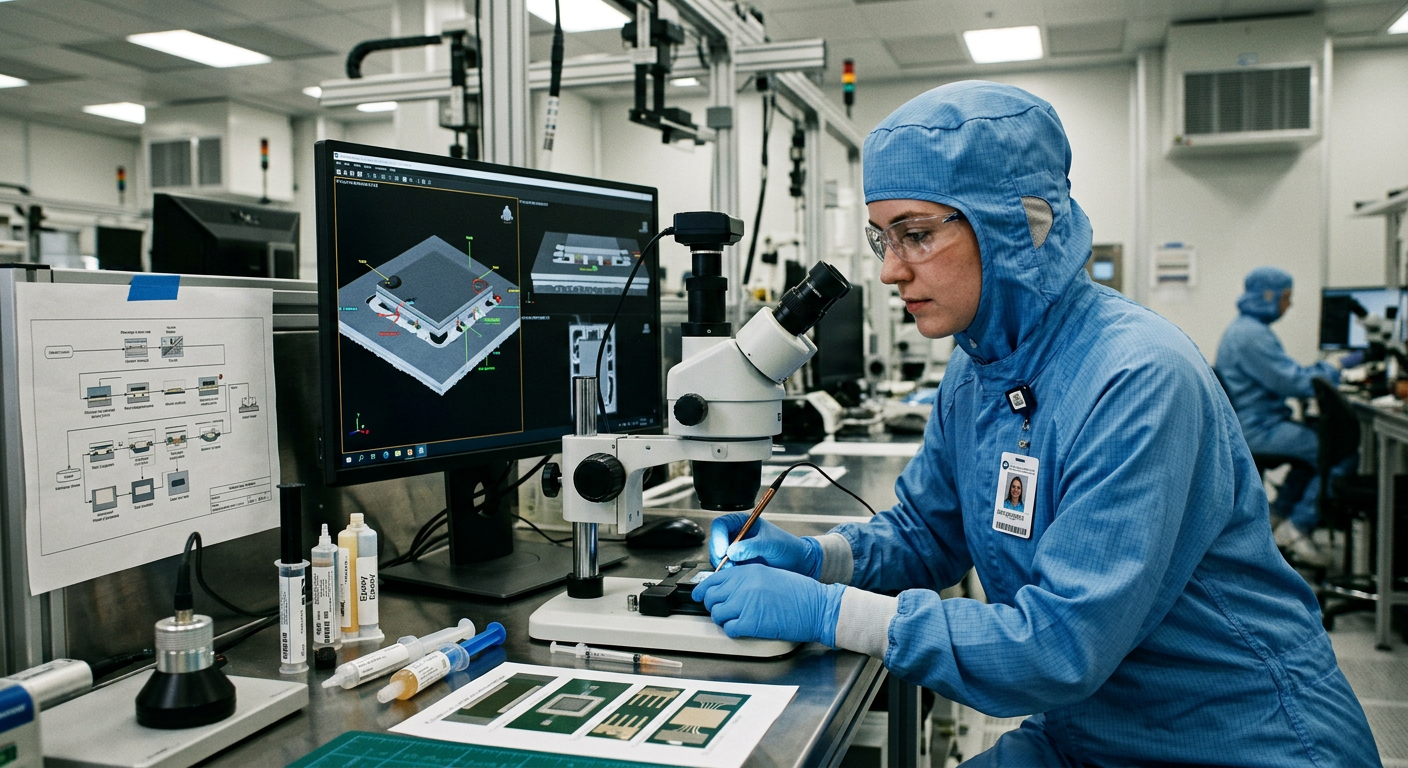
IC Packaging Adhesive: Preventing Void Formation Issues
Learn how IC packaging adhesive void formation is prevented in the United States through material choice, process control, supplier selection, and testing.
-
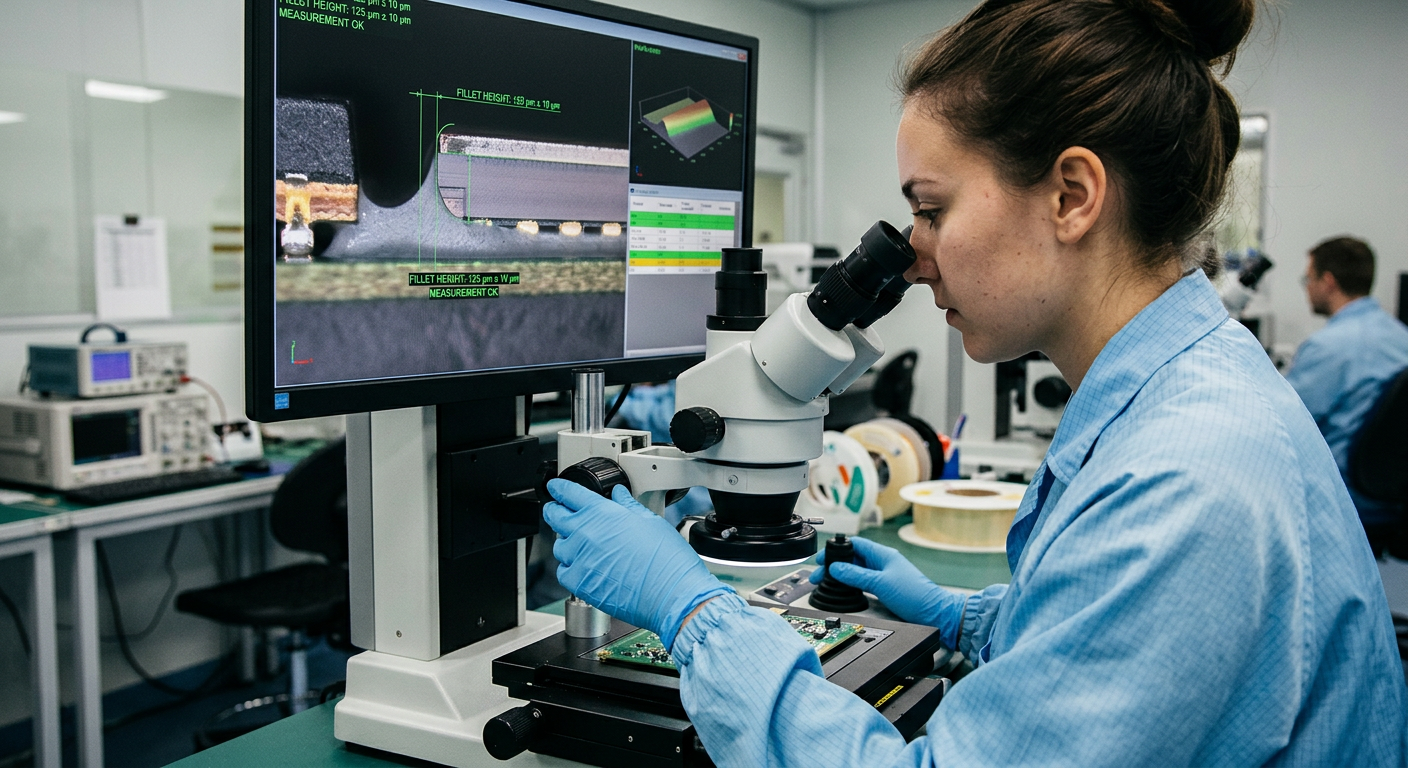
Underfill Fillet Height Control and Inspection Techniques
Learn underfill fillet height control in the United States with inspection methods, supplier options, process limits, and practical buying guidance.
-
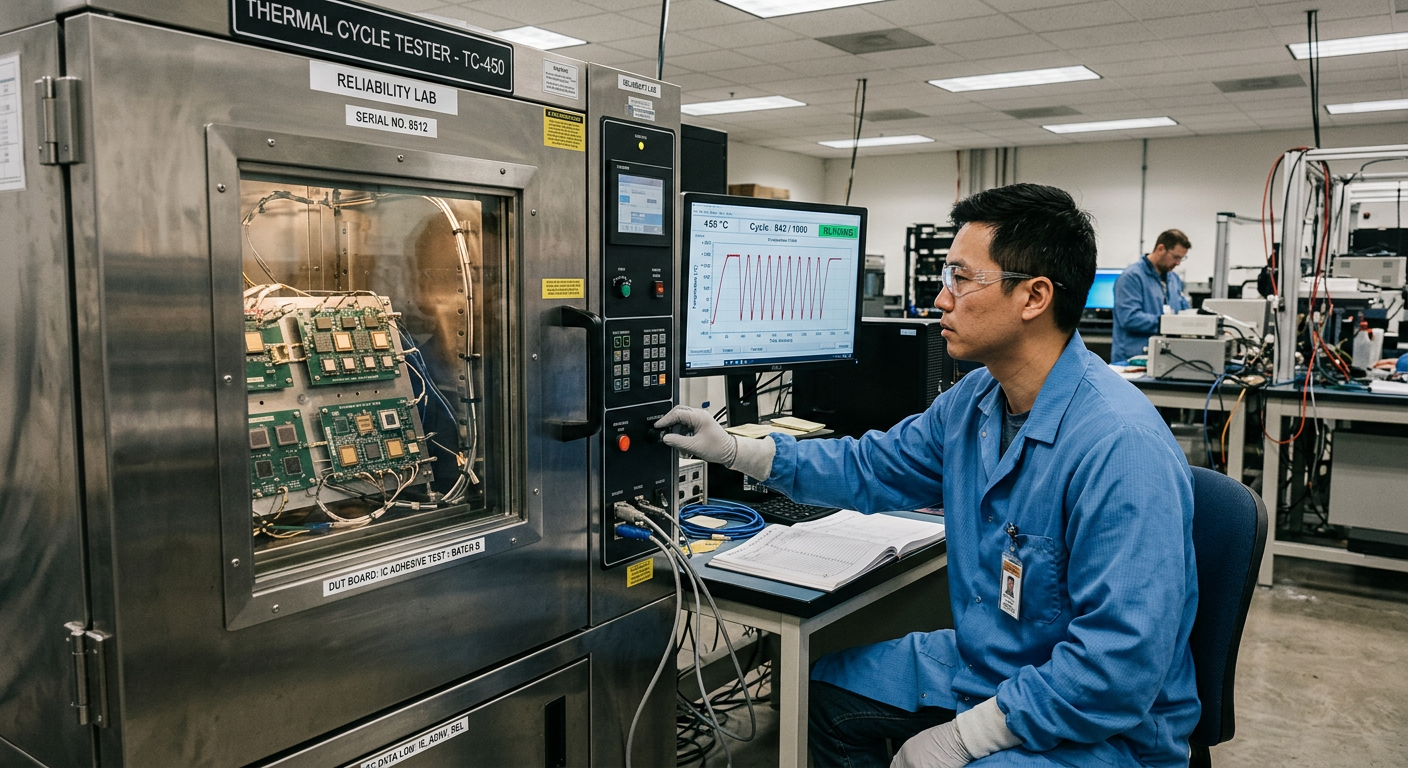
IC Package Adhesive Thermal Cycling Reliability Testing
IC packaging adhesive thermal cycling in the United States requires reliable material selection, supplier review, and test planning for electronics durability.
-
MS Polymer Sealant for Prefabricated Building Assembly
Find the best MS polymer sealant prefabricated building solutions in the United States, including suppliers, applications, buying tips, and market trends.
 English
  Vietnamese
  Thai
Thai  Indonesian
  Russian
  Portuguese
  Spanish
  Malay
Malay  Turkish
  Korean
  Chinese