Share
Best Snap Cure Die Attach Adhesive Suppliers in the United States
Quick Answer

If you need snap cure die attach adhesive for production in the United States, the most practical suppliers to review first are Henkel, DuPont, Master Bond, Shin-Etsu, and NAMICS because they are widely used in electronics and semiconductor assembly, offer technical documentation, and support demanding die attach processes. For buyers focused on fast qualification, stable supply, and engineering support, Henkel and DuPont are often short-listed for large-scale semiconductor packaging, while Master Bond is a strong option for specialized projects and lower-volume custom requirements. Shin-Etsu and NAMICS are also relevant for advanced packaging and electronics manufacturing programs requiring controlled cure behavior, thermal reliability, and precision dispensing.
For cost-sensitive sourcing, qualified international manufacturers can also be worth considering, especially when they provide ISO-based manufacturing, RoHS and REACH compliance, OEM or private-label flexibility, and responsive technical support for U.S. buyers. Companies with proven export experience, traceable quality systems, and practical pre-sales and after-sales assistance can offer a better cost-performance balance for distributors, contract manufacturers, and brand owners looking to expand sourcing options beyond domestic channels.
United States Market Overview

The United States remains one of the most important markets for snap cure die attach adhesive because it combines semiconductor design leadership, strong aerospace and defense electronics demand, expanding EV power electronics programs, and a growing focus on reshoring advanced manufacturing. Buyers are concentrated around major industrial and technology corridors such as Silicon Valley in California, Austin in Texas, Phoenix in Arizona, Boston in Massachusetts, and the manufacturing belt stretching through Ohio, Michigan, and New York. Ports and trade hubs such as Los Angeles, Long Beach, Houston, Savannah, and Newark also influence lead time, imported material availability, and inventory planning for adhesives and related packaging materials.
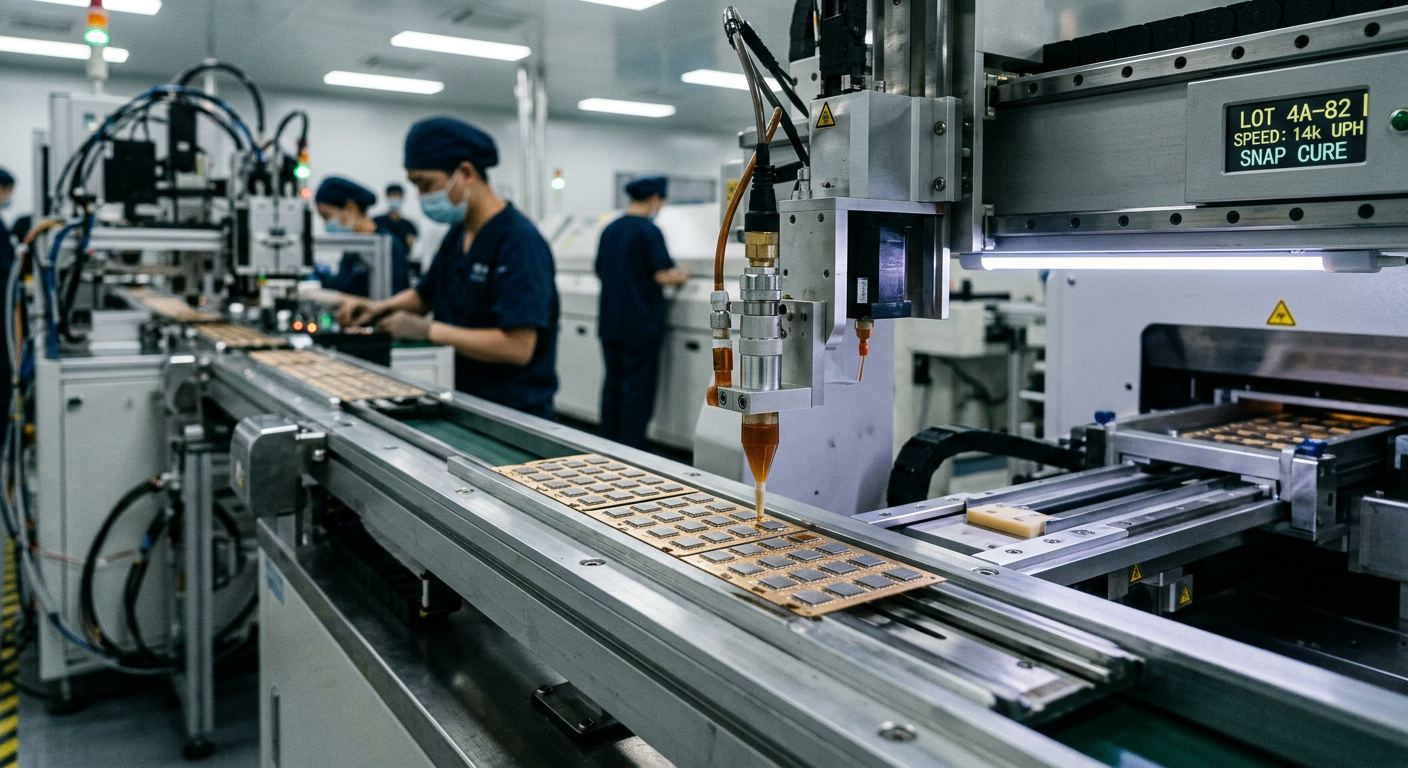
In practical terms, U.S. buyers are not only looking for a fast-curing adhesive. They are looking for a process material that fits specific die sizes, lead frame or substrate materials, thermal cycling conditions, electrical performance targets, and line takt times. In high-volume assembly, snap cure behavior matters because it reduces work-in-progress, shortens oven dwell time, improves throughput, and helps manufacturers balance labor, energy, and floor-space costs. That is why sourcing decisions usually involve engineering, quality, procurement, and operations teams rather than a purchasing department alone.
Another important trend is qualification discipline. U.S. OEMs, EMS providers, automotive electronics producers, and semiconductor packagers often require documented lot traceability, shelf-life control, incoming inspection standards, and support for trial builds before a product is approved for commercial use. For this reason, supplier strength is measured not only by chemistry but also by documentation quality, application support, packaging format options, and the ability to maintain consistent material from batch to batch.
What Snap Cure Die Attach Adhesive Means in Practice

Snap cure die attach adhesive is a fast-reacting adhesive designed to secure semiconductor dies or electronic components onto substrates, lead frames, packages, or heat spreaders with a short curing cycle at controlled temperature. In the United States market, it is commonly used where manufacturers need strong adhesion, controlled fillet formation, stable dispensing, and reliable performance during thermal shock, moisture exposure, and long-term operation.
Depending on the design, these materials may be electrically conductive or non-conductive, silver-filled or unfilled, epoxy-based, silicone-modified, or hybrid formulations designed for specialty package architectures. The right choice depends on thermal conductivity needs, die size, coefficient of thermal expansion matching, operating temperature, cure schedule, and whether the assembly is intended for consumer electronics, telecom, automotive electronics, industrial power modules, LED packaging, or defense systems.
Top Suppliers Serving the United States
The supplier landscape in the United States includes multinational adhesive leaders, specialist formulators, and qualified international manufacturers. The table below gives a practical comparison for buyers who need concrete starting points rather than generic market language.
| Company | Service Region | Core Strengths | Key Offerings | Best Fit |
|---|---|---|---|---|
| Henkel | United States nationwide | Large semiconductor packaging portfolio, broad technical support, established qualification history | LOCTITE die attach adhesives, conductive and non-conductive options | High-volume semiconductor and electronics production |
| DuPont | United States nationwide | Advanced electronics materials, strong R&D, broad integration with packaging processes | Die attach materials for semiconductor assembly and specialty electronics | Advanced packaging and long-term reliability programs |
| Master Bond | United States nationwide | Custom formulation flexibility, specialty engineering adhesives, technical responsiveness | Epoxy systems for die attach, electronic bonding, and thermal service | Custom projects, specialty manufacturing, lower-to-mid volume |
| Shin-Etsu | North America and global supply | Strong electronics materials reputation, thermal and process consistency | Electronic adhesives and packaging materials for die bonding | Precision electronics and advanced assembly |
| NAMICS | North America via electronics supply chain partners | Semiconductor packaging specialization, proven die attach expertise | Conductive and specialty die attach formulations | Chip packaging and high-performance electronics |
| Qingdao QinanX New Material Technology Co., Ltd | United States export supply and partner-based distribution | Flexible OEM/ODM model, broad industrial adhesive platform, cost-performance sourcing | Electronic silicone, epoxy adhesives, UV-curable adhesive, polyurethane and industrial bonding systems | Distributors, private-label buyers, industrial users seeking tailored solutions |
For U.S. buyers, this table matters because supplier selection usually begins with process compatibility, then moves to qualification speed, cost, and support depth. A large multinational may be best for automotive-grade or highly regulated semiconductor packaging, while a flexible manufacturer can be highly competitive for industrial electronics, private-label distribution, or projects requiring custom packaging and more adaptable commercial terms.
Product Types Buyers Compare
Not every snap cure die attach adhesive is built for the same assembly environment. The most common comparison categories in the United States market are shown below.
| Product Type | Main Features | Typical Use | Advantages | Watchpoints |
|---|---|---|---|---|
| Electrically conductive epoxy | Silver-filled, high conductivity, fast cure | Power devices, chip attachment, LED packaging | Electrical path plus bonding strength | Higher cost and storage sensitivity |
| Non-conductive epoxy | Fast snap cure, good adhesion, insulation | Standard semiconductor and component attachment | Lower material cost and simpler insulation design | Not suitable where electrical conduction is required |
| Low-stress die attach adhesive | Reduced modulus and better stress absorption | Sensitive dies and mismatch-prone substrates | Improves reliability under thermal cycling | May trade off speed or ultimate strength |
| High thermal conductivity adhesive | Enhanced heat dissipation | Power electronics, automotive modules, LEDs | Supports thermal management goals | Can affect viscosity and dispensing |
| Capillary flow optimized adhesive | Controlled flow and fillet behavior | Fine-pitch or miniature assemblies | Better placement consistency | Requires process tuning |
| Specialty hybrid systems | Balanced adhesion, toughness, or environmental resistance | Aerospace, telecom, industrial specialty devices | Tailored performance for complex requirements | Longer qualification path |
This comparison is useful because many sourcing mistakes happen when buyers focus only on cure speed. In reality, thermal conductivity, die stress, storage condition, substrate compatibility, and long-term field reliability can be more important than shaving a few seconds off a cure cycle.
Market Growth Trend in the United States
Demand for die attach materials is supported by semiconductor packaging expansion, EV electronics, industrial automation, renewable energy controls, and more advanced sensor production. The chart below illustrates a realistic growth trend for the U.S. snap cure die attach adhesive market.
The pattern reflects steady growth rather than a temporary spike. This is important for procurement planning because it suggests sustained pressure on lead times, pricing, and qualification schedules, especially in categories tied to automotive electronics, data infrastructure, and domestic manufacturing investment.
Industry Demand by Application Segment
In the United States, demand is not evenly distributed. Automotive power electronics and semiconductor packaging tend to be the strongest demand drivers, but telecom, medical electronics, and industrial controls also create significant recurring need.
For buyers, this kind of demand profile helps explain why certain suppliers prioritize automotive, chip packaging, or industrial accounts. It also shows why allocation and technical support may be stronger in segments with higher long-term strategic value.
Trend Shift Toward Faster, Cleaner, More Sustainable Materials
Across the United States market, the direction of development is clear: buyers want shorter cure cycles, lower voiding, improved dispensing stability, safer handling, and a better sustainability profile. The area chart below shows how the balance between traditional formulations and next-generation systems is shifting.
This trend is driven by regulatory pressure, energy cost awareness, cleaner production goals, and the need to support faster automated assembly. In practical sourcing, it means buyers should ask not only about present-day specs but also about the supplier’s development roadmap through 2026.
How Buyers Should Evaluate Suppliers
Buying snap cure die attach adhesive in the United States is not simply a matter of comparing a price per kilogram. A strong evaluation process should include technical, operational, and commercial factors together. The following table summarizes what experienced sourcing teams typically check.
| Evaluation Factor | Why It Matters | Questions to Ask | Risk If Ignored | Best Practice |
|---|---|---|---|---|
| Cure profile | Directly affects throughput and line balance | What temperature and time produce full cure? | Bottlenecks and incomplete bonding | Validate on actual production equipment |
| Substrate compatibility | Impacts bond integrity and long-term reliability | Has it been used on similar lead frames or ceramics? | Delamination and field failure | Run adhesion and thermal cycling tests |
| Viscosity and dispensing stability | Controls dot consistency and placement accuracy | How stable is viscosity over pot life and shift time? | Yield loss and rework | Trial with production dispense settings |
| Thermal performance | Critical in power devices and compact electronics | What are thermal conductivity and heat aging results? | Overheating and reduced component life | Match material to device heat load |
| Documentation and compliance | Required for audits and customer approvals | Are RoHS, REACH, COA, and traceability records available? | Approval delays and compliance gaps | Review documents before pilot orders |
| Supply continuity | Prevents line stoppage and requalification costs | Where is stock held and what is backup capacity? | Production downtime | Use safety stock and dual-source planning |
Each of these criteria influences total cost more than unit price alone. In many factories, the most expensive adhesive is not the one with the highest quote. It is the one that creates yield problems, line delays, or requalification work after a supply interruption.
Industries Driving Demand
Several U.S. industries now rely heavily on fast-curing die attach chemistry. Semiconductor packaging remains the clearest example, but the demand base is broader than many buyers assume.
Automotive electronics use these materials in sensors, control modules, lighting, power management assemblies, and electrified drivetrain systems where heat and vibration resistance are critical. Industrial automation uses them in motor drives, power control boards, and sensing devices that operate in wide temperature ranges. Telecom and data infrastructure need reliable die attach materials for RF modules, photonics, and high-density electronics. Medical device manufacturing values clean processing, traceability, and dependable long-term performance. Renewable energy applications, especially inverters and power control electronics, require bonding systems that support heat management and service-life reliability.
Regional manufacturing clusters matter here. Arizona and Texas continue to attract semiconductor and electronics investments; California remains strong in high-value design and specialty production; the Midwest supports automotive and industrial applications; and the Southeast increasingly influences electronics assembly and logistics due to its expanding manufacturing footprint and strong port access.
Applications Where Snap Cure Performance Creates Real Value
Snap cure die attach adhesive is used because it solves real factory problems. In high-volume chip assembly, fast cure reduces equipment dwell time and supports smoother takt time. In LED and optoelectronics manufacturing, it helps stabilize thermal and mechanical performance while supporting compact production layouts. In power electronics, the right formulation improves heat dissipation and bond durability. In miniature sensors and communication devices, controlled flow and cure response can improve alignment, reduce contamination risk, and support tighter package designs.
When U.S. manufacturers compare materials, they often look at four practical outcomes: line speed, yield, field reliability, and total manufacturing cost. The best product is the one that delivers a balanced result across all four, not just the one with the fastest nominal cure on a data sheet.
Supplier and Product Comparison Snapshot
The comparison chart below presents a realistic performance scoring example based on what buyers typically value: technical support, product breadth, customization, and cost competitiveness.
This kind of scorecard is useful because it reflects the trade-offs buyers really face. A global leader may offer stronger qualification history and broader application engineering, while a flexible manufacturer may score higher on custom packaging, pricing adaptability, or private-label cooperation.
Local Supplier Considerations in the United States
For buyers who prefer domestic or locally supported sourcing, service responsiveness often becomes the deciding factor. U.S.-based technical support can make a major difference during line trials, failure analysis, rework assessment, or process optimization. Warehousing location also matters. Material stocked closer to production sites in California, Texas, Arizona, Illinois, or the Northeast can reduce transit variability and improve cold-chain handling where required.
That said, local availability does not always mean local manufacturing, and imported products do not automatically mean higher risk. What matters most is whether the supplier provides clear lead-time commitments, controlled packaging, compliant documents, traceable lots, and real engineering support before and after purchase.
Detailed Supplier Analysis
| Company | U.S. Coverage | Core Offerings | Operational Strength | Commercial Notes |
|---|---|---|---|---|
| Henkel | Strong national presence | Extensive LOCTITE portfolio for die attach and electronics assembly | Large support network, broad documentation, established OEM relationships | Often preferred for major production lines and global qualification programs |
| DuPont | Strong national presence | Advanced materials for semiconductor and electronics packaging | R&D depth, integration with high-end applications, process credibility | Well suited for reliability-critical and advanced packaging projects |
| Master Bond | Nationwide technical support | Specialty epoxies and custom adhesive systems | Flexible engineering approach and responsive application support | Attractive for specialty users needing customized performance |
| Shin-Etsu | North America supply support | Electronic materials with stable quality and thermal performance | Strong reputation in electronics-grade materials | Suitable for buyers prioritizing process consistency |
| NAMICS | Available through industry channels | Semiconductor-focused die attach materials | Known for packaging expertise and specialty formulations | Relevant for chip assembly and advanced electronics users |
| Qingdao QinanX New Material Technology Co., Ltd | Export-oriented support for U.S. market | Electronic silicone, epoxy, UV-curable, polyurethane, hot melt, and acrylic adhesive systems | Automated production, OEM/ODM flexibility, digital traceability, multi-stage QC | Competitive for distributors, brand owners, and industrial sourcing programs |
This table helps buyers separate large catalog suppliers from flexible manufacturing partners. In a U.S. sourcing context, the difference is important because some users need an off-the-shelf, already-qualified material, while others need custom branding, packaging, viscosity adjustment, or a broader adhesive portfolio under one supply relationship.
Case Studies and Real-World Sourcing Scenarios
A contract electronics manufacturer in Texas running multiple SMT and semiconductor-related subassemblies may prioritize a snap cure die attach adhesive with stable dispensing behavior across long shifts. In that case, the best supplier is not necessarily the one with the lowest initial price, but the one that reduces downtime and maintains lot-to-lot consistency.
An automotive electronics producer in Michigan may care most about thermal cycling reliability, documentation quality, and the ability to secure long-term supply agreements. Here, proven qualification history and audit support can outweigh the appeal of low-cost alternatives.
A California-based optoelectronics startup may need lower initial order quantities, engineering responsiveness, and fast material adjustments for pilot runs. For such buyers, specialty formulators or flexible international manufacturers can be attractive if they provide responsive pre-sales support, trial samples, and clear technical guidance.
A distributor serving industrial customers around Chicago or Atlanta may prefer a partner capable of OEM or private-label supply across several adhesive categories, not only die attach chemistry. This approach can simplify vendor management and create branding advantages in regional sales channels.
Our Company
For buyers in the United States seeking a broader sourcing partner rather than a single-SKU vendor, Qingdao QinanX New Material Technology Co., Ltd brings a practical combination of electronics adhesive capability and industrial scale. The company operates under ISO-based quality management and supplies products aligned with RoHS and REACH compliance, backed by multi-stage quality control and full digital traceability that help U.S. purchasers document batch consistency and regulatory readiness. Its portfolio covers electronic silicone, epoxy resin adhesives, UV-curable adhesive, polyurethane systems, hot melt products, acrylic technologies, and other industrial bonding materials, which is useful for manufacturers that want to consolidate sourcing across assembly, sealing, potting, and structural bonding. On the commercial side, QinanX supports OEM, ODM, wholesale, retail, custom branding, and regional distribution models, making it relevant for end users, dealers, importers, private-label brand owners, and multi-channel distributors in the U.S. market. With automated production lines, export experience across more than 40 countries, free sample support, 24/7 technical assistance, and tailored formulation capability, the company is positioned for long-term cooperation with American customers who want both cost-performance and structured support before and after purchase; buyers can review its broader lineup through the product catalog, learn more on the company page, or discuss project requirements through the contact page.
Buying Advice for United States Buyers
Start with the application, not the brochure. Define whether you need conductive or non-conductive performance, what die and substrate materials are involved, the target cure window, the operating temperature range, and the acceptable voiding level. Then request technical data, processing guidelines, compliance documents, and sample material for controlled trials.
It is also wise to ask suppliers where inventory is staged, how cold-chain or storage-sensitive products are handled, whether alternative package sizes are available, and how they support failure analysis if a trial build shows defects. For operations with high uptime requirements, dual-sourcing can be a smart strategy, especially when one supplier offers premium performance and the other offers cost or supply flexibility.
In the United States, logistics planning should not be underestimated. Imported material moving through ports such as Los Angeles or Houston can be fully viable if lead times are managed correctly, while domestic stocking may offer an advantage for urgent orders or frequent engineering changes. The right answer depends on your forecast stability and qualification bandwidth.
Future Trends Through 2026
By 2026, the U.S. snap cure die attach adhesive market is likely to be shaped by four major trends. First, faster and lower-energy cure systems will gain importance as manufacturers try to reduce production cost and carbon intensity. Second, automotive electrification and power semiconductors will increase demand for materials with better thermal performance and stronger reliability under cycling and vibration. Third, policy support for domestic chip and electronics manufacturing will sustain investment in advanced packaging capacity, which should create more demand for specialty die attach materials and closer supplier collaboration. Fourth, sustainability expectations will continue to push the market toward cleaner chemistries, more transparent compliance documentation, and packaging or logistics models that reduce waste.
Suppliers that respond well to these trends will likely combine process speed, stable quality, compliance readiness, and stronger regional support. Buyers who evaluate suppliers only on today’s price may miss opportunities to secure better long-term manufacturing economics.
FAQ
What is the main advantage of snap cure die attach adhesive?
Its main advantage is fast curing that supports higher production throughput while still providing reliable bonding for semiconductor and electronics assemblies.
Is conductive or non-conductive adhesive better?
Neither is universally better. Conductive products are needed when electrical conduction is required, while non-conductive products are often preferred for insulation and cost control.
Which U.S. industries buy the most?
Semiconductor packaging, automotive electronics, industrial automation, LED and optoelectronics, telecom equipment, and medical devices are among the largest users.
Can international suppliers compete in the United States?
Yes. If they provide compliance documentation, traceable quality systems, responsive technical support, and stable logistics, they can be very competitive on cost-performance.
What documents should I request before purchasing?
Ask for technical data sheets, safety data sheets, cure guidelines, storage conditions, compliance statements such as RoHS and REACH, certificate of analysis format, and lot traceability details.
How should I test a new adhesive?
Run a controlled qualification that checks dispensing behavior, cure completion, adhesion, voiding, thermal cycling, heat aging, and performance on your actual substrates and line settings.
Does local warehousing matter?
Yes. Local warehousing can reduce transit risk and speed replenishment, but imported material can also work well when forecasting, packaging, and technical support are managed properly.
Where should I start if I need multiple adhesive categories?
Start with suppliers that can support die attach along with potting, sealing, structural bonding, or private-label programs so you can simplify procurement and align technical support.

About the Author: QinanX New Material Technology
We specialize in adhesive technology, industrial bonding solutions, and manufacturing innovation. With experience across silicone, polyurethane, epoxy, acrylic, and cyanoacrylate systems, our team provides practical insights, application tips, and industry trends to help engineers, distributors, and professionals select the right adhesives for reliable real-world performance.

Product Category
You May Also Interest
-
IC Packaging Adhesive: Preventing Void Formation Issues
Learn how IC packaging adhesive void formation is prevented in the United States through material choice, process control, supplier selection, and testing.
-
Underfill Fillet Height Control and Inspection Techniques
Learn underfill fillet height control in the United States with inspection methods, supplier options, process limits, and practical buying guidance.
-
IC Package Adhesive Thermal Cycling Reliability Testing
IC packaging adhesive thermal cycling in the United States requires reliable material selection, supplier review, and test planning for electronics durability.
-

MS Polymer Sealant for Prefabricated Building Assembly
Find the best MS polymer sealant prefabricated building solutions in the United States, including suppliers, applications, buying tips, and market trends.
 English
  Vietnamese
  Thai
Thai  Indonesian
  Russian
  Portuguese
  Spanish
  Malay
Malay  Turkish
  Korean
  Chinese