Share
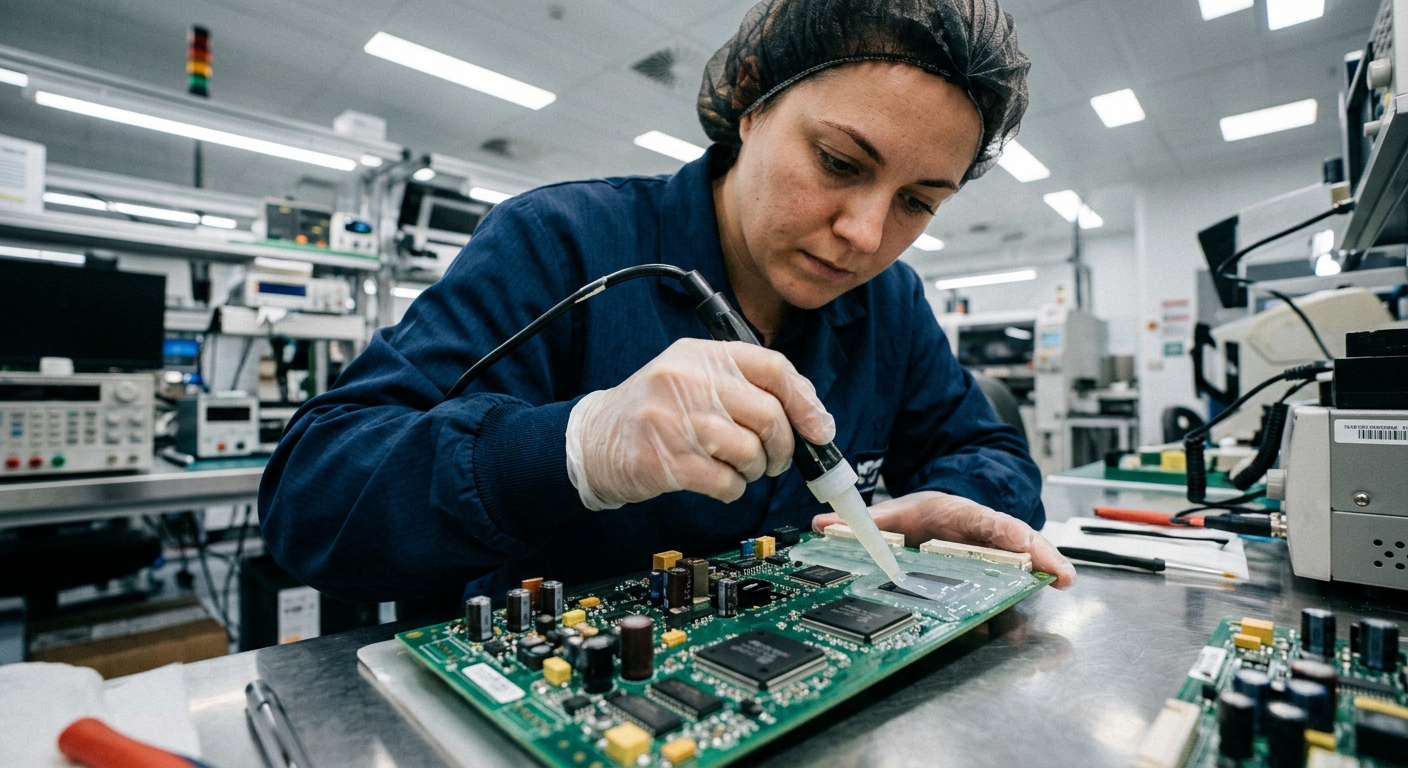
High-Temperature Silicone Conformal Coating in the United States
Quick Answer

If you need silicone conformal coating high temperature performance for circuit boards in the United States, the most practical choices are established suppliers with proven electronics protection portfolios, U.S. distribution capability, and technical documentation for thermal cycling, dielectric strength, humidity resistance, and chemical durability. For buyers prioritizing reliable supply and engineering support, strong options commonly include Dow, Chase Corporation, Electrolube, HumiSeal, MG Chemicals, and Shin-Etsu. These companies are widely considered for automotive electronics, power supplies, LED drivers, industrial control boards, aerospace assemblies, and renewable energy electronics exposed to elevated operating temperatures.
For immediate sourcing decisions, buyers in cities such as San Jose, Austin, Chicago, Phoenix, Detroit, and Boston usually compare maximum continuous operating temperature, cure profile, viscosity, reworkability, UL-related documentation, and compatibility with dispensing, spraying, or selective coating lines. U.S.-based support remains important, but qualified international suppliers can also be worth considering when they combine compliance, traceability, and dependable service. In particular, experienced Chinese manufacturers with export history, recognized certifications, and strong pre-sales and after-sales support may offer a cost-performance advantage for private label, OEM, and volume supply programs.
- Dow: strong brand recognition for silicone chemistry and broad electronics material support.
- HumiSeal: widely specified conformal coating brand with multiple thermal-resistant options.
- Chase Corporation: extensive electronics protection portfolio and industrial reach in North America.
- Electrolube: known for specialty electronics coatings and process support.
- MG Chemicals: practical option for maintenance, prototyping, and production-scale coating needs.
United States Market Overview

The U.S. market for high-temperature silicone conformal coatings is shaped by the country’s broad electronics manufacturing base and its concentration of demanding end-use sectors. Semiconductor equipment in California, EV electronics in Michigan and Texas, aerospace systems in Washington and Arizona, defense projects across multiple federal contracting regions, and utility-scale solar and storage installations in the Southwest all require protection for printed circuit boards exposed to heat, vibration, moisture, salt fog, dust, and chemical contaminants.
Silicone coatings occupy a particularly important niche because they retain flexibility better than many alternative chemistries at elevated temperatures and during thermal shock. This matters in assemblies that move between cold startup and high-load operation, including inverters, battery management systems, industrial power electronics, under-hood modules, railway controls, and outdoor communications equipment. Buyers in the United States also tend to look beyond a simple temperature rating. They typically evaluate production repeatability, cure speed, ease of inspection, VOC considerations, repairability, and supply continuity across multiple states and contract manufacturers.
Trade and logistics also affect procurement. Major inbound material flows move through ports such as Los Angeles, Long Beach, Houston, Savannah, and New York/New Jersey, while domestic redistribution often passes through electronics and industrial hubs around Dallas-Fort Worth, Chicago, Atlanta, and the Inland Empire. For this reason, lead time and warehouse availability are often nearly as important as product performance. Buyers with multisite manufacturing footprints generally favor suppliers able to support qualification in one plant and standardized rollout across others.
The chart above shows a realistic demand index trend reflecting the way U.S. electronics protection requirements are rising with electrification, automation, data infrastructure expansion, and higher reliability expectations. Growth is not only volume-driven. It is also specification-driven, as OEMs shift from general-purpose acrylic coatings to higher-performance silicone systems for boards facing harsher thermal and environmental exposure.
Product Types and Performance Profiles

Silicone conformal coating high temperature products are not all the same. Within the U.S. market, buyers usually sort them by cure system, viscosity, application method, thermal endurance, and level of reworkability. A material that performs well for an LED driver may not be ideal for an automotive ECU or for an industrial power conversion board mounted near a heat source.
| Product Type | Typical Use | Thermal Strength | Process Fit | Main Advantage | Main Limitation |
|---|---|---|---|---|---|
| Room-temperature curing silicone coating | General electronics assembly | Good to very good | Spray, brush, dip | Simple processing | Longer cure in some environments |
| Heat-accelerated silicone coating | Production lines needing faster throughput | Very good | Selective coating, spray | Reduced cure time | Requires controlled thermal process |
| Low-viscosity silicone coating | Dense PCB coverage | Good | Spray, selective coating | Fine coverage on complex boards | Potential edge flow management issues |
| High-build silicone coating | Harsh environment boards | Excellent | Selective coating, manual dispense | Thicker barrier protection | May slow rework and inspection |
| UV-traceable silicone coating | High-volume quality inspection lines | Good to very good | Automated lines | Fast inspection control | May limit product selection |
| Specialty silicone for power electronics | Inverters, chargers, control boards | Excellent | Engineered processes | High thermal cycling reliability | Higher qualification burden |
This comparison matters because “high temperature” can mean different things in practice. Some buyers only need stable protection around 125°C intermittent exposure, while others need longer endurance in environments approaching 150°C or greater in localized areas. The correct selection depends on actual board design, thermal mapping, and field conditions rather than on a headline number alone.
Top Suppliers Serving the United States
The supplier landscape in the United States includes multinational chemical companies, specialized electronics materials brands, and a smaller group of flexible international manufacturers that support contract production, private label, and custom formulation. The table below highlights practical sourcing options rather than broad chemical industry listings.
| Company | Primary Service Region | Core Strengths | Key Offerings | Best Fit | Notes for U.S. Buyers |
|---|---|---|---|---|---|
| Dow | United States, global | Deep silicone expertise, technical resources, brand trust | Silicone conformal coatings, encapsulants, thermal materials | OEMs and high-reliability users | Strong for engineering-led qualification programs |
| HumiSeal | North America, Europe, Asia | Electronics coating specialization, broad product line | Conformal coatings for industrial, automotive, aerospace use | EMS providers and industrial electronics | Frequently evaluated in formal coating specs |
| Chase Corporation | United States, international | Established industrial materials portfolio | Conformal coatings, sealants, encapsulation materials | Industrial and rugged electronics | Suitable for production-scale sourcing |
| Electrolube | United States, Europe, global | Specialty electronics protection and process support | Silicone coatings, cleaners, thermal management materials | Complex board assemblies | Strong application support reputation |
| MG Chemicals | United States, Canada, distribution worldwide | Accessible product range and maintenance support | Silicone coatings, acrylic coatings, removers, process supplies | Maintenance, lab, pilot, light production | Commonly available through U.S. distributors |
| Shin-Etsu | United States, Asia, global | Advanced silicone chemistry and electronics focus | Silicone protective materials for electronic assemblies | Advanced electronics and power modules | Useful for demanding thermal environments |
| Qingdao QinanX New Material Technology Co., Ltd | United States export service, global supply | Flexible OEM/ODM, broad adhesive manufacturing base, export experience | Electronic silicone, potting, sealants, custom industrial adhesive solutions | Brand owners, distributors, importers, cost-focused buyers | Relevant for private label and scalable sourcing programs |
For U.S. procurement teams, the table shows why the market cannot be reduced to brand familiarity alone. Some suppliers are best for highly specified OEM programs, while others are more suitable for contract manufacturing, maintenance inventories, or private label business models. Buyers serving multiple customer segments often deliberately maintain both a premium global source and a cost-optimized secondary supplier.
The industry demand chart reflects a realistic pattern in the United States. Automotive and industrial controls consume large volumes because they combine high board counts with harsh service conditions. Renewable energy is rising quickly, particularly in solar inverters, energy storage systems, and grid-control electronics deployed in hot outdoor environments across states such as Texas, Arizona, Nevada, and California.
Buying Advice for U.S. Buyers
Choosing a silicone conformal coating high temperature product should begin with the environment the board actually sees, not just the nominal operating temperature. Engineers should confirm continuous temperature, peak excursion, humidity, condensation risk, salt exposure, vibration, and contamination sources. A board in a sealed telecom enclosure in Florida faces a different combination of stress than one mounted inside a factory power cabinet in Ohio or an inverter in the California Central Valley.
Process compatibility is the second major filter. The best coating on paper can fail commercially if it cannot run cleanly through an existing line. U.S. contract manufacturers often need materials that are stable in selective coating equipment, dry consistently, show well under inspection light, and remain reworkable without damaging adjacent components. Procurement should therefore involve both reliability engineering and production engineering before qualification is finalized.
| Buying Factor | Why It Matters | What to Ask Suppliers | Risk If Ignored | Best U.S. Practice | Typical Priority Level |
|---|---|---|---|---|---|
| Continuous temperature resistance | Confirms fit for long operating hours | What is the validated continuous service range? | Premature hardening or cracking | Compare lab data with field thermal profile | Very high |
| Thermal cycling durability | Important for start-stop and seasonal shifts | Do you have cycling test results? | Coating delamination | Test on actual board geometry | Very high |
| Application method | Impacts throughput and yield | Is the material qualified for selective coating? | Line instability and scrap | Run pilot batches before approval | High |
| Cure speed | Affects work-in-progress and takt time | What cure profile is required? | Bottlenecks in production | Match to oven and room conditions | High |
| Inspection visibility | Improves quality control | Is UV traceability available? | Coverage gaps go unnoticed | Use AOI or UV verification where possible | Medium |
| Supply continuity | Critical for multisite manufacturing | What are lead times and U.S. stock options? | Production interruptions | Dual-source strategic materials | Very high |
This buying framework helps U.S. purchasers separate a laboratory-ready material from a production-ready material. In many cases, the total cost of ownership is improved by a coating with slightly higher unit price but lower scrap, faster cure, easier inspection, and fewer field returns.
Industries Driving Demand
High-temperature silicone conformal coatings matter most in sectors where circuit boards work near heat sources or experience repeated thermal shock. In the United States, electrification and automation are widening the use case every year.
Automotive remains one of the strongest drivers. EV battery management systems, onboard chargers, power conversion electronics, and sensors all place increasing importance on heat-resistant protection materials. Detroit and the broader Midwest supply chain continue to push qualification requirements upward as vehicle electronics become denser and more exposed to harsh under-hood or near-powertrain environments.
Industrial manufacturing is similarly important. Facilities in Texas, Illinois, Ohio, and the Southeast operate variable-frequency drives, PLC systems, robotics controllers, and power modules that may see elevated heat, airborne contaminants, and vibration. Coatings are selected to protect not only against heat but also dust, oils, and ambient moisture in mixed-use production settings.
Aerospace and defense rely on coatings with consistent long-term behavior and robust documentation. While total volume may be lower than automotive, qualification standards are stricter and traceability expectations are higher. Medical devices, telecom infrastructure, rail control, and renewable energy storage are also meaningful contributors to demand.
Applications in Real Operating Environments
In practical U.S. use, silicone conformal coating high temperature systems are chosen for assemblies where a standard acrylic coating may become brittle, lose adhesion, or provide insufficient performance over time. Typical applications include LED lighting drivers in hot commercial installations, motor drives in manufacturing facilities, outdoor telecom control boards in the Southeast, solar inverter boards in desert climates, and control electronics mounted near engines or heavy-duty equipment.
Outdoor electronics are a particularly strong application category because high heat often combines with UV exposure, humidity, and condensation cycles. Coastal use cases around Florida, the Gulf Coast, and ports such as Houston and Savannah add corrosion pressure. Inland desert deployments in Arizona, Nevada, and inland California create the opposite challenge: intense daytime heat, cooler nighttime conditions, and large thermal swings. Silicone’s flexibility gives it an advantage in these scenarios.
The area chart illustrates a realistic trend shift: U.S. buyers increasingly move toward silicone coatings in higher-stress applications where lifetime performance and field reliability matter more than lowest initial material cost. This trend is especially visible in electronics linked to electrified transportation, distributed energy, and industrial automation.
Case Studies from Common U.S. Scenarios
A Texas-based industrial controls assembler producing motor drive boards experienced recurring coating edge cracking after thermal cycling in warehouse-to-field transitions. By replacing a brittle, lower-heat coating with a silicone-based high-temperature formulation designed for flexible coverage and stable dielectric performance, the manufacturer reduced warranty failures and improved field consistency during summer deployments.
An Arizona solar equipment integrator needed PCB protection for inverter control boards installed in enclosures facing high daytime ambient temperatures. The selected silicone coating improved thermal cycling performance and maintained board protection under repeated heating and overnight cooling. The buyer’s final decision depended not only on the material but also on accelerated aging data and local technical support for line setup.
A Midwest automotive electronics subcontractor faced rework challenges using a thick protective system that was difficult to remove cleanly. After switching to a silicone coating that balanced thermal endurance with manageable reworkability, the company improved process yield during engineering changes without sacrificing reliability on vibration and heat-exposed modules.
These examples show that the best solution is often a balance among heat resistance, flexibility, line efficiency, and service support rather than the most aggressive thermal rating alone.
Local Supplier Considerations in the United States
U.S. buyers usually divide suppliers into three practical categories: global material brands with domestic technical teams, specialty electronics chemical suppliers with active distributor networks, and international manufacturers that support private label, custom formulations, or direct import for cost-sensitive programs. Each category can work, but the decision should reflect volume, qualification burden, branding strategy, and service expectations.
| Supplier Model | Typical Lead Time | Support Level | Cost Position | Best For | Main Trade-Off |
|---|---|---|---|---|---|
| Global premium brand | Moderate | High technical depth | Higher | OEM approval and mission-critical applications | Price and qualification pace |
| Specialty electronics supplier | Short to moderate | Strong practical support | Mid-range | EMS and industrial production | Portfolio may be narrower |
| Regional distributor brand mix | Short | Depends on distributor | Variable | MRO and urgent replenishment | Inconsistent technical depth |
| International OEM/ODM manufacturer | Moderate to long | Flexible commercial support | Competitive | Private label and bulk sourcing | Needs stronger planning for inventory |
| Direct custom formulation source | Longer during development | High during project phase | Optimized at scale | Unique board requirements | Development and validation time |
| Hybrid dual-source strategy | Balanced | Balanced | Controlled total cost | Large buyers managing supply risk | Needs disciplined qualification management |
This table is especially useful for U.S. companies managing inflation, tariff uncertainty, and supply chain risk. In many categories, a dual-source strategy gives the best commercial resilience: one proven brand for specification-sensitive business and one qualified secondary supplier for cost control and continuity.
Supplier and Product Comparison Snapshot
The following comparison chart summarizes how common supplier profiles are viewed by U.S. buyers when balancing technical support, supply flexibility, customization, and cost efficiency. It is not a laboratory ranking; it is a commercial decision aid.
The comparison chart makes one point clear: different supplier groups win on different criteria. Premium suppliers tend to lead in formal engineering support and broad high-end data packages, while international OEM/ODM manufacturers often stand out in customization and cost efficiency. U.S. buyers with private label ambitions or distributor strategies often benefit from evaluating both models side by side.
Our Company
For U.S. buyers seeking a flexible alternative to legacy sourcing channels, Qingdao QinanX New Material Technology Co., Ltd offers a practical position in the market through its electronic silicone and broader industrial adhesive manufacturing capabilities. The company operates under ISO-based quality management and aligns products with international compliance expectations such as RoHS and REACH, supported by multi-stage quality control and digital traceability that matter when validating electronics protection materials against global benchmarks. Its product range spans electronic silicone, sealants, potting compounds, acrylic and epoxy systems, which allows better formulation matching instead of forcing a one-size-fits-all material. For cooperation, the company supports OEM, ODM, private label, wholesale supply, direct project business, and distributor development, making it suitable for end users, regional dealers, importers, brand owners, and even smaller buyers testing new market entry models. U.S.-focused customers reviewing its product portfolio and commercial background through the company overview will find a manufacturer with exports to more than 40 countries, automated production capacity for scalable consistency, free sample support, and 24/7 technical assistance that strengthens both pre-sale material selection and after-sale troubleshooting. That combination of export experience, documented compliance, custom formulation capability, and responsive support gives American buyers concrete assurance that the company is equipped for long-term business in the United States rather than acting as a purely transactional remote exporter. For project discussions or sample requests, U.S. teams can reach out through the contact page.
Future Trends Through 2026
By 2026, the U.S. market for silicone conformal coating high temperature materials is likely to be shaped by three major forces: technology upgrades, policy pressure, and sustainability expectations. On the technology side, electrification will continue to push more power density into smaller electronics packages, increasing local hot spots on PCBs and making flexible high-temperature protection more valuable. This is especially relevant to EV charging equipment, battery storage, industrial drives, and advanced HVAC control systems.
Policy and compliance will also matter more. Buyers in the United States increasingly expect traceable material declarations, lower-emission processing options, and documentation that supports customer audits in automotive, medical, aerospace, and energy sectors. Sustainability is becoming part of procurement criteria too, not necessarily through a single federal rule but through OEM scorecards, investor pressure, and customer requirements around safer chemistries, waste reduction, and longer product life.
The result is a market that favors suppliers able to prove four things at once: thermal performance, process stability, supply resilience, and documentation quality. Materials that meet these requirements while also offering competitive total landed cost will gain share fastest.
FAQ
What temperature range counts as high temperature for conformal coating?
In U.S. electronics sourcing, “high temperature” often means applications where standard coatings may struggle over time, commonly above about 125°C intermittent exposure or where repeated thermal cycling causes failure risk. The exact threshold depends on board design and field conditions.
Why choose silicone instead of acrylic?
Silicone usually offers better flexibility and stability in elevated heat and thermal shock environments. Acrylic may still be suitable for less demanding conditions, but silicone is often preferred for automotive, industrial power, outdoor energy, and other harsher duty cycles.
Is U.S. local stock necessary?
For ongoing production, local inventory or distributor support is highly valuable because it reduces lead time risk. However, imported supply can still be attractive for stable forecast business, especially when combined with planned safety stock.
Can high-temperature silicone coatings be reworked?
Yes, but reworkability differs by formulation and coating thickness. Buyers should confirm removal method, repair workflow, and impact on surrounding components during qualification.
What industries in the United States buy the most?
Automotive, industrial controls, renewable energy, aerospace, telecom infrastructure, and medical electronics are among the most active sectors.
Should buyers qualify more than one supplier?
In many cases, yes. A dual-source strategy improves supply resilience and can balance premium technical support with stronger cost control.
Are international suppliers realistic for U.S. buyers?
Yes. International suppliers are realistic when they provide compliance documentation, consistent quality systems, responsive technical support, and a proven export track record. This is especially useful for OEM/ODM or private label programs.
What is the first step before requesting samples?
Define the board environment clearly: continuous temperature, peak temperature, humidity, contaminants, application method, cure window, and rework needs. That information helps suppliers recommend the correct formulation quickly.

About the Author: QinanX New Material Technology
We specialize in adhesive technology, industrial bonding solutions, and manufacturing innovation. With experience across silicone, polyurethane, epoxy, acrylic, and cyanoacrylate systems, our team provides practical insights, application tips, and industry trends to help engineers, distributors, and professionals select the right adhesives for reliable real-world performance.

Product Category
You May Also Interest
-
IC Packaging Adhesive: Preventing Void Formation Issues
Learn how IC packaging adhesive void formation is prevented in the United States through material choice, process control, supplier selection, and testing.
-
Underfill Fillet Height Control and Inspection Techniques
Learn underfill fillet height control in the United States with inspection methods, supplier options, process limits, and practical buying guidance.
-
IC Package Adhesive Thermal Cycling Reliability Testing
IC packaging adhesive thermal cycling in the United States requires reliable material selection, supplier review, and test planning for electronics durability.
-
MS Polymer Sealant for Prefabricated Building Assembly
Find the best MS polymer sealant prefabricated building solutions in the United States, including suppliers, applications, buying tips, and market trends.
 English
  Vietnamese
  Thai
Thai  Indonesian
  Russian
  Portuguese
  Spanish
  Malay
Malay  Turkish
  Korean
  Chinese