Share
Silicone vs Polyurethane Construction Sealant Compared for the United States
Quick Answer

For most construction work in the United States, silicone sealant is the better choice when you need long-term weather resistance, UV stability, and movement capability around glass, curtain walls, exterior joints, and wet areas. Polyurethane sealant is usually the stronger choice when you need paintability, abrasion resistance, and strong adhesion to concrete, masonry, wood, and many metals in traffic-bearing or structural building joints. If your project is exposed to direct sunlight, rain, and temperature swings for years, silicone often lasts longer. If your job involves floor joints, precast concrete, expansion joints, or paintable facades, polyurethane is often more practical.
Buyers in major U.S. markets such as Houston, Los Angeles, Chicago, New York, Savannah, and Miami typically compare sealants based on substrate, joint movement, cure speed, VOC requirements, and labor efficiency rather than price alone. Leading suppliers with strong U.S. market relevance include Dow, Tremco, Sika, Henkel, 3M, and Pecora. Qualified international suppliers can also be considered, especially when they provide compliant formulations, dependable technical documents, and strong pre-sales and after-sales support. This is one reason many contractors and private-label buyers also evaluate established Chinese manufacturers for better cost-performance on large-volume projects.
- Choose silicone for curtain wall glazing, weather sealing, bathrooms, skylights, and high-UV exterior joints.
- Choose polyurethane for concrete joints, parking decks, precast panels, industrial floors, and paintable façade work.
- For coastal U.S. regions, silicone generally performs better against UV and long-term weathering.
- For heavy-duty mechanical wear and paintable finishes, polyurethane usually has the advantage.
- If you are sourcing for distribution, compare ASTM compliance, movement rating, shelf life, and local support before ordering.
How the U.S. Construction Sealant Market Evaluates These Two Materials

The United States construction sealant market is large, technically mature, and highly specification-driven. Buyers in commercial construction, infrastructure rehabilitation, residential remodeling, and industrial facilities do not simply ask which sealant is stronger. They ask which chemistry best fits the joint design, substrate combination, service environment, and code or project specification. In practical terms, silicone and polyurethane are both essential, but they solve different problems.
Silicone dominates many exterior weatherproofing and glazing applications because it remains flexible for long periods, resists ultraviolet exposure, and performs well under severe seasonal movement. This matters in climates ranging from Arizona heat to freeze-thaw cycles in the Midwest and Northeast. Polyurethane remains highly relevant because it adheres very well to porous substrates, handles physical wear, and can usually be painted to match façade finishes. That makes it common in parking structures, concrete control joints, tilt-up panels, sidewalks, and industrial buildings.
Across U.S. ports and logistics hubs such as Long Beach, Houston, Newark, Charleston, and Seattle, imported sealants also compete with domestic brands. Contractors, private-label distributors, and regional dealers often compare landed cost, lead times, packaging options, and compliance documentation. Product selection is therefore a mix of technical performance and supply-chain practicality.
The market growth trend shown above reflects a realistic pattern driven by infrastructure upgrades, building envelope retrofits, stricter energy performance targets, and ongoing residential renovation. Silicone demand tends to rise with façade modernization and glazing upgrades, while polyurethane demand remains strong in civil and concrete-heavy work.
Core Differences Between Silicone and Polyurethane Construction Sealants

The most useful way to compare these products is by performance in real jobsite conditions. Silicone is known for weatherability, low shrinkage, strong flexibility, and excellent long-term exterior performance. Polyurethane is known for toughness, broader adhesion on porous materials, paintability, and better resistance to mechanical wear in many construction joints.
| Property | Silicone Sealant | Polyurethane Sealant | What It Means on U.S. Jobsites |
|---|---|---|---|
| UV resistance | Excellent | Moderate to good | Silicone is usually preferred for long-exposure exterior joints in states with strong sun. |
| Paintability | Usually not paintable | Usually paintable | Polyurethane fits facades and wall joints where color matching is required. |
| Adhesion to concrete | Good with proper formulation/primer | Very strong | Polyurethane is commonly selected for concrete slabs, precast, and expansion joints. |
| Movement capability | Excellent | Good to excellent | Both can handle movement, but silicone excels in many high-movement weather seals. |
| Abrasion resistance | Moderate | Better | Polyurethane is often favored in traffic or wear-prone environments. |
| Moisture and wet area durability | Excellent | Good | Silicone is common in kitchens, bathrooms, glazing, and wet exterior conditions. |
| Service life outdoors | Often longer | Good but can weather faster | Silicone can lower long-term maintenance on exposed envelope systems. |
| Typical odor and cure sensitivity | Depends on system | More moisture-sensitive during cure | Application conditions matter more for polyurethane in variable weather. |
This comparison explains why project specifiers often write silicone into curtain wall and glazing details while choosing polyurethane for horizontal concrete joints. There is overlap, but the center of gravity for each chemistry is different.
Where Silicone Sealant Performs Best
Silicone construction sealants are widely used in the United States for exterior weatherproofing, perimeter sealing, window systems, curtain walls, skylights, and sanitary joints. Their biggest advantage is long-term stability in sunlight and harsh weather. In cities like Phoenix, Las Vegas, San Diego, Tampa, and Miami, this becomes especially important because UV exposure and heat can quickly stress inferior materials.
Silicone is also preferred in many glazing systems because it bonds well to glass and certain coated or anodized metals when the proper product and preparation method are used. Structural and weatherproof silicone grades are common in commercial façades, airports, medical buildings, universities, and high-rise towers. On the residential side, silicone is popular around windows, doors, tubs, showers, sinks, and exterior trim details where water resistance matters more than paintability.
The main limitation is finish compatibility. Many silicone products cannot be painted, so architects and contractors must choose color-matched sealants from the beginning. Some users also find that silicone can be less ideal on porous surfaces unless the exact grade and primer recommendations are followed.
Where Polyurethane Sealant Performs Best
Polyurethane sealants are often selected for concrete, masonry, metal, wood, expansion joints, control joints, parking structures, sidewalks, precast panels, warehouses, and industrial floors. They offer very good adhesion to porous materials and can be painted, which makes them practical for visible joints in many building exteriors.
In the United States, polyurethane remains a preferred solution in transportation, precast, tilt-up, and commercial slab work because contractors want a sealant that handles movement while standing up to friction, impact, and jobsite abuse. On mixed-material façades, polyurethane can also be easier to integrate into painting schedules than silicone. In colder regions such as Minneapolis, Detroit, Cleveland, and Boston, installers still pay close attention to cure conditions, because moisture, temperature, and joint preparation directly affect performance.
Its biggest tradeoff versus silicone is long-term weathering in exposed sunlight. While premium polyurethane products perform well, they generally do not match silicone for UV stability over very long exposure cycles. That is why many specifiers reserve polyurethane for locations where paintability and substrate grip matter more than maximum weather resistance.
Product Types Commonly Sold in the United States
Both material families include several sub-types. Understanding these categories helps buyers avoid comparing the wrong products. A low-modulus weatherproof silicone should not be judged by the same criteria as a high-strength polyurethane used in deck joints.
| Sealant Type | Main Chemistry | Typical U.S. Use | Best Fit |
|---|---|---|---|
| Neutral-cure weatherproof sealant | Silicone | Windows, curtain walls, exterior perimeter joints | Commercial façade and glazing work |
| Structural glazing sealant | Silicone | Glass-to-metal structural bonding | High-rise and engineered façade systems |
| Sanitary sealant | Silicone | Bathrooms, kitchens, hospitals, food areas | Wet interior areas needing mold resistance |
| One-component PU sealant | Polyurethane | Control joints, precast, siding, metal joints | General building and concrete sealing |
| Self-leveling PU sealant | Polyurethane | Horizontal concrete joints and slabs | Parking decks and warehouse floors |
| Non-sag PU sealant | Polyurethane | Vertical and overhead joints | Precast walls and façade joints |
| Hybrid MS sealant | Modified silane | General construction with paintable finish | When users want a middle ground between chemistries |
This table matters because many purchasing mistakes happen when a buyer compares a general-purpose silicone against a specialized polyurethane or vice versa. The right comparison must start with the exact application category.
Buying Advice for U.S. Contractors, Distributors, and Brand Owners
In the United States, construction sealant purchasing is rarely one-size-fits-all. General contractors focus on labor efficiency and field reliability. Architects focus on specification compliance and appearance. Distributors focus on SKU range, margin, packaging, and repeat demand. Private-label brand owners focus on stable supply, branding flexibility, and documentation.
Before choosing silicone or polyurethane, review the substrate pairings, joint width-to-depth ratio, movement class, expected service temperature, exposure level, primer requirements, cure time, VOC limits, and whether the joint needs to be painted. It is also wise to confirm ASTM testing data, packaging type, shelf life, and storage instructions. In humid Gulf Coast markets, cure and storage conditions can differ from dry inland regions. In California and the Northeast, buyers may pay closer attention to environmental compliance and documentation.
For large-volume sourcing through ports such as Los Angeles, Oakland, Houston, and Savannah, import buyers should also assess pallet stability, private-label capability, multilingual labels where needed, and technical support speed. Sealants are not just products; they are a risk-management category. The best supplier is usually the one that helps reduce callbacks and jobsite uncertainty.
The industry demand pattern above shows why both chemistries remain important. Glazing and commercial façades strongly support silicone demand, while infrastructure, industrial floors, and parking structures keep polyurethane highly relevant.
Industries That Use Silicone and Polyurethane Sealants
Construction sealants touch far more than basic building exteriors. In the United States, these products support the entire lifecycle of built environments, from new developments to repair and retrofits. Silicone is common where weatherproofing, glazing, and moisture resistance dominate. Polyurethane is common where structural movement, porous materials, and wear resistance are priorities.
| Industry | Typical Preference | Why It Matters | Representative U.S. Use Case |
|---|---|---|---|
| Commercial construction | Both | Exterior joints need weathering; concrete joints need toughness | Office towers in New York and Chicago |
| Residential building | Both | Bathrooms and windows favor silicone; siding and paintable joints may favor PU | Single-family housing in Texas and Florida |
| Infrastructure | Polyurethane | Concrete movement joints and deck applications need adhesion and wear resistance | Parking structures and transit stations |
| Glazing and façade | Silicone | UV, weather resistance, and movement capability are critical | Curtain walls in Seattle and Atlanta |
| Industrial manufacturing | Polyurethane | Flooring joints and heavy-service conditions require durable sealing | Warehouses near inland logistics hubs |
| Healthcare and sanitation | Silicone | Wet-area sealing and cleanability are key | Hospitals and laboratories |
| Renovation and retrofit | Both | Material compatibility and paintability vary by substrate and scope | Historic building upgrades in the Northeast |
The table shows that the market is not split by brand loyalty alone. It is driven by service environment, substrate, and lifecycle expectations. That is why successful U.S. suppliers usually carry both silicone and polyurethane lines.
Applications by Job Type
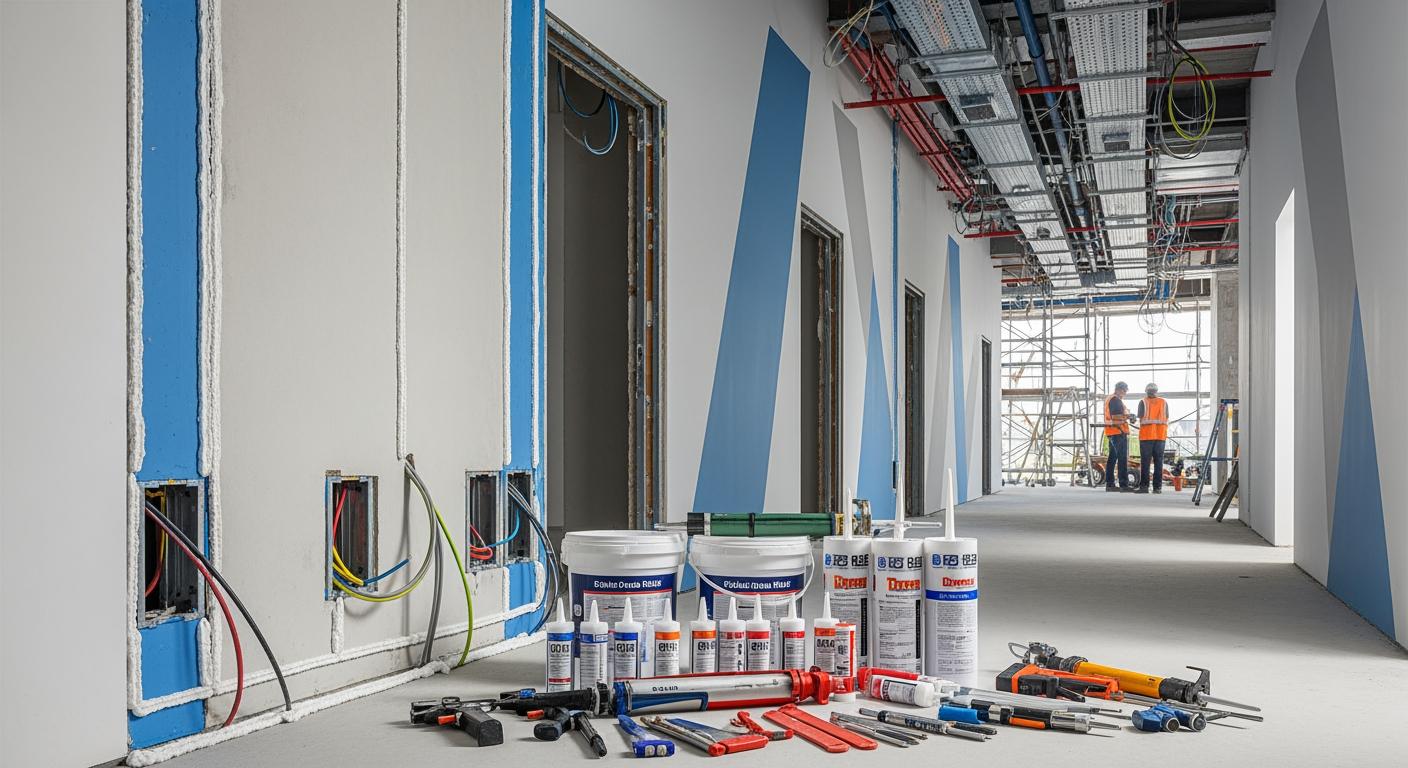
When buyers ask which sealant is better, the most honest answer depends on the joint. Around aluminum window frames, curtain walls, and skylight systems, silicone is often the safer long-term choice. In moving concrete joints, loading docks, warehouse floors, and parking decks, polyurethane is more common because it grips porous surfaces well and tolerates impact and abrasion better.
For bathrooms, kitchens, and wet mechanical rooms, silicone remains the standard because of water resistance and long-lasting flexibility. For EIFS transitions or paint-matched façade joints, polyurethane may fit better if the joint design and exposure level support it. Around marine-adjacent developments in places like Galveston, Tampa Bay, and Southern California, silicone is frequently preferred for above-grade exterior weather seals because of superior UV and moisture durability.
The practical lesson is simple: compare performance in the exact use environment, not in abstract laboratory terms. A sealant that excels on concrete decks may be the wrong answer for a glass curtain wall.
Case Studies from Typical U.S. Project Scenarios
Consider a mid-rise office renovation in downtown Chicago. The owner wants to replace failing perimeter window sealant on a façade exposed to wind, snow, rain, and wide thermal swings. Here, a high-performance neutral-cure silicone is usually the better decision because weather durability and movement performance outweigh the lack of paintability.
Now consider a logistics warehouse near Dallas with extensive concrete control joints and heavy forklift traffic. A self-leveling polyurethane is often the stronger option because of its adhesion to concrete and better wear behavior in floor movement joints. If the sealant must visually blend with painted surfaces in visible perimeter areas, a non-sag polyurethane may also be selected for some vertical joints.
A third example is a mixed-use residential development in Miami. Exterior glazing lines, balcony transitions, and façade weather seals often point to silicone because long-term UV and moisture resistance are essential. However, parking podium joints and service-area concrete joints may still call for polyurethane. This mixed-specification approach is common across the U.S. market because no single chemistry fits every part of the building.
Leading Suppliers Active in the U.S. Market
Buyers looking for dependable supply should compare not only chemistry but also brand capability, technical literature, field support, and regional coverage. The following companies are widely recognized in or relevant to the United States market for construction sealants.
| Company | Service Region | Core Strengths | Key Offerings |
|---|---|---|---|
| Dow | United States nationwide and global | Strong façade expertise, structural glazing reputation, robust technical data | Weatherproof silicone, structural silicone, façade solutions |
| Tremco CPG | United States and Canada | Building envelope systems, contractor support, broad construction portfolio | Silicone sealants, polyurethane sealants, air barrier systems |
| Sika | United States nationwide and global | Concrete and infrastructure presence, broad PU expertise, specification support | Polyurethane joint sealants, self-leveling systems, specialty construction sealants |
| Henkel | United States and global | Industrial adhesive depth, recognized brands, broad material science base | Construction and industrial sealants, specialty bonding systems |
| 3M | United States nationwide and global | Brand recognition, specialty sealing technologies, industrial distribution network | Construction sealants, hybrid technologies, specialty joint solutions |
| Pecora | United States focus | Architectural sealant reputation, building envelope specialization | Silicone weatherproofing, polyurethane sealants, glazing compounds |
| Master Builders Solutions | United States and global | Concrete and infrastructure application expertise | Polyurethane sealants, civil and commercial joint systems |
| Qingdao QinanX New Material Technology Co., Ltd | Export supply to U.S. buyers with global market experience | Broad chemistry portfolio, OEM/private label flexibility, cost-performance sourcing | Silicone sealants, polyurethane adhesives, MS sealants, custom adhesive programs |
This supplier comparison is useful because the U.S. market includes both specification-led premium brands and agile manufacturing partners for wholesale and private-label programs. Domestic buyers often mix both approaches depending on project type and margin target.
Supplier Comparison by Product and Sourcing Model
This comparison chart reflects a realistic market view rather than a formal ranking. U.S. majors tend to lead in local specification support and established project references, while internationally active manufacturers can compete strongly on breadth, customization, and private-label economics.
Trend Shift in Material Preference
Over the past several years, the U.S. market has gradually shifted toward longer-life building envelope solutions and lower-maintenance exterior systems. That tends to benefit silicone in exposed façade applications. At the same time, infrastructure repair, industrial expansion, and renovation spending continue to support polyurethane demand. Hybrid and modified silane technologies are also growing as buyers seek low-VOC, paintable, and user-friendly alternatives.
The trend shift shown here does not suggest polyurethane is disappearing. Instead, it shows silicone gaining share in premium exterior applications while polyurethane remains deeply embedded in concrete and industrial use. Hybrid sealants may capture some of the middle ground by 2026.
Our Company in the U.S. Supply Context
Qingdao QinanX New Material Technology Co., Ltd fits the U.S. market because it combines certified manufacturing discipline with a broad adhesive portfolio that includes silicone sealants, polyurethane systems, MS modified silane sealants, epoxy adhesives, acrylic products, hot melts, and water-based technologies, all produced under ISO-based quality control with RoHS and REACH compliance, multi-stage inspection, and digital traceability that supports consistent batch performance for buyers who need dependable documentation. For U.S. end users, distributors, dealers, brand owners, contractors, and even smaller private buyers, the company works through flexible supply models including OEM, ODM, wholesale, custom packaging, and private-label programs, which is especially useful for regional distribution and store-brand development. Its export record across more than 40 countries, automated production lines, ongoing R&D, free sample programs, and 24/7 technical assistance show real experience serving international markets like the United States, while its combination of online technical response, tailored formulation support, and scalable manufacturing gives local buyers a practical level of pre-sale and after-sales assurance that goes beyond a distant trading relationship. Buyers who want to explore product categories, custom supply options, or direct consultation can review the product range, learn more about the company, or contact the team for project-specific support.
How to Decide Between the Two for Specific U.S. Conditions
If your project is in a coastal or high-sun environment such as Florida, Southern California, or the Gulf Coast, silicone usually provides a more durable exterior seal over time. If your project is in a dense urban market with a strong emphasis on painted façade details, polyurethane may be more convenient where exposure conditions allow it. For bridges, parking structures, and slab joints, polyurethane is often the more job-appropriate option. For glazing and façade weatherproofing in cities with freeze-thaw cycles such as Denver, Minneapolis, and Buffalo, silicone often brings lower long-term maintenance risk.
Large distributors serving contractors around ports and inland freight hubs also think differently from specifiers. They care about cartridge and sausage format availability, pallet efficiency, private-label branding, shelf life in warehouses, and how fast a technical team can respond when a compatibility question arises. In these cases, the supplier’s support system can be nearly as important as the chemistry itself.
Future Trends Through 2026
By 2026, three trends are likely to shape the silicone versus polyurethane discussion in the United States. The first is sustainability and compliance. More buyers will expect lower-VOC options, cleaner labeling, and clearer environmental documentation. The second is durability-driven specification. Owners increasingly want longer maintenance cycles, which helps silicone in exposed envelope systems and favors premium polyurethane in infrastructure settings. The third is supply-chain diversification. U.S. importers, private-label companies, and distributors are actively balancing domestic sourcing with global manufacturing partnerships to improve resilience, cost control, and product availability.
Technology will also move the market. Expect more hybrid products, better adhesion without heavy primer use, and tighter data integration around batch traceability and performance records. Policy trends tied to energy efficiency, façade safety, embodied carbon awareness, and renovation funding may also influence sealant selection. In retrofit-heavy cities such as Boston, Philadelphia, and San Francisco, demand will likely grow for products that extend building-envelope life without major disruption.
Frequently Asked Questions
Is silicone better than polyurethane for exterior construction joints?
Silicone is usually better for highly exposed exterior joints that face UV radiation, rain, and major temperature changes over a long service life. Polyurethane can still perform well outdoors, but silicone often has the durability advantage in weatherproofing applications.
Is polyurethane better than silicone on concrete?
In many cases, yes. Polyurethane usually bonds very well to concrete and masonry and is often the first choice for control joints, expansion joints, sidewalks, decks, and parking structures.
Which sealant lasts longer in the United States climate?
For exposed exterior weathering, silicone often lasts longer. For protected or wear-focused concrete applications, polyurethane can still be the better overall performer because the service condition is different.
Can you paint silicone and polyurethane sealants?
Polyurethane is commonly paintable, while most silicone sealants are not. If appearance and paint matching are important, this factor can decide the product choice immediately.
Which is better for bathrooms and kitchens?
Silicone is generally better for wet interior spaces because it resists moisture and stays flexible for a long time. That is why it is common around sinks, showers, tubs, and backsplashes.
Which is better for parking decks and warehouse floors?
Polyurethane is usually the stronger choice, especially self-leveling grades designed for horizontal joints and wear-prone concrete applications.
Should distributors in the United States consider international manufacturers?
Yes, provided the supplier can show compliance documents, stable quality systems, responsive technical support, and dependable lead times. Many qualified overseas manufacturers are attractive for OEM, private label, and high-volume procurement because they can offer strong cost-performance.
What is the safest purchasing method for a first order?
Start with a documented sample evaluation, review technical data and compliance paperwork, confirm packaging and shelf life, and test the sealant on the actual substrate combination before moving to a full container or long-term program.
Final Takeaway
Silicone and polyurethane construction sealants are not direct replacements for one another in every project. In the United States, silicone is usually the best answer for glazing, façade weatherproofing, wet areas, and long-term UV exposure. Polyurethane is usually the better answer for concrete joints, paintable applications, and areas that must resist mechanical wear. The smartest buyers match chemistry to substrate, environment, and maintenance goals, then choose a supplier with strong technical support and reliable logistics. That approach reduces failure risk, cuts rework costs, and delivers better long-term value than choosing on price alone.

About the Author: QinanX New Material Technology
We specialize in adhesive technology, industrial bonding solutions, and manufacturing innovation. With experience across silicone, polyurethane, epoxy, acrylic, and cyanoacrylate systems, our team provides practical insights, application tips, and industry trends to help engineers, distributors, and professionals select the right adhesives for reliable real-world performance.

Product Category
You May Also Interest
-
IC Packaging Adhesive: Preventing Void Formation Issues
Learn how IC packaging adhesive void formation is prevented in the United States through material choice, process control, supplier selection, and testing.
-
Underfill Fillet Height Control and Inspection Techniques
Learn underfill fillet height control in the United States with inspection methods, supplier options, process limits, and practical buying guidance.
-
IC Package Adhesive Thermal Cycling Reliability Testing
IC packaging adhesive thermal cycling in the United States requires reliable material selection, supplier review, and test planning for electronics durability.
-
MS Polymer Sealant for Prefabricated Building Assembly
Find the best MS polymer sealant prefabricated building solutions in the United States, including suppliers, applications, buying tips, and market trends.
 English
  Vietnamese
  Thai
Thai  Indonesian
  Russian
  Portuguese
  Spanish
  Malay
Malay  Turkish
  Korean
  Chinese