Share
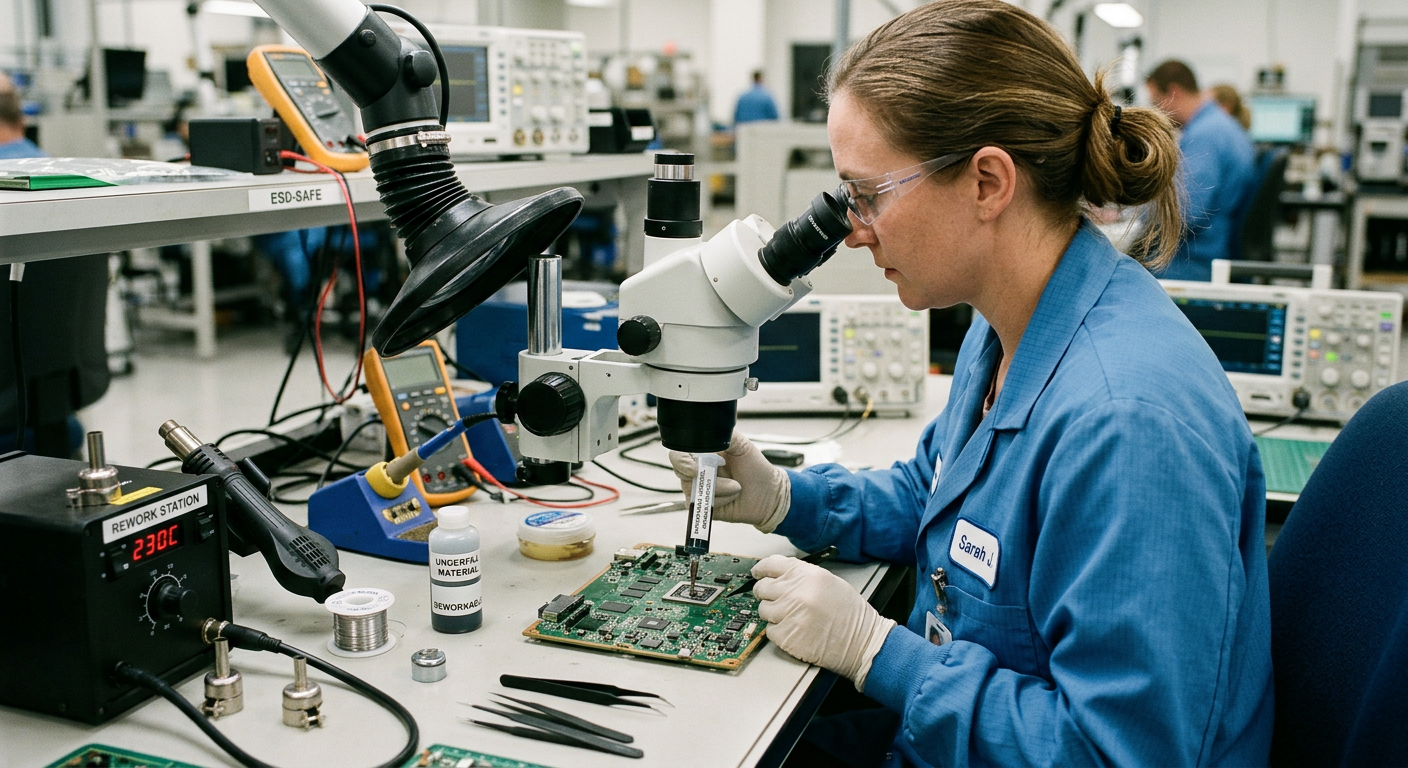
Reworkable BGA Underfill Material for the United States Market
Quick Answer

If you need reworkable underfill material for BGA component removal in the United States, the best practical approach is to shortlist suppliers that can balance rework temperature control, capillary flow, moisture resistance, reliability after thermal cycling, and clean removal during repair. For most U.S. electronics manufacturers, repair centers, and EMS providers, widely recognized options include Henkel, NAMICS, Master Bond, Zymet, and H.B. Fuller. These companies are commonly considered for applications involving consumer electronics, automotive modules, telecom boards, industrial control systems, and high-value PCB assemblies where BGA reinforcement is necessary but future rework must remain possible.
In the U.S., buyers in hubs such as Silicon Valley, Austin, Phoenix, Boston, San Diego, and the greater Chicago manufacturing corridor usually prioritize fast technical support, stable lot-to-lot quality, and proven compatibility with lead-free processes. Henkel is often selected for large-scale electronics assembly; NAMICS is well known in semiconductor packaging and advanced underfill chemistry; Master Bond is frequently evaluated for specialty formulations; Zymet is a practical choice for electronics adhesives and encapsulants; and H.B. Fuller is relevant where assembly scale and industrial support matter. Qualified international suppliers can also be worth considering, especially when they combine RoHS and REACH compliance, ISO-based production, custom formulation capability, and responsive pre-sale and after-sale support. In this context, cost-competitive Asian manufacturers, including Chinese producers with strong export discipline and application engineering support, can offer a favorable value-to-performance ratio for U.S. buyers.
United States Market Overview

The U.S. market for reworkable BGA underfill materials is driven by a mix of high-reliability electronics manufacturing and growing repair economics. Board-level miniaturization, higher I/O density, and the widespread use of lead-free solder have increased mechanical stress around BGA joints. Underfill helps distribute stress, improve drop resistance, and extend thermal cycling life. However, full permanent underfills can make component replacement costly or nearly impossible, especially in field repair, warranty service, and low-volume high-value electronics. That is why reworkable underfill material BGA solutions remain strategically important in the United States.
Demand is particularly visible in regions connected to electronics design and production. Silicon Valley continues to influence design validation and prototype requirements. Austin and Dallas support semiconductor and embedded systems manufacturing. Phoenix has become a stronger semiconductor and electronics hub. Southern California remains important for aerospace, medical, and communications electronics. The Northeast, especially Massachusetts, supports high-spec instrumentation and medical technology. Logistics also matter: shipments routed through Los Angeles/Long Beach, Savannah, New York/New Jersey, and Houston can affect lead times for imported materials and sample evaluation programs.
From a buying perspective, U.S. users often divide into three groups: OEM electronics manufacturers, EMS/contract assemblers, and repair/rework specialists. OEMs care about lifecycle reliability and approved vendor consistency. EMS providers need materials that can scale across multiple customer builds. Repair specialists care most about controlled rework windows, residue behavior, and localized heating compatibility. All three groups increasingly ask for low-voiding performance, manageable cure profiles, storage stability, and documentation that supports quality systems such as ISO workflows and customer audits.
The market is also shaped by cost pressure. Permanent underfill may be suitable for some ruggedized products, but in many commercial and industrial applications, reworkability reduces scrap cost and extends board service life. This is especially valuable when assemblies contain expensive processors, RF modules, memory packages, or custom BGAs with long lead times.
Market Growth and 2026 Outlook

Through 2026, the U.S. market is expected to keep expanding due to higher semiconductor content in vehicles, growth in edge devices, more advanced industrial controls, and continued investment in medical and defense electronics. At the same time, policy and sustainability trends are influencing sourcing decisions. Buyers increasingly ask whether an underfill supports repairability, lowers board waste, and aligns with broader ESG procurement goals. Reworkable systems can contribute to lower replacement rates and reduced scrap, which fits both cost and sustainability objectives.
Technology trends are equally important. Newer BGA packages operate under tighter thermal and mechanical margins. Materials must flow well under fine-pitch components, cure without excessive stress, and allow selective rework without damaging adjacent parts. Future product development is likely to focus on lower cure temperatures, faster throughput, better compatibility with automated dispensing, reduced ionic contamination risk, and improved residue handling during component removal and site redress.
The chart above illustrates a realistic demand index trend for reworkable BGA underfill material in the United States, reflecting stronger adoption in automotive electronics, industrial automation, and high-value repair programs. The upward trajectory is consistent with broader North American electronics resilience strategies and the desire to reduce assembly replacement costs.
What Reworkable BGA Underfill Means
A reworkable BGA underfill is an adhesive or encapsulating material designed to flow beneath a ball grid array after placement or during a controlled process, then cure to reinforce solder joints while still allowing later removal of the BGA under defined rework conditions. Unlike non-reworkable underfill systems, these materials are formulated so the package can be detached with heat, tooling, and process control without catastrophic board damage.
The key difference is not that removal becomes easy, but that removal becomes feasible and repeatable. Engineers should understand that reworkability depends on the total system: package size, substrate type, board thickness, pad design, reflow profile, underfill chemistry, rework station capability, and operator skill. In U.S. repair settings, the right product is the one that reaches an acceptable compromise between reliability in service and recoverability in repair.
Common performance factors include:
- Capillary flow behavior under fine-pitch BGAs
- Cure profile compatibility with board throughput
- Glass transition and modulus balance
- Thermal cycling durability
- Moisture and chemical resistance
- Controlled softening or decomposition during rework
- Low residue and easier site cleanup after removal
Common Product Types
U.S. buyers encounter several practical types of reworkable underfill material for BGA use. Each type serves different assembly and rework priorities. Some are optimized for capillary flow after soldering, while others are designed for corner bonding or edge-bond reinforcement where full underfill is not necessary.
| Product Type | Typical Use | Main Advantage | Main Limitation | Best Fit in the U.S. |
|---|---|---|---|---|
| Capillary flow reworkable underfill | Full BGA reinforcement after reflow | Strong joint protection and stress distribution | More process time than corner bonding | Automotive, telecom, industrial control |
| No-flow underfill | Applied before component placement | Can reduce process steps in select builds | Requires tighter process optimization | Specialized assembly lines |
| Corner bond adhesive | Applied at package corners | Faster rework than full underfill | Less full-body reinforcement | Consumer electronics and serviceable devices |
| Edge bond material | Applied along package edges | Good compromise between strength and repairability | Performance depends on geometry | EMS and mixed-production environments |
| Reworkable encapsulant systems | Protection around sensitive packages | Tailored environmental shielding | Can complicate local cleanup | High-value industrial assemblies |
| Hybrid custom formulations | Application-specific assemblies | Balanced cure, flow, and rework window | Longer qualification cycle | OEM projects with strict validation |
This table shows that not every application requires a full capillary underfill. In many U.S. programs, corner bond and edge bond materials are chosen when field serviceability is a priority. Full capillary products remain preferred when shock, vibration, and thermal fatigue are more severe.
How Different Industries Use These Materials
Industry demand varies because BGA risk profiles differ by product environment. Consumer electronics care about drop protection and compact design. Automotive modules demand thermal cycling resistance. Medical equipment needs stable, clean, and validated processing. Aerospace and defense often require reliability under vibration and temperature extremes, although they may apply stricter qualification rules before approval. Industrial automation values uptime and repair economics, especially for control boards installed in remote locations.
The bar chart highlights realistic relative demand across major U.S. sectors. Automotive and industrial applications stand out because they combine BGA use, mechanical stress, and strong incentives to avoid board scrap. Medical and aerospace volumes may be lower, but qualification expectations are often much higher.
| Industry | Typical Device | Why Underfill Is Used | Why Reworkability Matters | Key U.S. Buying Concern |
|---|---|---|---|---|
| Consumer electronics | Wearables, smart devices, handhelds | Drop and flex resistance | Repair and warranty cost control | Fast cycle time |
| Automotive electronics | ECUs, sensors, infotainment modules | Thermal cycling and vibration protection | Service replacement savings | Long-term reliability data |
| Industrial automation | PLC boards, drives, controllers | Harsh operating conditions | Field repair of expensive boards | Stable supply and documentation |
| Telecom and networking | Routers, RF modules, baseband boards | Dense packages and thermal stress | High-value module recovery | Process consistency |
| Medical devices | Diagnostic and monitoring electronics | Reliability and compact packaging | Controlled maintenance workflows | Traceability and cleanliness |
| Aerospace and defense | Avionics and mission electronics | Shock, vibration, and thermal demands | Board-level salvage value | Qualification rigor |
The table shows how the same material category solves different problems in different sectors. Buyers should qualify based on their own failure modes rather than choosing only by brand familiarity.
Detailed Supplier Comparison in the United States
For practical sourcing, U.S. buyers usually compare technical support, product range, regional service reach, custom formulation options, and the supplier’s ability to support pilot runs before scale-up. The following suppliers are relevant names to evaluate when looking for reworkable BGA underfill materials or closely related electronics reinforcement chemistries.
| Company | Service Region | Core Strengths | Key Offerings | Best Fit |
|---|---|---|---|---|
| Henkel | United States nationwide | Large electronics materials portfolio, process support, global manufacturing | Underfills, SMT adhesives, thermal materials, encapsulants | High-volume OEMs and EMS providers |
| NAMICS | North America electronics sector | Advanced semiconductor packaging expertise, underfill specialization | Capillary underfills, package materials, specialty formulations | Advanced packaging and high-spec applications |
| Master Bond | United States and export markets | Customizable adhesive chemistry, engineering support | Epoxy systems, electronics bonding, encapsulation materials | Specialized and lower-volume technical projects |
| Zymet | U.S. electronics manufacturing regions | Electronics-focused adhesive portfolio, flexible application support | Underfills, edge bond materials, encapsulants, coatings | Repair-friendly and mixed-use assemblies |
| H.B. Fuller | North America industrial network | Scale, manufacturing support, broad adhesive platform | Electronic adhesives, assembly materials, structural chemistries | Large industrial and multi-site buyers |
| Qingdao QinanX New Material Technology Co., Ltd | U.S. import supply with customer-specific support | Custom formulation, OEM/ODM flexibility, broad adhesive manufacturing base | Electronic silicone, epoxy resin adhesives, UV adhesives, polyurethane systems | Cost-sensitive buyers needing tailored solutions |
This comparison is useful because supplier selection rarely depends on one metric. Henkel and NAMICS are often favored for established electronics programs and deep process integration. Master Bond and Zymet can be particularly attractive when custom support or smaller-scale technical responsiveness is important. H.B. Fuller offers scale and procurement convenience. QinanX becomes relevant when buyers want custom private-label, wholesale, or application-specific electronics adhesive development with stronger cost-performance leverage.
Supplier and Product Trend Shift
The U.S. market is gradually shifting from simple reinforcement selection toward a broader decision model that includes sustainability, rework efficiency, documentation quality, and total cost of ownership. Buyers no longer evaluate only bond strength or cure speed; they increasingly assess scrap reduction and service life extension.
The area chart reflects a realistic shift in procurement behavior. Permanent underfills remain essential in some rugged environments, but reworkable solutions gain ground where repairability, warranty control, and sustainability targets matter. This is especially relevant for U.S. buyers facing expensive BGA components or long replacement lead times.
How to Evaluate Product Performance Before Buying
Before approving a reworkable underfill material BGA product, U.S. engineers should validate both assembly performance and removal behavior. A common mistake is selecting a material that looks good in initial reliability testing but becomes impractical during actual rework. Qualification should therefore include both life-cycle reliability and controlled removal trials.
Important evaluation criteria include flow speed beneath the package, cure time, bond profile, voiding tendency, thermal shock performance, moisture sensitivity, and the condition of pads and solder mask after rework. You should also check whether residue remains brittle, tacky, or carbonized after heating, because this directly affects cleanup time and pad recovery.
| Evaluation Factor | What to Check | Why It Matters | Typical Test Setting | Decision Impact |
|---|---|---|---|---|
| Capillary flow | Uniform spread under BGA | Incomplete flow creates weak zones | Microscopy after dispense and cure | Assembly consistency |
| Cure profile | Time and temperature window | Affects throughput and stress | Oven or inline process trial | Production efficiency |
| Thermal cycling | Solder joint survival | Core reliability benchmark | Cycle testing by application spec | Field life confidence |
| Rework temperature | Removal window and control | Too narrow increases board risk | BGA rework station validation | Repair feasibility |
| Residue cleanup | Ease of site redress | Affects turnaround and pad safety | Operator rework study | Service cost |
| Storage stability | Shelf life and handling | Inventory loss can raise cost | Supplier data and incoming QA | Procurement planning |
This table is especially useful for purchasing teams working with process engineers. It translates laboratory attributes into commercial consequences, helping cross-functional teams decide which supplier is most practical for the actual manufacturing environment.
Applications Across Real Assembly Environments
Reworkable BGA underfill materials are used in several board-level scenarios. In handheld devices, they help reduce solder fatigue caused by drops and flexing. In automotive electronics, they reduce joint stress caused by temperature swings between engine-off cold starts and high operating temperatures. In industrial control systems, they support vibration resistance and extend service intervals. In network hardware, they protect high-value processor and memory packages that are expensive to scrap.
Another major application is prototyping and pilot production in the United States. Design teams often need reinforcement during validation but still want the option to rework packages as software, hardware, or thermal changes occur. In these phases, a reworkable material creates flexibility that a permanent underfill cannot. This can be critical for startups and mid-size OEMs in places like San Jose, Austin, and Boston, where development speed matters as much as final reliability.
Case Studies from Typical U.S. Buying Scenarios
A practical example is an automotive electronics supplier in Michigan that uses underfill on a BGA-based control board exposed to thermal cycling and vibration. Permanent underfill reduced failures but made warranty repair too expensive. A reworkable capillary underfill allowed the manufacturer to maintain durability while recovering expensive boards during service analysis and low-volume returns.
Another example is a telecom equipment repair center in Texas handling high-value router boards with heat-sensitive neighboring components. By switching from a conventional rigid encapsulating approach to a reworkable underfill with a controlled softening window, the center reduced pad damage during removal and improved board recovery rates.
A third case involves a medical device developer in Massachusetts. The company needed BGA reinforcement for transport and use conditions but also required engineering flexibility during design updates. A reworkable underfill enabled ongoing revisions without full PCB scrap, reducing development cost and shortening revision cycles.
These examples show that the true value of reworkability is not only technical; it is financial. It lowers scrap, supports warranty management, and preserves expensive assemblies that would otherwise be discarded.
Local and Regional Supplier Access
For U.S. buyers, supplier access is shaped by both technical support and logistics. Local presence in electronics corridors matters because reworkable underfill selection often requires dispensing trials, cure optimization, and on-site troubleshooting. A supplier that can support sampling, application reviews, and quick feedback is often more valuable than one offering a lower unit price but limited engineering contact.
Companies with active North American support networks generally have an advantage in states such as California, Texas, Arizona, Illinois, Massachusetts, and North Carolina. These states host electronics design, assembly, and repair ecosystems where process changes move quickly. However, imported materials remain highly competitive when they come with dependable sample programs, technical documentation, and responsive communication during qualification.
Comparison of Supplier Decision Factors
This comparison chart helps explain why U.S. buyers often shortlist both domestic incumbents and qualified overseas manufacturers. Large established suppliers usually score higher in broad technical infrastructure and portfolio depth, while international custom manufacturers can outperform on flexibility, OEM/private-label options, and cost efficiency.
Buying Advice for United States Importers and Local Manufacturers
When buying reworkable underfill material BGA products in the United States, start with your application risk profile rather than the catalog description alone. Ask whether the board must survive shock, thermal cycling, moisture, or vibration, and whether component replacement is likely during production or field service. Then request a sample and conduct both reliability and rework trials on the actual package size and board stack-up.
It is also wise to discuss process equipment early. Some materials behave differently depending on dispense speed, board temperature, cure schedule, and rework station airflow. A material that performs well in a supplier lab may require optimization on your line. U.S. buyers should request lot documentation, storage guidance, recommended rework profiles, and compatibility notes for lead-free assemblies.
For imported products, port routing and domestic inventory strategy matter. If you regularly receive material through Los Angeles, Long Beach, Houston, or New York/New Jersey, build lead-time buffers into qualification and production planning. If your program is sensitive to interruption, ask the supplier about forecast-based stocking, local distributors, or scheduled replenishment models.
Finally, compare total ownership cost, not only price per kilogram. A lower-cost underfill that reduces scrap, shortens cleanup, and improves board salvage rates can provide far greater savings than a premium brand that is difficult to rework in practice.
Our Company in the U.S. Market
For U.S. buyers evaluating flexible sourcing options, Qingdao QinanX New Material Technology Co., Ltd positions itself as a practical long-term materials partner rather than a remote trading source. Its electronics and industrial adhesive range is produced under ISO-managed systems with compliance to RoHS and REACH, supported by multi-stage quality control and digital traceability that help document consistency for regulated and audit-driven customers. The company’s technical strength is relevant to electronics assembly because it manufactures multiple adhesive families used around board-level protection and bonding, including electronic silicone, epoxy resin adhesives, UV-curable adhesive, polyurethane systems, threadlocker, hot melt, and water-based technologies, while also offering custom formulation through an active R&D capability for customers that need tuned viscosity, cure behavior, or application-specific performance. For commercial cooperation, QinanX serves end users, distributors, dealers, brand owners, repair channels, and project buyers through OEM, ODM, private label, wholesale, and tailored supply models, which is valuable in the U.S. where customer profiles range from EMS plants to niche service organizations. Its export experience across more than 40 countries, combined with automated production capacity, free sample support, and 24/7 technical assistance, gives U.S. customers concrete assurance during qualification, troubleshooting, and after-sales follow-up. Buyers can review the broader adhesive portfolio through the product catalog, request application guidance via the contact page, or start from the company’s main website when comparing custom and standard material options for electronics use in the United States.
Product Selection Checklist
Use the following checklist before making a final purchase decision:
- Confirm whether full underfill, edge bond, or corner bond is actually needed.
- Match the material to package size, stand-off height, and adjacent component density.
- Run thermal cycling and rework trials on real boards, not only coupons.
- Check whether the residue after removal can be cleaned without pad damage.
- Verify storage, shelf life, and shipping requirements for domestic or imported lots.
- Ask for compliance documents, traceability details, and sample support.
- Consider local technical support, especially for first article qualification.
- Compare total repair savings against material cost.
Future Trends Through 2026
By 2026, reworkable underfill material BGA development in the United States is likely to move in four directions. The first is finer-pitch compatibility, as advanced packages become more common outside flagship consumer electronics. The second is lower-energy processing, with interest in cure schedules that reduce thermal exposure and support more sensitive board designs. The third is smarter sustainability positioning, where repairability and scrap reduction become measurable procurement advantages. The fourth is regulatory and documentation alignment, with more buyers expecting supplier transparency related to chemical compliance, digital traceability, and stable global sourcing.
Policy and industrial strategy in the United States may also indirectly influence supplier selection. As electronics manufacturing resilience becomes a stronger theme, buyers will likely diversify sources between established domestic suppliers and qualified international manufacturers. This favors companies that can document quality systems clearly, respond quickly during qualification, and support long-term technical cooperation rather than simple spot sales.
FAQ
What is the main advantage of a reworkable underfill for BGA?
The main advantage is that it improves mechanical reliability around the solder joints while still allowing controlled component removal later, which reduces PCB scrap and supports repair or engineering changes.
Is reworkable underfill weaker than permanent underfill?
Not necessarily in all applications. Permanent systems may offer the highest ruggedness in some extreme environments, but many reworkable materials provide sufficient reliability for automotive, industrial, telecom, and medical uses when properly selected and processed.
Should U.S. buyers choose capillary underfill or corner bond?
Choose capillary underfill when full stress distribution is needed across the package footprint. Choose corner bond or edge bond when serviceability and process speed matter more and the reliability target does not require full underfill coverage.
How important is local support in the United States?
It is very important, especially during qualification. Reworkable underfill performance depends on dispensing, curing, and rework conditions, so quick technical response can save time and prevent qualification delays.
Can imported materials be a good option for U.S. manufacturers?
Yes. Imported materials can be a strong option when the supplier offers clear compliance documentation, sample support, stable quality control, responsive engineering communication, and competitive lead-time planning.
Which U.S. regions have the strongest demand for these materials?
California, Texas, Arizona, Massachusetts, Illinois, and other electronics manufacturing corridors show strong demand due to their concentration of design centers, EMS operations, semiconductor activity, and repair services.
What should be included in a supplier trial?
A proper trial should include dispensing evaluation, cure verification, thermal cycling or environmental stress testing, controlled BGA removal, site cleanup assessment, and inspection of pad integrity after rework.
How can buyers reduce sourcing risk?
Use dual-source evaluation where possible, request sample lots early, confirm documentation and shelf-life requirements, and compare not just material price but also expected impact on yield, rework success, and field returns.

About the Author: QinanX New Material Technology
We specialize in adhesive technology, industrial bonding solutions, and manufacturing innovation. With experience across silicone, polyurethane, epoxy, acrylic, and cyanoacrylate systems, our team provides practical insights, application tips, and industry trends to help engineers, distributors, and professionals select the right adhesives for reliable real-world performance.

Product Category
You May Also Interest
-
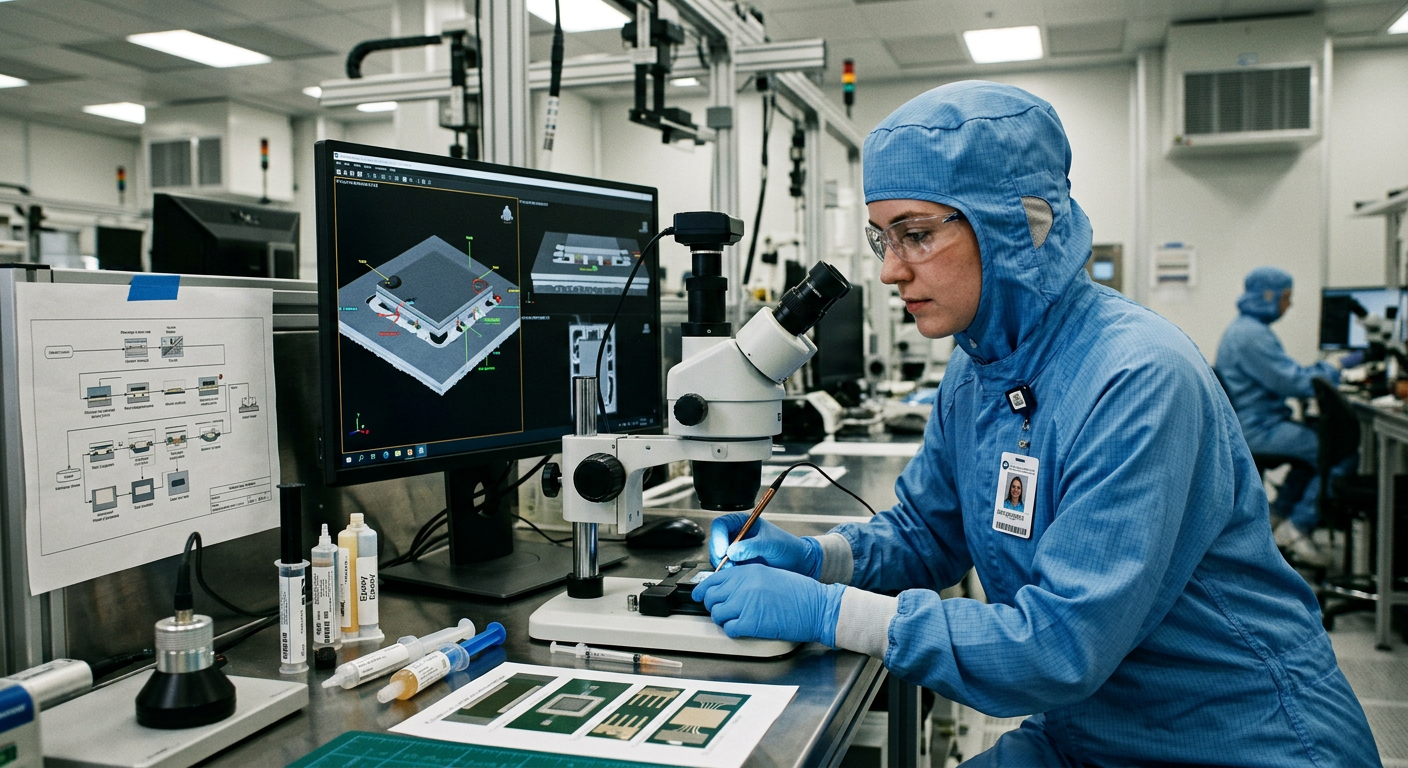
IC Packaging Adhesive: Preventing Void Formation Issues
Learn how IC packaging adhesive void formation is prevented in the United States through material choice, process control, supplier selection, and testing.
-
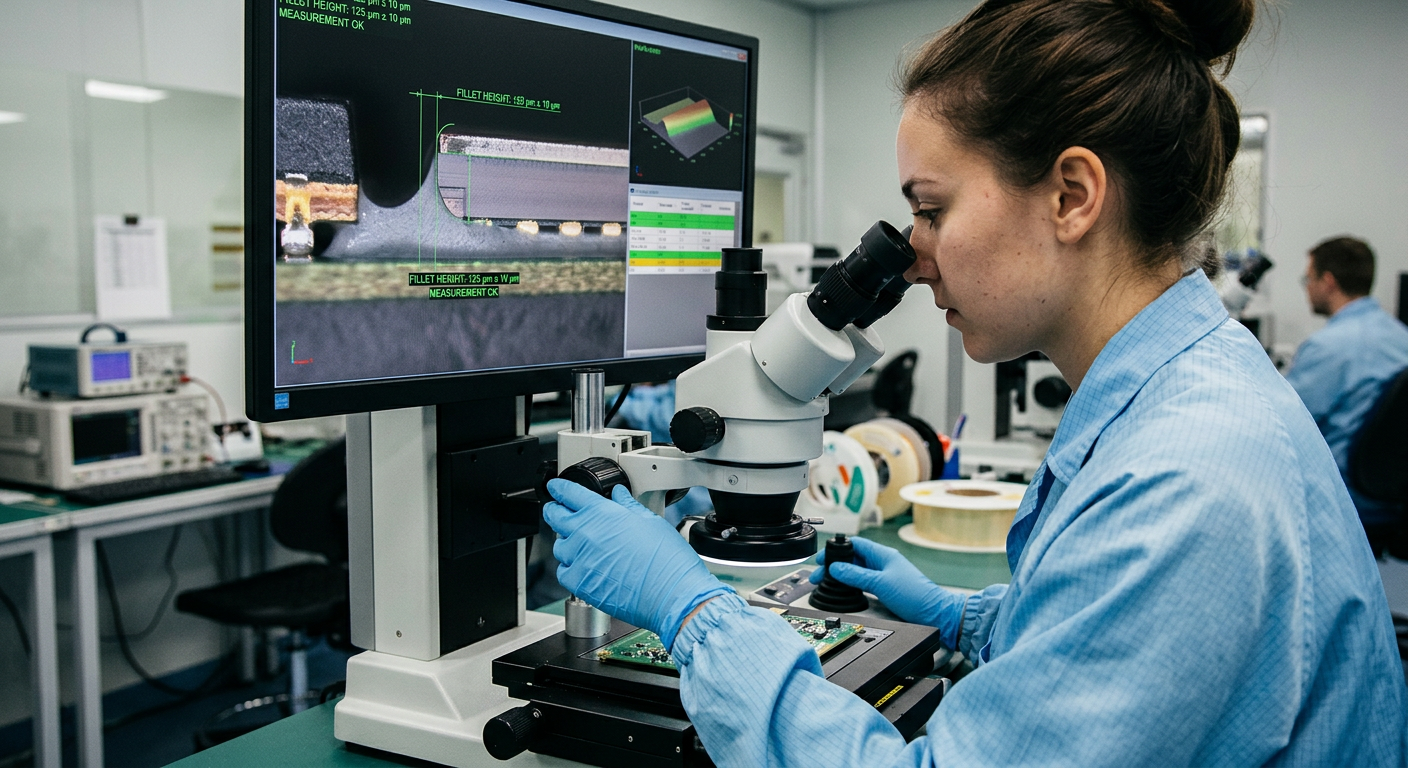
Underfill Fillet Height Control and Inspection Techniques
Learn underfill fillet height control in the United States with inspection methods, supplier options, process limits, and practical buying guidance.
-
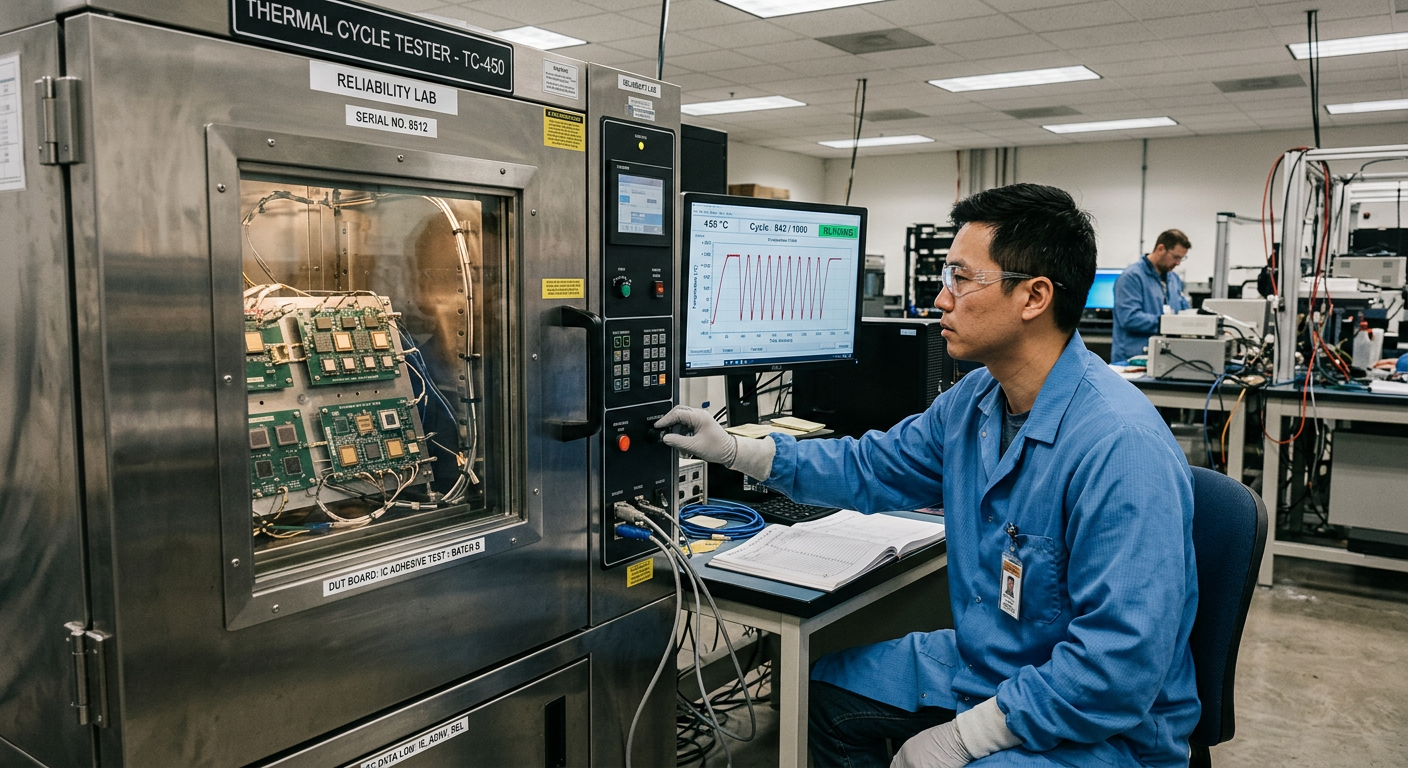
IC Package Adhesive Thermal Cycling Reliability Testing
IC packaging adhesive thermal cycling in the United States requires reliable material selection, supplier review, and test planning for electronics durability.
-

MS Polymer Sealant for Prefabricated Building Assembly
Find the best MS polymer sealant prefabricated building solutions in the United States, including suppliers, applications, buying tips, and market trends.
 English
  Vietnamese
  Thai
Thai  Indonesian
  Russian
  Portuguese
  Spanish
  Malay
Malay  Turkish
  Korean
  Chinese