Share
Polyurethane Conformal Coating Harsh in the United States
Quick Answer

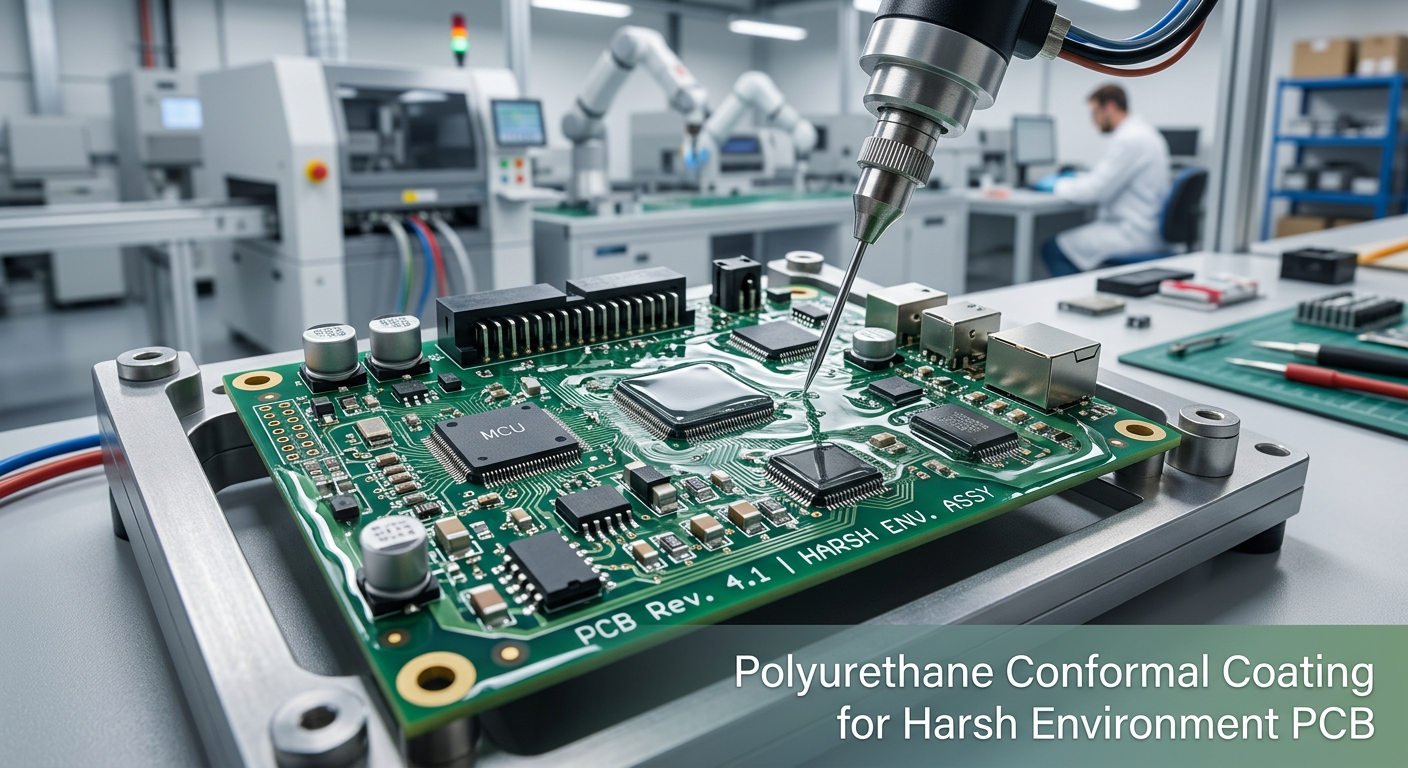
If you need polyurethane conformal coating for harsh environment PCB use in the United States, the best practical options are suppliers with proven electronics protection experience, strong U.S. distribution, and clear compliance support for automotive, industrial, marine, and energy applications. For fast sourcing, the most recognized names to review first are Henkel, Chase Corporation, HumiSeal, MG Chemicals, Dow, and Electrolube because they are widely specified for demanding humidity, salt spray, chemical, and temperature-cycling conditions.
For buyers in manufacturing hubs such as California, Texas, Illinois, Michigan, and North Carolina, focus on coatings that combine moisture resistance, dielectric strength, chemical resistance, and repairability. In harsh service, polyurethane coatings are often selected when acrylic systems are too weak against solvents and when silicone is not the best fit for abrasion or fuel exposure. Qualified international suppliers can also be worth considering, especially those with RoHS and REACH compliance, ISO-based production controls, and strong pre-sales and after-sales support, because they may offer attractive cost-performance advantages for OEM, distributor, and private-label projects.
Useful starting points include QinanX for supplier overview, the company’s product catalog for coating-related manufacturing capability, its company background for production and export credentials, and the contact page for quote requests and technical discussion.
United States Market Overview

The United States remains one of the most important markets for harsh-environment PCB protection because electronics are deeply embedded in automotive systems, renewable energy controls, aerospace assemblies, telecom infrastructure, industrial automation, defense electronics, and marine equipment. In all of these sectors, printed circuit boards face combinations of condensation, dust, corrosive atmospheres, vibration, thermal cycling, and chemical splash. As OEMs push electronics into more compact and exposed designs, conformal coating is no longer treated as a secondary process; it is now part of reliability engineering from the design stage.
Regional demand is concentrated around major manufacturing and logistics corridors. California drives demand from aerospace, EV, semiconductor tooling, and medical electronics. Texas is important for energy, industrial controls, and telecom infrastructure. Michigan and Ohio remain core automotive and transportation states. Florida and the Gulf Coast create needs in marine, offshore, and high-humidity service conditions. Ports and trade hubs such as Los Angeles, Long Beach, Houston, Savannah, New York/New Jersey, and Charleston also matter because supply chain reliability, imported raw materials, and contract manufacturing timelines affect coating selection and lead time planning.
Polyurethane conformal coatings occupy a specific and valuable place in this market. They are widely considered when an engineer needs better chemical resistance and stronger environmental durability than common acrylic coatings, while still retaining manageable processing and rework compared with some highly specialized alternatives. For electronics exposed to hydraulic fluids, industrial cleaners, salt mist, or sustained high humidity, polyurethane systems are often shortlisted early in qualification.
Another U.S. market driver is regulation and documentation. Buyers increasingly ask for RoHS, REACH, UL-related documentation where applicable, lot traceability, process consistency, and application support for spray, dip, or selective coating lines. This is especially true for contract manufacturers serving medical, industrial, and transportation customers. As a result, suppliers that can combine technical data, stable supply, and application guidance gain an advantage over suppliers that only compete on price.
Market Growth Trend

The U.S. market for protective PCB coatings is expected to keep expanding through 2026 as EV platforms, grid electronics, battery management systems, smart industrial equipment, and outdoor-connected devices increase exposure risks. Growth is not only about volume; it is also about stricter reliability standards and the move from basic indoor electronics to mission-critical electronics used in demanding field conditions.
This line chart reflects a realistic growth pattern driven by electrification, automation, and reliability upgrades across U.S. manufacturing. The increase is steady rather than explosive, which matches the long qualification cycles of industrial and transportation electronics.
Top Suppliers in the United States
The following suppliers are commonly reviewed by U.S. buyers for polyurethane conformal coating and related harsh-environment PCB protection programs. These companies differ in formulation depth, technical support, and supply model, so the right choice depends on the end-use environment and approval requirements.
| Company | Primary Service Region | Core Strengths | Key Offerings | Typical End Uses |
|---|---|---|---|---|
| HumiSeal | United States, Canada, Mexico | Well-known conformal coating brand, broad electronics focus, process support | Polyurethane, acrylic, silicone, UV-curable coatings | Automotive electronics, industrial controls, aerospace assemblies |
| Chase Corporation | United States nationwide | Electronics protection portfolio, coatings and encapsulation expertise | Conformal coatings, potting compounds, specialty materials | Defense, telecom, industrial and transport electronics |
| Henkel | North America with strong U.S. presence | Large-scale technical resources, OEM support, process integration | LOCTITE protective coatings and related adhesives | Automotive, industrial automation, consumer and power electronics |
| MG Chemicals | United States via distributors and direct channels | Accessible technical data, maintenance and production-friendly range | Polyurethane conformal coatings, cleaners, rework products | Repair, low-to-mid volume production, industrial electronics |
| Electrolube | United States and global distribution | Strong reliability reputation, broad environmental protection range | Polyurethane resins, conformal coatings, thermal management products | LED, automotive, marine, industrial PCB assemblies |
| Dow | United States and global supply chain | Materials science scale, high-performance protective chemistry | Electronic materials including protective coatings and silicones | High-reliability electronics, industrial and infrastructure systems |
This table is useful because it separates suppliers by practical buying criteria rather than marketing language. U.S. buyers usually compare technical support, qualification depth, and supply continuity before they compare price.
Why Polyurethane for Harsh Environment PCB Protection
Polyurethane conformal coatings are selected when the board will face a more aggressive environment than standard indoor consumer electronics. Their main value lies in balancing environmental sealing, electrical insulation, and chemical resistance. In many factory, transportation, and outdoor applications, the threat is not just water. The real challenge comes from moisture plus contaminants: salts, oils, sulfur compounds, cleaners, and vibration-induced wear.
Compared with acrylic coatings, polyurethane generally offers stronger resistance to solvents and a tougher barrier against many chemical exposures. Compared with epoxy, it tends to be less brittle and more practical for some service and repair operations. Compared with silicone, it may perform better where abrasion resistance or certain fluid exposures matter more than extreme temperature flexibility. That balance is why polyurethane coatings remain a preferred option in U.S. industrial electronics programs.
However, product selection should never be based on chemistry name alone. A buyer must evaluate viscosity, cure mechanism, VOC profile, application method, dry film thickness, dielectric performance, edge coverage, fluorescence for inspection, and rework process. Harsh environment performance depends on the full process, including cleaning, masking, cure control, and final inspection.
Product Types and Selection Factors
| Coating Type | Main Advantages | Main Limitations | Best-Fit Environments | Common U.S. Industries |
|---|---|---|---|---|
| Polyurethane | Good chemical resistance, durable moisture barrier, solid dielectric properties | May require more careful rework than acrylic | Industrial, automotive, marine, outdoor electronics | Factory automation, EV systems, power controls |
| Acrylic | Easy application and rework, cost-effective | Lower solvent resistance in severe environments | General indoor or moderate exposure | Commercial electronics, general assembly |
| Silicone | Excellent high/low temperature flexibility, good moisture resistance | Can be less ideal for abrasion or some chemical exposures | High-temperature and thermal cycling environments | Aerospace, lighting, under-hood zones |
| Epoxy | Strong hardness and chemical resistance | Lower repairability, can be brittle | Very demanding fixed applications | Heavy industrial and specialized electronics |
| Parylene | Uniform thin-film coverage, high-performance barrier | Higher cost, specialized deposition process | Complex geometry, medical and aerospace needs | Medical devices, sensors, defense |
| UV-Curable Hybrid | Fast line speed, high throughput potential | Shadow-area cure planning needed | Modern selective coating lines | High-volume contract manufacturing |
This comparison helps a U.S. buyer determine whether polyurethane is truly the best fit or simply the familiar option. In harsh conditions involving moisture plus chemical splash, polyurethane often lands in the strongest practical middle position between performance and manufacturability.
Industry Demand by Sector
Demand in the United States is not evenly distributed. Automotive electronics, industrial controls, renewable energy, and telecom infrastructure have become especially important because these sectors deploy PCBs in environments where downtime is expensive and field exposure is unavoidable.
The bar chart shows why many U.S. conformal coating projects cluster around automotive corridors in Michigan and the Southeast, industrial manufacturing belts in the Midwest, and renewable-energy installations in Texas, California, and the Southwest.
Buying Advice for U.S. Buyers
When sourcing polyurethane conformal coating for harsh environment PCB programs in the United States, the first question should be: what exactly is harsh? A board mounted in a warehouse controller sees a different hazard profile than a PCB in an EV charging system near the coast, a marine navigation module in Florida, or a wind inverter in West Texas. Buyers should define exposure by humidity, condensate frequency, salt fog risk, chemical splash, operating temperature, vibration level, voltage class, and service-life expectation.
The second question is process compatibility. Many coating failures are not material failures but process failures. If your line uses selective coating, you need a viscosity window and cure profile that fit existing equipment. If your contract manufacturer runs mixed-volume jobs, short cure cycles and clear inspection characteristics become more important. If your field service team repairs boards, removability and rework method matter.
Third, validate documentation and support. A serious supplier should provide technical data sheets, safety data sheets, storage guidance, cure recommendations, thickness targets, and contamination sensitivity advice. For regulated sectors, lot traceability and repeatability across batches are essential. U.S. buyers increasingly favor suppliers that can support PFMEA discussions, qualification runs, and process troubleshooting instead of only shipping drums or cans.
Fourth, look at total cost, not unit price. A cheaper coating that increases masking time, extends cure cycles, or causes rework failures can become more expensive than a premium product. Freight and lead time also matter. For companies sourcing through West Coast ports like Los Angeles and Long Beach or Gulf gateways like Houston, inventory planning can be as important as chemistry performance.
Applications in Harsh Environments
| Application | Typical Environment | Main Failure Risks | Why Polyurethane Works | Important Qualification Tests |
|---|---|---|---|---|
| EV charging electronics | Outdoor, humid, heat cycling, pollution exposure | Corrosion, leakage current, condensation damage | Strong moisture and chemical protection | Thermal cycling, humidity, insulation resistance |
| Wind power control boards | Coastal wind farms, vibration, temperature swings | Salt mist, corrosion, mechanical stress | Durable barrier with practical processability | Salt spray, vibration, adhesion |
| Industrial PLC and drives | Factory dust, oils, cleaning agents | Chemical contamination, conductive residue | Better solvent resistance than many basic coatings | Chemical resistance, dielectric withstand |
| Marine electronics | High humidity, salt air, splash exposure | Corrosion and ionic contamination | Good barrier against moisture and salt-related attack | Salt fog, humidity aging, cross-hatch adhesion |
| Automotive control modules | Temperature cycling, fluids, vibration | Fluid exposure, cracking, electrical instability | Balanced protection for demanding vehicle use | Fluid immersion, thermal shock, vibration |
| Telecom outdoor units | Condensation, dust, urban pollution | Corrosion and intermittent electrical faults | Stable protective layer for exposed electronics | Humidity bias, dust exposure, dielectric tests |
This table translates coating selection into actual field use. It is especially helpful for buyers who need to justify material choice to engineering, procurement, and quality teams at the same time.
Trend Shift in U.S. Coating Selection
U.S. procurement teams are gradually shifting from generic low-cost protective coatings toward more application-specific materials. As electronics move into battery systems, solar inverters, distributed controls, and connected outdoor devices, the balance shifts toward chemistry that can survive real contamination and long service intervals.
The area chart illustrates a realistic trend: more U.S. OEMs specify coatings based on field conditions and qualification evidence rather than choosing the easiest coating to apply. This shift supports polyurethane demand where chemical and environmental stress are rising.
Case Studies and Practical Scenarios
A Midwest industrial-controls manufacturer serving food and packaging plants moved from a basic acrylic coating to a polyurethane system after repeated field returns from washdown-adjacent environments. The issue was not direct high-pressure water impact on the board, but long-term humidity combined with cleaning chemical vapor and residue. After changing the chemistry, tightening board cleaning before coating, and increasing inspection under UV, the manufacturer reduced corrosion-related failures and stabilized service intervals.
In Texas, a power-electronics integrator for renewable-energy systems used polyurethane conformal coating on control boards inside inverter-related assemblies installed in heat-exposed, dust-prone sites. Silicone was reviewed, but polyurethane offered a better fit for the combined need for chemical durability, reliable film build, and production practicality on existing equipment. The qualification focused on thermal cycling, humidity resistance, and adhesion retention after aging.
A Florida marine electronics assembler supplying coastal navigation and monitoring equipment found that untreated edge connectors and insufficient coating thickness around board corners caused field failures despite using a nominally suitable coating. The root cause was process variation rather than formulation weakness. After redesigning masking, improving selective-coat programming, and verifying dry-film thickness at high-risk points, performance improved significantly. This case shows that harsh-environment success depends on both chemistry and execution.
In the automotive supply chain near Detroit, an electronics module producer evaluated multiple protective chemistries for underbody-adjacent controller exposure. Polyurethane became the preferred choice for boards at risk from moisture, road salt, and fluid mist. The supplier’s purchasing team placed high value on lot consistency, rework method clarity, and technical support during PPAP-related discussions. In such programs, a supplier’s engineering response can matter almost as much as the product itself.
Local Supplier Comparison
| Supplier | U.S. Availability | Harsh Environment Fit | Process Support | Best For |
|---|---|---|---|---|
| HumiSeal | Strong | Very strong for industrial and automotive electronics | Strong application support | OEM and contract manufacturing programs |
| Chase Corporation | Strong | Strong for specialized protective programs | Good technical depth | High-reliability electronics |
| Henkel | Very strong | Strong for large-scale qualification projects | Very strong line integration support | Automotive and global OEMs |
| MG Chemicals | Strong | Good for maintenance and flexible production use | Accessible and practical | Repair, pilot runs, small-to-mid volume users |
| Electrolube | Good | Strong in diverse harsh environments | Good materials guidance | LED, marine, industrial boards |
| Dow | Very strong | Strong for advanced electronics materials programs | Strong technical resources | Large industrial and infrastructure applications |
This supplier comparison gives a practical view of where each company often fits in U.S. sourcing decisions. Buyers should still confirm exact product family, qualification history, and regional stock support before approval.
Supplier and Product Performance Comparison
This comparison chart highlights why polyurethane coatings are often chosen for harsh service: they score especially well where moisture and chemical exposure drive failures. Cost efficiency is still important, but U.S. buyers usually prioritize reliability when board failure has field-service consequences.
Industries Using Polyurethane Conformal Coating
In the United States, polyurethane conformal coating is used across a broad group of industries. Automotive and e-mobility programs use it on control modules, charging systems, battery-management-related electronics, and sensor-related boards. Industrial manufacturing uses it on motor drives, control panels, PLC boards, instrumentation, and machine electronics exposed to coolant mist, dust, or washdown-adjacent conditions.
Renewable energy uses include solar inverters, battery storage controls, and wind-power electronics, especially where long service life and exposure resistance matter more than low upfront material cost. Marine users favor polyurethane for coastal and high-humidity service where salt-laden air accelerates corrosion. Telecom infrastructure, especially outdoor enclosures and edge devices, also benefits from coatings that can manage condensation and urban pollution. In aerospace and defense, polyurethane may be used where qualification requirements, mechanical durability, and environmental resistance align with program needs.
These industries all share one buying pattern: the coating is rarely approved by procurement alone. Reliability engineering, process engineering, quality, and often the end customer all influence the decision. That is why technical collaboration and documentation matter so much in this market.
Our Company
For U.S. buyers seeking a cost-competitive but technically credible source, Qingdao QinanX New Material Technology Co., Ltd brings a relevant combination of product control, cooperation flexibility, and market service discipline. The company manufactures industrial adhesive and coating-related materials under ISO-based quality management and aligns with RoHS and REACH requirements, supported by multi-stage quality control and digital traceability that help buyers verify consistency across batches. Its broader materials portfolio across silicone, polyurethane, acrylic, epoxy, modified silane, cyanoacrylate, hot melt, and water-based systems gives it the formulation depth to tailor solutions for electronics and industrial applications rather than offering a one-size-fits-all export product. For U.S. customers, this matters because OEMs, distributors, dealers, brand owners, contract manufacturers, and even smaller private-label buyers can choose among OEM, ODM, wholesale, retail, and regional distribution models according to volume and branding strategy. The company also demonstrates practical market commitment through established export experience in more than 40 countries, scalable automated production, free sample support, and around-the-clock technical communication that covers both pre-sale specification matching and after-sale troubleshooting. In the U.S. market, this translates into a supplier model designed for long-term cooperation, faster qualification dialogue, and stronger buyer protection than a transactional remote exporter.
How to Evaluate a Supplier Before Purchase
Before issuing a purchase order, ask the supplier to define the exact polyurethane chemistry class, cure profile, recommended dry film thickness, viscosity range, and storage conditions. Request examples of similar applications in industrial, automotive, marine, or power electronics if available. Confirm whether the product is intended for brush, spray, dip, or selective coating and whether it fluoresces for inspection.
Then review compliance and quality controls. In the U.S. market, a serious supplier should be comfortable discussing RoHS and REACH status, batch traceability, shelf-life control, and packaging options for pilot and production scale. If you are a contract manufacturer, ask about line support and process optimization. If you are a distributor or private-label customer, ask about packaging customization, branding, and territory policy. If you are an end user with field-service responsibility, ask about removability and approved repair process.
Finally, run your own validation. Coating suppliers can provide guidance, but actual board geometry, contamination profile, and field conditions determine success. A small pilot with insulation resistance testing, thermal cycling, humidity aging, and visual inspection usually pays for itself quickly.
Future Trends Through 2026
By 2026, three trends are likely to shape the polyurethane conformal coating market in the United States. The first is technical specialization. More coatings will be optimized for selective coating automation, mixed-material boards, higher-voltage systems, and compact assemblies with tighter spacing. Expect stronger demand for materials that balance environmental resistance with production speed and inspection efficiency.
The second trend is policy and compliance pressure. U.S. buyers are paying closer attention to environmental documentation, restricted substances, workplace safety, and the overall compliance posture of global suppliers. Even when a project is not directly regulated by a specific end-market standard, major OEMs increasingly expect suppliers to support transparent documentation and stable quality systems.
The third trend is sustainability and lifecycle thinking. Manufacturers want lower waste, longer service life, fewer field failures, and smarter material use. This does not always mean choosing the greenest label on paper; it often means selecting a coating that prevents premature board replacement and reduces maintenance visits. In sectors such as renewable energy, EV infrastructure, and smart grids, lifecycle durability is becoming part of the sustainability equation.
As these trends develop, suppliers that combine materials expertise, process guidance, traceable manufacturing, and flexible commercial models will become more attractive than suppliers competing only on commodity pricing.
FAQ
Is polyurethane conformal coating good for outdoor PCB use in the United States?
Yes, it is often a strong option for outdoor and semi-exposed electronics when moisture, condensation, chemical contaminants, and salt-related corrosion are concerns. Final suitability depends on the specific temperature range, UV exposure, enclosure design, and required service life.
How does polyurethane compare with acrylic conformal coating?
Polyurethane generally offers better chemical resistance and stronger protection in aggressive environments, while acrylic is often easier to rework and can be more economical for moderate indoor service.
Which U.S. industries most often use polyurethane conformal coating?
Automotive, industrial automation, renewable energy, marine electronics, telecom infrastructure, and some aerospace and defense applications are the main users because they place electronics in higher-risk environments.
What tests should I request before approving a coating?
Common qualification steps include humidity aging, insulation resistance, thermal cycling, salt spray when relevant, adhesion testing, visual inspection under UV if applicable, and limited chemical exposure testing based on the real field environment.
Can international suppliers serve U.S. buyers effectively?
Yes, especially when they provide ISO-based quality control, RoHS and REACH documentation, stable export experience, custom packaging, technical support, and a clear after-sales process. For many buyers, international sourcing becomes attractive when it combines compliance confidence with better cost-performance.
What is the biggest mistake when buying conformal coating?
The most common mistake is choosing a material by chemistry name or price alone without matching it to the actual contamination profile, application process, and inspection method. Process quality is as important as the coating itself.

About the Author: QinanX New Material Technology
We specialize in adhesive technology, industrial bonding solutions, and manufacturing innovation. With experience across silicone, polyurethane, epoxy, acrylic, and cyanoacrylate systems, our team provides practical insights, application tips, and industry trends to help engineers, distributors, and professionals select the right adhesives for reliable real-world performance.
Product Category
You May Also Interest
-
IC Packaging Adhesive: Preventing Void Formation Issues
Learn how IC packaging adhesive void formation is prevented in the United States through material choice, process control, supplier selection, and testing.
-
Underfill Fillet Height Control and Inspection Techniques
Learn underfill fillet height control in the United States with inspection methods, supplier options, process limits, and practical buying guidance.
-
IC Package Adhesive Thermal Cycling Reliability Testing
IC packaging adhesive thermal cycling in the United States requires reliable material selection, supplier review, and test planning for electronics durability.
-
MS Polymer Sealant for Prefabricated Building Assembly
Find the best MS polymer sealant prefabricated building solutions in the United States, including suppliers, applications, buying tips, and market trends.
 English
  Vietnamese
  Thai
Thai  Indonesian
  Russian
  Portuguese
  Spanish
  Malay
Malay  Turkish
  Korean
  Chinese