Share
Best UV Adhesive Options for Electronics Lens Bonding USA
Quick Answer

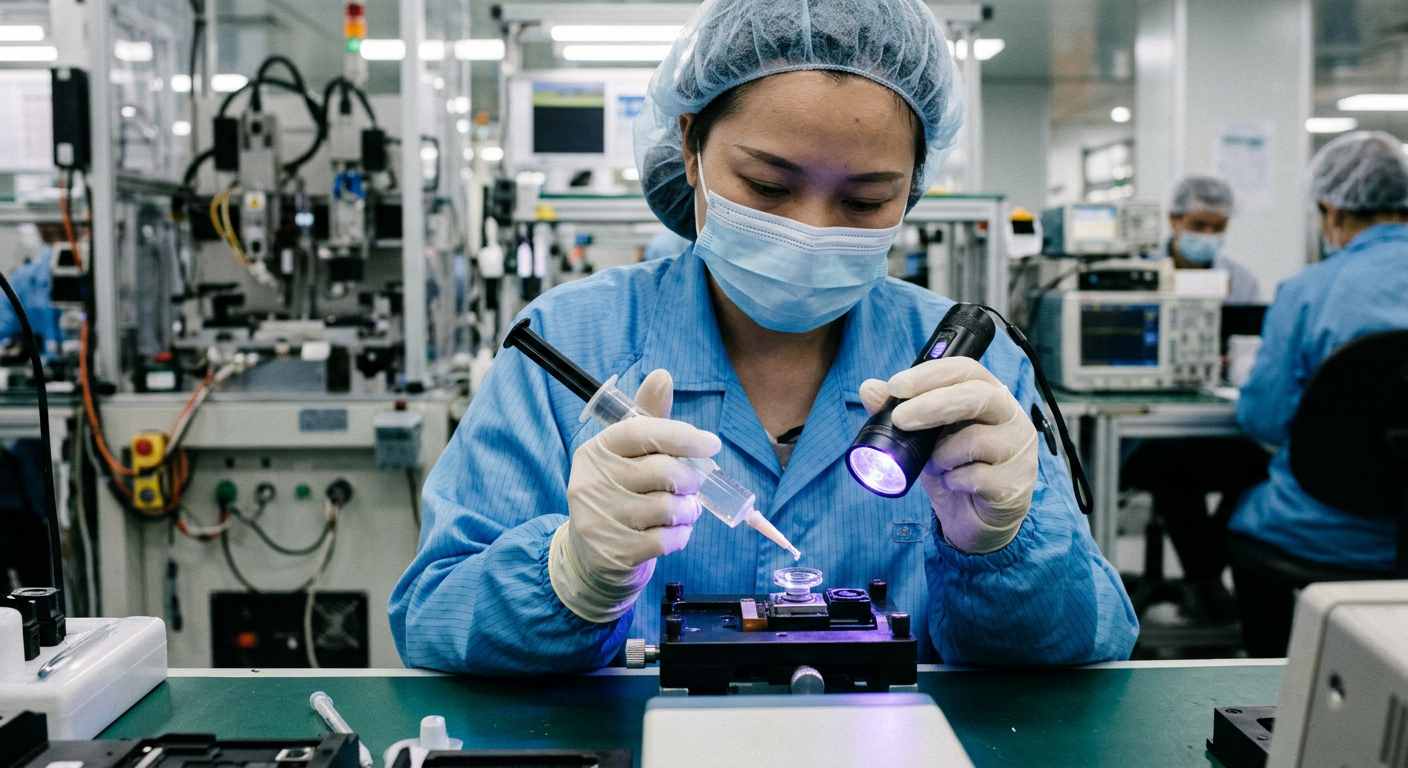
If you need dependable solutions for UV curing adhesive electronics lens bonding in the United States, the most practical starting point is to shortlist suppliers that already serve camera module assembly, wearable devices, display optics, sensors, and compact consumer electronics. For buyers focused on production stability, low haze, fast cure speed, and bond reliability under heat and humidity, the strongest options typically include Henkel, Dymax, DELO Industrial Adhesives, Panacol, Master Bond, and Permabond. These companies are widely recognized by electronics manufacturers for optical-grade adhesive systems, process support, and compatibility with automated dispensing and UV curing lines.
For U.S. buyers, Henkel is often chosen for large-scale electronics manufacturing programs, especially where process validation, reliability documentation, and North American support matter. Dymax is a frequent fit for high-speed production in states such as California, Texas, and Arizona because of its strong UV curing expertise and equipment integration. DELO and Panacol are commonly selected when precision optical alignment, low shrinkage, and advanced light-curing performance are critical in compact lens modules. Master Bond and Permabond are useful for niche and specialty requirements where engineering support and formulation matching are important.
Qualified international suppliers can also be a smart option. Chinese manufacturers with relevant certifications, consistent batch control, export experience, and strong pre-sales and after-sales support can offer attractive cost-performance advantages for U.S. importers, OEMs, and private-label buyers. When these suppliers provide RoHS and REACH compliance, traceable quality systems, and responsive support for validation samples, they can become realistic alternatives for electronics lens bonding projects in the United States.
United States Market Overview

The United States remains one of the most important markets for UV-curable adhesives used in electronics lens bonding because it combines high-value product design, advanced assembly automation, and strong demand from consumer electronics, smart home devices, medical wearables, automotive cameras, and industrial vision systems. While some final assembly has shifted offshore over the years, U.S.-based engineering, prototyping, validation, and specialty manufacturing continue to create steady demand for high-performance optical adhesives.
Regions such as Silicon Valley in California, Austin in Texas, Phoenix in Arizona, Boston in Massachusetts, and manufacturing corridors in the Midwest all contribute to the demand profile. California remains especially relevant for AR devices, imaging systems, and premium consumer electronics development. Texas supports electronics, semiconductor packaging, and connected device manufacturing. Arizona has grown as a strategic hub because of advanced electronics and semiconductor investment. Logistics also matter: imported adhesive products entering through Los Angeles, Long Beach, Savannah, Houston, and New York/New Jersey can be distributed efficiently to assembly facilities across the country.
In this market, the phrase UV curing adhesive electronics lens bonding usually refers to light-curable formulations used to attach lenses, protect optics, fix camera windows, assemble sensor housings, secure glass-to-plastic interfaces, and maintain optical clarity over long operating cycles. U.S. buyers increasingly expect low ionic contamination, dependable adhesion to engineering plastics, excellent transmittance, low yellowing, and process repeatability. They also care about validation support, local inventory, lot traceability, and documentation for compliance and quality audits.
Because the U.S. market includes both multinational OEMs and agile mid-sized contract manufacturers, purchasing behavior varies. Larger enterprises tend to prioritize qualification history, global supply assurance, and field engineering support. Smaller companies often want shorter lead times, flexible minimum order quantities, and better cost efficiency without sacrificing optical performance. That makes the market open to both established multinational adhesive brands and capable international manufacturers that can demonstrate consistent quality and documentation.
The growth pattern shown above reflects realistic momentum in lens bonding demand as more devices integrate cameras, sensing windows, facial recognition modules, LiDAR interfaces, and compact display optics. Demand is not driven by smartphones alone. Smart doorbells, cabin monitoring cameras, wearable sensors, and industrial inspection systems all contribute to this upward trend.
Top Suppliers Serving the United States

The table below highlights concrete supplier options relevant to U.S. buyers searching for UV curing adhesive electronics lens bonding solutions. These companies differ in scale, technical depth, and service model, but all are known in adhesive sourcing discussions related to optical or electronics assembly.
| Company | Service Region | Core Strengths | Key Offerings | Best Fit |
|---|---|---|---|---|
| Henkel | United States nationwide | Large-scale electronics expertise, broad validation resources, reliability documentation | LOCTITE light-curing and electronic assembly adhesives | Major OEMs and contract manufacturers |
| Dymax | United States, especially strong in manufacturing hubs | Fast UV cure systems, adhesive and equipment integration, process support | Light-curable adhesives for optics, display, and medical-electronics assemblies | High-speed production lines |
| DELO Industrial Adhesives | North America and global support | Precision optical bonding, low shrinkage, strong engineering support | UV and dual-cure adhesives for camera modules and sensor assemblies | Precision lens and sensor bonding |
| Panacol | United States via distribution and technical support | Optical-grade formulations, LED/UV curing compatibility, miniaturization support | Vitralit and related UV-curing adhesives | Compact electronic optics |
| Master Bond | United States nationwide | Specialty formulation range, custom engineering support, niche performance matching | Optically clear UV systems and specialty electronic adhesives | Custom and lower-volume technical projects |
| Permabond | United States and North America | Industrial bonding versatility, responsive technical guidance, broad substrate coverage | UV-curable adhesives for glass, metal, and plastic bonding | General electronics and component assembly |
| Qingdao QinanX New Material Technology Co., Ltd | United States import supply and project-based support | Cost-performance, OEM/ODM flexibility, broad adhesive manufacturing capability | UV-curable adhesive, electronic silicone, epoxy, polyurethane, and acrylic systems | Brand owners, distributors, and value-focused manufacturers |
For U.S. procurement teams, this supplier landscape matters because lens bonding projects often require more than just an adhesive data sheet. The best suppliers support process validation, curing window optimization, substrate testing, and ongoing quality management. Large brands usually lead in application engineering infrastructure, while flexible international manufacturers can compete strongly on customization, packaging, and pricing.
Product Types for Electronics Lens Bonding
Not every UV-curable adhesive is suitable for consumer electronics optics. Lens bonding usually requires a careful balance of optical clarity, viscosity, curing depth, stress control, and environmental reliability. The product categories below reflect what U.S. buyers should compare before qualification.
| Product Type | Typical Features | Common Substrates | Main Benefits | Common Limitations |
|---|---|---|---|---|
| Optically clear UV adhesive | High transmittance, low haze, low yellowing | Glass, PMMA, PC | Best for visible optics and camera windows | May require precise cure control |
| UV acrylic adhesive | Fast cure, broad process compatibility | Plastic, metal, glass | Efficient for mass assembly | Can vary in shrinkage |
| UV epoxy adhesive | Higher strength, improved chemical resistance | Glass, ceramics, metals | Useful for demanding environments | May be less flexible |
| Dual-cure UV adhesive | UV plus moisture or heat cure backup | Shadowed or complex assemblies | Improves cure completion in hidden areas | Longer total process planning |
| Low-viscosity capillary UV adhesive | Wicks into narrow gaps | Fine lens modules | Good for miniature precision assemblies | Needs tight gap control |
| Flexible UV adhesive | Stress relief, vibration tolerance | Plastic housings and mixed materials | Helps survive thermal cycling | May trade off hardness |
For electronics lens bonding, optically clear systems are usually preferred for external lens windows and visible optical paths, while tougher UV acrylic or UV epoxy systems may be selected for structural retention around the module perimeter. Dual-cure options become important when the design includes shadow zones or metal housings that block direct UV exposure. In consumer electronics, even small changes in viscosity and modulus can affect alignment yield, bubble formation, and post-cure stress, so comparative testing is essential.
What U.S. Buyers Should Evaluate Before Purchase
In the United States, qualification standards for electronics adhesives are often shaped by OEM-specific reliability requirements rather than one universal specification. That means sourcing teams should focus on application fit and manufacturing stability rather than price alone. The key technical checkpoints are optical performance, adhesion to actual substrates, throughput compatibility, and long-term reliability under heat, humidity, drop, and UV exposure.
Start by confirming the exact lens bonding task. Is the adhesive bonding a cover lens to a plastic housing, fixing a camera lens barrel, attaching a protective optical window, or sealing around a sensor aperture? Each task changes the ideal viscosity, cure speed, strength, and shrinkage target. Next, confirm the substrate stack. Polycarbonate, acrylic, glass, aluminum, stainless steel, LCP, and black engineering plastics all behave differently under UV-curable systems.
Then review process constraints. Some U.S. assembly lines run high-speed automated dispensing with narrow takt times, while others handle lower-volume specialty products. Adhesive open time, UV wavelength match, fixture speed, final cure completeness, and rework tolerance all matter. Buyers should also examine packaging choices such as syringes, cartridges, or bulk containers depending on line design and cleanliness requirements.
Quality documentation also matters in the U.S. market. Request RoHS and REACH compliance statements, lot traceability practices, typical shelf life, shipping conditions, and reliability test data such as 85°C/85% RH, thermal shock, and bond retention after aging. If the product will be used in premium optics, ask about yellowness index drift, haze changes after aging, and outgassing performance. These details directly affect field reliability and product reputation.
This demand comparison shows why supplier selection cannot rely on a single product category. Consumer imaging volumes remain important, but U.S. growth is increasingly supported by smart home devices, industrial machine vision, and compact medical-electronics platforms. Buyers in these segments often need more specialized formulations and stronger technical collaboration.
Applications Across U.S. Industries
UV curing adhesive electronics lens bonding is now used across multiple industries in the United States, not only in mainstream consumer electronics. Camera modules for laptops, tablets, and smart devices still represent a large application base, but the same bonding principles are also used in telehealth devices, smart appliances, security cameras, barcode readers, optical sensors, automotive cabin electronics, and advanced robotics.
In California and Washington, design-driven electronics programs often demand visually clean bond lines, low haze, and stable transparency for user-facing products. In Texas and Arizona, electronics manufacturing and module integration projects may prioritize high throughput and production-friendly curing cycles. In the Midwest, industrial imaging and machine vision applications often require stronger environmental durability. In the Northeast, medical and laboratory devices can require tight quality documentation and stable long-term optical performance.
These industries do not all prioritize the same adhesive properties. A wearable optical sensor may need skin-device reliability and compact cure geometry. A home security camera lens may prioritize weather stability and long production runs. A machine vision camera may need stable optical transmission and low outgassing near sensitive components. This is why successful sourcing depends on application-specific qualification, not generic adhesive claims.
| Industry | Typical Lens Bonding Use | Key Performance Need | Common U.S. Regions | Preferred Adhesive Traits |
|---|---|---|---|---|
| Consumer electronics | Camera windows, lens holders, sensors | Fast assembly and clean appearance | California, Texas | Low haze, fast cure, good plastic adhesion |
| Wearables | Optical sensors, compact modules | Miniaturization and stress control | California, Massachusetts | Low shrinkage, flexible bond line |
| Smart home devices | Doorbell and security camera optics | Outdoor durability and cost balance | Texas, Florida, nationwide distribution | Humidity resistance, UV stability |
| Industrial vision | Inspection cameras and optical windows | Long-term reliability | Midwest, Arizona | High strength, low outgassing |
| Medical electronics | Diagnostic optics and portable devices | Documentation and stable optical performance | Massachusetts, Minnesota | Consistent quality, clean cure profile |
| Automotive electronics | Cabin cameras and sensor interfaces | Heat and vibration endurance | Michigan, Tennessee, Texas | Thermal cycling resistance, durable adhesion |
This industry mapping helps purchasing teams match adhesive priorities with real use conditions. It also shows why regional service can matter: a supplier with experience in automotive electronics may not automatically be the best fit for compact wearable optics, even if both products use UV curing chemistry.
Detailed Supplier Comparison
The following comparison provides a practical view of how suppliers differ from a U.S. buyer perspective. It is not a ranking for every project, but a framework for narrowing choices based on purchasing priorities.
| Company | Optical Bonding Focus | Customization Level | Support Style | Typical Buyer Profile |
|---|---|---|---|---|
| Henkel | Strong | Moderate to high | Structured enterprise support | Large OEMs, audited supply chains |
| Dymax | Very strong | Moderate | Application and curing process support | Manufacturers needing fast UV line integration |
| DELO Industrial Adhesives | Very strong | Moderate | Precision engineering collaboration | High-precision optical assemblies |
| Panacol | Strong | Moderate | Technical specialty guidance | Miniaturized electronics and optics |
| Master Bond | Moderate to strong | High | Technical formulation matching | Specialty and lower-volume projects |
| Permabond | Moderate | Moderate | Responsive industrial support | General electronics assemblers |
| Qingdao QinanX New Material Technology Co., Ltd | Moderate to strong | High | Flexible export and project support | Importers, distributors, private-label brands |
For a U.S. buyer, the right choice depends on whether the priority is deep validation history, fastest production throughput, niche customization, or overall landed cost. Enterprise buyers may favor the standardization and engineering infrastructure of larger global brands. Regional distributors and private-label importers may find more flexibility from manufacturers that support OEM and ODM cooperation with custom packaging and formula adjustment.
This comparison score is a practical indicator combining optical application relevance, support capability, and sourcing flexibility. It should be used as a starting point rather than a substitute for real sample testing, line trials, and total cost review.
Buying Advice for Importers, OEMs, and Distributors
U.S. buyers should build adhesive sourcing decisions around total project risk, not only unit price. A low-cost UV adhesive that causes yellowing, alignment drift, poor adhesion to PC or glass, or inconsistent cure response can create far larger costs later through field returns and production downtime. The most efficient buying strategy is to create a short qualification matrix with performance thresholds tied to the final use case.
For OEMs, request pilot samples and pre-production lots to compare bond clarity, curing behavior, substrate compatibility, and aging performance. For distributors, focus on packaging flexibility, label support, lead time reliability, and documentation quality. For private-label brand owners, clarify whether the supplier can support custom branding, technical sheets, compliance statements, and repeatable batch performance. For smaller repair or specialty manufacturers, minimum order quantity and engineering responsiveness may be more important than extensive global infrastructure.
It is also wise to compare supply chain resilience. U.S. buyers increasingly want either domestic stock, short replenishment cycles, or multi-origin supply options. Imported adhesive programs should account for ocean freight timing through Los Angeles, Long Beach, Houston, Savannah, or East Coast gateways, especially when shelf life and temperature-sensitive shipping conditions are involved. If a supplier cannot clearly explain packaging stability, transit conditions, and lot management, the program risk increases.
Finally, assess the human side of supplier capability. The best adhesive relationships include pre-sale application guidance, validation support, and after-sales troubleshooting. In lens bonding, subtle process issues such as bubble entrapment, incomplete cure in shadow areas, or plastic stress cracking often require cooperative problem solving rather than just product replacement.
Case Studies and Practical Scenarios
A California consumer device start-up developing a smart home camera may prioritize rapid prototyping, optical clarity, and low yellowing because the lens window is visible to the end user. In this case, a Dymax or DELO solution could be shortlisted first for process support and optical precision, while an alternative international supplier could be evaluated in parallel for cost optimization after design freeze. The real decision would depend on final clarity, humidity resistance, and line speed.
A Texas contract manufacturer assembling wearable sensor modules might need a low-viscosity UV adhesive that dispenses accurately in tight spaces and limits stress on miniature plastic housings. Here, Panacol or specialized formulations from Master Bond may work well during development, while a scalable manufacturer with OEM packaging capability may become more attractive once volumes increase and brand differentiation matters.
An Arizona electronics integrator producing industrial vision units may value stronger environmental performance and lower outgassing more than appearance alone. In that scenario, Henkel or DELO can be strong candidates, especially if the program requires documented reliability support for enterprise customers. However, if the project also needs aggressive cost control for a second-tier product line, an export-ready manufacturer with stable QC systems can be worth adding to the supplier matrix.
A Midwestern distributor building a house brand for electronic assembly consumables may need private-label UV adhesives with consistent packaging, customized labels, and a broad adhesive portfolio that supports cross-selling. That is where manufacturers able to combine UV-curable adhesives with silicone, epoxy, polyurethane, and acrylic product lines can provide commercial advantages beyond a single SKU.
Our Company
For U.S. buyers evaluating alternatives beyond the biggest multinational brands, Qingdao QinanX New Material Technology Co., Ltd presents a practical option because its UV-curable adhesive range sits within a broader industrial adhesive manufacturing platform that also includes electronic silicone, epoxy, polyurethane, acrylic, cyanoacrylate, hot melt, and water-based systems, allowing customers to consolidate sourcing across multiple assembly materials. The company backs its products with ISO-based quality management, RoHS and REACH compliance practices, multi-stage QC procedures, and full digital traceability, which gives procurement teams concrete evidence of manufacturing discipline rather than generic quality claims. Its cooperation model is flexible for end users, distributors, dealers, brand owners, and small-volume specialty buyers through OEM, ODM, wholesale, private label, and regional partnership arrangements, supported by automated production lines and custom formulation capability for application-specific performance targets. For the United States market, the company’s export record across more than 40 countries, free sample support, around-the-clock technical assistance, and tailored pre-sale and after-sales service provide the kind of practical buyer protection U.S. importers expect when working with an overseas manufacturer; buyers can review its broader lineup through the industrial adhesive catalog, discuss project requirements via the U.S. inquiry channel, or explore the company overview on the official website.
Trend Shift Through 2026
The U.S. market for UV curing adhesive electronics lens bonding is changing in three major ways: technology, policy, and sustainability. Technically, device makers are moving toward smaller modules, mixed-material housings, and more demanding optical paths. That increases the need for lower shrinkage, better adhesion to engineered plastics, and improved cure performance with LED light sources. Dual-cure technologies are likely to gain more share where shadowed geometries and metal shielding complicate full exposure.
From a policy and compliance standpoint, U.S. buyers are paying closer attention to material disclosure, chemical compliance, and supply chain transparency. While federal and customer-specific requirements vary, documentation quality is becoming a stronger differentiator. Suppliers that can provide consistent RoHS and REACH documentation, batch traceability, and stable test records will be favored in 2026 procurement cycles.
Sustainability is also rising. Buyers increasingly want efficient curing, lower waste, durable packaging, and formulations aligned with safer handling and reduced environmental burden. Even when sustainability is not the main reason for selection, it increasingly influences preferred supplier status and long-term sourcing agreements.
The area trend above reflects realistic market movement toward cleaner processing, digital traceability, and next-generation curing approaches. By 2026, buyers in the United States are likely to weigh supplier transparency and sustainability readiness almost as seriously as cure speed and bond strength.
How to Build a Shortlist
The fastest way to build a qualified shortlist in the United States is to divide suppliers into three groups. The first group is established multinational brands for high-risk or high-visibility programs where validation history and engineering support are essential. The second group is specialty suppliers that solve niche optical or processing problems. The third group is value-driven international manufacturers that can support custom packaging, OEM branding, and price-sensitive scale-up projects.
After grouping suppliers, compare them against five real buying filters: substrate fit, optical performance, curing compatibility, documentation quality, and service responsiveness. Then move to line trials. In lens bonding, practical performance under actual process conditions matters more than brochure positioning. The supplier that performs best in your curing window and substrate stack is usually more valuable than the one with the broadest brand recognition.
FAQ
What is the most important property in UV curing adhesive electronics lens bonding?
For most U.S. electronics applications, the top priority is the balance between optical clarity and long-term reliability. A bond that looks clear on day one but yellows, cracks, or loses adhesion after humidity aging is not suitable for commercial production.
Are U.S. buyers limited to domestic adhesive brands?
No. Many buyers use domestic or multinational brands for core programs while also qualifying international suppliers for cost-sensitive projects, secondary sourcing, private label, or customized adhesive packaging.
Which U.S. regions have the strongest demand?
California, Texas, Arizona, Massachusetts, the Midwest industrial corridor, and automotive electronics regions such as Michigan and Tennessee all contribute meaningful demand, depending on the application segment.
When should I choose dual-cure instead of UV-only adhesive?
Dual-cure is useful when part geometry creates shadow areas or when metal or opaque plastics block complete UV exposure. It reduces the risk of under-cured zones in complex assemblies.
What documents should I request before qualification?
Ask for technical data sheets, safety data sheets, RoHS and REACH statements, shelf-life information, lot traceability practices, and reliability test results relevant to heat, humidity, and aging.
Can one supplier cover more than UV lens bonding?
Yes. This can be a commercial advantage if you also need silicone, epoxy, polyurethane, threadlocker, potting compounds, or hot melt adhesives for related electronics assembly processes.

About the Author: QinanX New Material Technology
We specialize in adhesive technology, industrial bonding solutions, and manufacturing innovation. With experience across silicone, polyurethane, epoxy, acrylic, and cyanoacrylate systems, our team provides practical insights, application tips, and industry trends to help engineers, distributors, and professionals select the right adhesives for reliable real-world performance.
Product Category
You May Also Interest
-
IC Packaging Adhesive: Preventing Void Formation Issues
Learn how IC packaging adhesive void formation is prevented in the United States through material choice, process control, supplier selection, and testing.
-
Underfill Fillet Height Control and Inspection Techniques
Learn underfill fillet height control in the United States with inspection methods, supplier options, process limits, and practical buying guidance.
-
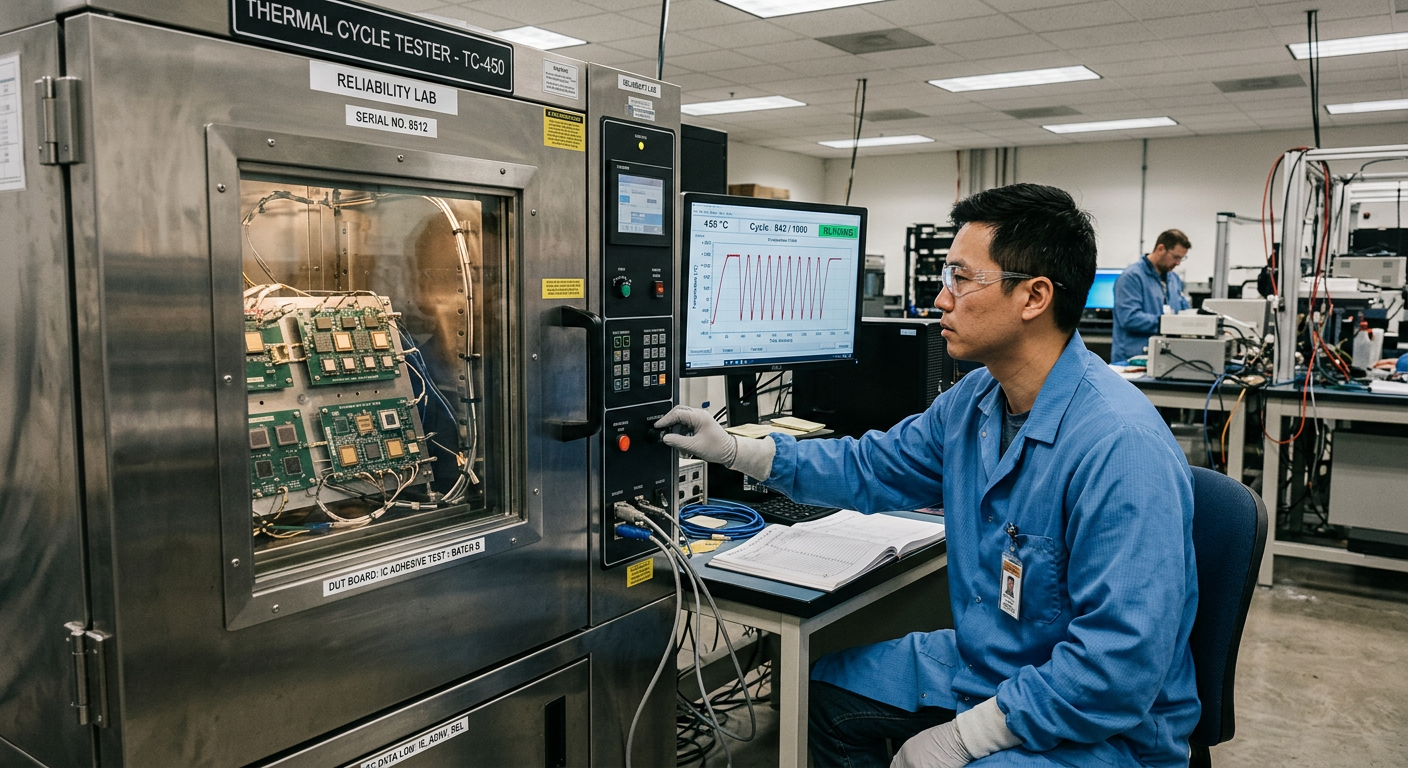
IC Package Adhesive Thermal Cycling Reliability Testing
IC packaging adhesive thermal cycling in the United States requires reliable material selection, supplier review, and test planning for electronics durability.
-

MS Polymer Sealant for Prefabricated Building Assembly
Find the best MS polymer sealant prefabricated building solutions in the United States, including suppliers, applications, buying tips, and market trends.
 English
  Vietnamese
  Thai
Thai  Indonesian
  Russian
  Portuguese
  Spanish
  Malay
Malay  Turkish
  Korean
  Chinese