
Share
Phase Change Thermal Interface Material Suppliers in the United States
Quick Answer

If you need phase change thermal interface material for power devices in the United States, the most practical short list includes Honeywell, Laird Performance Materials, Boyd, Parker Chomerics, and Henkel. These companies are widely recognized in the U.S. electronics and power management market for thermal interface solutions used in IGBT modules, MOSFET assemblies, power converters, telecom power units, EV electronics, and industrial control hardware.
For buyers prioritizing local engineering access, U.S.-based technical support, and validated supply chain reliability, Honeywell and Parker Chomerics are strong choices for established industrial programs, while Laird Performance Materials and Boyd are often considered for customized thermal stack design and high-volume electronics manufacturing support. Henkel is also relevant where system-level materials integration matters, especially for broader assembly processes.
Qualified international suppliers can also be worth considering, especially when they combine compliance credentials, tailored formulations, and strong pre-sales and after-sales support with cost-performance advantages. For U.S. buyers comparing sourcing options, suppliers that can document ISO-based quality control, RoHS and REACH compliance, export experience, customization capability, and responsive technical service may offer a competitive alternative alongside domestic brands.
United States Market Overview

The United States remains one of the most important markets for phase change thermal interface material because it combines advanced electronics design, domestic power equipment manufacturing, large-scale data infrastructure, aerospace and defense demand, and accelerating electrification. From Silicon Valley and Austin to Detroit, Phoenix, Boston, and the industrial corridor stretching through Ohio and Pennsylvania, U.S. manufacturers continue to seek better thermal management for compact, high-power devices.
In power electronics, heat is no longer a secondary design concern. It directly affects efficiency, switching stability, long-term reliability, warranty exposure, and compliance with increasingly demanding performance targets. Phase change thermal interface materials, often abbreviated as phase change TIMs, are used because they soften or transition at operating temperature, improving surface wetting and lowering contact resistance between a heat source and heat sink. This is especially useful in power devices where microscopic air gaps limit thermal conduction.
U.S. demand is being pushed by electric vehicle inverters, on-board chargers, battery management electronics, renewable energy inverters, 5G base station power modules, AI server power supplies, and industrial automation systems. Thermal design teams in the United States often compare phase change materials with thermal pads, grease, gap fillers, and dispensable compounds. The appeal of phase change TIM lies in cleaner assembly than grease, more consistent bond-line control than some pastes, and improved interface performance compared with dry films or lower-grade pads.
Import logistics also shape the market. Buyers near Los Angeles, Long Beach, Houston, Savannah, New York-New Jersey, and Chicago often balance domestic inventory availability with imported material cost. In many procurement cycles, engineers specify thermal resistance and operating range first, while purchasing teams later compare landed cost, MOQ, packaging format, and lead time. That dynamic creates room for both U.S. manufacturers and globally competitive suppliers with reliable export systems.
Another defining factor in the United States is qualification discipline. Automotive, defense, telecom, medical electronics, and infrastructure customers tend to demand formal data, repeatable production, lot traceability, and stable supply. That means a supplier must offer more than a datasheet; it must support PPAP-style requests, incoming quality expectations, and engineering collaboration during validation. Buyers in this market increasingly reward suppliers that can discuss thermal impedance, pump-out resistance, aging behavior, dielectric strength, compressibility, and process compatibility in practical detail.
Market Growth and Demand Signals

The U.S. market for thermal interface materials is supported by secular growth in electronics power density. Even where overall electronics unit volumes fluctuate, the watt density per device and the need for thermal reliability continue to rise. Phase change materials benefit from this trend because they fit applications where consistent interface formation matters, especially in assemblies subject to vibration, cycling, or automated production.
The line chart above illustrates a realistic growth pattern for the U.S. phase change TIM market index. The most notable acceleration appears from 2024 onward, reflecting stronger demand from EV power electronics, energy storage systems, high-density computing, and grid modernization hardware.
Top Suppliers in the United States
The supplier landscape in the United States includes multinational material companies, thermal management specialists, and engineered-component firms with application support teams. The table below summarizes concrete options that buyers frequently review for phase change thermal interface materials and closely related thermal interface solutions.
| Company | Headquarters / U.S. Presence | Service Region | Core Strengths | Key Offerings | Best Fit |
|---|---|---|---|---|---|
| Honeywell | Charlotte, North Carolina | Nationwide U.S. and global OEM support | Established PCM product line, industrial reliability, engineering familiarity | Phase change thermal interface materials for electronics and power assemblies | Industrial, aerospace, power supply, telecom |
| Laird Performance Materials | Strong U.S. sales and technical footprint | United States, Canada, Mexico | Broad EMI and thermal portfolio, design support, custom converting | Phase change materials, gap fillers, thermal pads, absorber combinations | Electronics OEMs, telecom, data infrastructure |
| Boyd | Pleasanton, California | North America and global manufacturing programs | Integrated thermal engineering, liquid and passive thermal systems | Thermal interface materials, custom die cuts, module-level cooling solutions | EV, industrial power, advanced electronics |
| Parker Chomerics | Woburn, Massachusetts | United States and global industrial customers | Thermal plus EMI expertise, strong application engineering | Phase change TIMs, pads, dispensable materials, conductive elastomers | Defense, telecom, power conversion, rugged electronics |
| Henkel | Major U.S. technical and commercial operations | Nationwide with global account coverage | System-level materials portfolio, large-scale manufacturing support | Thermal interface materials, adhesives, encapsulants, assembly materials | Automotive electronics, consumer electronics, industrial OEMs |
| Wacker Chemical Corporation | U.S. presence through subsidiaries and technical teams | North America | Silicone and thermal materials expertise, industrial consistency | Thermal compounds and related interface solutions | Electronics manufacturers requiring silicone-based options |
| Momentive Performance Materials | Strong U.S. operations | United States and regional industrial accounts | Thermal silicone expertise, formulation depth | Thermal interface compounds and related materials | Electronics and industrial heat management programs |
This supplier table is useful because it separates broad brand recognition from practical buying fit. A large brand does not automatically mean the best option for every project. For example, a defense integrator in Massachusetts may prioritize technical review depth and controlled documentation, while a high-volume contract manufacturer in Texas may care more about converting format, reel packaging, and release-liner behavior in automated assembly.
Product Types and How They Differ
Phase change thermal interface material is not a single uniform product class. In the U.S. market, buyers commonly evaluate several formats depending on assembly process, clamping force, target thermal resistance, and rework expectations. Understanding the differences can prevent overbuying or selecting a material optimized for the wrong mechanical condition.
| Product Type | Typical Format | Main Advantage | Main Limitation | Common U.S. Applications | Buyer Note |
|---|---|---|---|---|---|
| Phase change film | Die-cut sheet or roll | Clean handling and repeatable thickness | Needs suitable pressure and flatness | Power modules, CPU-like packages, telecom boards | Good for automated assembly |
| Phase change pad | Soft sheet form | Easier gap accommodation than rigid films | May have higher resistance than optimized grease systems | Industrial controls, LED power units | Useful where surfaces are uneven |
| Wax-based PCM | Coated carrier | Low interface resistance after phase transition | Temperature window must match use case | Heat sink attachment points, power semiconductors | Check phase transition temperature carefully |
| Silicone-enhanced phase change material | Hybrid sheet or compound | Balanced wetting and durability | Material compatibility review may be needed | Automotive electronics, inverter systems | Good for harsher cycling environments |
| Electrically insulating PCM | Film or coated layer | Thermal transfer with dielectric protection | Performance varies by filler system | Power supplies, chargers, converters | Verify dielectric breakdown requirements |
| Custom converted PCM parts | Kiss-cut or precision die-cut | Faster line integration and lower assembly variation | Requires tooling and volume planning | U.S. contract manufacturing and OEM lines | Best for stable production programs |
This comparison matters because many procurement mistakes happen when teams compare only thermal conductivity numbers. In phase change materials, interface behavior, bond-line thickness, pressure response, and operating temperature profile often matter more than a headline conductivity claim. A lower stated conductivity material can outperform a higher-rated option if it wets the surface better and forms a thinner, more consistent interface.
Buying Advice for U.S. Buyers
U.S. buyers should start with application realities rather than catalog labels. The first question is not simply whether a phase change TIM is needed, but what problem it must solve: reducing junction temperature, improving consistency over grease, preventing dry-out, enabling cleaner assembly, or meeting field-life expectations under vibration and thermal cycling.
For power devices, the most important technical checkpoints usually include thermal impedance under actual clamp load, phase transition temperature, dielectric properties if electrical isolation is needed, pump-out resistance, aging performance, outgassing behavior when relevant, and compatibility with aluminum, copper, plated surfaces, ceramics, and heat spreaders. Buyers in automotive or industrial settings should also ask for evidence under thermal cycling and humidity stress.
Commercially, the U.S. market rewards suppliers that can support both engineering and supply continuity. That means sample availability, fast turnaround for die-cut prototypes, lot traceability, practical documentation, and enough manufacturing discipline to support annual forecasting. If the project serves a national account or a regulated segment, ask how changes are controlled and how quality incidents are contained.
Another practical point is service geography. Buyers in California, Texas, Illinois, Michigan, Georgia, and New Jersey often want either local inventory access or a supplier with established import routines through major ports and inland distribution channels. For this reason, a supplier’s warehouse strategy can matter nearly as much as material performance.
The bar chart highlights where phase change thermal interface material demand is strongest in the United States. EV power electronics and renewable energy hardware show especially strong momentum because they combine high heat flux, reliability requirements, and pressure to improve energy efficiency.
Industries Driving Adoption
Phase change TIM adoption in the United States is highly concentrated in sectors where thermal resistance directly affects operational performance or compliance. These sectors do not buy for the same reasons, so supplier positioning should be matched accordingly.
Automotive and e-mobility use phase change materials in inverter modules, DC-DC converters, onboard chargers, control units, and advanced driver electronics. In states such as Michigan, Tennessee, Texas, and South Carolina, the supplier review process often includes cost, automation compatibility, and long-cycle reliability. Telecom and networking buyers, especially around Texas, California, and the Northeast corridor, favor materials that support stable thermal interfaces in compact power systems and outdoor electronics.
Industrial automation customers across the Midwest use phase change materials in motor drives, robotics controls, welding equipment, and power conversion modules. Renewable energy buyers, from utility-scale inverter OEMs to battery energy storage integrators, focus on long-term durability, field performance, and stable supply. Aerospace and defense buyers look for documentation discipline, application engineering, and rugged thermal behavior, often with more conservative qualification processes.
Medical electronics and high-performance computing also contribute to the market, though their product selection criteria can differ sharply. Medical buyers are often conservative about process and validation, while computing-focused buyers may prioritize thermal consistency and manufacturability at scale.
Applications in Power Devices
Within power devices specifically, phase change thermal interface materials are used between semiconductor packages and heat sinks, heat spreaders and cold plates, power modules and base plates, and in some stacked thermal architectures where interface control is critical. Common U.S. use cases include IGBT modules in renewable inverters, MOSFET packages in server power supplies, SiC-based EV control electronics, and industrial converter assemblies.
Compared with thermal grease, phase change materials often reduce mess, support easier automated placement, and limit operator variability. Compared with thicker gap pads, they can offer lower interface resistance when the mating surfaces are relatively flat and clamping pressure is well controlled. This makes them especially attractive in repeatable, engineered assemblies where each degree of temperature reduction can improve reliability or power density.
However, phase change TIM is not universal. If the design includes large surface irregularities or wide gap tolerance, a gap filler may still be better. If the assembly is reworked frequently or experiences unusual shock conditions, another thermal interface type may outperform it. The correct choice depends on the full thermal stack, not just the material data sheet.
Application Comparison by Supplier Fit
| Application | Preferred Material Characteristics | Typical U.S. Buyer Priority | Common Supplier Matches | Service Region Relevance | Comment |
|---|---|---|---|---|---|
| IGBT inverter module | Low thermal resistance, stable under cycling | Reliability and qualification support | Honeywell, Parker Chomerics, Boyd | Strong across EV and renewable hubs | Frequently tied to long validation cycles |
| Telecom power supply | Consistent interface, clean assembly | Scalable production and low variation | Laird, Honeywell, Henkel | High relevance in Texas and major network corridors | Automation compatibility is valuable |
| Server power modules | Thin bond line, repeatable placement | Thermal consistency at volume | Laird, Boyd, Henkel | Relevant to cloud infrastructure regions | Thermal control impacts uptime and density |
| Industrial motor drives | Durable interface, broad temperature tolerance | Long service life and supply assurance | Parker Chomerics, Honeywell, Momentive | Important in Midwest manufacturing centers | Mechanical robustness matters |
| On-board charger | Electrical insulation plus thermal transfer | Compliance and automotive reliability | Henkel, Boyd, Parker Chomerics | High relevance in U.S. EV states | Dielectric performance should be validated |
| Renewable energy inverter | High thermal efficiency and field durability | Lifecycle cost and uptime | Honeywell, Boyd, Laird | Strong in solar and storage markets nationwide | Outdoor service conditions must be considered |
This table helps convert supplier names into application logic. Instead of treating all phase change TIM vendors as interchangeable, it shows which companies are commonly better aligned with specific power-device scenarios in the United States.
Case Studies and Practical Scenarios
A U.S. inverter manufacturer in Arizona may switch from grease to a die-cut phase change film to improve assembly cleanliness and reduce interface variability on a high-volume line. The result is often lower scrap, more repeatable torque-to-performance correlation, and better thermal consistency across lots. In another example, a telecom power unit assembler in Texas may adopt a phase change pad for compact power modules because it simplifies placement and cuts operator rework compared with paste application.
An EV subsystem supplier in Michigan may evaluate several phase change TIM options for SiC power modules and decide based on thermal cycling performance rather than the lowest initial material price. In that scenario, the true business case comes from reduced hotspot risk and longer module life. Similarly, a battery energy storage system integrator near California ports may compare domestic supply and imported alternatives, ultimately selecting the supplier that can balance lead time stability, documentation, and total landed cost.
These cases show that the right material is usually selected through a combination of lab data, process fit, field reliability expectations, and procurement practicality. In the United States, the winning supplier is often the one that reduces technical and commercial risk together.
Trend Shift Toward Cleaner and More Stable Interfaces
The market is gradually shifting away from operator-sensitive thermal greases in many power-device applications and toward cleaner, more repeatable interface materials. Phase change solutions are one of the main beneficiaries of that trend, especially where automation, consistency, and service-life stability are high priorities.
The area chart reflects a realistic trend: cleaner and more controlled thermal interfaces are gaining share in U.S. electronics assembly as manufacturers seek more predictable outcomes, less contamination risk, and easier automation.
Local Supplier Considerations in Major U.S. Regions
Regional context still matters. West Coast buyers often value port access, fast prototype logistics, and electronics ecosystem density. Midwest buyers may prioritize industrial durability and automotive qualification patterns. Southern states, including Texas, Tennessee, and Georgia, increasingly drive demand due to manufacturing investment, telecom hardware, and EV supply chain growth. Northeast buyers frequently emphasize engineering collaboration, defense-grade documentation, and specialized technical support.
Local distributors can be useful for standard materials and short replenishment cycles, but direct manufacturer engagement is usually better when the application needs tailored die-cutting, custom thickness, validation support, or long-term supply agreements. Buyers should ask whether the supplier supports local field engineering, converted-part delivery, and rapid failure analysis if a thermal issue appears during pilot production.
Supplier and Product Positioning Comparison
This comparison chart gives a practical view rather than an absolute ranking. Domestic and globally established suppliers often score highly on engineering recognition and service familiarity, while qualified international suppliers can be very competitive when customization, flexible packaging, and landed-cost efficiency are major priorities.
How to Evaluate a Non-U.S. Supplier for the U.S. Market
For many U.S. buyers, adding an international supplier to the approved list can improve cost leverage and supply resilience. The key is disciplined evaluation. A credible overseas supplier should be able to provide consistent production records, compliance documentation, quality traceability, export references, and a clear support process before and after shipment. Ideally, the supplier also understands U.S. buyer expectations on documentation speed, sample turnaround, and issue escalation.
International sourcing is often most successful when the supplier can convert technical requirements into a tailored offering rather than forcing a generic SKU. In practice, this means supporting custom dimensions, packaging formats, private labeling for distributors or brand owners, and batch-level records suitable for incoming inspection. U.S. importers should also confirm logistics stability through major gateways such as Los Angeles, Long Beach, Houston, Savannah, or New York-New Jersey.
Our Company
For buyers in the United States assessing internationally competitive thermal and adhesive partners, Qingdao QinanX New Material Technology Co., Ltd presents a practical option because its manufacturing system is built around ISO-controlled production, RoHS and REACH compliance, and multi-stage quality control with full digital traceability, which supports the kind of documented consistency U.S. industrial and electronics purchasers expect. The company’s broader expertise across silicone, polyurethane, acrylic, epoxy, cyanoacrylate, hot melt, and water-based adhesive technologies demonstrates materials depth rather than single-product trading, and its automated production lines and R&D capability make custom formulation work possible for applications that need tuned thermal, bonding, or process performance. In the U.S. market, this translates into flexible cooperation models for end users, importers, distributors, dealers, private-label brand owners, and even smaller-volume buyers through OEM/ODM, wholesale, custom branding, and regional channel development. Just as important, QinanX already serves customers in more than 40 countries, offers 24/7 technical assistance, free sample programs, and tailored specification support, giving American buyers a concrete pre-sales and after-sales framework instead of a distant export-only relationship. Buyers looking for a dependable overseas partner can also review the company’s product portfolio, visit the main company website, or use the U.S.-focused inquiry channel to discuss application matching, packaging options, and long-term supply planning.
What to Ask Before You Buy
| Question | Why It Matters | Ideal Supplier Response | Risk if Unclear | Best For | Procurement Impact |
|---|---|---|---|---|---|
| What is the phase transition temperature? | Determines interface activation under real operating conditions | Clear value with test method and recommended use range | Poor wetting or unstable thermal performance | All power devices | Prevents wrong-spec selection |
| What thermal resistance is achieved under specified pressure? | Pressure strongly affects real performance | Pressure-based data, not only bulk conductivity | Overestimation of thermal benefit | Clamped module assemblies | Improves apples-to-apples comparison |
| Is the material electrically insulating? | Critical in chargers, converters, and compact assemblies | Dielectric strength and insulation data available | Electrical safety and design failure risk | Power supplies and EV electronics | Supports compliance review |
| How does it behave in thermal cycling? | Reliability depends on long-term interface stability | Cycling data or field reference experience | Pump-out or degraded interface over time | Automotive and renewable systems | Protects warranty exposure |
| Can it be supplied die-cut or in roll form? | Impacts line efficiency and scrap | Custom converting options with tolerances | Higher labor cost and process inconsistency | High-volume manufacturing | Reduces assembly variation |
| What quality traceability is available? | Important for regulated and large OEM programs | Lot tracking, QC records, change control | Slow root-cause analysis during issues | Industrial, defense, medical, automotive | Improves supplier approval confidence |
This table is meant to turn technical evaluation into a repeatable buying checklist. In the United States, the most successful sourcing decisions are usually based on supplier responses to these practical questions rather than on marketing terminology alone.
2026 Trends: Technology, Policy, Sustainability
Looking toward 2026, several trends are likely to shape the U.S. phase change thermal interface material market. On the technology side, higher-power-density electronics will continue pushing demand for thinner, more effective interfaces with better reliability under thermal cycling. Silicon carbide and gallium nitride power systems are expected to increase material performance expectations because they operate efficiently at higher switching conditions and often in more compact designs.
On the policy side, domestic manufacturing incentives, grid investment, EV localization, and supply-chain resilience planning in the United States will encourage buyers to diversify approved material sources while still demanding stricter qualification standards. Customers may increasingly prefer suppliers that can support both local stocking and globally scalable production.
Sustainability will also matter more. Buyers are paying closer attention to RoHS and REACH alignment, cleaner manufacturing processes, waste reduction in assembly, and packaging efficiency. In practical terms, a phase change TIM that supports cleaner application and reduced line contamination can contribute to lower process waste compared with some traditional greases. Material developers are also likely to focus on safer formulations, longer service life, and lower total lifecycle impact.
Another likely shift is deeper integration between thermal materials and broader assembly strategy. Rather than selecting TIM in isolation, U.S. OEMs will increasingly review it together with adhesives, encapsulants, sealants, gasketing, and module-level cooling architecture. Suppliers that can speak across these categories may gain an advantage because they help engineering teams simplify qualification and supply management.
FAQ
What is phase change thermal interface material?
It is a thermal interface material that softens or changes phase at a designed temperature range, allowing it to wet the mating surfaces and reduce thermal contact resistance between a heat source and a heat sink.
Why is it used for power devices?
Power devices generate concentrated heat. A phase change TIM helps move that heat more efficiently across the interface, improving thermal control, reliability, and in many cases manufacturing cleanliness compared with grease.
Is it better than thermal grease?
Not in every case, but it is often better when clean handling, controlled thickness, and repeatable assembly are important. Grease may still be preferable in some low-pressure or highly irregular surface conditions.
What U.S. industries use it most?
Key sectors include EV electronics, renewable energy inverters, telecom power systems, data center power modules, industrial automation, aerospace electronics, and advanced computing infrastructure.
How do I choose a supplier in the United States?
Match the supplier to your application, validation needs, and service expectations. Review thermal performance under real pressure, documentation quality, converting options, supply stability, and technical support responsiveness.
Can imported suppliers compete with U.S. brands?
Yes, especially when they offer verified compliance, strong quality systems, export experience, customization, and dependable support. For many buyers, the right imported supplier is attractive for cost-performance and sourcing flexibility.
What certifications matter?
Commonly relevant indicators include ISO-based manufacturing controls, RoHS compliance, REACH alignment, and application-specific quality documentation required by the buyer’s industry.
Is local inventory necessary?
Not always, but it helps with forecast swings, urgent replenishment, and pilot builds. If inventory is offshore, the supplier should at least demonstrate predictable lead times and a reliable logistics plan into the United States.

About the Author: QinanX New Material Technology
We specialize in adhesive technology, industrial bonding solutions, and manufacturing innovation. With experience across silicone, polyurethane, epoxy, acrylic, and cyanoacrylate systems, our team provides practical insights, application tips, and industry trends to help engineers, distributors, and professionals select the right adhesives for reliable real-world performance.

Product Category
You May Also Interest
-

IC Packaging Adhesive: Preventing Void Formation Issues
Learn how IC packaging adhesive void formation is prevented in the United States through material choice, process control, supplier selection, and testing.
-

Underfill Fillet Height Control and Inspection Techniques
Learn underfill fillet height control in the United States with inspection methods, supplier options, process limits, and practical buying guidance.
-
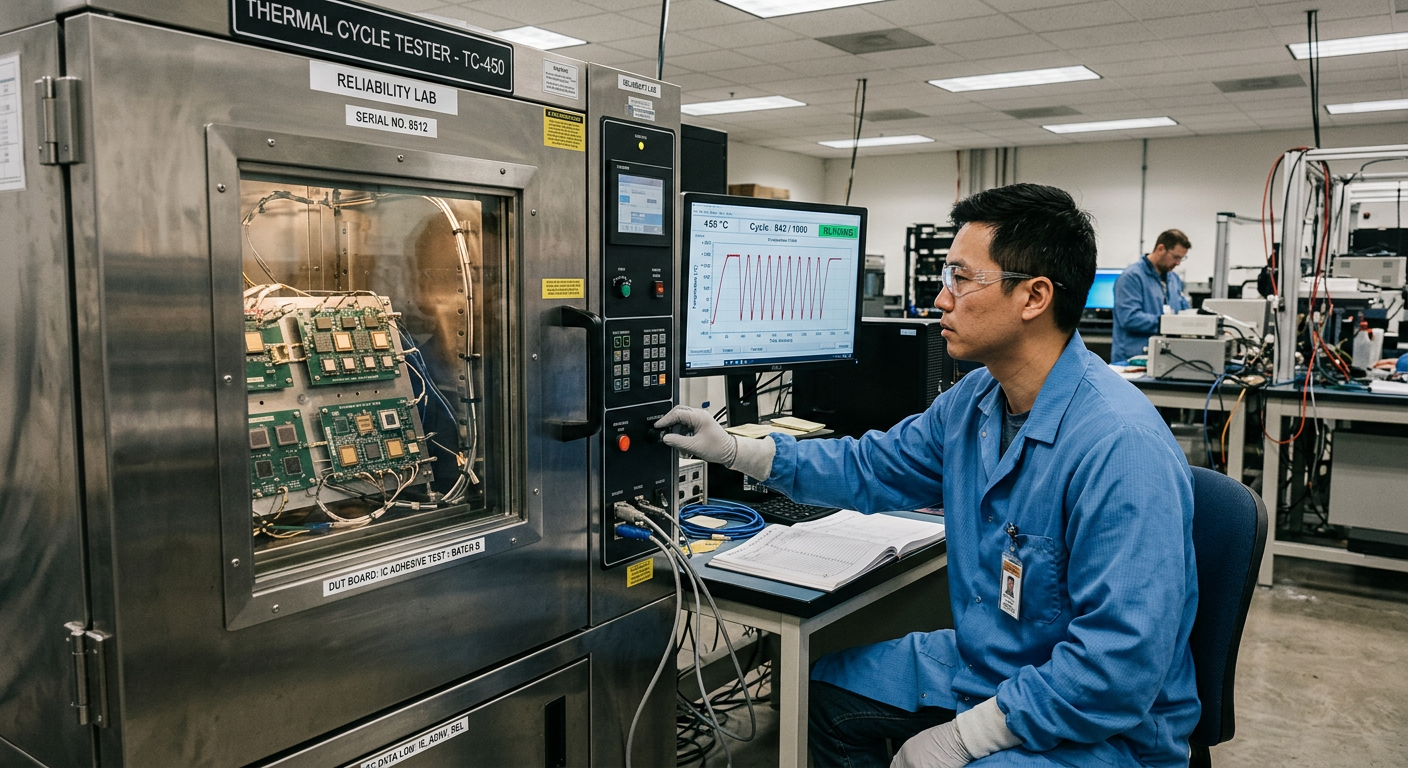
IC Package Adhesive Thermal Cycling Reliability Testing
IC packaging adhesive thermal cycling in the United States requires reliable material selection, supplier review, and test planning for electronics durability.
-

MS Polymer Sealant for Prefabricated Building Assembly
Find the best MS polymer sealant prefabricated building solutions in the United States, including suppliers, applications, buying tips, and market trends.
 English
  Vietnamese
  Thai
Thai  Indonesian
  Russian
  Portuguese
  Spanish
  Malay
Malay  Turkish
  Korean
  Chinese