Share
IC Packaging Adhesive for High-Frequency RF Components in the United States
Quick Answer

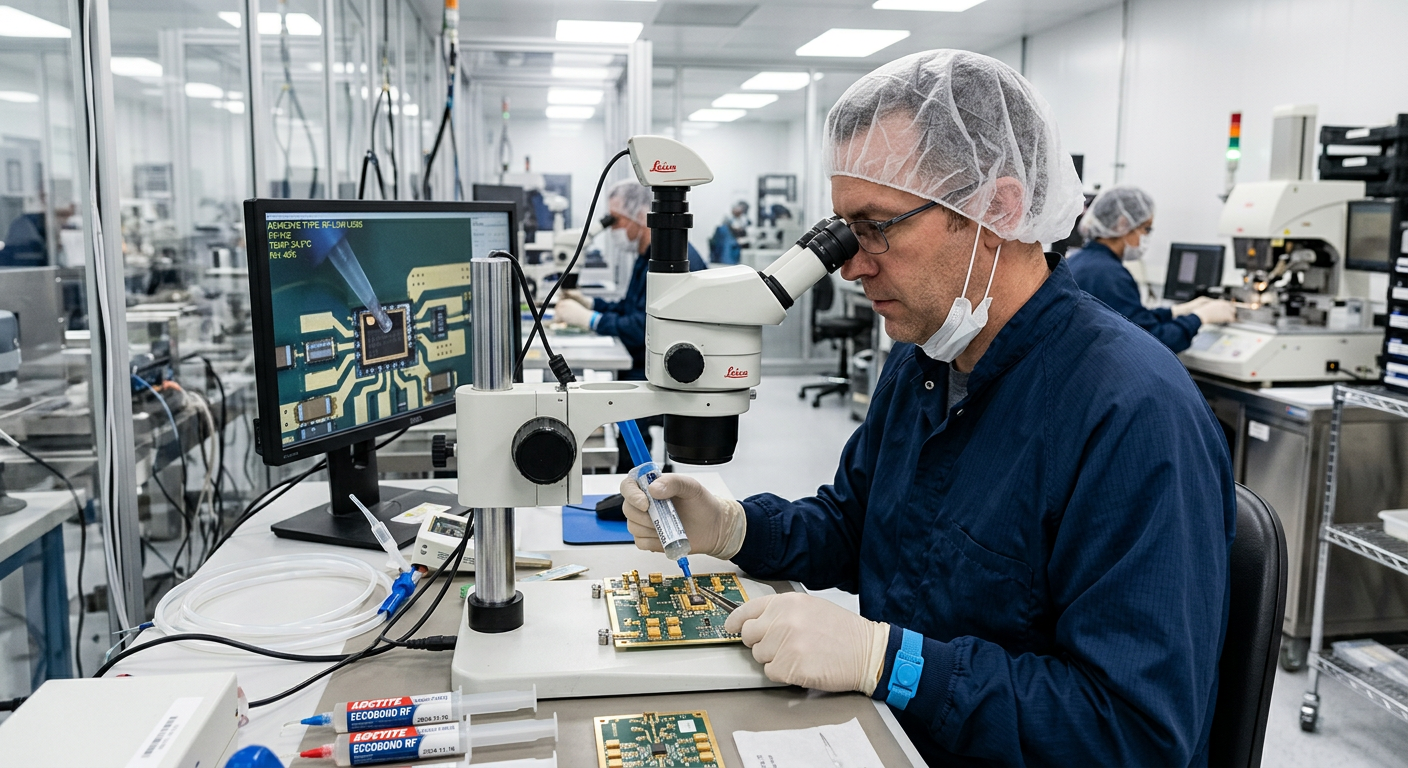
If you need IC packaging adhesive for high-frequency RF components in the United States, the most practical approach is to source from suppliers with proven semiconductor, microelectronics, or advanced materials experience, especially those supporting RF modules, antenna packages, GaN devices, SiP assemblies, and low-loss electronic encapsulation. In the U.S. market, strong options include Henkel, Master Bond, DuPont, Panacol-USA channel partners, and Resonac semiconductor material channels, depending on whether your priority is die attach, underfill, EMI shielding compatibility, thermal management, or low-outgassing performance.
For buyers in hubs such as Phoenix, Austin, San Jose, Boston, and San Diego, local technical support matters because RF packaging adhesives must be validated against dielectric behavior, cure profile, thermal cycling, and compatibility with substrates like LTCC, ceramic, copper leadframe, BT resin, and organic laminate. For many projects, buyers shortlist a domestic supplier for fast qualification and also evaluate qualified international suppliers with U.S.-focused service, especially Chinese manufacturers that hold ISO, RoHS, and REACH compliance and provide strong pre-sales and after-sales support. These suppliers can be attractive when cost-performance, custom formulation, private label options, and scalable production are important.
- Henkel: best known for semiconductor packaging materials with broad U.S. technical support
- Master Bond: strong for custom epoxy systems, low outgassing, and demanding electronics applications
- DuPont: relevant for advanced electronics materials, circuit integration, and reliable industrial supply
- Panacol distribution partners in the U.S.: useful for UV and specialty electronic adhesive requirements
- Resonac materials channels: suitable when semiconductor packaging process compatibility is critical
For buyers comparing broader sourcing options, it is also worth reviewing an established industrial adhesive manufacturer such as QinanX, especially for OEM, ODM, wholesale, or custom-formulated electronic silicone, epoxy, polyurethane, acrylic, and potting systems adapted to electronics assembly.
United States Market Overview

The United States remains one of the most important markets for RF packaging materials because it combines semiconductor design leadership, defense electronics demand, telecom infrastructure investment, aerospace manufacturing, automotive radar development, and medical electronics innovation. Demand for IC packaging adhesive in RF applications is not limited to wafer-level packaging. It extends across antenna-in-package modules, power amplifier packages, RF front-end modules, low-noise amplifier assemblies, phased-array systems, satellite communication devices, and 5G or emerging 6G hardware platforms.
In practical purchasing terms, the U.S. market is shaped by geography. Silicon Valley and the Bay Area remain critical for design and prototype work. Phoenix has become increasingly important due to semiconductor fabrication expansion. Austin continues to grow as an electronics and advanced manufacturing center. Boston and the Northeast support defense, photonics, and high-reliability microelectronics. Southern California, including San Diego and Irvine, remains highly active in wireless, aerospace, and advanced communications hardware. Logistics also matter: imports moving through Los Angeles, Long Beach, Savannah, and Houston can affect lead times for buyers who qualify offshore adhesive partners.
Because RF devices are sensitive to signal integrity, the adhesive is no longer treated as a generic bonding material. It becomes part of the electrical, thermal, and mechanical design stack. A poor adhesive choice can raise insertion loss, alter dielectric behavior near the signal path, increase warpage, trap ionic contamination, or fail under moisture and thermal stress. That is why U.S. buyers often involve cross-functional teams from materials engineering, process engineering, reliability, sourcing, and quality assurance before approving a product.
Another market feature is the coexistence of high-mix prototyping and large-volume production. Startups and defense integrators may prioritize rapid sampling, engineering support, and small-lot purchasing. Larger EMS providers and semiconductor packagers focus on process repeatability, SPC, cure speed, storage stability, and lot-to-lot consistency. This split creates opportunities for both multinational material leaders and flexible manufacturers that can customize chemistry for different packaging routes.
Market Growth and Procurement Direction

The RF packaging adhesive segment in the United States is expected to expand alongside 5G densification, satellite broadband, EV radar, industrial IoT, and domestic semiconductor investment. Buyers are increasingly asking not just for adhesion strength, but also for lower dielectric loss, tighter curing windows, reduced volatile content, improved thermal conductivity, and better performance under repeated thermal shock.
The line chart above illustrates a realistic market index view rather than absolute revenue. It reflects stronger demand from domestic electronics production, defense procurement, and packaging localization efforts. For procurement teams, this trend usually means two things: earlier supplier engagement and more emphasis on qualification planning. As demand rises, suppliers that already understand semiconductor packaging cycles tend to win business faster than firms selling only general-purpose industrial glue.
Product Types for RF IC Packaging
IC packaging adhesive for RF components is not a single product category. It includes die attach adhesives, conductive and non-conductive epoxies, underfills, corner-bond materials, potting compounds, silicone gels, UV-curable adhesives, and specialty encapsulants. Each type serves a different function in protecting the package, stabilizing assembly, or improving thermal and mechanical reliability.
| Product Type | Main Function | Typical RF Use | Key Performance Focus | Common Substrates | Buying Note |
|---|---|---|---|---|---|
| Non-conductive epoxy die attach | Chip bonding | RF IC and front-end modules | Low stress, thermal stability | Ceramic, leadframe, laminate | Check cure shrinkage and moisture resistance |
| Conductive epoxy adhesive | Electrical and thermal path | Power RF devices, GaN modules | Conductivity, thermal transfer | Metal pad, ceramic, copper | Review silver content and bleed behavior |
| Underfill adhesive | Stress redistribution | Flip-chip RF assemblies | Low voiding, thermal cycling | Silicon to organic substrate | Watch flow speed and rework limits |
| Silicone encapsulant | Environmental protection | Sensitive RF sensors and modules | Flexibility, low modulus | Mixed electronic assemblies | Useful where stress control matters |
| Electronic potting compound | Insulation and sealing | Shielded RF control modules | Moisture resistance, insulation | PCB, housing, connectors | Confirm dielectric profile near signals |
| UV-curable adhesive | Fast assembly fixation | Opto-RF and microelectronic parts | Speed, positioning accuracy | Glass, metal, plastic | Best where light access is possible |
| Acrylic structural adhesive | Structural reinforcement | Peripheral package hardware bonding | Toughness, process speed | Metal and engineered plastics | Usually not the first choice near signal path |
This table shows why product selection should be tied to package architecture. For example, an underfill that performs well in a consumer flip-chip package may not be the best fit for a defense RF module with extreme temperature cycling. Likewise, a conductive epoxy suitable for power devices may create different processing risks in fine-pitch RF assemblies. Buyers should define the target function before requesting quotes.
What Makes an RF Packaging Adhesive Suitable
High-frequency RF components are unusually sensitive to materials behavior. The adhesive can influence both the reliability of the assembly and the electromagnetic environment around it. In the United States, engineers qualifying adhesives for RF packaging usually review the following factors in detail.
Low dielectric impact is often the first concern. Materials located near the RF path should have stable electrical behavior over the intended frequency range, particularly in advanced 5G, mmWave, radar, and satellite systems. Thermal performance is also crucial, especially for power amplifiers, GaN devices, and modules exposed to elevated junction temperatures. Mechanical stress must be controlled because CTE mismatch can crack solder joints, delaminate interfaces, or shift package dimensions.
Moisture resistance matters for long-life field reliability. Low ionic contamination is important because corrosion and leakage problems can emerge over time, especially in compact electronics. Process fit is another decisive factor. An adhesive that looks good on paper but requires an unrealistic cure profile or presents storage difficulties may fail during manufacturing scale-up. Finally, qualification data such as thermal cycling, high-temperature storage, pressure cooker testing, and shear strength trends often determine whether a material moves from trial to approved vendor list.
Industry Demand by End Use
The strongest demand centers are not evenly distributed across sectors. Wireless infrastructure, aerospace and defense, automotive radar, and semiconductor packaging all pull different specifications from suppliers.
The bar chart highlights where practical buying activity is concentrated. Semiconductor packaging leads because it consumes multiple adhesive classes across die attach, underfill, edge bonding, and encapsulation. Aerospace and defense score strongly because qualification demands are high, project values are significant, and service life is long. Automotive radar continues to rise due to ADAS growth, while medical electronics requires smaller volumes but very strict reliability and compliance documentation.
Top Suppliers Serving the United States
The supplier landscape includes multinational material companies, specialty electronic adhesive formulators, and regionally focused distributors. The best choice depends on whether you need rapid prototyping, custom chemistry, domestic technical response, long qualification history, or a balance between cost and process support.
| Company | Service Region | Core Strengths | Key Offerings | Best Fit | Buyer Consideration |
|---|---|---|---|---|---|
| Henkel | Nationwide U.S. | Semiconductor packaging depth, broad technical support | Die attach, underfill, encapsulants, thermal materials | Large OEMs and advanced packaging | Strong qualification pedigree, premium positioning |
| Master Bond | Nationwide U.S. | Custom epoxy expertise, specialty formulations | Electronic epoxies, conductive adhesives, low outgassing systems | High-reliability and engineering-driven projects | Excellent for niche requirements and consultation |
| DuPont | Nationwide U.S. | Advanced electronics materials portfolio | Electronic materials and integration solutions | Large electronics and materials programs | Best when broader materials compatibility matters |
| Panacol channel partners | U.S. regional distribution | UV curing and specialty electronics bonding | UV adhesives, dual-cure systems, precision assembly materials | Fast-curing microelectronic assembly | Confirm local stock and application engineering support |
| Resonac materials channels | U.S. semiconductor regions | Semiconductor process compatibility | Packaging materials for electronics and semiconductors | Fab-linked and package-linked sourcing | Useful for process-aligned material selection |
| Namics distribution channels | Selective U.S. electronics markets | Microelectronics packaging specialization | Conductive pastes, underfills, packaging materials | Fine packaging applications | Check availability and channel coverage |
| QinanX | U.S. import-supported supply | Flexible formulation, OEM/ODM, broad adhesive range | Electronic silicone, epoxy potting, UV adhesive, acrylic, PU systems | Cost-sensitive buyers and private label programs | Best when customization and scalable sourcing are important |
This supplier table is useful because it separates premium domestic or multinational options from flexible import-supported manufacturing partners. A U.S. buyer may not need the same supplier for every project. Many teams dual-source: one supplier for qualification and urgent technical troubleshooting, another for cost optimization or custom formulation in production.
How Supplier Preferences Are Shifting
Across the United States, buyers are moving away from a single metric such as bond strength and toward a broader decision framework that includes process yield, thermal performance, compliance, sourcing resilience, and customer support. This shift is especially visible in regions where semiconductor and RF manufacturing capacity is expanding.
The area chart indicates a realistic trend shift: more buyers now want flexible supply arrangements, custom materials, and backup sources. This does not mean legacy suppliers are losing relevance. It means procurement teams increasingly expect suppliers to adapt to shorter design cycles, domestic inventory strategies, and changing policy conditions related to semiconductor and defense supply chains.
Buying Advice for U.S. RF Component Manufacturers
When purchasing IC packaging adhesive for RF components in the United States, begin with the device architecture rather than the catalog. Ask whether the adhesive sits close to the RF signal path, carries current, helps dissipate heat, seals from moisture, or redistributes stress. Then map those functions to measurable specifications.
Request a technical data sheet, safety data sheet, recommended cure schedule, shelf life details, and storage requirements. If the adhesive will be used in a regulated or reliability-critical environment, ask for test data tied to your use case, including temperature cycling, thermal aging, moisture exposure, and shear or pull strength after aging. If you manufacture in Arizona or Texas, for example, warehouse and transport temperature management can be relevant. If your product ships through coastal regions such as California or the Gulf, humidity resilience becomes more important.
Buyers should also confirm dispense behavior, pot life, voiding tendency, rework limitations, lot traceability, and package size options. A supplier that only offers large industrial packaging may not suit a prototyping lab. Conversely, a small-pack supplier may not support volume manufacturing cost targets. For imported materials, factor in freight timing through Long Beach, Los Angeles, Savannah, or Houston and whether the supplier has buffer inventory or a distribution partner serving the U.S. market.
| Evaluation Item | Why It Matters | Preferred Evidence | Risk If Ignored | Who Should Review | Practical Tip |
|---|---|---|---|---|---|
| Dielectric behavior | Protects RF signal integrity | Frequency-linked material data | Signal loss or detuning | RF engineer | Test near the intended frequency band |
| Thermal conductivity | Controls heat in active devices | Lab data and field history | Hot spots and early failure | Thermal engineer | Review full stack, not adhesive alone |
| CTE and modulus | Limits mechanical stress | Material property sheet | Cracks, delamination, warpage | Packaging engineer | Match to substrate and die materials |
| Cure profile | Fits production process | Validated process window | Low yield and inconsistent bonding | Process engineer | Run pilot trials before approval |
| Compliance status | Supports regulated trade | RoHS, REACH, quality certification | Procurement delays or rejection | Quality and sourcing | Collect documents early |
| Lot traceability | Improves accountability | Batch records and QC data | Hard-to-resolve field issues | Quality manager | Ask for digital traceability |
| Service response | Speeds troubleshooting | Technical support structure | Long downtime during qualification | Project manager | Prioritize suppliers with application support |
This table helps convert broad buying advice into a usable qualification checklist. Teams that formalize review criteria early usually reduce trial failures and avoid choosing materials solely on price.
Industries Using RF Packaging Adhesives
In the United States, the need for high-frequency IC packaging adhesive spans several industries. Telecom infrastructure uses these materials in base stations, repeaters, beamforming modules, and small cells. Aerospace and defense applications include radar, satellite communications, avionics, guidance systems, electronic warfare hardware, and secure communications devices. Automotive manufacturers and Tier 1 suppliers use RF-capable adhesives in radar sensors, vehicle connectivity modules, telematics units, and V2X hardware.
Medical electronics applications involve imaging equipment, wearable communication modules, and compact diagnostic electronics, where reliability and controlled outgassing may matter more than cost. Industrial IoT and smart manufacturing also contribute demand through wireless gateways, machine monitoring systems, and ruggedized communications modules. In each case, the adhesive must do more than stick parts together. It must protect performance over the life of the product.
Common RF Applications
Within actual assemblies, adhesive use varies by function. Die attach materials anchor active dies in power amplifiers and RF front-end modules. Underfills protect solder interconnects in compact packages. Silicone or epoxy encapsulants shield sensitive circuitry from moisture, vibration, and contamination. Potting compounds support sealed RF control units and rugged modules used in aerospace, defense, or field telecom equipment. Fast-curing UV systems are common in micro-positioned assemblies when optical access is available and high throughput is required.
The most advanced packages may combine multiple adhesive classes in a single product. For example, an RF module can use one die attach material, a separate underfill, a shielding-compatible sealant, and another encapsulation material around passive networks or control chips. This layered use is one reason why adhesive suppliers with broad portfolios often have an advantage in larger electronics accounts.
Case Studies from the U.S. Market
A defense electronics contractor in the Boston area qualifying a radar subassembly will typically prioritize long-term thermal cycling stability, moisture resistance, and documentation discipline over the lowest unit cost. A telecom hardware producer in San Diego may focus on fast cure, low voiding, and signal stability across high-frequency bands used in modern infrastructure. An automotive electronics integrator near Detroit or in the South may emphasize vibration resistance, process automation compatibility, and cost control at scale. A fabless semiconductor company prototyping in San Jose often needs fast samples, engineering discussions, and small-batch flexibility before moving to contract manufacturing.
These real-world purchasing patterns show that the right supplier is context dependent. U.S. buyers should ask whether a vendor can support prototype-to-production transfer, whether material data is deep enough for cross-functional review, and whether supply continuity is reliable in the face of shifting market conditions.
Supplier and Product Comparison Snapshot
The following comparison chart provides a simplified view of how buyers often rate key sourcing factors for RF packaging adhesives. It is not a laboratory ranking but a practical procurement lens.
This comparison chart shows why buyers rarely choose based on unit price alone. Technical support and qualification depth consistently rank highest because RF packaging failures can be extremely expensive. Customization and scalability also matter, especially when a project moves from prototype to volume production and the original material no longer fits the process window or target cost.
Local Supplier Dynamics in the United States
Local supply in the United States is shaped by direct manufacturers, authorized distributors, and engineering-focused specialty formulators. Buyers in California may value immediate application support and sample turnaround. Buyers in Arizona and Texas may focus on volume readiness tied to semiconductor growth. Northeast buyers often prioritize documentation and reliability performance for defense, aerospace, and medical projects.
Domestic support is particularly important during qualification because process changes, dispense tuning, substrate interactions, and curing optimization may require back-and-forth work between supplier and customer. However, local presence does not always mean local manufacturing. Many successful supply programs involve imported materials with U.S. warehousing, regional sales channels, or strong digital support backed by application engineering.
| U.S. Region | Main RF / Electronics Activity | What Buyers Usually Prioritize | Typical Supplier Advantage | Logistics Consideration | Commercial Note |
|---|---|---|---|---|---|
| California | Wireless, aerospace, design, prototyping | Fast samples, technical support | Application engineering strength | Port access via Los Angeles and Long Beach | Short development cycles are common |
| Arizona | Semiconductor expansion | Process compatibility, volume supply | Packaging material depth | Inland distribution planning matters | Qualification discipline is high |
| Texas | Telecom, electronics manufacturing | Scalable sourcing, cost control | Balanced support and pricing | Strong freight links and warehousing options | OEM and EMS demand is broad |
| Northeast | Defense, medical, photonics | Reliability data, compliance | Documentation and specialty chemistry | Short domestic transport preferred | Smaller volumes can still be high value |
| Midwest | Automotive and industrial electronics | Automation fit, thermal cycling | Durability-focused products | Regional inventory improves continuity | Cost-performance is closely watched |
| Southeast | Growing electronics assembly | Lead time, responsive support | Flexible distribution channels | Ports such as Savannah support imports | Supplier responsiveness influences awards |
This regional table matters because a supplier that performs well for a San Jose design team may not be the most efficient partner for a volume assembly plant in Texas or a ruggedized systems integrator in Massachusetts. Regional alignment affects cost, technical response, and program timing.
Our Company
For U.S. buyers evaluating alternatives beyond traditional large-brand channels, Qingdao QinanX New Material Technology Co., Ltd presents a practical option for RF-related electronics adhesive sourcing because the company combines ISO-based manufacturing control with compliance to RoHS and REACH, multi-stage QC, and full digital traceability across industrial adhesive categories that include electronic silicone, two-component epoxy, electronic potting compounds, UV-curable adhesive, acrylic structural systems, polyurethane formulations, and other assembly materials relevant to electronic packaging environments. From a cooperation standpoint, the company supports end users, distributors, dealers, brand owners, and smaller buyers through OEM, ODM, private label, wholesale, and flexible order models, which is useful in the United States where one customer may need engineering samples while another needs regional brand packaging and container-scale replenishment. Its automated production lines and custom formulation capability are backed by export experience in more than 40 countries, and for U.S. customers this matters because supply reliability, formulation adjustment, and documentation response are as important as price; buyers can engage through the company’s product catalog or request tailored technical and commercial support via the U.S.-focused contact channel, supported by ongoing pre-sales and after-sales communication that reflects established international market service rather than one-off remote exporting.
2026 Trends for IC Packaging Adhesive RF Components
Looking toward 2026, several trends are likely to shape adhesive selection in the United States. The first is stronger demand for materials compatible with higher-frequency operation, including mmWave and advanced radar bands. This will increase scrutiny on dielectric properties, signal-path placement, and consistency under thermal stress. The second is policy-driven localization. U.S. semiconductor investment and supply-chain resilience initiatives are encouraging buyers to diversify qualified sources and shorten support loops.
The third trend is sustainability. While high-reliability electronics will not sacrifice performance, buyers are asking more questions about solvent content, energy-efficient cure profiles, material utilization, and compliance documentation. Suppliers able to reduce waste, improve dispensing efficiency, or offer safer handling profiles may gain an edge. The fourth trend is integration complexity. More compact SiP and heterogeneous package designs will require adhesives that combine low stress, controlled flow, strong adhesion, and thermal performance without introducing signal penalties.
Finally, digital quality systems will become more important. U.S. buyers increasingly want traceable lots, faster document access, and supplier data that can be integrated into their own quality workflows. This favors manufacturers that already operate with digital QC records and disciplined batch control.
FAQ
What is the best adhesive type for RF IC packaging?
There is no single best type for every design. Non-conductive die attach epoxy is common for chip bonding, conductive epoxy is used when thermal or electrical conductivity is needed, underfill supports flip-chip assemblies, and silicone or potting materials help protect complete modules. The right choice depends on frequency sensitivity, thermal load, substrate compatibility, and production method.
Do RF packaging adhesives affect signal performance?
Yes. Adhesives placed near the RF path can influence dielectric behavior, parasitics, and overall signal integrity. That is why engineers often request material characterization linked to the operating frequency range, especially for 5G, radar, satellite, and mmWave devices.
Should U.S. buyers only use domestic suppliers?
Not necessarily. Domestic suppliers are often strong for fast technical support and qualification assistance, but qualified international suppliers can be competitive when they offer proper certifications, traceability, stable production, custom formulation, and responsive service for U.S. customers. Many buyers maintain both domestic and international options.
What certifications matter when buying electronic adhesives?
Common procurement requirements include ISO-linked quality systems and compliance documentation such as RoHS and REACH. For some sectors, additional customer-specific validation, reliability testing, and controlled material documentation are just as important as formal certifications.
How do I reduce risk when switching adhesive suppliers?
Run a structured qualification plan. Compare cure profile, adhesion, thermal cycling, moisture resistance, electrical behavior, dispense characteristics, and storage stability. Pilot production and reliability testing are essential before a full transition, particularly for aerospace, defense, automotive, and telecom hardware.
Is custom formulation worth considering?
Yes, especially if a standard catalog product does not fit your exact substrate, cure window, or environmental target. Custom formulation can improve yield, lower total process cost, and better match RF packaging constraints, though it requires a supplier with strong R&D and stable quality control.
Final Takeaway
For IC packaging adhesive used in high-frequency RF components in the United States, the best sourcing strategy is practical rather than brand-driven. Start with your package function, define reliability and electrical constraints, and shortlist suppliers that can prove process fit. Henkel, Master Bond, DuPont, Panacol distribution channels, and other established materials providers remain strong choices for high-specification programs. At the same time, flexible manufacturers such as QinanX can be valuable for buyers seeking custom formulation, OEM or private label cooperation, and cost-performance advantages backed by compliance, export experience, and scalable production. In a U.S. market shaped by semiconductor investment, 5G infrastructure, radar growth, and supply-chain diversification, the winners will be buyers who qualify adhesives carefully and build supplier portfolios that balance performance, resilience, and long-term support.

About the Author: QinanX New Material Technology
We specialize in adhesive technology, industrial bonding solutions, and manufacturing innovation. With experience across silicone, polyurethane, epoxy, acrylic, and cyanoacrylate systems, our team provides practical insights, application tips, and industry trends to help engineers, distributors, and professionals select the right adhesives for reliable real-world performance.

Product Category
You May Also Interest
-

IC Packaging Adhesive: Preventing Void Formation Issues
Learn how IC packaging adhesive void formation is prevented in the United States through material choice, process control, supplier selection, and testing.
-

Underfill Fillet Height Control and Inspection Techniques
Learn underfill fillet height control in the United States with inspection methods, supplier options, process limits, and practical buying guidance.
-
IC Package Adhesive Thermal Cycling Reliability Testing
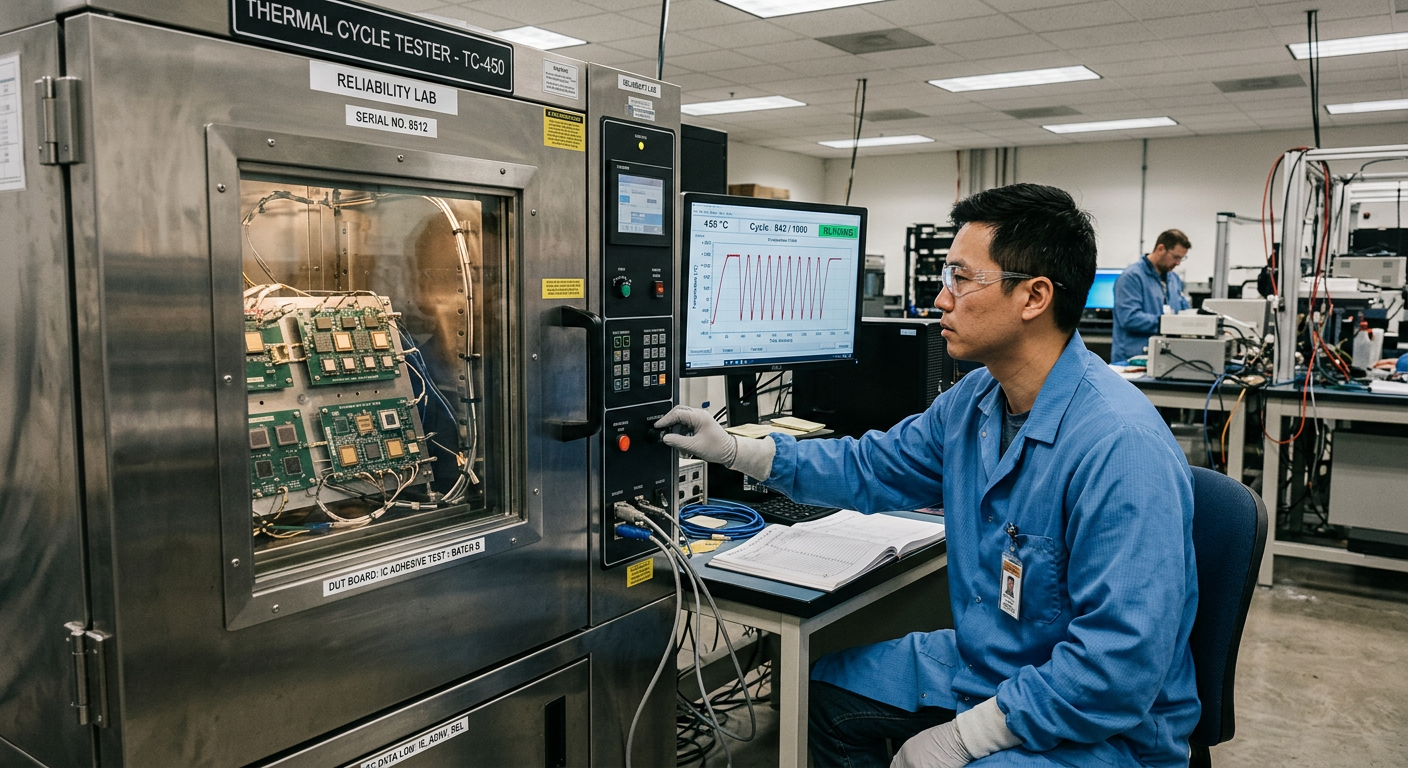
IC packaging adhesive thermal cycling in the United States requires reliable material selection, supplier review, and test planning for electronics durability.
-

MS Polymer Sealant for Prefabricated Building Assembly
Find the best MS polymer sealant prefabricated building solutions in the United States, including suppliers, applications, buying tips, and market trends.
 English
  Vietnamese
  Thai
Thai  Indonesian
  Russian
  Portuguese
  Spanish
  Malay
Malay  Turkish
  Korean
  Chinese