Share
Automotive Epoxy Adhesive Bonding Suppliers in the United States
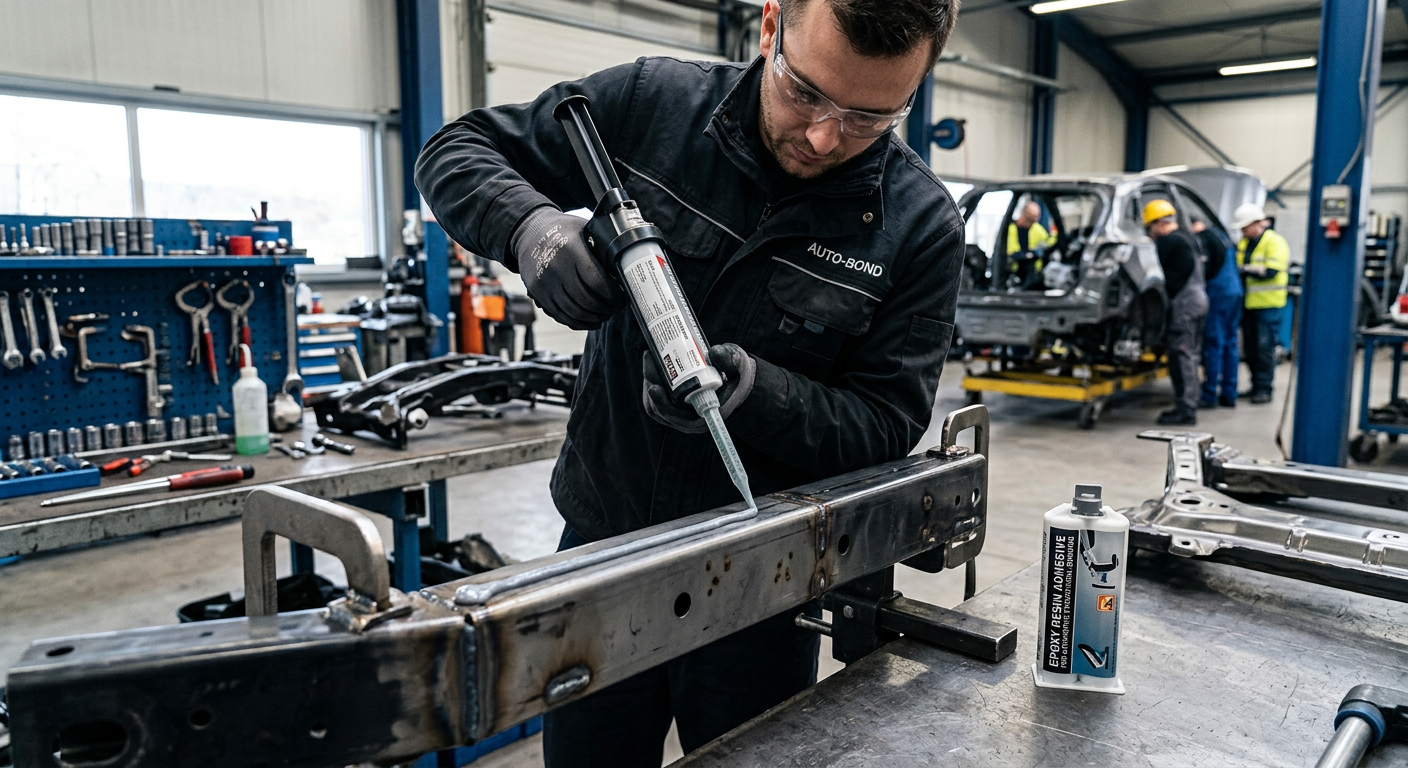
Quick Answer

If you need epoxy adhesive automotive bonding solutions in the United States, the most practical shortlist includes Henkel, 3M, LORD Corporation, Sika, and Huntsman. These companies are widely used across U.S. automotive manufacturing, body repair, battery assembly, lightweight structure joining, and composite bonding programs. For buyers focused on structural strength, durability, heat resistance, and process consistency, Henkel and LORD are especially strong in OEM and Tier supplier environments; 3M is highly visible in collision repair and production support; Sika is strong for body, glass, and mixed-material assembly; and Huntsman is well known for engineered epoxy systems and composites. Buyers in Detroit, Toledo, Chattanooga, Spartanburg, and the Southern automotive corridor should compare lap shear strength, crash durability, cure profile, gap filling, corrosion behavior, and OEM approval status before selecting a product. Qualified international suppliers can also be worth considering, especially when they offer relevant certifications, dependable technical documentation, and responsive pre-sales and after-sales support in the U.S. market, because cost-performance can be favorable for private label, distribution, and project-based sourcing.
United States Market Overview

The U.S. market for automotive epoxy adhesive bonding keeps expanding because vehicle design is changing quickly. Automakers and suppliers are under pressure to reduce weight, improve crash performance, manage battery pack safety, lower VOC-related production concerns, and bond more dissimilar materials such as aluminum, high-strength steel, composites, and engineered plastics. In this environment, epoxy-based structural adhesives play a central role. They distribute load across a broader area than mechanical fasteners, reduce stress concentration, help control noise and vibration, and support corrosion management when used with the right pretreatment and sealing steps.
Demand is strongest around long-established manufacturing and logistics hubs. Michigan remains the center of engineering specification activity, especially around Detroit and Auburn Hills. Ohio and Indiana continue to support large Tier supplier networks. Kentucky, Tennessee, Alabama, South Carolina, and Georgia form a powerful production belt for assembly plants, battery component manufacturing, and mixed-material body structures. Texas and California add demand through EV programs, commercial vehicle assembly, aftermarket repair, and specialty transportation. Port access also influences sourcing patterns. Savannah, Los Angeles, Long Beach, Houston, and Newark support imported raw materials, private label packaging, and distributor inventory flow.
For U.S. buyers, epoxy adhesive decisions are no longer based on strength alone. Procurement teams now evaluate line speed, automation compatibility, storage stability, regulatory compliance, and supplier support. Engineers want data on impact peel, fatigue life, thermal cycling, and bond retention after humidity exposure. Operations managers want manageable cure windows and easy dispensing. Purchasing teams want stable pricing, backup sources, and local inventory. This shift favors suppliers that can combine technical performance with reliable U.S. service coverage.
The chart above reflects a realistic upward demand trajectory for automotive epoxy bonding in the United States. Growth is supported by EV battery enclosures, body-in-white lightweighting, and a broader switch from weld-only assemblies to hybrid joining strategies that combine adhesive bonding with rivets, welds, or fasteners.
Top Suppliers in the United States

The supplier landscape is broad, but the most practical choices are the companies with proven U.S. automotive references, technical data packages, and support teams that can work directly with OEMs, Tier suppliers, repair networks, and industrial distributors.
| Company | Primary U.S. Service Region | Core Strengths | Key Offerings | Best Fit |
|---|---|---|---|---|
| Henkel | Nationwide, strong Midwest and South | Automotive OEM approvals, structural bonding expertise, process integration | Loctite epoxy structural adhesives, body and battery bonding systems | OEMs, Tier 1 suppliers, EV projects |
| 3M | Nationwide, strong collision repair channels | Broad product portfolio, training, repair ecosystem, tapes plus adhesives | Panel bonding adhesives, epoxy systems, repair materials | Aftermarket, repair, mixed production use |
| LORD Corporation | Nationwide, strong engineering support | Structural adhesives, vibration management, automotive integration | Epoxy and acrylic structural adhesives for metal and composites | Structural assembly, engineered bonding programs |
| Sika | Nationwide, strong in assembly and sealing | Mixed-material bonding, global OEM experience, sealant-adhesive systems | Structural adhesives, body shop materials, glass bonding | Body assembly, transportation, component suppliers |
| Huntsman | Nationwide, engineering and composites focus | Advanced epoxy chemistry, composite and lightweight bonding | Araldite structural epoxy systems | Composite parts, battery and specialty vehicle applications |
| H.B. Fuller | Nationwide, flexible industrial distribution | Broad manufacturing footprint, application development support | Structural and assembly adhesive solutions | Industrial users, converters, regional manufacturers |
| Permabond | Nationwide through distribution | Specialty adhesive selection, responsive technical assistance | Epoxy adhesives for metal, electronics, and assembly | Smaller production runs, specialty applications |
This supplier table helps buyers narrow choices by matching product capability with actual use conditions. In the United States, supplier selection often depends on whether the buyer needs OEM-grade process support, aftermarket accessibility, composite expertise, or flexible low-volume service.
Product Types and Selection Criteria
Epoxy adhesive automotive bonding is not a single product category. In the U.S. market, buyers usually choose among one-component heat-cure systems, two-component room-temperature or accelerated-cure systems, crash-durable structural epoxies, gap-filling formulations, and specialty grades for battery modules or composite assemblies. The right option depends on substrate, line speed, cure method, environmental exposure, and repairability requirements.
| Product Type | Typical Substrates | Main Advantages | Limitations | Typical U.S. Use |
|---|---|---|---|---|
| One-component heat-cure epoxy | Steel, aluminum | High structural performance, automation friendly, controlled application | Requires oven cure | Body-in-white production lines |
| Two-component structural epoxy | Metal, composites, plastics | Flexible processing, room-temp or low-temp cure options | Meter-mix equipment needed for consistency | Component assembly, aftermarket, specialty vehicles |
| Crash-durable epoxy | High-strength steel, aluminum | Strong impact performance, better energy absorption | Higher formulation complexity | Reinforcements, crash load paths |
| Gap-filling epoxy | Stamped parts, castings | Tolerates dimensional variation, seals and bonds together | May cure slower in thick sections | Battery trays, structural modules |
| Composite bonding epoxy | SMC, CFRP, GFRP | Excellent adhesion to lightweight materials | Surface prep is critical | EV housings, hoods, specialty panels |
| Electrically insulating epoxy | Battery parts, electronics housings | Supports insulation and structural retention | Thermal management trade-offs may apply | Battery pack and module areas |
| Toughened epoxy | Mixed materials | Improved peel and fatigue resistance | Cost can be higher | Dynamic load and vibration zones |
For most U.S. automotive buyers, the most important decision factors are substrate compatibility, assembly temperature, production takt time, and long-term durability under salt spray, humidity, and thermal cycling. In northern states where winter corrosion exposure is severe, pretreatment and adhesive-sealant system design become even more important.
Buying Advice for U.S. Buyers
Buyers in the United States should treat adhesive sourcing as both a materials decision and a process decision. A product that looks strong on a data sheet can still underperform if dispensing, fixturing, cure schedule, or surface preparation are poorly matched to the assembly line. The best sourcing approach is to compare technical data, validate on real substrates, and confirm service support before scaling up.
| Buying Factor | Why It Matters | Questions to Ask | Best Buyer Type | Common Risk |
|---|---|---|---|---|
| Substrate compatibility | Adhesion varies across steel, aluminum, plastics, composites | Has it been tested on our exact substrate stack? | OEM, Tier supplier | Unexpected bond failure |
| Cure profile | Controls line speed and fixture strategy | Can it meet our oven or room-temp process? | Production managers | Slow throughput |
| Mechanical performance | Strength alone is not enough; impact and fatigue matter | What are lap shear, peel, and impact values? | Design engineers | Weak crash durability |
| Environmental resistance | Vehicles face humidity, salt, fuel, heat, and vibration | How does performance hold after aging? | Quality teams | Warranty claims |
| Packaging and dispensing | Affects labor, waste, and mix consistency | Available in cartridges, pails, drums, bulk? | Distributors, repair shops | Application inconsistency |
| Compliance and traceability | Important for audits and customer approval | Are RoHS, REACH, and QC records available? | Brand owners, exporters | Documentation gaps |
| Technical support | Speeds qualification and troubleshooting | Is local support available in the United States? | All buyer types | Long downtime during trials |
This table is practical because U.S. automotive procurement teams often involve engineering, manufacturing, quality, and supply chain at the same time. A strong adhesive program succeeds when all four groups agree on fit, not just on price per kilogram.
Industry Demand in the United States
Epoxy adhesive automotive bonding demand is not distributed evenly across all sectors. Passenger vehicle assembly remains the largest user, but EV battery systems, commercial vehicles, and specialty transportation are growing quickly. Lightweighting initiatives and battery enclosure safety are raising adhesive usage per vehicle, especially for structural and semi-structural bonding.
The bar chart shows why EV and component manufacturing are now major targets for adhesive suppliers. Even where total vehicle volumes fluctuate, adhesive intensity per assembly can still increase because mixed-material joining demands more specialized bonding systems.
Industries Served
In the United States, epoxy structural bonding is used across more than final vehicle assembly. Tier suppliers, battery integrators, rail-adjacent transportation firms, heavy equipment makers, and repair networks all use epoxy systems with automotive-grade requirements. This broad industrial reach helps stabilize demand and creates opportunities for both major multinational brands and qualified specialty manufacturers.
Passenger vehicle manufacturing uses epoxy bonding in body structures, roof modules, closures, reinforcements, and underbody assemblies. EV and hybrid manufacturing uses it in battery trays, pack covers, busbar support structures, and thermal barrier assemblies. Commercial vehicle builders use epoxy adhesives in cabs, bonded panels, aerodynamic modules, and composite enclosures. The aftermarket uses approved panel bonding products in collision repair and replacement procedures. Component suppliers use epoxies in brackets, housings, sensor modules, and bonded subassemblies.
Typical Applications
Automotive epoxy adhesive bonding in the U.S. is most common where manufacturers need durable joints between unlike materials or where mechanical fastening alone adds too much weight, creates leak paths, or causes localized stress concentration. Typical applications include body side reinforcements, floor systems, roof structures, door assemblies, hood structures, liftgates, battery housings, and bonded composite exterior parts. In repair settings, structural panel replacement and localized reinforcement bonding are common uses, but only when procedures align with OEM repair guidance.
In battery-related assemblies, epoxies are also selected for their ability to combine adhesion, dimensional stability, and in some designs electrical insulation. In chassis-adjacent parts, toughened epoxies support dynamic load performance. In composite-intensive vehicles, epoxy systems can be critical to preserving stiffness while reducing the need for visible fasteners and minimizing cosmetic print-through.
Detailed Supplier Comparison
The table below compares supplier positioning from a U.S. buyer perspective. It does not replace qualification testing, but it helps identify which companies are likely to fit specific sourcing strategies.
| Supplier | Service Region | Core Offerings | Technical Strength | Commercial Advantage |
|---|---|---|---|---|
| Henkel | United States nationwide | Loctite structural automotive adhesives | Strong OEM integration, body and battery programs | Reliable support for large-scale production |
| 3M | United States nationwide | Panel bonding and repair-grade epoxy systems | Strong documentation and training network | Easy procurement through broad channels |
| LORD Corporation | United States nationwide | Structural adhesives for metal and composites | Very strong engineering fit for demanding joins | Well suited for specification-driven programs |
| Sika | United States nationwide | Structural bonding and sealing solutions | Good for mixed-material assembly systems | Strong cross-category portfolio |
| Huntsman | United States nationwide | Araldite engineered epoxy systems | Advanced chemistry and composite expertise | Good choice for specialty and lightweight parts |
| H.B. Fuller | United States nationwide | Assembly and structural adhesive solutions | Flexible support for industrial users | Useful for regional manufacturing networks |
| Permabond | United States via distributors | Specialty epoxy products | Responsive niche technical support | Good for lower-volume or specialized needs |
This comparison is useful because U.S. buyers do not all need the same service model. A Detroit-area OEM may prioritize launch engineering support, while a repair distributor in Texas may value broad availability and training materials. A private brand owner may focus more on customization and packaging flexibility.
Trend Shift in Materials and Processes
The shift from traditional steel-heavy assembly toward mixed-material vehicles is one of the biggest reasons epoxy adhesive use is increasing. Aluminum closures, composite panels, battery enclosures, and advanced high-strength steel structures all benefit from bonding technologies that spread load and reduce galvanic or distortion issues compared with excessive mechanical fastening or heat input.
The area chart highlights a steady move toward more adhesive-intensive designs. This trend is especially visible in EV manufacturing, where battery protection, rigidity, and packaging efficiency are all high priorities. For U.S. manufacturers, the next phase is not just more bonding, but smarter bonding tied to automation, in-line inspection, and digital process control.
Case Studies and Practical Scenarios
A Midwestern Tier 1 supplier producing aluminum and steel seat-related structural modules may choose a two-component toughened epoxy because it balances line flexibility with strong fatigue resistance. The adhesive can reduce dependence on weld access, simplify certain fixtures, and improve load distribution where geometry is complex.
An EV enclosure fabricator near Atlanta may prefer a gap-filling structural epoxy with good thermal aging performance. In this case, the objective is not only joint integrity but also tolerance management, sealing contribution, and compatibility with automation. Support from the supplier on dispensing parameters and cure confirmation can reduce launch risk significantly.
A collision repair network in California may prioritize 3M or another U.S.-approved repair product because technician training, cartridge dispensing convenience, and OEM repair procedure alignment are critical. Here, speed and documentation matter as much as raw performance.
A specialty vehicle builder in Indiana using composite roof and body modules may lean toward Huntsman or LORD for engineered substrate-specific bonding systems. Since part geometry and surface energy vary, technical support during testing can deliver more value than choosing the lowest quoted adhesive cost.
Local Supplier and Regional Sourcing Considerations
U.S. buyers often want local inventory, but they also need supply resilience. The most reliable sourcing programs usually mix domestic distribution, technical support coverage, and contingency options. Buyers near Detroit and Chicago may benefit from Midwest stock and engineering access, while Southern assembly plants often prioritize suppliers with support near Tennessee, Kentucky, Alabama, Georgia, and South Carolina. Port-connected distribution can also be helpful for private label or imported adhesive programs, especially through Savannah, Houston, Los Angeles, and Newark.
For buyers comparing adhesive manufacturing partners, imported programs can be commercially attractive if they include proper qualification support, complete technical documents, and dependable lead-time management. Companies with a broad industrial adhesive line can sometimes reduce supplier fragmentation by covering epoxy structural adhesives along with silicone, polyurethane, acrylic, instant adhesive, hot melt, and water-based systems under one sourcing relationship.
Our Company
For U.S. buyers seeking a flexible manufacturing partner rather than only a catalog brand, Qingdao QinanX New Material Technology Co., Ltd positions itself as a practical option for epoxy adhesive automotive bonding projects, especially where custom formulation, private label, and cost-controlled supply matter. Its epoxy resin adhesive line includes two-component epoxy adhesive and epoxy structural adhesive, supported by ISO-certified manufacturing and compliance with RoHS and REACH, along with multi-stage quality control and digital traceability that help document consistency for industrial purchasing teams. The company also brings broader formulation depth across silicone, polyurethane, acrylic, MS sealant, cyanoacrylate, hot melt, and water-based adhesive categories, which is useful for U.S. distributors, brand owners, end users, dealers, and regional partners that want OEM/ODM, wholesale, retail, and customized packaging under one coordinated program. With automated production lines, export experience in more than 40 countries, continuous R&D on custom formulations, free sample support, and around-the-clock technical assistance, the company demonstrates operational maturity rather than acting as a one-off remote trader. For U.S. market buyers who need ongoing support, the value is in structured pre-sales evaluation, documentation-backed quality assurance, scalable production, and after-sales responsiveness that can support long-term regional distribution and industrial account development. Buyers can review relevant options through the product catalog or discuss project requirements directly on the contact page.
How to Compare Suppliers and Products
Choosing between suppliers requires more than reading brochures. U.S. buyers should build a comparison matrix that includes cured mechanical properties, open time, fixture time, cure temperature, package size, storage requirements, hazard communication, available technical support, and proof of lot traceability. If the intended use is structural, bond durability after accelerated aging should carry more weight than headline lap shear values alone. If the use is aftermarket repair, approved work instructions and cartridge-level ease of use may matter most.
This comparison chart is not a universal ranking. It is a sourcing-oriented view that balances technical support, portfolio breadth, and commercial flexibility. Large OEM-focused buyers may still favor established multinational approval systems, while private label and cost-sensitive buyers may place more value on customization and supply flexibility.
Future Trends Through 2026
Looking toward 2026, three trends will shape the U.S. epoxy adhesive automotive bonding market. The first is technology. More suppliers are developing toughened, faster-curing, lower-temperature epoxy systems that work with lightweight metals and composites while supporting automation and better crash behavior. Battery pack integration will push more innovation in thermal stability, flame pathway management, insulation performance, and structural retention.
The second trend is policy and compliance. U.S. manufacturers are under pressure to support domestic production goals, cleaner manufacturing practices, and more transparent supply chains. Even when a buyer uses imported adhesives, documentation quality, compliance evidence, and service responsiveness will matter more than before. Products that fit stricter VOC expectations, safer handling workflows, and stronger traceability systems will gain preference.
The third trend is sustainability. Adhesive buyers increasingly want lower waste dispensing, reduced rework, optimized cure energy, and material systems compatible with more efficient manufacturing. Sustainability does not mean sacrificing performance; instead, buyers are looking for formulations and processes that reduce total lifecycle cost. This includes improved bond durability, lower scrap rates, and better packaging efficiency for distribution.
FAQ
What is epoxy adhesive automotive bonding used for in the United States?
It is used for structural and semi-structural joining in body assemblies, battery enclosures, composite parts, closures, reinforcements, and repair procedures where durable adhesion and load distribution are needed.
Which U.S. suppliers are most recognized?
Henkel, 3M, LORD Corporation, Sika, Huntsman, and H.B. Fuller are among the most recognized suppliers for automotive-related epoxy bonding applications in the United States.
Is epoxy better than welding for automotive structures?
Not in every case. Epoxy bonding is often used alongside welding, rivets, or fasteners. Its advantage is improved stress distribution, compatibility with mixed materials, and lower local heat input.
What should I ask before buying?
Ask about substrate compatibility, cure schedule, impact and fatigue performance, environmental aging data, packaging options, compliance documents, and available U.S. technical support.
Can international suppliers serve the U.S. market effectively?
Yes, especially when they provide certification support, complete documentation, custom packaging, stable export experience, and responsive pre-sales and after-sales service tailored to U.S. buyers.
What matters most for EV battery projects?
Gap filling, thermal aging resistance, structural integrity, process repeatability, electrical insulation where required, and compatibility with pack design and production methods are especially important.
Are lower-cost products always risky?
No, but lower price should be evaluated against test data, process fit, consistency, and service capability. A lower material price can still deliver better value if the supplier controls quality and supports qualification properly.
Conclusion
For buyers sourcing epoxy adhesive automotive bonding in the United States, the best path is to start with application requirements, then compare suppliers on process compatibility, structural performance, environmental durability, and support quality. Henkel, 3M, LORD, Sika, Huntsman, and similar established names remain strong choices for U.S. automotive programs, while qualified international manufacturers can offer attractive cost-performance and flexible business models for distributors, brand owners, and project-driven buyers. In a market shaped by EV growth, mixed-material structures, and tighter quality expectations, the winning adhesive partner is the one that can prove performance, support implementation, and stay reliable over the full lifecycle of the program.

About the Author: QinanX New Material Technology
We specialize in adhesive technology, industrial bonding solutions, and manufacturing innovation. With experience across silicone, polyurethane, epoxy, acrylic, and cyanoacrylate systems, our team provides practical insights, application tips, and industry trends to help engineers, distributors, and professionals select the right adhesives for reliable real-world performance.

Product Category
You May Also Interest
-
IC Packaging Adhesive: Preventing Void Formation Issues
Learn how IC packaging adhesive void formation is prevented in the United States through material choice, process control, supplier selection, and testing.
-
Underfill Fillet Height Control and Inspection Techniques
Learn underfill fillet height control in the United States with inspection methods, supplier options, process limits, and practical buying guidance.
-
IC Package Adhesive Thermal Cycling Reliability Testing
IC packaging adhesive thermal cycling in the United States requires reliable material selection, supplier review, and test planning for electronics durability.
-
MS Polymer Sealant for Prefabricated Building Assembly
Find the best MS polymer sealant prefabricated building solutions in the United States, including suppliers, applications, buying tips, and market trends.
 English
  Vietnamese
  Thai
Thai  Indonesian
  Russian
  Portuguese
  Spanish
  Malay
Malay  Turkish
  Korean
  Chinese