Share
Dual Cure UV Adhesive Shadow Area Solutions in the United States
Quick Answer

If you need reliable curing where UV light cannot fully reach a bond line, the most practical answer in the United States is to use a dual cure UV adhesive shadow area system that combines light cure with a secondary mechanism such as moisture cure, anaerobic cure, or activator-assisted cure. For buyers in U.S. manufacturing hubs such as Chicago, Detroit, Houston, Los Angeles, and Charlotte, the best options usually come from established adhesive suppliers with proven support for electronics, medical devices, automotive components, glass bonding, and industrial assembly.
Strong supplier options in the U.S. market include Dymax, DELO Industrial Adhesives, Permabond, Master Bond, Henkel, and Panacol. These companies are widely considered when a project involves hidden bond lines, opaque substrates, deep channels, or metal-to-glass assemblies where conventional UV-only adhesives leave uncured zones.
For fast decision-making, Dymax is often preferred for high-speed automated assembly, DELO is strong in precision electronics and camera modules, Permabond is practical for industrial bonding and threadlocking-related shadow cure needs, Master Bond serves specialized engineering and regulated sectors, Henkel covers broad industrial manufacturing, and Panacol is well known for medical and electronics bonding. Qualified international suppliers can also be worth considering, especially when they hold RoHS and REACH compliance, offer OEM and private label flexibility, and maintain responsive pre-sales and after-sales support for U.S. buyers. In many cases, Chinese manufacturers with documented export experience and strong cost-performance advantages can provide a competitive solution when validation, lead time, and technical service are handled properly.
United States Market Overview

The United States remains one of the most active markets for advanced light-curable bonding systems because of its concentration of high-value manufacturing. Demand is strongest in regions tied to electronics assembly, medical device production, transportation equipment, and specialty glass fabrication. In California, Arizona, and Texas, electronics and semiconductor-adjacent manufacturing drive interest in low-outgassing and precision-dispense dual cure materials. In Michigan, Ohio, Indiana, and Tennessee, automotive and mobility applications create steady demand for adhesives that can cure in narrow, partially shaded, or enclosed assemblies. Along the East Coast, particularly around Boston and New Jersey, medical technology and laboratory device manufacturing continue to support premium adhesive adoption.
U.S. buyers usually look beyond initial cure speed. They evaluate whether the material can achieve full bond integrity in shadowed areas, whether it can support automated dispensing, whether it meets environmental and safety targets, and whether supplier documentation is adequate for validation and audit review. This is especially important in sectors where production records, traceability, and lot consistency affect qualification decisions.
Another important market factor is logistics. Buyers near the ports of Los Angeles, Long Beach, Savannah, Houston, and New York/New Jersey often compare domestic inventory programs with imported supply options. Companies that can combine technical guidance with stable replenishment schedules have an advantage, especially where a production line cannot tolerate adhesive shortages or inconsistent batches.
In the U.S., the phrase dual cure UV adhesive shadow area is not just a product search term. It usually reflects a real manufacturing challenge: one part of the bond line sees enough UV exposure for rapid fixture, while another section is blocked by geometry, metal housings, pigmented plastics, or overlap design. The market continues to move toward hybrid curing strategies because they reduce scrap, shorten work-in-process time, and improve confidence in final assembly strength.
Market Growth Trend

The U.S. market for dual cure UV systems is expected to expand steadily through 2026 as manufacturers balance speed, quality assurance, and lower energy consumption. Growth is supported by miniaturized electronics, wearable devices, EV components, optical assemblies, and advanced industrial sensors.
Top Suppliers in the United States Market
The table below highlights widely recognized suppliers relevant to U.S. buyers searching for shadow area curing solutions. Service region, strengths, and core offerings matter because dual cure performance is heavily application-specific.
| Company | Primary Service Region | Core Strengths | Key Offerings | Best Fit Applications |
|---|---|---|---|---|
| Dymax | United States nationwide, strong presence in medical and industrial manufacturing corridors | High-speed curing systems, process integration, dispensing and curing equipment support | Dual cure light-curable adhesives, UV/visible systems, compatible curing equipment | Medical devices, electronics, plastic bonding, automated lines |
| DELO Industrial Adhesives | North America technical support with strong precision assembly focus | Advanced engineering support, micro-dispensing compatibility, electronics expertise | Dual-cure photobonding adhesives, structural precision bonding solutions | Camera modules, sensors, automotive electronics, optics |
| Permabond | Broad U.S. industrial coverage through distribution and technical channels | Practical product selection, industrial bonding knowledge, shadow cure formulations | UV-curing and dual-cure adhesives, anaerobic technologies, specialty assembly materials | Glass-to-metal, industrial components, hidden bond lines |
| Master Bond | United States with focus on engineered and specialty sectors | Custom engineering support, regulated application suitability, performance documentation | Dual cure adhesive systems, optical-grade and specialty bonding compounds | Aerospace, medical, electronics, instrumentation |
| Henkel | Nationwide U.S. manufacturing and distribution footprint | Scale, broad portfolio, process reliability, global validation experience | Loctite UV and hybrid curing systems, assembly adhesives | Automotive, industrial manufacturing, consumer products |
| Panacol | U.S. support for electronics and medical assembly projects | Precision cure behavior, fine-feature dispensing, optical and electronic assembly knowledge | Light-curing and dual-cure adhesives for shadowed or enclosed zones | Medical wearables, microelectronics, optical assemblies |
For U.S. buyers, these suppliers stand out not only because of product chemistry but because they understand qualification workflows, fixture speed requirements, bond-line geometry, and the production consequences of incomplete cure. A practical supplier should be able to discuss substrate compatibility, cure confirmation methods, and line integration instead of only quoting viscosity and tensile data.
Product Types for Shadow Area Curing
There is no single best chemistry for every shaded bond line. The right choice depends on material pairing, geometry, exposure time, production speed, and service environment. The main categories used in the United States are listed below.
| Product Type | Secondary Cure Mechanism | Main Advantage | Typical Limitation | Common U.S. Use Cases |
|---|---|---|---|---|
| UV + Moisture Cure | Ambient moisture | Useful for assemblies where hidden areas remain inaccessible to light | Secondary cure speed depends on humidity and bond geometry | Glass, plastics, enclosures, display components |
| UV + Anaerobic Cure | Oxygen exclusion between metal surfaces | Excellent for metal-containing assemblies and thread-related zones | Best performance typically requires close-fitting metal interfaces | Threaded fittings, metal housings, industrial fasteners |
| UV + Activator Cure | Chemical activator | More controlled shadow cure in difficult geometries | Adds a process step and needs activator compatibility management | Complex industrial assembly, appliance components |
| UV + Heat Cure | Thermal post-cure | Can improve final crosslinking and structural performance | Not suitable for heat-sensitive parts | Automotive electronics, durable structural assemblies |
| UV + Visible Light Cure | Broader light response plus secondary mechanism | Better response through some materials and improved process flexibility | Still needs validation for deep shadow zones | Optical devices, consumer electronics |
| Hybrid Structural Light Cure | Proprietary multi-stage chemistry | Balances fast fixture with long-term durability | Usually higher cost and more detailed process qualification | Medical devices, premium electronics, transportation |
The key point is that a dual cure UV adhesive shadow area strategy should be chosen based on where the shaded region exists, how quickly the assembly must move, and what level of final mechanical or environmental performance is required. U.S. buyers often begin with a cure-throughput target and then work backward to chemistry selection.
Industry Demand Comparison
Demand varies by industry, with electronics, medical, and automotive remaining the strongest end-use sectors in the United States.
Buying Advice for U.S. Buyers
When sourcing in the United States, buyers should test more than cure speed. A dual cure UV adhesive for shadow area applications must be validated for hidden cure completion, substrate adhesion, environmental aging, and process stability. The best purchasing decision usually comes from a structured trial rather than a simple sample comparison.
Start by identifying the exact shadow zone. Is the blocked area caused by a metal flange, a pigmented housing, overlap depth, or a narrow capillary channel? Then define what the adhesive must do in both the exposed and shaded sections. In many U.S. production lines, fast fixture under light is needed for alignment, but the real quality issue appears after shipping vibration, thermal cycling, or moisture exposure. That is why shadow cure verification matters more than surface tack-free appearance.
Next, confirm the manufacturing method. A low-viscosity adhesive may wet narrow gaps better, while a thixotropic grade may hold position on vertical surfaces. If your line runs in high-volume facilities near Detroit, Dallas, or Atlanta, dispensing consistency may be as important as bond strength. Ask suppliers for data on cure depth, tack-free time, secondary cure time, recommended intensity, and compatibility with your lamp or LED wavelength.
Documentation is another major factor. U.S. buyers in medical, electronics, and transportation often need lot traceability, compliance records, shelf-life control, and repeatable quality data. Supplier support should include technical onboarding, process troubleshooting, and realistic scale-up guidance. The right partner does not simply ship material; it helps reduce qualification risk and production downtime.
How Purchasing Criteria Are Shifting
The trend in the U.S. market is shifting from simple speed-first selection to a broader balance of cure assurance, lower emissions, durability, and automated process fit.
Industries Using Dual Cure UV Shadow Area Adhesives
In the United States, dual cure solutions are most valuable in industries where line speed and bond certainty must coexist. Electronics manufacturers use them for sensor housings, PCB-attached components, wearable assemblies, and connector reinforcement where one side of the joint is hidden. Medical device producers rely on them in housings, fluidic components, and transparent-to-opaque interfaces that need quick positioning and dependable final cure.
Automotive and e-mobility applications are growing quickly, especially in modules with mixed materials such as metal brackets, plastic clips, and compact enclosures. Industrial equipment manufacturers use them in seals, display modules, and instrument windows. Glass and optics firms apply them in decorative assemblies, camera-related parts, and inspection equipment. Consumer product makers use them where assembly aesthetics matter and visible cure must be fast without sacrificing hidden bond strength.
The appeal across these sectors is similar: faster throughput than many two-part systems, cleaner processing than some conventional structural materials, and better shadow-zone security than UV-only products. In a competitive U.S. manufacturing environment, that combination often translates into better takt time and lower rework rates.
Common Applications
| Application | Typical Substrates | Why Shadow Cure Matters | Preferred Adhesive Traits | Typical U.S. Regions |
|---|---|---|---|---|
| Camera and sensor modules | Glass, plastic, metal | Housing geometry blocks light in corners and under flanges | Low shrinkage, precision dispense, dependable secondary cure | California, Texas, Arizona |
| Medical device housings | PC, ABS, acrylic, stainless steel | Hidden interior joints cannot receive full direct UV exposure | Biocompatibility awareness, low outgassing, fast fixture | Massachusetts, Minnesota, California |
| Automotive electronics | Metal, engineered plastics | Deep channels and enclosed designs create uncured zones | Thermal resistance, vibration durability, hybrid cure profile | Michigan, Ohio, Tennessee |
| Glass-to-metal decorative bonding | Glass, aluminum, stainless steel | Opaque metal overlaps shade a portion of the bond line | Optical clarity in exposed areas, strong hidden cure | Florida, New York, Illinois |
| Industrial displays and indicators | Polycarbonate, PMMA, coated metals | Frames and bezels restrict light access along edges | Adhesion to mixed substrates, process consistency | Illinois, North Carolina, Texas |
| Threaded or retaining assemblies | Steel, aluminum, brass | Internal areas remain fully shaded after assembly | Anaerobic or activator-assisted secondary mechanism | Nationwide industrial distribution |
This table shows why application context matters. A buyer searching for a dual cure UV adhesive shadow area product should not assume that one grade covers camera modules, medical housings, and automotive electronics equally well. The geometry, substrate chemistry, environmental stress, and regulatory requirements are different.
Case Studies from Typical U.S. Production Scenarios
A Midwest automotive electronics supplier assembling sensor covers originally used a UV-only adhesive that provided excellent tack-free speed on exposed edges. However, a portion of the bond line under the metal retaining frame remained under-cured, causing failures after thermal cycling. After switching to a dual cure system with a light-triggered fixture and a thermal or chemical shadow cure component, the supplier reduced post-test failures and improved line confidence without sacrificing takt time.
In a California wearable electronics project, a producer bonded a transparent window to an opaque housing. Direct UV exposure was possible only around the perimeter, while the inner areas were partially blocked by design features. A dual cure light-curable adhesive helped preserve appearance while ensuring hidden cure completion. The result was fewer returns related to edge lifting and better process repeatability during scale-up.
A medical device contract manufacturer in Massachusetts used a dual cure material for a fluidic housing with mixed transparent and opaque regions. The initial benefit was rapid alignment under light, but the real operational value came from a dependable secondary cure that supported leak resistance in concealed joint sections. This reduced the need for extended work-in-process holding and improved production planning.
In each case, the lesson is the same: when the bond line includes a shadowed section, speed alone is not enough. The right curing architecture improves both throughput and field reliability.
Local Supplier Comparison
U.S. buyers often narrow their options by balancing technical depth, market coverage, and support availability. The comparison below helps frame the decision.
| Supplier | Technical Support Depth | Automation Compatibility | Best Known For | Ideal Buyer Type |
|---|---|---|---|---|
| Dymax | Very strong | Excellent | Integrated curing and dispensing solutions | High-volume manufacturers and medical assemblers |
| DELO Industrial Adhesives | Very strong | Excellent | Precision electronics and advanced assemblies | Engineered product teams and electronics OEMs |
| Permabond | Strong | Good | Industrial practicality and shadow cure flexibility | General manufacturers and industrial distributors |
| Master Bond | Very strong | Moderate to strong | Specialized engineered applications | R&D teams, aerospace, medical, specialty equipment |
| Henkel | Strong | Excellent | Large-scale industrial supply and validation familiarity | Automotive, appliance, broad industrial buyers |
| Panacol | Strong | Strong | Medical, optics, and microelectronics bonding | Precision manufacturers and device developers |
For buyers with urgent production deadlines, the best supplier is often the one that can combine cure chemistry with realistic process advice. That includes lamp specification review, dispense pattern recommendations, cure verification planning, and support during pilot runs. Technical service is especially valuable when assemblies have mixed transparent and opaque materials or when product validation must satisfy customer audits.
Supplier and Product Positioning
The chart below illustrates how common U.S.-market supplier options are often perceived across four decision drivers: cure speed, shadow-area reliability, engineering support, and cost efficiency. Actual scores vary by grade and application, but the pattern is realistic for sourcing discussions.
Our Company in the United States Market
For U.S. buyers looking beyond domestic brands, QinanX presents a practical option for dual cure and related industrial bonding programs because its manufacturing model combines certified process control with broad adhesive expertise across UV-curable acrylics, silicone systems, polyurethane adhesives, epoxy materials, cyanoacrylates, hot melts, and water-based products. For product reliability, the company operates under ISO-based quality systems and aligns with RoHS and REACH expectations, using multi-stage quality control with digital traceability to support lot consistency and audit readiness that U.S. importers, contract manufacturers, and brand owners increasingly require. For commercial flexibility, the business supports OEM, ODM, wholesale supply, private label packaging, regional dealer cooperation, distributor partnerships, and direct project-based sourcing, which makes it relevant not only to large industrial end users but also to local traders, emerging brands, maintenance buyers, and specialized assembly shops. For service assurance in the U.S. market, the company’s established export experience across more than 40 countries, automated production scale, custom formulation capability, free sample programs, and around-the-clock technical assistance provide concrete buyer protection during qualification, launch, and repeat ordering; combined with responsive online support and coordinated offline project handling through market-facing sales operations, this shows a long-term commitment to serving American customers rather than acting as a distant transactional exporter. Buyers who want to review the full adhesive portfolio can explore the product catalog for U.S. industrial adhesive sourcing, learn more on the company background page for American partners, or request technical follow-up through the United States inquiry contact page.
How to Evaluate an International Supplier for U.S. Projects
Qualified overseas suppliers can be competitive in the United States when the project requires cost control, custom packaging, or a tailored formula for a niche assembly. However, buyers should use a disciplined evaluation process. Ask for technical data sheets, safety documents, compliance statements, and sample traceability. Confirm the supplier’s export record, manufacturing consistency, and ability to support application-specific adjustments. Review whether the company can handle pilot volumes and then scale to container-level or scheduled repeat shipments through major U.S. logistics gateways.
It is also smart to compare not only price per kilogram but total implementation cost. A cheaper adhesive that increases scrap, slows cure, or adds process complexity can be more expensive in the long run. Conversely, an international supplier with sound documentation, custom formulation support, and strong communication may deliver better value than a premium-priced domestic option for certain programs.
2026 Trends in Technology, Policy, and Sustainability
By 2026, the U.S. market for dual cure UV adhesive shadow area solutions is expected to become more selective and more data-driven. On the technology side, LED-curing compatibility will continue to grow because manufacturers want lower heat, better energy efficiency, and longer equipment life. Adhesives designed for shorter cycle times, lower shrinkage, and more precise cure profiles will gain share, especially in electronics and medical assembly.
On the policy side, buyers will keep prioritizing compliance alignment, material transparency, and supply-chain documentation. Even when an adhesive is not heavily regulated by one specific federal rule, manufacturers increasingly want supplier records that support internal ESG goals, customer audits, and cross-border trade compliance. Companies that can document RoHS and REACH alignment and provide stable quality evidence will remain better positioned.
Sustainability will also shape demand. U.S. manufacturers are increasingly interested in lower-VOC processing, reduced energy consumption, compact LED curing, and cleaner assembly methods that minimize waste and rework. Dual cure systems can support these goals when they reduce scrap from incomplete cure, shorten production time, and enable more efficient manufacturing layouts. The most successful suppliers in 2026 will likely be those that combine performance, documentation, and practical support for automation and sustainability targets.
FAQ
What is a dual cure UV adhesive for shadow area applications?
It is an adhesive that cures quickly when exposed to UV or visible light and also has a second curing mechanism for areas where light cannot reach. That secondary cure may be moisture, heat, anaerobic reaction, or chemical activation.
Why not use a standard UV adhesive?
A standard UV-only adhesive may remain uncured in hidden zones under opaque parts, deep overlaps, or enclosed geometries. That can reduce bond strength and long-term reliability.
Which industries in the United States use these products most?
Electronics, medical devices, automotive electronics, optics, industrial equipment, and specialty glass assembly are the leading sectors.
How should I compare suppliers?
Look at cure reliability in shaded zones, substrate compatibility, technical support, compliance documentation, dispensing behavior, lead time, and whether the supplier can support scale-up in your production environment.
Are imported solutions acceptable for the U.S. market?
Yes, if the supplier can provide compliance support, lot consistency, technical service, and dependable logistics. Many U.S. buyers consider international suppliers when cost-performance and customization are strong.
What is the biggest mistake buyers make?
The most common mistake is approving a product based only on exposed-area cure speed. Shadow-zone performance must be validated with realistic parts, actual bond geometry, and post-aging tests.
Conclusion
For manufacturers in the United States, the best dual cure UV adhesive shadow area solution is usually one that delivers fast fixture in exposed zones and dependable secondary cure in hidden sections without complicating production. Suppliers such as Dymax, DELO, Permabond, Master Bond, Henkel, and Panacol remain important benchmarks because they support real industrial qualification needs. At the same time, qualified international partners with certified quality systems, export experience, and flexible OEM or private label models can be highly competitive for American buyers who want value, customization, and responsive support. The smartest path is to match adhesive chemistry to joint geometry, process speed, and long-term performance requirements rather than choosing on cure speed alone.

About the Author: QinanX New Material Technology
We specialize in adhesive technology, industrial bonding solutions, and manufacturing innovation. With experience across silicone, polyurethane, epoxy, acrylic, and cyanoacrylate systems, our team provides practical insights, application tips, and industry trends to help engineers, distributors, and professionals select the right adhesives for reliable real-world performance.
Product Category
You May Also Interest
-
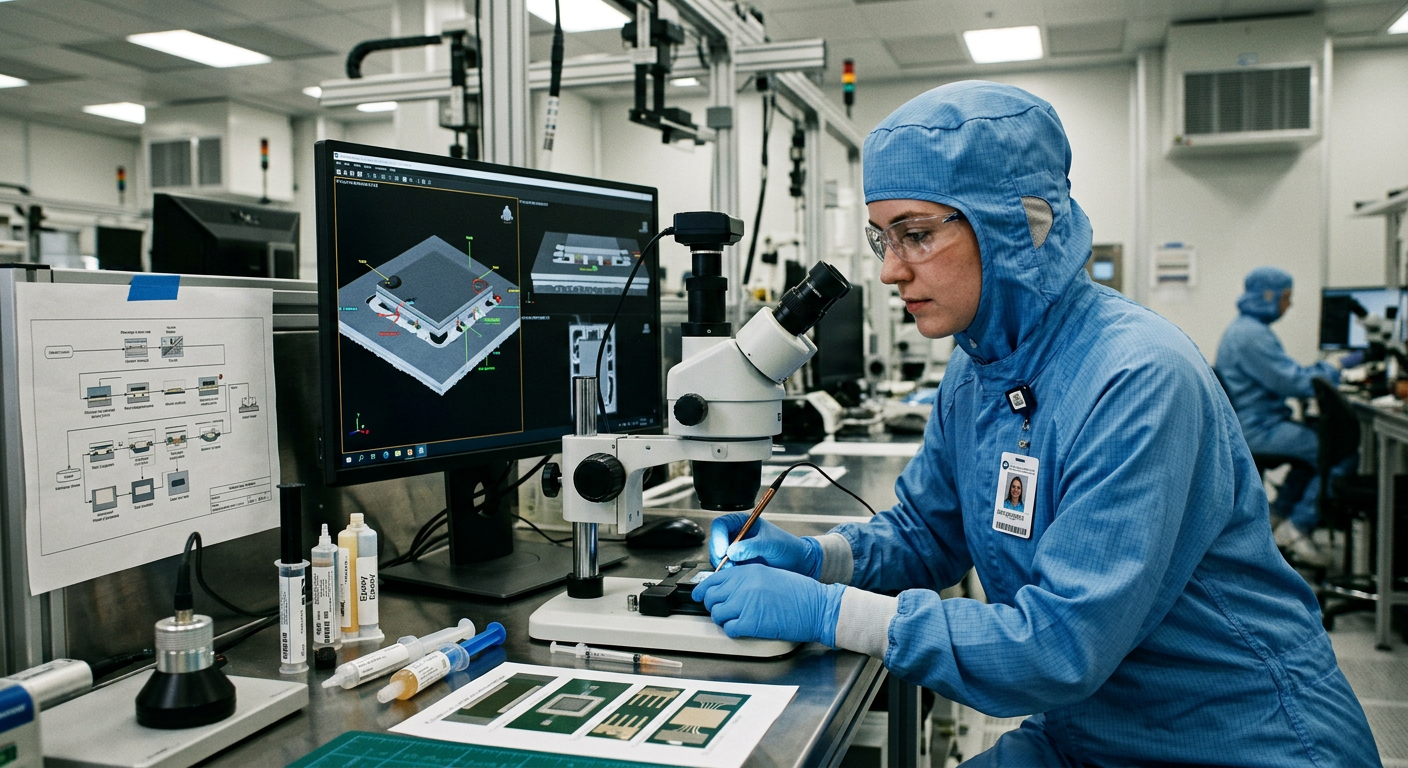
IC Packaging Adhesive: Preventing Void Formation Issues
Learn how IC packaging adhesive void formation is prevented in the United States through material choice, process control, supplier selection, and testing.
-
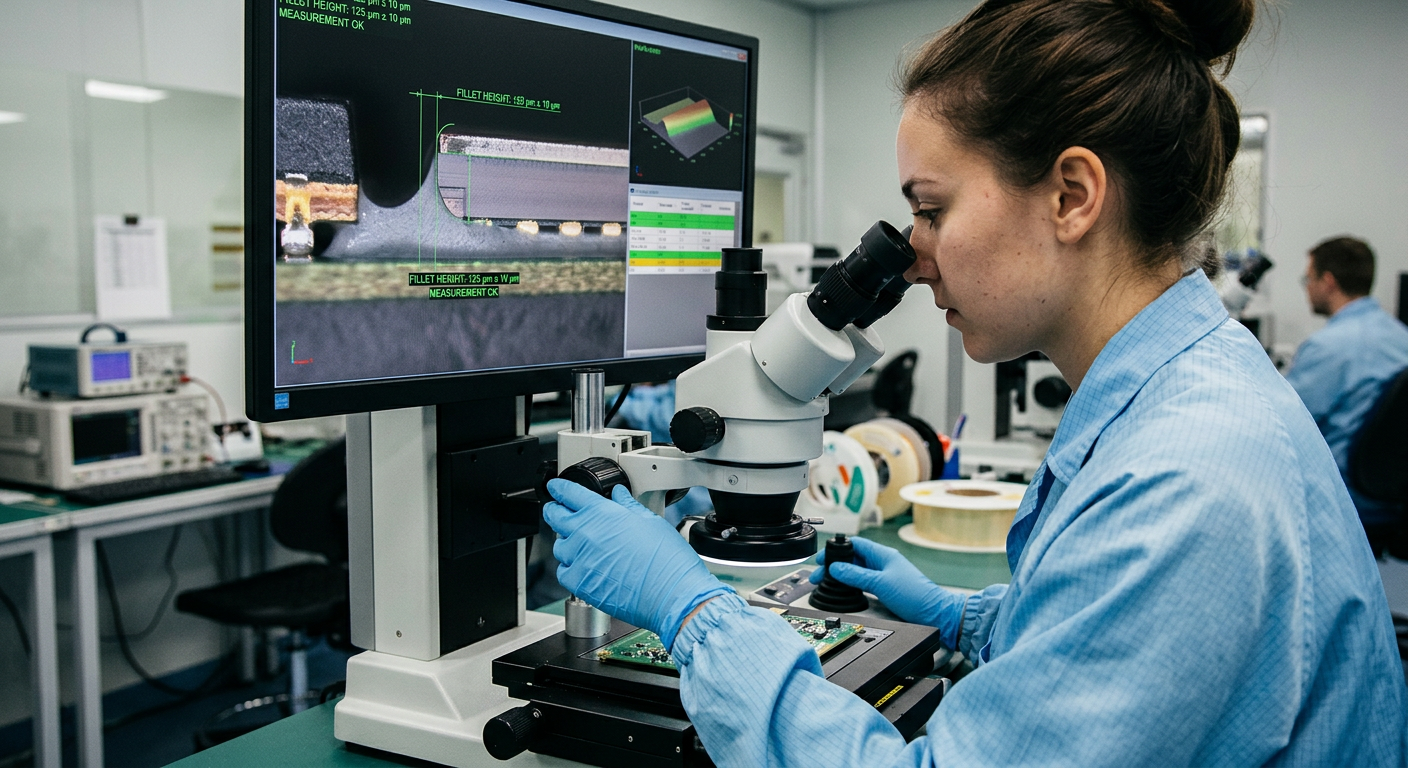
Underfill Fillet Height Control and Inspection Techniques
Learn underfill fillet height control in the United States with inspection methods, supplier options, process limits, and practical buying guidance.
-
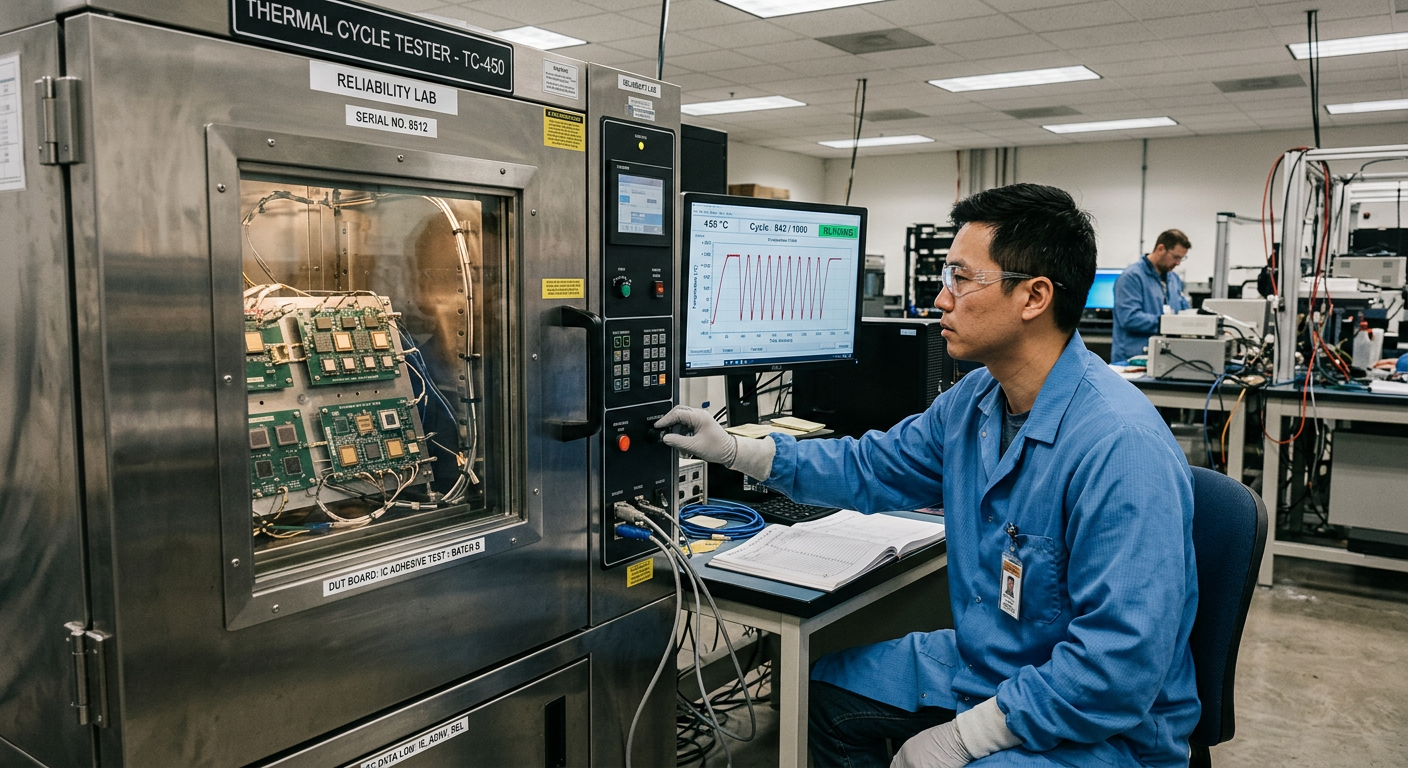
IC Package Adhesive Thermal Cycling Reliability Testing
IC packaging adhesive thermal cycling in the United States requires reliable material selection, supplier review, and test planning for electronics durability.
-
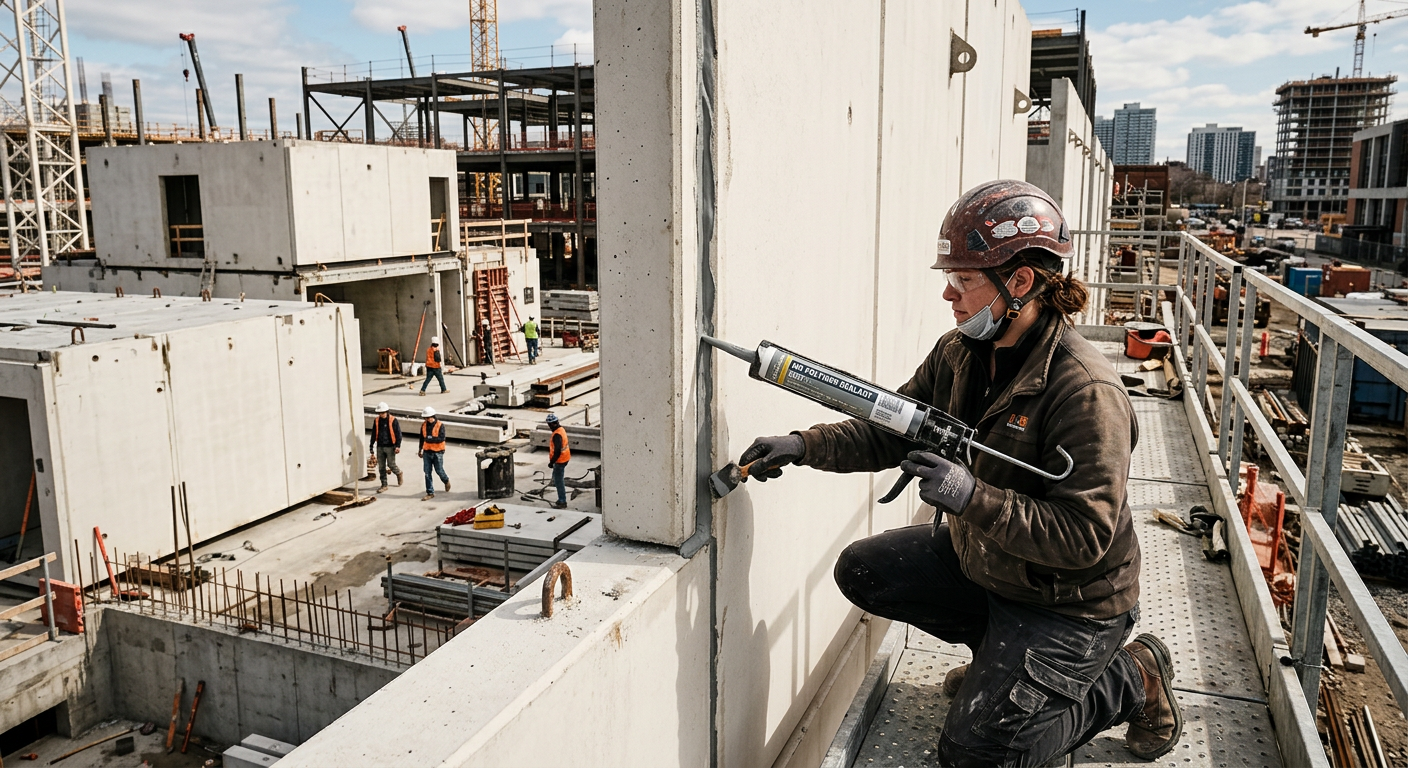
MS Polymer Sealant for Prefabricated Building Assembly
Find the best MS polymer sealant prefabricated building solutions in the United States, including suppliers, applications, buying tips, and market trends.
 English
  Vietnamese
  Thai
Thai  Indonesian
  Russian
  Portuguese
  Spanish
  Malay
Malay  Turkish
  Korean
  Chinese