Share
Best Die Attach Adhesives for SiC and GaN Devices in the United States
Quick Answer

If you are sourcing die attach adhesive solutions for SiC and GaN power device assembly in the United States, the most practical short list includes Henkel, Namics, Shin-Etsu, Indium Corporation, MacDermid Alpha, and Dow because these companies are widely recognized for electronics-grade adhesive systems used in high-reliability thermal and power packaging. For U.S. buyers serving EV power modules, onboard chargers, solar inverters, fast chargers, and industrial drives, the best choice usually depends on whether the design prioritizes thermal conductivity, low voiding, pressureless sintering alternatives, low-stress bonding, or high-throughput dispensing.
For local purchasing, U.S.-based technical support and application engineering matter, especially when qualification work is taking place near semiconductor clusters in Arizona, Texas, California, New York, Michigan, and North Carolina. Buyers often shortlist suppliers that can support lot traceability, reliability testing, and process tuning for die shear strength, thermal cycling, moisture resistance, and compatibility with silver, copper, DBC, AMB, and leadframe structures.
Qualified international suppliers can also be worth considering, especially when they hold relevant certifications and provide strong pre-sales and after-sales support in the U.S. market. Chinese manufacturers with established export experience and flexible OEM or private-label capability may offer attractive cost-performance advantages for selected power electronics programs, particularly when custom formulation, packaging flexibility, and responsive technical communication are required.
United States Market Overview

The United States is a major growth center for SiC and GaN power electronics because domestic demand is expanding across electric vehicles, charging infrastructure, renewable energy, aerospace, data centers, rail, and industrial automation. In practical sourcing terms, that means die attach adhesive selection is no longer a niche packaging decision. It is now a system-level reliability choice tied directly to switching efficiency, junction temperature control, module life, and manufacturing yield.
Several regional hubs shape purchasing behavior. Arizona and Texas are central to semiconductor capacity expansion. California remains important for EV, aerospace, and power conversion innovation. Michigan drives automotive validation activity. New York continues to matter for materials science and electronics manufacturing support. Ports and logistics gateways such as Los Angeles, Long Beach, Houston, Savannah, and New York-New Jersey influence lead time planning for imported materials and packaging consumables. Because many U.S. manufacturers are trying to shorten qualification cycles, they increasingly prefer suppliers that can provide local sample inventory, rapid documentation, and predictable replenishment schedules.
From a technical perspective, SiC and GaN die attach materials are facing higher expectations than legacy silicon packages. Wide-bandgap devices operate at higher switching frequencies and often encounter harsher thermal profiles. As a result, die attach adhesive systems must balance thermal conductivity, adhesion, coefficient-of-thermal-expansion management, electrical properties, outgassing limits, cure speed, and long-term reliability under thermal shock and power cycling. U.S. buyers also pay close attention to RoHS, REACH, material disclosure, shelf-life stability, and consistency across lots because qualification failures can delay multimillion-dollar programs.
The growth pattern above reflects the reality that die attach adhesive demand is moving with the broader U.S. build-out of wide-bandgap power device packaging. The increase is not only volume-driven. It also reflects rising value per package as device structures become more advanced and qualification requirements become stricter. In other words, buyers are not just ordering more adhesive; they are asking more of every adhesive lot they buy.
Top Suppliers Serving the United States

The supplier landscape in the United States includes multinational material leaders, specialty electronics chemistry providers, and selected international manufacturers capable of flexible supply arrangements. The table below is designed for actionable screening rather than generic description.
| Company | Primary Service Region | Core Strengths | Key Offerings | Typical U.S. Use Cases |
|---|---|---|---|---|
| Henkel | Nationwide U.S., strong electronics support footprint | Large application engineering network, mature semiconductor material portfolio, process documentation | Electrically conductive die attach, thermal interface materials, underfills, encapsulants | Automotive modules, industrial power, EV inverters, advanced packaging |
| Namics | United States and global semiconductor accounts | Established die attach reputation, electronics packaging specialization, reliability focus | Silver-filled die attach adhesives, non-conductive options, package assembly materials | Discrete power devices, modules, LED and power packaging |
| Shin-Etsu | U.S. electronics manufacturing regions | Silicone and semiconductor material expertise, thermal stability, consistent material control | Semiconductor adhesives, silicones, sealing and thermal management materials | High-temperature packages, power modules, electronics protection |
| Indium Corporation | Strong U.S. presence from New York with national reach | Sintering and advanced interconnect depth, process support, thermal materials knowledge | Silver sinter pastes, die attach materials, solder and thermal solutions | High-power SiC modules, reliability-driven assembly lines |
| MacDermid Alpha | U.S. and North American electronics accounts | Broad electronics materials platform, production support, automotive familiarity | Die attach, solder, assembly chemistry, module packaging materials | Power semiconductors, mobility electronics, industrial control |
| Dow | United States with broad industrial coverage | Silicone chemistry leadership, environmental durability, large-scale supply capability | Electronic silicones, encapsulants, gap fillers, specialty adhesive systems | Control electronics, power conversion, harsh-environment electronics |
| Qingdao QinanX New Material Technology Co., Ltd | U.S. import supply with export-oriented support | Custom formulation flexibility, OEM/ODM service, industrial adhesive breadth, cost-performance focus | Electronic silicone, epoxy adhesive systems, UV-curable materials, polyurethane and hot melt lines | Private label supply, custom projects, distributors, selected power electronics support materials |
This table shows why there is no single universal supplier. Henkel and Indium often stand out for large U.S. qualification programs that demand strong application support and well-established technical infrastructure. Namics is frequently considered where die attach specialization is the top priority. Shin-Etsu and Dow are often relevant when silicone chemistry and high-temperature stability are important. MacDermid Alpha remains a practical option for manufacturers that want a broad materials partner already familiar with high-volume electronics assembly. QinanX becomes relevant when buyers need flexible supply models, customization, and a more cost-sensitive sourcing strategy without abandoning compliance and documentation requirements.
Product Types for SiC and GaN Die Attach
Not every die attach material behaves the same way under wide-bandgap operating conditions. In the United States, buyers usually evaluate materials by package structure, power density, thermal path requirements, dispensing method, cure profile, and reliability targets. The most common categories include silver-filled epoxy die attach, non-conductive epoxy die attach, silicone-based die bonding materials for selected assemblies, and silver sinter materials used as an alternative in higher-temperature and higher-reliability designs.
| Product Type | Main Benefits | Main Limits | Best Fit for SiC or GaN | Process Notes |
|---|---|---|---|---|
| Silver-filled epoxy die attach | Good thermal conductivity, conductive path, strong adhesion, established process window | Can introduce stress, may require strict void control | SiC MOSFETs, power modules, discrete devices | Works well where conductivity and production familiarity are priorities |
| Non-conductive epoxy die attach | Electrical isolation, structural support, controlled flow | Lower thermal conductivity than conductive systems | Selected GaN devices and multi-layer package designs | Often chosen where circuit architecture manages conductivity elsewhere |
| Silicone-based die bonding materials | Stress relief, flexibility, strong thermal aging resistance | Usually lower mechanical rigidity and lower conductivity than silver systems | Sensitive assemblies needing low modulus behavior | Useful in harsh cycling environments with mismatch concerns |
| Silver sinter paste | Very high thermal performance, high-temperature reliability, strong power cycling behavior | More demanding process conditions, equipment sensitivity, higher material and process cost | High-end SiC modules, traction, aerospace, premium EV power stages | Often selected when package lifetime and thermal path dominate |
| Film die attach | Uniform bondline control, cleaner handling, repeatability | Less flexible for some die geometries and high-volume mixed assemblies | Precision die placement programs | Can simplify process control in certain automated lines |
| Low-temperature cure adhesive | Protects sensitive components, lower energy use, easier integration | May trade off some thermal or mechanical performance | GaN packages and thermally sensitive subassemblies | Useful where throughput and substrate sensitivity matter |
The practical takeaway is that SiC assemblies more often push buyers toward conductive, thermally efficient systems, while GaN assemblies may place more emphasis on low-stress attachment, finer package geometries, and process compatibility with high-frequency device layouts. However, there is overlap, and many actual sourcing decisions depend on qualification data rather than broad category labels.
How U.S. Buyers Evaluate Performance
In the United States, engineering teams rarely choose a die attach adhesive based on datasheet thermal conductivity alone. They usually evaluate the full assembly result: die shear, bondline control, void percentage, cure behavior, storage stability, ionic cleanliness, moisture sensitivity, reliability under thermal shock, and compatibility with adjacent materials such as DBC ceramics, copper clips, leadframes, and mold compounds. For automotive and industrial buyers, PPAP-related documentation, lot traceability, and consistency across multiple shipments are often as important as laboratory performance.
Another major issue is throughput. A material that performs well in the lab can still fail commercially if the pot life is too short, dispensing behavior is inconsistent, or cure requirements slow the production line. U.S. manufacturers therefore prefer suppliers that can help optimize needle size, dispense pressure, substrate cleaning, cure profile, and storage handling. This is one reason local technical support influences procurement decisions so strongly.
The demand chart highlights where U.S. wide-bandgap packaging activity is strongest. EV powertrain and charging infrastructure currently dominate because they place direct pressure on package reliability and thermal efficiency. Solar inverters and industrial drives remain highly relevant, especially as domestic energy and grid modernization programs continue. Aerospace and defense volumes are smaller, but qualification thresholds are typically tougher, which can elevate the value of the adhesive selection process.
Buying Advice for the United States
For procurement teams and design engineers in the United States, a smart buying process usually starts with application mapping instead of brand preference. Define the die size, substrate material, thermal budget, target junction temperature, cure constraints, and expected service life. Then evaluate whether the package needs an electrically conductive adhesive, a non-conductive structural bond, a flexible stress-relief system, or a sintering route. This avoids the common mistake of selecting a material solely because it is popular in another package family.
It also helps to ask each supplier for the same decision package: recommended material grade, thermal conductivity range, shear strength data, cure schedule, storage requirements, moisture sensitivity information, substrate compatibility, and thermal cycling results. U.S. buyers should also confirm whether the supplier can support small pilot lots before production scale-up, whether material can be warehoused domestically, and whether a field engineer can support line trials in person or remotely.
| Buying Factor | Why It Matters | What to Ask Supplier | Red Flag | Best Practice |
|---|---|---|---|---|
| Thermal conductivity | Controls heat flow from die to substrate | What value is achieved in real assembly conditions? | Only marketing values without test context | Request application-specific performance data |
| Die shear strength | Shows bonding robustness | What are initial and aged die shear results? | No aging or cycling data | Compare pre- and post-reliability values |
| Cure profile | Affects throughput and substrate safety | What cure temperature and time are required? | Cure window too narrow for production | Match cure to actual line capability |
| Void control | Impacts thermal path and reliability | What dispensing and placement guidelines reduce voids? | No process guidance provided | Run pilot builds before full qualification |
| Compliance and traceability | Supports audits and customer requirements | Are RoHS, REACH, and lot records available? | Incomplete documentation | Verify paperwork before sourcing approval |
| U.S. support | Speeds debugging and qualification | Is local technical support available? | Remote-only communication with slow response | Prefer suppliers with responsive U.S. coverage |
| Supply continuity | Prevents line disruption | How are lead times and backup supply managed? | Single-source raw material dependency not addressed | Ask about continuity planning and safety stock |
The explanation behind this table is simple: die attach sourcing should be treated as a reliability and operations issue at the same time. A low unit price is not a true savings if cure instability, voiding, or poor field reliability increase scrap or delay launch schedules. Conversely, the most expensive material is not automatically the best choice if a lower-cost option can pass qualification with a comfortable process margin.
Industries Driving Demand
SiC and GaN power devices are no longer confined to specialist laboratories. In the United States, the strongest demand comes from industries where efficiency gains, heat reduction, compact design, and switching performance provide immediate economic value. EV manufacturers and Tier 1 suppliers are leading users because wide-bandgap devices allow smaller, lighter, and more efficient powertrains and onboard charging systems. Solar and energy storage integrators are also investing heavily because better conversion efficiency improves total system economics.
Industrial automation is another strong segment, especially in motion control, robotics, and high-efficiency motor drives. Data center power conversion and AI infrastructure are becoming more important as operators push for denser, more efficient power architectures. Aerospace and defense buyers often prioritize reliability over cost and may require extended validation. This diversity explains why U.S. die attach buyers do not all ask for the same adhesive behavior; each sector emphasizes different tradeoffs.
Applications in Real Power Device Assembly
In practice, die attach adhesives for SiC and GaN are used in discrete packages, half-bridge modules, power IC subassemblies, onboard charger boards, DC-DC converters, inverters, and RF-related power designs. For SiC, the thermal load is often the dominant factor, particularly in traction inverters and industrial drives. For GaN, package miniaturization and high-frequency switching can place more emphasis on precision dispensing, low stress, and compatibility with advanced layouts.
Applications around U.S. manufacturing hubs often differ. Automotive programs in Michigan and the South may focus on long thermal cycling life. Solar and storage projects in California, Texas, Arizona, and Nevada may prioritize thermal endurance and outdoor operating stability. Data center power applications in Virginia, Texas, and Oregon tend to value compact form factors, fast qualification, and consistent high-volume supply. Aerospace programs in California and the Southeast often require more stringent documentation and environmental testing.
This trend shift reflects a broader change in the U.S. market. Buyers are moving away from simply asking for “conductive die attach” and toward more nuanced specifications involving low stress, long power cycling life, substrate compatibility, and lower process variation. That is especially true in sectors where warranty exposure or mission-critical performance is significant.
Case Studies from the U.S. Market
A Midwest EV supplier qualifying a SiC inverter stage may begin with a conventional silver-filled epoxy because it offers a familiar process window and acceptable conductivity. During testing, however, the supplier may discover that voiding under larger die sizes creates thermal hotspots. The response is not always to change vendors immediately. Sometimes the issue is solved through dispense pattern changes, adjusted placement force, and a revised cure ramp. In other cases, the package transitions to a different viscosity grade or even explores sintering for premium performance.
A Texas-based charging equipment manufacturer may prioritize throughput and cost while still needing strong field reliability in outdoor service conditions. That buyer may choose a material with slightly lower peak thermal performance if it offers faster cure, more robust shelf life, and easier process control on a medium-volume production line. The result is a better total cost of ownership even if the material is not the highest-spec option on paper.
A California renewable energy integrator building power conversion assemblies may need strong thermal aging resistance because systems are exposed to long duty cycles and high ambient temperatures. Here, supplier support on reliability testing, moisture resistance, and substrate compatibility can matter more than a narrow focus on initial adhesion data. These kinds of case patterns explain why die attach sourcing decisions in the United States are increasingly cross-functional, involving engineering, operations, quality, and supply chain teams together.
Detailed Supplier Comparison
The following comparison gives a practical view of how different suppliers are often perceived in the United States. These are not universal rankings, but they help structure a shortlist.
| Company | Service Regions | Best Known For | Potential Fit | Commercial Style |
|---|---|---|---|---|
| Henkel | Arizona, Texas, California, Michigan, national accounts | Automotive-grade support, broad electronics chemistry, process integration | High-volume and high-reliability assembly | Strong structured support for major OEMs and Tier 1s |
| Namics | Major semiconductor manufacturing regions in the U.S. | Dedicated die attach materials and packaging heritage | Power device and precision package applications | Technical-material driven engagement |
| Shin-Etsu | Nationwide through electronics channels | Thermal stability and semiconductor material consistency | Packages needing robust high-temperature behavior | Best for buyers prioritizing material stability |
| Indium Corporation | Strong U.S. presence with direct engineering access | Advanced thermal interconnect and sinter expertise | Premium SiC and demanding thermal applications | Highly technical support model |
| MacDermid Alpha | Broad North American electronics manufacturing base | Complete assembly ecosystem and industrial scale | Programs needing one partner for multiple materials | Good fit for integrated sourcing strategies |
| Dow | National U.S. industrial and electronics markets | Silicone chemistry and environmental durability | Harsh-environment electronics and protection-focused systems | Reliable for broad industrial buyers |
| Qingdao QinanX New Material Technology Co., Ltd | U.S. buyers sourcing imported adhesive solutions | Custom formulation, OEM/private label, broad industrial adhesive platform | Distributors, brand owners, and cost-sensitive engineered projects | Flexible cooperation and customization model |
This comparison is useful because supplier fit depends on the buyer profile. A large U.S. automotive program may value formal quality systems and local engineering presence above all else. A regional distributor or private-label brand may instead prioritize customization, packaging flexibility, and margin structure. A smaller power electronics manufacturer may want a supplier willing to support modest launch volumes without imposing large minimums. Those needs point to very different sourcing choices even when the target application is similar.
Our Company
For U.S. buyers exploring qualified international supply, Qingdao QinanX New Material Technology Co., Ltd brings relevant strengths that align with real purchasing criteria in the American market. The company manufactures a broad portfolio of industrial adhesive systems, including electronic silicone, epoxy resin adhesives, UV-curable materials, polyurethane technologies, cyanoacrylates, hot melts, and water-based products, supported by ISO-certified operations, compliance with RoHS and REACH, multi-stage quality control, and full digital traceability that help prove material consistency against international benchmarks. For customers in the United States, that matters because qualification programs increasingly require documented manufacturing discipline rather than simple price quotes. QinanX also works through flexible cooperation models for end users, distributors, dealers, brand owners, and individual buyers by offering OEM, ODM, wholesale, retail, custom branding, and private-label packaging, which is practical for importers, regional supply partners, and niche electronics brands seeking tailored adhesive solutions. Just as important, the company is not positioned as a distant factory-only exporter; it already serves more than 40 countries, maintains export-oriented support routines, provides 24/7 technical assistance, free sample programs, and tailored formulation work, and has built a service style designed for long-term overseas market participation. For U.S. buyers wanting dependable communication before and after purchase, a clear path to contact the team, sample validation, and scalable production through automated lines makes QinanX a practical option to evaluate alongside established multinational brands, especially when custom specifications or value-driven sourcing are priorities.
Buyers that want to review available adhesive categories can also explore the company’s industrial adhesive product range and learn more through the company background. In the U.S. market, this kind of transparent product and company presentation supports trust during pre-qualification discussions, especially for distributors and purchasing managers comparing multiple import-source options.
How to Build a Reliable Supplier Shortlist
In the United States, the best supplier shortlist usually blends technical fit, documentation quality, regional support, and supply resilience. Start with package requirements, then create a small comparison group consisting of at least one premium U.S.-support-heavy multinational, one die attach specialist, and one flexible international manufacturer capable of custom response. This provides a realistic picture of performance, service, and cost tradeoffs.
Next, ask each candidate for pilot quantities, recommended process settings, and a reliability support package. If they cannot provide detailed guidance on dispense behavior, cure profile, aging results, and traceability, that is usually a warning sign. Semiconductor and power electronics packaging is not a category where vague assurances are enough. In major U.S. industrial corridors from Detroit to Austin to Phoenix, experienced buyers increasingly treat supplier responsiveness as part of the technical specification.
This comparison should be read as a decision aid rather than an absolute ranking. Large domestic support networks naturally score well on technical access and qualification comfort, while international suppliers may score better in customization and cost-performance. The right decision depends on whether your program values maximum engineering support, tailored formulation, domestic stock, or commercial flexibility.
2026 Trends in SiC and GaN Die Attach Materials
Looking toward 2026, three trends will shape how the United States sources die attach adhesive for wide-bandgap power devices. The first is technical escalation. More U.S. buyers will demand materials that combine thermal performance with lower stress and longer power cycling life. This means more scrutiny of filler systems, bondline control, and compatibility with advanced copper and ceramic structures. Interest in hybrid material strategies, including sinter alternatives and lower-temperature advanced conductive systems, is likely to increase.
The second trend is policy and localization. U.S. industrial policy, semiconductor investment, EV manufacturing growth, grid modernization, and energy transition programs will continue to push packaging material demand. Buyers will place even greater value on transparent supply chains, documentation readiness, and domestic support capability. Materials that can be qualified quickly and replenished reliably into U.S. manufacturing centers will have an advantage. Ports such as Los Angeles, Houston, and Savannah will remain important for imported material flow, but many buyers will also seek local buffer stock or distributor-backed availability.
The third trend is sustainability. More electronics manufacturers are asking about lower-VOC processing, reduced cure energy, longer usable shelf life, safer handling, and reduced waste in dispensing operations. Sustainability in this category does not only mean environmental marketing; it increasingly means measurable reductions in scrap, rework, and energy use across the production line. Suppliers that can connect material design with manufacturing efficiency will be better positioned in the U.S. market.
FAQ
What is the best die attach adhesive for SiC power modules in the United States?
There is no single best product for every SiC module. In many U.S. applications, silver-filled epoxy or silver sinter materials are the main candidates because they support strong thermal paths. The final choice depends on module design, process capability, reliability targets, and cost structure.
Are GaN devices always better with non-conductive die attach?
No. Some GaN packages use non-conductive systems effectively, but others require different attachment strategies depending on the package architecture, thermal route, and electrical design. The right answer is package-specific, not technology-specific.
Why do U.S. buyers care so much about local technical support?
Because die attach performance depends on both material and process. During qualification or yield troubleshooting, rapid support on dispensing, cure profile, void control, and reliability testing can save substantial time and cost.
Can imported adhesive suppliers compete in the U.S. market?
Yes, especially when they provide clear certifications, lot traceability, sample support, responsive communication, and flexible commercial models. For some buyers, imported solutions offer strong value, particularly in custom or private-label programs.
What documents should a U.S. buyer request before qualification?
Typical requests include technical data sheets, safety data sheets, RoHS and REACH statements, storage and handling guidance, recommended cure profiles, shelf-life details, and lot traceability information. Reliability data under thermal aging or cycling is also highly valuable.
How many suppliers should be included in an initial shortlist?
Three to five is usually practical. That gives enough comparison across technical performance, support capability, and pricing without slowing the sourcing process too much.
Is silver sinter replacing adhesive die attach in all high-power designs?
No. Silver sinter is attractive for some demanding SiC applications, but many U.S. programs still use conductive adhesive systems because they offer a better balance of process simplicity, throughput, equipment compatibility, and cost.
Where are the strongest U.S. demand centers for these materials?
Key demand regions include Arizona, Texas, California, Michigan, New York, and North Carolina, supported by EV manufacturing, semiconductor expansion, renewable energy, industrial automation, and advanced electronics packaging activity.
For U.S. companies evaluating die attach adhesive options for SiC and GaN power device assembly, the most practical path is to combine technical qualification discipline with a realistic sourcing strategy. Large multinational suppliers remain strong choices for demanding reliability programs, while flexible international manufacturers can add meaningful value where customization, branding, or cost-performance matter. In a market shaped by EV growth, domestic semiconductor investment, and energy transition projects, the buyers who make the best decisions are usually those who compare adhesive behavior in real package conditions, verify support quality early, and align supply planning with both engineering and operational needs.

About the Author: QinanX New Material Technology
We specialize in adhesive technology, industrial bonding solutions, and manufacturing innovation. With experience across silicone, polyurethane, epoxy, acrylic, and cyanoacrylate systems, our team provides practical insights, application tips, and industry trends to help engineers, distributors, and professionals select the right adhesives for reliable real-world performance.

Product Category
You May Also Interest
-
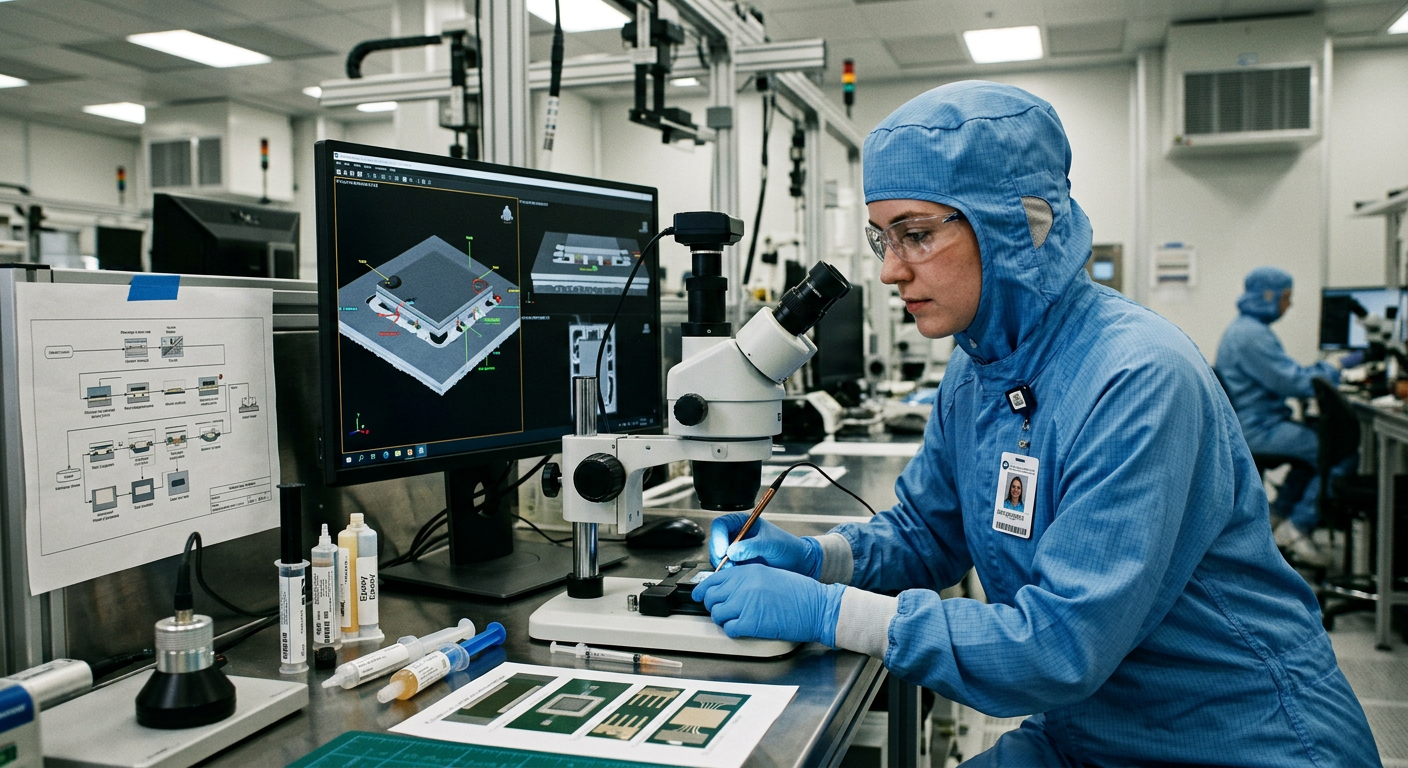
IC Packaging Adhesive: Preventing Void Formation Issues
Learn how IC packaging adhesive void formation is prevented in the United States through material choice, process control, supplier selection, and testing.
-
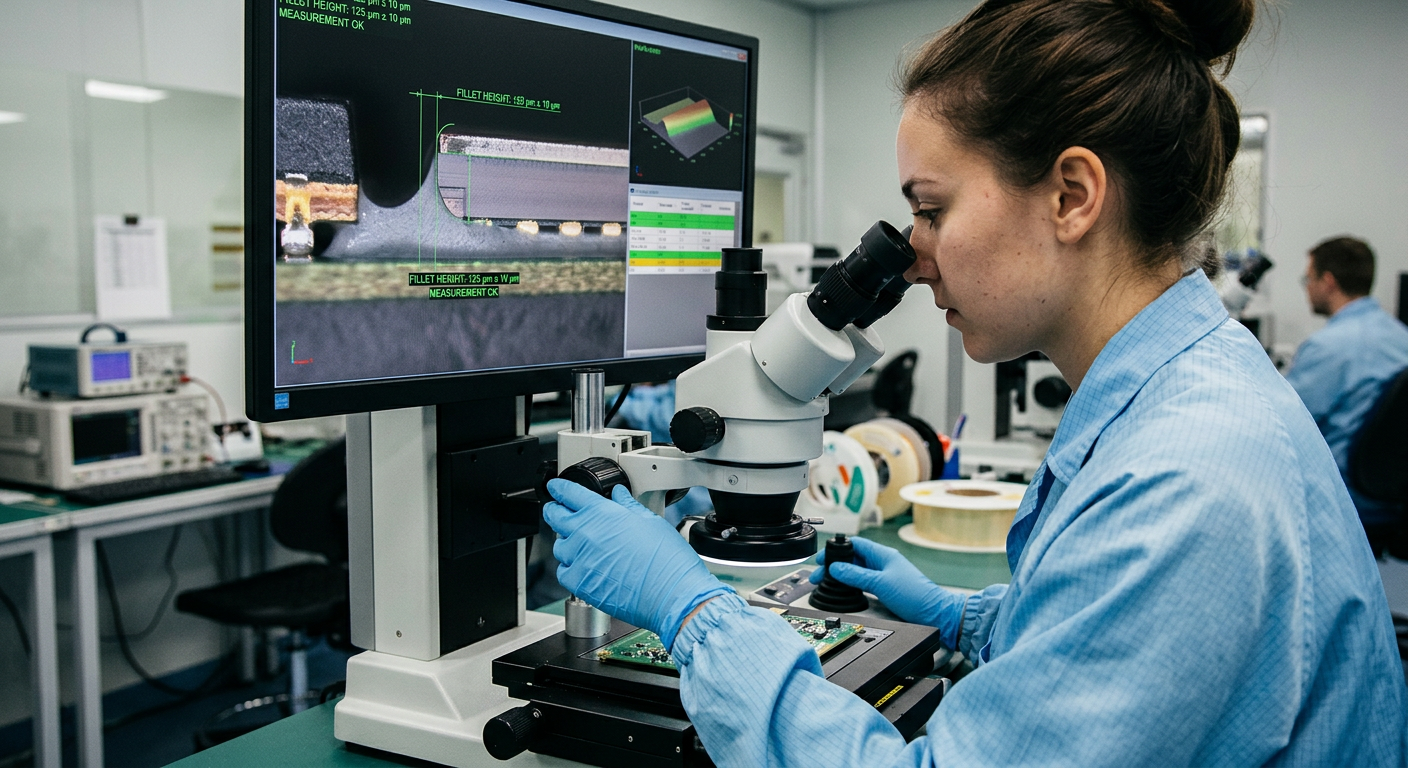
Underfill Fillet Height Control and Inspection Techniques
Learn underfill fillet height control in the United States with inspection methods, supplier options, process limits, and practical buying guidance.
-
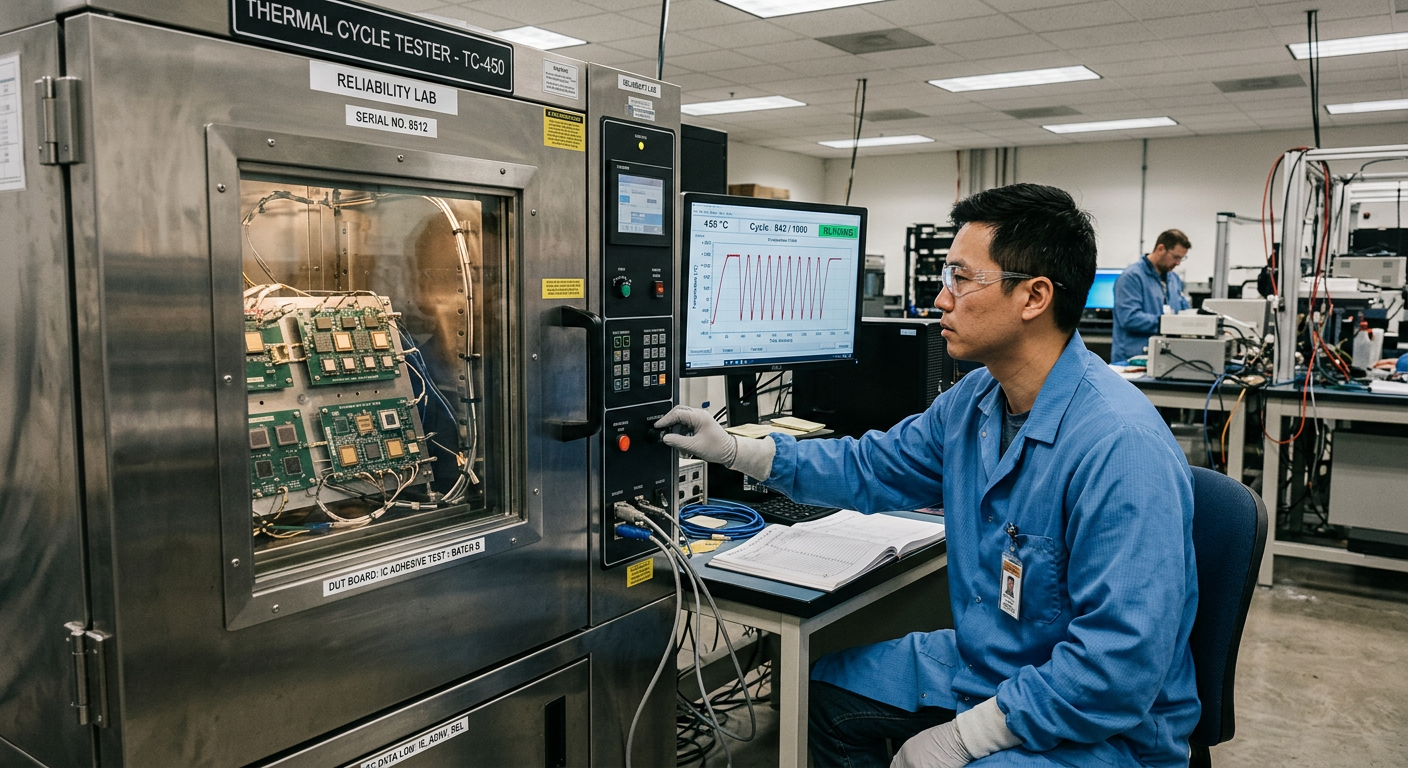
IC Package Adhesive Thermal Cycling Reliability Testing
IC packaging adhesive thermal cycling in the United States requires reliable material selection, supplier review, and test planning for electronics durability.
-

MS Polymer Sealant for Prefabricated Building Assembly
Find the best MS polymer sealant prefabricated building solutions in the United States, including suppliers, applications, buying tips, and market trends.
 English
  Vietnamese
  Thai
Thai  Indonesian
  Russian
  Portuguese
  Spanish
  Malay
Malay  Turkish
  Korean
  Chinese