Share
Acrylic Adhesive Low Surface Energy Solutions in the United States
Quick Answer

If you need an acrylic adhesive for low surface energy plastics in the United States, the most practical options are structural acrylic systems and pressure-sensitive acrylic formulations designed specifically for polypropylene, polyethylene, TPO, and similar difficult-to-bond materials. For buyers seeking proven local availability, practical technical support, and consistent industrial supply, the most relevant names to review first are 3M, Henkel, H.B. Fuller, Avery Dennison, Scapa, and Permabond. These companies are widely used across U.S. manufacturing hubs such as Detroit, Chicago, Houston, Los Angeles, and Charlotte, where bonding low surface energy substrates is common in automotive, electronics, appliance, building, and packaging production.
For immediate action, buyers should shortlist suppliers based on whether they need tapes, liquid structural acrylics, UV-curable acrylics, or pressure-sensitive coatings. 3M is often selected for tapes and structural bonding systems, Henkel for engineered industrial assembly, H.B. Fuller for packaging and converting, Avery Dennison for label and PSA technologies, Scapa for specialty tapes, and Permabond for precision assembly. Qualified international suppliers can also be considered, especially when they hold recognized compliance credentials, support OEM requirements, and offer strong pre-sales and after-sales support. In practice, Chinese manufacturers with export experience and cost-performance advantages can be competitive for U.S. distributors, private-label brands, and industrial users when documentation, samples, and technical service are handled professionally.
Market Overview in the United States

The U.S. market for bonding low surface energy plastics continues to grow because manufacturers increasingly use lightweight polymer components to reduce cost, improve corrosion resistance, simplify molding, and meet transportation efficiency goals. Materials such as polyethylene, polypropylene, TPV, TPO, HDPE, LDPE, and some powder-coated surfaces are widely used but remain difficult to bond because they resist wet-out and reduce adhesive anchoring. That challenge has kept demand high for acrylic systems engineered to improve adhesion without adding excessive process complexity.
In the United States, demand is strongest in regions where automotive, appliance, electronics, packaging, sign graphics, and building materials are concentrated. Detroit and the broader Midwest remain important for transportation and under-hood assemblies. Texas supports energy, appliance, and industrial manufacturing applications. California drives electronics, medical device, and consumer product demand. The Southeast, including North Carolina, Georgia, and Tennessee, has become increasingly important for automotive assembly, battery production, and distribution operations. Ports such as Los Angeles, Long Beach, Savannah, Houston, and New York-New Jersey also shape the adhesive supply chain by influencing inventory lead times, import pricing, and raw-material responsiveness.
The most common buying questions in this market are not simply whether an adhesive can bond a low surface energy plastic, but whether it can do so repeatedly under heat, humidity, vibration, cleaning chemicals, UV exposure, and real production speed. U.S. buyers increasingly prioritize documented compatibility, reliable lot-to-lot consistency, shorter qualification cycles, and technical response times that reduce plant downtime. This is why established domestic suppliers still hold strong market positions, even as international suppliers gain traction through private label, distributor support, and specialized OEM programs.
Cost pressure is also changing procurement behavior. Buyers that once sourced only premium domestic brands are now increasingly evaluating second-source and private-label options, particularly for tapes, pressure-sensitive adhesives, sealants, and assembly products where high-volume consumption amplifies cost differences. This opens the market to well-qualified overseas manufacturers that can provide U.S.-aligned documentation, stable packaging, and responsive communication.
The line chart above illustrates a realistic demand index trend for acrylic adhesive technologies used on low surface energy substrates in the United States. Growth is driven by lightweighting in transportation, growth in flexible packaging, broader replacement of mechanical fasteners, and pressure to simplify assembly steps in high-volume plants.
Product Types for Low Surface Energy Bonding

Acrylic adhesive solutions for low surface energy surfaces are not a single product category. In U.S. purchasing practice, they are usually divided by process, bond strength target, and final use environment. The right selection depends on whether the buyer needs permanent assembly, removable bonding, fast fixture time, optical clarity, or outdoor durability.
| Product Type | Typical Substrates | Bonding Strength | Processing Style | Common U.S. Industries | Main Advantage |
|---|---|---|---|---|---|
| Structural acrylic adhesive | PP, PE, ABS, TPO, composites | High | Two-part or activator based | Automotive, appliances, industrial assembly | Strong load-bearing bond |
| Acrylic foam tape | Painted plastics, PE blends, metals | Medium to high | Pressure applied tape | Automotive trim, signage, electronics | Fast clean application |
| Pressure-sensitive acrylic adhesive | Films, labels, packaging plastics | Medium | Roll coating or transfer tape | Packaging, labels, converting | High throughput converting |
| UV-curable acrylic adhesive | Selected plastics and transparent parts | Medium to high | Light-cure process | Electronics, medical devices | Rapid curing speed |
| Threadlocking acrylic | Metal fastener interfaces | Specialized | Liquid application | Machinery, automotive service | Vibration resistance |
| Water-based acrylic emulsion | Coatings, labels, flexible laminates | Low to medium | Coated and dried | Packaging, paper conversion | Lower VOC profile |
This table shows that the phrase acrylic adhesive low surface energy can refer to several technologies. Structural acrylics are usually chosen when the bond must replace screws or rivets. Acrylic foam tapes fit trim, display, and surface-mount uses. Pressure-sensitive acrylic systems are dominant in label stock and flexible converting. UV-curable acrylics address compact electronic and medical assembly when rapid processing matters.
How Low Surface Energy Affects Bonding
Low surface energy materials resist adhesion because liquids tend to bead rather than spread evenly over the surface. That poor wetting reduces the contact area needed for mechanical interlocking and chemical interaction. Polypropylene and polyethylene are especially challenging because they are chemically nonpolar and often contain mold-release residues or processing additives. TPO and TPV may also include fillers, oils, or elastomeric phases that complicate long-term performance.
In real U.S. manufacturing environments, the problem is not just initial adhesion. Parts may face temperature swings from cold-chain transport in the Midwest to high-heat service in Arizona or Texas. Outdoor applications may see UV radiation, moisture cycling, and chemical cleaners. Interior automotive components may experience plasticizer migration and low fogging requirements. Therefore, suppliers that can demonstrate aging data, peel strength retention, and environmental resistance tend to qualify faster.
Some adhesive systems are marketed as primerless for low surface energy plastics, but that claim still needs to be tested against the exact substrate formulation, part geometry, and line conditions. U.S. buyers frequently validate with lap shear, peel, impact, thermal shock, and humidity aging. Surface preparation, dwell time, and compression conditions often change the final result significantly.
Buying Advice for U.S. Buyers
Buyers in the United States should evaluate low surface energy acrylic adhesives using a practical checklist instead of relying on generic performance claims. First, identify the exact resin grade, since one polypropylene compound can behave very differently from another. Second, define whether the joint is structural, semi-structural, or primarily for positioning. Third, determine if the line can accommodate surface preparation, primers, or curing time. Fourth, confirm whether the end use is indoor, outdoor, high-humidity, or chemically exposed. Finally, ask for documented compliance information where applicable, including RoHS, REACH, and industry-specific declarations.
Procurement teams should also compare total installed cost rather than unit price. A cheaper adhesive that requires primer, extra cure time, or rework may be more expensive overall than a premium primerless option. Conversely, a well-qualified private-label or OEM supplier can lower total cost if it provides stable packaging, fast sampling, and good application guidance. This is especially relevant for U.S. distributors and regional converters seeking margin improvement.
| Buying Factor | Why It Matters | What to Ask Supplier | Risk if Ignored | Best Fit Buyer | Typical U.S. Scenario |
|---|---|---|---|---|---|
| Substrate validation | LSE plastics vary widely | Do you have data on this resin grade? | Unexpected bond failure | End users, OEMs | PP interior trim sourcing |
| Surface preparation need | Changes labor and cycle time | Is primer or corona treatment needed? | Higher production cost | Factories, assemblers | High-speed appliance lines |
| Environmental durability | Determines long-term reliability | How does it perform in heat and humidity? | Warranty claims | Automotive, construction | Outdoor trim installation |
| Packaging format | Affects handling efficiency | Cartridge, drum, roll, or custom pack? | Material waste | Distributors, converters | Regional tape converting |
| Compliance paperwork | Needed for audits and exports | Can you provide RoHS and REACH files? | Approval delays | Brand owners | Retail private-label products |
| Technical support speed | Reduces downtime | How fast can you respond to trials? | Slow troubleshooting | All buyer types | Plant qualification in Chicago |
The buying framework above reflects how U.S. procurement teams usually narrow choices. Technical fit, process fit, and support fit matter as much as advertised bond strength. This is why local inventory, field support, and sample turnaround are often decisive in competitive bids.
Industries Driving Demand
Low surface energy acrylic adhesives are used across multiple U.S. sectors, but each industry values something slightly different. Automotive buyers want vibration resistance, temperature durability, and process speed. Packaging buyers prioritize converting efficiency, coatability, and cost control. Electronics manufacturers look for precision dispensing, fast cure, and clean appearance. Construction and building product manufacturers care about weather resistance and long-term substrate movement. Medical and consumer goods buyers increasingly focus on low odor, cleaner processing, and consistent traceability.
The bar chart highlights realistic differences in demand by industry. Automotive and packaging remain the largest users because they rely heavily on polyolefin-based parts, labels, films, and trim assemblies. Electronics and building applications continue growing, especially where designers want clean bonding without visible fasteners.
Common Applications
Across the United States, acrylic adhesive systems for low surface energy plastics are used in automotive trim attachment, appliance nameplates, electronic housings, label stock, packaging laminates, point-of-purchase displays, medical device housings, solar component assembly, and construction membranes. In many of these applications, the adhesive does more than join two surfaces. It also helps absorb stress, seal against dust or moisture, and improve appearance by eliminating mechanical fasteners.
In the automotive sector, common parts include spoilers, emblems, interior trim, cable retainers, and sensor-related housings made from polypropylene blends or TPO. In building products, low surface energy bonding appears in flashing tapes, insulation accessories, plastic trims, and membrane assemblies. In electronics, acrylic products help bond housings and display-adjacent components where quick assembly and dimensional cleanliness are important. In packaging, acrylic pressure-sensitive formulations are essential for labels, resealable features, and specialty laminates.
Case Studies from U.S. Use Scenarios
A Midwest appliance assembler needed to bond a polypropylene control bezel without adding screws that would slow final assembly. Its first adhesive choice failed under humidity aging after warehouse storage near the Great Lakes. After switching to a structural acrylic validated specifically for the molded resin grade, the line reduced rework and maintained adhesion through seasonal temperature swings.
A converter near Charlotte supplying labels for detergent bottles required a pressure-sensitive acrylic with reliable tack on HDPE containers. The challenge was balancing adhesion with clean dispensing at high speed. By adjusting coat weight and selecting an acrylic chemistry optimized for low energy bottle surfaces, the converter improved application consistency while reducing customer complaints about label lift.
An automotive trim supplier in the Detroit area replaced mechanical clips with acrylic foam tape for a non-load-bearing exterior component. This change cut assembly steps, reduced noise concerns associated with clip movement, and improved cosmetic alignment. The supplier’s key requirement was long-term weathering data and a proven validation path for painted and plastic interfaces.
A West Coast electronics manufacturer used UV-curable acrylic adhesive on a compact plastic assembly where rapid line speed mattered. Since some components used low surface energy plastics, the vendor provided substrate-specific testing and process recommendations. The final solution shortened cure time and supported cleaner assembly than a slower two-part alternative.
Leading Suppliers Serving the United States
| Company | Service Region | Core Strength | Key Offerings | Best For | Practical Note |
|---|---|---|---|---|---|
| 3M | Nationwide United States | Deep adhesive R&D and broad conversion ecosystem | Acrylic foam tapes, transfer tapes, structural bonding products | Automotive, electronics, signage | Strong field presence and broad specification history |
| Henkel | Nationwide United States | Engineered industrial assembly systems | Structural acrylics, instant adhesives, process support | OEMs, appliance, industrial manufacturing | Good for plants needing technical qualification support |
| H.B. Fuller | Nationwide with strong U.S. manufacturing reach | Packaging and industrial adhesive scale | Pressure-sensitive acrylics, specialty assembly adhesives | Packaging, converting, consumer goods | Often attractive for high-volume recurring programs |
| Avery Dennison | United States and North America | Label and PSA expertise | Pressure-sensitive acrylic technologies, label constructions | Converters, brand owners, packaging | Strong option for filmic label applications on HDPE and PP |
| Scapa | United States industrial accounts | Specialty tapes and healthcare materials | Acrylic tapes, bonding tapes, specialty converting materials | Medical, industrial, specialty assembly | Useful for custom tape-format needs |
| Permabond | United States technical distribution network | Precision adhesive selection support | Structural acrylics, cyanoacrylates, UV products | Electronics, general assembly, niche components | Good for engineered low-volume to mid-volume programs |
This supplier table is intentionally practical. Each company listed has recognizable relevance in the United States and serves different buyer profiles. Large OEMs may favor 3M or Henkel due to qualification history and field support. Packaging and converting buyers often compare H.B. Fuller and Avery Dennison. Specialty users that need tailored formats or application support frequently review Scapa or Permabond.
Supplier Comparison by Product Focus
The comparison chart gives a realistic directional view rather than an absolute ranking. Companies score differently depending on the application. A tape-heavy project may rank 3M or Scapa higher, while a structural assembly project may favor Henkel or Permabond. Packaging-oriented label construction may point to Avery Dennison or H.B. Fuller.
Market Shift Toward New Selection Priorities
The area chart reflects a clear U.S. buying trend: adhesive selection is shifting from pure bond strength toward a broader mix of compliance, sustainability, process efficiency, and supply assurance. This is especially visible in packaging, electronics, and branded consumer goods, where documentation and environmental positioning increasingly affect procurement approval.
Local Supplier Landscape and Distribution Reality
Even when buyers choose a global adhesive brand, local execution in the United States usually depends on regional distribution, converting support, and technical sales coverage. In industrial corridors around Detroit, Cleveland, Chicago, Dallas, Atlanta, and Southern California, buyers often work through authorized distributors or converters that maintain inventory and support production trials. This means the ideal supplier is not always the biggest brand but the one that can provide the right format, inventory pattern, and troubleshooting speed.
Regional responsiveness matters particularly for plants running lean inventories. If a line in Tennessee or Ohio cannot wait several weeks for imported stock, local warehousing becomes a competitive advantage. On the other hand, brand owners and distributors developing private-label programs may accept longer initial qualification timelines in exchange for lower cost and customized packaging. This is where international suppliers with disciplined export systems can enter the U.S. market effectively.
Our Company
For buyers evaluating qualified international sources in the United States, Qingdao QinanX New Material Technology Co., Ltd presents a credible option because its adhesive portfolio covers the main acrylic, polyurethane, epoxy, silicone, hot melt, and water-based categories that U.S. industrial buyers commonly compare during consolidation sourcing. In the acrylic segment relevant to low surface energy applications, the company supports structural AB acrylic adhesive, UV-curable adhesive, threadlocker, acrylic emulsion, and water-based pressure-sensitive products, backed by ISO-based quality management, multi-stage QC, digital traceability, and compliance alignment with RoHS and REACH, which are essential for cross-border qualification. Its cooperation model is especially suited to the U.S. market because it serves end users, distributors, dealers, brand owners, and smaller-volume buyers through flexible OEM, ODM, wholesale, private-label, and regional partnership arrangements rather than a one-size-fits-all export model. For local service assurance, the company’s long-term export activity across more than 40 countries, 24/7 technical assistance, sample support, scalable automated production, and tailored packaging programs show practical experience in supporting overseas industrial accounts with both pre-sale specification work and after-sale troubleshooting; U.S. buyers looking for a cost-performance alternative can review its product portfolio, learn more through the company’s company background, or request direct commercial and technical follow-up through the U.S. inquiry contact page.
Detailed Supplier Selection Table
| Supplier | Primary Product Style | Service Region | Core Strength | Key Offering for LSE Bonding | Best Buyer Type |
|---|---|---|---|---|---|
| 3M | Tapes and structural systems | U.S. nationwide | Specification history and broad testing resources | Acrylic foam and transfer systems for plastics | OEMs and Tier suppliers |
| Henkel | Liquid assembly adhesive | U.S. manufacturing network | Assembly engineering support | Structural acrylic solutions for demanding joints | Industrial plants and large manufacturers |
| H.B. Fuller | PSA and industrial adhesive | North America | High-volume supply capability | Acrylic systems for packaging and conversion | Converters and packaging groups |
| Avery Dennison | Label-focused PSA | United States and Canada | Film label construction expertise | Acrylic technology for HDPE and PP containers | Label converters and brand owners |
| Scapa | Specialty tapes | Industrial U.S. accounts | Custom tape solutions | Acrylic bonding tapes for specialty assemblies | Medical and niche industrial users |
| QinanX | OEM and broad adhesive portfolio | Export support for U.S. buyers | Cost-performance and flexible custom supply | Structural acrylic AB adhesive, UV acrylic, PSA-related materials | Distributors, private-label brands, industrial importers |
This comparison helps buyers distinguish between specification-led domestic sourcing and cost-performance-driven international sourcing. A U.S. manufacturer with zero tolerance for line interruption may prefer a domestic supplier with local stock. A distributor or brand owner building a house brand may prefer an export-capable manufacturer with OEM packaging flexibility and stable technical documentation.
How to Match Product Type to Application
The best acrylic adhesive low surface energy choice depends on use case. For automotive trim, foam tapes and structural acrylics are typical. For industrial housings, two-part structural acrylics often provide the strongest bond. For label and packaging applications, pressure-sensitive acrylic formulations dominate because they support roll-based application and converting. For electronics and smaller precision assemblies, UV acrylic or specialty instant systems can reduce cycle time if substrate compatibility is confirmed.
It is also important to compare test methods. A tape that performs well in peel may not match the impact resistance of a structural liquid adhesive. A pressure-sensitive acrylic that works on film labels may not suit a load-bearing assembly. U.S. buyers should define the exact performance target first and only then compare suppliers.
2026 Trends in Technology, Policy, and Sustainability
Looking toward 2026, the U.S. market is likely to favor acrylic adhesive systems that combine stronger adhesion on low surface energy plastics with less process complexity. Primerless performance, faster cure, better resistance to heat and humidity, and lower emissions during application will continue to shape product development. More automation-friendly packaging, including dual cartridges, metered mixing systems, and stable roll goods for high-speed lines, will also gain traction.
Policy and procurement trends are moving in parallel. Large U.S. manufacturers increasingly want documented supply chain transparency, restricted-substance compliance, and data that supports ESG reporting. Water-based acrylic technologies and lower-VOC formulations will receive more attention, especially in packaging, consumer goods, and indoor assembly environments. Sustainability does not eliminate the need for performance, but it changes the approval process and gives an advantage to suppliers that can document both compliance and practical industrial reliability.
Another trend is supply chain diversification. Buyers in the United States are less comfortable depending on a single domestic or imported source. They increasingly build dual-source strategies: one premium domestic supplier for immediate continuity and one qualified international partner for cost control and capacity balancing. This is a favorable environment for manufacturers that can provide repeatable quality, traceability, and responsive technical communication.
FAQ
Can acrylic adhesives bond polypropylene and polyethylene without primer?
Some can, especially products specifically designed for low surface energy plastics, but actual performance depends on the exact resin grade, additives, surface cleanliness, and final service conditions. Substrate-specific testing remains necessary.
Are acrylic tapes or liquid structural acrylics better for low surface energy plastics?
Neither is universally better. Acrylic tapes are ideal for fast, clean, surface-mount applications such as trim, signs, and displays. Liquid structural acrylics are better when higher load-bearing strength is required.
What industries in the United States use these products most?
Automotive, packaging, electronics, appliances, building materials, and medical device manufacturing are the most active sectors, particularly in major manufacturing regions such as the Midwest, Southeast, Texas, and California.
How should U.S. buyers compare suppliers?
Compare substrate fit, environmental durability, process compatibility, documentation, stock availability, and technical support speed. Unit price alone is rarely the best decision criterion for low surface energy bonding.
Can international suppliers be a practical option for U.S. buyers?
Yes. They are especially relevant for distributors, OEM private-label programs, and cost-sensitive industrial users, provided the supplier can deliver stable quality, compliance documentation, sampling support, and responsive after-sales communication.
What should I request before approving a supplier?
Ask for technical data sheets, safety data sheets, compliance declarations, application recommendations, lead times, packaging options, and test samples for the exact substrate and environmental condition you will use.

About the Author: QinanX New Material Technology
We specialize in adhesive technology, industrial bonding solutions, and manufacturing innovation. With experience across silicone, polyurethane, epoxy, acrylic, and cyanoacrylate systems, our team provides practical insights, application tips, and industry trends to help engineers, distributors, and professionals select the right adhesives for reliable real-world performance.

Product Category
You May Also Interest
-
IC Packaging Adhesive: Preventing Void Formation Issues
Learn how IC packaging adhesive void formation is prevented in the United States through material choice, process control, supplier selection, and testing.
-
Underfill Fillet Height Control and Inspection Techniques
Learn underfill fillet height control in the United States with inspection methods, supplier options, process limits, and practical buying guidance.
-
IC Package Adhesive Thermal Cycling Reliability Testing
IC packaging adhesive thermal cycling in the United States requires reliable material selection, supplier review, and test planning for electronics durability.
-
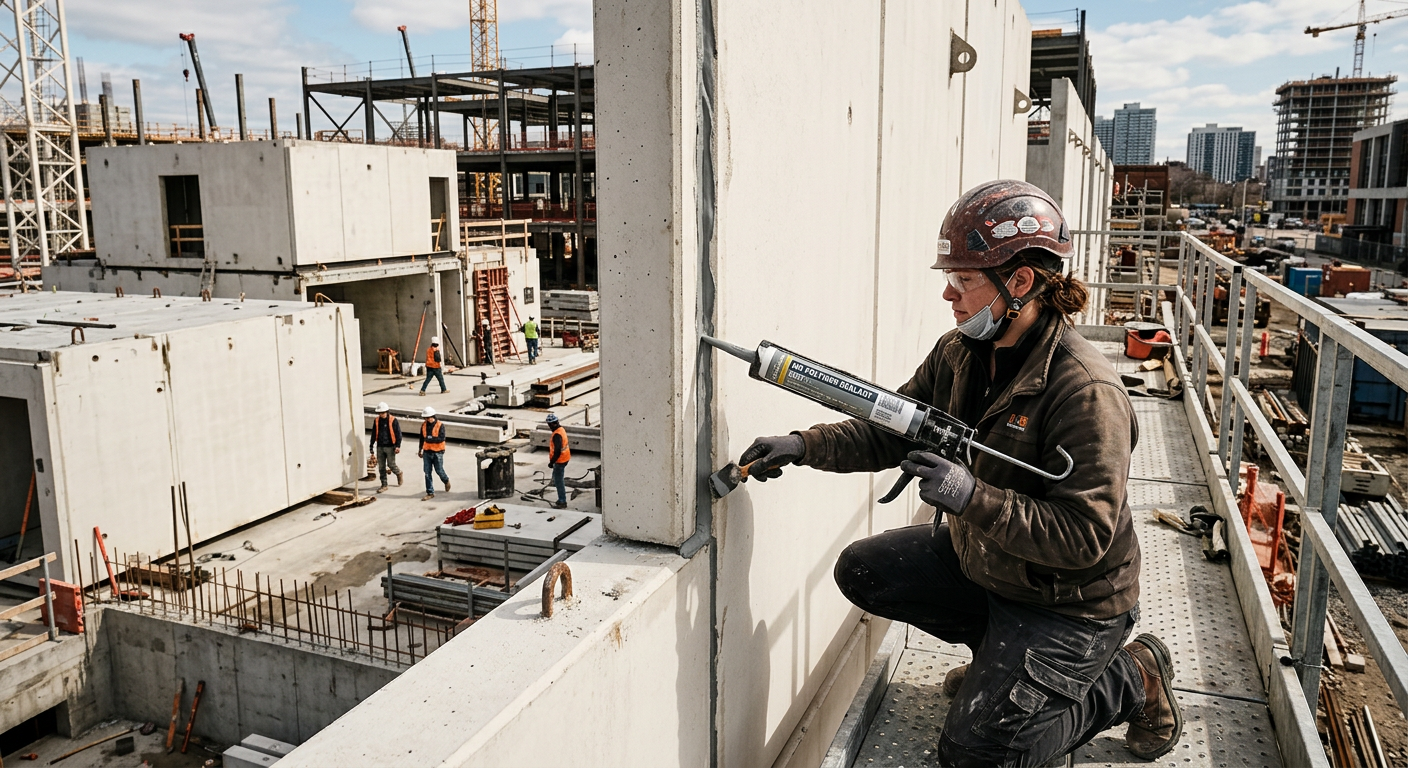
MS Polymer Sealant for Prefabricated Building Assembly
Find the best MS polymer sealant prefabricated building solutions in the United States, including suppliers, applications, buying tips, and market trends.
 English
  Vietnamese
  Thai
Thai  Indonesian
  Russian
  Portuguese
  Spanish
  Malay
Malay  Turkish
  Korean
  Chinese