
Share
Underfill Fillet Height Control in the United States
Quick Answer

Underfill fillet height control in the United States is primarily achieved by matching underfill viscosity, dispense pattern, substrate design, cure profile, and inspection criteria so the fillet remains continuous, symmetric, and within the assembly drawing limit around the component edge. For most electronics manufacturers, the best immediate approach is to work with established suppliers that support U.S. process validation, failure analysis, and line-side optimization, including Henkel, NAMICS, Shin-Etsu, Master Bond, H.B. Fuller, and Epoxy Technology. These companies are commonly considered for capillary flow underfills, corner-bond materials, and reinforced encapsulation systems used in automotive, consumer electronics, telecom, medical, and industrial power modules.
In practice, buyers in the United States should select a supplier based on substrate compatibility, target stand-off height, cure window, moisture reliability, and available local technical support in regions such as California, Texas, Arizona, New York, Ohio, and the broader Great Lakes manufacturing corridor. Qualified international suppliers can also be considered when they hold recognized certifications and can document reliable quality systems, export experience, and responsive pre-sales and after-sales support. For cost-performance-sensitive programs, this is especially relevant when comparing domestic and Asia-based underfill or related adhesive sources for pilot runs, private label programs, and high-volume production.
Why Fillet Height Matters in the U.S. Electronics Market

Underfill fillet height is not just a visual feature. It is a process indicator tied to solder joint reinforcement, thermal cycling life, edge wetting consistency, void management, package stress distribution, and long-term reliability. In the United States, where advanced electronics production spans semiconductor packaging in Arizona, EV electronics in Michigan and Tennessee, medical devices in Minnesota and Massachusetts, and aerospace electronics in California and Washington, the tolerance for process drift is narrow. A fillet that is too low may indicate incomplete edge coverage or insufficient capillary flow. A fillet that is too high may interfere with adjacent components, rework access, or mechanical clearances.
For contract manufacturers and OEMs, underfill inspection is often integrated into first article approval, process qualification, incoming material validation, and statistical process control. The priority is to confirm that the fillet height aligns with package geometry, board finish, flux residue status, and reliability targets rather than relying on appearance alone. This is especially important in high-density assemblies shipped through major U.S. trade and logistics hubs such as Los Angeles, Long Beach, Houston, Savannah, New York-New Jersey, and Chicago, where production scale and supply continuity directly affect turnaround time.
U.S. Market Outlook for Underfill and Advanced Packaging Materials

The U.S. market for underfill and associated electronic adhesive materials continues to expand with demand from AI hardware, automotive electrification, 5G infrastructure, defense electronics, wearable medical devices, and industrial automation. More package designs now use finer pitch interconnects, larger die sizes, heterogeneous integration, and more severe thermal loads, all of which increase the importance of precise fillet height control and repeatable inspection methods.
| Year | Estimated U.S. Demand Index | Main Growth Driver | Impact on Fillet Height Control |
|---|---|---|---|
| 2021 | 100 | Consumer electronics recovery | Higher volume need for fast inline visual standards |
| 2022 | 108 | Automotive electronics expansion | More demand for thermal cycling reliability validation |
| 2023 | 117 | Power devices and telecom upgrades | Greater focus on void reduction and edge consistency |
| 2024 | 128 | Advanced packaging investment | Tighter process windows for fine-pitch assemblies |
| 2025 | 140 | AI servers and data center hardware | Need for uniform fillets in high-heat packages |
| 2026 | 154 | EV, aerospace, domestic chip packaging | Broader use of automated inspection and digital traceability |
This market view shows why underfill control is no longer a niche quality topic. As packaging gets denser and field reliability expectations rise, fillet height becomes a measurable production parameter that links material choice to end-use performance.
What Underfill Fillet Height Control Means on the Production Floor
Underfill fillet height control refers to maintaining a target edge fillet around a component after dispense and cure so the material supports solder joints without exceeding dimensional or functional limits. In U.S. manufacturing practice, this usually means defining acceptable minimum and maximum fillet height, fillet width, continuity, corner shape, and allowable asymmetry. Some programs use percentage-of-die-height criteria, while others use absolute dimensions in millimeters based on board drawings and internal quality standards.
Control begins before dispensing. The actual result depends on die or package size, bump or ball pitch, substrate warpage, solder mask design, pad metallurgy, standoff, temperature during dispense, board cleanliness, and the rheology of the chosen underfill. Inspection criteria must therefore match the package family rather than rely on a single generic target for every assembly.
Common Product Types Used for Fillet Control
Different underfill technologies behave differently at the package edge. That is why engineers should choose material type based on package architecture, process speed, rework policy, and reliability profile.
| Product Type | Typical Use | Fillet Behavior | Main Advantage |
|---|---|---|---|
| Capillary flow underfill | Flip-chip and CSP reinforcement | Forms visible edge fillet after flow and cure | Strong solder joint reinforcement |
| No-flow underfill | Process integration before reflow | Fillet depends on reflow behavior and material spread | Fewer post-reflow steps |
| Corner bond adhesive | BGA and component corner reinforcement | Localized fillets at corners only | Faster dispensing and lower material use |
| Edge bond adhesive | Perimeter reinforcement | Controlled edge bead around selected sides | Balance of strength and cycle time |
| Molded underfill | High-volume advanced packages | Engineered encapsulation profile | Uniformity at scale |
| Dam-and-fill systems | Complex cavity control | Separate barrier and fill geometry | Improved containment and shape control |
This table matters because the acceptable fillet target changes with the material system. A capillary underfill around a flip-chip package is assessed differently from a corner-bond adhesive on a BGA in automotive control electronics.
Main Variables That Change Fillet Height
The most influential variables in underfill fillet height control are material viscosity, dispense volume, dispense location, substrate temperature, flow time, cure profile, and package standoff. However, U.S. production engineers also pay close attention to line-to-line consistency, operator handling, storage conditions, moisture exposure, and the age of material at the point of use.
A warmer board usually lowers effective viscosity and promotes faster flow, which can increase spread and alter the final edge profile. Too much dispense volume can create an oversized fillet or bleed into adjacent areas. Too little material can leave gaps, especially around corners or on warped substrates. Cure ramp rate also matters because it can freeze the shape too early or allow excessive movement before gelation. When process windows are narrow, a DOE approach is typically used to lock the final recipe.
Inspection Techniques Used in the United States
Underfill fillet inspection in the United States often combines visual checks, calibrated microscopy, automated optical inspection, X-ray review for hidden void concerns, cross-section validation during qualification, and occasional 3D metrology in advanced packaging environments. The right method depends on whether the goal is routine inline screening, engineering characterization, customer PPAP support, or failure analysis.
| Inspection Method | Best Use Case | What It Measures | Limitations |
|---|---|---|---|
| Visual inspection | Inline quick screening | Continuity, overflow, obvious asymmetry | Not dimensionally precise |
| Microscope with reticle | Lab and QA checks | Fillet height and width at selected points | Sampling only, slower than AOI |
| Automated optical inspection | High-volume production | Profile consistency and edge pattern deviations | Needs tuned lighting and algorithms |
| 3D optical metrology | Precision characterization | Height map and surface contour | Higher equipment cost |
| X-ray inspection | Void and hidden defect correlation | Internal distribution clues and trapped air | Indirect for surface height itself |
| Cross-section analysis | Qualification and failure analysis | True geometry, wetting, gap fill | Destructive and low throughput |
For many U.S. manufacturers, the most practical inspection stack is visual plus microscope measurement during setup, then AOI for production monitoring, supported by cross-sections during process qualification and engineering changes.
Acceptance Criteria for Practical Fillet Evaluation
There is no universal fillet height specification for every package, but good practice is to define acceptance by package family and critical reliability requirement. Criteria commonly include continuous perimeter coverage, no edge skip, no contamination of adjacent pads, no overflow into connector or test access zones, and a controlled minimum height sufficient to indicate full flow under the package. For automotive and industrial electronics, symmetry between opposite sides is often monitored because extreme imbalance can suggest uneven flow or warpage.
Many U.S. quality teams also define reject conditions such as trapped bubbles visible at the fillet boundary, corner starvation, cured cracks, detached fillet edges, or severe meniscus irregularity after thermal aging. The best documentation includes photographs of acceptable and non-acceptable fillets for each package class.
Industry Demand by End Use
Demand for underfill solutions in the United States is spread across several industries, but the strongest pull comes from sectors where vibration, temperature cycling, miniaturization, or mission reliability are central design constraints.
Industries and Applications Where Fillet Height Control Is Critical
Automotive modules use underfill or corner-bond reinforcement to improve thermal shock and vibration resistance. In EV battery management systems, ADAS units, and onboard charging electronics, fillet uniformity is important because edge inconsistencies may correlate with process instability under high thermal load. Consumer electronics makers focus on thin assemblies and tight cosmetic constraints, so excessive fillet height can be as problematic as insufficient coverage. Telecom hardware and data center electronics require materials that survive repeated thermal excursions while maintaining predictable package support. Medical device manufacturers tend to emphasize biocompatibility-adjacent cleanliness practices, traceability, and long-term reliability in compact electronics. Aerospace and defense projects often demand more rigorous documentation, including lot traceability, process validation, and failure mode review.
Typical applications include flip-chip processors, CSPs, BGAs, SiPs, camera modules, MEMS packaging, power modules, industrial sensors, control boards, and communication modules assembled in manufacturing clusters from Silicon Valley and Austin to Phoenix, Detroit, Boston, Raleigh, and San Diego.
Supplier Comparison for the U.S. Market
The supplier landscape in the United States includes multinational material companies, specialty electronic adhesive formulators, and process-oriented suppliers that support both standard and custom assembly needs. Buyers should compare not just material datasheets, but also local technical support, lot consistency, cure flexibility, and the supplier’s willingness to support validation builds.
| Company | Service Region | Core Strengths | Key Offerings |
|---|---|---|---|
| Henkel | Nationwide U.S. | Large electronics materials portfolio and process support | Capillary underfills, corner bond, advanced package materials |
| NAMICS | U.S. semiconductor and packaging hubs | Strong reputation in semiconductor packaging materials | Underfills for fine-pitch and advanced package applications |
| Shin-Etsu | Major U.S. electronics regions | Broad electronic materials expertise and reliability focus | Underfill, encapsulants, thermal interface related materials |
| Master Bond | United States and export markets | Custom and specialty adhesive formulations | Electronic-grade epoxies, encapsulants, selective reinforcement materials |
| H.B. Fuller | Nationwide U.S. manufacturing network | Industrial scale, application support, broad adhesive platform | Electronics adhesives, encapsulants, specialty bonding systems |
| Epoxy Technology | U.S. medical, aerospace, industrial sectors | Precision adhesive systems for high-spec assemblies | Electronics epoxy solutions, low-stress bonding and protection materials |
This comparison is useful because service footprint and application support often matter as much as raw material performance. The best supplier for a telecom module in Texas may differ from the best fit for a medical sensor package in Massachusetts.
Buying Advice for U.S. OEMs, EMS Companies, and Distributors
When buying underfill for U.S. production, start with application geometry, line speed, cure constraints, and reliability target rather than brand familiarity alone. Ask each supplier for rheology data at actual operating temperature, recommended dispense pattern, cure schedule options, moisture sensitivity guidance, and shelf-life management rules. If the product is intended for automotive, industrial power, or medical applications, request evidence of lot traceability, batch consistency, and long-term reliability test history.
Distributors and contract manufacturers should also consider whether the supplier can support dual-source planning, local stocking, and engineering response during new product introduction. In practical terms, local warehouse availability near ports and logistics corridors such as Los Angeles, Houston, Chicago, Atlanta, and Newark can reduce downtime and freight volatility. Buyers managing private-label or regional distribution programs may also need packaging flexibility, label customization, and MOQ structures that align with resale strategy.
Process Window Design for Better Fillet Stability
A robust process window usually includes controlled board preheat, calibrated dispense equipment, verified needle condition, controlled shot size, and inspection checkpoints after dispense and after cure. U.S. manufacturers with mature quality systems often link these checkpoints to MES records so that changes in operator, material lot, ambient condition, or machine maintenance can be correlated with fillet height trends. This is particularly valuable when troubleshooting intermittent edge defects.
For high-mix production, engineers may develop package-specific recipes with dedicated dispense path libraries. For high-volume production, automated compensation for board position and package offset can improve repeatability. In either case, routine gauge verification for microscope or AOI measurement is essential.
Case Studies from Typical U.S. Manufacturing Scenarios
An automotive electronics plant in the Midwest running corner-bond reinforcement on BGA packages observed field-return risk during thermal cycling. Investigation showed corner fillets varied widely between lines because one line had a slightly different board preheat profile. After standardizing substrate temperature and needle maintenance intervals, the plant reduced fillet variation and improved cycle-life stability.
A California communications hardware producer using capillary underfill on fine-pitch packages saw edge overflow near adjacent passive components. The root cause was an aggressive dispense volume paired with a lower-viscosity lot operating at elevated floor temperature. A revised dispense map and tighter point-of-use temperature control corrected the profile without changing the base material family.
A Northeast medical device assembler needed better traceability for underfill inspection. The company moved from subjective visual acceptance to calibrated microscope measurement at defined package edges, paired with image archiving. This improved customer audit readiness and reduced ambiguity during incoming and outgoing quality reviews.
How QinanX Fits the U.S. Market
For U.S. buyers evaluating globally competitive adhesive partners, QinanX presents a practical option in programs that value cost control without giving up process discipline. The company manufactures a broad industrial adhesive portfolio that includes electronic silicone, epoxy resin adhesive systems, electronic potting compounds, polyurethane technologies, UV-curable adhesives, acrylic products, and other assembly materials relevant to electronics protection and structural bonding. Its ISO-based production framework, RoHS and REACH compliance, multi-stage QC process, and full digital traceability system provide evidence that material consistency and regulatory alignment are managed to international benchmarks rather than handled informally. For U.S. end users, distributors, dealers, private-label brand owners, and even smaller project buyers, QinanX supports flexible cooperation models including OEM, ODM, wholesale, retail-style supply, and custom branding or packaging through automated production lines designed for scalable output. The company’s export experience across more than 40 countries, together with continuous R&D, free sample programs, 24/7 technical assistance, and tailored formulation support, shows practical market familiarity rather than one-off remote exporting. Buyers who want to review product categories can use the company’s industrial adhesive product page, evaluate manufacturing background via the company overview, or initiate application-specific support through the U.S. inquiry contact channel for pre-sale validation and after-sale follow-up.
Local Supplier Evaluation Checklist
Before approving any supplier in the United States, compare them against a practical checklist. This helps align commercial decisions with engineering reality and avoids overreliance on brochure claims.
| Evaluation Factor | Why It Matters | What to Ask | Preferred Evidence |
|---|---|---|---|
| Fillet control capability | Predictable package edge profile | How is target fillet height defined and validated? | Application notes and sample inspection data |
| Reliability performance | Field life and warranty risk | What thermal cycling and moisture results are available? | Test summaries and customer qualification data |
| Process support | Faster line startup and troubleshooting | Can the supplier support DOE and onsite optimization? | FAE availability and response plan |
| Supply assurance | Lower risk of production disruption | Is there U.S. stock or regional distribution coverage? | Warehouse or distributor footprint |
| Customization flexibility | Better fit for unique assemblies | Are OEM, ODM, or private label options available? | Packaging options and MOQ policy |
| Compliance and traceability | Audit readiness and customer trust | What certifications and lot tracking systems exist? | ISO records, RoHS/REACH statements, traceability workflow |
This framework is especially useful for U.S. distributors building regional supply partnerships and for OEMs balancing performance with sourcing resilience.
Common Problems and Corrective Actions
If fillet height is too low, start by checking dispense volume, substrate temperature, contamination, and whether the material viscosity has drifted due to storage or pot-life issues. If the fillet is too high or spreads excessively, review shot size, line speed, board temperature, and the possibility of lower-than-expected viscosity. If the fillet is discontinuous at corners, inspect package coplanarity and dispense path placement. If cured fillets crack, stress concentration or cure profile may be the issue, especially in large packages or high CTE mismatch designs.
Corrective action should not stop at operator adjustment. The best U.S. plants document the defect mode, isolate lot and equipment conditions, compare images against the golden sample, and confirm the fix through repeat inspection and reliability screening.
Future Trends Through 2026
By 2026, underfill fillet height control in the United States will be shaped by three major shifts: smarter process automation, stronger domestic electronics policy support, and sustainability pressure across materials and packaging. Technically, more factories will combine dispense data, machine vision, and MES analytics to predict fillet drift before defects appear. This will be especially relevant in semiconductor and EV supply chains supported by domestic investment and reshoring efforts. On the policy side, growth in U.S.-based packaging and electronics manufacturing encourages tighter quality systems and regional sourcing strategies. On the sustainability side, buyers increasingly ask about lower-VOC handling practices, optimized packaging waste, efficient cure profiles, and compliance transparency.
Material innovation will also continue. Expect more formulations tuned for faster cure, lower warpage stress, improved thermal aging, and better compatibility with advanced package architectures. Suppliers that can support both technical validation and resilient logistics across U.S. manufacturing corridors will gain an advantage.
FAQ
What is a good underfill fillet height?
A good underfill fillet height is the one defined by the package drawing, reliability target, and validated process window. It should be continuous, controlled, and not interfere with nearby features.
Is visual inspection enough for underfill fillet control?
Visual inspection is useful for quick screening, but most U.S. manufacturers supplement it with calibrated microscopy, AOI, or 3D measurement for dimensional control and consistency.
Does a larger fillet always mean better reliability?
No. Excessive fillet size can indicate over-dispense, increase interference risk, and create stress concerns. Reliability depends on full gap fill and controlled geometry, not maximum visible volume.
Which industries in the United States care most about this issue?
Automotive, semiconductor packaging, telecom, industrial automation, medical devices, and aerospace electronics are the main sectors where underfill fillet height control is treated as a critical quality parameter.
Can international suppliers compete in the U.S. underfill-related materials market?
Yes. If they can provide compliant materials, stable manufacturing, digital traceability, documented export experience, and responsive technical support, international suppliers can be strong cost-performance alternatives for U.S. buyers.
What should distributors look for first?
Distributors should prioritize product consistency, local service response, packaging flexibility, certification status, and proof that the supplier can support both sampling and volume supply without process instability.
Conclusion
Underfill fillet height control in the United States is best managed as a complete process discipline rather than a simple inspection checkpoint. The most successful manufacturers define package-specific targets, choose materials that fit actual process conditions, verify edge geometry with practical measurement methods, and partner with suppliers that can support local validation and supply continuity. Whether the buyer chooses a major domestic brand, a specialized electronics adhesive formulator, or a qualified international supplier such as QinanX, the priority remains the same: stable fillet formation, documented reliability, and responsive support across the full production lifecycle.

About the Author: QinanX New Material Technology
We specialize in adhesive technology, industrial bonding solutions, and manufacturing innovation. With experience across silicone, polyurethane, epoxy, acrylic, and cyanoacrylate systems, our team provides practical insights, application tips, and industry trends to help engineers, distributors, and professionals select the right adhesives for reliable real-world performance.

Product Category
You May Also Interest
-

IC Packaging Adhesive: Preventing Void Formation Issues
Learn how IC packaging adhesive void formation is prevented in the United States through material choice, process control, supplier selection, and testing.
-
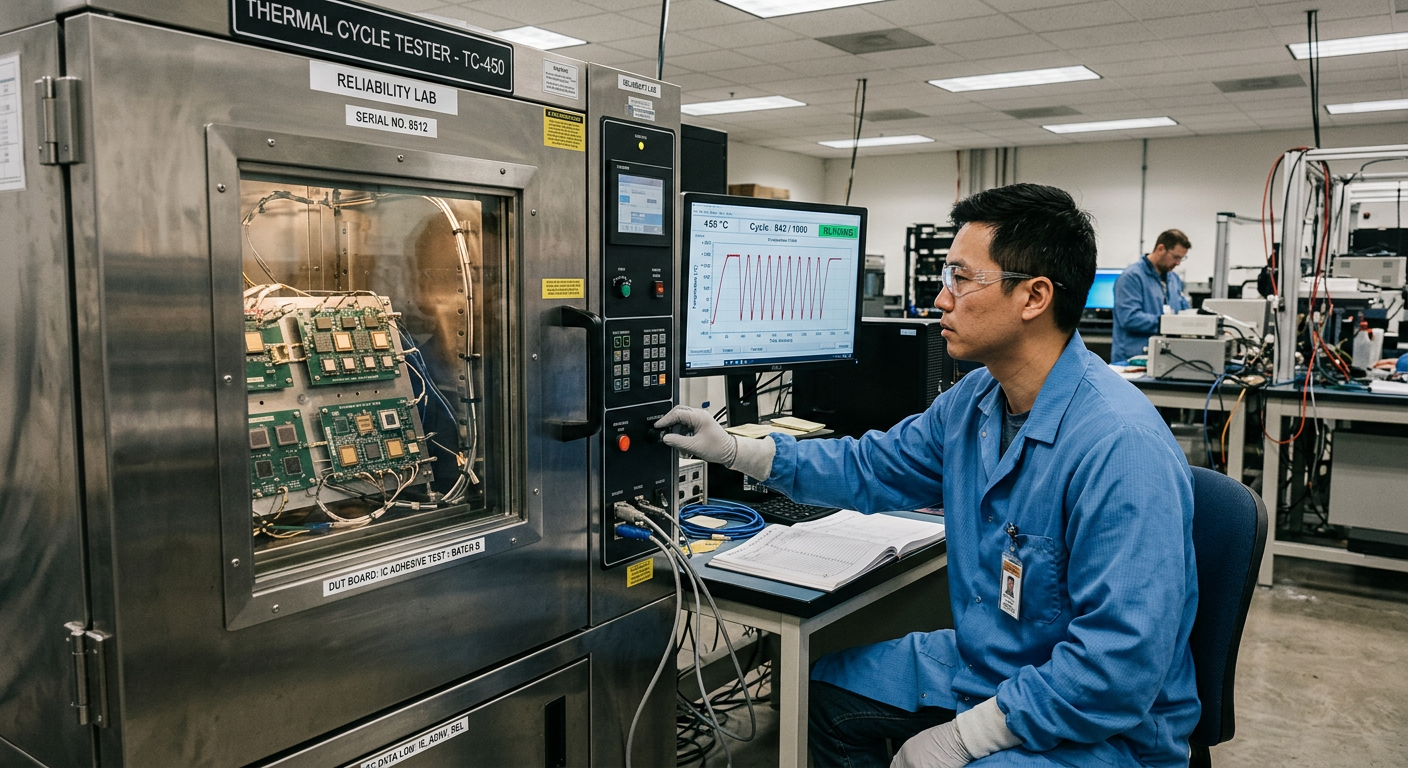
IC Package Adhesive Thermal Cycling Reliability Testing
IC packaging adhesive thermal cycling in the United States requires reliable material selection, supplier review, and test planning for electronics durability.
-

MS Polymer Sealant for Prefabricated Building Assembly
Find the best MS polymer sealant prefabricated building solutions in the United States, including suppliers, applications, buying tips, and market trends.
-
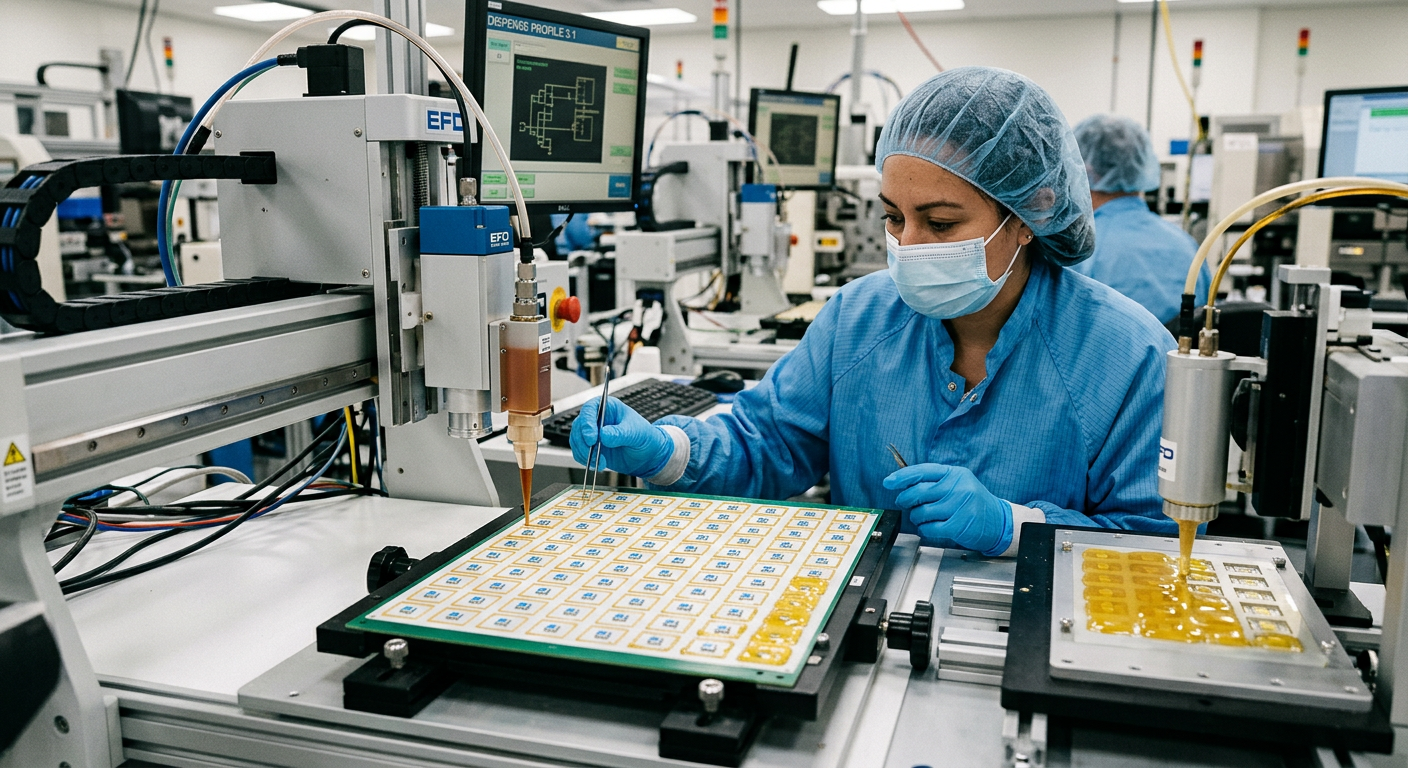
Phosphor Dam and Fill Adhesive for LED Package Assembly
Explore phosphor dam fill adhesive LED package solutions in the United States, including suppliers, material types, buying tips, applications, and 2026 market trends.
 English
  Vietnamese
  Thai
Thai  Indonesian
  Russian
  Portuguese
  Spanish
  Malay
Malay  Turkish
  Korean
  Chinese