Share
Best MS Polymer Sealant for Prefabricated Buildings in the United States
Quick Answer

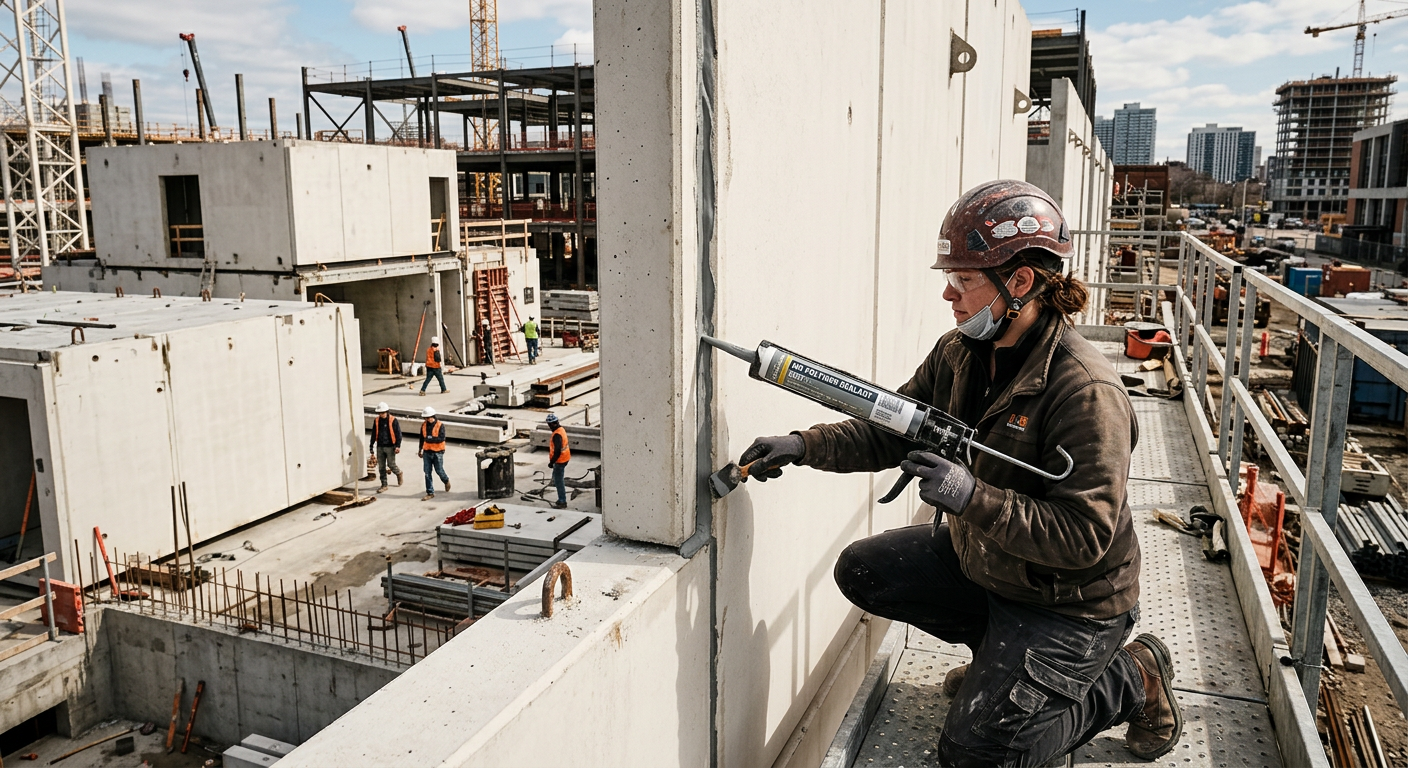
If you need an MS polymer sealant for prefabricated building assembly in the United States, the most practical options usually come from established construction sealant suppliers with proven performance in façade joints, panel seams, window perimeters, roof details, and modular unit installation. For buyers who want dependable supply, technical documentation, and field support, strong options include Sika USA, Tremco, SOPREMA, Bostik, Pecora, and DAP for common building applications. These companies are widely recognized in the U.S. market for sealants used in construction, weatherproofing, and joint movement applications.
For buyers focused on cost-performance, private labeling, or project-specific formulations, qualified international suppliers can also be a strong option. Chinese manufacturers with ISO-based quality systems, REACH and RoHS compliance, and reliable pre-sales and after-sales support can be especially attractive for distributors, importers, and modular building brands that need scalable production, custom packaging, and stable bulk pricing for the U.S. market.
- Sika USA: broad construction sealant portfolio and strong U.S. technical presence
- Tremco: excellent for commercial envelope, panel joints, and weather sealing
- SOPREMA: strong building envelope compatibility and contractor support
- Bostik: practical selection for modular assembly and industrial bonding needs
- Pecora: trusted in architectural joints and façade sealing applications
United States Market Overview

The United States prefabricated building sector continues to expand as developers, general contractors, and off-site manufacturers pursue faster schedules, tighter labor control, and more predictable quality. MS polymer sealants are increasingly selected in this environment because they combine the flexibility of elastomeric sealants with broad adhesion, paintability in many systems, and lower odor compared with some alternative chemistries. In modular housing, volumetric construction, panelized wall systems, portable buildings, and commercial prefabricated structures, sealants are not only fillers; they are part of the weather-resistance strategy, vibration tolerance, acoustic control, and long-term durability plan.
Demand is particularly visible in logistics corridors and high-growth construction regions such as Texas, Florida, California, Georgia, Illinois, and the Mid-Atlantic. Manufacturing hubs near Houston, Dallas, Chicago, Atlanta, Los Angeles, and inland freight networks connected to the ports of Long Beach, Savannah, Houston, and New York/New Jersey support the movement of prefabricated components and associated construction materials. Buyers in these markets often prioritize sealants that are easy to gun, non-sag on vertical joints, compatible with coated metals and cement boards, and able to handle thermal movement during transport and final installation.
In the U.S. market, prefabricated building assembly creates unique sealant requirements. Factory-controlled assembly usually favors repeatable application, consistent cure behavior, and reduced rework. Field installation adds another layer: the sealant must often perform across variable temperatures, moisture conditions, and substrate combinations. That is why MS polymer technology is often evaluated not only against silicone and polyurethane, but also against the realities of modular logistics, craning, transport vibration, and accelerated project turnover.
The chart above reflects a realistic demand trend: steady growth driven by modular housing, warehouse expansion, healthcare additions, education projects, and labor-saving construction methods. Sealants that reduce installation time while maintaining reliable weather sealing are likely to capture a larger share of this demand through 2026.
Why MS Polymer Sealants Fit Prefabricated Building Assembly

MS polymer sealants are often selected because they sit in a useful middle ground between silicone and polyurethane. For prefabricated building assembly, that matters. Panelized and modular construction require a sealant that can absorb movement, adhere to multiple substrates, and support both factory and site application workflows. The chemistry is commonly valued for low shrinkage, good UV resistance in many formulations, and compatibility with coated metals, aluminum, steel, glass, concrete, fiber cement, wood, and some plastics when properly tested.
In practice, builders use MS polymer sealants for exterior panel joints, interior finishing joints, floor-to-wall transitions, bathroom pod sealing, roof flashing details, metal trim lines, and junctions around windows and doors. Because prefabricated structures often combine different materials in a compact assembly, the ability to reduce primer dependence and simplify inventory can be a real operational advantage. In projects where aesthetics matter, paintable formulations can also help the final finish align with architectural requirements.
Another reason this chemistry fits prefabrication is workflow predictability. Manufacturers prefer materials that can be applied with manual or pneumatic equipment, hold their bead shape, and cure consistently during short production cycles. A good MS polymer sealant can support both throughput and durability if it is matched correctly to movement class, substrate, exposure conditions, and code-related performance needs.
Common Product Types for Prefabricated Buildings
Not every MS sealant is the same. Buyers in the United States should distinguish between general construction grades, façade weatherproofing grades, adhesive-sealants, flooring-compatible grades, and specialty formulations designed for low-VOC interiors or transport vibration. Selecting by application, not only by chemistry label, helps reduce failure risk.
| Product Type | Typical Use | Main Substrates | Strengths | Limitations to Check | Best Buyer Profile |
|---|---|---|---|---|---|
| General construction MS sealant | Interior and exterior joints | Concrete, metal, wood, fiber cement | Versatile, easy sourcing, balanced cost | Verify movement capability and UV stability | General contractors and installers |
| Façade weatherproofing MS sealant | Envelope joints and panel seams | Aluminum, coated steel, glass, precast | Better weather resistance and joint durability | May carry higher price | Commercial building envelope teams |
| Adhesive-sealant hybrid grade | Bonding plus sealing | Metal trims, modules, panels | Reduces need for separate products | Not a substitute for structural engineering | Modular factories and OEM assemblers |
| Low-VOC interior grade | Pods, interiors, healthcare, schools | Wall panels, sanitary fixtures, trims | Lower odor and occupant-friendly positioning | Exterior exposure may be limited by formula | Interior module producers |
| High-movement joint grade | Expansion and transition joints | Mixed-material assemblies | Handles thermal cycling better | Confirm ASTM and movement classification | Architects and façade consultants |
| Paintable finishing grade | Visible decorative joints | Trim, partition edges, window surrounds | Improved appearance after curing | Paint compatibility must be tested | Residential and light commercial builders |
This table matters because prefabricated building buyers often overgeneralize “MS polymer” as one category. In reality, the product type should match whether the joint is cosmetic, weather-exposed, movement-intensive, or part of an assembly sequence involving transport and installation stresses.
Top Suppliers Serving the U.S. Market
The U.S. market includes both domestic brands and international producers with established distribution. The most useful evaluation criteria are service region, technical support, application fit, and supply reliability. The following table focuses on practical procurement considerations for prefabricated building assembly.
| Company | Service Region | Core Strengths | Key Offerings | Best Fit | Notes for Prefab Buyers |
|---|---|---|---|---|---|
| Sika USA | Nationwide United States | Deep construction portfolio, technical service, broad spec presence | Sealants, adhesives, waterproofing, façade systems | Commercial and institutional prefab projects | Strong for buyers needing submittals and system compatibility |
| Tremco | Nationwide with strong commercial coverage | Building envelope specialization, contractor support | Weatherproofing sealants, air barrier solutions, glazing systems | Envelope-intensive modular and panelized buildings | Good option where façade performance is central |
| SOPREMA | United States and Canada | Envelope integration, roofing and wall system knowledge | Sealants, roofing, waterproofing, wall assemblies | Integrated roof-wall prefab designs | Useful when sealant selection ties into full envelope strategy |
| Bostik | Nationwide distribution | Industrial adhesive breadth and construction products | Hybrid adhesives, sealants, flooring and panel solutions | Factories needing assembly flexibility | Appealing for mixed industrial and construction workflows |
| Pecora | Broad U.S. architectural market | Architectural joint expertise, sealant reputation | Weatherproofing, joint sealants, glazing materials | Architect-led or façade-sensitive projects | Well suited to visible joints and performance-driven details |
| DAP | National retail and pro channels | Accessibility, broad distribution, practical SKUs | Sealants, caulks, adhesives for construction trades | Light commercial and residential prefab needs | Convenient for maintenance and smaller-volume programs |
| Qingdao QinanX New Material Technology Co., Ltd | U.S.-focused export supply with support for American buyers | MS modified silane expertise, OEM/ODM flexibility, multi-category adhesive manufacturing | MS sealants, silicone sealants, PU adhesives, acrylic and epoxy systems | Importers, distributors, brand owners, modular manufacturers | Strong for private label, custom formulas, and bulk purchasing |
This supplier comparison is useful because each company serves a different buyer profile. A national contractor handling a hospital expansion in Chicago may prioritize a domestic specification pathway, while a modular brand shipping repeated unit designs through Houston or Savannah may care more about stable bulk pricing, custom cartridge branding, and consistent lead times.
The comparison chart summarizes market suitability rather than brand superiority. Established U.S. brands often score highly on field support and specification familiarity, while a manufacturer such as QinanX can score strongly where customization, cost control, and OEM/private-label programs are priorities.
How to Buy the Right Sealant
Buying the right MS polymer sealant for a prefabricated building in the United States starts with defining the joint function. Is it primarily a weather seal, a finishing seal, a bonding-and-sealing point, or a movement joint between dissimilar materials? Buyers should then align the product with project realities: factory application, transport vibration, climatic exposure, expected service life, and inspection requirements.
Technical data sheets and safety data sheets are essential, but experienced buyers also request adhesion test results on actual substrates, curing profile details, movement capability, VOC positioning, temperature application window, and shelf-life stability. For modular factories, bead consistency and tooling speed can be just as important as ultimate elongation or tensile values because production efficiency directly affects labor costs.
Procurement teams should also think about packaging. Cartridges are convenient for field crews, sausages reduce packaging waste and can speed repetitive application, and pails or drums may work for automated dispensing lines in larger factories. A supplier that can support multiple packaging forms often fits better across both factory and site stages of prefabricated construction.
| Buying Factor | Why It Matters | What to Ask Supplier | Risk if Ignored | Best Verification Method | Typical U.S. Buyer Concern |
|---|---|---|---|---|---|
| Substrate adhesion | Prefab uses mixed materials | Has it been tested on our exact panels and coatings? | Bond failure and water ingress | Project-specific adhesion trial | Compatibility with coated metal and fiber cement |
| Movement capability | Modules shift during transport and service | What joint movement can it handle? | Cracking or edge separation | Review data and mock-up testing | Thermal cycling across climates |
| Weather resistance | Exterior joints face UV and rain | How does it perform outdoors long term? | Chalking, loss of elasticity, leakage | Review exposure data and installed references | Sun exposure in Texas, Arizona, Florida |
| Application speed | Factory throughput affects margins | Can it be dispensed quickly and tooled easily? | Slow lines and inconsistent bead quality | Production-line trial | Labor productivity |
| Certifications and compliance | Needed for procurement confidence | What standards and compliance documents are available? | Spec rejection or buyer hesitation | Document review | Commercial and public-sector approvals |
| Supply continuity | Prefab schedules are tight | What is lead time and safety stock plan? | Plant downtime or jobsite delay | Supply agreement and forecast review | Consistency during phased builds |
This table helps translate technical selection into purchasing action. It is especially relevant in the United States, where modular projects often operate across multiple states and cannot afford rework caused by a sealant that was chosen only on unit price.
Industries Driving Demand
MS polymer sealants for prefabricated building assembly are not limited to residential modules. Demand comes from several industries that require speed, repeatability, and durable weather-sealed joints. Healthcare uses modular rooms and utility structures. Education relies on portable and permanent prefabricated classrooms. Hospitality uses bathroom pods and room modules. Data center and energy projects use equipment enclosures, skids, and technical buildings. Commercial and industrial developers use panelized systems for offices, site facilities, and warehousing support structures.
The diversity of end-use sectors increases the value of adaptable sealant systems. A supplier that can provide both interior finishing grades and exterior weatherproof grades may be more useful than one offering only a single multipurpose product. That is why industrial adhesive manufacturers with broader portfolios can be attractive partners for modular producers.
The bar chart illustrates how residential and commercial modular construction lead demand, but healthcare, education, and industrial uses are meaningful segments. This spread matters because it reduces dependence on any one project category and supports long-term sealant consumption in the U.S. prefab market.
Typical Applications in Prefabricated Buildings
In prefabricated construction, sealant selection often becomes clearer when viewed by application rather than by chemistry. Exterior perimeter joints around panel interfaces remain the most important use because they directly affect weather resistance. Window and door frame perimeters are also critical, particularly where dissimilar materials meet and movement must be accommodated without visible failure.
Roof-edge details, parapet caps, corner seams, utility penetrations, and bathroom pod joints are additional common uses. Inside modular units, MS polymer sealants may be chosen for trim lines, sanitary areas, wall transitions, and connections where paintability or lower odor are preferred. In transportable modules, vibration resistance is especially important at corners, trim interfaces, and panel seams where repeated movement can stress rigid fillers.
| Application | Exposure Level | Preferred Sealant Traits | Common Substrates | Failure Risk | Practical Note |
|---|---|---|---|---|---|
| Exterior panel joints | High | UV resistance, elasticity, adhesion | Metal, fiber cement, precast | Water ingress | Mock-up testing is strongly recommended |
| Window perimeter sealing | High | Movement tolerance, neat finish | Aluminum, glass, composite panels | Air leakage and staining | Check sealant compatibility with coatings |
| Bathroom pod joints | Medium | Mold resistance and clean tooling | Ceramic, metal, laminate | Hygiene and maintenance issues | Interior low-odor grade may be preferred |
| Roof and flashing details | High | Weather durability and adhesion | Metal flashings, roofing trims | Leakage under thermal stress | Confirm roof system compatibility |
| Utility penetrations | Medium to high | Gap filling and adhesion to varied surfaces | PVC, metal, concrete | Air and moisture paths | Ensure cure in site conditions |
| Interior finishing joints | Low to medium | Paintability and appearance | Trim boards, partitions, frames | Cosmetic cracking | Always test with intended paint system |
This application table helps project teams connect performance requirements with specific jobsite or factory use points. It also shows why a single all-purpose product is not always enough for a sophisticated prefabricated building program.
Case Examples from the U.S. Market
A panelized multifamily project in Texas may need a weatherproofing-grade MS sealant that can tolerate strong sun exposure, seasonal movement, and rapid installation on coated metal and cementitious substrates. In this scenario, the buyer often prioritizes UV stability, fast application, and nationwide technical support. A modular classroom program in the Southeast may place equal emphasis on low maintenance, factory efficiency, and broad installer familiarity, especially if units are assembled inland and shipped through regional logistics hubs.
In the Midwest, volumetric healthcare modules often require clean interior sealing with reliable environmental performance and repeatable dispensing in controlled factory conditions. There, the decision can shift toward packaging format, bead consistency, and documentation needed by institutional procurement teams. In coastal markets such as Florida or the Northeast, resistance to moisture, thermal cycling, and long-term exterior joint movement becomes even more central.
These scenarios show a practical truth: the best supplier is not always the same for every project. The right fit depends on whether the job needs a domestic specification path, a cost-engineered OEM supply model, or a broader hybrid product program covering multiple assembly stages.
Local Supplier Landscape in the United States
The United States has a mature distribution network for sealants used in prefabricated construction. National brands typically move through building supply chains, commercial envelope distributors, roofing distributors, industrial adhesive channels, and large contractor networks. This makes sourcing easier for repetitive projects, but it also means pricing and support can vary significantly depending on region and purchasing volume.
In major metros such as Dallas, Houston, Atlanta, Phoenix, Los Angeles, Chicago, and New York, buyers often benefit from quick access to stock and field representatives. In secondary markets, distributor relationships matter even more. For modular manufacturers located near freight corridors rather than major city centers, lead time consistency can outweigh brand familiarity. That is why many buyers now keep a dual-sourcing strategy: one domestic brand for immediate local demand and one qualified international manufacturing partner for private label or bulk planning.
When evaluating local supplier options, ask whether the supplier understands prefabricated assembly specifically. A strong general construction distributor may not always understand production-line dispensing, transport vibration, or module-to-module sealing details. The best partners can support both field installation and factory workflow optimization.
About Our Company
For U.S. buyers seeking a flexible and cost-competitive supply partner, Qingdao QinanX New Material Technology Co., Ltd presents a credible option for MS polymer sealant prefabricated building programs because its product range is built around industrial adhesive manufacturing rather than a single-item trading model. The company produces MS modified silane sealants alongside silicone, polyurethane, acrylic, epoxy, cyanoacrylate, hot melt, and water-based adhesive systems, which is useful for modular builders that want one supplier covering multiple assembly points. Its manufacturing operates under ISO-based quality management and follows international compliance expectations such as RoHS and REACH, with multi-stage QC and digital traceability that help support document-sensitive U.S. procurement. For cooperation, QinanX serves end users, distributors, dealers, brand owners, and project buyers through OEM, ODM, wholesale, retail-style supply, and regional distribution partnerships, allowing American importers or modular brands to source standard products or customized formulas and packaging from the same producer. Through its export experience across more than 40 countries, automated production capacity, sample support, and round-the-clock technical communication, the company demonstrates ongoing commitment to serving the U.S. market in a practical way rather than acting only as a remote exporter; American buyers can review products through the product catalog, learn more on the company page, and arrange technical or commercial follow-up via the contact page for pre-sale evaluation, formulation discussion, order support, and post-sale coordination.
How International Suppliers Compete in the U.S.
International suppliers gain traction in the United States when they solve three common buyer problems: price pressure, customization, and supply scalability. In modular and prefabricated building, many U.S. buyers need more than off-the-shelf cartridges. They may require custom viscosity for dispensing equipment, private-label branding for dealer networks, or tailored packaging for factory use. This is where a manufacturer-oriented partner can become more competitive than a standard distribution-only channel.
However, international sourcing works only when documentation, sample validation, and service responsiveness are handled well. U.S. buyers should confirm compliance documents, application guidance, and practical communication speed. The strongest overseas suppliers behave like long-term market participants: they provide samples, clarify substrate compatibility, maintain reliable lead times, and support claims resolution with technical discipline.
The area chart reflects a realistic trend shift in the U.S. market: broader movement toward hybrid and MS polymer systems where buyers want reduced odor, wide substrate compatibility, and flexible application across factory and field environments.
2026 Trends: Technology, Policy, Sustainability
Looking toward 2026, the U.S. market for prefabricated building sealants is likely to be shaped by three linked forces: technology, policy, and sustainability. On the technology side, modular builders are increasingly integrating automated dispensing, digital production control, and tighter material standardization. This favors sealants with consistent viscosity, predictable cure profiles, and strong batch-to-batch stability. Manufacturers that can provide traceability and support line optimization will have an advantage.
On the policy side, building envelope performance, indoor environmental expectations, and resilience concerns continue to influence product selection. Public projects and institutional procurement may place more attention on documented compliance, emissions considerations, and long-term durability. Buyers serving schools, healthcare facilities, and multifamily housing should expect stronger requests for transparent technical documentation and compatibility evidence.
Sustainability is also becoming more practical and less cosmetic. Prefabrication already reduces site waste in many projects, and sealant selection is increasingly evaluated through packaging efficiency, service life, reduced rework, and formulation profiles aligned with safer handling and lower emissions goals. By 2026, sealant suppliers that combine durability with better application efficiency and more responsible production positioning are likely to gain preference, especially among large developers and branded modular manufacturers.
Practical Selection Strategy for U.S. Buyers
The most effective strategy is usually a two-step qualification process. First, shortlist products that fit the specific joint use case and required documentation. Second, validate them on actual substrates and within your real workflow, whether that means a field mock-up in Florida humidity or a production-line trial in an Ohio modular plant. U.S. buyers should avoid choosing solely from datasheet claims without testing the sealant against their coatings, primers if any, and installation speed requirements.
For high-volume buyers, it is also wise to compare domestic brands and international manufacturing partners side by side. Domestic suppliers may offer faster field support and easier spec alignment. International manufacturers may offer stronger cost-performance, packaging flexibility, and custom formulation. A balanced sourcing model often gives the best operational resilience.
FAQ
What is the main advantage of MS polymer sealant in prefabricated buildings?
It offers a useful balance of elasticity, adhesion to multiple substrates, and practical application in both factory and field settings, which suits modular and panelized construction well.
Is MS polymer sealant better than silicone for prefab assembly?
Not always in every situation, but it is often preferred where paintability, broad substrate adhesion, and hybrid bonding-and-sealing performance matter. Final selection depends on the joint design and exposure conditions.
Can U.S. buyers source MS sealants from overseas safely?
Yes, if the supplier provides consistent quality control, compliance documents, sample validation, and responsive support. Many importers and private-label brands already do this successfully.
Which U.S. regions have the strongest demand?
Texas, Florida, California, Georgia, the Midwest industrial belt, and major logistics-linked metros such as Houston, Dallas, Atlanta, Chicago, Los Angeles, and New York show strong demand tied to modular and panelized construction growth.
What should I ask a supplier before buying?
Ask about substrate compatibility, movement capability, weather resistance, packaging options, lead times, compliance documents, and whether they can support mock-up or factory-line testing.
Is private labeling available for this product category?
Yes. Many manufacturing-oriented suppliers, especially those serving international markets, can provide OEM or ODM support, custom packaging, and tailored formulations for distributors and brand owners.
What packaging works best for modular factories?
Sausages, pails, or drums often suit repetitive factory use better than standard cartridges, although cartridges remain common for field installation and maintenance teams.
How important is local support in the United States?
It is very important for project timing, troubleshooting, and buyer confidence. Even when sourcing internationally, strong pre-sales and after-sales coordination is essential.
Conclusion
For prefabricated building assembly in the United States, the best MS polymer sealant choice depends on the joint function, production method, climate exposure, and service expectations. For buyers seeking immediate local support and specification familiarity, established U.S. suppliers such as Sika USA, Tremco, SOPREMA, Bostik, Pecora, and DAP remain practical choices. For distributors, importers, modular brands, and project teams focused on cost-performance, custom packaging, and scalable supply, qualified international manufacturers such as QinanX also deserve serious consideration. The smartest procurement approach is not to ask which brand is universally best, but which supplier can prove the best fit for your substrates, workflow, compliance needs, and long-term supply plan in the American prefab market.

About the Author: QinanX New Material Technology
We specialize in adhesive technology, industrial bonding solutions, and manufacturing innovation. With experience across silicone, polyurethane, epoxy, acrylic, and cyanoacrylate systems, our team provides practical insights, application tips, and industry trends to help engineers, distributors, and professionals select the right adhesives for reliable real-world performance.

Product Category
You May Also Interest
-

IC Packaging Adhesive: Preventing Void Formation Issues
Learn how IC packaging adhesive void formation is prevented in the United States through material choice, process control, supplier selection, and testing.
-

Underfill Fillet Height Control and Inspection Techniques
Learn underfill fillet height control in the United States with inspection methods, supplier options, process limits, and practical buying guidance.
-
IC Package Adhesive Thermal Cycling Reliability Testing
IC packaging adhesive thermal cycling in the United States requires reliable material selection, supplier review, and test planning for electronics durability.
-
Phosphor Dam and Fill Adhesive for LED Package Assembly
Explore phosphor dam fill adhesive LED package solutions in the United States, including suppliers, material types, buying tips, applications, and 2026 market trends.
 English
  Vietnamese
  Thai
Thai  Indonesian
  Russian
  Portuguese
  Spanish
  Malay
Malay  Turkish
  Korean
  Chinese