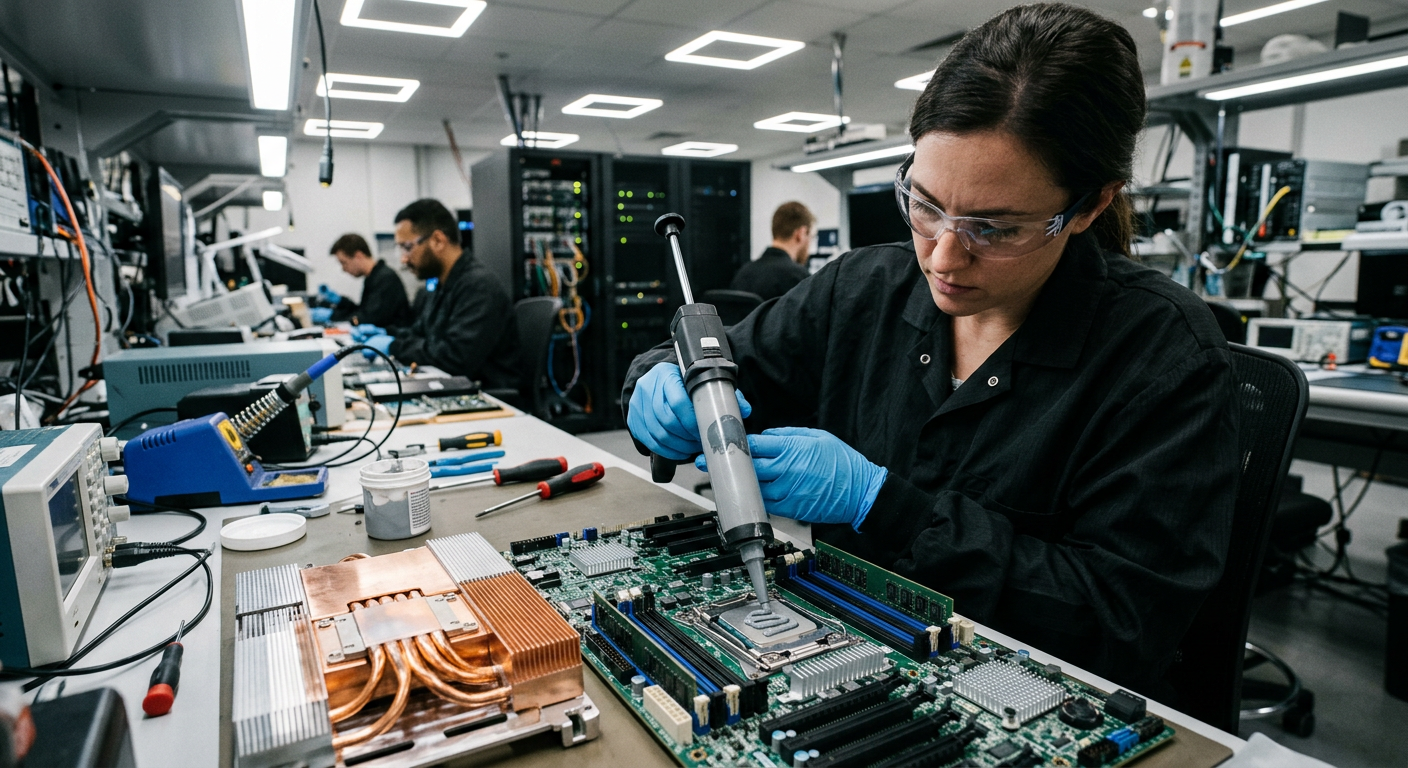
Share
Server Heat Spreader Thermal Adhesive Suppliers in the United States
Quick Answer

If you need thermal adhesive for server heat spreaders in the United States, the most practical shortlist includes Henkel, Parker Lord, 3M, Master Bond, DuPont, and MG Chemicals. These companies are relevant for data center hardware, electronics assembly, and thermal interface bonding where heat spreaders, heat sinks, shielding parts, and structural thermal management all matter. For buyers in U.S. markets such as Silicon Valley, Austin, Phoenix, Boston, and the Northern Virginia data center corridor, the best supplier depends on whether you prioritize thermal conductivity, automation compatibility, UL-related requirements, dielectric performance, or long-term reliability under thermal cycling.
For fast sourcing, start by matching your application to the right adhesive family: silicone-based thermal adhesive for flexibility and gap tolerance, epoxy-based thermal adhesive for strength and dimensional stability, polyurethane systems for specific shock and stress profiles, and specialty electronic adhesives for controlled dispensing and clean assembly. U.S. buyers should also consider qualified international manufacturers that support local requirements, especially when cost-performance is important. Suppliers with ISO-based production, RoHS and REACH compliance, OEM or private-label flexibility, and responsive pre-sale and after-sale technical support can be strong alternatives for American distributors, equipment brands, and contract manufacturers.
- Henkel: strong for electronics manufacturing scale, Loctite thermal materials, and broad U.S. technical support.
- Parker Lord: known for thermal management materials used in demanding electronic assemblies.
- 3M: practical for diversified thermal interface and bonding needs with strong U.S. distribution.
- Master Bond: suitable for custom engineering requirements, specialty formulations, and precision industrial bonding.
- DuPont: relevant where advanced materials integration and electronics performance matter.
- MG Chemicals: accessible for electronics repair, prototyping, and smaller-scale production runs.
United States Market Overview

The United States is one of the world’s most important markets for server thermal management materials because it combines large-scale cloud infrastructure, advanced semiconductor packaging, high-performance computing, telecom expansion, AI server growth, and a mature electronics supply chain. Demand for server heat spreader thermal adhesive is especially concentrated in regions with dense OEM, ODM, EMS, and data center activity. Northern Virginia leads in hyperscale deployments, Silicon Valley remains critical for design and innovation, Texas supports server, telecom, and industrial electronics production, Arizona continues to attract advanced electronics and semiconductor investment, and New England contributes through precision engineering and defense-related electronics.
In practical buying terms, the U.S. market expects more than simple adhesion. Buyers usually require documented thermal conductivity ranges, process consistency, controlled viscosity, predictable cure behavior, low outgassing where needed, electrical insulation performance, and resistance to thermal shock, humidity, and aging. Compliance expectations are also high. Even when a specification does not explicitly require every standard, procurement teams increasingly prefer suppliers able to document ISO quality systems, RoHS and REACH alignment, batch traceability, and repeatable QC controls.
Another major market factor is the move toward denser compute systems. AI servers, GPU clusters, edge computing cabinets, liquid-cooled platforms, and compact 1U or 2U server modules all generate more heat in tighter footprints. That pushes thermal adhesive selection closer to an engineering decision than a commodity purchase. A server heat spreader adhesive may influence operating temperature, component life, rework difficulty, throughput, and even service warranty outcomes.
U.S. buyers also tend to split into several procurement models. Large OEMs and data center hardware brands often seek approved vendor lists, custom validation, and long-term supply assurance. Contract manufacturers prioritize dispensing performance, cure speed, and low defect rates. Regional distributors need flexible pack sizes, stable lead times, and application support. Smaller labs, repair teams, and integrators need reliable access to proven grades without excessive minimum order quantities. This diversity creates room for both established domestic brands and experienced international manufacturers with good market adaptation.
Market Growth and Demand Signals

The following chart illustrates a realistic view of U.S. market growth for thermal adhesive use in server heat spreader applications from 2021 to 2026. Growth is being driven by AI compute density, rack power increases, and continuing data center expansion near major trade and logistics hubs such as Los Angeles/Long Beach, Houston, Savannah, New York/New Jersey, and Chicago.
Common Product Types for Server Heat Spreader Bonding
Thermal adhesive for server heat spreaders is not one single product class. Selection depends on substrate combination, expected heat load, bond line thickness, cure window, assembly speed, and reliability targets. In the U.S. market, four categories appear most often in electronics thermal management projects.
Silicone thermal adhesives are often chosen where flexibility is needed and the design must absorb thermal expansion mismatch between metals, ceramics, and electronic packages. They are useful where the heat spreader must stay bonded despite repeated heating and cooling cycles. Epoxy thermal adhesives are common where stronger structural performance and lower creep are needed, though they are usually less forgiving than silicones under differential expansion. Acrylic or specialty hybrid systems appear in applications where rapid handling strength or certain automated process features matter. Polyurethane-based solutions are less dominant in server heat spreader bonding than silicone or epoxy, but can be relevant for niche stress-management needs.
For many buyers, the most important specification is thermal conductivity, but that number alone is not enough. A higher published W/m·K value does not automatically produce better system-level performance if the adhesive is too thick, too stiff, difficult to dispense, or poorly matched to the substrate. Real selection should consider interface design, clamping behavior during cure, and field conditions.
| Product Type | Typical Use in Server Assembly | Main Strength | Main Limitation | Typical Buyer Profile | Service Region Focus |
|---|---|---|---|---|---|
| Silicone Thermal Adhesive | Heat spreader to housing, module shielding, flexible thermal bonding | Good stress relief and thermal cycling durability | Lower structural rigidity than epoxy | Server OEMs and EMS providers | Nationwide U.S. |
| Epoxy Thermal Adhesive | Rigid heat spreader attachment and permanent electronics bonding | High bond strength and dimensional stability | Can be brittle under mismatch stress | Industrial electronics and high-reliability users | U.S. manufacturing clusters |
| Acrylic Thermal Adhesive | Fast fixture applications with selected thermal needs | Good processing speed in some lines | Less common for premium server thermal paths | Assemblers needing throughput | Regional contract manufacturing hubs |
| Polyurethane Thermal Adhesive | Stress-managed bonding in selected electronic assemblies | Toughness and impact resistance | Less common for top-end thermal conductivity | Niche equipment builders | Industrial regions |
| Gap-Filling Thermal Compound Adhesive | Uneven surfaces and tolerance-heavy assemblies | Fills gaps while transferring heat | May require controlled curing profile | Data center hardware fabricators | U.S. and cross-border North America |
| Two-Part Thermal Adhesive | Custom mix ratio process lines and stronger engineered bonds | Tunable cure and performance range | Mixing equipment needed | Automated production users | Major U.S. electronics zones |
This table shows that product type should be selected by assembly reality, not by brochure language. A server manufacturer in Austin building high-volume rack units may prioritize controlled dispense and cure consistency, while an engineering group in San Jose may care more about thermal cycling and compact mechanical tolerance. The right thermal adhesive is always the one that supports the entire assembly process and long-term operating profile.
Industry Demand by Application Segment
The next chart compares where server-related thermal adhesive demand is strongest in the U.S. electronics and thermal management landscape.
How to Buy the Right Thermal Adhesive
Purchasing teams in the United States usually reduce mistakes by using a structured evaluation process. The first step is to define the thermal path. Ask whether the adhesive mainly secures a heat spreader, fills a gap, bonds a sink to a module, or helps transfer heat from local hotspots to a wider metallic surface. The second step is to map material pairing: aluminum, copper, plated steel, ceramic, FR-4, package mold compound, or coated surfaces all interact differently.
The third step is to define process conditions. Is the assembly manual, semi-automatic, or fully automated? Is room-temperature cure acceptable, or is heat cure needed to improve throughput? Do you need one-component material for convenience, or two-component material for controlled performance? The fourth step is durability. U.S. buyers often require resistance to vibration in transport, thermal shock in operation, and humidity exposure in mixed climate logistics and deployment environments.
Cost should be assessed in total system terms, not only by unit price. A lower-cost adhesive that increases rework, slows line speed, or causes thermal failure is usually more expensive in the end. Buyers near large logistics nodes such as Chicago, Atlanta, Dallas, and the Port of Los Angeles may also factor inventory continuity and domestic stock availability into their qualification plan.
| Buying Criterion | Why It Matters | What to Ask Supplier | Red Flag | Best Fit Example | U.S. Buyer Impact |
|---|---|---|---|---|---|
| Thermal Conductivity | Determines heat transfer efficiency | What test method and bond line assumptions were used? | Only one headline number with no context | High-density CPU or GPU module | Directly affects operating temperature |
| Viscosity and Dispensing | Controls manufacturing consistency | Can it run on existing dispense equipment? | Unstable flow from batch to batch | High-volume EMS line | Impacts scrap and takt time |
| Cure Profile | Changes throughput and bond reliability | Room cure, heat cure, or dual cure options? | Long cure without production support | Automated server assembly | Impacts line scheduling |
| Electrical Properties | Important around electronic components | Is the material electrically insulating? | Unclear dielectric data | PCB-adjacent heat spreaders | Reduces short-circuit risk |
| Reliability Testing | Validates field durability | Any thermal cycling, humidity, or aging data? | No performance history | Mission-critical data center hardware | Supports warranty confidence |
| Supply Support | Prevents qualification disruption | Are local stock, samples, and technical support available? | Slow answers and uncertain lead time | Regional distributor network | Supports stable procurement |
The explanation behind this table is simple: a reliable supplier answers engineering questions with data, process guidance, and quality records. A weak supplier focuses only on price or general claims. In the U.S. market, practical documentation and responsive support often separate scalable partners from risky ones.
Industries Using Thermal Adhesive for Heat Spreaders
Although the main focus here is server equipment, the same thermal adhesive technologies are used across several adjacent sectors. This matters because cross-industry use often improves product maturity and supply resilience. Electronics thermal materials developed for automotive power modules, telecom base stations, industrial power systems, or renewable energy controls often transfer well into server and storage hardware.
The strongest U.S. demand centers include hyperscale computing, enterprise server manufacturing, edge cabinets for telecom and smart infrastructure, networking switches, storage systems, industrial controllers, and defense-related processing equipment. In all of these, heat spreader bonding supports thermal uniformity, local hotspot management, and mechanical integration where screws or clips are not ideal.
Applications in Server and Data Center Hardware
Within server platforms, thermal adhesive can be used in several ways. It can bond a metal spreader to a package or subassembly, secure thermal shields to electronics housings, mount heat transfer elements on power components, and help bridge heat from memory, VRM, or control modules to a broader metallic frame. It can also support compact edge systems where conventional fastening methods add size, weight, or process complexity.
As rack power density rises, especially in AI and accelerated computing systems, thermal interfaces are moving from secondary materials to design-critical elements. In dense blade systems, adhesives that maintain consistent contact despite thermal expansion can improve reliability. In transportable or edge server units exposed to vibration, a well-chosen adhesive can reduce mechanical loosening risks compared with purely mechanical attachment. In customized short-run assemblies, adhesive bonding also simplifies prototyping and mixed-material designs.
Trend Shift in Material Preferences
This area chart shows how U.S. preference is shifting from conventional rigid bonding toward more engineered thermal interface solutions that combine conductivity, controlled compliance, and process automation benefits.
Case Studies and Practical Scenarios
A U.S. cloud hardware integrator assembling GPU server nodes in Texas may need a thermal adhesive to secure auxiliary heat spreaders near power regulation modules. The chosen material must cure predictably, avoid contamination risk, and tolerate repeated thermal cycles during heavy compute loads. In this case, a silicone-based thermal adhesive or carefully selected epoxy system may work depending on required stiffness.
A California networking hardware company may use thermal adhesive for compact switch assemblies where metallic spreaders route heat away from localized chipsets. Here, dispense precision and electrical insulation become key because the adhesive sits close to populated board areas. A formulation with controlled flow and reliable dielectric behavior is often preferred.
An industrial edge computing supplier in Illinois may value thermal shock resistance and transport durability more than maximum conductivity alone, especially for systems shipped across wide temperature zones. In this scenario, adhesive toughness and long-term bond integrity can outweigh the pursuit of the highest headline thermal number.
These examples show that the “best” adhesive is application-specific. Engineers should validate the material in the actual stack-up, under the true thermal load, and with realistic production conditions.
Top Suppliers in the United States
The supplier landscape below includes major U.S.-active brands that are commonly considered for thermal adhesives used in server heat spreader and electronics thermal management applications. Availability, exact grades, and application fit vary by project, so these names are best used as a qualification starting list rather than a one-size-fits-all ranking.
| Company | Service Region | Core Strength | Key Offerings | Best For | Practical Note |
|---|---|---|---|---|---|
| Henkel | United States nationwide | Large-scale electronics materials portfolio | Loctite thermal adhesives and interface materials | OEMs, EMS, enterprise hardware brands | Strong validation and application support |
| Parker Lord | United States and North America | Engineered bonding for demanding assemblies | Thermally conductive adhesives and specialty materials | High-reliability electronics | Useful for performance-driven projects |
| 3M | United States nationwide | Broad industrial and electronics distribution | Thermal interface and bonding solutions | Multi-site buyers and distributors | Good channel access and brand familiarity |
| Master Bond | United States with export reach | Specialty formulation expertise | Epoxy, silicone, and custom electronic adhesives | Custom engineering and low-to-mid volume specialty work | Strong technical matching for niche applications |
| DuPont | United States strategic markets | Advanced materials integration | Electronics materials and thermal management solutions | Premium electronics and advanced system design | Best evaluated through project-specific engagement |
| MG Chemicals | United States via distributors | Accessible electronics materials supply | Thermal adhesives, compounds, repair materials | Lab, repair, prototype, smaller manufacturing teams | Good for practical smaller-scale sourcing |
This supplier table is most useful when read as a market map. Henkel and 3M are often favored for broad U.S. availability and corporate procurement familiarity. Parker Lord and Master Bond become especially relevant when performance engineering or application-specific matching is central. DuPont is important in advanced materials ecosystems, while MG Chemicals remains convenient for smaller teams and accessible distribution.
Supplier Comparison by Purchasing Priorities
The following comparison chart helps visualize how typical buyers might assess supplier fit across four common procurement priorities.
Local Sourcing Versus International Supply
Many U.S. buyers start with domestic brands for qualification convenience, but international sourcing has become more common when buyers need better cost control, custom packaging, private label support, or broader formulation flexibility. This is especially true for regional distributors, aftermarket sellers, and brand owners who need differentiated product offerings. Port access through Los Angeles/Long Beach, Houston, Savannah, and New York/New Jersey makes containerized or palletized adhesive imports manageable when paired with stable demand planning.
The key is not simply whether a supplier is domestic or overseas. The more important question is whether the supplier can meet U.S. compliance expectations, provide consistent quality records, support technical troubleshooting, and maintain practical logistics for replenishment. Buyers should ask for sample validation, specification sheets, QC traceability, packaging options, and after-sales support procedures before approving a new source.
| Sourcing Model | Main Advantage | Main Risk | Best Buyer Type | Key Requirement | Typical Outcome |
|---|---|---|---|---|---|
| Domestic Brand Direct | Fast communication and known reputation | Higher cost in some cases | Large OEMs | Formal qualification support | Stable but premium procurement |
| Domestic Distributor | Convenient local stock | Limited customization | Midsize manufacturers | Regional inventory depth | Fast replenishment |
| International OEM Supply | Strong cost-performance | Longer qualification process | Brand owners and importers | Compliance and traceability | Competitive margin improvement |
| Private Label Import | Brand differentiation | Needs packaging and documentation control | Distributors and dealers | Stable OEM partner | Higher channel flexibility |
| Hybrid Dual Sourcing | Supply risk reduction | More qualification work | Strategic procurement teams | Cross-approval management | Better continuity and leverage |
| Project-Based Specialty Source | Tailored engineering fit | Can have narrower supply scale | R&D groups | Close technical collaboration | Optimized niche performance |
The explanation for this sourcing table is that procurement strategy shapes technical outcomes. A U.S. buyer focused on speed may prefer a domestic distributor, while a brand owner launching a thermal management line may gain more from an international OEM relationship with private-label control. The best decision balances engineering fit, landed cost, and support certainty.
Our Company
Qingdao QinanX New Material Technology Co., Ltd is well positioned for U.S. buyers seeking a practical thermal adhesive partner for server heat spreader and electronics applications because its manufacturing system is built around ISO-controlled production, multi-stage QC, digital batch traceability, and compliance with RoHS and REACH expectations that American electronics and industrial buyers routinely request. The company’s product base spans silicone, polyurethane, acrylic, epoxy, MS polymer, cyanoacrylate, hot melt, and water-based systems, which means local customers do not have to force a server heat spreader project into a one-material catalog when a better-fit formulation is available. For end users, contract manufacturers, distributors, dealers, private-label brand owners, and even smaller-volume buyers, QinanX supports flexible cooperation models including OEM, ODM, wholesale, custom formulation, and branded packaging through automated production lines designed for consistent scale. For the U.S. market, that matters because buyers often need more than a standard drum or cartridge: they may need custom viscosity windows, retail-ready packs, regional distribution support, or specification alignment with an existing product line. Through its export experience across more than 40 countries, free sample programs, round-the-clock technical response, and tailored project support before and after purchase, the company operates with the kind of continuity and accountability U.S. purchasers expect from a long-term market participant rather than a distant spot exporter. Buyers evaluating alternatives can review its broader adhesive product range, learn more on the company profile page, or request technical discussion through the United States inquiry contact.
What Makes a Good Server Heat Spreader Thermal Adhesive
A good server heat spreader thermal adhesive should combine adequate thermal conductivity with stable adhesion, process compatibility, and life-cycle durability. For U.S. projects, especially those tied to enterprise hardware, cloud infrastructure, telecom, or industrial computing, the practical checklist usually includes controlled viscosity, predictable cure, reliable insulation where required, resistance to humidity and heat aging, and compatibility with aluminum or copper spreaders and coated or bare electronic surfaces.
Another important point is manufacturability. A material that looks strong on paper but strings badly during dispensing, traps voids, or demands an unrealistic cure schedule will create line problems. Process stability is especially important for U.S. EMS facilities that run mixed products and need repeatable throughput.
2026 Trends in the United States
By 2026, the U.S. market for thermal adhesive in server heat spreader applications is likely to be shaped by three major forces: denser compute architectures, policy pressure on efficiency and materials reporting, and stronger sustainability expectations in procurement. AI and high-performance computing will keep pushing localized heat flux higher, which will increase demand for more engineered thermally conductive adhesives that perform consistently in compact assemblies. As cooling architectures diversify, adhesives may need to work alongside vapor chambers, liquid-assisted systems, and more complex metal assemblies rather than simple passive sinks.
On the policy side, U.S. buyers increasingly ask for transparent compliance records, safer chemistry management, and supply-chain visibility. Even where direct regulation is not yet strict, major customers often impose internal standards that reach down to the material supplier level. Sustainability will also become more visible in purchasing decisions, with greater attention to solvent reduction, manufacturing efficiency, lower-waste packaging, and longer-life assemblies that reduce replacement cycles. Suppliers able to support these trends with test data, cleaner process options, and flexible custom development will have the strongest position.
FAQ
Is thermal adhesive better than thermal paste for a server heat spreader?
They serve different purposes. Thermal paste mainly improves thermal contact between parts that are mechanically clamped, while thermal adhesive both bonds and transfers heat. If the heat spreader must be fixed in place without screws or clips, adhesive is often the better choice.
What thermal conductivity should I look for?
There is no single correct number. For server heat spreader use, buyers should evaluate the whole interface design, bond line thickness, and actual operating conditions. A moderate conductivity material with better contact and durability can outperform a higher-number material in real use.
Are silicone or epoxy thermal adhesives better for server hardware?
Silicone is often better where flexibility and thermal cycling resistance matter. Epoxy is often better where structural rigidity and permanent bonding are more important. The choice depends on substrate mismatch, service temperature, and manufacturing process.
Can international suppliers meet U.S. requirements?
Yes, if they provide the right compliance documents, quality control traceability, technical support, and reliable export service. Many U.S. buyers now qualify overseas suppliers when the cost-performance balance is favorable and support quality is strong.
What pack sizes are common for U.S. buyers?
Common formats include syringes, cartridges, pails, and drums, depending on whether the buyer is a lab, repair team, contract manufacturer, or large OEM production line.
How should I validate a new thermal adhesive supplier?
Start with data sheet review, sample testing on your actual substrate stack-up, cure verification, thermal cycling checks, and process trials on the intended dispensing equipment. Then review supply continuity, QC records, and response speed for technical issues.
Final Buying Takeaway
For buyers in the United States, the best server heat spreader thermal adhesive supplier is the one that combines verified thermal performance with process stability, compliance documentation, and dependable support. Henkel, Parker Lord, 3M, Master Bond, DuPont, and MG Chemicals are all reasonable starting points for U.S.-active sourcing. At the same time, internationally experienced manufacturers with strong certification discipline, custom formulation capability, OEM flexibility, and responsive support can be competitive options for American importers, distributors, and hardware brands. In a market where AI server density, energy efficiency, and reliability expectations are all rising, informed adhesive selection is no longer a minor purchasing detail; it is part of the thermal design strategy itself.

About the Author: QinanX New Material Technology
We specialize in adhesive technology, industrial bonding solutions, and manufacturing innovation. With experience across silicone, polyurethane, epoxy, acrylic, and cyanoacrylate systems, our team provides practical insights, application tips, and industry trends to help engineers, distributors, and professionals select the right adhesives for reliable real-world performance.

Product Category
You May Also Interest
-
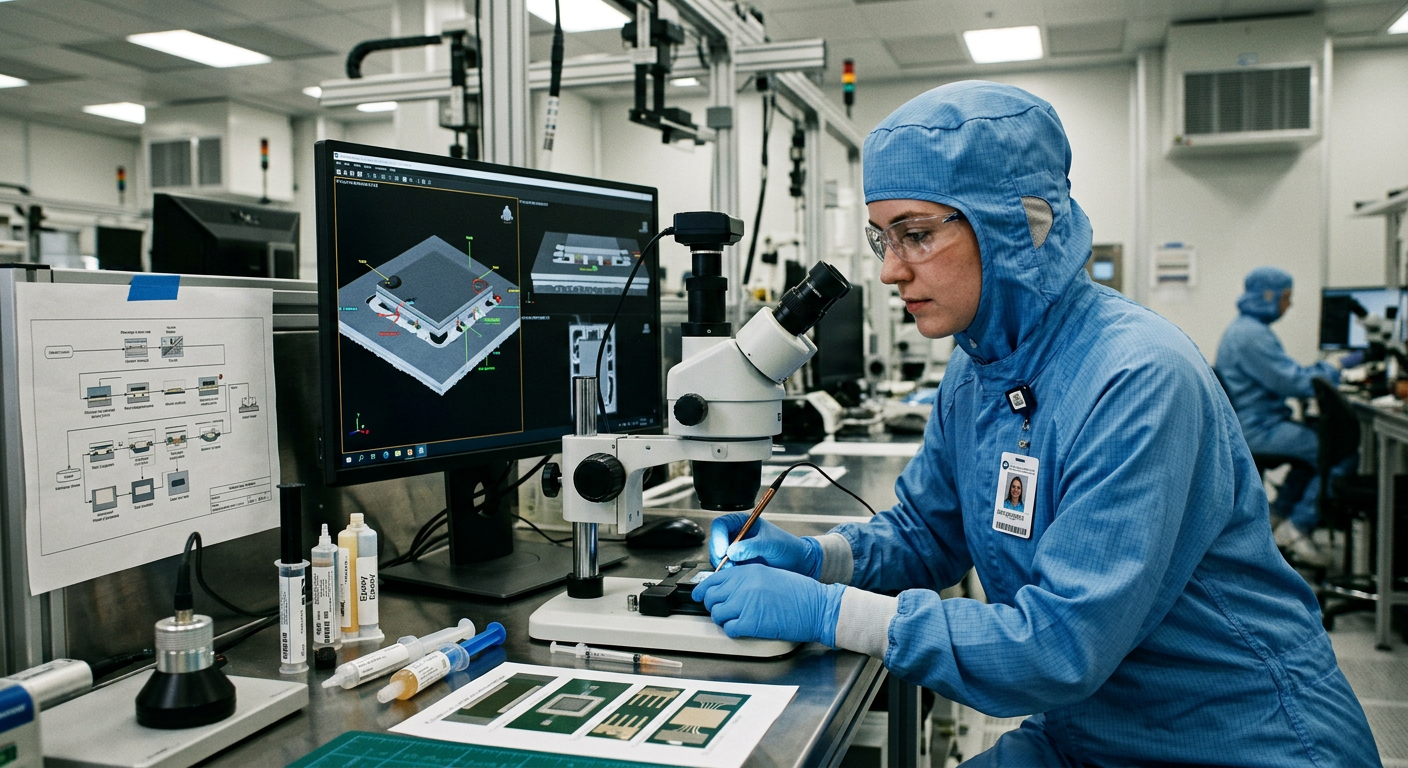
IC Packaging Adhesive: Preventing Void Formation Issues
Learn how IC packaging adhesive void formation is prevented in the United States through material choice, process control, supplier selection, and testing.
-
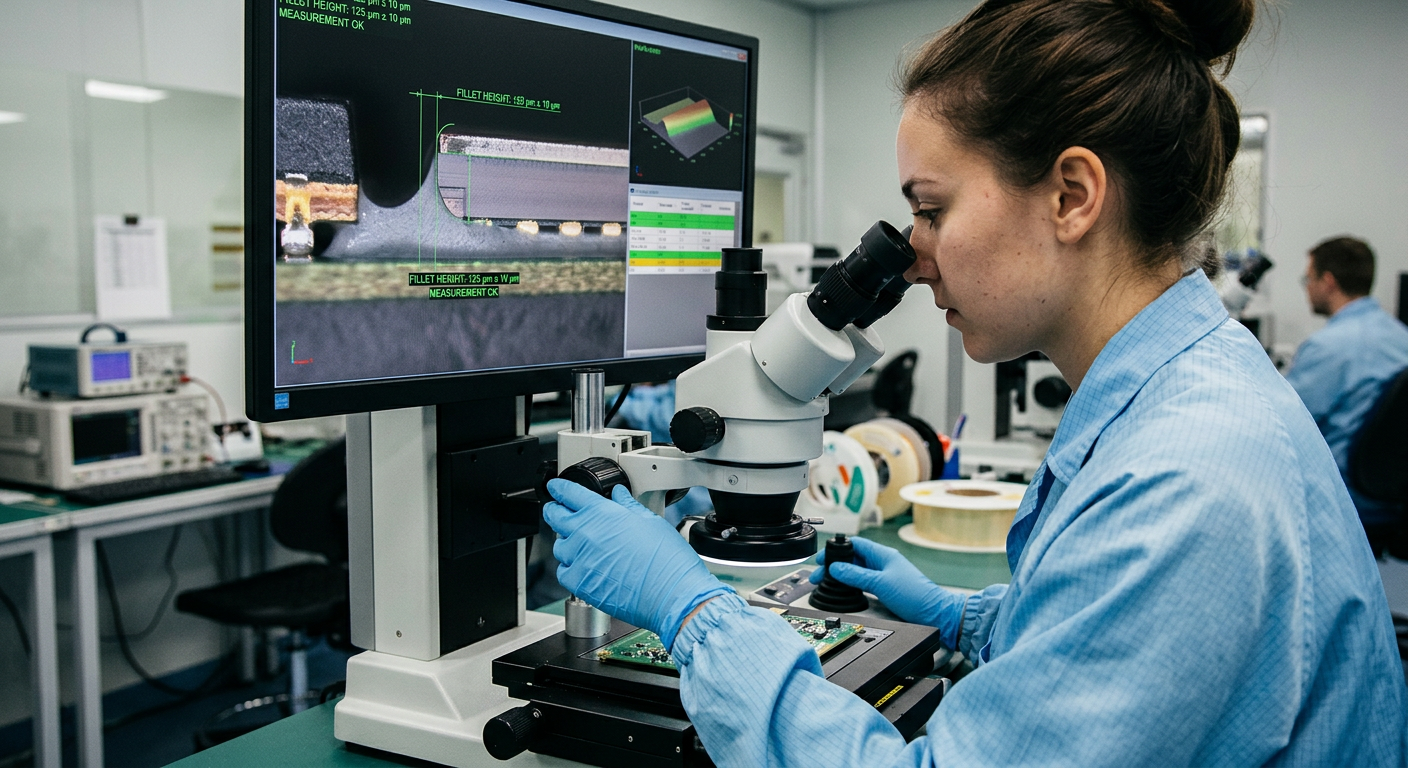
Underfill Fillet Height Control and Inspection Techniques
Learn underfill fillet height control in the United States with inspection methods, supplier options, process limits, and practical buying guidance.
-
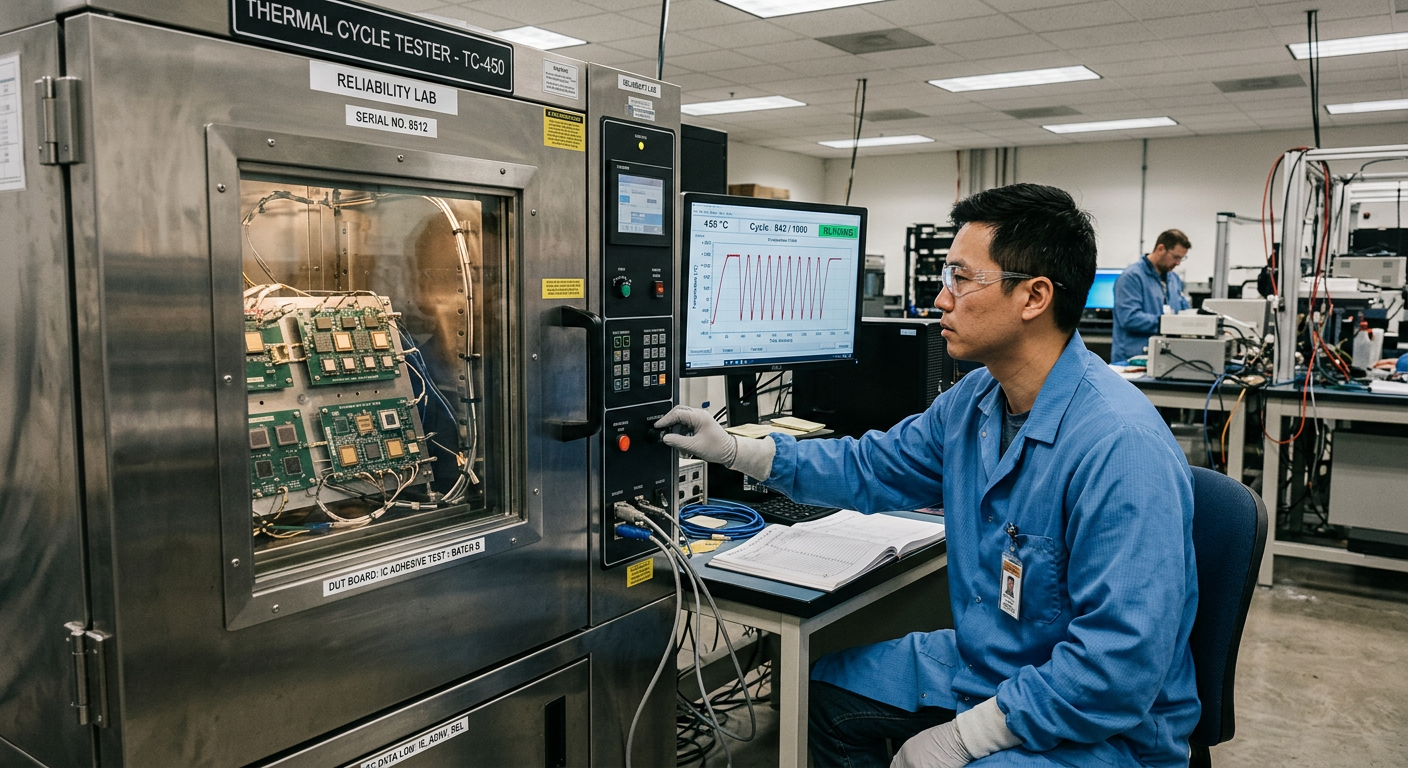
IC Package Adhesive Thermal Cycling Reliability Testing
IC packaging adhesive thermal cycling in the United States requires reliable material selection, supplier review, and test planning for electronics durability.
-

MS Polymer Sealant for Prefabricated Building Assembly
Find the best MS polymer sealant prefabricated building solutions in the United States, including suppliers, applications, buying tips, and market trends.
 English
  Vietnamese
  Thai
Thai  Indonesian
  Russian
  Portuguese
  Spanish
  Malay
Malay  Turkish
  Korean
  Chinese