Share
Die Attach Adhesive Thermal Resistance Guide for United States
Quick Answer

In the United States, the most practical way to evaluate die attach adhesive thermal resistance is to match the adhesive’s thermal conductivity, bond line thickness, cure profile, coefficient of thermal expansion, and long-term reliability to the device package and operating temperature. For power electronics, LEDs, automotive control modules, RF devices, and industrial semiconductors, buyers typically shortlist suppliers that can show verified thermal resistance data under realistic assembly conditions rather than only quoting bulk thermal conductivity.
The most recognized suppliers serving the U.S. market include Henkel, DuPont, Indium Corporation, Master Bond, Panacol, and 3M. These companies are widely considered for die attach materials used in New York, California, Texas, Arizona, Oregon, and electronics manufacturing hubs across the United States. If your target is lower junction temperature, better heat dissipation, and stable performance through thermal cycling, silver-filled epoxy die attach adhesives are usually the first option; for more flexible assemblies and lower stress, silicone or specialty hybrid systems may be considered.
For immediate action, ask each supplier for thermal resistance data measured at your expected bond line thickness, substrate type, die size, and cure schedule. Also request reliability results for temperature cycling, high-temperature storage, humidity exposure, and shear strength retention. Qualified international suppliers can also be considered, especially manufacturers with RoHS and REACH compliance, ISO-based quality systems, OEM or private-label flexibility, and strong pre-sales and after-sales support. In many U.S. projects, cost-performance advantages from experienced overseas producers become attractive when they can support local timelines, documentation, and technical communication.
United States Market Overview

The U.S. market for die attach adhesive solutions remains driven by semiconductor packaging, electric vehicles, advanced driver assistance systems, telecom hardware, medical electronics, aerospace modules, LED lighting, and industrial controls. Demand is concentrated in technology and manufacturing corridors such as Silicon Valley, Austin, Phoenix, Portland, Boston, Detroit, San Jose, San Diego, and the broader Northeast electronics belt. Imports also flow efficiently through major logistics hubs including the ports of Los Angeles, Long Beach, New York and New Jersey, Savannah, and Houston, which matters when adhesive buyers need predictable lead times for production schedules.
Thermal resistance has become one of the most closely reviewed specifications because power density keeps rising while package sizes shrink. U.S. manufacturers increasingly need die attach materials that handle higher heat flux without sacrificing electrical insulation where required, or electrical conductivity where package architecture demands it. This is especially visible in EV inverters, battery management systems, IGBT modules, SiC devices, GaN devices, optoelectronics, and 5G infrastructure assemblies.
Another defining feature of the United States market is qualification rigor. Buyers often require documentation aligned with internal supplier quality programs, customer PPAP-style review processes in automotive-related applications, and environmental compliance checks. As a result, a supplier’s credibility depends not only on the adhesive formula itself, but also on data transparency, lot traceability, shelf-life management, and process support for dispensing, stamping, screen printing, or jetting.
How Thermal Resistance Is Specified

Die attach adhesive thermal resistance is the measure of how strongly the adhesive layer resists heat flow from the semiconductor die to the substrate or package. In practice, lower thermal resistance usually supports lower junction temperatures, better device longevity, and more stable electrical performance. However, buyers in the United States should be careful not to compare products on thermal conductivity alone. A material with high published conductivity can still perform poorly if bond line thickness is uncontrolled or if voiding occurs during assembly.
Key variables include adhesive chemistry, filler type, filler loading, bond line thickness, die size, substrate flatness, wetting performance, cure conditions, and void content. The reason this matters is simple: the effective thermal path in a real package is not identical to the bulk material value in a technical data sheet. Therefore, engineering and procurement teams should ask for application-specific validation.
In U.S. sourcing discussions, the following related terms often appear together: thermal conductivity, thermal impedance, junction-to-case thermal performance, bond line control, die shear strength, outgassing, bleed, voiding, and thermal cycling durability. Reviewing all of them together provides a more realistic picture than relying on a single headline figure.
Key Specification Factors Buyers Review
| Specification Factor | Why It Matters | Typical Buyer Target in U.S. Projects | Risk If Ignored |
|---|---|---|---|
| Thermal conductivity | Indicates heat transfer capability of the adhesive bulk material | Usually medium to high for power devices and LED packaging | Higher junction temperature and lower power efficiency |
| Bond line thickness | Directly affects total thermal resistance of the joint | Tightly controlled thin bond line for repeatable performance | Thermal variation between production lots |
| Cure profile | Determines throughput and final network structure | Matched to assembly line and substrate limits | Incomplete cure, weak bond, unstable thermal path |
| Die shear strength | Shows mechanical integrity after bonding | Stable at room and elevated temperature | Cracking, die movement, premature field failure |
| Thermal cycling resistance | Measures reliability under repeated temperature changes | Required for automotive, industrial, aerospace use | Delamination and rising thermal resistance over time |
| Moisture resistance | Important for humid environments and long service life | Strong retention after humidity aging | Corrosion, interface degradation, package failure |
| Electrical behavior | Some packages need conductive systems, others insulating | Selected by package design and circuit requirement | Short circuits or performance mismatch |
This table shows why U.S. buyers evaluate die attach adhesive thermal resistance as part of a full package reliability framework. A supplier that offers only conductivity values without process and reliability context is usually not enough for a serious qualification program.
Common Product Types in the U.S. Market
Different device architectures require different material platforms. The most common die attach adhesive families used in the United States include silver-filled epoxy systems, non-conductive epoxy systems, silicone die attach materials, polyimide-based systems for high-temperature applications, and specialized hybrid adhesives for low-stress thermal interfaces.
Silver-filled epoxy adhesives are preferred where strong thermal performance and electrical conductivity are needed, such as power semiconductors and some RF modules. Non-conductive epoxies are selected where insulation matters but robust heat transfer is still necessary. Silicone systems are used when flexibility, thermal shock tolerance, and stress absorption are more critical than maximum conductivity. Polyimides and advanced high-temperature chemistries are common in aerospace, downhole, and extreme-environment electronics.
Product Type Comparison
| Adhesive Type | Thermal Performance | Mechanical Behavior | Typical U.S. Applications |
|---|---|---|---|
| Silver-filled epoxy | Very strong thermal path and often electrically conductive | Rigid, high strength | Power modules, LEDs, RF, automotive electronics |
| Non-conductive epoxy | Moderate to high depending on filler system | Rigid, good dimensional stability | Sensors, IC packaging, control modules |
| Silicone die attach | Moderate, lower than silver-filled epoxy in many cases | Flexible, stress-relieving | Optoelectronics, assemblies with CTE mismatch |
| Polyimide-based adhesive | Useful in high-temperature service | Stable at elevated temperature | Aerospace, defense, specialty semiconductors |
| Hybrid thermal adhesive | Balanced thermal and mechanical performance | Tunable properties | Advanced industrial and telecom packages |
| Low-bleed die attach paste | Engineered for precision placement and cleanliness | Process-friendly | Fine-pitch and small-die packaging lines |
For procurement teams, this comparison highlights the basic trade-off: the best thermal resistance result is often achieved with highly filled, tightly controlled systems, but those same materials may introduce stress if the package sees large thermal excursions. The right choice depends on the full application environment, not only on a single data-sheet number.
Market Growth in the United States
Electronics assembly demand in the United States is being supported by reshoring efforts, federal support for semiconductor investment, automotive electrification, and growth in industrial automation. These trends are increasing demand for reliable thermal management materials, including die attach adhesives. Buyers in states such as Arizona, Texas, New York, and California increasingly prioritize domestic support capability even when they source materials globally.
The line chart illustrates a realistic market growth pattern, reflecting expansion in semiconductor packaging, EV-related electronics, and high-reliability assemblies. While exact growth rates vary by segment, the direction is clear: thermal performance materials are under more scrutiny than ever.
Industry Demand by End Use
Demand is not evenly distributed. The strongest U.S. pull comes from sectors where power density, reliability, and thermal cycling performance create serious material stress. Automotive electronics, industrial automation, telecom infrastructure, and LED packaging continue to be large users of thermally managed die attach systems.
This demand view helps buyers understand where supplier capacity tends to be allocated. For example, suppliers that already serve automotive or aerospace customers often have stronger documentation and qualification discipline, but may also require longer approval cycles.
Trend Shift in Material Preferences
The U.S. market is gradually shifting from simple conductivity-first selection to a broader performance model that includes thermal cycling reliability, low-void assembly, reduced volatile content, process automation compatibility, and sustainability expectations. This is especially true as more factories adopt automated dispensing, data traceability, and tighter statistical process control.
The area chart shows an important change in buyer behavior. Purchasing teams in the United States are aligning more closely with engineering teams, and final sourcing decisions increasingly depend on performance across the full product life cycle rather than initial material cost alone.
Buying Advice for U.S. Engineers and Procurement Teams
The best approach is to define the thermal path before asking for samples. Start with die size, target power dissipation, allowable junction temperature rise, substrate type, and process method. Then define the acceptable cure window, production takt time, dispensing behavior, and rework policy. This helps suppliers recommend the right chemistry rather than sending a generic “high thermal conductivity” product that may not fit your package.
Buyers should also request application notes related to silver migration risk, pump-out or bleed behavior, ionics, and storage handling. For U.S. operations managing multiple contract manufacturers across different states, consistency of process support is especially important. If one facility is in California and another in Texas, both need comparable instructions and quality documentation to avoid qualification drift.
Another practical point is logistics. Thermally conductive die attach products may require cold-chain storage, short floor life, or controlled thaw procedures. If your supplier cannot support shipping and storage compliance into major U.S. regions, attractive pricing may quickly be offset by scrap, line downtime, or inconsistent bond quality.
Supplier Comparison for the United States
| Company | Primary Service Region | Core Strength | Key Offerings |
|---|---|---|---|
| Henkel | Nationwide United States with strong support in electronics manufacturing hubs | Broad semiconductor packaging portfolio and process support | Silver-filled and specialty die attach adhesives for power and IC packaging |
| DuPont | United States and global OEM networks | Advanced materials expertise and established electronics credibility | Thermally managed adhesive systems for semiconductor and electronic assembly |
| Indium Corporation | Strong U.S. presence including Northeast technical support | Deep thermal materials expertise and packaging knowledge | Die attach materials, solder alternatives, thermal interface solutions |
| Master Bond | United States with custom technical support from New Jersey | Custom formulations and high-reliability adhesives | Epoxy systems with thermally conductive and specialty properties |
| Panacol | United States through distribution and technical channels | Precision adhesive solutions for electronics and optoelectronics | Die attach and UV or heat-curing specialty adhesives |
| 3M | Nationwide United States industrial channels | Large-scale industrial materials expertise | Thermal management adhesives and electronic assembly materials |
| Namics | Serves U.S. semiconductor and electronics customers | Packaging materials specialization | Die attach pastes and semiconductor packaging compounds |
This supplier table is useful because it combines service region, technical positioning, and product focus. For U.S. buyers, service coverage matters nearly as much as raw product performance, particularly when production lines need on-site troubleshooting or fast lot review.
Detailed Supplier Analysis
Henkel remains one of the most visible names in die attach adhesive selection for American manufacturers. It is often preferred for high-volume electronics, automotive electronics, and semiconductor packaging projects that need broad technical documentation and large-scale supply capability. DuPont is frequently evaluated where advanced material engineering and long-term electronics platform support are priorities. Indium Corporation stands out with strong materials science credibility and extensive engagement with thermal management challenges in electronics assembly.
Master Bond is a practical choice when U.S. buyers want custom technical collaboration and specialty formulations rather than only standard catalog products. Panacol is relevant in high-precision and optoelectronic assemblies where process control and specialty cure behavior matter. 3M, while broader than only die attach, remains important in the U.S. industrial materials ecosystem because buyers often value established procurement channels and multi-site support.
For semiconductor and packaging specialists, Namics is often reviewed for paste performance, package compatibility, and process behavior. Depending on the application, buyers may also compare these global and domestic suppliers with agile international manufacturers that can adapt formulations and packaging formats for OEM projects or regional distribution strategies.
Supplier and Product Positioning Comparison
This comparison chart is not a universal ranking for every project, but it reflects a realistic composite view of thermal capability, U.S. support accessibility, and application credibility. Buyers should still validate performance on their exact package design.
Industries That Depend on Low Thermal Resistance
Automotive electronics is one of the strongest application areas in the United States. Under-hood modules, traction inverters, onboard chargers, and sensing systems all require stable thermal paths. Industrial manufacturing also drives demand, especially in motor drives, PLC modules, power supplies, and machine vision hardware. In telecom, thermal resistance influences signal integrity and service life in RF power devices and base station electronics.
Medical electronics creates a different challenge: thermal management must coexist with reliability, cleanliness, and traceable manufacturing. Aerospace and defense applications add shock, vibration, extreme temperature, and long qualification cycles. LED lighting and specialty optoelectronics continue to rely on thermally efficient die attach solutions because light output, color stability, and component lifespan all depend on heat control.
Typical Applications in the United States
| Application | Thermal Need | Preferred Adhesive Direction | Notes for U.S. Buyers |
|---|---|---|---|
| Power semiconductors | Very high heat dissipation | Silver-filled epoxy | Focus on low bond line and thermal cycling data |
| LED packages | Heat removal for light stability | Thermally conductive epoxy or silicone | Check yellowing resistance and optical compatibility |
| Automotive control modules | High reliability under vibration and cycling | Robust epoxy systems | Require extensive reliability validation |
| RF and telecom devices | Thermal control and electrical performance | Conductive die attach systems | Review signal and package interactions carefully |
| Medical electronics | Stable long-term operation | Low-void, controlled cure materials | Documentation and cleanliness are key |
| Aerospace modules | Extreme environment resistance | High-temperature specialty adhesive | Qualification cycle is usually long and strict |
| Industrial sensors | Balanced thermal and mechanical stability | Non-conductive epoxy or hybrid adhesive | Check moisture and chemical resistance |
This application table gives a practical starting point. It shows that thermal resistance targets differ by industry, so the “best” adhesive always depends on the device environment, reliability expectation, and production method.
Case Studies and Real-World Purchasing Scenarios
A U.S. LED module assembler in California may compare two silver-filled epoxy die attach materials that both advertise strong thermal conductivity. In real production, however, one adhesive forms a thinner and more uniform bond line, producing lower effective thermal resistance and improved lumen stability over time. The result is not just cooler operation but also fewer warranty complaints for color shift and early output degradation.
An automotive electronics supplier in Michigan may favor a die attach adhesive with slightly lower headline conductivity but much better thermal cycling endurance between low and high temperatures. In field terms, that trade-off can be smarter because the package experiences repeated expansion and contraction. A rigid adhesive with a weak interface may lose thermal performance over time even if its initial conductivity number looks better in the lab.
A telecom hardware manufacturer in Texas may prioritize lot traceability, regional inventory support, and fast technical troubleshooting because downtime during product launch is more expensive than a small material cost increase. In such cases, the preferred supplier is often the one with solid process documentation, responsive field support, and the ability to coordinate with contract manufacturers in multiple states.
For a U.S. distributor serving smaller OEMs, flexible package sizes and private labeling can matter. Here, a manufacturer that supports wholesale, OEM branding, and stable recurring specs may be more commercially attractive than a large multinational focused only on major accounts.
Local Supplier Access and Distribution Considerations
In the United States, buyers often mix domestic technical qualification with global sourcing. This hybrid model works well when procurement teams separate “material risk” from “logistics risk.” Domestic warehousing, bonded inventory programs, and technical representation near customer sites can reduce delivery uncertainty even when production is overseas. Regions such as Southern California, Texas, New Jersey, Illinois, and Georgia are especially important because they connect electronics demand with import, storage, and redistribution infrastructure.
For high-mix, low-volume users, working through U.S. specialty distributors may make more sense than buying direct from a large multinational. For larger OEMs and EMS companies, direct global contracts often provide better control over technical review, pricing tiers, and quality agreements. The right route depends on annual volume, engineering support needs, and whether the buyer expects custom formulation work.
Our Company
For U.S. buyers evaluating alternative or complementary sources, Qingdao QinanX New Material Technology Co., Ltd brings relevant experience as an industrial adhesive manufacturer with a broad portfolio spanning electronic silicone, epoxy resin adhesives, polyurethane systems, acrylics, cyanoacrylates, hot melts, MS sealants, and water-based products, which supports cross-category sourcing for electronics and industrial assembly programs. Its manufacturing system is backed by ISO certification, RoHS and REACH compliance, multi-stage quality control, and full digital traceability, which are practical indicators for American buyers that material batches can be documented and reviewed against international benchmarks. For cooperation, the company does not operate on a one-size-fits-all model: it supports OEM and ODM projects, private label, wholesale supply, retail-oriented packaging, and regional distribution partnerships for end users, distributors, dealers, brand owners, and smaller buyers who need tailored commercial structures. From a service assurance perspective, the company already has proven export experience across more than 40 countries, runs automated production lines for scalable consistency, provides 24/7 technical assistance, free sample programs, and custom formulation support, and engages the U.S. market through responsive online and project-based offline support that helps local customers manage product selection, qualification, and post-sale troubleshooting as a long-term operating partner rather than a distant transactional exporter. Buyers can review product categories through the product center, learn more on the official website, or discuss project requirements via the U.S. inquiry contact page.
How to Evaluate Samples Before Approval
A disciplined sample evaluation program in the United States usually starts with process screening, followed by thermal measurement and reliability testing. First, confirm dispensing or placement consistency, viscosity stability, open time, and cure compatibility with your actual equipment. Second, measure thermal performance at target bond line thickness and on your real substrate materials. Third, complete shear testing before and after temperature cycling, humidity aging, and high-temperature exposure.
It is also wise to review contamination risk, outgassing, storage handling, and package-to-package consistency. In LED and optical assemblies, any bleed or contamination can create quality issues beyond thermal performance alone. In automotive and industrial programs, long-term resistance to thermal fatigue is often more important than initial peak performance.
Future Trends Through 2026
By 2026, the United States market is expected to place even more emphasis on materials that combine lower thermal resistance with automated processing, lower volatile content, and stronger sustainability profiles. Three trends stand out.
The first is technology shift. As SiC and GaN devices expand in EV charging, renewable energy conversion, and high-frequency power systems, die attach materials will face more aggressive thermal loads. Buyers will increasingly look for formulations that control stress while preserving thermal efficiency.
The second is policy and supply chain change. Ongoing efforts to strengthen domestic semiconductor capacity in the United States will encourage suppliers to improve local technical support, warehousing, and qualification responsiveness. Documentation discipline, traceability, and regional inventory planning will become more important in sourcing decisions.
The third is sustainability. U.S. OEMs and contract manufacturers are asking more questions about RoHS, REACH, lower-emission processing, waste reduction, and efficient packaging. Adhesive suppliers that can show responsible material management and reliable manufacturing consistency will be better positioned in both enterprise procurement and distributor channels.
FAQ
What is a good thermal resistance target for die attach adhesive?
There is no single universal target because thermal resistance depends on the die size, power level, bond line thickness, substrate, and package structure. In U.S. practice, the correct target is the one that keeps junction temperature safely within the device design margin under worst-case operating conditions.
Is thermal conductivity the same as thermal resistance?
No. Thermal conductivity is a material property, while thermal resistance describes how much the full bonded interface resists heat flow in a specific geometry. A high conductivity adhesive can still show poor effective thermal performance if the bond line is too thick or voided.
Are silver-filled epoxies always the best choice?
Not always. They are often the leading choice for high thermal performance and conductive applications, but they may not be ideal where stress relief, flexibility, or insulation is more important. Package design and reliability requirements must guide the selection.
How important is bond line thickness?
It is critical. In many U.S. qualification programs, bond line control is one of the main drivers of actual thermal resistance. Even a strong adhesive can underperform if process variation creates a thicker bond than expected.
What documents should U.S. buyers request from suppliers?
Request technical data sheets, safety documentation, storage and handling instructions, cure recommendations, thermal resistance or conductivity test data, reliability results, compliance declarations such as RoHS and REACH, and where relevant, lot traceability details.
Can international suppliers meet U.S. requirements?
Yes, provided they can show recognized compliance, consistent quality systems, responsive technical communication, reliable export experience, and support for qualification, sampling, and after-sales service. Many U.S. buyers evaluate international suppliers when the cost-performance balance is compelling and the documentation is strong.
Final Takeaway
For buyers in the United States, die attach adhesive thermal resistance should be evaluated as a full system issue rather than a single material number. The best supply decision balances thermal conductivity, bond line control, reliability under cycling, process compatibility, documentation quality, and service accessibility. Established suppliers such as Henkel, DuPont, Indium Corporation, Master Bond, Panacol, 3M, and Namics remain important options, while qualified international manufacturers can offer competitive value when they support certification, customization, and dependable project communication. In practical terms, the right adhesive is the one that keeps the device cooler, survives field conditions longer, and integrates cleanly into the real production line you operate in the United States.

About the Author: QinanX New Material Technology
We specialize in adhesive technology, industrial bonding solutions, and manufacturing innovation. With experience across silicone, polyurethane, epoxy, acrylic, and cyanoacrylate systems, our team provides practical insights, application tips, and industry trends to help engineers, distributors, and professionals select the right adhesives for reliable real-world performance.

Product Category
You May Also Interest
-
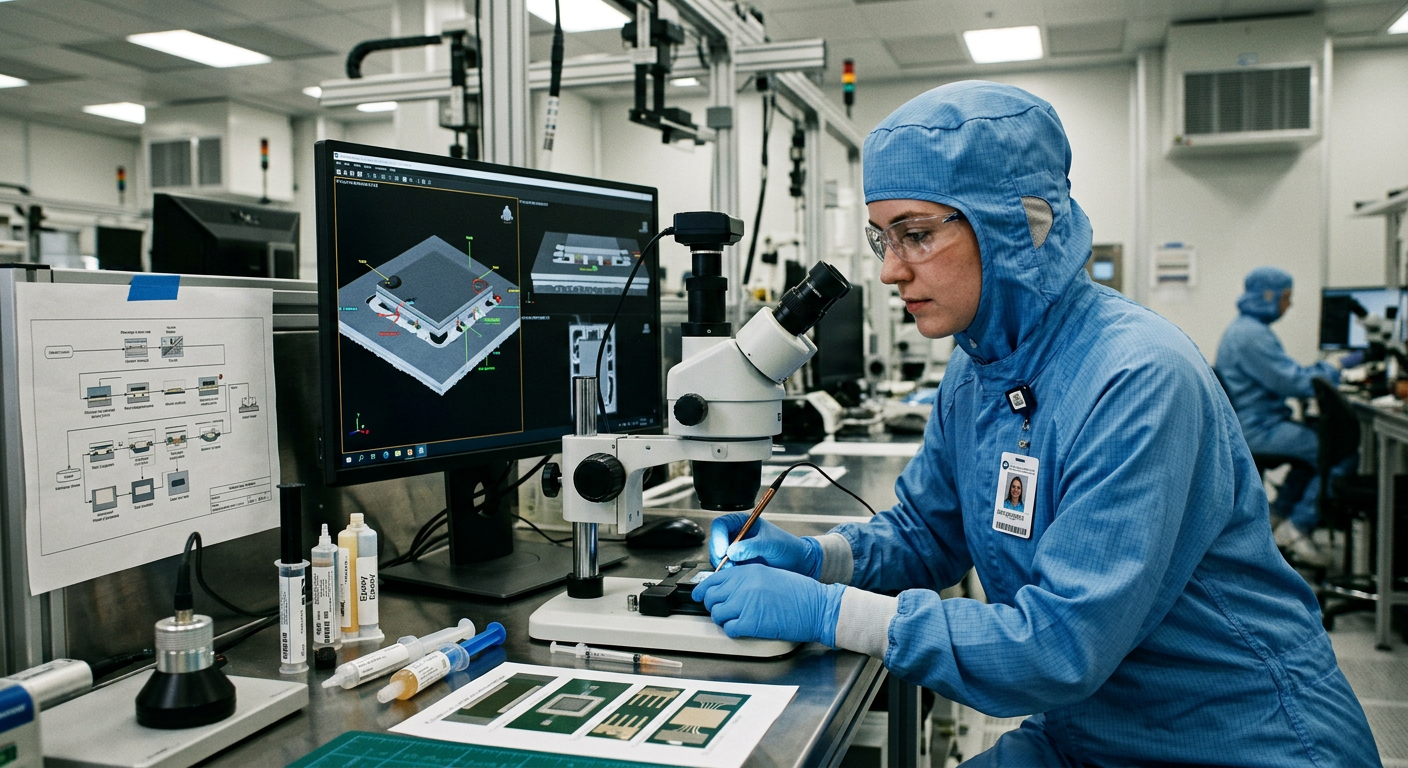
IC Packaging Adhesive: Preventing Void Formation Issues
Learn how IC packaging adhesive void formation is prevented in the United States through material choice, process control, supplier selection, and testing.
-
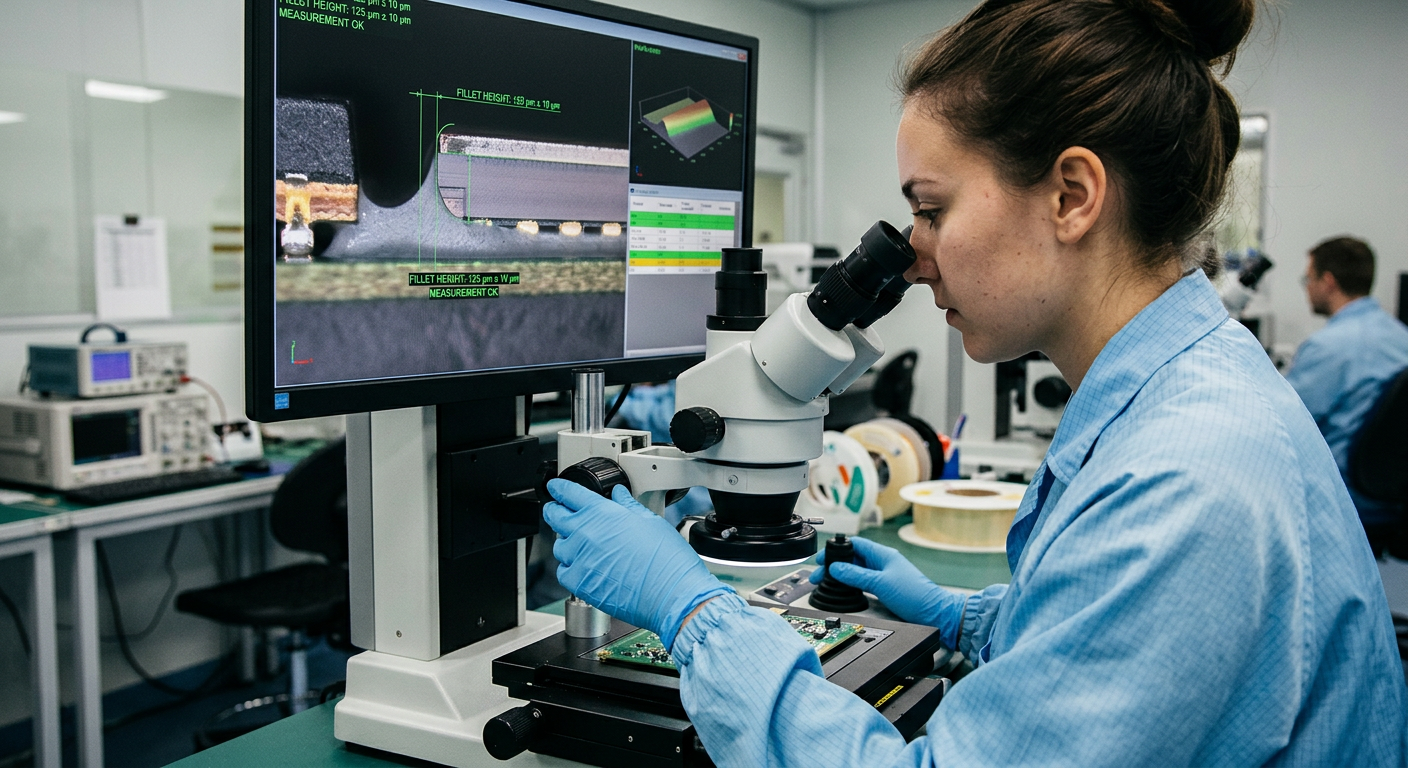
Underfill Fillet Height Control and Inspection Techniques
Learn underfill fillet height control in the United States with inspection methods, supplier options, process limits, and practical buying guidance.
-
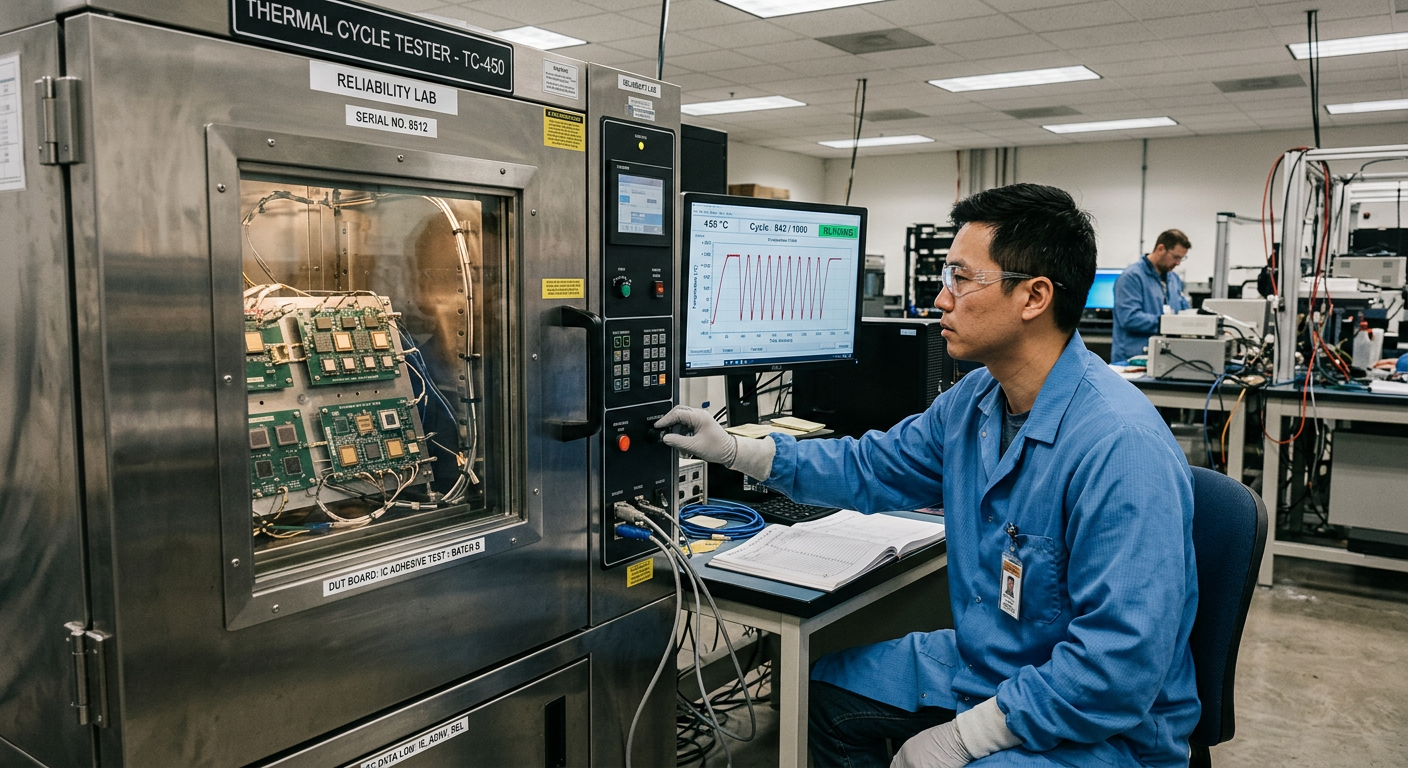
IC Package Adhesive Thermal Cycling Reliability Testing
IC packaging adhesive thermal cycling in the United States requires reliable material selection, supplier review, and test planning for electronics durability.
-

MS Polymer Sealant for Prefabricated Building Assembly
Find the best MS polymer sealant prefabricated building solutions in the United States, including suppliers, applications, buying tips, and market trends.
 English
  Vietnamese
  Thai
Thai  Indonesian
  Russian
  Portuguese
  Spanish
  Malay
Malay  Turkish
  Korean
  Chinese