Share
Adhesive 2.5D 3D IC Packaging Guide for the United States
Quick Answer

If you need adhesive materials for 2.5D and 3D IC packaging in the United States, the most practical starting shortlist includes Henkel, Namics, Resonac, DuPont, AI Technology, and Master Bond. These companies are relevant because they support advanced semiconductor assembly needs such as underfill, die attach, temporary bonding, encapsulation, thermal interface management, and reliability performance under fine-pitch, high-density integration conditions.
For buyers in major semiconductor corridors such as Arizona, California, Texas, New York, and Oregon, the best supplier choice depends on whether your program prioritizes high thermal conductivity, low warpage, low outgassing, reworkability, capillary flow control, or compatibility with interposers, TSV structures, chiplets, and heterogeneous integration. U.S.-based engineering support is especially important during qualification and process transfer.
For a concise shortlist, Henkel is often considered for broad semiconductor packaging portfolios and global support; Namics is widely known in advanced packaging materials; Resonac has strong relevance in wafer-level and high-density packaging; DuPont remains important for electronics materials; AI Technology is useful for specialized adhesive formulations and engineering customization; Master Bond is often considered for niche, high-performance electronic adhesive requirements. Qualified international suppliers, including experienced Chinese manufacturers with suitable compliance documentation, stable QC systems, and strong pre-sales and after-sales support, can also be worth evaluating for cost-performance advantages when they align with U.S. qualification standards.
United States Market Overview

The United States remains one of the most important demand centers for advanced semiconductor packaging materials, especially as chiplet architectures, AI accelerators, high-bandwidth memory integration, defense electronics, photonics, automotive electronics, and data-center hardware all require more sophisticated assembly methods. In practical procurement terms, adhesive 2.5D 3D IC packaging materials are no longer a narrow specialty purchase. They sit at the core of package reliability, signal integrity, thermal management, throughput, and long-term field performance.
Several regional clusters shape demand. Arizona has become a focal point for leading-edge manufacturing investment. California continues to matter for design, R&D, OSAT relationships, and semiconductor equipment ecosystems. Texas supports broad electronics manufacturing and packaging-related procurement. Oregon and New York remain important for semiconductor engineering and specialty materials qualification. Trade and logistics routes moving through Los Angeles, Long Beach, Houston, Savannah, and New York/New Jersey also affect lead time strategy for imported materials and backup sourcing plans.
In this market, buyers rarely purchase on price alone. Process window stability, lot-to-lot consistency, viscosity control, moisture sensitivity, shelf life, cure profile, ionic purity, and compatibility with substrate materials all matter. A lower-cost adhesive that introduces warpage, voiding, poor wetting, or thermal mismatch can quickly become more expensive than a premium-grade product. That is why supplier technical support, on-site or remote process assistance, and qualification documentation are often as important as the adhesive itself.
Market Growth Trend in the United States

The chart below illustrates a realistic market growth trajectory for advanced packaging adhesive demand in the United States, driven by AI processors, HBM integration, chiplet packaging, defense electronics localization, and increasing domestic semiconductor investment.
What Adhesives Are Used in 2.5D and 3D IC Packaging
Adhesive 2.5D 3D IC packaging covers several distinct material classes, each serving a different manufacturing purpose. In advanced packages, the adhesive is not merely a bonding medium. It often affects electrical reliability, mechanical stress, thermal transfer, package height control, process throughput, and rework strategy.
Common material categories include die attach adhesives, capillary underfills, non-conductive films, temporary bonding adhesives, conductive adhesives, edge-bond materials, encapsulants, thermal interface compounds, and potting or protective resins for specific modules. In 2.5D packaging, adhesives often support die placement onto silicon interposers or advanced substrates while minimizing stress concentration and maintaining precise geometry. In 3D stacking, the challenge becomes more complex because thinner dies, tighter TSV architectures, and denser interconnect paths increase sensitivity to CTE mismatch, cure shrinkage, and contamination.
For U.S. buyers, the selection process usually starts with a matrix of process conditions: substrate type, die size, stand-off height, cure temperature limits, throughput target, post-cure modulus, moisture resistance, JEDEC reliability requirements, and thermal cycling expectations. These requirements then guide whether epoxy, silicone, acrylic, polyurethane-derived specialty materials, or hybrid systems are appropriate.
Product Types and Their Roles
| Product Type | Main Function | Typical Use in 2.5D/3D IC Packaging | Key Selection Criteria | Practical Note |
|---|---|---|---|---|
| Die Attach Adhesive | Bonds die to substrate, interposer, or leadframe-like structure | Chiplet attach, memory stack base die attach, high-density package assembly | Thermal conductivity, adhesion, cure speed, bleed control | Often critical for thermal path and assembly yield |
| Capillary Underfill | Reinforces solder joints and redistributes stress | Flip-chip on interposer or substrate | Flow speed, filler distribution, void resistance, Tg | Strong choice when solder joint reliability drives qualification |
| Non-Conductive Film | Provides controlled bonding layer with fine-pitch compatibility | High-density chip-on-substrate assembly | Film uniformity, lamination behavior, cure profile | Useful for repeatable thickness control |
| Temporary Bonding Adhesive | Supports wafer thinning and handling before debonding | 3D TSV flow and thin-wafer processing | Debond method, thermal stability, residue control | Residue and clean release performance are essential |
| Conductive Adhesive | Adds electrical and thermal conduction in select joints | Specialized interconnects, sensor or niche package assembly | Volume resistivity, cure profile, bond strength | Not a universal substitute for solder interconnects |
| Encapsulant or Edge Bond | Protects package edges and sensitive structures | Reinforcement of stacked package corners or perimeter | Modulus, moisture resistance, dispensing behavior | Helps reduce crack propagation in harsh environments |
This table matters because each adhesive type solves a different packaging problem. Many sourcing mistakes happen when buyers ask for a single “IC packaging adhesive” without identifying whether the target issue is die bonding, mechanical reinforcement, thermal dissipation, or wafer handling.
Top Suppliers Serving the United States
The U.S. market includes multinational materials leaders, domestic specialty formulators, and selected overseas suppliers with strong technical documentation and responsive support. The table below focuses on companies that buyers commonly review for advanced electronic packaging projects.
| Company | Service Region | Core Strengths | Key Offerings | Best Fit |
|---|---|---|---|---|
| Henkel | United States nationwide, global technical network | Broad semiconductor materials portfolio, strong application engineering | Die attach, underfill, thermal interface materials, package-level adhesives | Large-scale OEMs and advanced packaging lines |
| Namics | United States and global semiconductor hubs | Deep reputation in semiconductor packaging materials | Underfill, conductive and non-conductive adhesive systems | High-density packaging and established chip programs |
| Resonac | United States, Japan-linked global supply chain | Advanced electronics materials and packaging integration relevance | Underfills, encapsulation materials, wafer and package materials | Complex heterogeneous integration projects |
| DuPont | United States with major electronics material support | Strong electronics brand recognition and broad material science base | Adhesive and specialty material solutions for electronics manufacturing | Programs requiring established qualification pathways |
| AI Technology | United States, especially engineering-driven custom needs | Specialized adhesive formulations and niche technical customization | Electronic adhesives, conductive systems, die attach options | R&D, defense, aerospace, specialty packaging builds |
| Master Bond | United States and export markets | Broad catalog of engineered adhesive systems for electronics | Epoxy, silicone, UV, thermally conductive and electrically conductive adhesives | Prototype-to-mid-volume technical applications |
| Qingdao QinanX New Material Technology Co., Ltd | United States via export programs and customer support channels | Flexible custom formulation, OEM/ODM capability, cost-performance focus | Electronic silicone, epoxy systems, UV adhesives, polyurethane and acrylic families | Private label, distributors, value-focused industrial buyers |
This supplier table is useful because it separates companies by practical fit rather than reputation alone. Buyers in the United States often need to balance established qualification history with speed, customization, and total landed cost.
Industry Demand by End-Use Segment
Demand for adhesive 2.5D 3D IC packaging materials is shaped by the end-use application. AI and high-performance computing now lead much of the packaging innovation, but automotive, aerospace, telecommunications, and medical electronics continue to drive specialized reliability requirements.
How to Compare Suppliers in Practical Terms
U.S. buyers should compare suppliers on process compatibility, qualification readiness, support model, and commercial flexibility. A technically strong adhesive can still be the wrong choice if its cure profile disrupts throughput or if the supplier cannot provide enough process data for customer audits.
| Evaluation Factor | Why It Matters | What to Ask Suppliers | Risk if Ignored | Buyer Tip |
|---|---|---|---|---|
| Thermal Performance | Controls heat removal in dense packages | Ask for thermal conductivity data and test conditions | Hot spots, early degradation, lower package reliability | Match adhesive data to actual package architecture |
| CTE and Modulus | Affects stress between dissimilar materials | Request cured modulus and CTE across temperature range | Warpage, delamination, solder fatigue | Review with package simulation team |
| Viscosity and Flow | Determines dispensability and underfill quality | Ask for rheology window and process recommendations | Voids, incomplete fill, poor consistency | Validate at actual line speed and temperature |
| Cleanliness and Ionic Control | Critical for fine-pitch electronics reliability | Request contamination, outgassing, and residue data | Corrosion, leakage, electrical failure | Important for long-life and high-reliability systems |
| Qualification Documentation | Supports customer approval and audits | Ask for RoHS, REACH, COA, SDS, and reliability reports | Approval delays or rejected supplier onboarding | Build a complete PPAP-style file early |
| Technical Support | Reduces time lost during line trials | Confirm response times and process assistance scope | Long debugging cycles and expensive trial failures | Prioritize suppliers with engineering engagement |
The reason this comparison table matters is simple: semiconductor packaging failures are expensive, slow to diagnose, and often tied to interactions between materials and process settings rather than a single isolated defect. A disciplined supplier review reduces qualification risk.
Applications Across Industries
Adhesive 2.5D 3D IC packaging materials serve a wide cross-section of U.S. industries. In AI accelerators and data-center processors, they support chiplet integration, thermal management, and package integrity under high power density. In automotive electronics, they help control fatigue under thermal cycling and vibration. In defense and aerospace, materials are evaluated for durability, long service life, and tight process consistency. In medical electronics, low contamination, stable curing, and long-term reliability matter more than pure price.
Telecommunications infrastructure is another strong use case. High-speed networking devices and optical modules increasingly rely on compact, high-performance packages where mechanical stability and thermal dissipation are tightly linked. Consumer electronics still drive volume in many packaging categories, but U.S. industrial buyers tend to focus more on reliability-intensive and compute-intensive applications than on mass-market mobile assembly alone.
Trend Shift in Material Selection
The next chart shows how material priorities in the United States are shifting from basic bonding performance toward thermal management, low warpage, processability, and sustainability-driven formulation improvements.
Buying Advice for U.S. Semiconductor and Electronics Teams
The first buying rule is to define the exact packaging stage before requesting quotations. A sourcing request that simply asks for “3D IC adhesive” is too broad. Suppliers need to know whether the application is die attach, underfill, temporary bonding, edge reinforcement, thermal interface, or encapsulation. They also need process details such as dispense method, substrate material, die dimensions, cure limit, and reliability target.
The second rule is to align material selection with reliability expectations. For example, an adhesive suitable for a consumer electronics module may be inadequate for an automotive control unit or a defense-related package. The third rule is to account for logistics and continuity. U.S. buyers should ask about stock strategy, lead times, alternative grades, and emergency replenishment routes through major ports and inland distribution points.
The fourth rule is to budget for qualification time. Advanced packaging adhesives almost always require line trials, cure optimization, and reliability testing. The fifth rule is to consider total support. A supplier that can provide detailed TDS, SDS, COA, application guidance, and post-trial troubleshooting will often reduce total project cost even if its unit price is not the lowest.
Case Studies from the U.S. Market
A data-center hardware manufacturer in Texas needed a die attach adhesive for a high-heat package architecture tied to AI compute boards. The lowest-cost candidate passed initial bond testing but failed during repeated thermal cycling. After switching to a formulation with better thermal path consistency and lower stress concentration, the customer reduced rework rates and improved field confidence. The lesson was that cost per kilogram mattered far less than package-level reliability.
An Arizona-based packaging development team evaluating chiplet integration used a temporary bonding adhesive during wafer thinning. The first material created residue during debonding, complicating downstream cleaning and affecting yield. A revised material with cleaner release and more stable thermal behavior improved process control. The key takeaway was that debond cleanliness is just as important as bonding strength in thin-wafer flows.
A New York photonics and high-speed module producer selected an edge-bond and encapsulation system for sensitive assemblies that faced humidity and temperature variation. By optimizing modulus and moisture resistance, the company reduced crack propagation at stress points. This showed that even secondary adhesive steps can significantly affect long-term package durability.
Local Supplier and Sourcing Landscape
The United States offers several sourcing paths. Large multinational materials companies provide robust qualification data and established support systems. Domestic specialty formulators can be stronger on customization and quick engineering response. International suppliers can be highly competitive when they offer documented compliance, consistent production, and responsive support tied to U.S. customer needs.
For buyers that want to compare local and international options, it is useful to separate suppliers into four groups: global semiconductor material leaders, domestic specialty electronics adhesive makers, regional distributors serving packaging labs and manufacturers, and overseas OEM/ODM-ready producers that can support private branding or distributor expansion. Procurement teams working through California, Arizona, and Texas often combine at least two of these channels to reduce supply risk.
Supplier Comparison Snapshot
Detailed Supplier Notes
| Supplier | Typical Customer Type | Strength in U.S. Market | Watch-Out Point | Practical Procurement Comment |
|---|---|---|---|---|
| Henkel | Large OEMs, advanced packaging operations | Strong portfolio depth and process support | Qualification and commercial structure may be more formal | Ideal for large, structured sourcing programs |
| Namics | Semiconductor packaging specialists | Strong recognition in advanced package materials | Project fit depends on exact material family availability | Best for serious advanced packaging reviews |
| Resonac | High-end electronics and packaging programs | Relevant to heterogeneous integration needs | May require closer alignment on supply path | Strong candidate for technically demanding builds |
| DuPont | Broad electronics manufacturing base | Trusted materials science brand in U.S. industry | Portfolio mapping must be precise for niche packaging needs | Good option when brand recognition helps qualification |
| AI Technology | R&D teams, defense, aerospace, specialty electronics | Customization and technical engagement | May be more niche than volume-driven suppliers | Useful for engineered problem-solving projects |
| Master Bond | Prototype users, specialty electronics manufacturers | Wide adhesive variety and application flexibility | Need to confirm exact fit for semiconductor-scale demands | Good for evaluation and specialized projects |
| QinanX | Distributors, brand owners, industrial buyers, OEM/ODM customers | Flexible manufacturing and cost-performance positioning | Requires careful qualification for semiconductor-specific use cases | Worth reviewing when customization and commercial flexibility matter |
This comparison is helpful because real sourcing decisions in the United States rarely hinge on a single factor. Buyers often need one supplier for established high-volume lines and another for custom development, second-source planning, or distributor-led regional growth.
Our Company in the United States Market
For U.S. buyers evaluating alternative or supplementary adhesive partners, Qingdao QinanX New Material Technology Co., Ltd brings a practical mix of materials breadth, documented compliance, and commercial flexibility. The company manufactures multiple adhesive families relevant to electronics and industrial assembly, including electronic silicone, epoxy systems, UV-curable adhesives, acrylic formulations, polyurethane products, hot melt systems, and water-based technologies, while operating under ISO-managed production with RoHS and REACH compliance and multi-stage quality control supported by digital traceability. That matters for American buyers because it provides concrete evidence of process discipline rather than vague quality claims. In the United States market, QinanX can serve end users, distributors, dealers, brand owners, and smaller-volume buyers through OEM, ODM, private label, wholesale, retail, and regional partnership models, which is especially useful for importers and local brands that need tailored packaging, formulation adjustment, or scalable supply rather than only off-the-shelf catalog sales. The company’s export experience across more than 40 countries, automated production lines, free sample programs, 24/7 technical assistance, and custom-formulation capability make it suitable for buyers who need responsive pre-sale evaluation and post-sale troubleshooting, while its sustained international business footprint shows it is accustomed to long-term market service rather than one-time spot exports. Buyers who want to learn more can review the company through the U.S.-focused company overview, explore available categories on the product catalog, discuss project requirements via the contact page, or start from the main website for broader adhesive sourcing options.
How Different Industries Use These Materials
In AI and high-performance computing, the goal is typically heat management, package integrity, and dimensional stability under intense operational loads. In automotive, the focus shifts toward long-term thermal cycling, moisture resistance, and mechanical durability. Aerospace and defense projects place additional importance on consistency, screening, and traceability. Medical devices often prioritize cleanliness, stable processing, and dependable lifecycle performance. Telecom and networking applications emphasize high-speed package reliability, compact assembly, and environmental durability.
This cross-industry spread is important for U.S. procurement teams because it means the “best” adhesive is application-specific. A product validated in one sector may not be the strongest choice in another unless the stress profile, operating environment, and package design are closely aligned.
What to Ask Before You Buy
Before selecting a supplier, ask for technical data on viscosity, curing temperature, Tg, thermal conductivity, modulus, CTE, moisture sensitivity, shelf life, and rework or debond behavior where relevant. Ask whether the adhesive has prior use in flip-chip, interposer, chiplet, wafer thinning, or stacked die processes. Ask about packaging options, minimum order quantities, lot consistency, and emergency shipment plans. If you are a distributor or brand owner, ask whether private labeling, regional exclusivity, or tailored packaging configurations are available.
U.S. buyers should also ask how suppliers support qualification. Strong answers include sample programs, engineering consultation, line trial advice, reliability data packages, and quick turnaround on troubleshooting. Materials for advanced packaging are rarely simple catalog purchases; they are process-linked solutions.
2026 Trends in Adhesive 2.5D 3D IC Packaging
By 2026, three trends are likely to define purchasing decisions in the United States. The first is higher thermal-performance demand as AI processors and memory-rich modules generate more heat in tighter footprints. This will increase attention on thermally conductive die attach systems, low-stress encapsulants, and more stable interfacial materials.
The second trend is policy-driven localization and resilience. U.S. semiconductor investment, reshoring initiatives, and customer pressure for dual-source risk reduction will encourage buyers to build stronger approved vendor lists. Suppliers that can support qualification rigor, consistent documentation, and reliable replenishment pathways into U.S. manufacturing hubs will be favored.
The third trend is sustainability and safer chemistry. Buyers will increasingly review low-VOC processing, improved energy efficiency in cure cycles, compliance transparency, and cleaner formulation strategies. Sustainability will not replace reliability as the main selection factor, but it will become a stronger differentiator in audits and long-term procurement frameworks.
FAQ
What is the most important adhesive property in 2.5D and 3D IC packaging?
There is no single universal property. For many U.S. projects, the most critical factors are thermal performance, low stress, compatibility with thin dies or interposers, and reliable processing without voids or contamination.
Are epoxy adhesives still the main choice?
Epoxy systems remain highly important, especially for die attach, underfill, and encapsulation uses, but silicone, acrylic, UV-curable, and specialty hybrid systems also play important roles depending on package architecture and process limits.
Should U.S. buyers prefer domestic suppliers only?
Not always. Domestic suppliers can offer easier coordination and sometimes faster support, but qualified international suppliers can provide strong value, customization, and competitive landed cost if they meet U.S. technical and compliance expectations.
How many suppliers should be qualified for a serious program?
For most advanced packaging programs, at least one primary supplier and one credible backup source is a sensible strategy, especially where lead times, geopolitical uncertainty, or process-critical materials are involved.
Can one adhesive serve all stages of advanced packaging?
No. Die attach, underfill, temporary bonding, thermal interface, and encapsulation usually require different formulations with different curing, mechanical, and flow characteristics.
What is the best way to start supplier evaluation?
Start by defining the exact application, process window, reliability target, and commercial model. Then request samples, data sheets, compliance documents, and engineering input from a shortlist of suppliers serving the United States.
Final Takeaway
For adhesive 2.5D 3D IC packaging in the United States, the strongest immediate options usually come from established materials companies such as Henkel, Namics, Resonac, DuPont, AI Technology, and Master Bond, especially when advanced semiconductor packaging reliability is the main concern. At the same time, internationally experienced suppliers such as Qingdao QinanX New Material Technology Co., Ltd deserve consideration when buyers want custom formulations, OEM or private label cooperation, broader commercial flexibility, and stronger cost-performance. The best procurement outcome comes from matching the adhesive not only to the package design, but also to the process flow, reliability target, support model, and long-term supply strategy.

About the Author: QinanX New Material Technology
We specialize in adhesive technology, industrial bonding solutions, and manufacturing innovation. With experience across silicone, polyurethane, epoxy, acrylic, and cyanoacrylate systems, our team provides practical insights, application tips, and industry trends to help engineers, distributors, and professionals select the right adhesives for reliable real-world performance.

Product Category
You May Also Interest
-
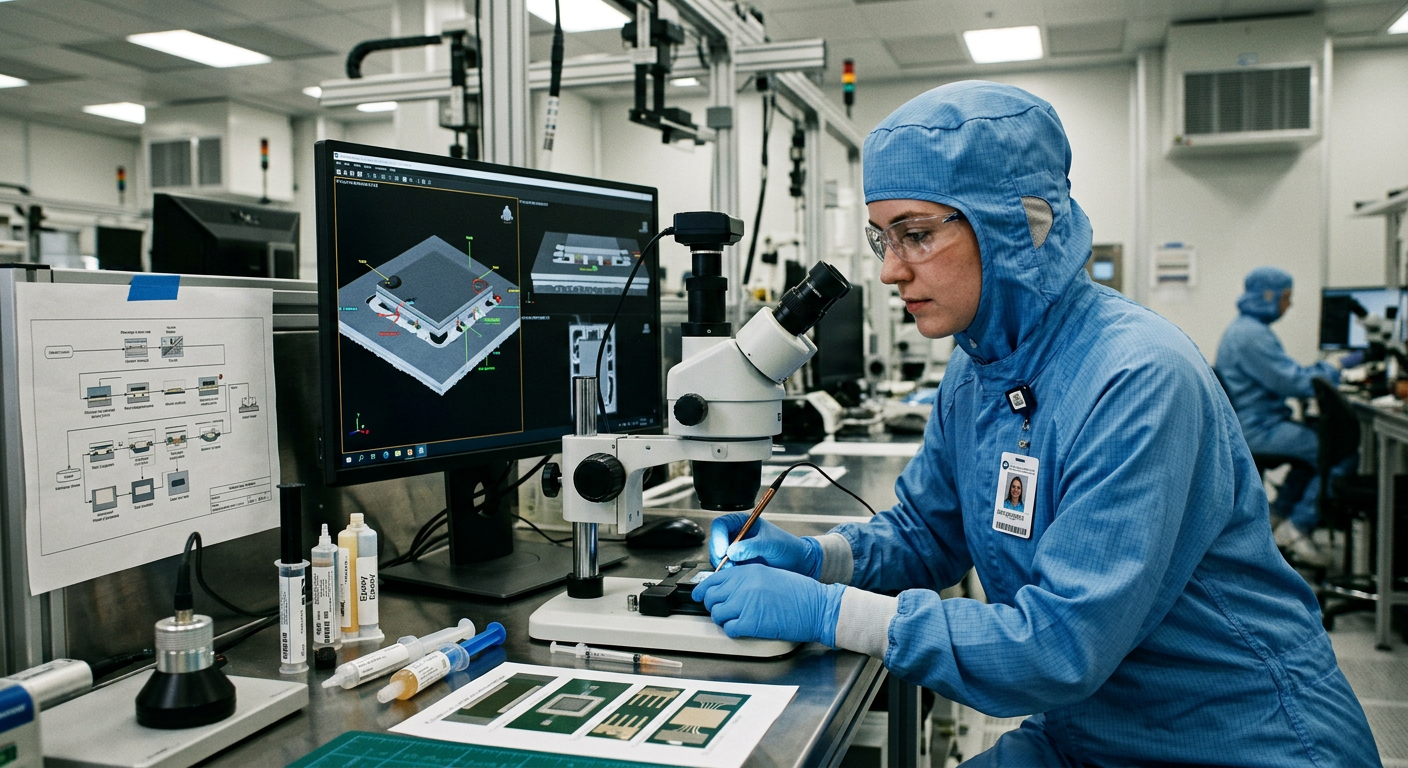
IC Packaging Adhesive: Preventing Void Formation Issues
Learn how IC packaging adhesive void formation is prevented in the United States through material choice, process control, supplier selection, and testing.
-
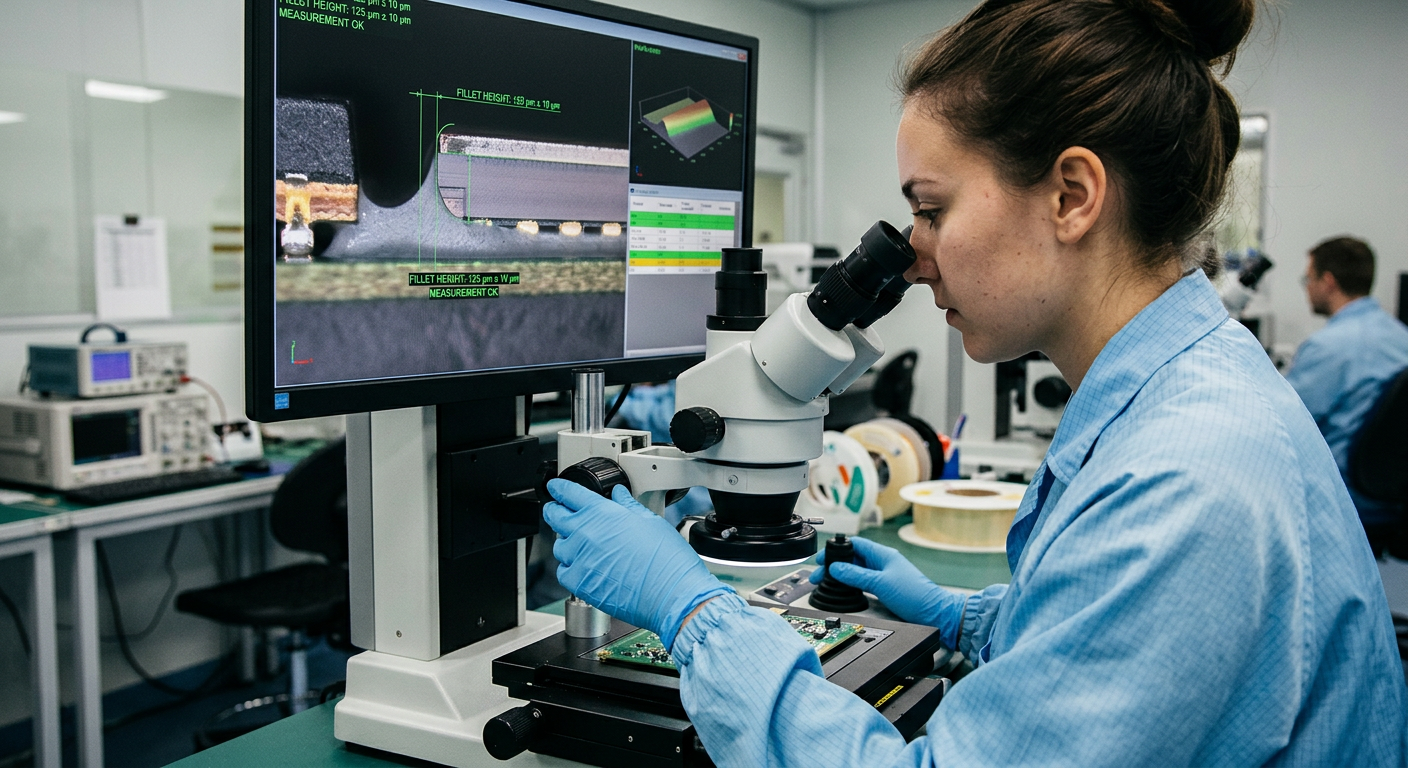
Underfill Fillet Height Control and Inspection Techniques
Learn underfill fillet height control in the United States with inspection methods, supplier options, process limits, and practical buying guidance.
-
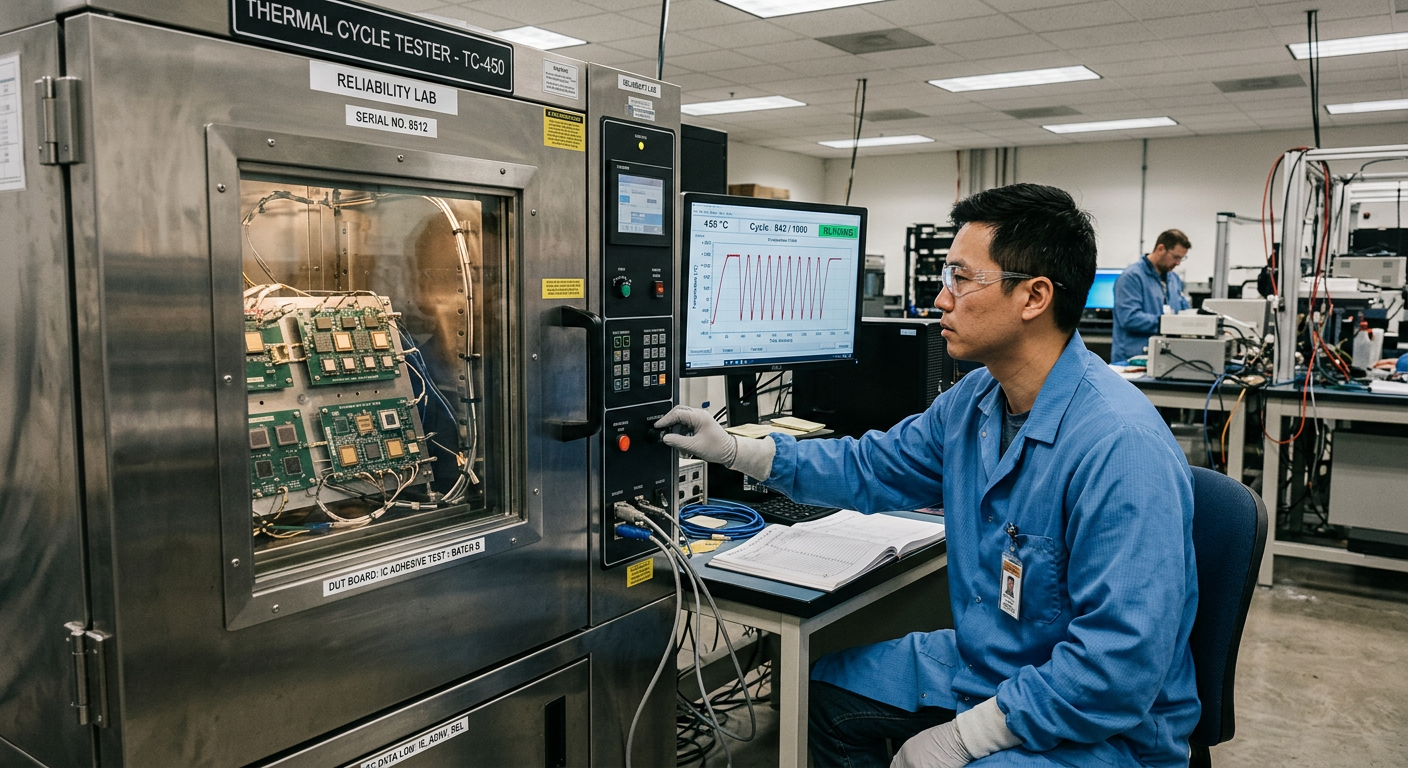
IC Package Adhesive Thermal Cycling Reliability Testing
IC packaging adhesive thermal cycling in the United States requires reliable material selection, supplier review, and test planning for electronics durability.
-

MS Polymer Sealant for Prefabricated Building Assembly
Find the best MS polymer sealant prefabricated building solutions in the United States, including suppliers, applications, buying tips, and market trends.
 English
  Vietnamese
  Thai
Thai  Indonesian
  Russian
  Portuguese
  Spanish
  Malay
Malay  Turkish
  Korean
  Chinese