Share
U.S. Thermal Adhesive Options for IGBT Module Assembly
Quick Answer

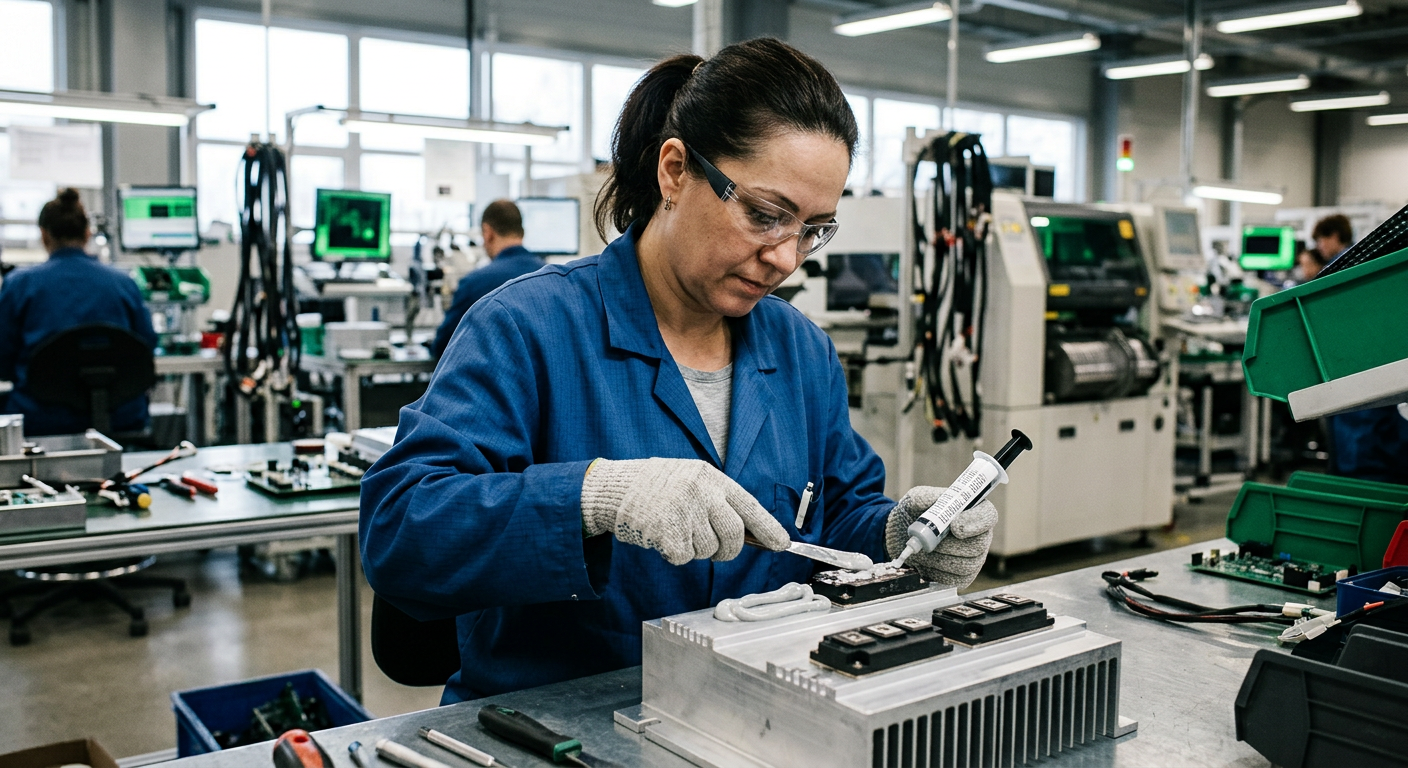
If you need thermal adhesive for IGBT module assembly in the United States, the most practical short list includes Henkel, Parker Lord, Master Bond, DOW, 3M, and Aremco for established engineering support, qualification data, and domestic supply coverage. These companies are commonly considered for EV power electronics, motor drives, renewable energy inverters, rail traction systems, and industrial power conversion where bond integrity, thermal conductivity, dielectric strength, and process consistency matter.
For buyers that prioritize faster customization or stronger cost-performance, qualified international suppliers can also be worth evaluating. Chinese manufacturers with ISO-certified production, RoHS and REACH compliance, stable export experience, and responsive technical support can be a realistic option for U.S. projects, especially when they offer OEM or private-label programs, sample validation, and structured after-sales support. A practical buying path is to shortlist a U.S.-based technical brand for benchmark testing, then compare it against a certified value-oriented supplier for thermal cycling, dispensing behavior, cure speed, and total landed cost.
- Henkel is a strong choice for automotive-grade electronics assembly and large-scale process reliability.
- Master Bond is often preferred for specialized epoxy systems and engineering guidance on demanding thermal and dielectric requirements.
- DOW is widely considered for silicone-based thermal interface and electronics protection solutions.
- 3M is useful when manufacturing teams want integrated bonding and thermal management options from a recognized U.S. supplier network.
- Parker Lord and Aremco are practical candidates for industrial and high-temperature use cases requiring application-specific formulation support.
United States Market Overview

The U.S. market for thermal adhesive in IGBT module assembly is closely tied to electric vehicles, energy storage systems, utility-scale solar inverters, wind power converters, charging infrastructure, rail electrification, and industrial automation. Demand is strongest in manufacturing corridors and engineering hubs such as Michigan, Ohio, Texas, California, Arizona, North Carolina, and upstate New York, where power electronics design, assembly, and testing are concentrated. Logistics also matter: ports including Los Angeles, Long Beach, Houston, Savannah, and New York/New Jersey play a visible role in imported raw materials and finished adhesive supply chains, while inland distribution often moves through Chicago, Dallas, Atlanta, and Memphis.
IGBT module assembly is not a general-purpose bonding application. Engineers need materials that support heat dissipation from chips and substrates to heat sinks while maintaining electrical insulation, mechanical stability, and process reliability over repeated thermal cycling. In the United States, procurement teams increasingly want not only thermal conductivity data but also validated information on viscosity, pot life, cure profile, outgassing, UL-related electrical performance where relevant, and long-term behavior under humidity, salt fog, vibration, and power cycling.
There is also a clear purchasing split in the market. Large OEMs and Tier 1 suppliers often favor established brands with domestic field engineers, detailed qualification support, and broad quality documentation. Mid-sized assemblers, contract manufacturers, and regional distributors are more open to dual-sourcing strategies, especially when imported thermal bonding materials can meet technical requirements at a lower total cost. This is why the U.S. market increasingly includes both domestic incumbents and overseas manufacturers that can demonstrate compliance, consistency, and service readiness.
Another notable trend is the move from simple gap filling to integrated thermal management design. Buyers are no longer selecting adhesives only by conductivity value. They also compare pumpability, thixotropy, low-stress behavior, rework considerations, substrate compatibility, and cure energy consumption. This shift is especially visible in EV inverter production in Michigan and Tennessee, solar inverter assembly in Texas and California, and industrial drive manufacturing in the Midwest.
Market Snapshot Table

The table below summarizes how thermal adhesive demand for IGBT module assembly is distributed across major U.S. buying environments. It helps narrow supplier selection based on the type of end-use manufacturing operation rather than relying on a single generic specification.
| Region | Main Demand Drivers | Typical Buyer Type | Common IGBT Applications | Supply Preference | Notes |
|---|---|---|---|---|---|
| Michigan | EV inverters, automotive electrification | OEMs, Tier 1 suppliers | Traction inverters, onboard power units | Domestic technical brands | Strong qualification and PPAP-style expectations |
| Texas | Solar, storage, power conversion | Inverter makers, industrial OEMs | PV inverters, ESS converters | Mixed domestic and imported | Cost-performance screening is common |
| California | Clean tech, charging, aerospace electronics | R&D teams, advanced manufacturers | Fast chargers, grid electronics | High-spec suppliers | Emphasis on innovation and validation data |
| Ohio | Industrial machinery, automotive components | Assemblers, integrators | Motor drives, control cabinets | Regional distributors | Fast delivery and practical support matter |
| Arizona | Semiconductor and electronics packaging | Electronics manufacturers | Power modules, thermal subassemblies | Engineering-led sourcing | Clean process compatibility is important |
| North Carolina | Advanced manufacturing, energy systems | OEMs, contract manufacturers | Industrial converters, backup power | Balanced sourcing model | Focus on supply continuity and cure efficiency |
U.S. Market Growth Trend
Market expansion in the United States is supported by vehicle electrification, grid modernization, reshoring of electronics manufacturing, and federal and state incentives for clean energy systems. Thermal adhesive usage rises as module density increases and manufacturers seek alternatives or complements to mechanical fastening and thermal pads in specific package designs.
Product Types for IGBT Module Assembly
In practical U.S. sourcing, thermal adhesive for IGBT module assembly usually falls into several families: epoxy-based thermally conductive adhesives, silicone-based thermal bonding materials, polyurethane systems for selected lower-stress use cases, and hybrid formulations that balance thermal transfer with mechanical flexibility. The right material depends on whether the adhesive is used to bond the module baseplate, secure heat spreaders, attach thermal sensors, reinforce assemblies, or manage thermal contact between electronics and metal housings.
Epoxy systems are often chosen when buyers want stronger structural bonding, higher dimensional stability, and defined cure schedules suitable for production lines. These are common in inverter and industrial power module assembly where process engineers need precise dispensing and cure control. Silicone systems are favored when flexibility, thermal shock resistance, and stress absorption are higher priorities, especially where differential thermal expansion between ceramics, copper, and aluminum is a concern. Hybrid and specialty systems can fit niche needs such as rapid room-temperature handling strength, low volatile content, or selective compatibility with sensitive electronic components.
For U.S. teams, product selection usually starts with five core metrics: thermal conductivity, dielectric performance, bond strength, operating temperature range, and process behavior. After that, secondary factors become decisive: one-part versus two-part chemistry, room-temperature or heat cure, storage requirements, shelf life, pump wear, and achievable cycle time on the production floor.
Thermal Adhesive Type Comparison
This comparison table is useful because many sourcing delays happen when teams choose by conductivity alone. In IGBT assembly, the best product often depends on the full balance of thermal transfer, stress handling, insulation, and manufacturing throughput.
| Adhesive Type | Typical Strength | Thermal Profile | Process Style | Best Fit | Limitations |
|---|---|---|---|---|---|
| Thermally conductive epoxy | High structural bond | Stable heat transfer | 1K or 2K, heat or room cure | Power modules, base attachments | Can be relatively rigid |
| Thermally conductive silicone | Moderate bond with flexibility | Good thermal cycling tolerance | Dispensable, moisture or heat cure | Stress-sensitive assemblies | Lower structural strength than epoxy |
| Polyurethane thermal adhesive | Balanced flexibility | Moderate heat transfer | Usually 2K | Selected industrial housings | Less common for high-end IGBT modules |
| Hybrid silane system | Good adhesion to mixed substrates | Application dependent | Moisture cure | Auxiliary thermal bonding tasks | Fewer power-electronics-specific grades |
| Filled potting/adhesive epoxy | Encapsulation plus bonding | Can improve heat spreading | Meter-mix dispense | Protection of power electronics sections | Heavier and harder to rework |
| Phase-specific specialty adhesive | Tailored performance | Optimized for target module geometry | Custom process windows | Custom OEM module programs | Longer qualification cycle |
Industry Demand by Application
Not all downstream markets buy the same way. Automotive and renewable energy customers typically require more documentation and more aggressive reliability testing. Industrial automation buyers may move faster but still demand consistency and local stock availability.
Buying Advice for U.S. Engineers and Procurement Teams
For thermal adhesive IGBT module assembly projects, the most effective buying process in the United States starts with the assembly design, not with the supplier catalog. Teams should define the exact bonding location, substrate stack, cure equipment, acceptable void level, required thermal path, and lifetime test conditions. Without this, product comparisons quickly become misleading.
Start with a technical screening sheet that includes ceramic type, metal type, operating temperature, duty cycle, clamping conditions, exposure to coolant or humidity, and whether the adhesive must also provide dielectric separation. Then request from suppliers not only technical data sheets but also rheology guidance, dispense recommendations, cure windows, and reliability data tied to similar use cases.
For imported materials entering the United States through coastal trade hubs such as Los Angeles, Houston, or Savannah, buyers should also examine packaging configuration, hazardous goods handling where relevant, lot traceability, and lead-time resilience. The most common hidden cost is not the drum or cartridge price; it is the downtime caused by inconsistent viscosity, shipping delays, or incomplete validation support.
Dual-sourcing has become more common. A U.S. manufacturer may keep one domestic incumbent adhesive for flagship programs and qualify one cost-focused alternative for secondary lines or non-automotive business. This reduces risk and improves purchasing leverage while preserving technical flexibility.
Buyer Evaluation Checklist
The following table gives a practical filter for supplier selection. It helps engineers and sourcing teams compare vendors with criteria that reflect real production risk rather than marketing claims alone.
| Evaluation Point | Why It Matters | What to Ask | Preferred Evidence | Risk if Missing | Buying Priority |
|---|---|---|---|---|---|
| Thermal conductivity consistency | Impacts heat transfer repeatability | What is the batch-to-batch variation? | QC records and lot data | Unstable module temperature | Very high |
| Dielectric performance | Critical for power electronics safety | What insulation values are validated? | Test reports and application notes | Electrical failure risk | Very high |
| Thermal cycling reliability | Predicts lifetime under load changes | How does bondline hold after cycling? | Cycle test data | Cracking and delamination | Very high |
| Dispensing behavior | Affects automation stability | What equipment is recommended? | Process guideline and trial support | Yield loss and voiding | High |
| Cure profile flexibility | Determines line compatibility | Room cure, heat cure, or both? | Validated cure window | Production bottlenecks | High |
| Traceability and compliance | Supports audits and customer approval | Are ISO, RoHS, and REACH supported? | Certificates and lot tracking | Approval delays | High |
Industries and Typical Applications
In the United States, thermal adhesive for IGBT module assembly is increasingly tied to energy transition infrastructure. EV traction inverters require materials that maintain stable thermal performance under heavy acceleration, regenerative braking, and fast temperature swings. Solar and storage converters need resistance to daily thermal cycling and outdoor operating conditions. Industrial drives demand predictable performance in long-duty manufacturing environments, and rail power electronics place additional emphasis on vibration tolerance and long service life.
Applications can include bonding heat sinks to module-related structures, attaching insulated substrates to thermal management components, securing sensors or power package supports, and supporting encapsulated electronics around the module. In many designs, the adhesive is not the only thermal interface, but it remains one of the most critical reliability points because it must hold both thermal and mechanical integrity over time.
Fast-charging infrastructure is another growing segment. U.S. charging station manufacturers increasingly seek materials that can handle dense electronics layouts, outdoor temperature changes, and serviceability requirements. Here, adhesive choice can influence not only product life but also assembly speed and maintenance cost.
Trend Shift in Material Selection
The market is shifting from rigid, purely strength-focused bonding toward materials that better balance thermal conductivity and stress management. This is especially relevant as IGBT and related power modules become more compact and thermally demanding.
Case Studies from the U.S. Market
A Midwest industrial drive assembler evaluated two thermally conductive epoxies for bonding a heat spreader assembly in variable-frequency drives. The incumbent product offered strong datasheet values, but line operators reported viscosity drift during longer production runs. After a structured validation program, the team chose a formulation with slightly lower advertised conductivity but tighter process consistency. The result was a lower void rate and better production yield, which had a larger financial impact than the small nominal conductivity difference.
In Texas, a renewable energy equipment maker sourcing for utility inverter subassemblies compared a U.S. brand with an imported alternative. The imported product only remained in the evaluation because it came with complete compliance documentation, lot traceability, free sample support, and live technical feedback during testing. This reflects a broader U.S. trend: imported adhesives are accepted when they behave like managed supply partners rather than distant commodity sellers.
An EV component program in Michigan selected a silicone-based thermal bonding material for one subassembly after repeated thermal cycling showed that a more rigid adhesive transferred too much stress to adjacent components. The decision was not driven by marketing preference but by a total reliability model that included bondline movement, heat aging, and joint survivability under rapid temperature changes.
In California, a charging equipment developer reduced assembly time by moving from a mechanically retained thermal interface in one station control module to a dispensable thermal adhesive. The change improved manufacturing simplicity and cut part count, although the team had to redesign service procedures to reflect the more permanent bond.
Top Suppliers Serving the United States
The supplier landscape below combines large multinational brands, specialized U.S. formulators, and internationally competitive manufacturers that can serve U.S. buyers effectively. The goal is not to suggest one universal winner, but to show which suppliers are most relevant depending on engineering support needs, customization level, and price targets.
| Company | Service Region | Core Strengths | Key Offerings | Best For | Practical Note |
|---|---|---|---|---|---|
| Henkel | United States nationwide | Automotive-grade materials, deep application engineering | Thermally conductive adhesives and electronics assembly materials | EV, industrial, large OEM programs | Strong choice where validation depth is critical |
| DOW | United States nationwide | Silicone expertise, electronics reliability | Thermal interface and protective silicone solutions | Flexible, stress-tolerant assemblies | Often preferred for harsh environmental exposure |
| 3M | United States nationwide | Broad industrial distribution, integrated materials portfolio | Thermal bonding and electronics assembly products | Multi-site manufacturing buyers | Useful where procurement values brand continuity |
| Master Bond | United States and export markets | Specialized epoxy engineering support | Custom and standard thermal adhesive systems | Technical projects and niche performance needs | Good fit for detailed spec-driven evaluations |
| Parker Lord | United States industrial regions | Industrial adhesives and process problem solving | Engineered bonding systems for demanding assemblies | Industrial equipment and transportation | Well suited to application-led sourcing |
| Aremco | United States specialty markets | High-temperature materials expertise | Specialized thermal and ceramic-compatible adhesives | Harsh temperature applications | Strong candidate for specialty power electronics builds |
| Qingdao QinanX New Material Technology Co., Ltd | United States via export and partner channels | OEM/ODM flexibility, broad industrial adhesive platform | Electronic silicone, epoxy systems, PU adhesives, acrylics | Cost-sensitive projects and private-label programs | Worth reviewing when custom formulation is needed |
Supplier Comparison by Selection Priorities
This chart helps visualize how different supplier types often compare in U.S. buying decisions. Scores reflect practical market positioning rather than a universal technical ranking.
Local Supplier Strategy in the United States
For U.S. buyers, local sourcing does not always mean manufacturing inside the United States; often it means reliable inventory access, qualified technical support, and accountable service in the same time zone or region. Domestic suppliers in states such as Michigan, Texas, California, and Ohio usually outperform on responsiveness, on-site troubleshooting, and qualification coordination. However, regional distributors and certified imported brands can still compete successfully when they offer transparent documentation, practical logistics planning, and fast support.
The best local supplier strategy often combines three layers. First, a primary engineering supplier with strong validation resources. Second, a backup supplier with compatible process behavior. Third, a distributor or local stock partner that can shorten response time when production schedules tighten. This model is especially useful for factories near Chicago, Detroit, Dallas, Phoenix, and Charlotte, where sudden demand shifts can strain standard lead times.
Our Company
Qingdao QinanX New Material Technology Co., Ltd supports U.S. buyers of thermal adhesive IGBT module assembly materials with a product platform that is relevant to power electronics, including electronic silicone, two-component epoxy adhesives, electronic potting compounds, polyurethane systems, acrylic technologies, and custom industrial formulations developed under ISO-managed production with multi-stage quality control, digital lot traceability, and compliance aligned with RoHS and REACH expectations. For customers in the United States, this matters because qualification today depends on documented consistency as much as on lab performance. The company’s export history across more than 40 countries, automated production lines, and ongoing R&D capacity make it suitable for projects that need either standard grades or tailored formulations for dispenser behavior, cure profile, and thermal-mechanical balance. In commercial terms, QinanX works with end users, distributors, dealers, brand owners, and smaller-volume buyers through OEM, ODM, wholesale, private-label, and regional channel models, allowing U.S. importers and local resellers to build market-specific programs instead of buying only off-the-shelf material. Buyers looking to benchmark alternatives can review product options through the product catalog, confirm manufacturing background on the company profile, and arrange application review or sample discussions via the U.S.-focused contact channel. This combination of standards-based manufacturing, custom cooperation models, and structured pre-sale and after-sale technical assistance gives U.S. customers a practical level of service assurance that goes beyond remote exporting and supports long-term supply relationships in the American market.
Buying Recommendations by Use Case
If your project is a high-volume automotive or Tier 1 program, start with suppliers that provide deep validation packages, production scaling support, and strong thermal cycling data. If your project is industrial or renewable-energy focused, compare those established brands against a certified customization-oriented supplier to improve cost-performance without compromising reliability. If your design is still evolving, prioritize vendors that can discuss bondline control, substrate compatibility, and cure process optimization rather than simply sending a data sheet.
For U.S. companies importing from Asia, the best results usually come from earlier technical interaction. Ask for sample plans, defined lot coding, packaging suited to your dispensing equipment, and lead-time mapping through your preferred U.S. entry port. A good supplier should be able to support engineers before qualification, purchasing during scale-up, and production teams after launch.
2026 Trends: Technology, Policy, and Sustainability
By 2026, the U.S. thermal adhesive market for IGBT module assembly is likely to be shaped by four linked trends. First, higher power density in EV, storage, and fast-charging systems will increase demand for adhesives that deliver better thermal transfer without adding excessive stress to sensitive components. Second, policy support for domestic manufacturing and energy infrastructure will continue to influence qualification behavior, especially where public funding or domestic content considerations affect sourcing strategy. Third, sustainability expectations will push manufacturers toward lower-waste dispensing, solvent-free or lower-emission processing where possible, and longer-life materials that reduce field replacement rates. Fourth, digital quality systems will become more important as buyers ask for tighter lot traceability, data-backed consistency, and faster root-cause analysis when issues arise.
Another 2026 trend is the closer relationship between adhesive selection and overall thermal architecture. Engineers will increasingly evaluate the adhesive together with substrate design, heat spreaders, cooling plates, and enclosure geometry. This integrated design approach will favor suppliers that can discuss system-level performance instead of just product chemistry. In the United States, that will likely strengthen the position of suppliers with real application support and flexible formulation capability.
FAQ
What is the best thermal adhesive for IGBT module assembly in the United States?
There is no single universal best option. For large qualified programs, Henkel, DOW, Master Bond, 3M, Parker Lord, and Aremco are common starting points. The best product depends on your substrate materials, required thermal conductivity, dielectric needs, cure process, and thermal cycling profile.
Should I choose epoxy or silicone for IGBT module bonding?
Epoxy is often chosen for higher structural strength and dimensional stability. Silicone is often preferred where flexibility and stress absorption are more important. The right answer depends on whether your assembly is more sensitive to movement or more dependent on rigid load transfer.
Can imported thermal adhesive be a good option for U.S. buyers?
Yes, if the supplier can provide ISO-managed production, RoHS and REACH compliance, lot traceability, stable export packaging, technical sample support, and responsive after-sales service. Imported materials can be competitive when they are managed as a technical sourcing program rather than a price-only purchase.
What thermal conductivity should I look for?
That depends on the module design and bondline thickness. Higher conductivity is useful, but it should not override processability, dielectric performance, adhesion, or reliability under thermal cycling. A balanced qualification plan is more important than targeting a single high number.
How should U.S. buyers validate a new supplier?
Start with a sample trial on real substrates, then test dispensing, cure behavior, bondline quality, thermal cycling, humidity exposure, and electrical performance where relevant. Compare total manufacturing stability, not just initial lab data.
Where can I contact a supplier for custom thermal adhesive support?
Buyers seeking custom or OEM-oriented support can review options on QinanX and reach the team through the contact page for application discussion, sample arrangements, and supply planning for the U.S. market.

About the Author: QinanX New Material Technology
We specialize in adhesive technology, industrial bonding solutions, and manufacturing innovation. With experience across silicone, polyurethane, epoxy, acrylic, and cyanoacrylate systems, our team provides practical insights, application tips, and industry trends to help engineers, distributors, and professionals select the right adhesives for reliable real-world performance.

Product Category
You May Also Interest
-

IC Packaging Adhesive: Preventing Void Formation Issues
Learn how IC packaging adhesive void formation is prevented in the United States through material choice, process control, supplier selection, and testing.
-

Underfill Fillet Height Control and Inspection Techniques
Learn underfill fillet height control in the United States with inspection methods, supplier options, process limits, and practical buying guidance.
-
IC Package Adhesive Thermal Cycling Reliability Testing
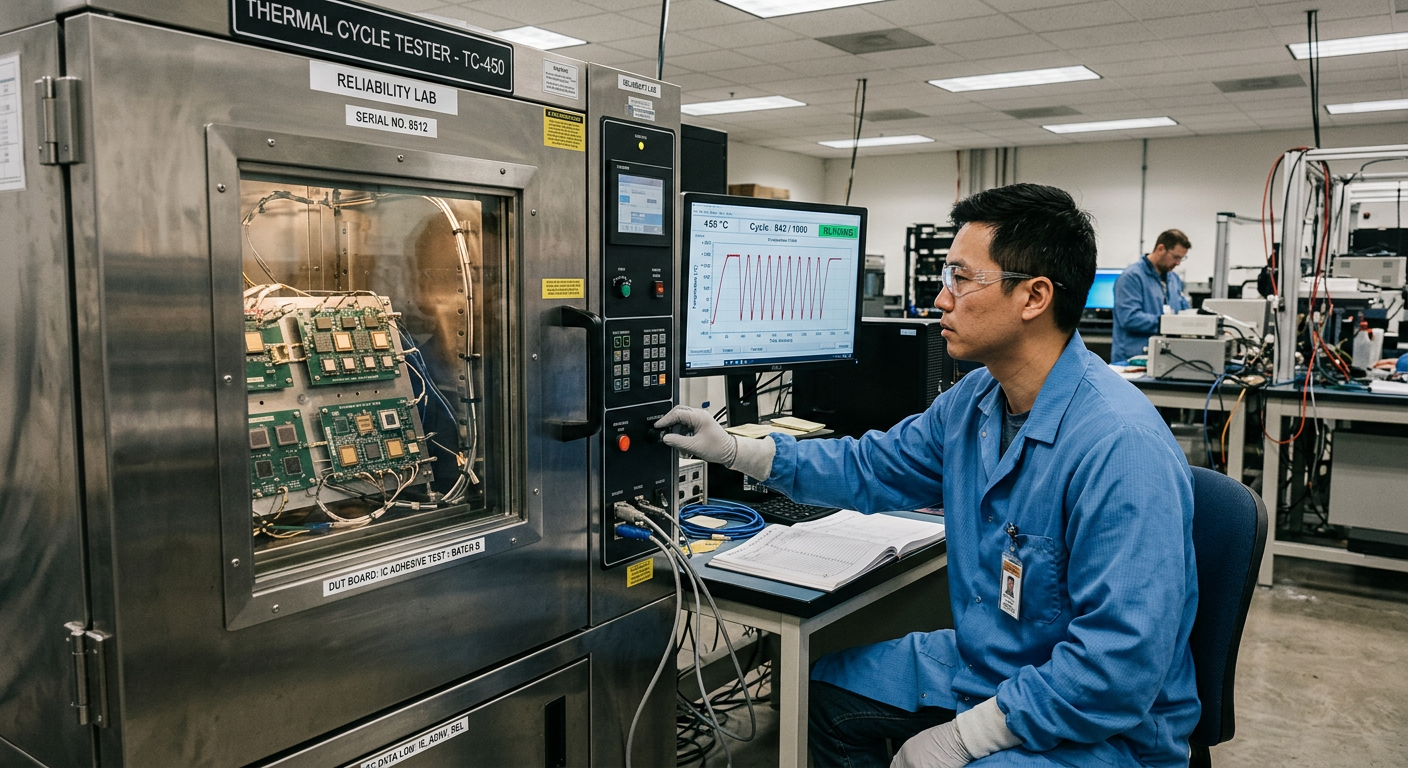
IC packaging adhesive thermal cycling in the United States requires reliable material selection, supplier review, and test planning for electronics durability.
-

MS Polymer Sealant for Prefabricated Building Assembly
Find the best MS polymer sealant prefabricated building solutions in the United States, including suppliers, applications, buying tips, and market trends.
 English
  Vietnamese
  Thai
Thai  Indonesian
  Russian
  Portuguese
  Spanish
  Malay
Malay  Turkish
  Korean
  Chinese