Share
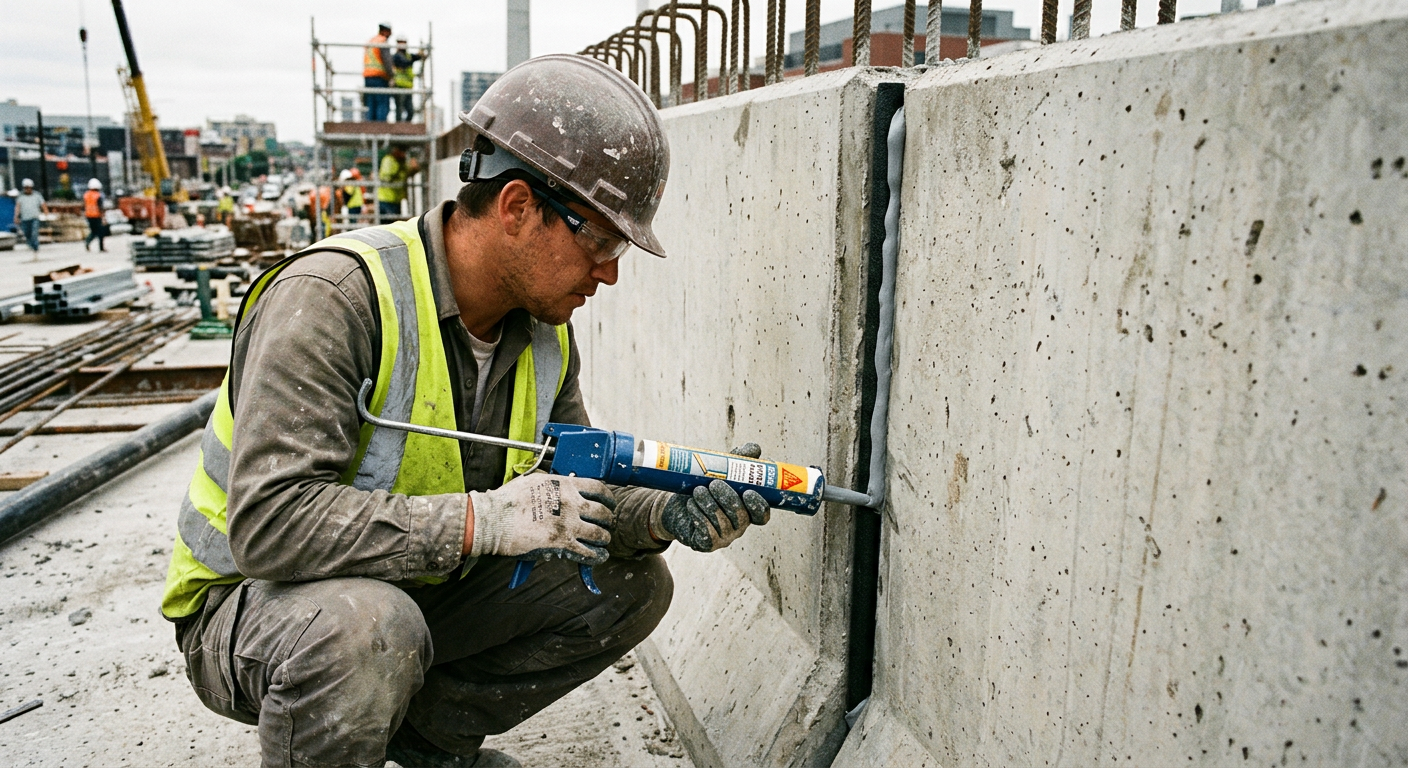
Elastic MS Polymer Sealant Movement Joint in United States
Quick Answer

If you need an elastic MS polymer sealant for movement joint sealing in the United States, the most practical choices are established brands with a strong construction presence, clear ASTM-compliant documentation, and reliable technical support for expansion joints, facade joints, precast panels, window perimeters, and floor transitions. For buyers who want immediate access, broad U.S. distribution, and proven project references, Sika, Tremco, BASF MBCC legacy channel partners, Pecora, Dow, and Henkel/OSI are among the most relevant names to review first.
For commercial construction, facade restoration, parking structures, and mixed-use developments in cities such as New York, Chicago, Houston, Los Angeles, Miami, and Seattle, the best option is usually a movement joint sealant that combines high elasticity, weather resistance, paintability, adhesion to concrete and metal, and low-VOC compliance. MS polymer technology is especially attractive where contractors want silicone-like durability with easier paint compatibility and lower odor during installation.
Qualified international suppliers can also be worth considering, especially for private label, distributor sourcing, and cost-sensitive projects. Manufacturers with recognized compliance programs, stable production systems, export experience, and responsive pre-sales and after-sales service can offer strong cost-performance advantages for U.S. importers, regional dealers, and brand owners.
- Sika: strong national distribution, broad construction sealant portfolio, trusted for infrastructure and facade work.
- Tremco: widely specified in building envelope systems, especially for commercial movement joints.
- Pecora: well-known in glazing, precast, and restoration markets with contractor-friendly support.
- Dow: trusted for weathering performance and large-project technical confidence.
- OSI/Henkel: accessible across dealer channels for construction and renovation applications.
United States Market Overview

The U.S. market for movement joint sealants remains active because the country continues to invest in commercial buildings, residential renovation, logistics facilities, transport hubs, and infrastructure renewal. Expansion joints and dynamic building joints are exposed to temperature swings, UV radiation, freeze-thaw cycling, wind-driven rain, vibration, and substrate movement. In states with harsh seasonal shifts such as Illinois, New York, Pennsylvania, Minnesota, and Colorado, elasticity retention is critical. In coastal regions such as Florida, Texas, California, and the Carolinas, UV stability, humidity tolerance, and resistance to salt-laden air matter more.
MS polymer sealants have gained attention in this environment because they bridge a practical gap between traditional polyurethane and silicone. Buyers often choose them where they want strong adhesion to concrete, aluminum, masonry, coated metal, stone, fiberglass, and some plastics, while also reducing issues such as bubbling, heavy solvent odor, or poor paint acceptance. This is particularly relevant in urban renovation corridors, logistics expansions near the Ports of Los Angeles and Long Beach, Gulf Coast warehousing, and East Coast redevelopment linked to New York/New Jersey port activity and Savannah distribution growth.
Another reason this segment is growing is procurement diversification. U.S. contractors, sealant applicators, distributors, and private-label brands increasingly compare domestic stock programs with imported alternatives. They are looking not only at tube price but also at consistency, curing profile, compatibility with backer rods and primers, shelf stability, documentation quality, and claims support. That shift benefits suppliers able to combine technical files, traceable quality systems, and dependable lead times.
The chart above illustrates a realistic growth pattern for the U.S. movement joint sealant market. The pace is not explosive, but it is steady, supported by building envelope repairs, warehouse construction, data center expansion, and stricter expectations around durability and low-emission products. By 2026, demand is likely to be shaped by sustainability declarations, labor-saving formulations, and better adhesion across mixed substrates.
Top Suppliers Relevant to the United States

The table below highlights suppliers and brands that are useful reference points for buyers evaluating elastic MS polymer sealant movement joint products in the U.S. market. It mixes major domestic-market brands and internationally capable manufacturers because many procurement teams compare branded specification options with OEM/private-label sourcing.
| Company | Service Region | Core Strengths | Key Offerings | Best Fit |
|---|---|---|---|---|
| Sika Corporation | Nationwide United States | Strong spec presence, construction systems integration, technical documentation | Building sealants, joint sealants, facade and concrete solutions | Commercial, infrastructure, large contractors |
| Tremco | United States and Canada | Building envelope expertise, restoration market strength, contractor support | Movement joint sealants, waterproofing, glazing systems | Facade, parking decks, restoration |
| Pecora Corporation | Nationwide United States | Architectural sealant focus, precast and glazing experience | Construction sealants, traffic coatings, glazing materials | Architects, specifiers, applicators |
| Dow | North America and global projects | Weatherability reputation, engineering support, project confidence | Silicone and specialty sealants for demanding envelopes | High-performance exterior joints |
| Henkel OSI | United States retail and dealer channels | Channel accessibility, contractor familiarity, renovation usage | Sealants, adhesives, window and door installation products | Residential and light commercial |
| Qingdao QinanX New Material Technology Co., Ltd | U.S. importers, distributors, OEM and private label buyers | Flexible manufacturing, broad adhesive portfolio, export capability | MS modified silane sealants, silicone, PU, epoxy, acrylic, hot melt | Brand owners, wholesalers, regional distributors |
This supplier comparison is useful because not every buyer has the same goal. A specification-led high-rise in Manhattan may lean toward a brand already embedded in consultant documents, while a regional building materials distributor in Texas may prioritize margin, packaging flexibility, and private-label scalability. That is why it is important to compare supplier fit, not just nominal product performance.
Product Types for Movement Joint Sealing
Elastic MS polymer sealants used for movement joints in the United States are usually selected by substrate type, expected joint movement, environment, and application method. The most common categories include general construction MS sealants, premium facade-grade formulations, floor joint products with stronger abrasion resistance, low-modulus weatherproof grades, paintable interior-exterior hybrid formulations, and OEM-oriented versions designed for repacking or private-label branding.
| Product Type | Main Use | Typical Benefit | Common Substrates | U.S. Buying Note |
|---|---|---|---|---|
| General construction MS sealant | Window, door, panel perimeter joints | Balanced adhesion and elasticity | Concrete, aluminum, masonry, PVC | Good for broad dealer inventory |
| Facade movement joint grade | Exterior expansion and control joints | Higher weather resistance and movement recovery | Precast, stone, metal cladding | Best for commercial envelope work |
| Floor joint MS sealant | Warehouses, walkways, interior floors | Better toughness under traffic exposure | Concrete slabs, industrial flooring | Check abrasion and cleaning chemical resistance |
| Low-modulus sealant | High-movement joints | Lower stress on substrates | EIFS, metal, concrete, composites | Useful for thermal movement zones |
| Paintable hybrid sealant | Architectural finishing and renovation | Cleaner visual integration after curing | Trim, masonry, wood, metal | Confirm coating compatibility |
| OEM/private-label MS sealant | Distributor or brand-owner programs | Custom packaging and market positioning | Varies by formula | Ideal for importers building house brands |
The table shows that product selection should start with the use case rather than the chemistry name alone. Two products may both be labeled as hybrid or MS polymer sealants, but their modulus, skin time, cure rate, sag resistance, and long-term movement behavior can differ significantly. In the U.S., this matters most when projects move between humid Gulf Coast conditions, dry Southwest climates, and freeze-thaw northern markets.
How Demand Varies by Industry
Demand for movement joint sealants in the United States is closely tied to building activity patterns and maintenance cycles. Commercial buildings, warehousing, transportation structures, curtain walls, precast systems, modular construction, and institutional facilities all create recurring need for durable elastic sealants. MS polymer products are especially attractive when owners want broad substrate compatibility and lower odor during occupied-space renovation.
This bar chart reflects where purchasing intensity is strongest. Commercial envelope work and warehousing continue to be active because they combine new construction with routine joint maintenance. Infrastructure is also significant, though specifications there can lean toward specialty systems depending on movement, chemical exposure, and traffic conditions.
Applications Across U.S. Projects
In practice, elastic MS polymer sealant for movement joint sealing is used in a wide variety of projects. Common examples include concrete control joints on commercial facades, perimeter joints around windows and storefront systems, precast panel joints, transitions between dissimilar materials, metal roof penetrations, modular unit connections, and expansion joints in low-rise mixed-use buildings. It is also used in renovation work where old polyurethane or failing acrylic materials need replacement and the contractor wants reduced odor and simpler tooling.
In coastal Florida, installers often prioritize resistance to humidity, UV radiation, and wind-driven rain. In the Midwest, joint recovery after temperature cycling is more critical. In the Pacific Northwest, moisture tolerance and long exterior service life matter greatly. In Texas and Arizona, strong adhesion under heat exposure and substrate expansion is often central to the decision. These regional differences explain why technical support and field guidance are as important as base chemistry.
| Application | Typical Location | Why MS Polymer Fits | Main Performance Need | Buying Tip |
|---|---|---|---|---|
| Facade movement joints | Office towers, retail centers | Elasticity with good substrate bonding | UV and thermal movement resistance | Review movement capability data |
| Window perimeter sealing | Residential and commercial buildings | Paintability and weather sealing | Air and water tightness | Check compatibility with frame coatings |
| Precast concrete joints | Parking structures, wall panels | Adhesion to mineral substrates | Joint recovery and weathering | Use with proper joint design |
| Interior floor joints | Warehouses, schools, hospitals | Low odor and flexible movement handling | Toughness and cleaning resistance | Confirm traffic suitability |
| Modular construction joints | Off-site building assembly | Fast handling and broad material adhesion | Consistent cure and movement tolerance | Request production-batch consistency data |
| Renovation replacement sealing | Urban restoration projects | Easier repainting and lower odor | Adhesion on aged substrates | Test surface prep requirements first |
This application table shows why one-size-fits-all buying is risky. The sealant that performs well on window perimeters in Atlanta may not be the best product for a concrete floor joint in Denver or a precast connection in Boston. Contractors and procurement teams should align the formulation with joint design, exposure class, and expected maintenance cycle.
Buying Advice for U.S. Importers, Contractors, and Distributors
When selecting an elastic MS polymer sealant for movement joint sealing in the United States, buyers should compare more than brochure claims. Start with movement capability, adhesion profile, weather resistance, VOC characteristics, and paint compatibility. Then assess pack format, delivery lead time, technical documentation, and claims handling. For contractors, jobsite reliability matters most. For distributors, consistency and margin protection are often just as important.
Ask whether the product has documented compliance with relevant construction expectations in the U.S. market, whether cure speed is suitable for climate and schedule, and whether the manufacturer can support mock-ups or substrate testing. If you are buying for private label, review cartridge quality, foil sausage options, labeling flexibility, palletization, and shelf-life control. If you are sourcing for a regional branch network, ensure the supplier can maintain lot traceability and repeatable color control across shipments.
Buyers near major trade and logistics hubs such as Houston, Los Angeles, Savannah, Newark, and Chicago often have an advantage when importing or redistributing sealants because freight options are broader and replenishment can be managed more efficiently. However, inland warehousing and climate-controlled storage are also important because sealant stability can be affected by prolonged heat exposure during summer transit.
Trend Shift Toward Sustainable and Multi-Purpose Formulations
The U.S. sealant market is gradually shifting toward products that satisfy more than one operational objective: flexibility, low emissions, easier application, compatibility with varied substrates, and cleaner appearance after painting. This shift is especially visible in renovation, healthcare, education, public-use buildings, and tenant-improvement work where odor and cure behavior affect occupied spaces.
The area chart shows a realistic adoption trend for lower-emission and hybrid-style products. By 2026, sustainability and policy factors are expected to influence specification decisions more directly, especially in states and cities with stricter green building targets. Products that combine durability with documentation support are likely to gain share.
Case Studies and Practical Use Scenarios
A logistics center outside Dallas may need movement joint sealants for tilt-up concrete panels and warehouse floor transitions. In that case, the buyer typically prioritizes adhesion to concrete, consistent gunability in warm weather, and a supply partner able to deliver pallets on schedule for phased installation. An MS polymer grade can work well where the contractor also wants lower odor and reduced surface staining risk compared with some alternatives.
A facade repair contractor in Chicago may be replacing failed joints in a mid-rise office building. Freeze-thaw cycles, strong wind, and thermal movement make elasticity retention essential. Here, a premium facade-grade sealant with proven long-term movement performance and compatibility with masonry, coated metal, and precast is more important than the lowest upfront price.
In Miami, restoration of a condominium envelope may require a paintable sealant with UV resistance, humid-climate cure stability, and reliable adhesion to concrete and aluminum. The contractor may also prefer a product backed by regional technical support due to occupied-building scheduling constraints and moisture-sensitive installation windows.
For a private-label building materials brand in California, the case is different. The objective may be to launch a house-brand elastic movement joint sealant with bilingual packaging, stable lot quality, and pricing that protects distributor margin. In that context, a flexible OEM partner with documentation, sample support, and export experience may be more valuable than a premium branded specification product.
Supplier Comparison by Practical Selection Criteria
The following comparison helps buyers evaluate suppliers against practical criteria rather than reputation alone. It is especially relevant for distributors, contractors, and procurement teams balancing technical performance with commercial efficiency.
| Supplier | Technical Support | Distribution Access | Private Label Capability | Project Specification Strength | Cost Position |
|---|---|---|---|---|---|
| Sika Corporation | Strong | Strong | Limited relative to OEM specialists | Very strong | Mid to premium |
| Tremco | Very strong | Strong | Limited | Very strong | Premium |
| Pecora Corporation | Strong | Moderate to strong | Limited | Strong | Mid to premium |
| Dow | Very strong | Strong | Limited | Very strong | Premium |
| Henkel OSI | Moderate | Very strong | Limited | Moderate | Mid |
| Qingdao QinanX New Material Technology Co., Ltd | Strong online and export-focused | Importer and distributor based | Very strong | Application-driven rather than spec-led | Competitive |
This table clarifies the purchasing trade-off. U.S. legacy brands dominate where consultant specifications and long reference histories are decisive. OEM-oriented manufacturers become more attractive where the buyer values customization, flexible packaging, and more aggressive landed cost structures.
The comparison chart summarizes what many U.S. buyers experience in practice: strong specification support and broad channel reach remain important, but customization and cost efficiency are increasingly influential, especially for regional brands and import-focused distributors.
Local Suppliers and Distribution Context
Within the United States, most buyers source movement joint sealants through a mix of direct manufacturer relationships, regional construction supply houses, specialized glazing distributors, and online industrial procurement platforms. In metropolitan markets such as New York, Atlanta, Dallas, Phoenix, Los Angeles, and Chicago, availability is usually strongest for major branded products. Smaller cities may rely more heavily on dealer networks and project-based ordering.
Local stocking matters because movement joint sealants are often needed on tight schedules. Delays can affect facade closures, window installation, concrete pours, and handover milestones. That is why many contractors prefer suppliers with U.S. warehouse support, while many distributors prefer manufacturers that can help build regional stock plans and custom packaging strategies.
If you want to explore broader sourcing options, you can review the manufacturer’s main site at QinanX adhesive solutions, browse the wider portfolio through industrial sealant and adhesive products, understand the supplier background via company capabilities and manufacturing profile, or request application guidance from the technical and sales contact team. Using those pages inside a U.S. sourcing process is most useful for buyers comparing private-label or distributor supply programs against established domestic brands.
Our Company
Qingdao QinanX New Material Technology Co., Ltd serves the U.S. market as a manufacturing-focused adhesive partner with particular value for buyers seeking MS modified silane sealants backed by verifiable production discipline and flexible commercialization models. Its adhesive range is produced under ISO-managed operations with compliance aligned to RoHS and REACH expectations, supported by multi-stage quality control and digital traceability that help U.S. importers and distributors verify batch consistency and documentation readiness. Beyond product breadth across silicone, polyurethane, epoxy, acrylic, hot melt, and water-based systems, the company’s strength for movement joint applications lies in its ability to tailor formulations and packaging for different customer groups, including end users, regional distributors, dealers, brand owners, contractors, and smaller private buyers through OEM, ODM, wholesale, retail, and regional partnership programs. With automated production lines, custom branding support, and export experience across more than 40 countries, it operates with the scale and process discipline buyers expect from a long-term supply partner rather than a one-off exporter. For U.S.-facing business, the practical service assurance comes from 24/7 technical assistance, free sample support, pre-sale application matching, and post-sale problem handling structured around sustained market development, giving local buyers confidence that specification questions, packaging changes, and performance follow-up are addressed as part of an ongoing commercial presence in this region.
Industries That Commonly Use This Sealant
Construction and building remain the largest users, especially for facades, windows, expansion joints, and retrofit work. Automotive and transportation sectors may use related MS technologies where flexible sealing and vibration resistance are needed, although movement joint building products are a more specialized subset. Industrial manufacturing facilities use them in floor joints, utility penetrations, and enclosure assembly. Renewable energy projects can also create demand, particularly in modular installations and weather-exposed mounting interfaces.
Healthcare and education projects are important in the U.S. because renovation often occurs while buildings remain in service. Lower odor and paintability can therefore influence product choice. Packaging and furniture are less central for movement joint sealants specifically, but they reinforce the broader manufacturing credibility of a supplier that already handles multiple adhesive chemistries and production controls.
What to Watch in 2026
Looking toward 2026, the U.S. market is likely to favor sealants that offer stronger environmental documentation, improved adhesion without complicated priming, and more predictable performance across mixed substrates. Sustainability expectations will continue to rise, especially where public procurement, LEED-oriented design, and low-emission interior standards influence buying. This does not mean the cheapest products disappear; it means low-cost products without technical evidence become harder to justify.
Technology trends will include better moisture-curing control, faster skin formation balanced with workable tooling time, and hybrid formulations tuned for both weather resistance and paint acceptance. Policy trends may encourage lower-VOC products and clearer material disclosures. Supply-chain trends will push buyers to diversify between domestic stock and qualified international manufacturing partners, especially for private-label programs and high-volume channel business.
For distributors, 2026 is likely to reward suppliers that can support digital documentation, lot traceability, fast sample development, and flexible packaging. For contractors, the advantage will go to products that reduce callbacks by maintaining adhesion and elasticity under real U.S. weather conditions rather than laboratory-only performance claims.
FAQ
Is MS polymer sealant good for movement joints?
Yes, many MS polymer sealants are well suited to movement joints because they combine elasticity, adhesion to multiple substrates, and good weather resistance. The key is selecting a grade designed specifically for dynamic joint movement rather than general gap filling.
How is MS polymer different from silicone for movement joints?
MS polymer sealants are often chosen when buyers want strong adhesion, lower odor, and paintability. Silicone usually leads in extreme weathering performance, but MS polymer can be a practical alternative where coating compatibility and application convenience matter.
What should U.S. buyers ask suppliers before purchasing?
Ask for movement capability, adhesion data, cure profile, VOC information, shelf life, packaging options, recommended substrates, and documentation for quality control. Also ask how the supplier handles technical issues after delivery.
Are imported sealants a realistic option in the United States?
Yes, especially for distributors, private-label brands, and cost-focused procurement teams. The main conditions are stable quality, clear compliance documentation, dependable shipping plans, and responsive support during qualification and after-sales service.
Which U.S. regions have the strongest demand?
Demand is strong in coastal redevelopment markets, major logistics corridors, and dense commercial regions such as Texas, California, Florida, the Northeast, and Midwest metro areas. Climate and building type influence the exact product profile needed.
Can this type of sealant be used on concrete, aluminum, and masonry together?
Often yes, but always confirm the exact formulation and test on project substrates. Surface preparation, joint design, and coating compatibility can change the result significantly.

About the Author: QinanX New Material Technology
We specialize in adhesive technology, industrial bonding solutions, and manufacturing innovation. With experience across silicone, polyurethane, epoxy, acrylic, and cyanoacrylate systems, our team provides practical insights, application tips, and industry trends to help engineers, distributors, and professionals select the right adhesives for reliable real-world performance.

Product Category
You May Also Interest
-

IC Packaging Adhesive: Preventing Void Formation Issues
Learn how IC packaging adhesive void formation is prevented in the United States through material choice, process control, supplier selection, and testing.
-

Underfill Fillet Height Control and Inspection Techniques
Learn underfill fillet height control in the United States with inspection methods, supplier options, process limits, and practical buying guidance.
-
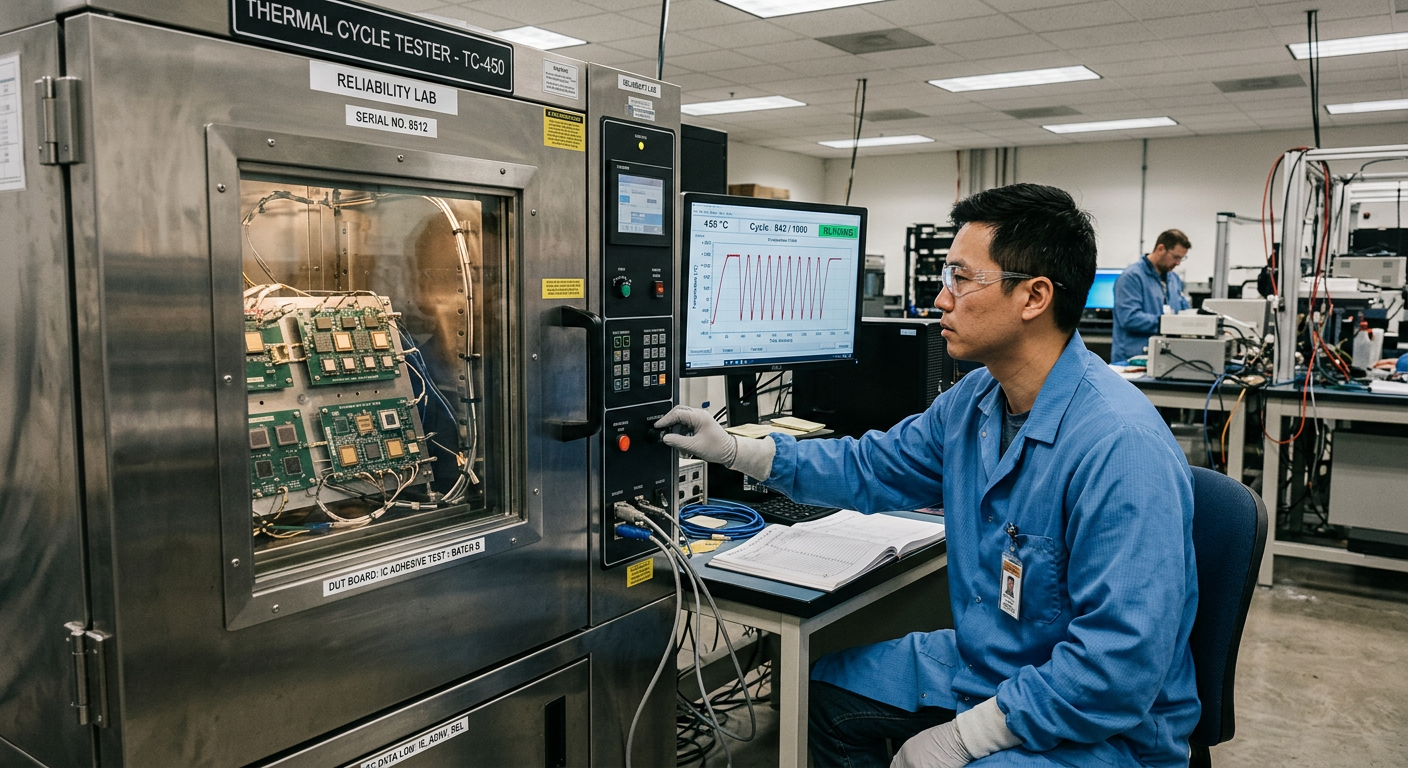
IC Package Adhesive Thermal Cycling Reliability Testing
IC packaging adhesive thermal cycling in the United States requires reliable material selection, supplier review, and test planning for electronics durability.
-

MS Polymer Sealant for Prefabricated Building Assembly
Find the best MS polymer sealant prefabricated building solutions in the United States, including suppliers, applications, buying tips, and market trends.
 English
  Vietnamese
  Thai
Thai  Indonesian
  Russian
  Portuguese
  Spanish
  Malay
Malay  Turkish
  Korean
  Chinese