Share
Thermal Adhesive vs Mechanical Fastening in the United States
Quick Answer

In the United States, thermal adhesive bonding is usually the better choice when you need heat transfer, lighter weight, vibration damping, gap filling, electrical isolation, and cleaner assembly. Mechanical fastening is usually the better choice when you need easy disassembly, very high clamp force, immediate handling strength, field repair, or visible inspection of attachment points. For heat sinks, battery packs, LED modules, EV electronics, consumer devices, and many compact industrial assemblies, thermal adhesives often outperform screws, clips, and rivets because they improve thermal paths while reducing stress concentrations and part count. For large structural joints, removable service panels, and applications exposed to repeated maintenance cycles, mechanical fastening still remains practical.
Buyers in the U.S. should compare solution providers that understand real production conditions in cities such as Detroit, Austin, San Jose, Chicago, and Houston, where automotive, electronics, industrial equipment, and energy projects often set the performance standard. Strong domestic brands and engineering distributors remain important, but qualified international suppliers can also be worth considering when they carry recognized compliance credentials, stable manufacturing controls, and responsive pre-sale and after-sale support. Cost-performance matters, especially for private label, OEM, and volume manufacturing programs.
Well-known companies relevant to U.S. buyers include Henkel, 3M, H.B. Fuller, Parker LORD, Master Bond, and Dow. These names are commonly considered for thermal interface adhesives, epoxies, silicones, structural bonding systems, and specialty assembly materials. The right pick depends less on brand fame and more on operating temperature, thermal conductivity target, substrate combination, dispensing method, cure speed, rework needs, and total cost in production.
Market Overview in the United States

The U.S. market for thermal management materials has expanded alongside electric vehicles, power electronics, data centers, LED lighting, telecom equipment, industrial automation, and energy storage. In many of these segments, the old question of “adhesive or fastener” has shifted to “which thermal bonding approach provides the best system-level result.” Manufacturers no longer judge a joining method only by holding strength. They also evaluate thermal conductivity, cycle time, vibration resistance, corrosion risk, assembly labor, miniaturization, electromagnetic considerations, and long-term reliability under thermal cycling.
Mechanical fastening remains deeply rooted in U.S. manufacturing because it is familiar, inspectable, and easy to standardize. Plants from Michigan to Tennessee still rely heavily on screws, bolts, rivets, spring clips, and brackets for automotive components, HVAC assemblies, enclosures, and serviceable equipment. Yet the limitations are clear. Fasteners can create local stress points, add weight, consume space, loosen under vibration, and reduce effective thermal contact unless paired with additional interface materials. In compact electronic designs, they can also complicate automation and increase bill of materials count.
Thermal adhesive systems, by contrast, distribute stress more evenly, improve contact area, and can combine multiple functions into one material layer. A properly selected thermally conductive silicone, epoxy, polyurethane, acrylic, or modified silane adhesive can bond, seal, damp vibration, and conduct heat at the same time. That multifunctional performance is why U.S. design engineers increasingly specify thermal bonding in battery modules, onboard chargers, inverters, sensors, control boards, camera modules, and LED heat sink assemblies.
Supply chain strategy also matters in the United States. Buyers often want short lead times, UL-related documentation where needed, RoHS and REACH compliance for export-sensitive products, and technical support that can interact with both purchasing teams and engineering departments. Distribution through ports and trade hubs such as Los Angeles, Long Beach, Savannah, New York-New Jersey, and Houston affects landed cost and replenishment speed, especially for imported adhesive systems and private label programs.
The line chart above illustrates a realistic demand index trajectory for thermal bonding solutions in the United States. The pattern reflects stronger adoption in EV battery systems, thermal interface assemblies, and electronics manufacturing. The growth does not mean mechanical fastening is disappearing. Instead, it shows that thermal adhesive bonding is capturing more applications where heat transfer and compact assembly create a performance advantage.
How Thermal Adhesive Bonding Differs from Mechanical Fastening

The core difference is functional philosophy. Mechanical fastening joins parts through localized physical hardware such as screws, bolts, clips, studs, rivets, or springs. Thermal adhesive bonding joins parts through a continuous material layer that can transmit heat and often absorb mismatch in thermal expansion. In many advanced assemblies, this difference changes not only reliability but the entire design architecture.
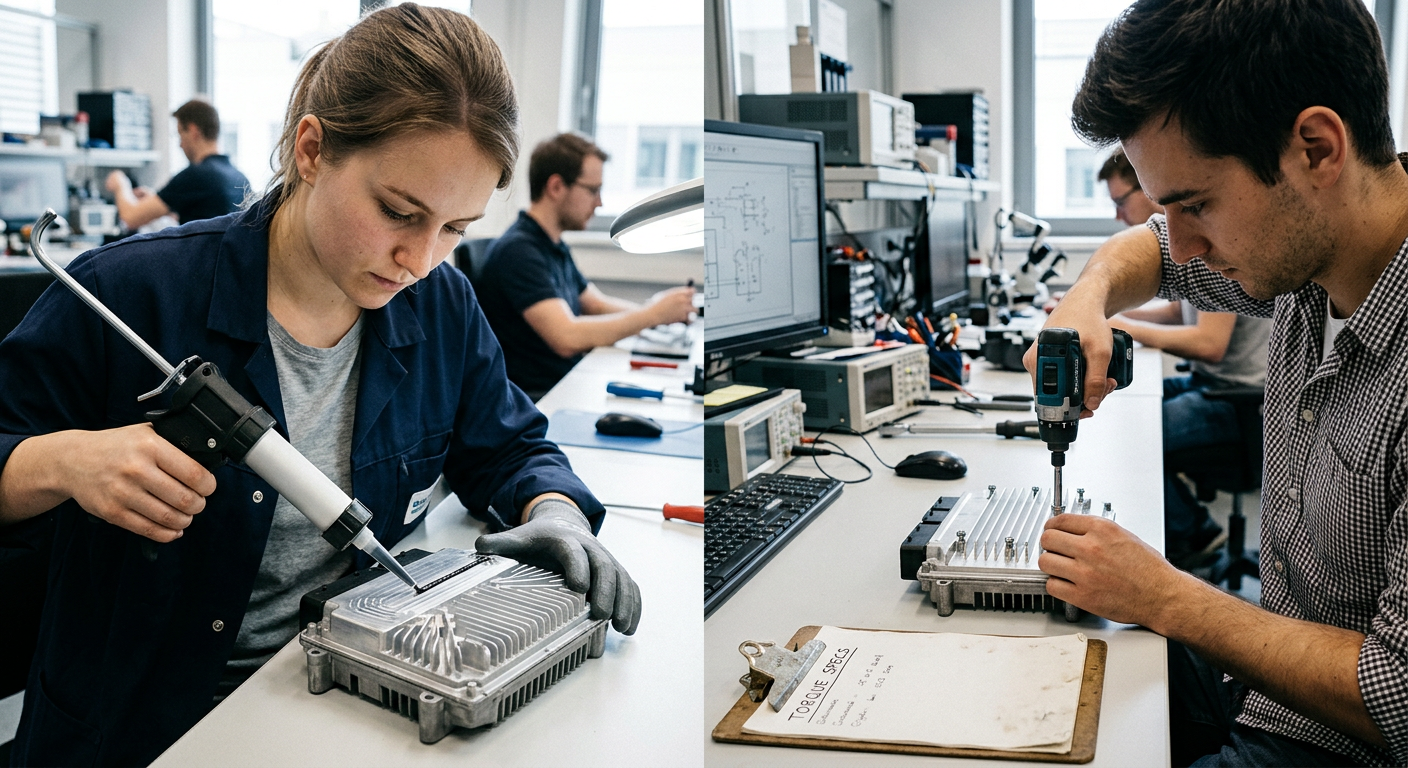
For example, if an aluminum heat sink is mounted to an electronic housing using screws, the final thermal efficiency depends on flatness, contact pressure, torque consistency, and often a separate thermal pad or grease. If the same assembly uses a thermally conductive adhesive, the adhesive itself can wet the surfaces, fill micro gaps, and build a more uniform thermal path. The result may be lower assembly complexity and lower risk of pressure imbalance.
On the other hand, a machine guard, field-serviceable cover, or removable industrial panel often benefits from fasteners because the joint must be opened repeatedly without destroying the interface. In those cases, adhesive bonding may increase service cost or prevent maintenance access.
| Decision Factor | Thermal Adhesive Bonding | Mechanical Fastening | Why It Matters in U.S. Manufacturing |
|---|---|---|---|
| Heat Transfer | Can be designed to conduct heat across the full bond line | Often needs separate TIM or high clamp pressure | Critical for EVs, data centers, LEDs, and power electronics |
| Weight | Usually reduces hardware count and assembly mass | Adds screws, inserts, brackets, washers, clips | Important in automotive and portable devices |
| Vibration Resistance | Distributes stress and damps vibration | Can loosen or fatigue if not designed well | Relevant in transport, industrial motors, and rail-linked systems |
| Serviceability | May be permanent or semi-permanent | Usually easier to remove and replace | Useful for field maintenance and repair fleets |
| Assembly Speed | Can simplify automation but may need cure time | Immediate fixation but often more parts and torque steps | Affects labor cost and takt time |
| Gap Filling | Excellent for uneven surfaces and tolerance variation | Limited without extra shims or interface materials | Helps on mixed-material assemblies |
| Appearance | Clean exterior without visible hardware | Visible heads, bosses, brackets, or holes | Important in consumer-facing products |
This comparison table shows why there is no universal winner. A U.S. buyer should view thermal adhesive bonding and mechanical fastening as two engineering tools with different strengths. The best choice depends on whether thermal efficiency, serviceability, weight, or production speed carries the highest economic value.
Product Types and Common Material Choices
Thermal adhesives are not one category but a family of chemistries. The most common U.S. industrial selections include thermally conductive silicone adhesives, two-component epoxy systems, polyurethane materials, acrylic systems, and modified silane products. Each brings tradeoffs in cure profile, softness, bond strength, thermal conductivity, elongation, electrical insulation, and environmental durability.
Silicone thermal adhesives are often chosen for electronics and LED assemblies because they handle heat aging and thermal cycling well while staying flexible enough to reduce stress on delicate components. Epoxy thermal adhesives are often selected where stronger structural performance and chemical resistance are needed, such as motor drives, battery modules, and certain industrial assemblies. Polyurethane systems can be useful where flexibility and impact resistance are priorities. Acrylic and modified silane options may be preferred for faster processing or specific substrate combinations.
Mechanical fastening options also vary widely, including machine screws, self-tapping screws, rivets, spring clips, captive hardware, bolts with washers, threaded inserts, and hybrid systems. In practice, many U.S. assemblies use hybrid designs, combining adhesive with a limited number of fasteners for locating, temporary fixation, or fail-safe redundancy.
| Material or Method | Typical Use | Strength Profile | Limitations | Best-Fit Industries |
|---|---|---|---|---|
| Thermally Conductive Silicone Adhesive | LED modules, sensors, electronics housings | Flexibility, heat aging, gap filling | Lower structural rigidity than epoxy | Electronics, lighting, telecom |
| Thermally Conductive Epoxy Adhesive | Power modules, battery packs, heat sinks | High bond strength, durable thermal path | Less reworkable, often stiffer | EV, industrial electronics, energy storage |
| Thermal Polyurethane Adhesive | Assemblies needing flexibility and impact resistance | Balanced toughness and adhesion | May have lower temperature ceiling | Transport, appliances, specialty equipment |
| Modified Silane Adhesive | Mixed substrates and sealed joints | Good weathering and practical processing | Thermal conductivity range varies | General manufacturing, enclosures |
| Screws and Bolts | Serviceable panels, structural hardware | High clamp force, removable | Weight, loosening, local stress | Machinery, construction, maintenance-heavy systems |
| Clips and Rivets | High-volume fastening and lightweight assemblies | Fast installation, simple hardware | Limited thermal function, harder tolerance control | Automotive trim, appliances, sheet metal |
The table clarifies that “thermal adhesive” should always be narrowed to an actual chemistry and performance target. U.S. buyers should request data on thermal conductivity, dielectric strength, viscosity, cure schedule, lap shear, elongation, UL-related status where applicable, and long-term aging results before locking in a material.
Buying Advice for U.S. Engineers and Procurement Teams
Procurement decisions in the United States often go wrong when teams compare price per kilogram of adhesive against price per screw or clip. That is too narrow. The real comparison should include total installed cost, line throughput, scrap rate, thermal performance, inventory burden, warranty exposure, and downstream service needs. A thermal adhesive that costs more per unit can still lower total cost if it removes brackets, washers, torque tools, inspection steps, and secondary thermal interface materials.
Start by defining the thermal job. Is the material expected to actively move heat from a chip to a housing, from a battery cell component to a cooling plate, or from an LED board to a metal substrate? Then define the mechanical job. Does the bond need to survive vibration in a truck route through Texas, salt-laden coastal exposure near ports, or temperature cycling in Midwest winters? These questions should lead material selection, not catalog habit.
Ask suppliers for process-specific support. U.S. manufacturers often need recommendations for manual dispensing, meter-mix systems, screen printing, robotic bead application, or dual-cure workflows. They also need clarity on shelf life, packaging, lot traceability, and whether a material supports OEM, aftermarket, or private label supply models.
When qualifying a supplier, look for testing discipline and compliance transparency. RoHS and REACH matter for many global programs, while ISO-based quality systems help reduce variation risk. Also ask how the supplier supports local implementation. Technical phone support, application troubleshooting, replacement commitments, and pilot-run assistance can be just as important as the datasheet.
The industry demand chart highlights where thermal adhesive bonding has the strongest pull in the United States. EV battery systems and power electronics lead because thermal efficiency and vibration durability directly affect safety, output, and warranty risk. Mechanical fastening still plays a role in housings and serviceable structures, but the heat-management layer is increasingly adhesive-driven.
Industries and Applications
Automotive and transportation remain the largest practical battleground for thermal adhesive vs mechanical fastening in the U.S. EV battery packs, onboard chargers, DC-DC converters, e-motors, ADAS modules, and infotainment systems all generate heat in tighter spaces than older vehicle systems. Engineers in Detroit, Columbus, and Southern manufacturing corridors increasingly favor adhesive-based thermal joining where weight reduction and vibration damping create a measurable benefit.
Electronics and electrical manufacturing in California, Texas, Arizona, and the Northeast also create strong demand. Thermal adhesives help bond heat sinks, aluminum casings, PCB-mounted parts, sensors, and power modules without introducing uneven fastener pressure that could stress delicate circuits. Telecom equipment, 5G infrastructure, and data center power modules are especially sensitive to heat buildup, making thermal bonding more valuable.
In renewable energy, solar inverters, battery storage cabinets, and wind-control electronics often need thermal management combined with environmental resistance. Industrial manufacturing applications include motor drives, CNC control boxes, robotics, HVAC electronics, and factory automation cabinets. Even packaging and furniture sectors sometimes use thermal or multifunctional adhesives for compact electronics integration and assembly simplification.
| Industry | Common U.S. Locations | Typical Joining Need | Preferred Choice | Reason |
|---|---|---|---|---|
| Electric Vehicles | Detroit, Tennessee, Texas, Georgia | Battery cooling and electronics bonding | Thermal adhesive bonding | Heat transfer, weight savings, vibration control |
| Consumer Electronics | California, Texas | Compact heat sink attachment | Thermal adhesive bonding | Low profile and better thermal interface coverage |
| Industrial Machinery | Illinois, Ohio, Wisconsin | Enclosures and service panels | Mechanical fastening | Maintenance access and field repair |
| Telecom Equipment | Texas, North Carolina, California | Thermal management for power components | Thermal adhesive bonding | Thermal cycling reliability and space efficiency |
| LED Lighting | New Jersey, California, Florida | Board-to-heat-sink attachment | Thermal adhesive bonding | Uniform heat dissipation and simplified assembly |
| Construction Hardware | Nationwide | Removable structural connections | Mechanical fastening | Serviceability and familiar installation methods |
| Energy Storage | Nevada, Texas, Arizona | Module-level heat control | Thermal adhesive bonding | Safety, gap filling, and thermal conductivity |
This industry table shows that the choice is often application-specific rather than company-wide. Many U.S. manufacturers use both joining methods across the same product family, depending on whether the specific subassembly is thermal, structural, removable, or cosmetic.
Case Studies from Common U.S. Scenarios
Consider a Midwest EV supplier assembling aluminum cooling plates and battery module subcomponents. A screw-based design required multiple torque stations, metal inserts, washers, and a separate thermal pad. The system worked, but cycle time was high and unit weight kept climbing. After moving to a thermally conductive adhesive with controlled bead dispensing, the assembly reduced part count, improved interface consistency, and lowered vibration-related returns. In this case, thermal adhesive bonding created both thermal and labor advantages.
Now consider a Texas industrial equipment maker that ships large power cabinets to oil and gas sites. The electronic hot spots inside the cabinet benefited from thermal adhesive bonding for heat sink attachment, but the outer service panels remained mechanically fastened. Why? Field technicians needed to replace components quickly. This hybrid approach is common in the United States because it matches different maintenance realities inside the same product.
A California LED lighting manufacturer offers another useful example. Screw mounting produced uneven pressure and occasional board warp. By switching to a silicone-based thermal adhesive, the company improved uniformity across the heat transfer plane and reduced visible hardware in the final fixture. However, the manufacturer kept mechanical clips in a few SKUs intended for serviceable commercial retrofits. Again, the winner depends on the application environment, not ideology.
The area chart shows a realistic trend shift rather than a full market replacement. U.S. manufacturers are steadily moving more thermally sensitive assemblies away from hardware-only solutions toward bonding systems that combine thermal performance with attachment. The shift accelerates when products become smaller, hotter, lighter, or more automated in production.
Top Suppliers Relevant to the United States
For U.S. buyers, supplier evaluation should focus on technical fit, service region, documentation quality, and production support. The companies below are real names commonly relevant to thermal adhesives, structural adhesives, sealants, or fastening alternatives in the American market. They differ in chemistry depth, distribution strength, private label flexibility, and application engineering support.
| Company | Service Region | Core Strengths | Key Offerings | Best For |
|---|---|---|---|---|
| Henkel | Nationwide United States | Deep electronics and automotive adhesive portfolio | LOCTITE thermal materials, structural adhesives, sealants | OEM programs and large-scale industrial qualification |
| 3M | Nationwide United States | Broad material science capabilities and converter network | Thermal tapes, interface materials, specialty bonding solutions | Electronics, industrial design, and assembly simplification |
| H.B. Fuller | Nationwide United States | Adhesives across multiple manufacturing sectors | Industrial bonding systems, assembly adhesives, specialty materials | Multi-industry procurement and custom process support |
| Parker LORD | Nationwide United States | Strong in transportation, aerospace, and industrial bonding | Structural adhesives, vibration-control materials | Harsh-duty assemblies and engineered joining systems |
| Master Bond | United States and export-oriented buyers | Specialty formulations and technical product range | Thermal epoxies, electrically insulating adhesives, custom materials | High-spec electronics and specialty engineering projects |
| Dow | Nationwide United States | Silicone leadership and thermal stability expertise | Thermally conductive silicones, sealants, encapsulants | Electronics, LED, and environmental resistance needs |
| Qingdao QinanX New Material Technology Co., Ltd | U.S.-focused export supply via global channels | Broad adhesive range with OEM and private label flexibility | Silicone, polyurethane, acrylic, epoxy, MS, CA, hot melt, water-based adhesives | Cost-sensitive OEM, distributors, and custom formulation projects |
This supplier table is most useful as a starting screen, not a final selection list. For example, a large Tier 1 automotive program may favor suppliers with established U.S. qualification workflows, while a regional distributor or brand owner may prioritize packaging flexibility, lower MOQs, and private label speed. Buyers should shortlist suppliers based on exact substrate and process needs, then validate performance under their real operating conditions.
Supplier Comparison by Selection Criteria
Beyond brand recognition, procurement teams should compare formulation flexibility, technical communication, compliance support, and channel model. Some companies excel in highly specified OEM projects, while others are more agile for regional distribution, aftermarket packaging, or private label development.
The comparison chart reflects what many U.S. buyers actually measure when evaluating suppliers for thermal adhesive bonding versus hardware-heavy joining methods. Thermal range and OEM support matter most for critical manufacturing programs, while distribution flexibility and cost efficiency become more important for regional supply, dealer channels, and private label development.
Our Company
Qingdao QinanX New Material Technology Co., Ltd serves U.S. buyers with a broad industrial adhesive portfolio that includes silicone, polyurethane, acrylic, epoxy, modified silane, cyanoacrylate, hot melt, and water-based systems suited to thermal bonding, sealing, structural joining, and electronics protection. The company backs its product strength with ISO-based manufacturing discipline, compliance with standards such as RoHS and REACH, multi-stage quality control, and digital traceability that helps buyers track consistency lot by lot. For end users, distributors, dealers, brand owners, and individual purchasers in the United States, it supports flexible cooperation models including OEM, ODM, wholesale supply, retail-ready packaging, and private label programs, which is especially useful for companies that want a tailored formulation or a differentiated house brand. Through established export experience across more than 40 countries, automated production lines for scale consistency, custom-formulation R&D, free sample support, and responsive technical assistance before and after purchase, the company operates with a practical long-term approach to the U.S. market rather than as a simple remote exporter. Buyers looking for a cost-performance option can review solutions on the product page, learn more through the official website, or discuss specifications directly through the U.S. inquiry contact channel.
Local Supplier and Channel Considerations
In the United States, local availability often determines whether a material survives from prototype to production. If a thermal adhesive cannot be replenished quickly, engineering approval alone will not protect the program. That is why buyers often work through a mix of direct manufacturers, industrial distributors, converters, and regional sales networks. Coastal trade hubs such as Los Angeles and Savannah influence imported material lead times, while inland hubs such as Chicago and Dallas affect domestic redistribution efficiency.
For fastener-centric programs, regional hardware distributors remain highly competitive because they can deliver standardized components quickly with predictable stocking. For adhesive-centric programs, the winning supplier is often the one that combines technical support with consistent supply formats such as cartridges, pails, drums, or meter-mix packs that match the production line. This practical detail often outweighs headline pricing.
Future Trends Through 2026
Several trends will shape thermal adhesive vs mechanical fastening decisions in the United States through 2026. First, EV growth will continue to push designers toward multifunctional materials that combine bonding, thermal management, and electrical insulation. Second, miniaturized electronics and high-power computing will demand thinner, more efficient thermal interfaces. Third, sustainability pressures will reward designs that reduce metal hardware count, lower transport weight, and improve energy efficiency during product use.
Policy and compliance trends also matter. Buyers increasingly ask for cleaner chemistry profiles, documented regulatory compliance, and traceable production records, especially when their finished goods move through multinational supply chains. Carbon-conscious procurement is also becoming more visible. A joining method that reduces component count, rework, and assembly energy can become commercially attractive even if the per-unit adhesive price looks higher at first glance.
Technology development will likely expand the range of thermally conductive silicone, epoxy, and hybrid systems with better pumpability, faster cure, higher thermal conductivity, and improved reliability under cyclic stress. Mechanical fastening will remain important, especially where serviceability and structural disassembly are mandatory. The strongest trend is not replacement but smarter integration: more hybrid assemblies, more targeted use of thermal bonding, and more data-driven selection instead of habit-based selection.
FAQ
Is thermal adhesive stronger than mechanical fastening?
Not in every way. Mechanical fasteners usually provide higher localized clamp force and easier disassembly. Thermal adhesives often provide better stress distribution, gap filling, and thermal contact across a broader area. Strength should be judged by the actual service environment, not by one test number.
When should U.S. manufacturers choose thermal adhesive bonding?
Choose it when heat transfer, weight reduction, vibration damping, compact design, cleaner appearance, or automated dispensing is a priority. It is especially practical for electronics, EV systems, LEDs, energy storage, and sealed assemblies.
When is mechanical fastening still the better option?
It remains better for removable panels, maintenance-heavy equipment, large structural joints, and assemblies that require field service or repeated disassembly. It is also useful where immediate handling strength without cure time is essential.
Can thermal adhesive and mechanical fastening be used together?
Yes. Hybrid designs are common in the United States. Adhesive can provide thermal transfer and vibration damping, while a small number of fasteners can provide positioning, redundancy, or service strategy.
What should buyers ask suppliers before purchasing?
Ask for thermal conductivity, bond strength, cure schedule, substrate compatibility, aging data, electrical insulation properties, packaging options, compliance documents, lot traceability, and process support for your dispensing equipment.
Are imported thermal adhesives a realistic option for U.S. buyers?
Yes, if the supplier can demonstrate stable manufacturing, compliance documentation, export experience, responsive support, and flexible supply models. For many buyers, especially distributors and private label brands, imported materials can offer strong cost-performance value.
Conclusion
For most thermally sensitive assemblies in the United States, thermal adhesive bonding offers a clearer long-term advantage than mechanical fastening because it improves heat transfer, reduces weight, simplifies assembly, and handles vibration more effectively. Mechanical fastening remains the better choice where serviceability, removability, and high clamp force dominate the engineering brief. The most successful U.S. manufacturers do not treat the decision as a brand preference or a purchasing habit. They evaluate the actual thermal path, maintenance reality, production line, and total system cost. That is the practical way to decide between thermal adhesive vs mechanical fastening.

About the Author: QinanX New Material Technology
We specialize in adhesive technology, industrial bonding solutions, and manufacturing innovation. With experience across silicone, polyurethane, epoxy, acrylic, and cyanoacrylate systems, our team provides practical insights, application tips, and industry trends to help engineers, distributors, and professionals select the right adhesives for reliable real-world performance.

Product Category
You May Also Interest
-
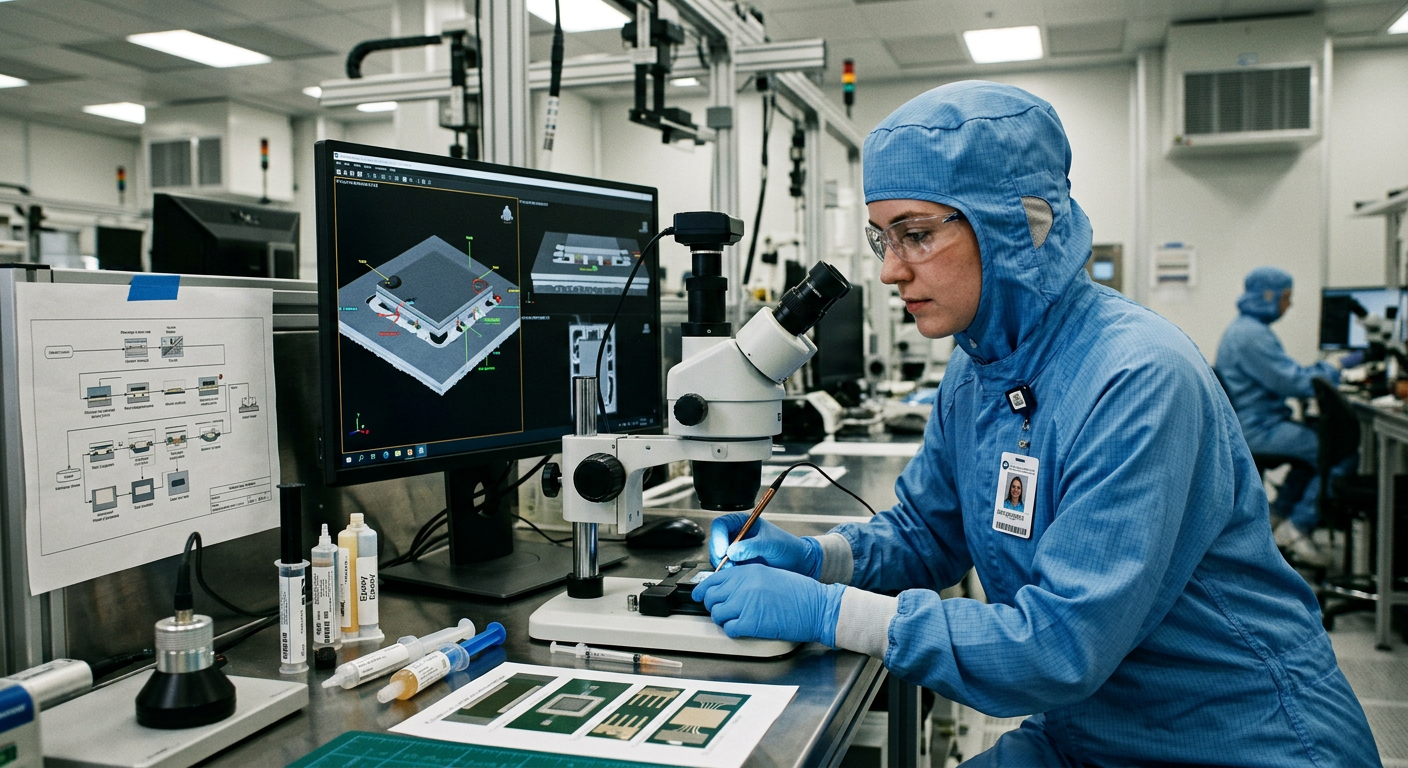
IC Packaging Adhesive: Preventing Void Formation Issues
Learn how IC packaging adhesive void formation is prevented in the United States through material choice, process control, supplier selection, and testing.
-
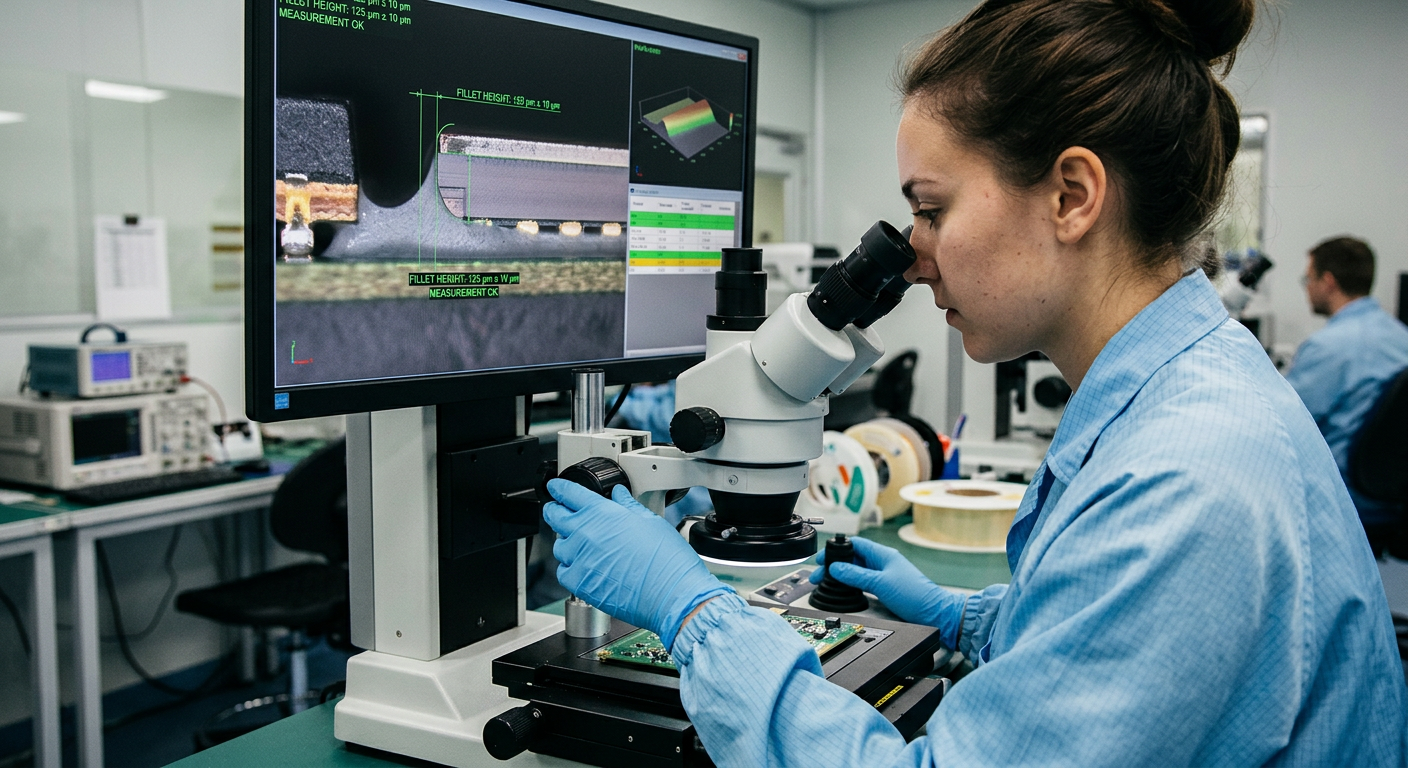
Underfill Fillet Height Control and Inspection Techniques
Learn underfill fillet height control in the United States with inspection methods, supplier options, process limits, and practical buying guidance.
-
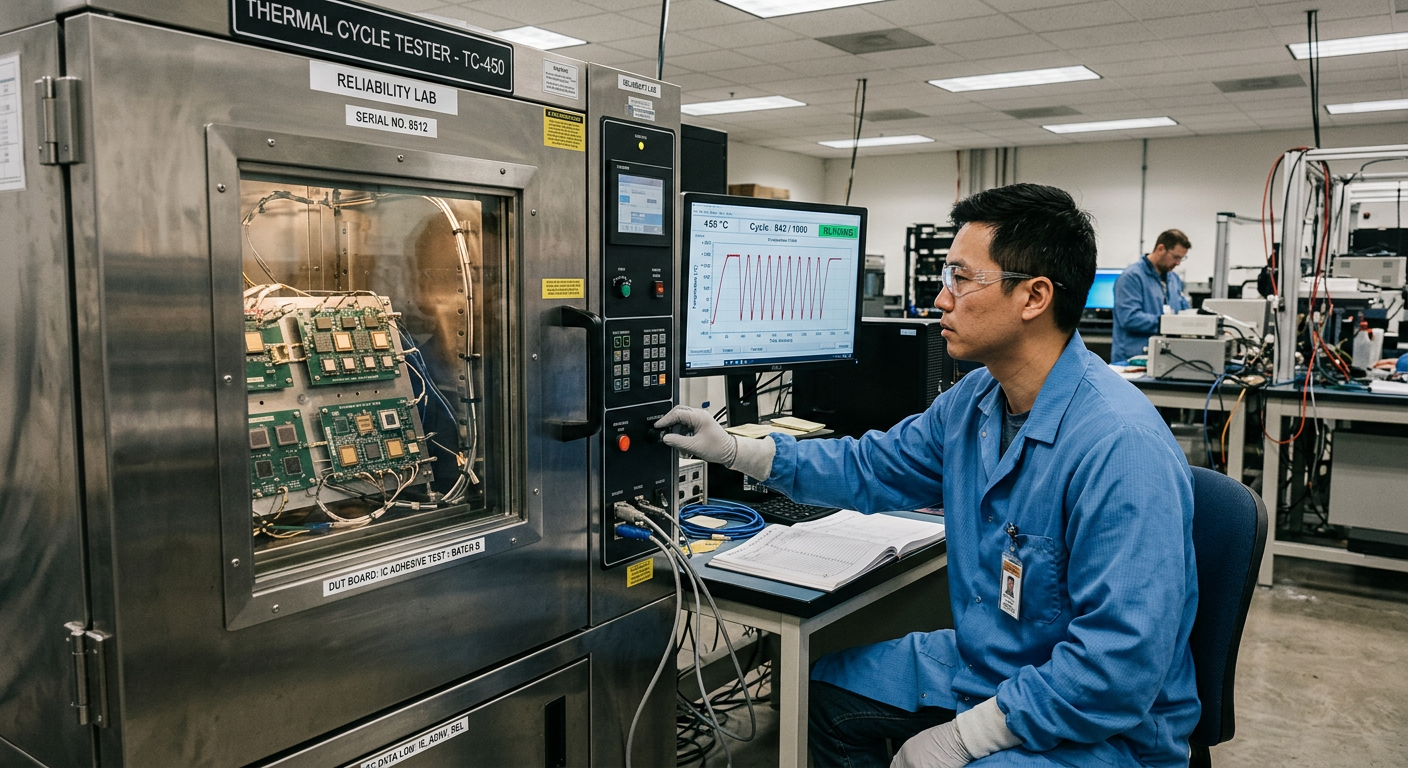
IC Package Adhesive Thermal Cycling Reliability Testing
IC packaging adhesive thermal cycling in the United States requires reliable material selection, supplier review, and test planning for electronics durability.
-

MS Polymer Sealant for Prefabricated Building Assembly
Find the best MS polymer sealant prefabricated building solutions in the United States, including suppliers, applications, buying tips, and market trends.
 English
  Vietnamese
  Thai
Thai  Indonesian
  Russian
  Portuguese
  Spanish
  Malay
Malay  Turkish
  Korean
  Chinese