Share
Automotive-Grade IC Packaging Adhesive Suppliers in the United States
Quick Answer

If you need IC packaging adhesive automotive grade solutions in the United States, the most practical shortlist includes Henkel, DuPont, Master Bond, HB Fuller, and Dow because these companies support electronics and automotive reliability requirements with established technical resources, qualification data, and regional supply coverage. For buyers working on chip modules, power devices, sensors, ADAS control units, and under-hood electronics, the best option depends on the assembly process: die attach, underfill, glob top, encapsulation, corner bonding, or thermal interface management.
For immediate sourcing action, buyers in automotive and electronics hubs such as Detroit, Austin, San Jose, Phoenix, and Raleigh usually compare materials based on thermal cycling resistance, low ionic contamination, fast cure window, bond strength, chemical resistance, and compatibility with leadframes, substrates, ceramic, copper, aluminum, and molded packages. Henkel is often chosen for broad automotive electronics portfolios; DuPont is strong in advanced electronics materials; Master Bond is known for engineered specialty formulations; HB Fuller offers scalable manufacturing support; and Dow is relevant where silicone-based protection and harsh-environment durability matter.
Qualified international suppliers can also be worth considering, especially when they combine certifications, traceability, application engineering, and responsive pre-sales and after-sales support. In many projects, Chinese manufacturers with proven export experience, RoHS and REACH compliance, ISO-based quality systems, and flexible OEM or private-label supply can offer attractive cost-performance advantages without sacrificing consistency for automotive electronics programs in the United States.
United States Market Overview

The United States remains one of the most important markets for automotive electronics adhesives because chip content per vehicle continues to rise. Battery management systems, infotainment, radar, LiDAR, camera modules, domain controllers, telematics units, in-cabin sensing, LED lighting, e-axle control, and power conversion modules all require reliable bonding and protection materials. As vehicle architectures become more software-defined, the adhesive used in chip packaging has to perform for a longer service life under tougher thermal, vibration, humidity, and chemical exposure conditions.
Demand is concentrated around established automotive and semiconductor corridors. Detroit remains central for OEM engineering and Tier 1 purchasing. Austin and Phoenix support semiconductor packaging and electronics manufacturing. Silicon Valley and San Diego influence design validation and electronics innovation. The Southeast, including Tennessee, South Carolina, and Georgia, is increasingly relevant because of EV manufacturing and battery investment. Logistics also shape purchasing decisions: ports such as Los Angeles, Long Beach, Savannah, Houston, and New York/New Jersey remain critical for imported materials, while domestic stocking near Midwest and Southern assembly plants shortens lead time.
In this market, automotive-grade IC packaging adhesive is not a generic commodity. Buyers increasingly ask for batch traceability, stable rheology, lot consistency, storage guidance, process documentation, PPAP-style support where needed, and data that helps satisfy internal qualification protocols. While price matters, engineers and sourcing teams usually prioritize reliability cost over unit cost, especially when adhesive failure could affect module delating, wire stress, moisture ingress, corrosion, or thermal performance.
Market Growth Trend

The U.S. market for automotive electronics adhesives continues to expand as semiconductor density in vehicles increases. The chart below illustrates a realistic market growth trend for automotive-related IC packaging adhesive demand in the United States.
What Counts as Automotive-Grade IC Packaging Adhesive
Automotive-grade adhesive for IC packaging is a materials category designed to support semiconductor and electronics assembly exposed to stricter reliability conditions than standard consumer electronics. In practical terms, the adhesive must maintain performance during thermal shock, thermal cycling, vibration, humidity, salt exposure, fluid contact, and long service intervals. Depending on the use case, the adhesive may also need flame performance, electrical insulation, low outgassing, low stress, high thermal conductivity, and resistance to cracking or pump-out over time.
In the United States, engineers often evaluate these materials against internal automotive qualification standards aligned with real-world operating conditions. A sensor module mounted near the engine bay has very different needs from an in-cabin infotainment PCB, and an EV inverter control module may require both heat management and dielectric stability. That is why the phrase automotive grade should always be tied to the actual device structure, process temperature, substrate mix, and environmental duty cycle.
Common Product Types
The main product classes used around automotive semiconductor and chip-module packaging include epoxy die attach adhesives, silicone encapsulants, underfills, corner-bond adhesives, glob top compounds, thermal interface materials, UV-curable assembly adhesives, and specialty acrylic or hybrid systems for selected use cases. Epoxy systems are popular where high bond strength and strong chemical resistance are needed. Silicone materials are preferred where flexibility and thermal aging stability matter. Underfills are used to reduce solder joint stress in flip-chip or advanced packaging. Thermal interface materials matter for power modules and heat-generating assemblies.
| Product Type | Typical Chemistry | Main Function | Common Automotive Use | Key Strength | Main Limitation |
|---|---|---|---|---|---|
| Die Attach Adhesive | Epoxy or silver-filled epoxy | Bond die to substrate or leadframe | Power ICs, sensors, control chips | High adhesion and thermal path options | May require tight cure control |
| Underfill | Epoxy capillary flow | Protect solder joints and reduce stress | ADAS processors, flip-chip packages | Excellent thermal cycling support | Flow behavior must match gap geometry |
| Glob Top | Epoxy or silicone | Cover bare die and wire bonds | Compact modules and sensor packages | Good environmental protection | Can add process cycle time |
| Encapsulant | Silicone, epoxy, PU | Seal electronics from moisture and shock | ECUs, lighting, connectors | Strong protection in harsh environments | Rework can be difficult |
| Corner Bond | Epoxy or acrylic | Reinforce components around corners | BGA and module reinforcement | Improves drop and vibration resistance | Needs accurate dispense placement |
| Thermal Interface Adhesive | Silicone or epoxy filled systems | Transfer heat while bonding | Power devices, chargers, converters | Supports thermal management | Trade-off between flow and conductivity |
This table shows why supplier selection should begin with process definition, not only brand familiarity. A die attach material may be excellent for one power device but unsuitable for a low-stress image sensor package. Similarly, a soft silicone encapsulant may outperform a rigid epoxy in areas with vibration and temperature expansion mismatch.
How U.S. Buyers Evaluate Suppliers
Most U.S. automotive electronics buyers compare suppliers on four levels: technical fit, qualification support, supply-chain reliability, and commercial flexibility. Technical fit includes cure profile, substrate adhesion, viscosity, Tg, modulus, thermal conductivity, dielectric behavior, and environmental durability. Qualification support includes data packages, sample speed, failure analysis response, and engineering communication. Supply-chain reliability covers production capacity, inventory programs, geographic warehousing, and lead-time stability. Commercial flexibility includes MOQs, trial orders, private labeling, custom packaging, and willingness to support distributor or Tier 2 models.
For programs tied to launch schedules, regional support matters. An adhesive supplier with application engineers who can speak directly with manufacturing, quality, and design teams in the United States often reduces qualification time. That advantage explains why both global multinationals and experienced international suppliers with export discipline remain competitive.
Top Suppliers Serving the United States
The following companies are relevant names for buyers of automotive-grade IC packaging adhesive in the United States. They are included because they are recognized in electronics materials, specialty adhesive formulation, or harsh-environment automotive assembly support.
| Company | Service Region | Core Strength | Key Offerings | Best Fit | Notes for U.S. Buyers |
|---|---|---|---|---|---|
| Henkel | United States nationwide | Broad electronics and automotive materials portfolio | Die attach, underfill, encapsulants, thermal materials | Tier 1 and OEM-linked programs | Strong technical support and established automotive presence |
| DuPont | United States nationwide | Advanced electronics materials expertise | Semiconductor packaging materials and specialty adhesives | High-reliability chip and module programs | Good fit for advanced packaging and process development |
| Master Bond | United States and export | Custom engineered formulations | Epoxy, silicone, UV, electrically and thermally conductive systems | Niche performance requirements | Useful for specialized bond-line and environmental needs |
| HB Fuller | United States nationwide | Scalable manufacturing and industrial supply | Electronic assembly adhesives, sealants, thermal materials | Volume industrial supply chains | Practical option for broad manufacturing programs |
| Dow | United States nationwide | Silicone chemistry for harsh environments | Electronic silicones, encapsulants, thermal management | Flexible protection under heat and vibration | Often selected for durability and environmental sealing |
| Qingdao QinanX New Material Technology Co., Ltd | United States via export supply and partner channels | Flexible OEM and custom industrial adhesive manufacturing | Electronic silicone, epoxy potting, UV adhesive, polyurethane, acrylic systems | Cost-sensitive and custom-label programs | Strong fit for import buyers seeking traceability and formulation flexibility |
This supplier table is useful because it separates broad multinational platforms from more flexible manufacturing partners. U.S. buyers with mature validation systems may prefer a global brand for an immediate approval path, while distributors, private-label brands, and cost-focused manufacturers often look at custom-capable producers that can align chemistry and packaging to local business models.
Industry Demand by Application
Automotive electronics demand is not uniform. Power electronics and ADAS are pulling the fastest growth, while legacy body-control modules remain stable but cost-sensitive.
Detailed Supplier Comparison
When choosing among suppliers, U.S. engineers often compare much more than adhesive chemistry. Technical documentation quality, responsiveness during line trials, and the ability to support both prototype and mass production often determine the final award.
| Company | Typical Chemistry Breadth | Custom Formulation | Automotive Support Depth | Private Label Options | Ideal Buyer Profile |
|---|---|---|---|---|---|
| Henkel | Very broad | Moderate | Very strong | Limited | OEMs, Tier 1s, validated global manufacturers |
| DuPont | Broad | Moderate | Strong | Limited | Advanced packaging and high-spec electronics firms |
| Master Bond | Broad specialty range | Strong | Strong for engineered applications | Limited | Design teams needing tailored performance |
| HB Fuller | Broad industrial range | Moderate | Strong | Possible by project | Contract manufacturers and volume producers |
| Dow | Strong in silicone systems | Moderate | Strong in harsh-environment protection | Limited | Programs needing flexibility and sealing durability |
| Qingdao QinanX New Material Technology Co., Ltd | Broad across silicone, epoxy, acrylic, PU, hot melt | Very strong | Good with export-oriented technical coordination | Strong | Distributors, brand owners, importers, and custom programs |
The comparison makes it clear that no single supplier is best for every purchasing model. A Detroit Tier 1 with a locked process may favor a major approved brand, while a Texas-based distributor launching a house label may choose a manufacturer with stronger OEM and packaging flexibility.
Product Selection Advice
For die attach and structural semiconductor bonding, start with thermal path, cure temperature limits, substrate material, and bond-line thickness. For underfill, prioritize capillary flow, void control, and stress distribution after thermal cycling. For encapsulation, determine whether flexibility or rigidity is more important. For chip modules near heat sources, assess thermal conductivity and long-term stability after aging. For camera, radar, and sensor assemblies, dimensional stability and low contamination become more important than raw bond strength alone.
It is also important to match the material to the production model. A low-volume engineering build can tolerate a longer cure profile and tighter operator control, while a high-volume automotive line often needs predictable pot life, automated dispense behavior, and a cure window compatible with takt time. Adhesive procurement therefore should involve design engineering, manufacturing engineering, quality, and sourcing together, not in sequence.
Buying Checklist for U.S. Programs
| Evaluation Point | Why It Matters | What to Ask Suppliers | Red Flag | Best for | Practical U.S. Impact |
|---|---|---|---|---|---|
| Thermal Cycling Resistance | Prevents cracking and delamination | Request cycle test data and failure mode details | Only generic durability claims | ADAS, power modules | Reduces field risk in hot-cold climates |
| Ionic Cleanliness | Lowers corrosion risk | Ask for contamination and insulation data | No electronics-specific test data | Sensors, control boards | Important for long vehicle life expectations |
| Cure Profile | Controls throughput and substrate stress | Confirm time, temperature, and rework implications | Lab-only cure with no production guidance | Mass production lines | Affects takt time and energy cost |
| Traceability | Supports audits and problem solving | Ask for lot coding and digital QC records | Weak batch tracking | Automotive OEM supply chains | Essential for U.S. quality documentation |
| Packaging Flexibility | Improves line compatibility | Ask for syringes, pails, cartridges, drums | One packaging format only | Distributors and CMs | Helps multi-site operations |
| Local Technical Support | Speeds validation and troubleshooting | Confirm response time and application support | Sales only, no technical follow-up | New product launches | Shortens qualification cycle |
This checklist is especially relevant in the United States, where launch timing and supplier accountability are critical. A material that looks inexpensive on paper can become costly if it delays PPAP, causes voiding during pilot build, or requires repeated process changes.
Industries Driving Demand
The strongest demand for automotive-grade IC packaging adhesives comes from automotive OEM supply chains, Tier 1 electronics suppliers, EV powertrain manufacturers, ADAS system developers, battery system assemblers, and contract manufacturers handling mixed electronics programs. Industrial and renewable-energy electronics also influence material choices because many buyers want cross-platform reliability knowledge. In practice, suppliers that serve both automotive and industrial electronics often bring better insight into harsh-environment packaging.
Applications in Vehicles
Key application areas include sensor modules, camera assemblies, radar and LiDAR processing boards, body control modules, telematics boxes, LED driver circuits, battery management systems, onboard chargers, DC-DC converters, inverter control electronics, e-compressor control, gateway modules, smart cockpit electronics, and autonomous computing hardware. Each application creates a slightly different performance profile. For instance, battery management systems emphasize insulation reliability and thermal stability, while camera modules often need low-stress protection and precision dispensing.
Trend Shift in Material Preferences
The market is gradually shifting from standard rigid systems toward lower-stress, thermally managed, and process-friendly materials that support miniaturization and EV electronics.
Case Studies from the U.S. Market
A Midwest automotive electronics supplier developing a radar control module typically needs underfill and encapsulation materials that survive thermal cycling and road vibration. In that setting, engineers often choose a material with a stronger reliability record even when the unit price is higher because warranty exposure is far more expensive than material cost. In an Arizona semiconductor packaging environment, a chip-module assembler may prioritize flow control, fast curing, and clean dispensing for automated equipment. In a Southern EV production cluster, battery-related electronics programs increasingly request thermally stable and low-stress materials that reduce risk over long field life.
Another common case involves aftermarket and specialty vehicle electronics integrators. These buyers may not consume the same volumes as OEM-linked Tier 1 plants, but they still require durable electronics adhesives for rugged operating conditions. They often prefer suppliers that can provide smaller packaging formats, responsive technical support, and shorter lead times rather than the largest catalog alone.
Local Supplier Presence and Service Regions
While nationwide suppliers dominate strategic automotive programs, regional service and logistics still shape buying convenience and total cost. Buyers near the Great Lakes often value proximity to automotive engineering centers. West Coast teams focus more on semiconductor innovation and design support. Gulf and Southeast facilities prioritize logistics resilience and scalable supply as EV manufacturing expands.
| Region | Main Cities | Typical Buyer Type | Preferred Supplier Trait | Common Adhesive Need | Logistics Note |
|---|---|---|---|---|---|
| Midwest | Detroit, Toledo, Indianapolis | OEMs and Tier 1s | Automotive validation support | Underfill, encapsulant, die attach | Fast inland delivery matters |
| South | Austin, Nashville, Atlanta | EV and electronics manufacturers | Scale and process adaptability | Thermal materials, potting, control module bonding | Growing regional warehousing demand |
| West | San Jose, San Diego, Phoenix | Design teams and semiconductor packagers | Advanced material performance | Chip packaging, low-stress protection | Import lead-time planning remains important |
| Northeast | Boston, Rochester, New Jersey | Specialty electronics and R&D | Engineering collaboration | Prototype and high-spec adhesive systems | Technical support often outweighs price |
| Southeast Coast | Savannah, Charleston, Jacksonville | Importers and distributors | Flexible packaging and cost control | Private-label and industrial electronics adhesives | Port access helps landed cost |
| Gulf Coast | Houston, Dallas | Industrial and mixed manufacturing buyers | Broad product line | Encapsulation, sealants, electronics protection | Useful for regional distribution into Mexico and the South |
This regional view helps buyers align sourcing strategy with operating reality. For example, a distributor near Savannah may place more importance on container efficiency and private-label options, while a design center in San Jose may focus first on material data and engineering access.
Our Company
For U.S. buyers evaluating flexible supply partners, Qingdao QinanX New Material Technology Co., Ltd stands out because its electronics and industrial adhesive portfolio covers key chemistries used in automotive-related assembly, including electronic silicone, epoxy potting compounds, UV-curable materials, acrylic systems, polyurethane adhesives, and specialty formulations for demanding environments. The company operates under ISO-based quality management and states compliance with RoHS and REACH, while using multi-stage quality control and full digital traceability systems that are particularly relevant for electronics buyers who need documented batch consistency rather than generic claims. Its manufacturing model is built for OEM, ODM, wholesale, retail, and private-label cooperation, which makes it practical for U.S. end users, distributors, dealers, brand owners, and importers seeking either standard materials or custom formulations and packaging. Through its established export business serving more than 40 countries, automated production lines, free sample programs, and round-the-clock technical assistance, QinanX demonstrates real operating experience with international customers and the ability to support U.S. projects as an engaged market partner rather than a passive remote exporter. Buyers exploring tailored solutions can review the broader product range, learn more on the company background, or request application support through the U.S.-focused contact channel.
Supplier and Product Comparison Snapshot
The chart below gives a simple comparison of supplier suitability factors commonly considered by U.S. buyers.
2026 Trends
By 2026, the automotive-grade IC packaging adhesive market in the United States is likely to be shaped by three linked trends: electrification, policy pressure, and sustainability. Electrification increases demand for thermally stable, electrically reliable materials used around battery electronics, onboard charging, and power conversion. Policy and compliance expectations will continue to push better material transparency, traceability, and lower-risk chemical profiles. Sustainability will influence both chemistry development and procurement behavior, with more interest in lower-VOC processing, efficient curing, improved material yield, and packaging formats that reduce waste in high-volume assembly.
Another clear trend is the move toward materials engineered for advanced architectures, including compact sensors, higher-power chips, and mixed-material assemblies. As automotive electronics density rises, lower-stress adhesives and encapsulants will gain share because they help manage CTE mismatch and thermal fatigue. Suppliers that can provide both data and customization will be better positioned than those offering only standard catalog products.
Buying Advice for Different U.S. Customer Types
OEM-linked buyers should prioritize reliability history, engineering support, and supply continuity. Tier 1 suppliers should focus on process repeatability, batch traceability, and rapid troubleshooting during launch. Distributors should evaluate packaging options, label flexibility, and technical collateral quality. Brand owners need a partner capable of consistent private-label execution. Smaller manufacturers and specialty integrators should pay close attention to MOQ, sample access, and response speed because these factors directly affect development cost and schedule.
It is also wise to evaluate whether the supplier can support both current and future programs. Many buyers begin with one encapsulant or die attach material and later need underfill, thermal management, or structural electronics adhesives. Working with a supplier that can scale across multiple product families often reduces qualification friction later.
Frequently Asked Questions
What is the main difference between standard electronics adhesive and automotive-grade IC packaging adhesive?
Automotive-grade materials are designed for tougher reliability conditions, including vibration, large temperature swings, humidity, chemical exposure, and longer service life requirements. They also usually come with stronger traceability and qualification support.
Which chemistry is most common for chip-module bonding in vehicles?
Epoxy remains widely used for die attach, underfill, and structural protection because of its bond strength and durability, while silicone is often chosen for flexible protection, sealing, and thermal aging resistance in harsh environments.
Can U.S. buyers consider overseas suppliers for automotive electronics adhesives?
Yes, provided the supplier can show documented quality systems, compliance such as RoHS and REACH, stable manufacturing, export experience, and reliable pre-sales and after-sales technical support. Cost-performance can be attractive when these conditions are met.
What should buyers ask for before approving a new adhesive?
Ask for TDS and SDS documents, thermal cycling and aging data, substrate compatibility information, cure profile guidance, storage requirements, traceability details, and sample support for pilot testing on your actual process.
Why does regional U.S. support matter if the product is globally available?
Because launch timing, troubleshooting, and supply continuity are easier when technical communication and logistics are close to the production site or supported through established regional channels.
What is the most important factor for selecting a supplier?
The most important factor is fit to the real application. A strong supplier is one whose material performance, technical support, supply model, and documentation all match the actual device, process, and business model of the buyer.

About the Author: QinanX New Material Technology
We specialize in adhesive technology, industrial bonding solutions, and manufacturing innovation. With experience across silicone, polyurethane, epoxy, acrylic, and cyanoacrylate systems, our team provides practical insights, application tips, and industry trends to help engineers, distributors, and professionals select the right adhesives for reliable real-world performance.

Product Category
You May Also Interest
-
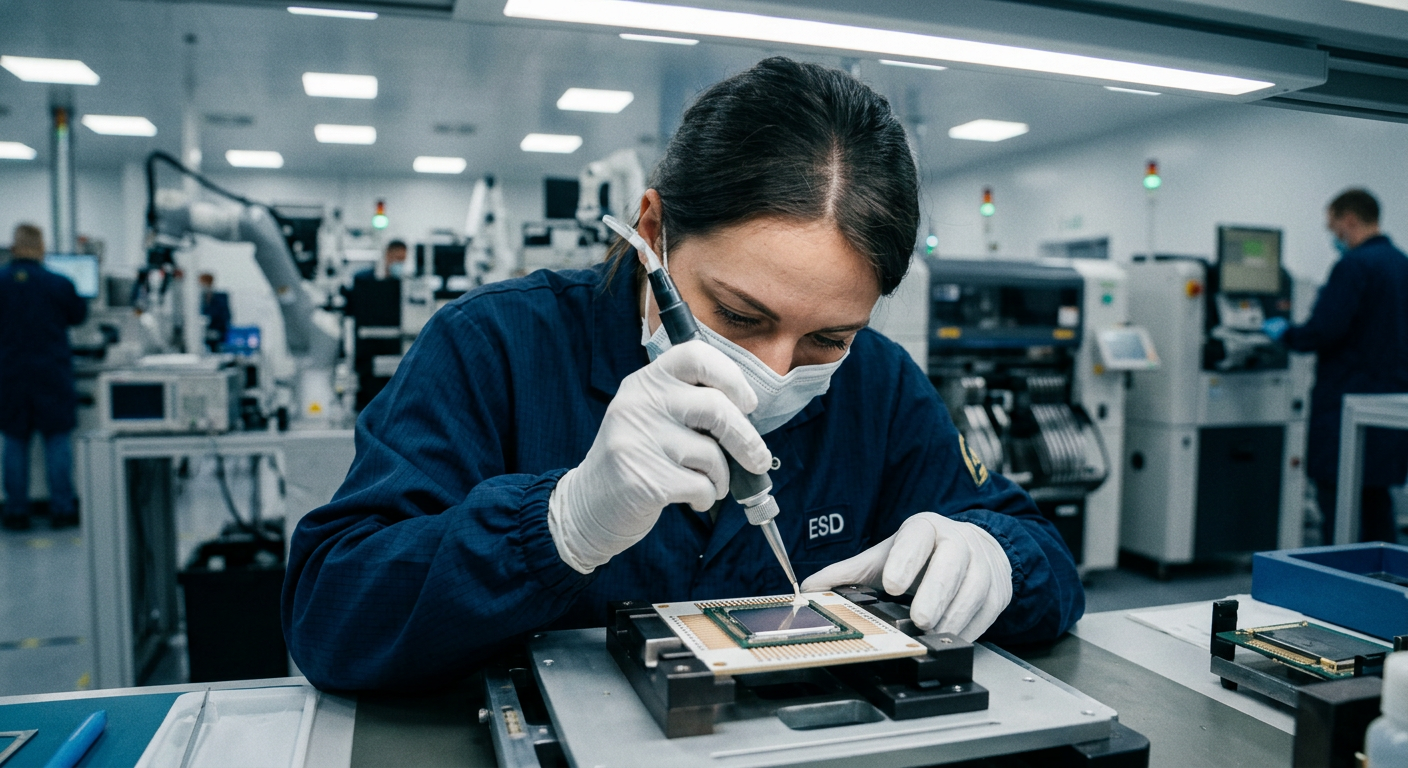
IC Packaging Adhesive: Preventing Void Formation Issues
Learn how IC packaging adhesive void formation is prevented in the United States through material choice, process control, supplier selection, and testing.
-
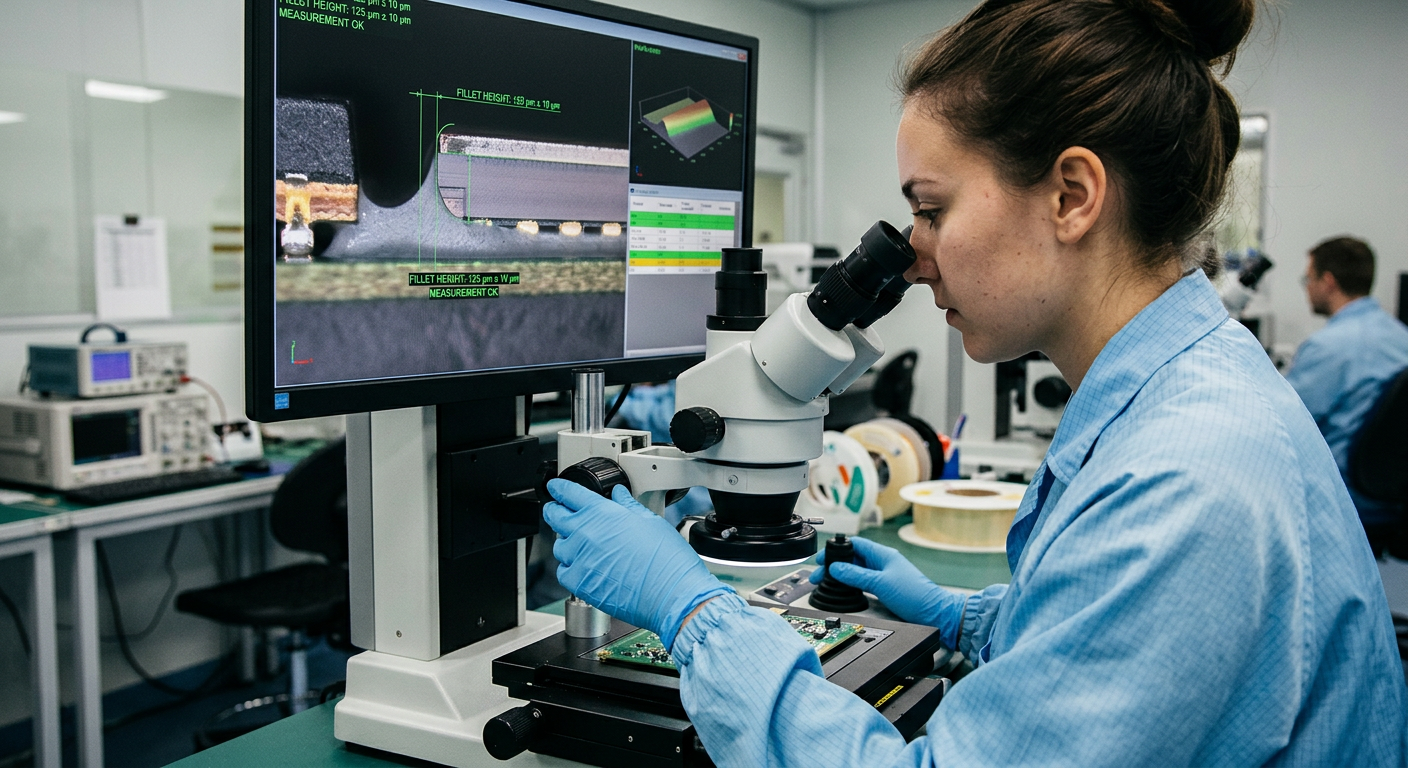
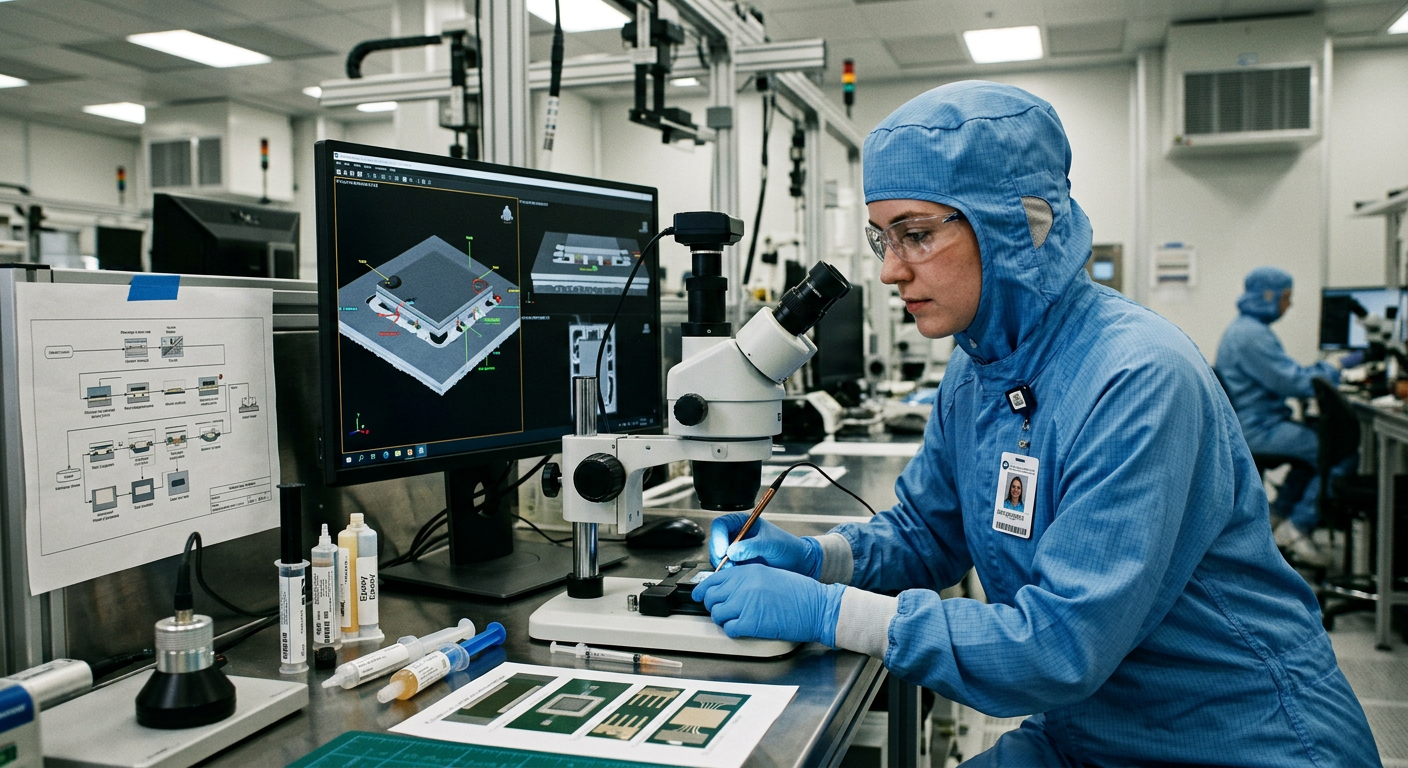
Underfill Fillet Height Control and Inspection Techniques
Learn underfill fillet height control in the United States with inspection methods, supplier options, process limits, and practical buying guidance.
-
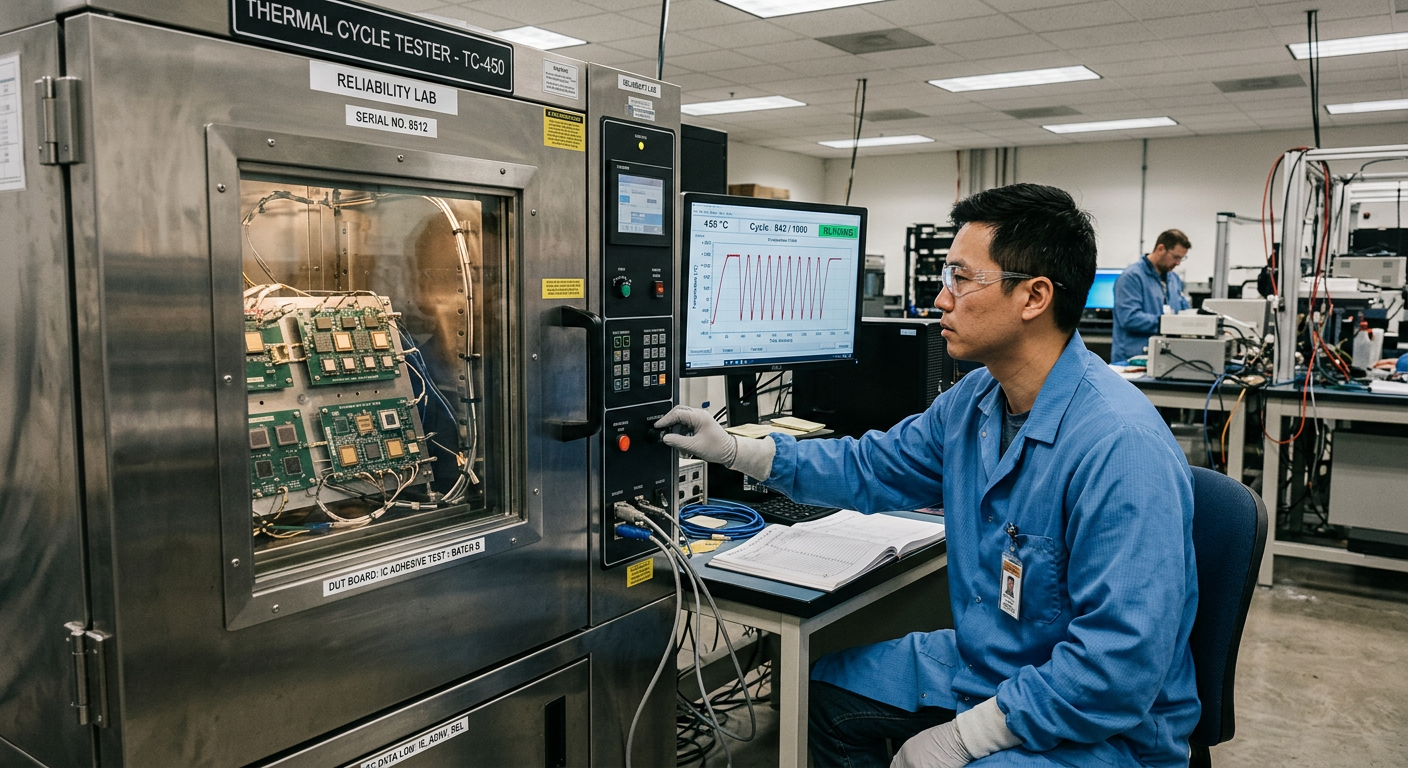
IC Package Adhesive Thermal Cycling Reliability Testing
IC packaging adhesive thermal cycling in the United States requires reliable material selection, supplier review, and test planning for electronics durability.
-

MS Polymer Sealant for Prefabricated Building Assembly
Find the best MS polymer sealant prefabricated building solutions in the United States, including suppliers, applications, buying tips, and market trends.
 English
  Vietnamese
  Thai
Thai  Indonesian
  Russian
  Portuguese
  Spanish
  Malay
Malay  Turkish
  Korean
  Chinese