Share
Isocyanate-Free MS Polymer Sealant Options in the United States
Quick Answer

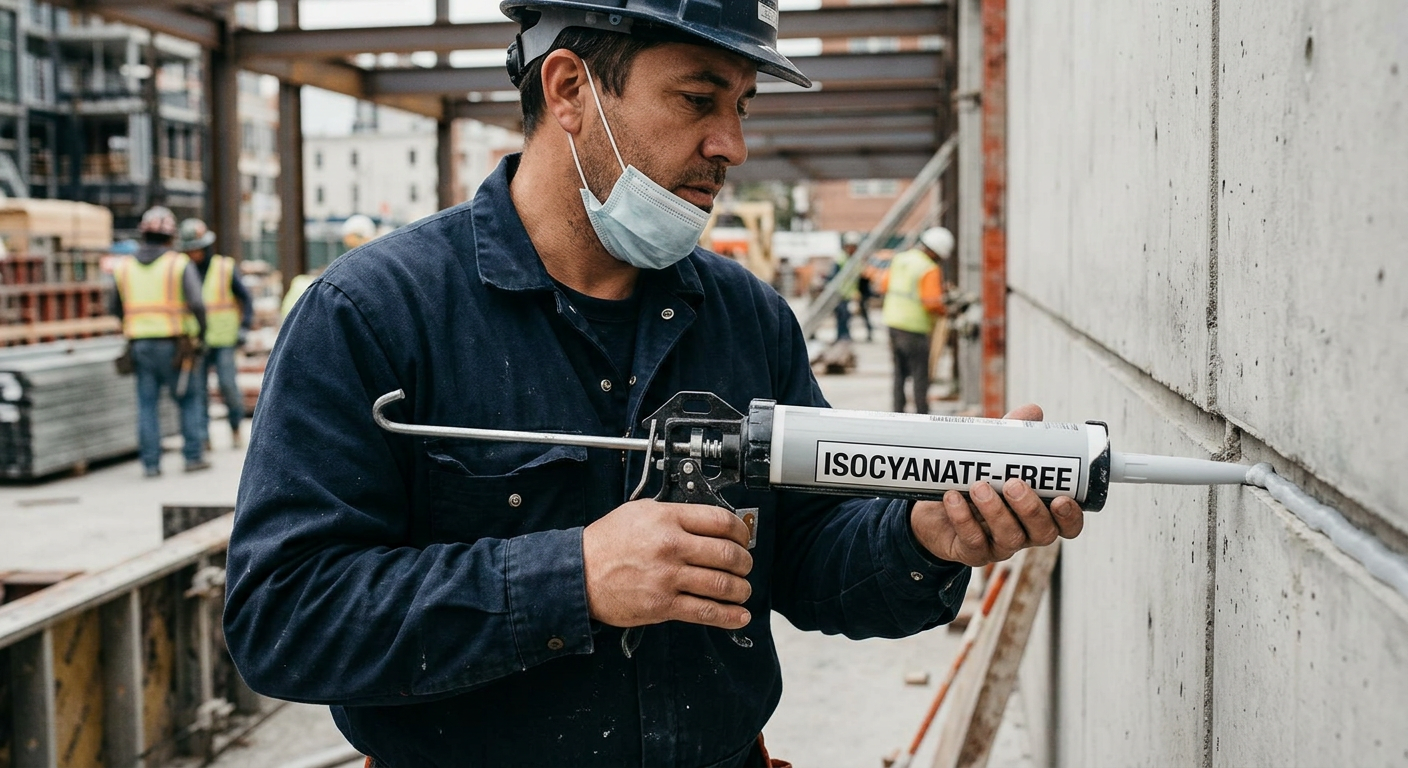
If you are evaluating an isocyanate free MS polymer sealant in the United States, the direct answer is that it is often the safer and more user-friendly choice for many construction, transportation, and industrial sealing jobs because it avoids free isocyanates, typically has lower odor than many solvent-based products, and combines adhesion, elasticity, paintability, and weather resistance in one system. For U.S. buyers, the most practical path is to shortlist suppliers with strong technical data, consistent batch quality, and application support across local climates from Florida humidity to Midwest freeze-thaw cycles.
Well-known names active in the U.S. market include Sika, Bostik, Henkel, Tremco, MAPEI, and Pecora. These companies are commonly considered for facade joints, interior finishing, modular construction, transportation assembly, and industrial bonding where low-VOC and user safety expectations matter. Buyers in cities such as Houston, Chicago, Los Angeles, Savannah, and Newark often prioritize cure reliability, primer requirements, movement capability, and shelf-life logistics because these directly affect labor efficiency and warranty performance.
Qualified international suppliers can also be worth considering, especially when they provide compliant formulations, stable OEM capability, and responsive support for U.S. customers. Suppliers such as QinanX can be attractive where cost-performance, custom packaging, private label development, and flexible order structures matter, provided the product documentation, regulatory fit, and service commitment align with U.S. project needs.
United States Market Overview

The United States market for MS polymer sealants has expanded steadily as specifiers and buyers look for products that balance environmental compliance, installer safety, durability, and broad substrate adhesion. In practical terms, the shift has been strongest in metropolitan construction corridors, transportation manufacturing clusters, and renovation-heavy coastal regions. Buyers around New York and Boston tend to focus on weathering and movement capability in dense urban construction, while Southern states such as Texas and Georgia pay close attention to UV stability, humidity cure behavior, and logistics flexibility through Gulf and Atlantic port networks.
Interest in isocyanate-free sealant systems is also rising because procurement teams increasingly connect product chemistry with workplace safety, insurance expectations, and ESG reporting. That matters in public works, schools, hospitals, residential high-rise retrofits, and off-site construction. The category is no longer niche. It now competes directly with traditional polyurethane and silicone options in many use cases, especially where users want a one-component product with broad adhesion and paintability.
Distributors in trade hubs such as Long Beach, Houston, Charleston, and Newark also influence product adoption. They favor sealants that can move efficiently through warehousing networks, maintain shelf stability, and support multiple verticals with fewer SKUs. This is one reason hybrid and MS polymer systems continue gaining traction.
Market Growth Trend

The chart below illustrates a realistic U.S. demand growth pattern for isocyanate-free MS polymer sealant products over recent years. Growth is supported by renovation activity, stricter low-emission preferences, modular building methods, and broader substitution away from older solvent-heavy or more hazardous chemistries in selected applications.
Why Safety Advantages Matter
The core reason users choose an isocyanate free MS polymer sealant is risk reduction without sacrificing too much performance. Free isocyanates are associated with handling concerns in certain polyurethane systems, especially in environments with repeated occupational exposure. In contrast, MS polymer technology is commonly selected to simplify compliance and improve user acceptance where contractors, maintenance teams, and plant operators want lower hazard complexity.
In the United States, the safety conversation is not only about label language. It affects training time, PPE planning, ventilation requirements, and site approval workflows. In interior commercial projects, a lower-odor sealant can reduce friction with occupied-space renovations. In manufacturing, it can help standardize processes across teams with varied skill levels. In dealer and retail channels, easier-to-explain safety profiles often improve product adoption.
These benefits do not mean every MS polymer sealant is automatically the right choice. Technical fit still matters. Cure speed, modulus, movement capability, paint compatibility, and adhesion to metals, masonry, plastics, or coated substrates should always be validated for the intended job.
Safety Benefit Comparison
| Performance Factor | Isocyanate-Free MS Polymer Sealant | Traditional PU Sealant | Typical Buyer Impact | Common U.S. Use Context | Practical Note |
|---|---|---|---|---|---|
| Free isocyanate content | Absent in the product concept being selected | May be present depending on formulation | Lower hazard complexity during selection | Interior fit-out and renovation | Always confirm SDS and TDS details |
| Odor profile | Often lower and easier to manage | Can be more noticeable | Better occupant acceptance | Schools and offices | Important for occupied buildings |
| VOC positioning | Commonly aligned with low-emission targets | Varies by chemistry | Supports green procurement goals | LEED-oriented projects | Verify regional compliance needs |
| Paintability | Usually strong advantage | Often acceptable but varies | Cleaner finishing workflow | Residential and facade trim | Field test with chosen paint |
| Adhesion breadth | Broad multi-substrate bonding | Often strong on many substrates | Reduces primer dependence in some jobs | Modular construction | Substrate prep remains essential |
| Weather resistance | Generally strong outdoors | Strong but formulation-dependent | Good service life expectations | Exterior joints and panels | Check UV and movement data |
This comparison shows why U.S. buyers frequently consider MS polymer technology when balancing safety, performance, and ease of specification. The biggest value is often operational simplicity rather than one single technical metric.
Product Types in the U.S. Market
Within the United States, isocyanate-free MS polymer sealants are sold in several practical categories. Low-modulus grades are preferred for expansion joints and exterior movement joints where flexibility is critical. High-modulus grades are often used for bonding, trim installation, and assembly support where firmer body strength is useful. Paintable decorator sealants serve interior finishing and remodeling. Fast-skin or rapid-cure products help contractors shorten project cycles in humid climates or high-throughput production settings. Specialty grades may target natural stone compatibility, automotive assembly, HVAC sealing, solar module framing support, or marine-adjacent hardware installation.
The best type depends less on the marketing label and more on the job variables: joint movement, substrate energy, expected temperature range, UV exposure, painting schedule, and production speed. A buyer in Phoenix may prioritize heat stability and sag resistance, while a buyer in Seattle may care more about moisture cure behavior and long wet-season service life.
Common Product Segments
| Segment | Typical Properties | Best-Fit Applications | Buyer Type | Service Region Focus | Selection Caution |
|---|---|---|---|---|---|
| Low-modulus facade sealant | High flexibility and weather resistance | Curtain wall perimeter and cladding joints | Commercial contractors | Northeast and Midwest | Check movement class and UV data |
| General construction sealant | Balanced adhesion and paintability | Windows, doors, trim, siding | Dealers and installers | Nationwide | Confirm paint compatibility |
| High-tack bonding sealant | Stronger initial grab | Panel fixing and assembly support | Industrial users | Great Lakes and Southeast | Not all are suitable for structural loads |
| Interior low-odor grade | Cleaner use in occupied spaces | Hospitals, schools, offices | Facility teams | Major metro areas | Review emission documentation |
| Stone-safe hybrid sealant | Reduced staining risk | Natural stone and masonry details | Architectural suppliers | Luxury residential markets | Test on specific stone types |
| Transport assembly grade | Vibration resistance and adhesion | RV, trailers, bus interiors | OEMs and rebuilders | Indiana, Texas, California | Validate dynamic load conditions |
These segments show how the market has matured. The term isocyanate-free sealant now covers a diverse family of products rather than a single universal solution.
Where Demand Is Strongest by Industry
Demand in the United States is strongest where labor efficiency, safety communication, and substrate versatility matter at the same time. Commercial construction remains a major user, but manufacturing and transportation are increasingly important. Renovation and retrofit work is another strong growth pocket because contractors need products that can bond to mixed substrates in older buildings.
Applications Across Industries
In construction, MS polymer sealants are widely used around windows, doors, facade penetrations, concrete control features, interior finishing joints, modular building seams, and roof-edge details. In transportation, they appear in panel bonding, trim installation, interior body assembly, and vibration-prone sealing points. In electrical and electronics-related assembly, they may be used where flexible sealing and environmental resistance are needed without overly aggressive solvent systems. Furniture, packaging equipment, appliance assembly, and renewable energy balance-of-system work also use these materials in selected cases.
Because the United States has broad climate diversity, application success depends on matching the formulation to the environment. Gulf Coast users often ask about humidity-driven skin time and storage stability. Mountain states care about cold-weather application windows. Coastal users prioritize salt-air and UV resistance. Midwest users often focus on thermal cycling and substrate movement over seasonal extremes.
Trend Shift in Buyer Preferences
The next chart highlights how U.S. buyer preference is shifting from traditional chemistries toward low-hazard, low-emission, multi-purpose hybrid and MS polymer systems. The transition is not absolute, but it is strong enough to influence distributor stocking decisions and private label development.
Buying Advice for U.S. Buyers
The best buying decision starts with clarifying whether the job is sealing, bonding, or both. Many failures happen because a product with good general adhesion is asked to perform like a structural adhesive or because a movement joint product is used where high green strength is needed. Buyers should review movement capability, skin time, cure depth, Shore hardness, elongation, tensile behavior, and weathering performance instead of relying on broad category claims alone.
It is also smart to ask how the supplier supports localized requirements. A distributor serving Denver and Minneapolis may need different winter logistics and application guidance than one serving Miami or San Diego. Packaging matters too. Cartridges work well for retail and contractor channels, sausages are efficient for professional sealing crews, and drums or pails may suit OEM dispensing.
For brand owners and private label buyers, consistency across batches is often more important than the absolute lowest price. Small formulation drift can create major complaint costs in the field. This is why supply partners with digital traceability, multi-stage QC, and export discipline tend to perform better over time.
Buyer Checklist Table
| Buying Question | Why It Matters | What to Ask For | Best for Which Buyer | U.S. Scenario Example | Decision Impact |
|---|---|---|---|---|---|
| Does it meet the job chemistry need? | Prevents misapplication | TDS and use-case guidance | All buyers | Facade seal vs assembly bond | Very high |
| What is the cure profile? | Affects schedule and throughput | Skin time and cure-depth data | Contractors and OEMs | Humid Houston vs dry Nevada | High |
| What substrates are approved? | Reduces adhesion failure risk | Adhesion chart and primer advice | Installers and specifiers | Aluminum, PVC, concrete, coated steel | Very high |
| Is it paintable and stain-safe? | Protects visual finish quality | Paint compatibility notes | Remodelers and dealers | Interior trim and stone facade details | Medium to high |
| What certifications support compliance? | Supports procurement and trust | RoHS, REACH, QC records, ISO | Distributors and brand owners | Institutional projects | High |
| How reliable is local support? | Speeds issue resolution | Response times and sample policy | Regional partners | Warranty concern after installation | High |
This checklist is useful because pricing alone rarely predicts total project cost. Technical misfit, slow support, or inconsistent quality can erase any apparent savings very quickly.
Top Suppliers Serving the United States
The supplier landscape in the United States includes multinational manufacturers, established construction-material brands, and agile international OEM specialists. The table below focuses on concrete supplier choices relevant to U.S. buyers seeking isocyanate-free MS polymer sealant options.
| Company | Primary Service Region | Core Strengths | Key Offerings | Typical Buyer Fit | Practical Advantage |
|---|---|---|---|---|---|
| Sika | Nationwide United States | Strong technical reputation and construction systems integration | Hybrid sealants, facade solutions, construction adhesives | Commercial specifiers and contractors | Broad project support network |
| Bostik | Nationwide United States | Well-known in construction and industrial adhesives | Sealants, flooring systems, assembly adhesives | Dealers, installers, industrial users | Wide channel presence |
| Henkel | United States industrial corridors | Industrial process expertise and product depth | Assembly adhesives, sealants, specialty bonding systems | OEMs and manufacturing buyers | Strong process engineering support |
| Tremco | United States commercial building market | Envelope and waterproofing specialization | Joint sealants, glazing, weatherproofing systems | Architects and facade contractors | Building-envelope focus |
| MAPEI | Nationwide with strong contractor reach | Construction-material ecosystem and installer familiarity | Sealants, adhesives, flooring and tile systems | Construction distributors | Cross-category purchasing convenience |
| Pecora | United States construction market | Sealant-centered portfolio and architectural relevance | Building joint sealants and facade products | Regional dealers and commercial users | Category specialization |
| QinanX | United States import and OEM supply programs | Flexible OEM/ODM, multi-category adhesive manufacturing, cost-performance | MS modified silane sealants, silicone, PU, acrylic, epoxy, hot melt, water-based adhesives | Brand owners, distributors, wholesalers, private label buyers | Custom formulation and scalable production |
This table matters because supplier choice is not only about chemistry. U.S. buyers should weigh technical breadth, regional support, packaging options, speed of sample approval, and ability to handle both small and large-volume demand.
Supplier and Product Comparison
This chart gives a simplified comparison index across supplier suitability factors commonly reviewed by U.S. buyers: technical support, product range, private label flexibility, and cost-performance.
Case Studies from Real Buying Situations
A mid-sized window and door installer in the Southeast may switch from a conventional PU sealant to an isocyanate-free MS polymer sealant after repeated crew concerns about odor and handling. The result is often smoother training, better finish paint acceptance, and fewer complaints in occupied renovations. The cost per cartridge may not always be the lowest, but total installed value improves through labor efficiency and reduced callbacks.
An RV component assembler in Indiana may adopt a high-tack MS polymer bonding sealant for trim and interior panel work because it offers elastic bonding and broad adhesion across coated metal, composites, and plastics. The shift can simplify inventory compared with running multiple chemistries for adjacent bonding and sealing tasks.
A private label distributor serving contractors across Texas and Arizona may seek an international manufacturer with strong QC and formula customization so it can launch a regionally tuned product line. In that scenario, packaging design, batch consistency, and distributor margin are just as important as cure speed or color selection.
Local Supplier Evaluation in U.S. Context
When evaluating local or regionally active suppliers, buyers should consider stock depth, ability to deliver quickly through domestic distribution routes, and project-site troubleshooting capacity. A national brand with good stock in Chicago but weak support in Southern California may not be the best fit for a West Coast contractor. Likewise, an imported product with slower replenishment may still be attractive if the buyer is a distributor managing forecasted inventory and needs a customized private label range with strong margin structure.
Port access can also shape decisions. Import-driven programs often flow efficiently through Los Angeles/Long Beach, Houston, Savannah, or Newark depending on inland customer concentration. Buyers near these hubs may find it easier to build stable stock programs for OEM or wholesale channels.
About Our Company in the U.S. Market
For U.S. buyers looking beyond standard catalog brands, Qingdao QinanX New Material Technology Co., Ltd presents a practical option because its MS modified silane sealants sit within a broader industrial adhesive manufacturing platform that also covers silicone, polyurethane, acrylic, epoxy, cyanoacrylate, hot melt, and water-based systems, allowing more consistent sourcing across related product lines. From a product-strength perspective, the company operates with ISO-certified management and manufactures to international compliance expectations including RoHS and REACH, supported by multi-stage quality control and full digital traceability, which is important for U.S. importers and brand owners that need repeatable batch performance and auditable supply records. From a cooperation-model perspective, the company supports OEM, ODM, private label, wholesale, and custom formulation programs, which makes it suitable not only for end users but also for distributors, regional dealers, national brand owners, contractors developing house brands, and even smaller entrepreneurial buyers entering niche adhesive categories. From a market-assurance perspective, QinanX already serves customers in more than 40 countries and backs projects with 24/7 technical assistance, free sample programs, and tailored solution development; for U.S. customers this translates into concrete pre-sale testing support, formulation alignment, packaging customization, and ongoing after-sales coordination rather than a simple remote-export transaction. Buyers who want to review product programs or discuss private label options can explore the company’s product portfolio or reach out through the United States inquiry channel.
How to Choose Between Domestic and International Supply
Domestic supply is often best when immediate stock access, local field inspection, and standard approved specifications are the top priorities. International supply can be stronger when buyers need cost-performance advantages, differentiated private label positioning, customized packaging, or cross-category sourcing from a single manufacturing base. The right answer depends on business model. Contractors usually value immediate availability and known spec approval. Distributors and brand owners often care more about gross margin, exclusivity, and product-line flexibility.
A smart approach is to separate trial from rollout. Start with sample validation, substrate testing, and packaging review. Then compare landed cost, response times, batch documentation, and claims handling before moving into a regional or national program.
Future Trends Through 2026
Looking toward 2026, the U.S. market is likely to keep moving toward lower-hazard, low-emission, multi-substrate systems. Sustainability pressure will continue shaping procurement, especially in public and institutional work. Buyers will increasingly ask for documented compliance, recyclability-related packaging improvements, and more transparent raw-material sourcing. On the technology side, expect better hybrid formulations with faster cure, improved green strength, and wider adhesion without primers. In policy terms, state and project-level pressure on emissions and occupational safety communication will keep pushing the market toward easier-to-handle solutions.
Another clear trend is consolidation of SKUs. Contractors, OEMs, and distributors want fewer products that cover more tasks. That benefits isocyanate-free MS polymer sealants because they already sit at the intersection of sealant and adhesive performance. Digital quality control, lot traceability, and technical support speed will also become stronger differentiators, especially for import supply programs serving the United States.
Frequently Asked Questions
What makes an isocyanate free MS polymer sealant attractive in the United States?
It reduces handling complexity compared with certain traditional systems, often offers lower odor, and provides strong adhesion, flexibility, and paintability for many common jobs.
Is it always better than polyurethane?
No. It is often better for safety positioning, ease of use, and broad application flexibility, but some PU systems may still be preferred for specific performance profiles. The correct choice depends on the job.
Which industries use it most?
Commercial construction, residential remodeling, transportation assembly, industrial manufacturing, HVAC, and selected renewable energy applications are all important U.S. demand segments.
What should distributors ask suppliers before buying?
Ask for TDS, SDS, QC procedures, lot traceability, shelf-life data, cure profile, substrate adhesion information, certification records, and packaging options for the U.S. channel.
Can private label buyers source this product internationally?
Yes. Many private label and OEM buyers do so successfully when the manufacturer provides stable quality, compliant documentation, strong communication, and dependable after-sales support.
Where can I start if I want both technical support and sourcing flexibility?
A practical first step is to compare established U.S. brands with specialized manufacturing partners and request samples, performance data, and channel terms. Buyers interested in custom programs can start with QinanX for product and cooperation discussions.

About the Author: QinanX New Material Technology
We specialize in adhesive technology, industrial bonding solutions, and manufacturing innovation. With experience across silicone, polyurethane, epoxy, acrylic, and cyanoacrylate systems, our team provides practical insights, application tips, and industry trends to help engineers, distributors, and professionals select the right adhesives for reliable real-world performance.

Product Category
You May Also Interest
-
IC Packaging Adhesive: Preventing Void Formation Issues
Learn how IC packaging adhesive void formation is prevented in the United States through material choice, process control, supplier selection, and testing.
-
Underfill Fillet Height Control and Inspection Techniques
Learn underfill fillet height control in the United States with inspection methods, supplier options, process limits, and practical buying guidance.
-
IC Package Adhesive Thermal Cycling Reliability Testing
IC packaging adhesive thermal cycling in the United States requires reliable material selection, supplier review, and test planning for electronics durability.
-
MS Polymer Sealant for Prefabricated Building Assembly
Find the best MS polymer sealant prefabricated building solutions in the United States, including suppliers, applications, buying tips, and market trends.
 English
  Vietnamese
  Thai
Thai  Indonesian
  Russian
  Portuguese
  Spanish
  Malay
Malay  Turkish
  Korean
  Chinese