Share
Construction Sealant Adhesion Failure in the United States: Root Causes, Fixes, and Supplier Options
Quick Answer

Construction sealant adhesion failure in the United States is most often caused by poor substrate preparation, incompatible sealant chemistry, incorrect joint design, excessive movement, moisture during application, and installation outside the recommended temperature range. The fastest fix is to identify whether the problem is adhesive failure at the substrate interface or cohesive failure within the sealant bead, then remove failed material, clean and dry the joint, verify substrate compatibility, apply the correct primer if needed, and reseal with a product rated for the specific movement, weather, and building material involved.
For practical sourcing in the U.S. market, commonly trusted names include Dow, Tremco, Sika, Pecora, GE Silicones, and Henkel depending on façade, glazing, precast, roofing, or floor-joint needs. Buyers in construction hubs such as Houston, Chicago, Los Angeles, New York, and Miami should also check local distributor stock, lead times, ASTM compliance, and field technical support before purchase. Qualified international suppliers can also be a smart option, especially when they hold relevant certifications, provide stable OEM or private-label manufacturing, and offer strong pre-sale and after-sale support for U.S. buyers seeking better cost-performance.
Understanding Sealant Adhesion Failure in the U.S. Construction Market

Across the United States, sealant performance is closely tied to climate, substrate diversity, labor quality, and code expectations. A sealant that performs well on a curtain wall in Seattle may behave differently on a concrete expansion joint in Phoenix or on a coastal façade in Miami. Temperature swings, UV exposure, freeze-thaw cycling, salt-laden air, and substrate moisture all influence long-term adhesion. Because of this, construction sealant adhesion failure is not just a material issue; it is a system issue involving design, installation, movement capability, and maintenance.
In U.S. projects, failures are frequently reported in commercial glazing systems, EIFS transitions, precast concrete joints, metal panel assemblies, roofing penetrations, wet-area tile transitions, and warehouse floor joints. The most expensive failures are usually hidden at first. Water infiltration behind cladding, air leakage around curtain walls, and edge lifting in expansion joints often emerge months after handover, especially after storm seasons or winter cycles. In ports and logistics centers from Long Beach to Savannah, buildings exposed to wind-driven rain and thermal movement place especially high demands on sealant adhesion.
From an asset-management perspective, failed sealant affects more than appearance. It can lead to corrosion of embedded metals, mold growth in interior cavities, reduced energy performance, damaged insulation, and warranty disputes between contractors, owners, and suppliers. That is why U.S. specifiers increasingly ask for documented adhesion testing, mock-ups, primer recommendations, and substrate-specific compatibility data before approving sealant systems.
What Sealant Adhesion Failure Actually Means

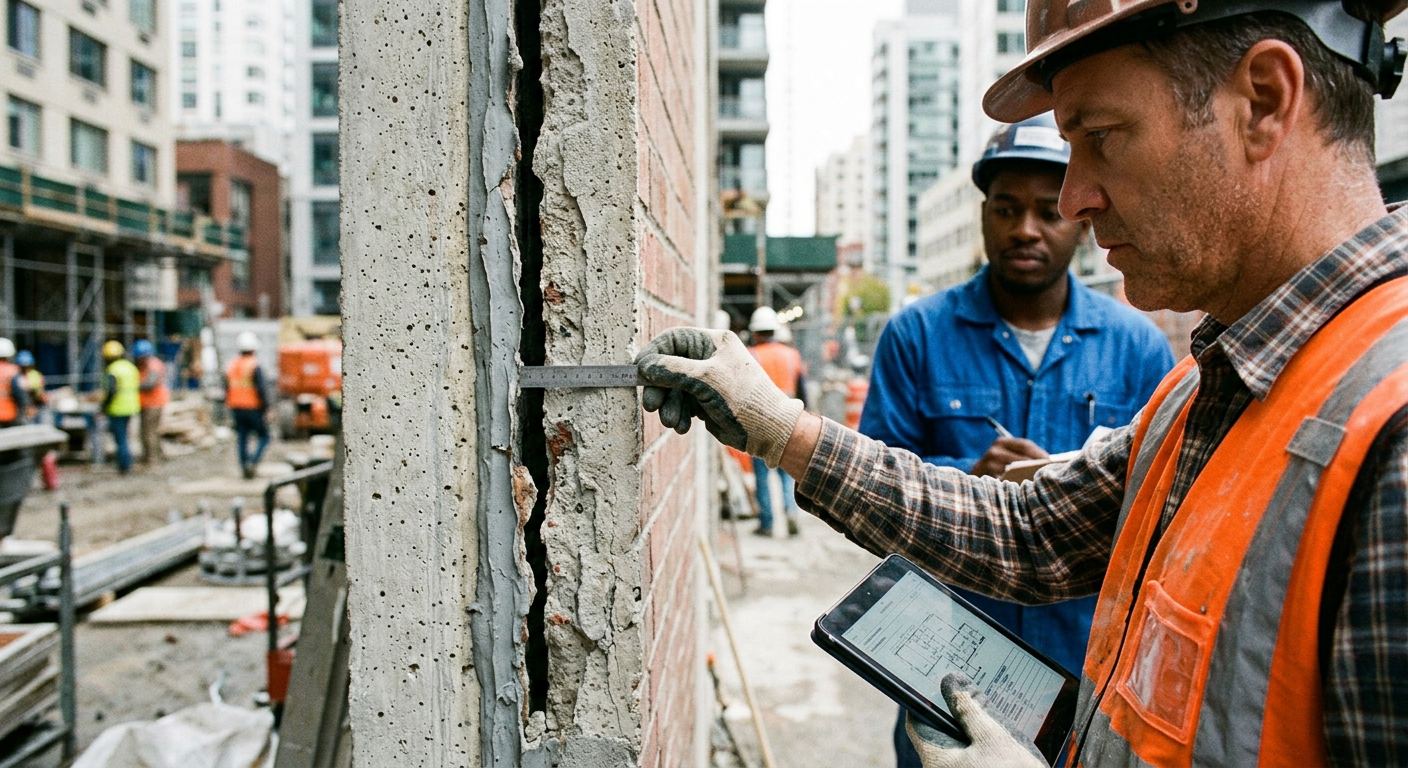
Sealant adhesion failure occurs when the bond between the sealant and the substrate breaks down. This differs from cohesive failure, where the material tears within itself while still attached to both sides of the joint. The distinction matters because each failure mode points to a different root cause. Adhesive failure often signals contamination, moisture, wrong chemistry, missing primer, or an incompatible surface treatment. Cohesive failure may indicate excessive movement, insufficient bead depth, low mechanical strength, or sealant aging beyond design limits.
In practice, field technicians should inspect whether the bead detached cleanly from glass, aluminum, concrete, masonry, or coated metal. They should also review whether the joint used proper backer rod, whether three-sided adhesion occurred, whether the substrate had residual curing compounds, and whether the product matched expected movement. On U.S. projects governed by demanding schedules, installation shortcuts remain a major cause of preventable failure.
Main Causes of Construction Sealant Adhesion Failure
| Cause | How It Happens | Common U.S. Jobsite Example | Typical Warning Sign | Recommended Fix | Risk Level |
|---|---|---|---|---|---|
| Poor surface preparation | Dust, oil, laitance, rust, old sealant residue, or release agents stay on the substrate | Concrete parking structures and aluminum storefront frames | Clean detachment from one side of the joint | Abrade if needed, solvent wipe where appropriate, and reseal after dry cleaning | High |
| Wrong sealant chemistry | Sealant is incompatible with substrate, coating, or movement demand | Using basic acrylic where high-movement silicone is required | Early cracking, edge lifting, poor elongation | Match chemistry to substrate and joint movement class | High |
| Moisture during application | Condensation, rain exposure, or wet pores interfere with cure and bond | Exterior installation during humid Gulf Coast mornings | Bubbles, weak bond, patchy cure | Apply only on dry surfaces within manufacturer limits | High |
| Improper joint design | Joint too narrow, too deep, or bonded on three sides | Precast panel joints without correct backer rod | Tearing at joint edges, movement stress | Redesign width-depth ratio and install bond breaker or backer rod | High |
| Primer omission or misuse | Required primer is skipped or overapplied | Porous masonry or fluoropolymer-coated metal systems | Localized edge failure | Follow substrate-specific primer guidance and field adhesion tests | Medium to high |
| Application in bad weather | Low temperature, excessive heat, UV, or wind affect tooling and cure | Winter façade sealing in Chicago or summer metal roofing in Arizona | Uneven bead, poor wetting, skinning too fast | Adjust installation window and protect fresh joints | Medium |
| Substrate movement mismatch | Actual movement exceeds sealant capability | Expansion joints and curtain walls with thermal cycling | Repeated splitting or detachment after seasons change | Select higher-movement sealant and confirm joint dimensions | High |
The table above shows that most adhesion failures are not random. They can be traced back to a mismatch between field conditions and specification discipline. On many U.S. commercial sites, the combination of rushed schedules and mixed substrates is the real trigger. Even a premium sealant can fail if installed over dusty concrete, on uncured paint, or in a joint that is too narrow for the expected movement.
Failure Patterns by Substrate Type
Different substrates fail for different reasons. Glass and anodized aluminum usually require careful cleaning because invisible residues can block wetting. Concrete and masonry are porous, so moisture and laitance are constant concerns. Stone may contain migrating oils or plasticizer-sensitive surfaces. Coated metals can present low-energy surfaces that need special primers or compatibility review. In wood-frame and mixed-envelope construction, movement between dissimilar materials often exceeds what a general-purpose caulk can tolerate.
In U.S. coastal cities such as Tampa, Charleston, and San Diego, salt exposure and intense sunlight accelerate aging in exposed façade joints. In northern states such as Minnesota and Michigan, freeze-thaw cycles punish underdesigned joints and reveal edge-bond problems quickly. In the Southwest, high daytime heat followed by cooler nights increases daily joint movement on metal assemblies. This is why sealant selection must be location-aware, not just product-aware.
U.S. Market Snapshot for Construction Sealants
The U.S. construction sealants market remains strong because repair, retrofit, energy upgrades, data center construction, prefab systems, and warehouse expansion all depend on reliable joint sealing. Demand is especially resilient in metropolitan corridors linked to manufacturing, ports, and logistics. Projects around Houston, Dallas, Atlanta, Inland Empire, New Jersey, and the Great Lakes region often require broad sealant portfolios spanning glazing, roofing, flooring, precast, and MEP penetrations.
At the same time, buyers are more cautious. They increasingly compare not only price per tube or sausage pack but also installed cost, callback risk, weatherability, movement rating, curing behavior, VOC compliance, and documentation quality. Many distributors now report stronger interest in value-engineered alternatives that still meet ASTM and project-specific performance standards.
The line chart indicates a realistic upward trend in U.S. construction sealant demand, supported by renovation spending, façade remediation, and infrastructure-related building projects. Growth is not uniform across every category, but the overall direction remains positive, especially for high-performance silicones, hybrid sealants, polyurethane systems, and specialty products tied to energy-efficient construction.
Product Types Used to Prevent Adhesion Failure
| Sealant Type | Best Use | Key Advantage | Main Limitation | Typical U.S. Applications | Failure Prevention Value |
|---|---|---|---|---|---|
| Silicone sealant | Glazing, weatherproofing, exterior façade joints | Excellent UV and weather resistance | Paintability is limited | Curtain walls, storefronts, metal panels | Very high for exposed joints |
| Structural silicone | Structural glazing and engineered façade systems | High strength and durability | Requires strict design and approval process | High-rise curtain wall projects | Very high when specified correctly |
| Polyurethane sealant | Concrete, floor joints, expansion joints | Strong adhesion and abrasion resistance | Lower UV resistance than silicone in some uses | Parking decks, slabs, precast joints | High for concrete movement joints |
| MS polymer sealant | General construction and mixed substrates | Good adhesion, paintability, lower odor | Performance varies by formulation | Interior and exterior transition joints | High for multi-material assemblies |
| Acrylic sealant | Low-movement interior joints | Economical and easy to tool | Not suitable for demanding exterior movement | Interior finishing and trim gaps | Low to medium |
| Butyl-based sealant | Certain concealed or compression joints | Good tack and water resistance | Limited for exposed aesthetic joints | Metal laps and concealed building details | Medium in niche uses |
| Epoxy joint compounds | Special industrial environments | Chemical resistance and strength | Less flexible for dynamic joints | Industrial plants and heavy-duty zones | Medium where movement is limited |
This comparison matters because many adhesion failures begin with wrong product selection rather than defective manufacturing. A low-cost interior-grade sealant will not survive a sun-exposed expansion joint in Texas. Likewise, a product designed for glass may not be ideal for porous masonry without a primer and testing protocol. For U.S. specifiers, substrate compatibility and movement capability are the first filters; price should come after performance fit.
How to Diagnose a Failed Joint Before Repair
A proper repair starts with diagnosis. First, identify the joint location, substrate pair, age of installation, and exposure conditions. Second, examine whether failure is adhesive, cohesive, or mixed. Third, determine whether the original bead dimensions and backing materials were correct. Fourth, check for contamination sources such as curing compounds, old coatings, dust, silicone residue, or water intrusion. Fifth, confirm whether the substrate itself is unstable, chalking, or delaminating.
For building managers and contractors in the United States, field adhesion tests and mock-up repairs are worth the time. They reduce rework risk and help avoid repeating the same mistake across dozens or hundreds of linear feet. On large envelope projects, it is often smart to involve both the sealant manufacturer’s technical team and the façade consultant before full replacement begins.
Step-by-Step Fixes for Construction Sealant Adhesion Failure
The most reliable fix is complete removal and replacement, not surface patching over failed areas. Residual failed sealant can act as a weak plane that undermines the new bead. A standard repair approach includes cutting out old material, removing residue mechanically and chemically where approved, drying the substrate, inspecting for hidden water damage, installing correct backer rod or bond breaker, applying primer if required, and placing a new bead sized for actual movement. Tooling should ensure full wetting at both sides without creating three-sided adhesion.
For porous masonry and concrete, allow enough drying time and verify surface integrity. For metals and glass, use manufacturer-approved cleaning methods and lint-free wipes. On coated panels, request compatibility confirmation. In highly regulated commercial projects, document lot numbers, weather conditions, and application methods to protect warranty claims and quality records.
Buying Advice for U.S. Contractors, Distributors, and Owners
When buying construction sealants in the United States, the safest approach is to purchase based on assembly requirements rather than generic product labels. Contractors should ask whether the product meets the relevant ASTM standards, what movement class it supports, which substrates it bonds to without primer, and how it performs under UV, immersion, or chemical exposure. Distributors should focus on products with stable supply, clear technical data, and low complaint rates. Building owners should prioritize long service life and reduced maintenance, not only upfront material cost.
Practical buying also depends on geography. In wet coastal environments, weatherproof silicones and compatible façade systems often justify higher unit pricing. In high-traffic industrial floors, durable polyurethane formulations may offer better lifecycle value. In mixed-material residential and commercial retrofits, MS polymer sealants can simplify installation because they often perform well across multiple substrates while remaining paintable.
The bar chart highlights where demand is concentrated. Commercial façades and renovation work remain major drivers because older buildings across cities such as Boston, Philadelphia, and San Francisco often require resealing due to aging joints, code upgrades, or water-intrusion remediation. Warehouses and logistics facilities also continue to grow, especially near ports and intermodal hubs.
Industries That Depend on Reliable Sealant Adhesion
Construction sealant performance matters across many U.S. sectors. Commercial real estate relies on it for weatherproof façades and glazing systems. Transportation infrastructure uses sealants in expansion joints, bridge-related concrete assemblies, and utility penetrations. Industrial manufacturing depends on chemical resistance, floor-joint durability, and enclosure sealing. Renewable energy facilities use specialty sealants in enclosures, panels, and equipment housings. Healthcare and education projects require durable, cleanable, and dependable sealing in high-occupancy buildings.
Data centers deserve special attention because they are expanding rapidly in Northern Virginia, Texas, Arizona, and the Midwest. These facilities demand high uptime, tight environmental control, and reliable envelope and equipment-room sealing. Even a localized sealant failure that allows moisture or air leakage can affect energy efficiency and operational stability over time.
Common Applications Where Adhesion Failure Appears
Typical U.S. failure points include curtain wall perimeters, window-to-wall transitions, precast panel joints, EIFS interfaces, concrete saw-cut joints, roof penetrations, HVAC curb seals, bathroom and kitchen wet zones, expansion joints in parking structures, and metal roof laps. In retrofit markets, adhesion failure is often found where a new sealant was applied over old incompatible residue or where repainting changed surface energy without updating the sealant specification.
Application-specific detail matters. A façade joint and a floor joint may both be called “sealant joints,” but they face different mechanical, thermal, and exposure conditions. Selecting one product family for all building joints is a common purchasing mistake that later leads to callbacks.
Case Studies from Typical U.S. Jobsite Scenarios
In a mid-rise office project in Houston, edge failure appeared within months on aluminum-to-concrete perimeter joints. Investigation showed that the concrete had not fully dried after pressure washing, and the sealant was applied during a humid morning before the joint surfaces stabilized. Replacement with proper drying, primer verification, and weather-timed installation resolved the issue.
In a Chicago parking deck, polyurethane joint failure occurred after one winter season. The original bead had bonded to three sides because no proper backer rod was used. Freeze-thaw movement then concentrated stress and tore the joint. Full rework with correct joint geometry restored performance.
In a Miami coastal condominium, repeated façade leakage traced back to sealant detachment from coated metal panels. The coating required a specific primer and compatibility confirmation, but the installation crew used a general-purpose product. A manufacturer-reviewed system with field adhesion testing reduced recurring leaks and improved storm resilience.
In a Los Angeles distribution center, skylight perimeter sealant failed unevenly due to prolonged UV exposure and movement mismatch. The original low-modulus product was not appropriate for the assembly’s thermal cycling. Replacing it with a façade-rated silicone extended service life and reduced maintenance frequency.
Local Suppliers and Brands Serving the U.S. Market
| Company | Service Region | Core Strengths | Key Offerings | Best Fit | Practical Note |
|---|---|---|---|---|---|
| Dow | Nationwide United States | Strong façade expertise, structural glazing leadership, deep technical documentation | Weatherproofing silicone, structural silicone, glazing solutions | High-rise façades and engineered glazing | Often preferred for specification-driven commercial projects |
| Tremco | Nationwide with strong contractor network | Building envelope systems, restoration support, broad sealant portfolio | Silicone, polyurethane, air barrier compatible sealants | Envelope restoration and commercial buildings | Good fit where system coordination matters |
| Sika | Nationwide United States | Concrete, flooring, roofing, and industrial expertise | Polyurethane sealants, hybrids, specialty construction systems | Infrastructure, flooring, precast, mixed-use projects | Widely available through distribution channels |
| Pecora | Nationwide, especially architectural markets | Architectural sealants and waterproofing reputation | Silicones, urethanes, air barrier accessories | Commercial envelope and renovation work | Commonly considered in façade repair specifications |
| GE Silicones | Nationwide through distribution | Well-known silicone performance in weatherproofing and glazing | Silicone construction sealants | Exterior weatherproof joints | Strong brand recognition in glazing-related applications |
| Henkel | Nationwide, industrial and construction channels | Adhesive technology breadth and specialty product development | Construction and industrial sealants, specialty adhesives | Industrial facilities and specialized assembly needs | Useful when projects combine bonding and sealing demands |
| 3M | Nationwide United States | Brand credibility, specialty construction and industrial materials | Construction sealants, tapes, joint accessories | Mixed repair and specialty maintenance jobs | Often selected for maintenance-driven procurement |
The supplier table shows that the U.S. market is mature, but the best choice depends on application and support level. Large national brands are often strongest on technical literature, testing protocols, and availability. However, regional distributors can be just as important because same-week delivery, local inventory, and field troubleshooting often determine project success more than brand name alone.
How Supplier Choice Affects Adhesion Outcomes
Supplier choice is not only about the cartridge on the shelf. Strong suppliers help reduce adhesion failure by providing substrate compatibility reviews, project-specific recommendations, primer guidance, application training, and mock-up support. This becomes critical in complex assemblies combining glass, powder-coated aluminum, precast concrete, granite, galvanized steel, and membrane transitions. Contractors who buy solely on low bid often discover that missing technical support can cost more than the original material savings.
That is why U.S. buyers increasingly compare suppliers on four levels: product range, documentation quality, support responsiveness, and distribution reliability. The best-performing relationships usually involve early consultation rather than emergency replacement after failure appears.
Supplier and Product Comparison for Practical Procurement
| Comparison Factor | Premium U.S. Brand | Regional Distributor House Brand | Qualified International OEM Supplier | Best Use Case | Main Watchpoint |
|---|---|---|---|---|---|
| Price level | Higher | Medium | Medium to lower | Budget balancing across large projects | Do not trade away compliance for savings |
| Technical documentation | Usually extensive | Varies by source | Can be strong if export-focused | Specification and warranty review | Confirm ASTM and project data availability |
| Lead time stability | Often reliable | Depends on local stock | Strong for planned bulk orders | Long-run procurement programs | Plan around shipping windows and safety stock |
| OEM/private label options | Limited | Sometimes available | Usually flexible | Brand owners and import distributors | Verify packaging and formula consistency |
| Field support | Often strong | Local access can be good | Best when U.S.-oriented service teams are established | Complex projects and claim prevention | Check response times and technical depth |
| Portfolio breadth | High | Medium | High in diversified manufacturers | Multi-application purchasing | Ensure each product is validated for its use |
| Customization | Limited to standard lines | Moderate | High | Private label and regional distribution | Require sample validation and QC records |
This procurement comparison helps buyers decide whether they need a specified premium brand, a locally stocked practical option, or a qualified international manufacturing partner. The right answer depends on whether the priority is immediate availability, customized branding, façade engineering support, or long-term cost control across multiple product families.
Industry Demand and Technology Shift
The area chart reflects a strong shift toward higher-performance, lower-emission, and more system-oriented sealants in the U.S. market. This is driven by sustainability goals, indoor air quality considerations, façade durability demands, and stricter project documentation. It also shows why buyers increasingly prefer suppliers that can prove consistency and regulatory alignment rather than relying on generic commodity products.
Our Company in the U.S. Supply Context
For U.S. buyers comparing local and international options, Qingdao QinanX New Material Technology Co., Ltd stands out as a manufacturer with broad product depth across silicone sealants, weatherproof and structural silicone, polyurethane systems, epoxy adhesives, acrylic structural adhesives, MS modified silane sealants, cyanoacrylates, hot melts, and water-based adhesive technologies, backed by ISO-certified manufacturing, multi-stage quality control, digital traceability, and compliance with standards such as RoHS and REACH that support international benchmark expectations. In practical cooperation terms, the company serves end users, importers, distributors, dealers, brand owners, contractors, and private buyers through flexible OEM, ODM, wholesale, private-label, and regional distribution models, which is especially useful for U.S. businesses seeking custom packaging, stable bulk supply, or differentiated house brands. From a market-assurance perspective, its export experience across more than 40 countries, automated production scale, free sample programs, 24/7 technical assistance, and tailored formulation capability provide concrete support for U.S. procurement teams that need responsive pre-sale selection help and after-sale troubleshooting rather than distant transactional supply; buyers can review product options through the product catalog, discuss specifications via the official website, and request project support through the U.S.-oriented contact channel when evaluating cost-performance alternatives to standard market brands.
How U.S. Buyers Should Evaluate International Suppliers
International sourcing can be highly competitive when managed carefully. The key is not to treat imported sealants as generic substitutes. Buyers should request technical data sheets, safety documents, test reports, shelf-life details, packaging options, and substrate compatibility guidance. They should also verify whether the supplier can support trial orders, custom branding, and complaint handling. For distributors and private-label brands in the United States, the strongest partners are those with repeatable QC systems, stable production, and responsive communication rather than one-off trading arrangements.
Ports such as Los Angeles, Long Beach, Houston, Savannah, and New York-New Jersey play an important role in landed-cost planning and replenishment timing. For larger programs, forecasting and container planning can materially improve unit economics without sacrificing quality assurance.
Comparison View of Supplier Priorities
This comparison chart illustrates a common U.S. buying reality. Premium domestic brands often lead in standard documentation and immediate recognition, while qualified international manufacturers may offer stronger customization and cost efficiency. The best procurement strategy is to align the supplier profile with project risk, distribution goals, and expected support needs.
Future Trends Through 2026
Looking toward 2026, three trends will shape the U.S. sealant market. The first is smarter material selection based on full assembly performance rather than standalone product claims. Building-envelope consultants and architects are increasingly using compatibility reviews and project mock-ups earlier in design. The second is sustainability pressure. Lower-VOC formulations, longer service life, reduced waste packaging, and resilient repair cycles will become more important in public and institutional procurement. The third is supply-chain diversification. Contractors and distributors want alternatives to single-source dependency, which opens more room for qualified international producers with strong compliance records and responsive technical service.
Policy and code expectations will also influence buying behavior. Energy-efficiency upgrades, weather resilience planning, and lifecycle cost scrutiny all favor sealants that maintain adhesion over longer periods under real movement and climate stress. In addition, growth in modular construction, prefabricated façades, and clean-energy projects will increase demand for products that deliver repeatable adhesion across factory and field conditions.
FAQ
What is the most common reason for sealant adhesion failure?
The most common reason is poor surface preparation. Dust, moisture, curing residue, oils, or old sealant contamination prevent proper wetting and bonding at the substrate interface.
Can I apply new sealant over failed sealant?
In most cases, no. Full removal is the safer repair method because residual failed material often compromises the new bond and leads to repeat failure.
Which sealant is best for exterior U.S. façade joints?
Silicone is often the preferred option for exterior weather-exposed façade joints because of its UV resistance, weatherability, and long-term movement performance, but the final choice depends on substrate and joint design.
Do concrete joints need primer?
Many concrete and masonry applications either benefit from or require primer, depending on porosity, moisture condition, sealant chemistry, and manufacturer guidance. Always confirm with adhesion testing.
How do I know if failure is adhesive or cohesive?
If the sealant peels away cleanly from one substrate, that is adhesive failure. If the sealant tears within the bead while remaining attached to both sides, that is cohesive failure.
Are imported construction sealants viable for the U.S. market?
Yes, if the supplier can provide reliable technical documentation, export experience, quality consistency, certification support, and practical pre-sale and after-sale service for U.S. buyers.
What should distributors in the United States ask before adding a new sealant line?
They should ask about substrate compatibility, ASTM alignment, shelf life, packaging formats, complaint handling, lot traceability, sample policy, lead times, and private-label flexibility.
How can building owners reduce future sealant failures?
They should require proper joint design, mock-up testing, trained installation crews, documented substrate prep, and periodic inspection in high-exposure areas such as façades, roofs, and movement joints.
Final Takeaway
Construction sealant adhesion failure in the United States is usually preventable. The core solution is disciplined matching of substrate, joint design, surface preparation, climate conditions, and sealant chemistry. For buyers, the best results come from selecting suppliers that provide not just material, but also compatibility guidance, documentation, and responsive support. Whether sourcing from established U.S. brands or qualified international manufacturers, the winning approach is to prioritize verified performance and lifecycle value over short-term purchase price alone.

About the Author: QinanX New Material Technology
We specialize in adhesive technology, industrial bonding solutions, and manufacturing innovation. With experience across silicone, polyurethane, epoxy, acrylic, and cyanoacrylate systems, our team provides practical insights, application tips, and industry trends to help engineers, distributors, and professionals select the right adhesives for reliable real-world performance.

Product Category
You May Also Interest
-
IC Packaging Adhesive: Preventing Void Formation Issues
Learn how IC packaging adhesive void formation is prevented in the United States through material choice, process control, supplier selection, and testing.
-

Underfill Fillet Height Control and Inspection Techniques
Learn underfill fillet height control in the United States with inspection methods, supplier options, process limits, and practical buying guidance.
-
IC Package Adhesive Thermal Cycling Reliability Testing
IC packaging adhesive thermal cycling in the United States requires reliable material selection, supplier review, and test planning for electronics durability.
-
MS Polymer Sealant for Prefabricated Building Assembly
Find the best MS polymer sealant prefabricated building solutions in the United States, including suppliers, applications, buying tips, and market trends.
 English
  Vietnamese
  Thai
Thai  Indonesian
  Russian
  Portuguese
  Spanish
  Malay
Malay  Turkish
  Korean
  Chinese