Share
Polyurethane Adhesive Composite Bonding in the United States
Quick Answer

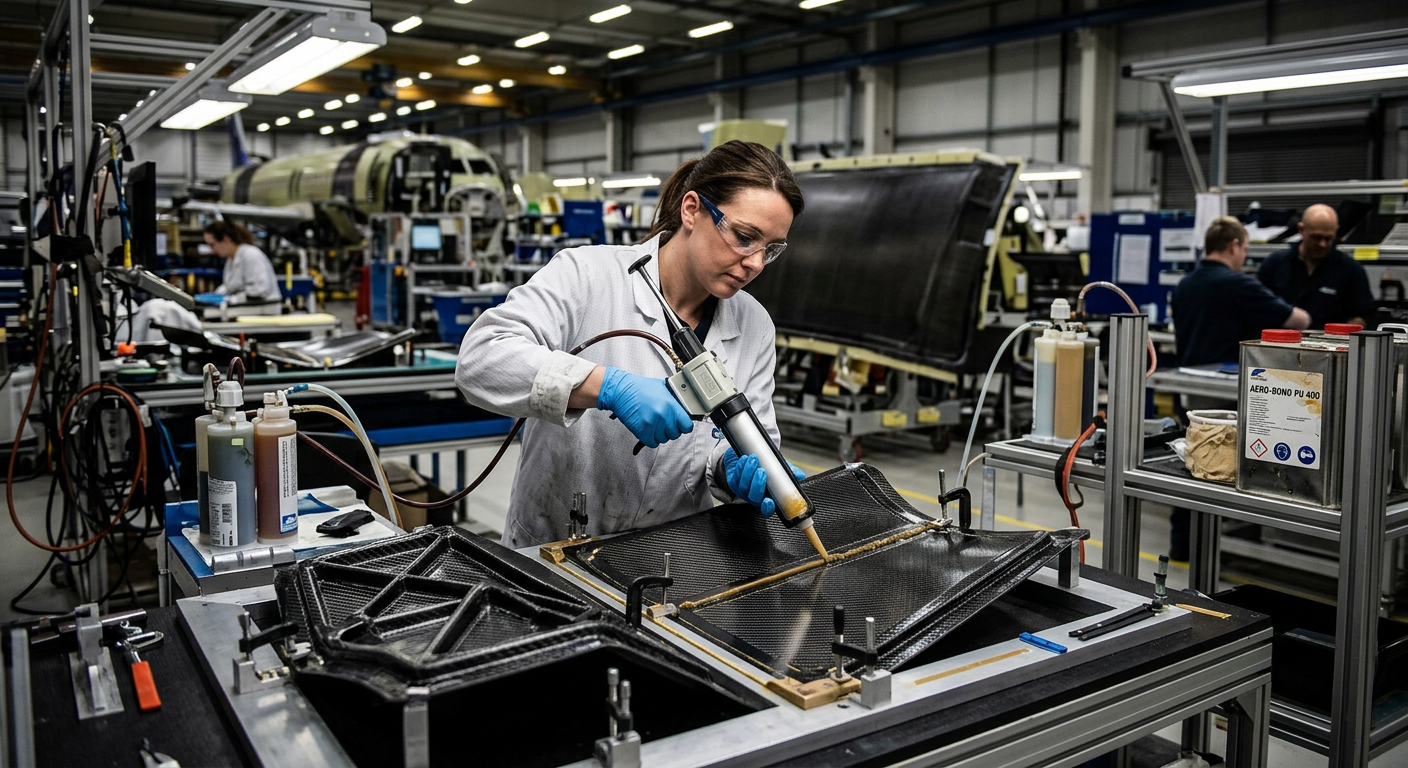
If you are sourcing polyurethane adhesive composite bonding solutions for aerospace programs in the United States, the most practical approach is to shortlist suppliers that already serve high-performance structural bonding requirements, maintain technical support for qualification work, and can document compliance expectations for traceability, consistency, and long-term durability. In the U.S. market, companies such as 3M, Henkel, Huntsman, H.B. Fuller, Permabond, and Master Bond are commonly evaluated for composite bonding projects because they have broad technical portfolios, application engineering resources, and experience with demanding transportation or industrial assemblies. For buyers near major aerospace clusters such as Seattle, Wichita, Dallas-Fort Worth, Phoenix, Los Angeles, and Charleston, local availability, testing support, and lead-time stability often matter as much as initial adhesive price.
For immediate action, ask suppliers for lap shear data, peel strength, cure profile, out-time behavior, compatibility with CFRP and GFRP substrates, resistance to humidity and thermal cycling, and whether the polyurethane system is intended for structural, semi-structural, or sealing-assist bonding. Also consider qualified international suppliers with strong certifications, export experience, and responsive pre-sales and after-sales support, including competitive Chinese manufacturers, because they can offer attractive cost-performance ratios for approved non-flight-critical programs, interiors, tooling, industrial composites, and selected transportation applications.
United States Market Overview

The United States remains one of the most important markets for composite bonding materials because it combines aerospace manufacturing, defense programs, advanced mobility, renewable energy, marine fabrication, and industrial equipment production in one ecosystem. Polyurethane adhesive composite bonding has gained attention where engineers want a balance of toughness, flexibility, dissimilar-material compatibility, and efficient processing. While epoxies remain dominant in many highly structural aerospace assemblies, polyurethane systems are increasingly relevant in bonded composite panels, interior components, secondary structures, radomes, sandwich constructions, fairings, battery enclosures, rail interiors, truck bodies, and specialty assemblies where impact resistance and strain accommodation are valuable.
In the United States, the strongest demand centers align with production hubs and logistics routes. Seattle anchors commercial aircraft supply chains. Wichita remains a core aerostructure and general aviation center. Dallas-Fort Worth supports aerospace, defense, and broad industrial manufacturing. Southern California continues to influence satellites, defense, e-mobility, and advanced composites. South Carolina and Georgia benefit from aircraft and automotive investment. Gulf Coast ports and East Coast logistics corridors help importers distribute raw materials and adhesive products quickly. Buyers often expect regional stocking, fast technical response, and clear quality documentation before qualifying a material for recurring use.
Another factor shaping this market is the shift toward mixed-material design. Composite assemblies now frequently combine carbon fiber reinforced plastic, aluminum, honeycomb cores, rigid foams, coated metals, and thermoplastics. Mechanical fasteners alone can introduce stress concentrations, increase weight, and complicate corrosion control. Polyurethane adhesive composite bonding can reduce these drawbacks by spreading load across a broader area while also helping with vibration damping and sealing. In practice, engineers select polyurethane systems when they need a forgiving bondline, good adhesion to multiple substrates, and better tolerance to movement than brittle chemistries.
From a purchasing standpoint, U.S. customers also care about supply resilience. Domestic brands retain a strong position because they are easy to audit and support, but imported materials continue to gain traction when suppliers provide stable batches, technical files, and reliable fulfillment through local channels. That is why supplier choice now depends on more than brand recognition. The real differentiators are performance data, qualification support, logistics reliability, packaging options, and the ability to match a formulation to a customer’s exact process window.
Key Supplier Landscape in the United States

The supplier landscape is broad, but the following companies are the ones most often considered when buyers need practical polyurethane adhesive composite bonding options with technical depth and regional relevance.
| Company | Headquarters / U.S. Presence | Service Region | Core Strengths | Key Offerings | Best Fit |
|---|---|---|---|---|---|
| 3M | St. Paul, Minnesota | Nationwide United States | Application engineering, broad adhesive science, aerospace relationships | Structural adhesives, tapes, primers, surface prep products | Large OEMs and Tier suppliers |
| Henkel | Rocky Hill, Connecticut and broad U.S. operations | Nationwide United States | LOCTITE portfolio, process support, industrial scale | Polyurethane, epoxy, acrylic, sealants, dispensing support | Mixed-material assembly programs |
| Huntsman | The Woodlands, Texas | United States and North America | Advanced materials knowledge, composites heritage | Polyurethane systems, composite resins, specialty formulations | Composite fabricators and industrial users |
| H.B. Fuller | St. Paul, Minnesota | Nationwide United States | Customization, manufacturing scale, industry breadth | Reactive polyurethane adhesives, laminating and assembly systems | Transportation and industrial assembly |
| Permabond | U.S. technical support network | United States | Fast technical response, specialty bonding expertise | Polyurethane and engineering adhesives for difficult substrates | Smaller programs and specialized assemblies |
| Master Bond | Hackensack, New Jersey | United States and export markets | Custom engineering grades, high-performance applications | Specialty structural adhesives and compounds | High-spec industrial and aerospace-adjacent projects |
This table is useful because it separates large broad-line suppliers from technically specialized ones. In the U.S. market, large multinationals usually offer deeper documentation, larger production capacity, and stronger local inventories. Smaller specialty suppliers can be more agile in customization, lower-volume support, or unusual substrate combinations. Buyers should align supplier choice with program scale, validation needs, and response speed rather than defaulting only to the biggest brand.
What Polyurethane Composite Bonding Means in Practice
Polyurethane adhesive composite bonding generally refers to the use of moisture-curing, two-component, or reactive polyurethane systems to join composite materials or composite-to-metal assemblies. These adhesives are valued for toughness and energy absorption. In practical engineering terms, they often perform well where bonded parts experience vibration, dynamic loads, thermal movement, or moderate impact. They can also support aesthetic or aerodynamic designs because they reduce visible fasteners and simplify joining of curved panels or dissimilar materials.
For aerospace-related work in the United States, engineers separate applications into categories. There are primary structures where certification barriers are highest and material approval paths are longest. There are secondary and semi-structural assemblies where a polyurethane may be a better fit. Then there are interior, enclosure, panel, insulation, ducting, support, and equipment housings where polyurethane systems can offer a compelling blend of processability and durability. Understanding the exact category matters because the same word, structural, can mean very different qualification demands depending on the final use.
Compared with epoxy adhesives, polyurethane systems usually offer greater flexibility and elongation. Compared with many silicones, they typically provide stronger cohesive bonding for load-bearing assemblies. Compared with acrylics, they can offer a different balance of cure speed, toughness, and surface compatibility. This makes polyurethane adhesives attractive for manufacturers who need durability under service stress but do not want the brittleness of some rigid systems.
Product Types Buyers Commonly Compare
| Product Type | Typical Cure Mechanism | Main Advantages | Common Limitations | Typical U.S. Applications | Buyer Notes |
|---|---|---|---|---|---|
| One-component moisture-curing PU | Atmospheric moisture | Simple dispensing, flexible bondline, sealing plus bonding | Slower deep cure, humidity sensitivity | Composite panels, interiors, transport bodies | Best where process simplicity matters |
| Two-component polyurethane | Resin and hardener reaction | Controlled cure, higher consistency, thicker sections | Meter-mix equipment required | Sandwich panels, industrial composites, enclosures | Useful for production lines needing repeatability |
| Reactive polyurethane hot melt | Initial set by cooling, final cure by moisture | Fast handling strength, efficient processing | Equipment investment, heat management | Interior laminates, panel assembly, lightweight components | Strong choice for throughput-driven plants |
| Solvent-free polyurethane adhesive | Reactive cure without solvent evaporation | Lower VOC profile, clean processing | Substrate prep still critical | Laminates, industrial bonding, specialty composites | Supports sustainability goals |
| Water-based polyurethane system | Water evaporation and coalescence or hybrid cure | Safer handling, lower emissions | Not for all structural demands | Foams, textiles, non-critical laminations | Often selected for interior and non-flight-critical uses |
| Modified polyurethane structural grade | Two-component or hybrid reactive cure | Higher strength, tuned toughness | More qualification work needed | Transportation, defense-adjacent structures, equipment housings | Candidate for advanced engineered assemblies |
This comparison matters because not every polyurethane is intended for the same duty level. U.S. buyers sometimes start with the term polyurethane adhesive composite bonding, but the real decision comes down to cure chemistry, line speed, bondline thickness, environmental exposure, and whether the adhesive must only hold parts together or also carry sustained service loads over time. Matching the product type to the assembly process usually saves more money than chasing the cheapest per-kilogram quote.
How Demand Is Growing
Demand for polyurethane composite bonding in the United States is expanding for several reasons. Aerospace interiors and secondary bonded parts continue to evolve toward lighter and more modular designs. Electric vehicles and commercial vehicles are also pushing more composite and mixed-material parts into production. Wind energy, recreational vehicles, marine applications, modular construction, and battery packaging create additional opportunities for polyurethane systems that offer durability without excessive brittleness.
The line chart shows a realistic growth pattern rather than a dramatic spike. That is how this market behaves in reality: qualification cycles are long, but once a material is approved, recurring volume can be stable and valuable. The strongest growth in 2026 is expected from transportation electrification, lightweight enclosures, bonded panel systems, and sustainability-focused replacement of solvent-heavy legacy processes.
Industry Demand by Segment
Demand for polyurethane composite bonding does not come only from aircraft manufacturing. In the United States, many suppliers actually build volume through adjacent sectors and use that scale to support aerospace-adjacent and specialty engineered applications.
The bar chart highlights a practical point for buyers: commercial vehicles and industrial equipment can be major demand drivers, which means adhesive systems proven there may later be adapted for selected aerospace-related assemblies after additional validation. That cross-industry maturity often improves cost control and supply continuity.
Trend Shift Toward Toughness, Sustainability, and Process Efficiency
The market is shifting from simple strength claims to a wider performance model. Buyers now evaluate total bond performance, cure speed, worker safety, emissions profile, automation compatibility, and life-cycle cost. Polyurethane adhesive composite bonding becomes more attractive when manufacturers need a chemistry that supports flexible design and faster assembly without sacrificing durability.
The area chart reflects a clear trend in the U.S. market: more customers want solvent-free or lower-emission systems, traceable quality records, and formulations that work with automated dispensing. This trend is especially visible in advanced manufacturing corridors and among companies reporting environmental metrics to major OEMs.
Buying Advice for U.S. Aerospace and Composite Buyers
When buying polyurethane adhesive composite bonding materials in the United States, start with the application environment rather than the adhesive brochure. Define whether the assembly will face thermal cycling, UV exposure, hydraulic fluids, cleaning chemicals, vibration, or long-term static load. Then define the substrates precisely, including surface finish, release-agent risk, primer use, and expected bondline thickness. These details will narrow the shortlist far faster than broad product marketing.
Also ask how the adhesive fits your production process. Can it be dispensed with your current meter-mix equipment? Does it need refrigerated storage? What is the open time and fixture time? How quickly can bonded parts move to the next station? Can the adhesive maintain performance if your substrate batch varies slightly? U.S. manufacturers with labor and throughput pressure increasingly favor systems that reduce process variability and rework.
For regulated or high-liability industries, insist on documentation. Good suppliers should provide technical data sheets, safety data sheets, storage guidance, batch traceability, and a realistic explanation of what has actually been tested. Marketing terms like aerospace grade or structural grade are not enough on their own. The right supplier will explain where the material fits and where it does not.
| Buying Criterion | Why It Matters | Questions to Ask | Risk if Ignored | Priority for U.S. Buyers | Best Practice |
|---|---|---|---|---|---|
| Substrate compatibility | Composite surfaces vary widely | Has it been tested on CFRP, GFRP, aluminum, coatings? | Bond failure or poor wet-out | Very high | Run substrate-specific trials |
| Cure profile | Controls takt time and handling | What are open time, fixture time, full cure conditions? | Production delays | Very high | Match adhesive to line speed |
| Environmental resistance | Service durability depends on it | How does it perform under humidity and thermal cycling? | Premature degradation | Very high | Request aging data |
| Certification and traceability | Critical for auditability | What QC records and compliance files are available? | Qualification rejection | High | Audit documentation early |
| Packaging and logistics | Affects waste and uptime | Available in cartridges, pails, drums, meter-mix packs? | Higher handling cost | Medium | Select pack size by consumption |
| Technical support | Speeds approval and troubleshooting | Is on-site or remote engineering support available? | Longer ramp-up and rework | High | Prefer suppliers with application support |
This buying matrix helps procurement teams and engineers align their priorities. In many U.S. organizations, engineering chooses on performance while purchasing negotiates on price. A structured review prevents false savings that later become scrap, downtime, or failed qualification costs.
Industries Using Polyurethane Composite Bonding
Aerospace remains the most visible category, but it is not the only one. Polyurethane adhesives are also used in truck and trailer bodies, rail interiors, bus panels, marine structures, wind turbine component assembly, industrial machinery covers, battery housings, building panels, and recreational vehicles. This breadth is important because it shows why the chemistry continues to improve. Large adjacent markets give suppliers reason to invest in better dispensing, lower emissions, stronger adhesion, and more durable formulations.
In U.S. aerospace-adjacent manufacturing, polyurethane systems are often reviewed for cabin panels, bonded floor structures, composite fairings, insulation support, equipment enclosures, access panels, and non-primary structural elements. In defense and specialty mobility, the appeal often comes from impact resistance and compatibility with vibration-heavy service. In industrial settings, the same toughness helps absorb movement across large bonded surfaces.
Typical Applications in the United States
| Application | Common Substrates | Performance Need | Why PU Is Chosen | Typical Region | Notes |
|---|---|---|---|---|---|
| Aerospace interior panels | CFRP, honeycomb, coated aluminum | Lightweight bonding with durability | Toughness and vibration damping | Seattle, Wichita, Charleston | Often secondary or interior use |
| Commercial vehicle sidewalls | FRP, aluminum, foam cores | Large-area bonding | Flexibility and fatigue resistance | Midwest, Texas, Southeast | High-volume production friendly |
| Rail interior modules | Composite skins, metals, plastics | Noise reduction and secure assembly | Bonding plus sealing benefit | Northeast, California | Often combined with fire-performance requirements |
| Marine composite structures | GFRP, wood composites, metals | Moisture resistance and movement tolerance | Durable flexible bondline | Florida, Gulf Coast | Surface prep is critical |
| Wind energy parts | Composite laminates, core materials | Fatigue and weather resistance | Toughness over large bonded areas | Texas, Midwest | Qualification is application-specific |
| Battery and equipment enclosures | Composite panels, aluminum, steel | Sealing, shock resistance, mixed materials | Balanced stiffness and flexibility | Michigan, Tennessee, Arizona | Important in electrification programs |
This table shows how geography and application influence adhesive choice. A buyer in Seattle may prioritize aerospace documentation and low outgassing data, while a buyer in Texas may care more about heat exposure and high-throughput assembly. The chemistry can be similar, but the approved formulation and packaging may differ substantially.
Case Studies and Practical Scenarios
A common U.S. scenario involves a composite fabricator producing lightweight interior modules for transportation equipment. The team begins with an epoxy because of its reputation for strength, but during testing they find that peel resistance and impact durability are not ideal for the vibration profile. A modified polyurethane system performs better in drop and fatigue testing, reduces edge cracking, and allows easier rework in early process setup. The switch improves assembly yield even if nominal tensile strength is lower on paper.
Another scenario occurs in bonded sandwich panels for vehicle or equipment enclosures. A one-component moisture-curing polyurethane may be attractive because it simplifies dispensing and combines bonding with sealing. However, in thicker bondlines or lower-humidity environments, cure speed may become inconsistent. The solution is often a two-component polyurethane that delivers more predictable full cure and stronger production control. This example shows why process conditions can matter as much as chemical family.
In an aerospace-adjacent application near Wichita, a supplier may need to join carbon composite skins to coated metal inserts while managing differential expansion. A rigid adhesive shows high initial strength but causes localized stress under temperature cycling. A tougher polyurethane formulation can reduce stress concentration and improve long-term assembly stability. Engineers still need qualification testing, but the design logic becomes clearer once movement is treated as a real service condition rather than an exception.
Local and Regional Supplier Comparison
U.S. buyers often want a side-by-side view that balances domestic reach, technical capability, and program flexibility. The comparison below is practical for early supplier screening.
| Supplier | Primary U.S. Reach | Technical Support Level | Customization | Lead-Time Advantage | Typical Customer Type |
|---|---|---|---|---|---|
| 3M | Strong nationwide distribution | High | Moderate | Strong for stocked items | OEMs, Tier 1, large manufacturers |
| Henkel | Strong nationwide operations | High | High | Strong with established accounts | Industrial and transportation manufacturers |
| Huntsman | North America-wide coverage | High | High | Good for engineered programs | Composite processors and technical buyers |
| H.B. Fuller | Broad U.S. manufacturing footprint | Medium to high | High | Good for industrial volume supply | Panel, transport, and industrial users |
| Permabond | Targeted U.S. support | High | Moderate | Good for specialized needs | Smaller OEMs and specialty fabricators |
| Master Bond | U.S. technical sales coverage | High | High | Program-dependent | High-spec users and development teams |
This table is most useful when the buyer needs to balance scale against responsiveness. Large suppliers often simplify audits and large repeat orders. More specialized suppliers can be stronger partners during development, lower-volume customization, or niche applications with unusual environmental requirements.
Comparison Chart for Supplier Evaluation
The comparison chart does not claim one universal winner. Instead, it illustrates how U.S. buyers often rank suppliers when considering technical support, product breadth, and fit for engineered composite bonding projects. A slightly lower score can still be the best choice if the supplier matches your exact substrates, qualification path, and service expectations.
Our Company in the United States Market
For buyers seeking a cost-competitive and technically disciplined alternative, Qingdao QinanX New Material Technology Co., Ltd positions itself in the United States market as a manufacturer rather than only a trading source, which matters for consistency and formulation control. Its polyurethane portfolio sits within a wider industrial adhesive platform that includes reactive polyurethane systems, solvent-free polyurethane adhesives, water-based polyurethane products, epoxy structural adhesives, acrylic systems, hot melts, silicones, and modified silane sealants, allowing real material matching instead of forcing one chemistry into every project. The company operates under ISO-based quality management and states compliance with RoHS and REACH, while using multi-stage quality control with digital traceability to document batches and production consistency, which supports international benchmark expectations for industrial buyers. For U.S. customers, that manufacturing depth is combined with flexible cooperation models through OEM, ODM, private label, wholesale supply, custom packaging, and regional distribution discussions, making the company relevant not only to end users but also to distributors, dealers, brand owners, and project-based buyers who want differentiated specifications. Through its automated production lines, export experience across more than 40 countries, free sampling support, round-the-clock technical assistance, and tailored formulation capability, QinanX demonstrates practical experience serving overseas industrial markets rather than acting as a remote opportunistic seller. Buyers exploring tailored adhesive programs can review the broader product range, learn more about the manufacturer, or request technical discussion through the U.S.-oriented contact channel for pre-sale validation and after-sale support planning.
How to Evaluate International Suppliers for U.S. Projects
International sourcing can be a smart move when the program allows time for validation and the buyer wants to improve cost-performance. The key is not to treat overseas suppliers as generic substitutes. Instead, evaluate whether they provide documentation, traceability, sample support, and stable manufacturing controls comparable to the level expected by U.S. industrial procurement teams. For polyurethane adhesive composite bonding, the best international suppliers tend to be those with broad chemistry knowledge, repeatable production, and enough technical flexibility to tune open time, viscosity, cure speed, or substrate adhesion to the buyer’s actual process.
Ports and inland logistics also matter. Importers distributing through Los Angeles, Long Beach, Houston, Savannah, New York-New Jersey, and Chicago intermodal channels can reduce transit uncertainty if they plan inventory correctly. If the supplier supports custom packaging, private labeling, and regular replenishment cycles, imported adhesive programs can become very practical for U.S. regional distributors and mid-sized manufacturers.
Future Trends Through 2026
By 2026, polyurethane adhesive composite bonding in the United States will likely be shaped by three major forces: smarter materials, tighter compliance expectations, and sustainability-driven process design. On the technology side, suppliers are moving toward better adhesion on low-surface-energy substrates, improved toughness without excessive softness, lower-temperature processing, and formulations compatible with automated meter-mix systems. That will help manufacturers reduce scrap and improve repeatability in high-mix production.
On the policy and compliance side, customers will continue asking for clearer chemical transparency, safer handling profiles, lower VOC options, and stronger digital traceability across supply chains. This is especially relevant when large OEMs push environmental and governance requirements down to Tier suppliers. Materials that can support internal sustainability reporting without sacrificing production speed will gain an advantage.
On the sustainability side, the shift is not only about green marketing. In real purchasing terms, solvent-free polyurethane systems, waterborne technologies for suitable applications, and adhesives that enable lightweight assemblies all contribute to lower life-cycle energy use and lower process emissions. Manufacturers in California, Washington, Texas, and the Midwest are already balancing emissions targets, worker safety, and automation investment, so the adhesives that succeed are the ones that fit operational reality rather than only laboratory claims.
FAQ
Is polyurethane adhesive suitable for aerospace composite bonding in the United States?
It can be suitable for selected aerospace and aerospace-adjacent applications, especially interiors, secondary assemblies, panel bonding, enclosures, and mixed-material components. Suitability depends on the exact load case, environment, qualification requirements, and customer approval path.
How does polyurethane compare with epoxy for composite bonding?
Epoxy often leads in rigid structural performance and high-temperature structural programs, while polyurethane usually offers greater toughness, flexibility, and movement tolerance. The right choice depends on whether the assembly values stiffness or strain accommodation more strongly.
What data should I request from a supplier?
Request lap shear strength, peel strength, elongation, hardness, cure schedule, open time, fixture time, environmental aging data, recommended surface preparation, shelf life, packaging formats, and batch traceability practices.
Can imported polyurethane adhesive compete in the U.S. market?
Yes, especially for industrial composites, transportation, interiors, panel systems, and approved specialty applications. The supplier must provide credible certifications, stable quality control, technical responsiveness, and dependable logistics planning.
Which U.S. regions have the strongest demand for composite bonding adhesives?
Seattle, Wichita, Dallas-Fort Worth, Southern California, South Carolina, the Midwest industrial belt, and Gulf Coast logistics corridors are among the most active regions because of aerospace, transportation, marine, and industrial manufacturing concentration.
What is the biggest mistake buyers make?
The most common mistake is choosing by generic strength claims or initial price alone. Successful sourcing depends on process fit, substrate compatibility, environmental durability, and the supplier’s ability to support qualification and recurring production.

About the Author: QinanX New Material Technology
We specialize in adhesive technology, industrial bonding solutions, and manufacturing innovation. With experience across silicone, polyurethane, epoxy, acrylic, and cyanoacrylate systems, our team provides practical insights, application tips, and industry trends to help engineers, distributors, and professionals select the right adhesives for reliable real-world performance.

Product Category
You May Also Interest
-
IC Packaging Adhesive: Preventing Void Formation Issues
Learn how IC packaging adhesive void formation is prevented in the United States through material choice, process control, supplier selection, and testing.
-
Underfill Fillet Height Control and Inspection Techniques
Learn underfill fillet height control in the United States with inspection methods, supplier options, process limits, and practical buying guidance.
-
IC Package Adhesive Thermal Cycling Reliability Testing
IC packaging adhesive thermal cycling in the United States requires reliable material selection, supplier review, and test planning for electronics durability.
-

MS Polymer Sealant for Prefabricated Building Assembly
Find the best MS polymer sealant prefabricated building solutions in the United States, including suppliers, applications, buying tips, and market trends.
 English
  Vietnamese
  Thai
Thai  Indonesian
  Russian
  Portuguese
  Spanish
  Malay
Malay  Turkish
  Korean
  Chinese