Share
One-Part Thermal Conductive Adhesive Curing Guide for the United States
Quick Answer

In the United States, the curing behavior of one-part thermal conductive adhesive depends mainly on chemistry, substrate, temperature profile, bond-line thickness, and production speed requirements. For most electronics and industrial assembly projects, the best choice is a one-component thermally conductive adhesive that balances workable open time, stable viscosity, low voiding, and predictable full-cure performance under controlled heat or moisture conditions. Buyers in major manufacturing hubs such as California, Texas, Michigan, Ohio, Arizona, and the Northeast typically compare thermal conductivity, dielectric safety, UL-related compliance needs, shelf life, and whether the adhesive fits automated dispensing lines.
For immediate sourcing, practical shortlists in the United States often include Henkel, Parker Lord, Master Bond, DOW, MG Chemicals, and 3M, depending on whether the application is automotive electronics, LED modules, power supplies, battery packs, telecom equipment, or industrial controls. These suppliers are widely recognized for reliable technical data, application engineering, and domestic market familiarity. At the same time, qualified international manufacturers can also be worth considering when they hold relevant certifications, maintain robust quality systems, and provide responsive pre-sales and after-sales support. Cost-performance is often a major advantage for buyers seeking private label, OEM, or flexible supply solutions without sacrificing process control or compliance expectations.
United States Market Overview

The United States market for thermally conductive bonding materials keeps expanding as electronic systems become more compact, more powerful, and more heat-sensitive. One-part thermal conductive adhesive has gained attention because it simplifies dispensing, reduces operator mixing errors, and improves consistency in volume production. In sectors like electric vehicles, energy storage, telecom infrastructure, industrial automation, LED lighting, and consumer electronics, thermal management is no longer a secondary design issue. It is now directly tied to product reliability, warranty exposure, and regulatory performance.
In the U.S., demand is especially visible around technology corridors and manufacturing hubs. Silicon Valley and Southern California continue to influence electronics prototyping and medical device integration. Texas contributes strong demand from power electronics, data infrastructure, and industrial equipment. Michigan and Ohio remain relevant through automotive and e-mobility production. Arizona and New Mexico add semiconductor and advanced electronics demand, while the Southeast supports EV, appliance, and contract manufacturing operations. These regional clusters matter because adhesive buyers often prefer suppliers that can support faster logistics, local warehousing, and field-level process troubleshooting.
Another important factor in the American market is the shift from mechanical fastening toward multifunctional materials. Engineers increasingly want a single material that can bond, transfer heat, absorb stress, and maintain dielectric insulation. That expectation has made one-component thermal interface adhesive systems more attractive than simpler greases or tapes in selected assemblies. Although not every design should switch to a cured adhesive, many production teams now evaluate this category early in thermal design instead of treating it as a last-minute assembly consumable.
Policy and supply chain behavior also influence purchasing. Buyers in the United States increasingly ask about RoHS and REACH alignment even when local regulations differ by end market. They also ask for lot traceability, stable lead times, shelf-life management, and support for dual-sourcing strategies. In sectors affected by reshoring, domestic content reviews, or heightened supply resilience planning, a supplier’s operational discipline matters nearly as much as raw thermal conductivity values.
Market Growth Trend

The chart below illustrates a realistic estimate of U.S. demand growth for one-part thermal conductive adhesive across electronics, e-mobility, industrial control systems, and energy-related applications. Growth reflects broader heat-management needs and the increasing acceptance of automated adhesive dispensing in manufacturing.
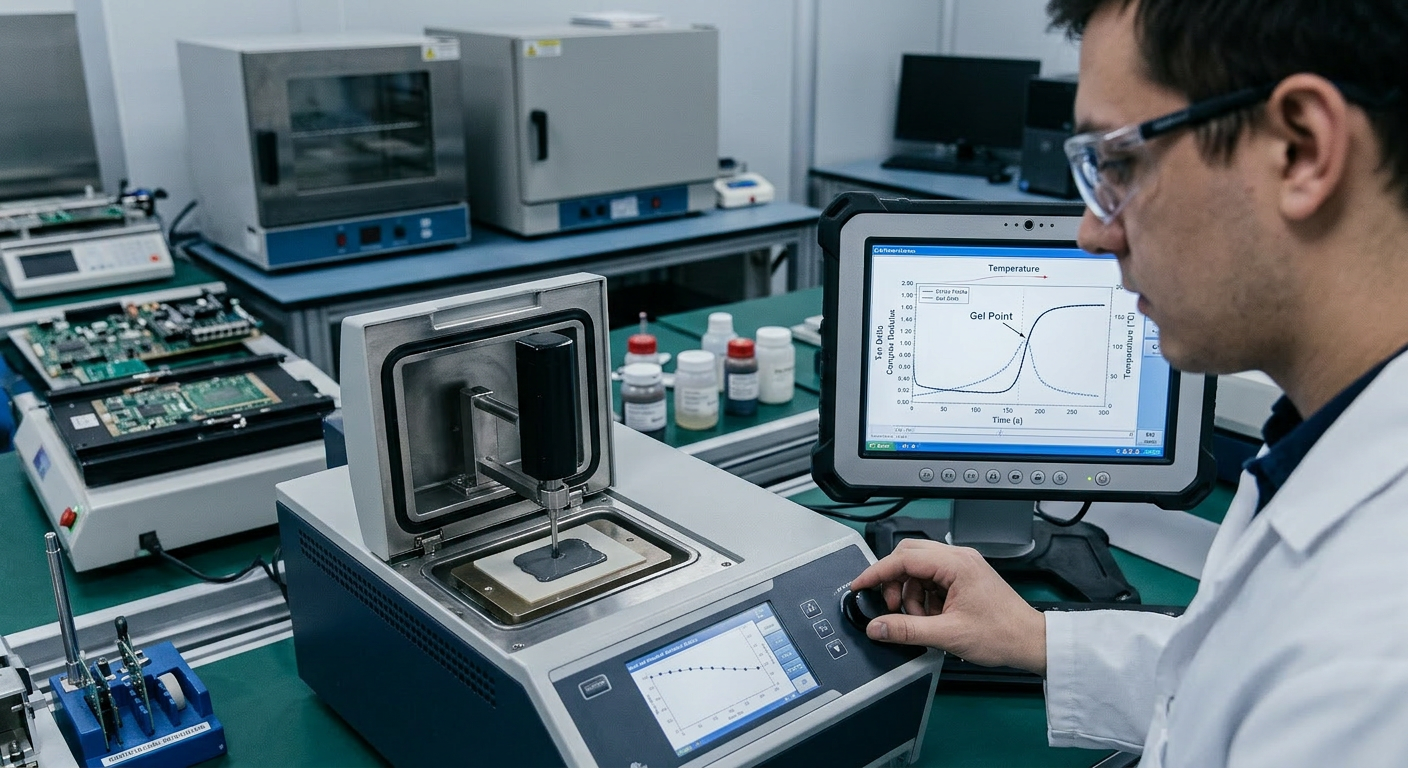
How One-Part Thermal Conductive Adhesive Cures
One-part thermal conductive adhesive is supplied as a ready-to-use material. Unlike a two-part system, it does not require ratio mixing before application. Cure begins through a defined trigger, usually heat, ambient moisture, UV assistance in niche formulations, or a staged reaction mechanism. In the U.S. industrial market, heat-curing one-component systems are especially common for electronics manufacturing because they deliver better storage stability, cleaner metering, and more repeatable bond quality under controlled process windows.
Curing properties matter because they influence takt time, throughput, reworkability, thermal resistance, and long-term reliability. A fast surface set may appear attractive, but if the adhesive traps volatiles, creates internal stress, or leaves uncured mass in the center of a thick bond line, field performance can suffer. Engineers therefore look beyond “fixture time” and evaluate full-cure schedule, exotherm profile, glass transition behavior, coefficient of thermal expansion compatibility, and post-cure adhesion retention after thermal cycling.
The most common cure drivers are substrate temperature and exposure duration. A formulation may cure in 10 to 30 minutes at an elevated temperature, or require longer dwell times at lower temperatures. For moisture-curing versions, ambient humidity and joint geometry become more important. In enclosed assemblies, cure may slow significantly if moisture access is limited. For this reason, bond-line design is not just a mechanical issue; it is a chemical process variable.
Thermally conductive fillers such as aluminum oxide, boron nitride, or other ceramic systems also influence cure behavior. High filler loading is needed for thermal conductivity, but it can change flow, wetting, and heat transfer during cure. A formulation with excellent thermal conductivity on paper may be harder to dispense or may need tighter process control. That is why data sheet review should always be followed by production-level validation.
Factors That Affect Curing Performance
| Factor | Why It Matters | Typical U.S. Production Concern | Impact on Cure |
|---|---|---|---|
| Substrate Material | Aluminum, copper, steel, ceramics, and coated plastics transfer heat differently | Mixed-material assemblies in EVs and industrial controls | Can accelerate or slow reaction depending on heat absorption |
| Bond-Line Thickness | Thicker adhesive layers retain heat and slow moisture penetration | Gap-filling in power modules and enclosures | Longer full cure and greater risk of internal uncured zones |
| Cure Temperature | Higher temperature usually shortens processing time | Balancing oven throughput with component safety | Primary lever for reducing cycle time |
| Humidity | Critical for moisture-curing systems | Seasonal plant variation from Arizona to Florida | Low humidity may delay cure significantly |
| Dispense Accuracy | Uniform volume improves thermal path consistency | Automated line control and low scrap requirements | Irregular bead size leads to uneven cure and performance |
| Storage Conditions | One-part systems can drift if mishandled | Cold-chain handling and shelf-life management | Poor storage can alter viscosity and cure response |
| Surface Preparation | Contaminants weaken wetting and adhesion | Oil, oxidation, and release agent residues | Can cause partial bond failure even after full cure |
This table shows why curing cannot be reduced to a single temperature number. In U.S. manufacturing, the same adhesive can perform very differently in a clean-room electronics plant in Arizona versus a humid contract assembly site on the Gulf Coast. Buyers should validate under real line conditions rather than relying solely on lab values.
Product Types in the U.S. Market
One-part thermal conductive adhesive is not a single uniform category. U.S. buyers usually compare materials by cure mechanism, conductivity range, flexibility, and intended assembly environment. Heat-curing grades are widely used where stable process windows exist. Moisture-curing grades can be useful for certain sealed electronics or lower-energy processing setups. Some silicone-based products emphasize flexibility and thermal aging, while epoxy-based systems tend to deliver stronger structural bonding and dimensional stability.
Silicone thermal adhesive is often selected where thermal cycling and stress absorption are critical, such as power electronics exposed to repeated expansion and contraction. Epoxy thermal adhesive is often chosen where stronger mechanical hold and cleaner edge definition are needed. Acrylic-based specialized systems exist in smaller niches, though they are less dominant in high-temperature electronics thermal management compared with silicone and epoxy chemistry families.
Another dividing line is whether the product functions mainly as a thermal interface material, a structural adhesive, or a hybrid of both. In some U.S. battery, inverter, and LED applications, engineers want the cured adhesive to replace screws, clips, and pads simultaneously. In others, they only need localized component fixation with modest heat dissipation. The wrong product type can lead to overdesign, unnecessary cost, or poor rework strategy.
Industry Demand by Segment
Demand is not evenly distributed. The bar chart below highlights realistic relative demand across major U.S. industries using one-component thermally conductive bonding materials.
Buying Advice for United States Buyers
For buyers in the United States, the right purchasing decision starts with application mapping, not with price or a single headline property. Ask whether the adhesive must mainly transfer heat, hold mechanical load, electrically insulate, seal against moisture, or survive vibration. Then match those needs to the actual line process. If your production line uses automated jetting or positive displacement dispensing, viscosity stability becomes a primary decision factor. If your assembly sees temperature swings from winter shipment to high-load operation, thermal cycling durability may be more important than initial lap shear strength.
It is also wise to separate prototype needs from mass-production needs. Engineers often approve a sample based on bench success, but a formulation that works for hand application may not behave the same way on an automated line running thousands of units per shift. U.S. contract manufacturers and OEMs usually benefit from requesting pilot-run quantities, dispensing trials, and cure-window studies before committing to annual volume contracts.
Commercial terms matter too. In the American market, many buyers now expect local inventory options, technical documentation aligned with compliance reviews, and practical support for PPAP-style documentation or controlled process change notifications in automotive and industrial programs. If a supplier cannot provide timely lot-level records, shipping consistency, and application engineering response, even a technically sound product can become a supply-chain risk.
What to Compare Before You Buy
| Evaluation Point | What to Ask | Why It Matters | Best Fit Example |
|---|---|---|---|
| Thermal Conductivity | What is the tested conductivity and method? | Prevents overestimating heat dissipation capability | High-power modules and LED boards |
| Cure Schedule | What is fixture time and full-cure condition? | Determines line speed and WIP inventory | Automated electronics assembly |
| Viscosity Stability | Does the product hold stable flow over shelf life? | Critical for repeatable dispensing | Metered bead or dot application |
| Electrical Insulation | What are dielectric and volume resistivity values? | Needed for live electronic assemblies | Power supplies and control boards |
| Adhesion Range | Which substrates are qualified? | Avoids failures on coated metals or engineered plastics | Mixed-material housings |
| Thermal Cycling Durability | How does it perform after repeated hot-cold cycles? | Predicts long-term field reliability | Automotive and outdoor electronics |
| Supply Support | Is local technical and logistics support available? | Reduces production interruptions | High-volume OEM programs |
This comparison framework helps U.S. buyers move from broad product claims to application-specific evaluation. The most successful sourcing teams combine laboratory metrics with process-fit checks and supplier support review.
Industries Using One-Part Thermal Conductive Adhesive
Automotive electronics is one of the fastest-growing sectors for this material in the United States. Battery management systems, onboard chargers, inverters, sensors, and power modules all produce heat in compact spaces. One-component thermal adhesive can help secure components while creating a more efficient thermal path to a heat sink or housing.
Industrial manufacturing is another major segment. Variable frequency drives, servo systems, power conversion equipment, and smart factory control modules all rely on stable thermal management to maintain uptime. In these applications, cure reliability matters because unplanned downtime is often more expensive than the adhesive itself.
Telecom and data infrastructure also contribute demand. Base stations, power modules, edge computing boxes, and network control hardware often combine high thermal loads with outdoor or semi-controlled environments. In these systems, buyers frequently need materials that resist humidity, vibration, and long service cycles.
LED lighting, renewable energy systems, and medical electronics remain important as well. Each application places different value on cure speed, softness, adhesion, and thermal transfer, which is why the “best” one-part thermal conductive adhesive depends strongly on the actual end use.
Common Applications
| Application | Main Need | Preferred Property | Typical U.S. Use Region |
|---|---|---|---|
| Power Module Bonding | Heat dissipation plus secure attachment | High conductivity and thermal cycling resistance | Michigan, Texas, Arizona |
| LED Heat Sink Assembly | Efficient heat transfer in compact space | Low voiding and stable cure | California, North Carolina |
| Battery Pack Electronics | Vibration resistance and insulation | Flexible cured body and dielectric safety | Tennessee, Georgia, Michigan |
| Industrial Control Boards | Component fixation with thermal path | Dispense consistency and line efficiency | Ohio, Illinois, Texas |
| Telecom Power Units | Long service life outdoors | Moisture resistance and thermal aging stability | Texas, Virginia, Colorado |
| Medical Electronics Modules | Compact thermal control and cleanliness | Precise dispensing and controlled cure profile | California, Minnesota, Massachusetts |
| Consumer Device Assemblies | Fast production and low rework rate | Balanced cure speed and automation fit | California, Washington, Texas |
These examples show that application context drives product selection. The same adhesive chemistry may work beautifully in an LED module but fail to meet the flexibility demands of an EV battery electronics enclosure.
Trend Shift in Material Preferences
The U.S. market is gradually shifting from basic single-function bonding materials toward formulations that combine thermal transfer, process automation, durability, and compliance support. The area chart below reflects a plausible trend in buyer preference for higher-value multifunctional formulations.
Case Studies from Typical U.S. Use Scenarios
A Midwest automotive electronics producer needed a one-part thermal conductive adhesive for a power control board mounted inside an aluminum housing. The initial material cured quickly in the lab but produced inconsistent bond thickness on the line. After switching to a formulation with more stable rheology and validating a stepped heat schedule, the manufacturer reduced rework and improved thermal consistency across production lots.
A Texas-based telecom equipment assembler faced intermittent failures in outdoor power modules. The issue was not simply thermal conductivity; it was cure completeness in thicker sections and adhesion loss after humidity exposure. By redesigning the bond geometry and selecting a more suitable one-component thermally conductive adhesive with better environmental resistance, the team improved field reliability and reduced warranty claims.
An LED module producer in California prioritized throughput and heat transfer but found that an aggressive cure cycle warped a temperature-sensitive subassembly. The final solution was not a faster adhesive but a more forgiving cure profile that matched the substrate stack. That change slightly increased oven dwell time but lowered total defect cost.
These examples show that curing behavior cannot be evaluated in isolation. In real U.S. production settings, the best adhesive is the one that aligns chemistry, thermal path, geometry, and manufacturing rhythm.
Top Suppliers Serving the United States
The table below highlights well-known suppliers that U.S. buyers commonly evaluate for one-part thermal conductive adhesive and related thermal management materials. The list includes domestic and internationally active manufacturers with practical relevance to American sourcing teams.
| Company | Service Region | Core Strengths | Key Offerings |
|---|---|---|---|
| Henkel | United States nationwide, with strong support in automotive and electronics hubs | Large application engineering network, broad electronics portfolio, established OEM relationships | Thermal interface adhesives, electronics assembly materials, LOCTITE thermal solutions |
| DOW | United States nationwide, especially strong in electronics and industrial markets | Silicone chemistry expertise, durability in thermal cycling, wide formulation range | Silicone-based thermally conductive adhesives and encapsulants |
| 3M | United States and North American industrial channels | Strong industrial brand, process integration support, broad converter network | Thermal bonding tapes, interface materials, specialty adhesive systems |
| Master Bond | United States with strong custom and specialty project support | Application-specific technical guidance, specialty formulations, smaller-batch flexibility | One-component thermal epoxy adhesives for electronics and medical devices |
| Parker Lord | United States industrial and transportation sectors | Engineering-driven solutions, strong presence in transportation and industrial manufacturing | Thermal management adhesives, structural and electronic assembly materials |
| MG Chemicals | United States through distribution and electronics channels | Accessible electronics-focused product range, practical technical documentation | Thermal pastes, adhesives, potting and protective materials |
| Qingdao QinanX New Material Technology Co., Ltd | United States through export programs, OEM supply, and customer-specific industrial projects | Broad adhesive manufacturing capability, custom formulation support, strong cost-performance for private label and distribution | Electronic silicone, epoxy systems, polyurethane, acrylic, instant adhesive, hot melt, and custom industrial adhesive solutions |
For U.S. buyers, these suppliers differ not only in product chemistry but in how they support validation, customization, and commercial flexibility. Large multinational companies often provide deep documentation and proven line support, while specialized or internationally flexible suppliers may offer stronger customization, lower MOQ options, or private label advantages for distributors and brand owners.
Supplier Comparison Snapshot
This chart compares representative supplier strengths in four practical dimensions that matter to American buyers: customization, local support responsiveness, product breadth, and cost-performance.
Local Supplier Considerations in the United States
When evaluating local supply in the United States, buyers should look beyond head office location. What matters in practice is where technical support, warehousing, and account management are actually delivered. A supplier with inventory close to Los Angeles, Houston, Chicago, Detroit, Atlanta, or New Jersey can reduce lead-time risk and improve response speed when production changes suddenly.
Distributors also play a large role in the U.S. adhesive market. In many cases, a buyer purchases from an authorized channel partner rather than directly from the manufacturer. That can be beneficial when the distributor provides application stocking, smaller lot sizes, and cross-brand comparison support. However, buyers should confirm whether technical recommendations come from factory-backed engineers or from catalog-level sales support only.
Regional service is especially important for production troubleshooting. If a one-part thermal conductive adhesive begins showing changes in bead shape, cure completeness, or adhesion after a process change, rapid technical intervention can save a line stop. This is one reason many American manufacturers prefer suppliers with a visible market footprint rather than purely transactional export arrangements.
Our Company
For buyers in the United States seeking a flexible alternative to larger multinational brands, QinanX brings practical value through a broad industrial adhesive manufacturing platform and a quality system built around ISO-certified production, RoHS and REACH aligned compliance, multi-stage quality control, and full digital traceability that supports disciplined lot management. Its portfolio spans electronic silicone, epoxy, polyurethane, acrylic, cyanoacrylate, hot melt, and water-based technologies, which gives U.S. customers room to consolidate sourcing or develop custom-fit thermal and electronic bonding solutions instead of forcing every project into a standard catalog grade. For cooperation, the company supports OEM, ODM, private label, wholesale, project supply, and regional distribution, making it suitable for end users, contract manufacturers, distributors, dealers, brand owners, and even smaller specialized buyers that need tailored packaging or formulation flexibility. Through its export experience across more than 40 countries, automated production lines, sample support, and round-the-clock technical assistance, QinanX operates with the process discipline American buyers expect from long-term supply partners. Buyers exploring product options can review the broader industrial adhesive range, learn more through the company’s market background and manufacturing capabilities, or discuss specifications and service needs directly via the U.S.-focused inquiry channel.
2026 Trends in the United States
Looking toward 2026, the U.S. market for one-part thermal conductive adhesive is expected to evolve in three clear directions: higher thermal loads, tighter process control, and stronger sustainability expectations. As EV electronics, AI hardware, power conversion systems, and distributed energy equipment generate more heat in smaller footprints, thermal adhesives will be expected to do more than they do today. Buyers will increasingly request materials that combine thermal transfer, dielectric safety, vibration tolerance, and compatibility with automated dispense systems.
Policy and compliance trends will also influence sourcing. Even where direct regulations do not mandate every chemical disclosure standard, U.S. OEMs increasingly require aligned documentation, controlled substance transparency, and supplier traceability. This is particularly true for automotive, electronics, and export-sensitive manufacturing sectors. Materials with robust data packages and change-management discipline will gain preference.
Sustainability will move from marketing language to procurement criteria. Buyers will pay more attention to process waste, energy-efficient cure schedules, packaging optimization, and long-life product performance that reduces field replacement. There is also likely to be increased interest in formulations that lower VOC concerns, simplify manufacturing steps, or support lighter, more integrated assemblies. In short, 2026 will reward suppliers that can connect materials science with real factory economics and compliance readiness.
FAQ
What is the biggest advantage of one-part thermal conductive adhesive?
The biggest advantage is process simplicity. Because the material is ready to dispense, it reduces mixing errors, improves consistency, and often fits automated production better than two-part systems.
Is one-part thermal conductive adhesive always heat cured?
No. Many popular grades are heat cured, but some rely on moisture or specialized cure mechanisms. The correct choice depends on assembly design, substrate sensitivity, and production flow.
Does higher thermal conductivity always mean better performance?
Not necessarily. Real performance also depends on bond-line thickness, wetting, void control, cure completeness, and contact quality between the component and heat sink.
Can U.S. buyers use international suppliers safely?
Yes, if the supplier demonstrates certifications, traceability, consistent manufacturing, clear technical support, and dependable logistics. Many buyers use international manufacturers when the cost-performance ratio and service model are strong.
Which U.S. industries are driving demand fastest?
Automotive electronics, energy storage, industrial automation, telecom power systems, and advanced electronics assembly are among the strongest demand drivers.
What should be tested before approving a material?
At minimum, test cure schedule, dispensing stability, adhesion to actual substrates, dielectric behavior if relevant, thermal cycling durability, and performance under real production conditions.
Is silicone or epoxy better for thermal adhesive applications?
Neither is universally better. Silicone often offers flexibility and environmental durability, while epoxy often offers stronger structural bonding and dimensional stability. The application decides the winner.
How important is local support in the United States?
It is very important for production programs. Local warehousing, responsive technical assistance, and rapid troubleshooting can prevent downtime and reduce sourcing risk.

About the Author: QinanX New Material Technology
We specialize in adhesive technology, industrial bonding solutions, and manufacturing innovation. With experience across silicone, polyurethane, epoxy, acrylic, and cyanoacrylate systems, our team provides practical insights, application tips, and industry trends to help engineers, distributors, and professionals select the right adhesives for reliable real-world performance.

Product Category
You May Also Interest
-
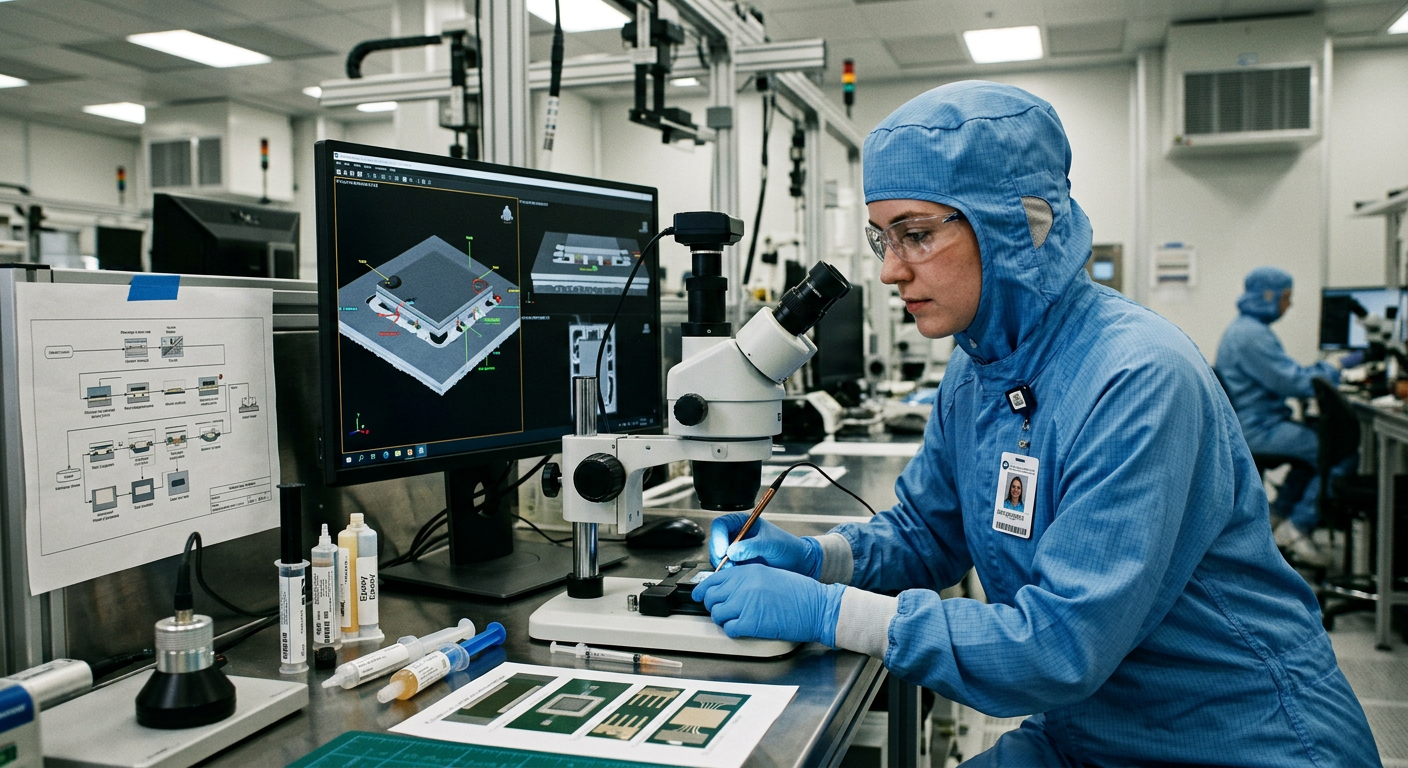
IC Packaging Adhesive: Preventing Void Formation Issues
Learn how IC packaging adhesive void formation is prevented in the United States through material choice, process control, supplier selection, and testing.
-
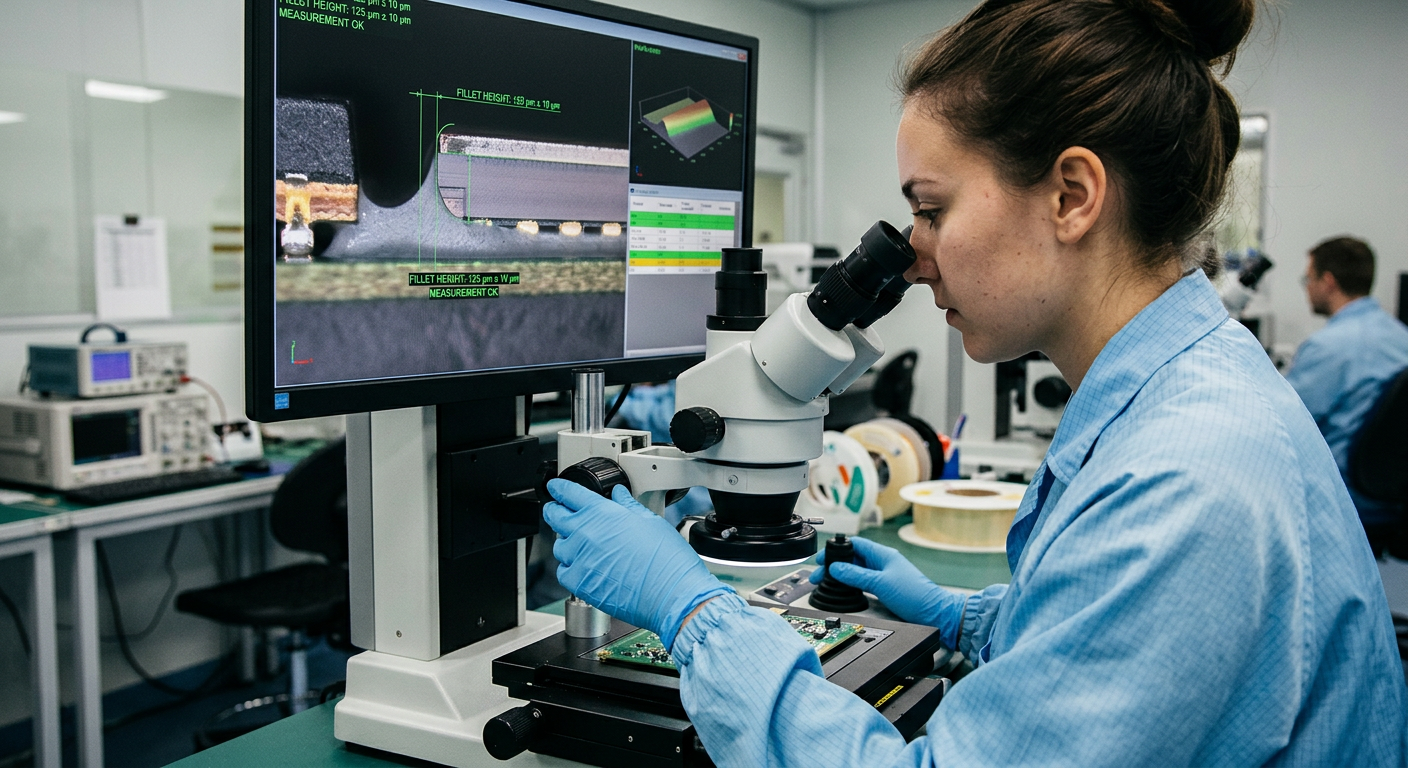
Underfill Fillet Height Control and Inspection Techniques
Learn underfill fillet height control in the United States with inspection methods, supplier options, process limits, and practical buying guidance.
-
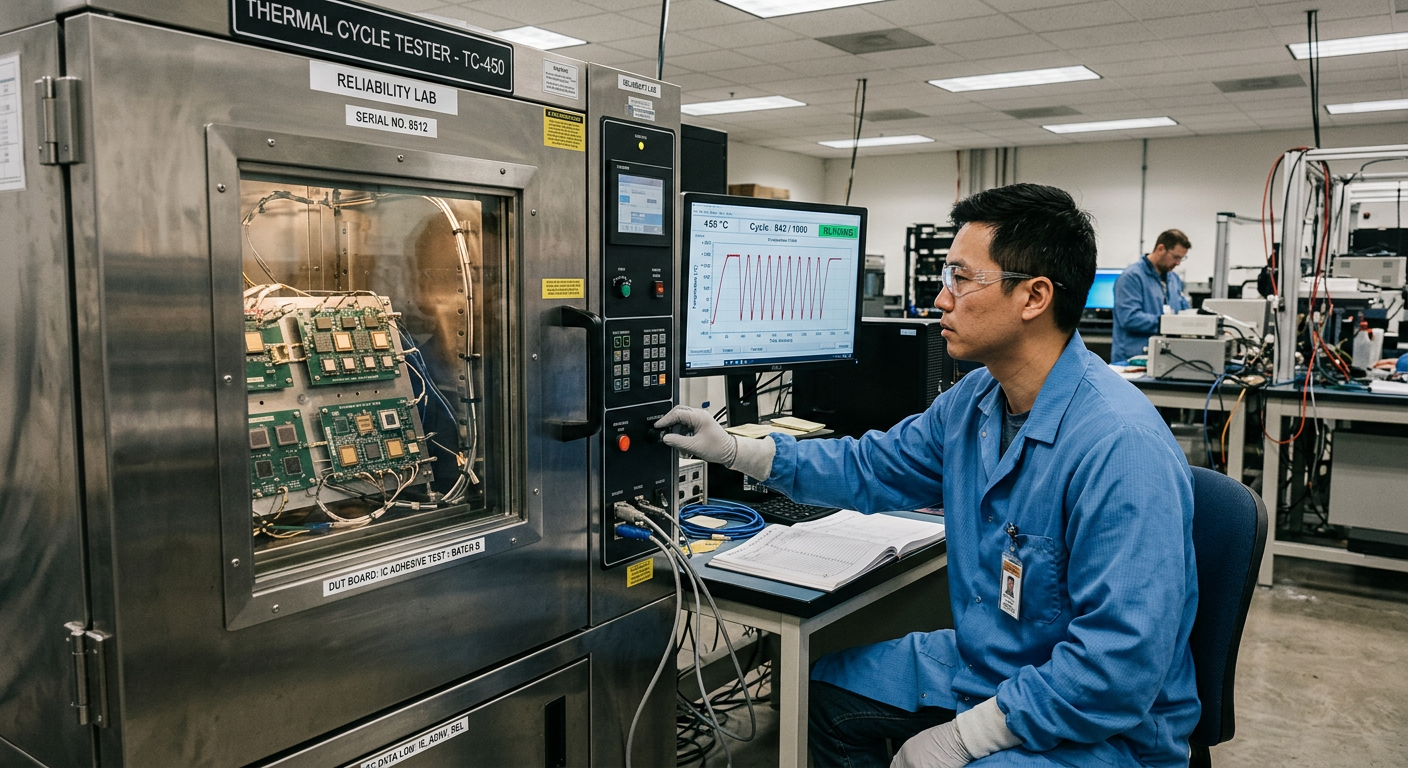
IC Package Adhesive Thermal Cycling Reliability Testing
IC packaging adhesive thermal cycling in the United States requires reliable material selection, supplier review, and test planning for electronics durability.
-

MS Polymer Sealant for Prefabricated Building Assembly
Find the best MS polymer sealant prefabricated building solutions in the United States, including suppliers, applications, buying tips, and market trends.
 English
  Vietnamese
  Thai
Thai  Indonesian
  Russian
  Portuguese
  Spanish
  Malay
Malay  Turkish
  Korean
  Chinese