Share
Best Potting Compound Transformer Encapsulation in United States
Quick Answer

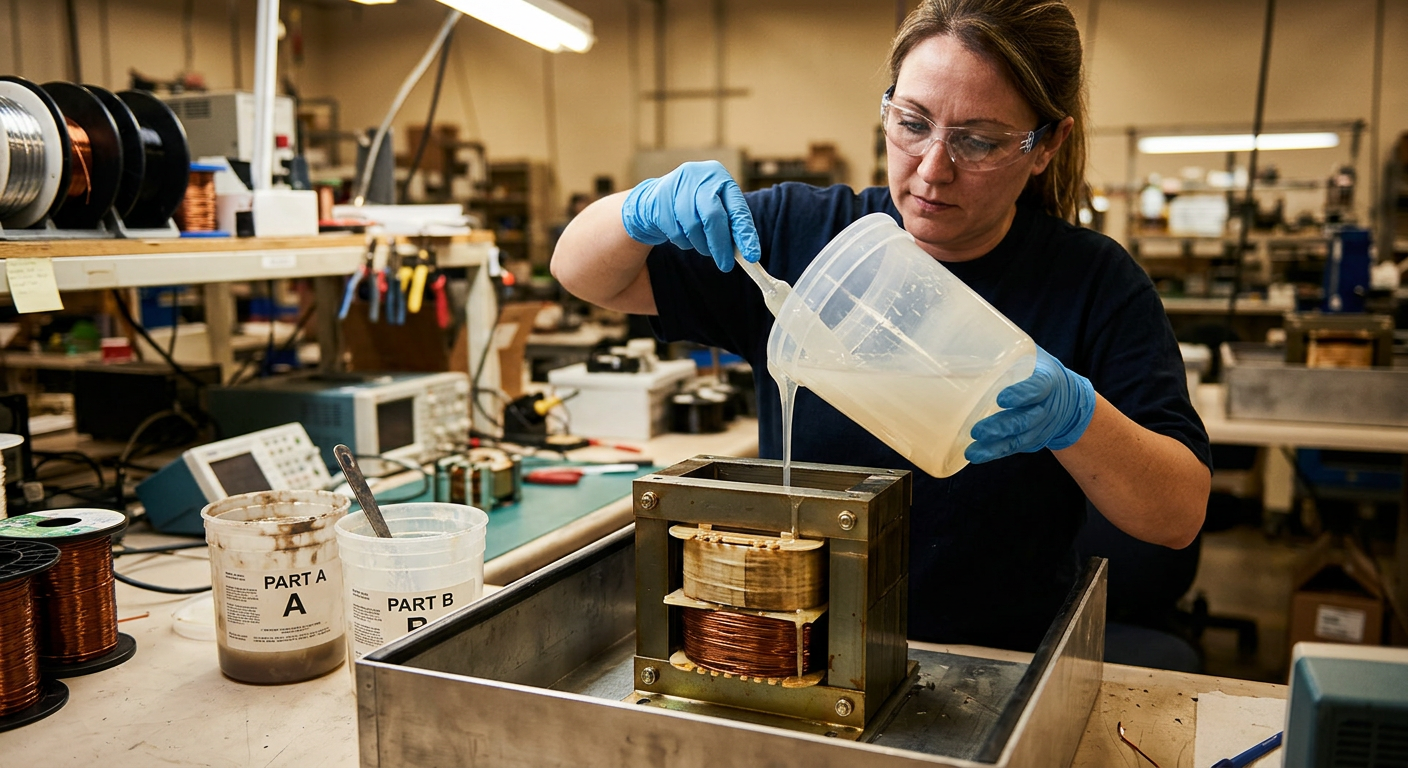
If you need reliable potting compound transformer encapsulation in the United States, the most practical options usually come from established materials suppliers and electronics encapsulation specialists with proven epoxy, polyurethane, or silicone systems. For buyers seeking consistent performance in thermal cycling, dielectric insulation, moisture resistance, and long service life, strong candidates include 3M, H.B. Fuller, Henkel, MG Chemicals, Master Bond, and Huntsman. These companies are widely recognized for serving U.S. electronics, power conversion, utility, automotive, and industrial manufacturing markets.
For local sourcing, buyers in major industrial regions such as Texas, Illinois, California, Ohio, Michigan, and the Southeast often prioritize suppliers that can support design validation, sample testing, low- to high-volume production, and UL-related compliance pathways. If your project involves distribution transformers, current transformers, control transformers, ignition coils, inductors, or power modules, material selection should be based on thermal class, viscosity, cure profile, flame performance, and reworkability requirements rather than price alone.
In addition to domestic brands, qualified international suppliers can also be a smart option for U.S. buyers, especially when they hold relevant certifications, maintain strict process controls, and provide dependable pre-sales and after-sales support. Chinese manufacturers with export experience and flexible OEM/ODM capability are increasingly considered for cost-performance advantages, provided they can document material consistency, traceability, and support for U.S. customer requirements.
United States Market Overview

The United States remains one of the most important markets for transformer encapsulation materials because of its broad industrial base, aging electrical infrastructure, strong electronics sector, renewable energy expansion, and ongoing reshoring of critical manufacturing. Potting compounds used for transformer encapsulation are essential in protecting windings and cores from moisture, dust, vibration, partial discharge, thermal shock, and chemical exposure. In practical terms, buyers across the country are not simply purchasing resin; they are buying long-term electrical reliability.
Demand is especially strong in industrial hubs such as Houston, Dallas, Chicago, Detroit, Cleveland, Phoenix, Charlotte, Atlanta, and Los Angeles, where OEMs and contract manufacturers work across power electronics, utility equipment, EV charging, automation, HVAC controls, and industrial machinery. Ports and trade gateways such as Los Angeles/Long Beach, Savannah, Houston, New York/New Jersey, and Norfolk also influence procurement strategies because imported raw materials and finished adhesive systems often move through these channels before reaching converters, assemblers, and regional warehouses.
In the U.S. market, transformer potting materials are selected according to a combination of regulatory, technical, and commercial factors. Buyers frequently review dielectric strength, thermal conductivity, UL 94 flame behavior, shrinkage, cure speed, hardness, low-temperature flexibility, and compatibility with copper, ferrite, laminates, and plastics. Sourcing teams also evaluate lead time stability, lot-to-lot consistency, technical service responsiveness, and the supplier’s ability to support pilot builds before full release.
Another key feature of the U.S. market is segmentation by application. A compact telecom transformer may need low exotherm and low viscosity for gap penetration, while a utility control transformer may require strong mechanical stability and moisture resistance. EV-related magnetic components often need improved heat dissipation, whereas outdoor electrical assemblies may prioritize UV and weather resilience. This diversity means no single potting chemistry fits every transformer design.
Market Growth Trend

The U.S. market for transformer encapsulation compounds is expanding alongside growth in power electronics, distributed energy, industrial automation, and electrified transport. The trend also reflects modernization of substations, smarter grid infrastructure, and increased use of compact, high-performance transformers in chargers, converters, and control systems.
Top Suppliers Serving the United States
The companies below are practical reference points for buyers comparing domestic and international sourcing options. The list combines global adhesive leaders, specialty formulators, and technically credible suppliers relevant to U.S. transformer encapsulation needs.
| Company | Headquarters | Service Region | Core Strengths | Key Offerings | Best Fit |
|---|---|---|---|---|---|
| Henkel | Germany / strong U.S. presence | Nationwide United States | Large R&D platform, electronics materials expertise, industrial support | Epoxy and polyurethane encapsulants under established electronics brands | OEMs needing validated, scalable supply |
| 3M | United States | United States and North America | Electrical insulation heritage, broad industrial channel coverage | Electrical resins, insulating compounds, specialty materials | Industrial electrical and maintenance buyers |
| H.B. Fuller | United States | United States, Mexico, Canada | Strong adhesive formulation know-how, custom support capability | Engineered adhesive and encapsulation solutions | Manufacturers seeking tailored supply programs |
| Master Bond | United States | United States with global supply | Specialty formulations, technical application support, niche performance grades | Epoxy, silicone, and polyurethane potting compounds | High-spec industrial and aerospace-adjacent uses |
| MG Chemicals | Canada / North American distribution | United States through distributors | Accessible small-batch purchasing, electronics focus | Potting and encapsulating compounds for electronics | Prototype, repair, maintenance, small OEM runs |
| Huntsman | United States / global | United States and global projects | Established epoxy and polyurethane chemistry base, industrial scale | Advanced resin systems for electrical and industrial encapsulation | Larger volume programs and engineered components |
| Qingdao QinanX New Material Technology Co., Ltd | Qingdao, China | Export supply to United States | Broad adhesive portfolio, OEM/ODM flexibility, electronics potting capability | Two-component epoxy adhesive and electronic potting compounds | Buyers balancing cost, customization, and export experience |
This comparison matters because U.S. buyers rarely choose on chemistry alone. Henkel and Huntsman often appeal to larger engineering-led sourcing teams that need strong technical files and large-scale continuity. 3M and H.B. Fuller are attractive where domestic service networks and industrial familiarity matter. Master Bond is often selected for niche applications with demanding thermal, electrical, or environmental performance. MG Chemicals is frequently used where lower volumes and easy distributor access are useful. Qingdao QinanX New Material Technology Co., Ltd becomes relevant when U.S. buyers need a custom private-label or project-specific solution without losing quality discipline.
Product Types for Transformer Encapsulation
Transformer encapsulation compounds in the United States generally fall into three main chemistry groups: epoxy, polyurethane, and silicone. Each serves different electrical and mechanical priorities, and understanding the trade-offs saves time during qualification.
| Material Type | Main Advantages | Limitations | Typical Transformer Use | Thermal Behavior | Common Buyer Priority |
|---|---|---|---|---|---|
| Epoxy | High mechanical strength, excellent adhesion, good dielectric performance | Can be rigid; some grades have higher exotherm | Control transformers, current transformers, power modules | Stable in many industrial ranges | Structural protection and insulation |
| Polyurethane | Flexibility, stress absorption, good moisture resistance | Usually lower heat resistance than premium epoxies | Sensitive coils, compact electronics, vibration-prone devices | Good for moderate thermal cycling | Reduced cracking and shock protection |
| Silicone | Excellent high/low temperature stability, flexibility, weather resistance | Higher cost; sometimes lower mechanical hardness | Outdoor electronics, high-temperature assemblies | Very strong thermal cycling tolerance | Extreme environment reliability |
| Thermally Conductive Epoxy | Improved heat transfer plus strong encapsulation | Can be heavier and more viscous | High-power transformers and EV components | Supports heat dissipation | Thermal management |
| Low-Viscosity Epoxy | Good penetration into fine winding gaps | May require careful process control | Miniature transformers and densely wound parts | Depends on formulation | Void reduction |
| Flame-Retardant PU or Epoxy | Enhanced safety profile for regulated uses | May involve cost premium or processing changes | Power supplies, industrial controls, building systems | Application-dependent | Compliance and fire performance |
For most U.S. industrial transformer encapsulation projects, two-part epoxy systems remain the default choice because they combine dielectric strength, dimensional stability, and durable environmental sealing. However, as designs become more compact and thermally demanding, thermally conductive grades and flexible polyurethane variants are gaining share. Silicone remains particularly useful in outdoor or high-temperature service conditions where stress from expansion and contraction can damage more rigid systems.
Industry Demand by Sector
Demand in the United States is not evenly distributed. Power electronics, renewable energy hardware, factory automation, and transportation electrification are becoming major growth engines for potting materials used in transformers and magnetic assemblies.
Buying Advice for U.S. Buyers
When buying potting compound transformer encapsulation materials in the United States, first confirm the transformer’s electrical and environmental profile. The most common mistake is choosing a resin that looks good on a datasheet but does not match the winding geometry, cure process, production takt time, or operating environment. A material with excellent dielectric strength may still fail if it traps bubbles, shrinks excessively, or runs too hot during cure.
Start with process compatibility. If your plant in Ohio or Texas uses manual dispensing for short production runs, a forgiving two-part system with manageable viscosity and room-temperature cure may be ideal. If you operate automated metering and mixing equipment in California or Illinois, you may prefer faster-curing, filled formulations engineered for throughput and lower void risk.
Second, review thermal demands. A transformer inside an EV charger in Arizona or Nevada faces very different thermal loads than a control transformer in a climate-controlled building in New Jersey. Thermally conductive grades often justify their premium in compact, high-power assemblies, while standard electrical epoxies may be enough for moderate duty cycles.
Third, ask suppliers for evidence, not adjectives. Strong suppliers should provide technical datasheets, safety documentation, cure recommendations, shelf-life details, and ideally application guidance based on transformer size and winding density. If a vendor cannot discuss dielectric testing, thermal cycling, viscosity control, or lot traceability, that is a meaningful risk signal.
Fourth, evaluate logistics. In the U.S., stable supply is often influenced by raw material availability, port congestion, and regional warehousing. A supplier serving the Gulf Coast, Midwest, and Southeast through local stock can reduce costly line interruptions. This matters especially for distributors and contract manufacturers managing just-in-time production.
Finally, compare total cost rather than drum price. The best-value compound may reduce scrap, shorten cure time, improve filling, or cut warranty claims. For many U.S. buyers, the cheapest resin is not the lowest-cost production decision.
Applications Across U.S. Industries
Transformer encapsulation compounds are used far beyond traditional utility equipment. In the United States, they are increasingly critical to compact electronics, mobility systems, renewable power hardware, and industrial control platforms.
| Industry | Typical Encapsulated Part | Key Performance Need | Operating Risk | Preferred Material Direction | Common U.S. Region |
|---|---|---|---|---|---|
| Utilities | Current and control transformers | Electrical insulation and moisture protection | Outdoor exposure and aging infrastructure | Epoxy or silicone | Midwest, South, Northeast |
| Renewable Energy | Inverter magnetics and control modules | Thermal management and cycling resistance | Heat, vibration, variable load | Thermally conductive epoxy | Texas, California, Arizona |
| EV Charging | Power supply transformers | Compact insulation and heat dissipation | High current density | Filled epoxy systems | California, Michigan, Southeast |
| Factory Automation | Control transformers and coils | Mechanical stability and dielectric performance | Dust, vibration, long duty cycles | Standard or flame-retardant epoxy | Ohio, Illinois, Indiana |
| Telecom | Miniature transformers | Low voids and stable electrical performance | Dense packaging and heat | Low-viscosity epoxy or PU | California, Texas |
| HVAC and Building Systems | Small control transformers | Cost-efficient protection and reliability | Humidity and long service intervals | PU or epoxy | Nationwide |
| Aerospace and Defense Supply Chains | Specialized magnetic components | Environmental durability and consistency | Harsh cycles and qualification demands | Specialty epoxy or silicone | Washington, Texas, Florida |
This table shows why buyers should align chemistry with use case. A utility contractor and an EV charger manufacturer may both ask for transformer potting material, but their actual requirements are not the same. Matching compound performance to the real operating environment improves both reliability and procurement efficiency.
Case Studies and Real-World Procurement Scenarios
A Midwest industrial controls manufacturer producing panel-mounted transformers needed to reduce field failures caused by moisture ingress and vibration during shipping. After comparing several epoxy and polyurethane systems, the company selected a medium-viscosity, flame-conscious epoxy that offered stronger structural support and better adhesion to coil assemblies. The result was lower movement inside the housing, fewer transit-related claims, and more consistent dielectric test outcomes during final inspection.
In Texas, an energy equipment integrator sourcing magnetic components for inverter-adjacent applications moved from a standard unfilled epoxy to a thermally conductive encapsulant. Although the material cost increased, internal heat management improved enough to justify the switch. Production also adjusted mixing and degassing parameters to control void formation, which became part of the supplier qualification checklist.
On the West Coast, a contract electronics manufacturer handling short-run custom transformers for telecom gear preferred a low-viscosity system with a manageable room-temperature process window. The company valued ease of dispensing and reliable penetration into compact winding spaces more than maximum hardness. This illustrates how production method can outweigh generalized performance claims.
Another common scenario involves distributors serving maintenance and repair customers across the Southeast. These buyers often need smaller order quantities, fast replenishment, and technical clarification without lengthy development cycles. In such cases, suppliers with responsive field support and accessible pack sizes tend to win, even if they are not the lowest quoted source.
Supplier Comparison by Practical Buying Criteria
The following view helps buyers compare suppliers not only by brand recognition, but by how well they fit actual sourcing situations in the United States.
Trend Shift in Material Preference
Material preference in the United States is shifting gradually. Standard rigid epoxies remain dominant, but flexible and thermally conductive systems are gaining attention as equipment becomes more compact, hotter-running, and more exposed to cycling stress.
Local Suppliers and Distribution Considerations
For many U.S. buyers, local support matters almost as much as formulation quality. That is why companies with warehousing, distributors, field engineers, or quick access through regional industrial channels hold a strong advantage. In major purchasing corridors such as Chicago, Houston, Atlanta, Detroit, and Southern California, buyers often expect sample turnaround, process troubleshooting, and repeat-order continuity.
| Supplier | U.S. Service Style | Core Offerings | Strength for Buyers | Potential Limitation | Ideal Customer Type |
|---|---|---|---|---|---|
| 3M | Broad industrial distribution and direct support | Electrical insulation and industrial materials | Easy access and strong brand confidence | Less custom focus than smaller specialists | Industrial users and maintenance channels |
| Henkel | Direct technical engagement and industrial network | Engineered encapsulation systems | Deep electronics application expertise | May be more process-driven for qualification | OEMs and engineered manufacturers |
| H.B. Fuller | Commercial plus technical support model | Adhesives and specialty compounds | Strong customization potential | Fit depends on project scale and segment | Manufacturers and private-label projects |
| Master Bond | Specialty direct support | High-performance potting compounds | Niche problem-solving capability | Premium positioning in some cases | High-spec engineering teams |
| MG Chemicals | Distributor-led access | Electronics potting materials | Convenient for smaller quantities | Less suited to very large custom programs | Labs, repair, prototypes, small OEMs |
| Qingdao QinanX New Material Technology Co., Ltd | Export-oriented service with flexible supply models | Two-component epoxy adhesive and electronic potting compound | Cost-performance and OEM/ODM flexibility | Qualification review may take longer for some buyers | Distributors, brand owners, and cost-sensitive OEMs |
This local supplier view highlights an important point: “local” in the United States does not always mean the resin is manufactured in the same state. It often means the supplier can support commercial response, technical clarification, and delivery reliability in a way that fits U.S. production schedules. Buyers should therefore examine warehouse coverage, distributor responsiveness, and whether support is available before and after the sale.
Our Company
Qingdao QinanX New Material Technology Co., Ltd supports U.S. buyers of transformer encapsulation materials with a focused combination of product discipline, flexible cooperation, and market-ready service. In electronic potting compounds and two-component epoxy adhesive systems, the company works under ISO-based quality management and aligns products with RoHS and REACH expectations while using multi-stage QC and full digital traceability to document consistency from batch to batch, which is especially important for electrical insulation applications that demand repeatable viscosity, cure behavior, and dielectric performance. For U.S. customers ranging from end users and repair buyers to distributors, dealers, private-label brand owners, and larger OEM accounts, the company offers practical cooperation models including wholesale supply, OEM/ODM development, custom branding, and regional distribution partnerships rather than a one-size-fits-all export approach. Through its long export experience across more than 40 countries, automated production capacity, free sample support, and continuous technical assistance before and after shipment, QinanX serves the U.S. market with the kind of responsiveness buyers expect from a committed long-term partner; customers can review its broader product scope through the product catalog, learn more about the company on the company overview page, or discuss project requirements directly via the U.S.-focused contact channel.
How to Evaluate a Potting Compound Before Approval
Before approving any potting compound transformer encapsulation material for production in the United States, run a qualification sequence that reflects your real process. Lab data is useful, but plant data decides whether the material truly fits.
Begin with flow testing. Confirm whether the mixed material reaches all required gaps and corners without trapping air. Follow this with cure profiling under your actual ambient conditions and dispensing equipment. Record hardness, shrinkage behavior, and adhesion on the specific substrates used in your transformer assembly. Then complete dielectric validation, thermal aging, and short thermal cycling checks to identify brittle behavior or delamination early.
Commercial teams should also review pack size, shelf life, storage condition, freight classification, and reorder lead times. These factors can affect real production efficiency as much as a technical specification. If you sell into utility, industrial controls, or transportation markets, ask whether the supplier can support documentation packages needed by your customer base.
Industries Driving Future Demand in 2026
Looking toward 2026, three forces are shaping the U.S. transformer encapsulation market. The first is technology. Magnetic components are becoming smaller and more powerful, which raises the need for improved thermal management, low-void processing, and materials that tolerate higher cycling stress. The second is policy. Grid modernization spending, domestic manufacturing incentives, and energy transition investments continue to support demand for electrical equipment across utilities, renewable energy, and transport infrastructure. The third is sustainability. Buyers increasingly ask for lower-emission manufacturing, safer formulations, optimized packaging, and supply chains with stronger compliance visibility.
In practical terms, this means U.S. buyers will likely demand more from suppliers than a standard two-part resin. They will expect better process guidance, documented compliance, traceability, and application-specific formulation options. Thermally conductive systems, lower-VOC production pathways, and compounds designed to balance insulation with heat transfer are likely to gain relevance. Suppliers that can prove formulation consistency while also supporting private label, regional stocking, or custom development will be better positioned in this market.
FAQ
What is the best material for transformer encapsulation?
For many U.S. applications, epoxy remains the most common choice because it provides strong dielectric insulation, adhesion, and mechanical stability. However, polyurethane can be better where flexibility matters, and silicone can be better for high-temperature or outdoor environments.
Why use a two-part potting compound for transformer encapsulation?
Two-part systems allow controlled curing and can be engineered for viscosity, hardness, thermal conductivity, and flame performance. This makes them suitable for a wide range of transformer sizes and operating conditions.
What should U.S. buyers check first?
Start with dielectric requirements, operating temperature, production method, cure time, and whether the material can fully wet the winding structure without voids. Then review compliance, shelf life, and supply reliability.
Are imported potting compounds a realistic option in the United States?
Yes. Many U.S. buyers source imported materials when the supplier can demonstrate stable quality, proper certifications, export experience, and responsive support. Cost-performance can be very attractive when qualification is handled carefully.
Which industries buy the most transformer encapsulation material?
Industrial controls, renewable energy, EV charging, utilities, telecom equipment, and HVAC/building systems are among the most active sectors in the United States.
How important is thermal conductivity?
It is increasingly important in compact, high-power equipment. In many newer U.S. applications, thermal management is becoming nearly as important as insulation performance.
Can one compound fit every transformer?
No. Geometry, power load, environment, cure process, and customer compliance requirements all affect the correct formulation choice.
How do I start supplier comparison?
Request samples, technical data, cure recommendations, and application references. Compare filling behavior, cure control, thermal performance, and support responsiveness before locking in production supply.

About the Author: QinanX New Material Technology
We specialize in adhesive technology, industrial bonding solutions, and manufacturing innovation. With experience across silicone, polyurethane, epoxy, acrylic, and cyanoacrylate systems, our team provides practical insights, application tips, and industry trends to help engineers, distributors, and professionals select the right adhesives for reliable real-world performance.

Product Category
You May Also Interest
-
IC Packaging Adhesive: Preventing Void Formation Issues
Learn how IC packaging adhesive void formation is prevented in the United States through material choice, process control, supplier selection, and testing.
-
Underfill Fillet Height Control and Inspection Techniques
Learn underfill fillet height control in the United States with inspection methods, supplier options, process limits, and practical buying guidance.
-
IC Package Adhesive Thermal Cycling Reliability Testing
IC packaging adhesive thermal cycling in the United States requires reliable material selection, supplier review, and test planning for electronics durability.
-

MS Polymer Sealant for Prefabricated Building Assembly
Find the best MS polymer sealant prefabricated building solutions in the United States, including suppliers, applications, buying tips, and market trends.
 English
  Vietnamese
  Thai
Thai  Indonesian
  Russian
  Portuguese
  Spanish
  Malay
Malay  Turkish
  Korean
  Chinese