Share
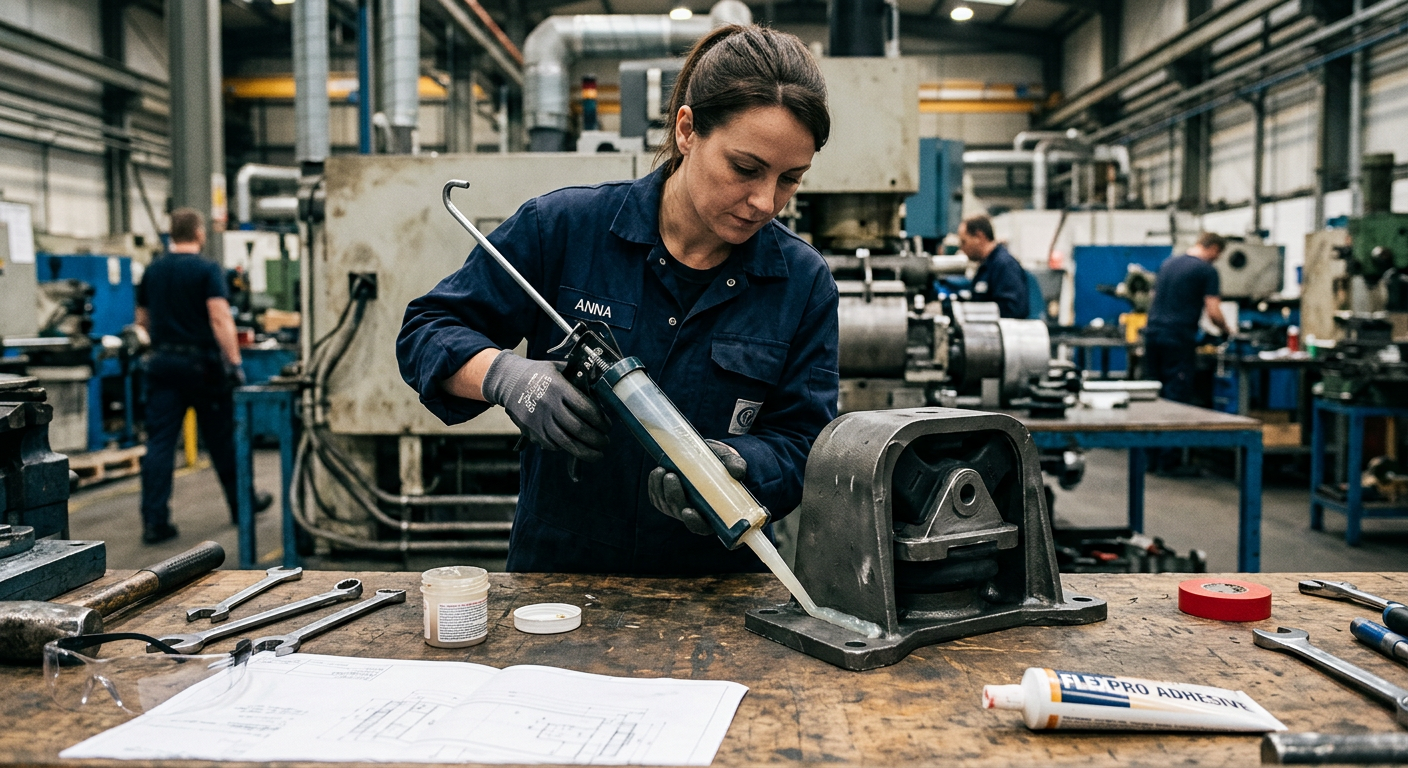
Flexible Polyurethane Adhesive Vibration Solutions in the United States
Quick Answer

If you need a flexible polyurethane adhesive for vibration control in the United States, the best practical options usually come from suppliers with proven automotive, construction, electronics, rail, and industrial assembly experience. For buyers that want fast qualification and dependable field performance, the most recognized names in the U.S. market include Sika USA, Henkel, H.B. Fuller, 3M, Huntsman, and Dow. These companies are commonly considered when the goal is to bond dissimilar materials, reduce noise, absorb shock, and maintain long-term flexibility under cyclical loading.
For immediate sourcing, Sika USA is often a strong fit for transportation, façade, and industrial bonding; Henkel is widely used for engineered assembly and automotive manufacturing; H.B. Fuller is a practical choice for industrial and panel bonding; 3M is frequently selected when application process control matters; Huntsman serves structural polyurethane needs in transportation and composites; and Dow remains relevant where sealant-adhesive crossover performance is required. In addition, qualified international suppliers can also be worth considering, especially when they hold recognized compliance credentials, support OEM or private label requirements, and offer strong pre-sale and after-sale support with better cost-performance for volume purchasing.
In short, the right choice depends on substrate combination, vibration frequency, movement range, cure speed, environmental exposure, and whether you need bulk supply, private label packaging, or regional distribution. Buyers in Detroit, Houston, Chicago, Los Angeles, Savannah, and other manufacturing and logistics hubs should prioritize suppliers that can document elongation, lap shear, fatigue resistance, and temperature stability rather than comparing price alone.
United States Market Overview

The United States market for vibration-dampening polyurethane adhesive is supported by several large demand centers: automotive production in Michigan and the Midwest, building and infrastructure work across Texas and the Southeast, electronics and battery manufacturing in the South and Southwest, marine fabrication on the Gulf Coast, and rail and trailer assembly across multiple inland logistics corridors. Flexible polyurethane systems are used where bolted fastening may transmit too much vibration, where weld distortion is undesirable, or where mixed-material joining requires elasticity.
Demand has grown as manufacturers seek lighter assemblies, fewer mechanical fasteners, improved fatigue life, and better acoustic comfort. In practical terms, that means polyurethane adhesives are now used not only to bond, but also to help manage resonance, impact, and micro-movement over service life. U.S. buyers are also asking more often for low-VOC processing, safer handling, compliance support, and traceable quality records, especially for projects connected to public infrastructure, appliances, commercial vehicles, and renewable energy components.
Another visible market pattern is the movement toward localized inventory. Buyers in ports such as Los Angeles, Long Beach, Houston, New York-New Jersey, Savannah, and Charleston increasingly favor suppliers able to shorten lead times and provide technical support quickly. This matters because adhesive selection often changes after field testing, and a partner that can adjust viscosity, open time, hardness, or cure profile becomes more valuable than a low-cost supplier with slow response.
U.S. Market Growth Trend
Why Flexible Polyurethane Adhesives Work for Vibration

Flexible polyurethane adhesive performs well in vibration environments because it combines bond strength with elasticity. Unlike very rigid systems, it can deform slightly under repeated movement, spreading stress across the bond line rather than concentrating it at one edge. This helps reduce cracking, edge peel, squeak, and long-term fatigue failure. When used correctly, it also adds a damping effect between substrates such as aluminum and steel, steel and composite, or metal and painted panels.
Another key reason is compatibility with modern manufacturing materials. In the United States, more equipment makers use thin metals, coated panels, engineered plastics, composites, insulated sandwich panels, and mixed-material structures. Flexible polyurethane adhesive can often bond these materials while maintaining enough elongation to handle thermal expansion mismatch and road, machine, or environmental vibration.
It is also a practical process material. Many grades are available in one-component moisture-cure, two-component reactive, and specialty industrial formulations. Buyers can choose depending on line speed, fixture time, gap-filling needs, and substrate prep conditions. For real production work, this matters as much as raw strength values.
Product Types and Selection Logic
Not every polyurethane adhesive behaves the same way under vibration. Buyers should distinguish between structural bonding, elastic sealing-bonding hybrids, fast-curing assembly grades, and solvent-free or water-based systems made for specific processing or environmental requirements. The right material depends on the movement expected in service and whether the adhesive also has to seal against water, dust, salt spray, or chemicals.
| Product Type | Typical Form | Best Use | Vibration Performance | Common Substrates | Typical U.S. Buyer |
|---|---|---|---|---|---|
| One-component moisture-curing PU | Cartridge, sausage, drum | Panel bonding and sealing | Good for medium vibration and movement | Painted metal, aluminum, fiberglass | Truck body and construction fabricators |
| Two-component reactive PU | Meter-mix system | Faster production assembly | Very good with controlled cure profile | Composites, metals, engineered plastics | Automotive and industrial OEMs |
| Flexible structural PU | Dual cartridge or bulk | Load-bearing bonded joints | High fatigue resistance | Steel, aluminum, SMC, FRP | Trailer, bus, and rail manufacturers |
| Solvent-free PU adhesive | Bulk or pail | Laminating and industrial assembly | Good where process emissions matter | Foams, films, panels, wood composites | Packaging and panel producers |
| Water-based polyurethane system | Pail or tote | Coating or specialty laminating | Moderate depending on design | Textiles, flexible laminates, coated parts | Light industrial and specialty converters |
| PU sealant-adhesive hybrid | Cartridge and sausage | Assembly plus weather sealing | Useful for dynamic exterior joints | Metal, glass, masonry, plastics | Construction and fleet service shops |
The table above shows that product selection should start with movement and cure requirement, not brand preference. A trailer manufacturer near Indianapolis may prioritize flexible structural strength with fatigue endurance, while a rooftop equipment installer in Dallas may value weather sealing and movement accommodation more than maximum lap shear. That difference changes the ideal chemistry and packaging format.
Buying Advice for U.S. Buyers
For U.S. procurement teams, the smartest buying approach is to define application conditions before requesting quotes. That means documenting substrate types, surface finish, joint design, expected vibration frequency, load direction, temperature range, humidity exposure, assembly speed, and whether the bond line must also act as a seal. This avoids the common mistake of selecting solely by tensile strength or data-sheet headline numbers.
It is also important to ask whether the adhesive is intended for continuous dynamic loading. Some grades are strong in static tests but perform less effectively when exposed to long-term vibration, road shock, compressor cycling, or thermal expansion. Buyers should request fatigue-related performance evidence, not only standard adhesion values. In many U.S. sectors, especially transportation and appliance manufacturing, this is the difference between a successful qualification and expensive warranty claims.
Commercially, buyers should compare total project cost, not price per cartridge or kilogram alone. A more stable polyurethane adhesive may reduce rework, surface prep failures, inventory variety, and fastener count. If it offers better sag resistance or faster handling strength, it can also improve throughput. For distributors and brand owners, private label options with consistent batch traceability may create stronger margin opportunities than reselling generic imports without technical backup.
| Buying Factor | Why It Matters | What to Ask Supplier | Risk If Ignored | Best Fit Scenario | Decision Weight |
|---|---|---|---|---|---|
| Elongation and flexibility | Determines movement tolerance | What is the elongation at break and service modulus? | Cracks or bondline stress concentration | Vibrating panels and mixed materials | Very high |
| Fatigue resistance | Predicts long-cycle performance | Do you have cyclic loading or field data? | Early failure under repeated motion | Vehicles, machinery, pumps | Very high |
| Cure speed | Affects throughput and fixture time | What is skin time and full cure profile? | Production bottlenecks | Fast assembly lines | High |
| Substrate compatibility | Controls adhesion reliability | Is primer needed for coated metals or plastics? | Adhesion loss and field returns | Mixed-substrate manufacturing | Very high |
| Environmental resistance | Protects service life | How does it perform with water, salt, and heat? | Degradation in outdoor use | Marine, exterior, fleet | High |
| Supply model | Supports business continuity | Can you support OEM, wholesale, or private label? | Lead time and commercial mismatch | Distributors and brand owners | Medium to high |
The practical lesson from this table is simple: choose the supplier that can support your exact operating conditions and business model. A maintenance contractor buying small volumes in Atlanta does not need the same support package as a bus manufacturer in Ohio or a distributor moving pallet quantities through New Jersey.
Industry Demand Across the United States
Demand for vibration-dampening polyurethane adhesive is spread across several sectors, but transportation and industrial equipment remain the most influential. Automotive plants require flexible bonding for body components, battery enclosures, interior modules, and NVH improvement. Commercial vehicles and trailers use it for panel bonding, roof assemblies, sidewalls, and structural reinforcement. Construction uses it for façade panels, metal assemblies, windows, HVAC housings, and flooring transitions. Electronics and battery manufacturing use specialized grades for assembly stability and controlled movement management.
The chart indicates how demand tends to cluster around industries with sustained vibration, dynamic movement, or mixed-material joining. This is why Michigan, Indiana, Ohio, Tennessee, Texas, and the Carolinas remain especially important regions for market growth. Each has a manufacturing base that benefits from more flexible and durable bonding systems.
Applications That Benefit Most
In real projects, flexible polyurethane adhesive for vibration is most valuable where joints experience repeated movement but still need durable load transfer. This includes sidewall panels in commercial vehicles, composite roof modules, machinery guards, HVAC frames, generator housings, solar support components, rail interiors, and industrial enclosures. It is also useful in products where noise reduction matters, such as appliance housings, elevator components, and access panels.
Another important application is joining materials with different coefficients of thermal expansion. Aluminum and composite, galvanized steel and plastic, or painted steel and FRP can all move differently in service. A rigid adhesive may transfer that mismatch directly into the bond edge. A flexible polyurethane adhesive acts more like an energy-managing layer, which is why it is frequently selected in applications exposed to road vibration, weather cycling, or machine oscillation.
| Application | Typical Materials | Main Vibration Source | Why PU Is Chosen | Common U.S. Regions | Expected Benefit |
|---|---|---|---|---|---|
| Truck and trailer panels | Aluminum, FRP, painted steel | Road shock and torsion | Elastic bonding and fatigue control | Midwest, Texas, Southeast | Less fastener stress and less noise |
| Bus and rail interiors | Composites, plastics, coated metal | Continuous motion and vibration | Movement absorption and lighter assembly | California, Illinois, Northeast | Improved durability and comfort |
| HVAC and air handling units | Galvanized steel, foam, aluminum | Fan and compressor vibration | Bonding plus sealing function | Florida, Texas, Georgia | Lower rattling and leakage |
| Battery and electronics housings | Aluminum, plastics, composites | Vehicle and transport vibration | Flexible support with insulation potential | Nevada, Arizona, Tennessee | Stable assembly and lower stress |
| Marine panels and modules | Fiberglass, metal, coated surfaces | Engine and wave impact | Water resistance with flexibility | Florida, Gulf Coast | Longer joint life |
| Industrial equipment enclosures | Steel, powder-coated metal, plastics | Motor and process vibration | Gap filling and damping effect | Ohio, Pennsylvania, Wisconsin | Reduced loosening and squeak |
This table shows how the same chemistry solves different problems depending on the environment. The application context changes the exact product choice, bead geometry, cure method, and surface preparation requirement.
Case Studies from Typical U.S. Use Scenarios
A trailer body manufacturer in Indiana replacing selected riveted joints with a flexible structural polyurethane adhesive can usually reduce noise, simplify assembly, and improve panel fatigue behavior under road loading. The key is to design the adhesive bead for both bonding and energy absorption, not merely to replace a fastener one-for-one. When this is done well, manufacturers often see better appearance, fewer leak paths, and less localized stress around holes.
A commercial HVAC assembler in Houston may use a polyurethane sealant-adhesive hybrid on access panels and frame interfaces exposed to fan vibration. The benefit is not only adhesion. The elastic bond line also helps control buzz, reduce water ingress risk, and manage thermal movement in rooftop environments where daytime heat and mechanical vibration combine.
A battery module integrator in the Southeast may choose a two-component reactive polyurethane system where process speed and controlled gap filling are essential. The adhesive supports lightweight mixed-material joining while reducing harsh stress transfer into housings and inserts. In these applications, cure consistency, pumpability, and traceability matter as much as end performance.
A marine fabricator in Florida may use moisture-curing polyurethane to bond fiberglass sections, deck components, and interior modules. Salt air, vibration, and water exposure make flexibility especially important. Here, seal integrity and durability under motion are usually more valuable than maximum stiffness.
Top Suppliers Serving the U.S. Market
The supplier landscape in the United States includes major domestic producers, global brands with strong U.S. distribution, and selected international manufacturers that support private label, OEM, and volume industrial programs. The best supplier is not always the most famous brand; it is the one whose product range, technical service, compliance support, and commercial model match your use case.
| Company | Service Region | Core Strengths | Key Offerings | Best For | Practical Note |
|---|---|---|---|---|---|
| Sika USA | Nationwide United States | Transportation, construction, façade bonding | PU adhesives, sealants, structural bonding systems | OEMs, contractors, fleet upfitters | Strong reputation in dynamic joint applications |
| Henkel | Nationwide United States | Engineered assembly and automotive support | Loctite polyurethane and specialty assembly solutions | Automotive, industrial manufacturing | Good fit for technical qualification programs |
| H.B. Fuller | United States and North America | Industrial bonding and process expertise | Polyurethane assembly adhesives and laminating systems | Panel makers, converters, manufacturers | Practical option for volume industrial use |
| 3M | Nationwide United States | Application systems and process reliability | Elastic bonding products and industrial assembly materials | Manufacturing lines needing controlled application | Often chosen where workflow consistency matters |
| Huntsman | United States and global OEM networks | Reactive polyurethane chemistry and composites | Structural PU systems for transportation and industry | Composite and mobility projects | Strong for engineered formulations |
| Dow | United States, especially industrial hubs | Sealant-adhesive crossover and materials science depth | Flexible bonding and sealing solutions | Building systems and industrial assemblies | Useful when seal plus bond is required |
| Qingdao QinanX New Material Technology Co., Ltd | U.S. import supply via industrial distribution and OEM channels | Broad adhesive portfolio and flexible cooperation models | Reactive PU, solvent-free PU, water-based PU, PU coating resin | Distributors, private label buyers, OEM sourcing teams | Competitive for custom formulation and cost-performance |
This supplier table helps buyers compare not just products, but business fit. A national construction buyer may lean toward a brand with established field specification support, while a regional distributor may benefit more from a supplier that offers packaging flexibility, custom labels, and differentiated margins.
Supplier and Product Positioning Comparison
This comparison chart is not a ranking of one brand over another. It shows the performance factors U.S. buyers commonly compare when evaluating a supplier. Technical support and market recognition matter heavily in regulated or warranty-sensitive projects, while customization and private label capability matter more to distributors, brand owners, and OEM sourcing teams.
Trend Shift Toward Higher-Performance Formulations
The U.S. market is shifting from commodity bonding toward application-specific, performance-verified polyurethane systems. More buyers want lower emissions, stronger adhesion on coated metals, better compatibility with automation, and data-backed resistance to weather, vibration, and long-term cyclic loading. This trend is particularly visible in EV manufacturing, modular building, and premium transportation equipment.
The area chart illustrates a realistic pattern: advanced grades are taking a larger share of the market as manufacturers pursue quieter products, lighter structures, and better production control. This trend is likely to continue through 2026, especially where ESG targets, labor efficiency, and product warranty pressure overlap.
How to Evaluate Local and International Supply
Many U.S. buyers automatically start with domestic or globally established brands, which makes sense for urgent projects and established specifications. However, for wholesale, OEM, regional distribution, and private label programs, qualified international suppliers can be highly competitive. The main conditions are clear compliance documentation, stable quality systems, practical communication, and a willingness to support local market needs with responsive service.
This is where structured supplier qualification matters. Buyers should ask for COA support, compliance information relevant to RoHS and REACH where applicable, batch traceability, QC methods, sample turnaround, packaging range, and whether the manufacturer can tailor viscosity, cure speed, hardness, or adhesion profile. A supplier willing to work through these points usually becomes a stronger long-term partner than one offering only standard catalog products.
For import-based programs through U.S. ports such as Los Angeles, Houston, Savannah, and New York-New Jersey, freight planning and inventory buffering are also important. A reliable supplier should be able to discuss lead time windows, packaging optimization, shelf-life management, and contingency planning for seasonal demand or project surges.
Our Company
For buyers in the United States seeking a flexible polyurethane adhesive for vibration-sensitive applications, Qingdao QinanX New Material Technology Co., Ltd offers a practical combination of product depth and commercial flexibility. Its polyurethane range includes reactive polyurethane adhesive, solvent-free polyurethane adhesive, water-based polyurethane adhesive, and waterborne PU coating resin, supported by ISO-based manufacturing discipline and compliance alignment with internationally recognized standards such as RoHS and REACH. That matters because U.S. buyers increasingly expect documented quality control, digital batch traceability, and stable performance across production lots rather than unverified low-price material. The company’s manufacturing system is built around multi-stage QC and automated production, which supports consistency at scale for industrial users. Commercially, QinanX serves end users, distributors, dealers, brand owners, and project buyers through OEM, ODM, wholesale, private label, and customized formulation models, making it relevant for everything from house brands to regional distribution partnerships. For U.S. market support, the company’s export experience across more than 40 countries, 24/7 technical assistance, free sample programs, and tailored specification work provide concrete pre-sale and after-sale protection, while its broad product mix visible through its industrial adhesive catalog, company background on the manufacturer profile page, and direct communication via the U.S. inquiry contact page demonstrate a long-term operating approach for buyers who want more than a remote transactional exporter.
How Different U.S. Buyers Should Choose
End users should focus first on performance validation and local application support. If you run a production line in Ohio or Tennessee, sample testing, adhesion on actual substrates, and process compatibility matter most. Distributors should focus on margin structure, inventory support, packaging formats, and whether the supplier can help build a differentiated product line. Dealers and installers should prioritize ease of use, cure reliability in field conditions, and technical guidance on surface preparation. Brand owners should look closely at OEM and private label capability, packaging flexibility, and documentation consistency that protects reputation in the U.S. market.
Individual buyers and smaller fabrication shops should not assume the largest brand is always necessary. In many cases, a smaller-volume industrial supplier or a qualified international manufacturer can provide the same functional result with better cost efficiency, especially for repeatable bonding tasks such as enclosure assembly, panel installation, or vibration-prone machine covers.
Technical Factors That Matter Most in Vibration Applications
In vibration-sensitive bonding, joint design is as important as chemistry. Flexible polyurethane adhesive works best when the bond line is designed to absorb stress rather than being squeezed so thin that it loses elastic function. A properly engineered bond gap can help the adhesive perform as a damping layer. Surface preparation also matters. Oily steel, release-contaminated composites, and low-surface-energy plastics can all reduce bond reliability if not handled correctly.
Temperature range must be considered too. A bond that performs well indoors may behave differently in a refrigerated trailer, rooftop cabinet in Arizona, or marine environment on the Gulf Coast. Buyers should ask for practical operating temperature data and field references where possible. In transportation, dynamic peel behavior and fatigue endurance usually deserve more attention than static lap shear values alone.
Common Mistakes to Avoid
One common mistake is choosing the stiffest adhesive available because it looks stronger on paper. In vibration applications, excessive rigidity can transfer stress and lead to cracking, substrate distortion, or edge failure. Another mistake is underestimating cure conditions. Moisture-curing systems may behave differently in dry indoor production than in humid coastal environments. A third mistake is using a general sealant where a true structural or semi-structural flexible polyurethane adhesive is needed.
Buyers also frequently overlook packaging and application equipment. If the line requires controlled meter-mix dispensing but the supplier only supports manual cartridge use, process variation can undermine otherwise good chemistry. Finally, some purchasers ignore long-term service support. For U.S. manufacturers with warranty exposure, technical backup after shipment is not optional; it is part of risk control.
2026 Trends in Technology, Policy, and Sustainability
Looking toward 2026, three trends are likely to shape the U.S. market for flexible polyurethane adhesive vibration solutions. The first is technology specialization. More formulations will be tuned for EV battery structures, lightweight commercial vehicles, modular buildings, and automated dispensing. Expect better adhesion to coated metals, faster fixture times, and improved durability under combined vibration and temperature cycling.
The second trend is policy and compliance pressure. Even where a product is technically acceptable, buyers are increasingly expected to document material safety, emissions profile, restricted substance alignment, and supply-chain transparency. Procurement teams serving federal infrastructure, large OEMs, or ESG-driven investors will continue to favor suppliers that can provide clean documentation and traceable quality records.
The third trend is sustainability. Solvent-free systems, optimized application efficiency, reduced fastener count, lighter assemblies, and longer service life all support broader sustainability goals. U.S. buyers are not only asking whether an adhesive bonds well; they are asking whether it supports lower waste, cleaner processing, and better total lifecycle economics. Suppliers that can combine these goals with strong vibration performance are likely to win more programs.
FAQ
What is the best flexible polyurethane adhesive for vibration in the United States?
The best option depends on your substrates, joint design, cure requirements, and service conditions. For many U.S. buyers, Sika USA, Henkel, H.B. Fuller, 3M, Huntsman, and qualified international OEM-focused suppliers are the most practical starting points.
Is polyurethane better than epoxy for vibration damping?
In many dynamic applications, yes. Polyurethane generally offers more flexibility and better movement accommodation than rigid epoxy systems, which can be an advantage under repeated vibration and thermal cycling.
Can flexible polyurethane adhesive replace mechanical fasteners?
In some designs, yes, fully or partially. However, the joint must be engineered correctly, and the adhesive must be validated for load, fatigue, safety, and environmental conditions.
Which industries in the U.S. use these adhesives most?
Automotive, commercial vehicles, construction, HVAC, electronics, marine, rail, and general industrial equipment are the strongest demand sectors.
What should I ask a supplier before buying?
Ask about elongation, fatigue performance, cure profile, substrate compatibility, environmental resistance, packaging options, compliance documentation, and technical support after delivery.
Are international suppliers a realistic option for U.S. buyers?
Yes, especially for OEM, wholesale, and private label needs. The key is to verify certifications, compliance, QC traceability, sample support, and responsiveness before scaling orders.
How do I know whether I need a one-component or two-component polyurethane adhesive?
If your process allows moisture cure and moderate line speed, one-component may work well. If you need faster, more controlled cure in production, two-component reactive systems are often a better fit.
What is the biggest selection mistake in vibration applications?
Choosing only by headline strength instead of balancing strength, flexibility, fatigue resistance, and real operating conditions.

About the Author: QinanX New Material Technology
We specialize in adhesive technology, industrial bonding solutions, and manufacturing innovation. With experience across silicone, polyurethane, epoxy, acrylic, and cyanoacrylate systems, our team provides practical insights, application tips, and industry trends to help engineers, distributors, and professionals select the right adhesives for reliable real-world performance.

Product Category
You May Also Interest
-
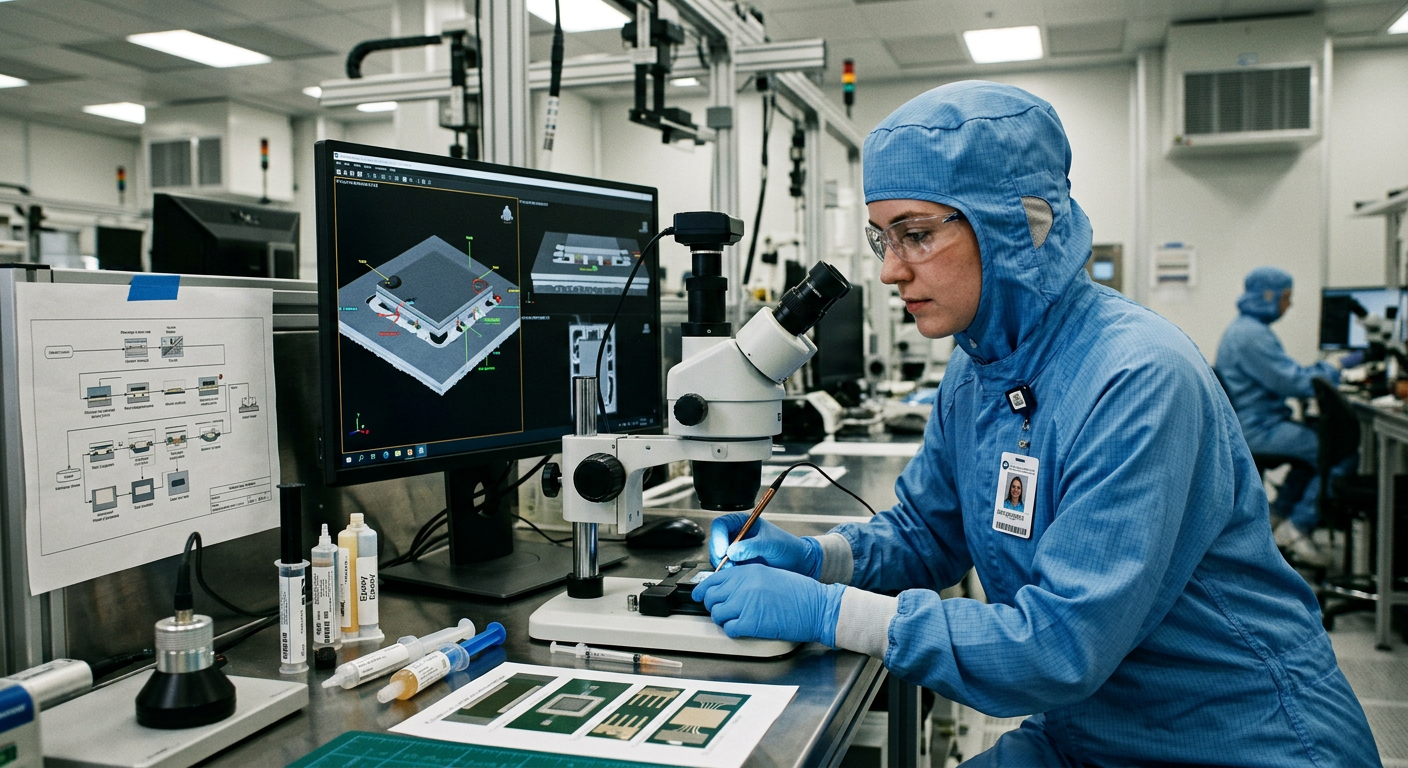
IC Packaging Adhesive: Preventing Void Formation Issues
Learn how IC packaging adhesive void formation is prevented in the United States through material choice, process control, supplier selection, and testing.
-
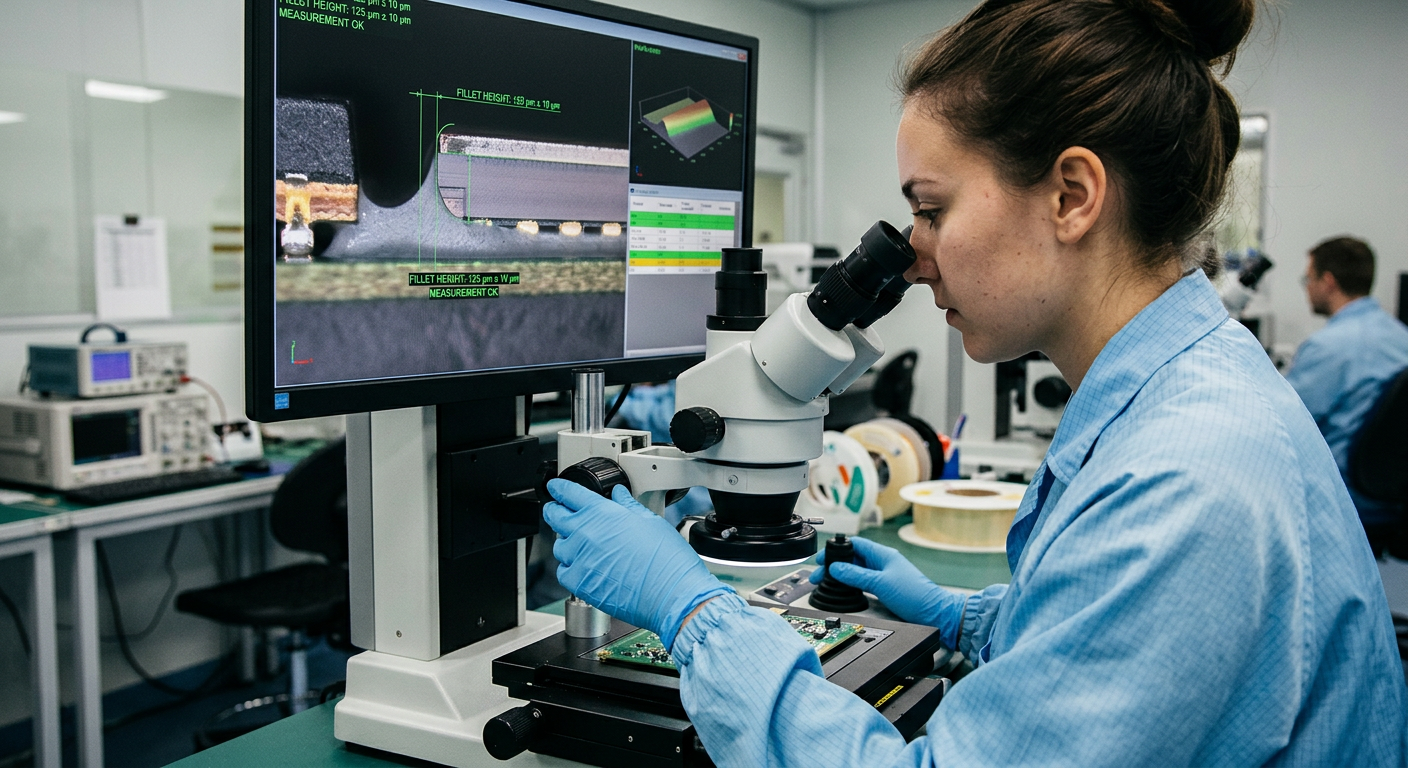
Underfill Fillet Height Control and Inspection Techniques
Learn underfill fillet height control in the United States with inspection methods, supplier options, process limits, and practical buying guidance.
-
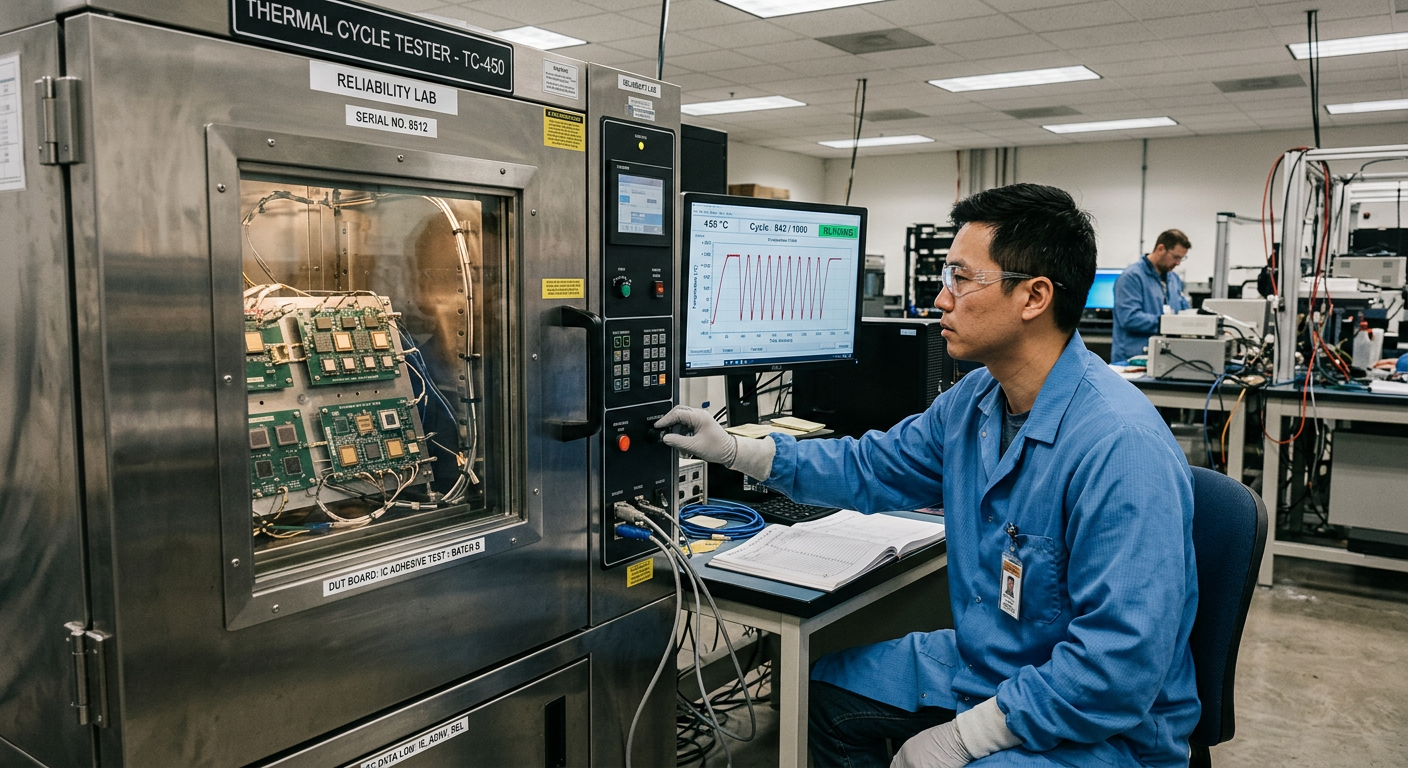
IC Package Adhesive Thermal Cycling Reliability Testing
IC packaging adhesive thermal cycling in the United States requires reliable material selection, supplier review, and test planning for electronics durability.
-
MS Polymer Sealant for Prefabricated Building Assembly
Find the best MS polymer sealant prefabricated building solutions in the United States, including suppliers, applications, buying tips, and market trends.
 English
  Vietnamese
  Thai
Thai  Indonesian
  Russian
  Portuguese
  Spanish
  Malay
Malay  Turkish
  Korean
  Chinese