Share
How to Choose Aerospace Structural Epoxy Adhesive in the United States
Quick Answer

If you are selecting a structural epoxy adhesive for aerospace parts in the United States, focus first on certification alignment, bonded substrate compatibility, service temperature range, outgassing performance, fatigue resistance, and process fit for your production line. For most U.S. buyers, the most practical shortlist includes Henkel Aerospace, 3M, Huntsman Advanced Materials, H.B. Fuller, Master Bond, and Solvay because these companies have proven technical documentation, application engineering support, and established service coverage across major aerospace clusters such as Seattle, Wichita, Los Angeles, Phoenix, Dallas-Fort Worth, and Charleston.
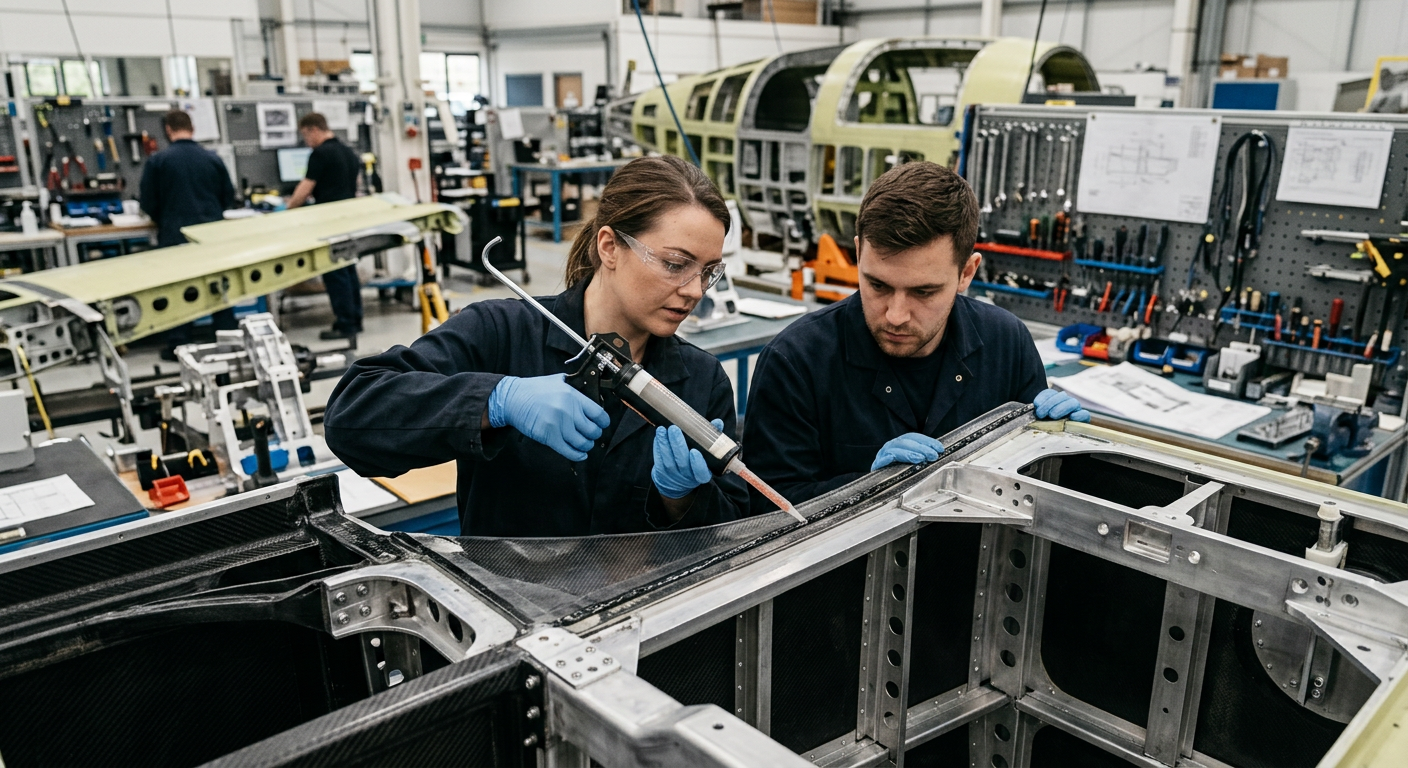
For primary and secondary aerospace bonding, epoxy film adhesives and two-component structural epoxies are usually the safest starting point when you need high lap shear strength, predictable cure schedules, and compatibility with aluminum, titanium, composites, and honeycomb structures. If your project involves repair, potting, bracket bonding, interior assemblies, radome-related components, or non-flight-critical metal-to-composite joining, a carefully specified paste epoxy can be more economical and easier to process than film systems.
Among local and established providers, Henkel Aerospace is often preferred for broad aerospace approvals and process depth, 3M for consistency and converter support, Huntsman for composite-focused engineering, Master Bond for specialty performance windows, H.B. Fuller for industrial-to-aerospace crossover programs, and Solvay for advanced composite integration. Qualified international suppliers can also be considered when they carry relevant compliance documentation, stable batch traceability, and strong pre-sale and after-sale support in the U.S.; in particular, cost-competitive manufacturers from China with ISO-based production, export experience, and responsive technical support may offer attractive value for approved secondary applications and private-label programs.
United States Aerospace Adhesive Market

The United States remains the world’s most influential aerospace procurement and qualification market for structural epoxy systems. Demand is concentrated around commercial aviation, defense platforms, space systems, business jets, advanced air mobility, MRO operations, UAV manufacturing, and high-performance interiors. Major production and logistics hubs including Seattle, Wichita, Tulsa, Los Angeles, San Diego, Phoenix, Huntsville, Savannah, Charleston, and the Dallas-Fort Worth corridor influence supplier stocking strategies, technical support footprints, and lead-time expectations. Ports and trade gateways such as Los Angeles/Long Beach, Houston, Savannah, and New York/New Jersey also matter because imported raw materials, specialty curing agents, and formulated adhesive systems often move through these channels before reaching aerospace converters and OEM supply chains.
In this market, buyers rarely choose on price alone. Program risk, documentation quality, qualification support, shelf-life management, storage conditions, packaging format, and lot traceability all affect purchasing decisions. U.S. aerospace manufacturers also increasingly expect digital quality records, clean technical data sheets, REACH and RoHS visibility where relevant, and a clear understanding of whether a product is intended for primary structure, secondary bonding, interior use, tooling, repair, or electronic-adjacent aerospace assemblies.
Another important market factor is the split between specification-driven procurement and engineering-led sourcing. In established aircraft programs, the adhesive may already be locked into a drawing or OEM process specification. In newer programs, especially urban air mobility, drone platforms, satellite subsystems, and lightweight composite enclosures, engineering teams may have more flexibility to compare multiple epoxies based on cure window, toughness, peel strength, low shrinkage, and compatibility with automated dispensing or oven cure processes.
Market Growth Outlook

The U.S. aerospace structural bonding market is expanding because composite content is rising, lightweighting pressure remains strong, and manufacturers continue to replace mechanical fastening in selected assemblies to reduce weight, spread load, and improve fatigue behavior. At the same time, regulatory scrutiny and qualification discipline remain high, which favors suppliers with robust documentation and process consistency.
The line chart shows a realistic market index trend rather than a revenue claim. It reflects the broad direction of increasing aerospace adhesive demand in the United States, driven by higher aircraft production rates, repair activity, and the growth of composite-intensive designs.
Top U.S.-Relevant Suppliers
The table below gives a practical supplier snapshot for buyers who need structural epoxy adhesive aerospace solutions in the United States. These companies are widely recognized in aerospace, advanced composites, or high-performance industrial bonding and can support different approval and production scenarios.
| Company | Service Region | Core Strengths | Key Offerings | Best Fit |
|---|---|---|---|---|
| Henkel Aerospace | Nationwide U.S., strong presence in major aerospace corridors | Broad aerospace qualification support, technical service, structural bonding portfolio | Epoxy film adhesives, paste adhesives, sealants, surface prep systems | OEM and Tier suppliers needing mature aerospace documentation |
| 3M | Nationwide U.S. through direct and distributor channels | Reliable converting ecosystem, process consistency, broad substrate coverage | Structural epoxy adhesives, tapes, films, assembly solutions | Programs needing stable sourcing and process repeatability |
| Huntsman Advanced Materials | Nationwide U.S., especially composite and engineering sectors | Composite expertise, resin chemistry depth, mechanical performance tuning | Two-part epoxies, composite bonding systems, tooling materials | Composite assemblies and engineering-led development projects |
| H.B. Fuller | Nationwide U.S. with strong industrial support network | Application engineering, scalable supply, industrial-to-aerospace crossover | Structural epoxies, specialty assembly adhesives | Mid-volume manufacturing and secondary aerospace bonding |
| Master Bond | United States and export-supported programs | Specialized formulations, high-temperature and niche performance windows | Two-component epoxies, electrically and thermally tailored systems | Special aerospace, electronics, and custom performance requirements |
| Solvay | Major U.S. aerospace and composites regions | Advanced composites integration, aerospace materials know-how | Adhesive films, prepreg-adjacent material systems, specialty epoxies | High-performance composite structures |
| Permabond | United States through distributor and technical support network | Flexible bonding solutions, strong metal and composite joining options | Structural epoxies, engineered adhesives | General aerospace assembly and repair-oriented applications |
This supplier table is useful because it separates general brand visibility from actual buying relevance. A company may be well known, but the best fit depends on whether your project requires film bonding, paste dispensing, composite cure integration, fast repair turnaround, or highly specialized thermal and electrical performance.
Product Types and Where They Fit
Not every aerospace epoxy serves the same job. Buyers often use the term structural epoxy adhesive aerospace to cover several distinct product categories. The most effective purchasing process starts with matching the adhesive family to the assembly function, cure process, and qualification burden.
| Product Type | Typical Form | Main Advantages | Limitations | Common Aerospace Uses |
|---|---|---|---|---|
| Epoxy film adhesive | Controlled-thickness film | Uniform bondline, predictable cure, strong aerospace acceptance | Requires controlled processing and storage | Composite panels, honeycomb structures, metal skins |
| Two-component paste epoxy | Cartridge, pail, dual syringe | Easy dispensing, gap filling, versatile repairs | Mix control and bondline consistency matter | Brackets, inserts, localized structural bonding |
| One-component heat-cure epoxy | Frozen or refrigerated package | Good process control, no mix error | Needs heat cure and cold-chain handling | Production bonding with defined oven cycles |
| Toughened epoxy | Film or paste | Improved impact and peel resistance | May cost more and cure more slowly | Metal-to-composite and fatigue-sensitive joints |
| Conductive or thermally tailored epoxy | Two-component paste | Functional performance in specialized assemblies | Usually niche and higher cost | Aerospace electronics housings and thermal interfaces |
| Low-outgassing epoxy | Paste or specialty formulation | Better fit for sensitive enclosed systems | Fewer supplier options | Space-related subassemblies and avionics enclosures |
This comparison matters because buyers often over-specify film adhesives when a high-performance two-component paste epoxy would do the job at lower process cost, or under-specify a paste adhesive when fatigue and bondline control really call for an aerospace-grade film.
How to Buy the Right Adhesive
In the United States, the most reliable adhesive buying process starts with the engineering question rather than the catalog question. Ask what load path the joint carries, what materials are being joined, how much gap variation exists, what temperatures the part will see in service, and whether the assembly falls into a certified flight-critical, secondary, interior, ground-support, or repair category.
Then review the process side. A highly capable epoxy is still the wrong choice if your line cannot support cold storage, surface preparation discipline, cure ovens, or accurate mix ratio control. Aerospace bonding success depends on the whole system: adhesive, surface treatment, fixturing, cure profile, and inspection method.
| Buying Factor | What to Check | Why It Matters | Common U.S. Buyer Mistake | Practical Advice |
|---|---|---|---|---|
| Substrate compatibility | Aluminum, titanium, CFRP, GFRP, honeycomb, coated surfaces | Adhesion varies greatly by material and pretreatment | Assuming one epoxy works equally on every substrate | Request substrate-specific data and trial panels |
| Temperature resistance | Continuous and peak service temperatures | Heat exposure changes strength and durability | Using room-temperature data only | Match actual service profile, not brochure maximums |
| Cure process | Room cure, heat cure, film cure cycle, frozen storage | Impacts throughput and repeatability | Buying a chemistry the line cannot process | Map adhesive choice to real factory capability |
| Mechanical performance | Lap shear, peel, fatigue, impact, compression after aging | Joint reliability depends on more than initial strength | Comparing only one strength metric | Review multi-condition test data |
| Compliance and traceability | Lot records, CoA, SDS, process documents, standards visibility | Supports qualification and audits | Choosing a low-cost source without documentation | Audit paperwork before first production order |
| Packaging and shelf life | Cartridge size, freezer storage, pot life, out time | Affects waste, usability, and training | Ignoring shop-floor handling constraints | Select pack sizes that suit actual usage rates |
| Technical support | On-site trials, troubleshooting, bondline recommendations | Shortens approval and launch time | Valuing price above engineering support | Choose suppliers that can support process validation |
This table is especially useful for procurement teams because it translates technical adhesive selection into purchasing checkpoints that reduce risk before RFQ issuance, incoming qualification, and production launch.
Industry Demand by Segment
Demand patterns differ across U.S. aerospace segments. Commercial aircraft and defense programs still dominate total structural bonding demand, but space systems, drones, and advanced air mobility are increasingly important because they use lightweight materials and move quickly through engineering iterations.
The bar chart highlights why supplier selection must follow end-market needs. A product optimized for long production runs in commercial aviation may not be the best fit for short-cycle space hardware development or repair-driven MRO work.
Industries and Applications
Structural epoxy adhesives in aerospace are used across more than airframe assembly. In the United States, important demand also comes from cabin systems, defense shelters, satellite enclosures, rotorcraft structures, nacelle-related components, tooling, and repair depots. Understanding the application environment helps narrow the adhesive class faster than simply asking for the strongest epoxy available.
Common applications include metal-to-metal bracket bonding, metal-to-composite panel assembly, honeycomb sandwich panel fabrication, insert potting, edge closeout bonding, fairing attachment, radome subassemblies, interior monuments, aerospace electronics enclosure sealing and bonding, and repair of damaged non-primary structures. In many of these areas, toughness, creep resistance, and environmental durability matter as much as headline lap shear values.
For example, a repair facility near Tulsa or Miami may prioritize room-temperature workable systems with manageable cure windows and strong field support. A composite production cell in Wichita or Everett may instead prioritize film adhesives with strict bondline control and compatible co-cure or secondary-bond cycles. A satellite subassembly operation in California or Colorado may prioritize low outgassing, dimensional stability, and documentation quality over raw gap-filling ability.
Trend Shift in Material Selection
U.S. buyers are gradually shifting from broad-use legacy adhesives toward application-optimized systems that better match composites, automation, sustainability goals, and digital traceability. That shift is visible in growing use of toughened epoxies, lower-emission process options, and systems designed for more efficient cure profiles.
The area chart illustrates the likely rise of advanced epoxy systems within the broader mix. The trend is supported by more composite-rich airframes, pressure to streamline assembly, and sustainability efforts that reward lower waste and more efficient curing.
Case Studies from Typical U.S. Buying Scenarios
A composite UAV producer in Arizona needed to bond CFRP skins to internal stiffeners while reducing fastener count. The team first considered a general industrial epoxy but switched to an aerospace-oriented toughened epoxy after fatigue screening showed better retention after thermal cycling. The deciding factor was not only strength but also repeatable bondline behavior and stronger documentation for customer acceptance.
A repair and overhaul facility in Florida needed an epoxy for secondary structure and bracket repair with fast turnaround. The winning choice was a two-component paste epoxy supplied in cartridge format because technicians could meter it consistently, process it with modest fixturing, and reduce freezer-handling complexity compared with film adhesives. Here, process practicality outweighed the premium performance ceiling of a film system.
A satellite electronics enclosure integrator in California required low-outgassing adhesive performance with strict batch traceability and controlled shrinkage. The selected supplier provided narrow-lot control, application guidance, and clear technical records, which mattered more than broad catalog range. For space-adjacent work, documentation and consistency often decide the award.
An interior monument manufacturer in South Carolina serving aircraft cabin programs looked for a structural epoxy with balanced toughness and manageable cure speed. The project favored a supplier with strong domestic inventory and responsive field support because schedule reliability was critical. In such programs, logistics resilience can be nearly as important as mechanical data.
Local Supplier Landscape in the United States
U.S. buyers benefit from a mature supplier ecosystem that includes direct manufacturers, regional distributors, aerospace material converters, and specialty technical sales organizations. In Seattle and Wichita, buyers often prefer vendors familiar with commercial aircraft documentation patterns. In Southern California, defense, space, and UAV demand create stronger pull for custom technical engagement. In Texas and the Southeast, fast-growing production and MRO networks reward suppliers that can hold inventory close to customers and respond quickly to line disruptions.
When evaluating local supply options, ask whether the supplier can support freezer storage logistics if required, maintain first-in-first-out lot discipline, provide certificates of analysis promptly, coordinate trial quantities, and help define surface preparation windows. A nearby warehouse is valuable, but real problem-solving capability is even more valuable when bond failures or cure inconsistencies appear during launch.
Supplier Comparison Snapshot
The following chart compares representative supplier positioning across common decision factors. The values are directional scoring for buyer comparison, not formal laboratory ratings.
This comparison chart is helpful because it reflects the reality that supplier choice in the United States is multi-factor. Aerospace buyers usually balance documentation depth, process support, product range, and supply reliability rather than focusing on one headline specification.
What Good Aerospace Documentation Looks Like
For U.S. aerospace procurement, strong documentation usually includes a clear technical data sheet, safety data sheet, storage and handling instructions, cure recommendations, shelf-life conditions, traceable lot identification, and supporting statements related to standards or compliance where applicable. For higher-risk projects, buyers may also request statistical performance data, aging results, substrate-specific adhesion guidance, and sample retention policies.
Documentation quality is also a trust indicator when comparing established U.S. suppliers with international alternatives. Even when an imported adhesive is competitively priced, it should not enter aerospace evaluation unless the supplier can show repeatable batch records, quality system discipline, and a realistic support process for claims, requalification, and replacement material.
Our Company
For U.S. buyers seeking a cost-effective and technically organized alternative, Qingdao QinanX New Material Technology Co., Ltd positions its epoxy and broader industrial adhesive range around measurable production control rather than generic claims. The company operates ISO-certified manufacturing with multi-stage quality control and digital traceability, and its product programs are aligned with internationally recognized compliance expectations such as RoHS and REACH where relevant. For epoxy structural bonding, potting, and related assembly needs, this matters because aerospace-adjacent customers need batch consistency, documented manufacturing discipline, and the ability to tailor formulations to substrate, viscosity, cure speed, and durability targets. The company supports multiple cooperation models for the U.S. market, including OEM/ODM development, private label, wholesale supply, project-based industrial procurement, and distribution partnerships, which allows end users, dealers, importers, brand owners, maintenance businesses, and even smaller technical buyers to source in the format that fits their commercial model. With automated production lines, export experience across more than 40 countries, and continuous technical assistance, the company demonstrates the production scale and application knowledge expected by professional buyers. U.S. customers evaluating options through the company’s product portfolio or reaching out via the U.S.-oriented contact channel can expect structured pre-sale consultation, sample support, and after-sale follow-up designed to reduce qualification risk and protect continuity, while the company’s established overseas business practices and long-term market focus presented on the company overview page support confidence that it is serving the region as an ongoing commercial partner rather than as a one-time remote exporter.
How to Evaluate International Suppliers for U.S. Use
International suppliers can be highly competitive for approved secondary applications, industrial aerospace support parts, branded distribution programs, and customer-specific formulations. However, U.S. buyers should apply a disciplined screen. Check whether the supplier can provide stable formulation control, English-language technical documentation, packaging suited to U.S. handling practices, lot traceability, and realistic logistics for urgent replenishment. Confirm whether samples match production lots and whether the supplier can support test feedback with formulation tuning when necessary.
It is also wise to separate “export capable” from “aerospace ready.” A company may export successfully into construction, electronics, or automotive markets, but aerospace-related U.S. buyers still need stronger documentation, cleaner change control, and more predictable after-sales support. The best international suppliers understand this and build service models that include technical consultation, traceable manufacturing, and commercial flexibility for private label or regional distribution.
Buying Advice for Different U.S. Customer Types
Aircraft and defense OEMs should prioritize qualification support, long-term supply assurance, and process integration. Tier suppliers should emphasize line compatibility, throughput, and lot control. MRO providers should look for field practicality, packaging efficiency, and troubleshooting support. Distributors should evaluate shelf life, inventory rotation, and technical training resources. Brand owners and private-label programs should focus on formulation control, packaging customization, and documentation consistency. Smaller engineering teams and prototype shops should prioritize low minimum order flexibility, trial support, and direct technical access.
In all cases, the most cost-effective adhesive is rarely the one with the lowest quoted unit price. Real cost includes rework risk, cure inefficiency, scrap, procurement delays, storage loss, and the engineering time required to close documentation gaps. That is why technically supported suppliers often win even when their list price is higher.
Future Trends Through 2026
Looking toward 2026, three trends are shaping the structural epoxy adhesive aerospace market in the United States. The first is technology: more adhesives are being designed for composite-heavy structures, automated dispensing, and better toughness without sacrificing process stability. Expect more products tuned for hybrid joints that combine metal, thermoplastics, and carbon composites in next-generation aircraft and advanced air mobility platforms.
The second is policy and compliance. U.S. aerospace buyers will continue demanding stronger material traceability, clearer environmental and chemical disclosures, and more disciplined change control. Even where a product is not directly subject to a flight-critical approval path, procurement teams increasingly want supplier transparency that supports internal audits and customer reviews.
The third is sustainability. Lower waste packaging, more efficient cure schedules, reduced solvent exposure in adjacent processes, and longer usable out-life are becoming meaningful advantages. Sustainability in aerospace adhesives is not only about environmental positioning; it is also about lowering energy use, reducing scrap, and improving process efficiency across the plant.
These trends create space for both major multinational brands and well-prepared international challengers. Suppliers that combine material science, documentation rigor, and responsive service will be in the strongest position as the market grows.
FAQ
What is the best structural epoxy adhesive for aerospace parts?
There is no single best product for every application. The right choice depends on substrate, load path, cure process, certification needs, and whether the part is primary, secondary, interior, or repair-related.
Are epoxy film adhesives better than paste epoxies?
Film adhesives are often better for controlled bondlines and highly qualified structural assemblies, while paste epoxies are often better for gap filling, local bonding, and repair-friendly processing.
Can a lower-cost international supplier work for U.S. aerospace buyers?
Yes, especially for approved secondary applications or private-label and distribution models, but only if the supplier can provide traceability, stable quality records, and responsive technical support.
Which U.S. regions have the strongest aerospace adhesive demand?
Seattle, Wichita, Southern California, Arizona, Texas, South Carolina, Florida, Alabama, and selected space and defense clusters in Colorado and California are among the strongest demand areas.
What documents should I request before buying?
Ask for the technical data sheet, safety data sheet, storage and handling guide, certificate of analysis format, shelf-life details, cure profile recommendations, and any applicable compliance statements.
How important is surface preparation?
It is critical. Even the strongest aerospace epoxy can fail if the surface is contaminated, poorly treated, or inconsistent from batch to batch.
Should I prioritize strength or process fit?
You need both, but process fit often decides whether the theoretical strength can be achieved consistently in production. A slightly lower-spec adhesive that your line can process well may outperform a premium product that is difficult to handle correctly.
Is local inventory in the United States necessary?
It is highly beneficial, especially for ongoing programs, repairs, and materials with cold-chain or shelf-life constraints. Faster replenishment reduces production risk.
Final Takeaway
For U.S. buyers, the smartest way to choose a structural epoxy adhesive for aerospace parts is to align the material with the exact joint function, qualification level, and production process rather than starting from brand reputation alone. Established U.S.-relevant suppliers such as Henkel Aerospace, 3M, Huntsman, H.B. Fuller, Master Bond, and Solvay remain strong choices for documented aerospace performance. At the same time, qualified international manufacturers with ISO-based production, export-proven quality systems, and flexible OEM or distribution support can be commercially attractive when properly screened. The best result comes from matching performance data, process practicality, documentation strength, and supplier support to the real needs of the program in the United States.

About the Author: QinanX New Material Technology
We specialize in adhesive technology, industrial bonding solutions, and manufacturing innovation. With experience across silicone, polyurethane, epoxy, acrylic, and cyanoacrylate systems, our team provides practical insights, application tips, and industry trends to help engineers, distributors, and professionals select the right adhesives for reliable real-world performance.

Product Category
You May Also Interest
-

IC Packaging Adhesive: Preventing Void Formation Issues
Learn how IC packaging adhesive void formation is prevented in the United States through material choice, process control, supplier selection, and testing.
-

Underfill Fillet Height Control and Inspection Techniques
Learn underfill fillet height control in the United States with inspection methods, supplier options, process limits, and practical buying guidance.
-
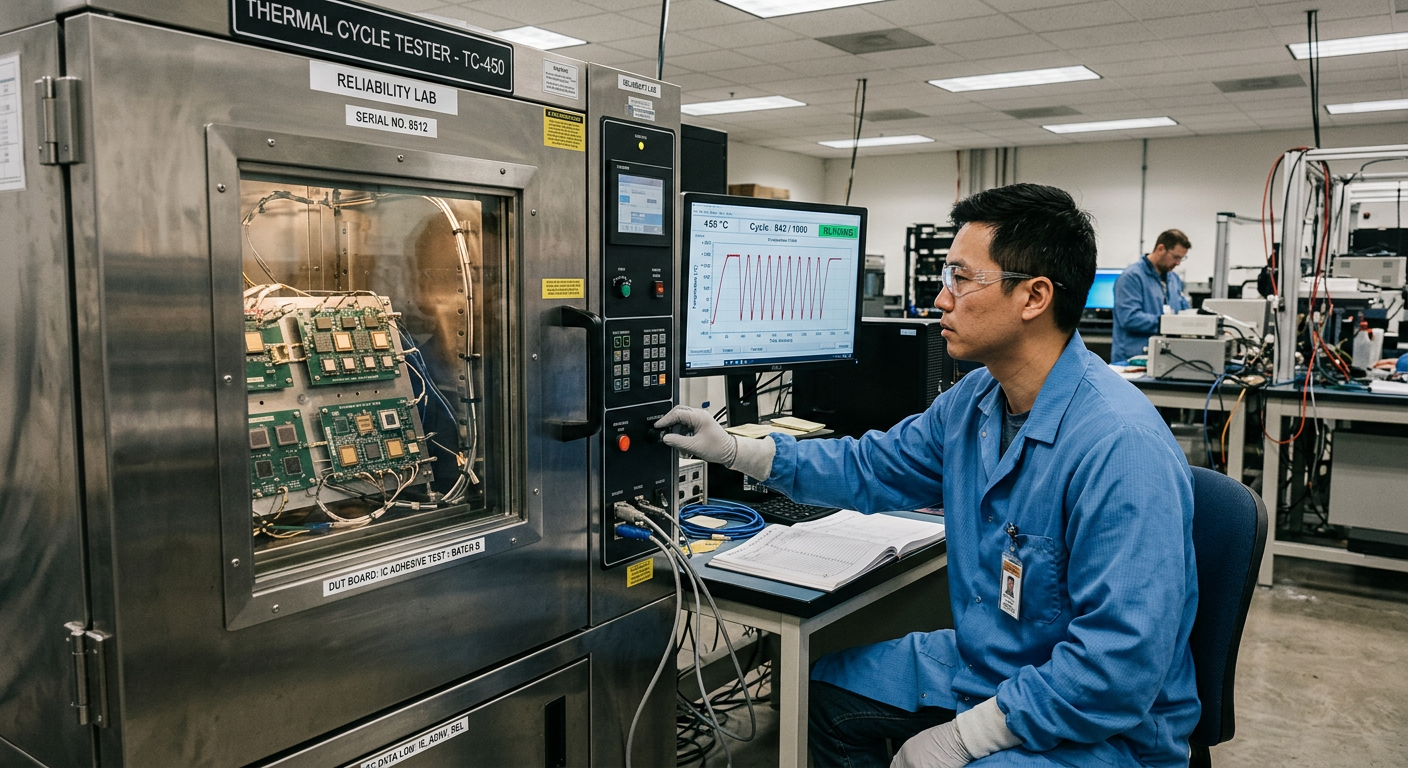
IC Package Adhesive Thermal Cycling Reliability Testing
IC packaging adhesive thermal cycling in the United States requires reliable material selection, supplier review, and test planning for electronics durability.
-

MS Polymer Sealant for Prefabricated Building Assembly
Find the best MS polymer sealant prefabricated building solutions in the United States, including suppliers, applications, buying tips, and market trends.
 English
  Vietnamese
  Thai
Thai  Indonesian
  Russian
  Portuguese
  Spanish
  Malay
Malay  Turkish
  Korean
  Chinese