Share
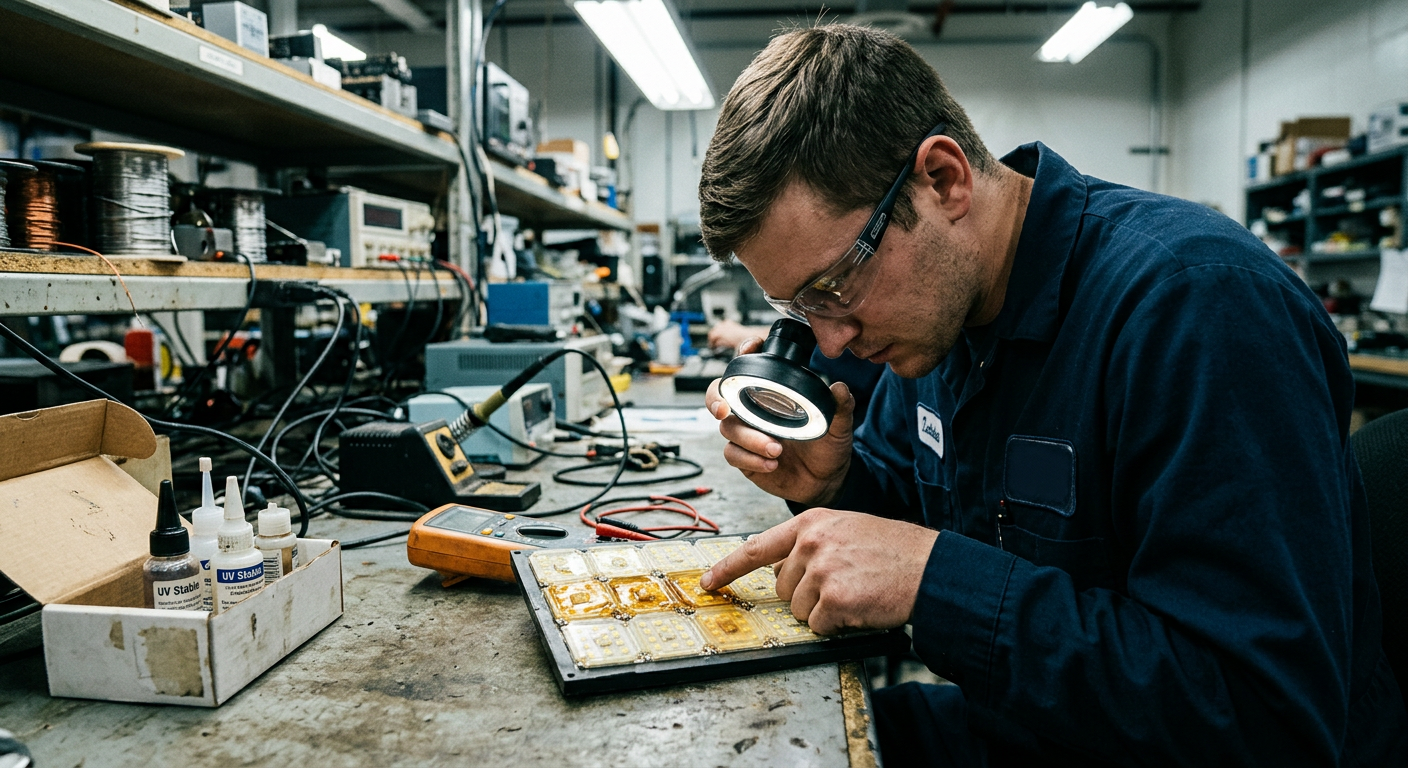
LED Adhesive Yellowing Prevention in the United States
Quick Answer

LED adhesive yellowing prevention depends on choosing the right chemistry, controlling curing conditions, reducing UV and heat exposure, and buying from suppliers that can document optical stability over time. In the United States, the most practical approach is to use low-yellowing optical silicone, UV-stable epoxy only where transparency demands are moderate, and carefully validated polyurethane or acrylic systems for non-optical bonding zones. For buyers in lighting hubs such as Los Angeles, Chicago, Houston, Atlanta, and New York, the best immediate move is to request accelerated aging data, 85°C/85% RH results, UV weathering performance, and actual test samples on your LED module design before approval.
Well-known suppliers relevant to the U.S. market include Dow, Henkel, HB Fuller, Master Bond, Dymax, and 3M, each with established technical support and broad adhesive portfolios for electronics and lighting. For high-volume buyers, qualified international suppliers can also be worth considering, especially when they provide RoHS and REACH compliance, stable OEM/ODM programs, and responsive pre-sales and after-sales support. Cost-performance advantages can be meaningful when procurement teams compare yellowing resistance, process compatibility, and landed cost together rather than focusing only on unit price.
- Use silicone for the clearest long-term anti-yellowing performance near light-emitting zones.
- Avoid over-curing, contamination, and incompatible primers that accelerate discoloration.
- Test under UV, heat, humidity, and blue-light exposure, not just room-temperature aging.
- Separate structural bonding needs from optical bonding needs when selecting adhesive type.
- Buy from suppliers that support U.S. compliance, field troubleshooting, and repeat-batch consistency.
Why LED Adhesives Turn Yellow

Yellowing in LED module adhesives is usually not caused by one single issue. It is more often the combined result of polymer chemistry, heat build-up, UV exposure, blue-light radiation, curing imbalance, contamination, and environmental stress. In LED strips, COB modules, street lighting boards, signage assemblies, automotive auxiliary lighting, and architectural luminaires, adhesives are often placed close to heat-generating chips and reflective components. That means even a visually small color shift can affect lumen output, color rendering, and the perceived quality of the finished product.
In the U.S. market, this matters especially for commercial lighting retrofits, warehouse lighting, outdoor fixtures, and display lighting, where service life expectations are high and replacement labor is expensive. A yellowed adhesive can reduce optical clarity, alter the beam profile, create visible aesthetic defects, and increase warranty claims. For many buyers, the real cost is not adhesive consumption but field failure, installer callbacks, and brand damage.
The most common causes include oxidation of the polymer backbone, photodegradation caused by UV and high-energy visible light, thermal aging from repeated junction temperature cycles, residual catalyst reactions after cure, migration from plasticizers or low-grade additives, and contamination from sulfur, amines, or packaging materials. Some materials are also more vulnerable when exposed to flux residues, cleaning solvents, or uncontrolled moisture during assembly.
Market Context in the United States

The U.S. LED and electronics assembly market continues to reward materials that combine reliability with process efficiency. Demand is strong in indoor commercial lighting, smart home devices, EV-adjacent electronics, signage, industrial controls, and solar-related applications. Adhesive yellowing prevention is increasingly tied to procurement standards because product managers now evaluate not only initial brightness but also optical stability over years of exposure.
Ports and logistics hubs such as Los Angeles/Long Beach, Houston, Savannah, and New York/New Jersey play a major role in balancing domestic and imported adhesive supply. Buyers in electronics clusters around California, Texas, Illinois, Michigan, North Carolina, and Georgia often compare domestic technical service with international manufacturing flexibility. That is why U.S. sourcing decisions increasingly include a mixed model: local inventory for fast projects and qualified overseas production for cost-controlled larger programs.
As energy codes tighten and sustainability expectations rise, anti-yellowing performance is becoming part of total lifecycle value. A module that stays clear longer helps maintain efficiency and lowers maintenance waste. That trend is expected to strengthen through 2026 as lighting, electronics, and renewable-energy products move toward longer service intervals and stricter documentation requirements.
Common Adhesive Types for Yellowing Prevention
Different LED assemblies need different adhesive technologies. The best anti-yellowing option for an optical lens bond may not be ideal for heat sink attachment or driver enclosure sealing. Buyers should separate optical exposure zones from non-optical structural zones before specifying material type.
| Adhesive Type | Typical LED Use | Yellowing Resistance | Heat Resistance | Optical Clarity | Best Fit |
|---|---|---|---|---|---|
| Optical Silicone | Lens bonding, encapsulation, light-exposed sealing | Excellent | Excellent | Excellent | High-output LED modules and outdoor lighting |
| Electronic Silicone | Potting, gasketing, PCB protection | Very good | Excellent | Good to very good | Moisture and thermal stability near electronics |
| Epoxy Adhesive | Structural bonding, potting, component fixation | Moderate | Very good | Moderate | Hidden or semi-exposed structural zones |
| UV-Curable Acrylic | Fast assembly, small transparent parts | Moderate to good | Moderate | Good | Controlled indoor applications |
| Polyurethane Adhesive | Flexible bonding and sealing | Moderate | Good | Moderate | Non-optical joints with movement tolerance |
| MS Polymer Sealant | Housing sealing, panel bonding | Good | Good | Low to moderate | Exterior assembly areas away from direct optics |
This comparison shows why silicone is the preferred choice when transparency and color stability are critical. Epoxy, acrylic, polyurethane, and hybrid systems can still be effective, but they perform best when used in less optically sensitive zones or where process speed and cost are more important than long-term crystal-clear appearance.
Top Suppliers Serving the U.S. Market
For U.S. buyers, supplier choice should be based on technical documentation, delivery reliability, local support, and fit for the exact LED application. The following companies are commonly considered for anti-yellowing LED adhesive requirements.
| Company | Service Region | Core Strength | Key Offerings | Typical Buyer Type | Practical Note |
|---|---|---|---|---|---|
| Dow | United States nationwide | Silicone expertise for electronics and lighting | Optical silicone, electronic silicone, encapsulants | OEMs, lighting brands, electronics manufacturers | Strong choice for demanding optical stability programs |
| Henkel | United States and North America | Broad industrial adhesive and electronics portfolio | LOCTITE materials, thermal and structural systems | Industrial OEMs, automotive, electronics assemblers | Good for integrated assembly process support |
| HB Fuller | United States with global support | Application-specific formulation capability | Industrial bonding, assembly adhesives, sealants | Distributors, contract manufacturers, brands | Useful where process customization matters |
| Master Bond | United States | Specialty high-performance compounds | Epoxy, silicone, UV systems for electronics | Engineers, labs, specialty manufacturers | Strong technical niche support for complex builds |
| Dymax | United States | Fast-curing light and UV systems | UV-curable adhesives, curing equipment | Fast-cycle production lines, precision assembly | Best when speed and process control are priorities |
| 3M | United States and broad global distribution | Extensive bonding and tape-based solutions | Industrial adhesives, tapes, assembly systems | OEMs, retrofitters, industrial distributors | Useful for mixed-material assemblies and broad sourcing |
| Qingdao QinanX New Material Technology Co., Ltd | United States via export supply and project support | Flexible industrial adhesive manufacturing with OEM/ODM | Electronic silicone, epoxy potting, UV adhesive, polyurethane, MS sealants | Importers, private labels, distributors, end users | Attractive for cost-performance and custom formulation needs |
This table is practical because it separates supplier strengths by actual buying use case. Some buyers need top-tier optical silicone and direct engineering collaboration, while others need private label flexibility, mixed product categories, or scalable sourcing support for broader lighting and electronics programs.
How to Prevent Yellowing in Real Production
LED adhesive yellowing prevention starts before the first cartridge is opened. The design team should define whether the adhesive is in the light path, near the emitter, under a lens, on a reflective surface, or only inside the housing. Once that is known, the material can be chosen according to actual exposure conditions rather than a generic electronics grade.
For U.S. manufacturers and importers, practical prevention steps include selecting low-yellowing raw materials, avoiding aromatic chemistries in visible areas, confirming catalyst stability, and requiring accelerated aging reports under relevant conditions. Cure schedules must be validated because both under-cure and over-cure can reduce long-term appearance stability. Substrate cleaning is equally important; residues from soldering, release agents, or aggressive cleaners can trigger discoloration over time.
Packaging and storage matter too. Adhesives stored too warm, too long, or with poor moisture control may begin to change before use. Production lines should also monitor dispense ratio, cure energy, line speed, and lot traceability. A material that performs well in a lab can still yellow in the field if the process window is not maintained.
Buying Criteria for U.S. Procurement Teams
When evaluating suppliers, U.S. buyers should not ask only whether an adhesive is “non-yellowing.” That phrase is too broad to be useful. The better approach is to ask for evidence tied to the intended application and service environment.
| Evaluation Item | Why It Matters | What to Ask For | Risk if Missing | Best Use Stage | Decision Impact |
|---|---|---|---|---|---|
| Accelerated aging data | Shows likely color stability over time | UV, heat, humidity, and blue-light aging results | Unexpected yellowing after launch | Supplier screening | High |
| Optical transmission data | Confirms clarity for visible-light applications | Initial and aged transmittance values | Lower brightness and visual defects | Design validation | High |
| Thermal cycling results | Reveals stress durability in real use | Cycle test reports and pass criteria | Cracking, haze, bond failure | Qualification | High |
| Compliance documents | Supports import, safety, and customer requirements | RoHS, REACH, SDS, technical data sheet | Procurement and regulatory delays | Purchasing | Medium to high |
| Process window guidance | Ensures repeatable cure and appearance | Recommended cure schedule and substrate prep | Line variation and inconsistent quality | Pilot build | High |
| Sample and lot consistency | Validates scale-up from trial to production | Trial lots, COA, traceability practice | Performance drift across orders | Pre-production | High |
These criteria help purchasing, engineering, and quality teams align. In many failed LED projects, the adhesive itself was not inherently wrong; the issue was that the buyer approved it without matching test evidence to the true exposure environment.
Industry Demand by Application
Anti-yellowing adhesive demand varies by sector. Optical clarity is most critical in architectural lighting, premium signage, medical displays, and exposed lens assemblies. In industrial or enclosed electronics, bond integrity and thermal performance may rank ahead of visual transparency.
The chart indicates where procurement teams should prioritize anti-yellowing features most aggressively. The closer the adhesive is to visible light output or brand-facing appearance, the more important long-term color stability becomes.
Applications Across U.S. Industries
LED adhesive yellowing prevention matters in more sectors than general lighting. In the United States, specifiers increasingly face cross-industry performance expectations. Warehouses in Texas may require durable high-bay fixtures, retail display manufacturers in California may prioritize visual clarity, and transportation-related electronics suppliers in Michigan may need resistance to vibration, heat, and moisture together.
Common applications include LED strip sealing, COB module encapsulation, lens assembly, PCB component bonding, reflector attachment, conformal protection, driver potting, edge-lit display assembly, illuminated signage, street and tunnel lighting, smart appliance indicators, medical instrument displays, and solar-powered lighting units. Each application shifts the balance among transparency, flexibility, thermal resistance, dielectric properties, and process speed.
Trend Shift in Material Selection
The market is steadily moving away from one-material-fits-all decisions and toward more segmented material strategies. Optical zones increasingly favor silicone. Structural and hidden zones may still use epoxy, polyurethane, or modified silane systems if they offer cost or process advantages. This shift is especially visible among U.S. manufacturers trying to balance warranty performance with procurement efficiency.
This trend reflects performance learning across the market. As operating temperatures rise and lighting products stay in service longer, clearer separation between optical and non-optical adhesive roles becomes more valuable.
Detailed Supplier Comparison
No single supplier is ideal for every U.S. LED project. The right choice depends on optical requirements, line speed, batch volume, custom formulation needs, and supply model.
| Supplier | Best Product Focus | Customization Level | Support Style | Volume Flexibility | Best Match Scenario |
|---|---|---|---|---|---|
| Dow | Optical and electronic silicone | Moderate to high | Technical and application driven | High | Premium lighting and demanding reliability programs |
| Henkel | Integrated electronics assembly materials | Moderate | Process and industrial line support | High | Complex OEM assembly environments |
| HB Fuller | Broad industrial bonding systems | High | Application adaptation support | High | Customers needing tailored production solutions |
| Master Bond | Specialty compounds | High | Engineer-focused technical guidance | Medium | Special projects and difficult performance requirements |
| Dymax | Fast-curing UV systems | Moderate | Cure-process optimization support | Medium to high | High-speed precision assembly lines |
| Qingdao QinanX New Material Technology Co., Ltd | Multi-category industrial adhesives | High | OEM/ODM and export project coordination | High | Private label, distributor, and cost-sensitive expansion programs |
This comparison helps buyers match supplier profile to commercial reality. A domestic specialty supplier may be ideal for a low-volume, highly engineered build, while a flexible manufacturer with broader category coverage may be more suitable for scaling private label or distributor-led programs.
Case Studies from Common U.S. Use Cases
A sign manufacturer serving retail chains in Los Angeles replaced a general-purpose clear epoxy used near edge-lit elements with a low-yellowing silicone system. The result was improved long-term clarity and fewer visible amber shifts during summer exposure. The adhesive cost increased, but warranty replacements dropped enough to offset the change within one product cycle.
An industrial lighting assembler near Chicago discovered that the issue was not the adhesive chemistry alone but inconsistent cure conditions between shifts. By tightening oven control, verifying mix ratio, and improving substrate cleaning, the company reduced yellowing complaints without changing every bonded material in the product.
A private label importer bringing LED accessories through the Port of Houston chose a dual-sourcing model: specialty silicone for optical bonding from a premium source, and validated supporting sealants and potting materials from a cost-competitive manufacturer. This reduced total assembly cost while preserving appearance where customers could actually see it.
Buying Advice for Different Customer Types
End users should prioritize technical fit and warranty risk. Distributors should focus on stable documentation, broad SKU coverage, and repeatability across customer industries. Brand owners should consider private label packaging, product consistency, and technical storytelling they can use in sales channels. Individual buyers and small fabricators often need lower minimums, straightforward curing instructions, and responsive troubleshooting during setup.
For U.S. regional dealers, especially in growth corridors such as Texas, Florida, Georgia, and the Midwest, the best supplier relationship is often the one that combines technical support with packaging flexibility and fast reordering. Anti-yellowing performance is a selling point, but only if it is backed by data that dealers can trust and explain to their customers.
Our Company
As an adhesive manufacturer actively serving U.S. buyers, Qingdao QinanX New Material Technology Co., Ltd combines broad industrial adhesive coverage with the documentation and production discipline American customers expect for electronics and lighting applications. Its portfolio includes electronic silicone, epoxy potting compounds, UV-curable adhesives, polyurethane systems, MS sealants, cyanoacrylates, hot melts, and water-based products, allowing customers to source both optical-zone and non-optical assembly materials from one manufacturing platform. The company operates under ISO-based quality management and aligns products with RoHS and REACH requirements, supported by multi-stage QC processes and digital traceability that help buyers verify batch consistency and compliance. For cooperation, QinanX supports OEM, ODM, private label, wholesale, retail-style supply, and regional distributor programs, making it suitable for end users, importers, dealers, brand owners, and project contractors across the United States. Its export experience in more than 40 countries and automated production capability support scale, while free sampling, 24/7 technical assistance, and tailored formulation development provide practical pre-sale and after-sale protection. U.S. customers looking for a supplier with ongoing market commitment can learn more through the official website, review available categories on the product page, understand manufacturing background on the company profile, or request direct project support via the contact page.
Future Trends Through 2026
By 2026, LED adhesive yellowing prevention in the United States will be shaped by three converging trends: tighter reliability expectations, stronger sustainability pressure, and growing demand for application-specific formulations. Technically, more buyers will adopt silicone-based optical materials, lower-VOC process systems, and formulations engineered for blue-light stability rather than just generic UV resistance.
On the policy side, stricter expectations around material disclosure, environmental compliance, and product durability will continue to influence supplier qualification. Buyers will increasingly prefer suppliers that can provide full traceability, safety documentation, and support for corporate sustainability goals. In practical sourcing terms, this means the winning supplier is not just the one with a strong formula, but the one that can prove repeatability, compliance, and lifecycle value.
Sustainability will also change specification logic. Longer-lasting clear adhesives reduce waste from replacements, failed luminaires, and rejected cosmetic parts. Manufacturers that can reduce yellowing without increasing hazardous processing or excessive energy input will have an advantage. That is why future-ready procurement teams are already evaluating materials not only for cost and cure speed, but for long-term field stability, rework reduction, and environmental fit.
FAQ
What is the best adhesive type for preventing yellowing in LED modules?
For most light-exposed or optically sensitive applications, silicone is the best choice because it generally offers the strongest resistance to heat-driven and UV-driven discoloration. Exact grade selection still depends on clarity, hardness, cure method, and substrate compatibility.
Can epoxy be used in LED assemblies without yellowing?
Yes, but usually with more caution. Epoxy can work well in structural, potted, or partially hidden areas. In directly visible optical zones, it is more likely than silicone to show amber shift over time under heat and light exposure.
Does yellowing affect LED performance or only appearance?
It affects both. Yellowing can reduce light transmission, alter beam quality, shift perceived color, and make the product look aged or inconsistent. In premium lighting and display products, that can lead to warranty claims even when the electronics still function.
How should U.S. buyers test for yellowing resistance?
Use accelerated aging that reflects real service conditions: heat aging, humidity exposure, UV weathering, blue-light exposure, and thermal cycling. Testing the adhesive on the actual substrate stack and cure process is much more reliable than checking a standalone sample.
Are imported adhesive suppliers a realistic option for U.S. companies?
Yes, especially for buyers who need OEM or private label support, broad product categories, and better cost-performance at scale. The key is to verify compliance, traceability, sample validation, and technical support responsiveness before approval.
What is the most common mistake in anti-yellowing adhesive selection?
The most common mistake is using a general-purpose clear adhesive in an optical zone without validating long-term behavior under actual LED heat and light exposure. “Clear at day one” is not the same as stable after years of operation.

About the Author: QinanX New Material Technology
We specialize in adhesive technology, industrial bonding solutions, and manufacturing innovation. With experience across silicone, polyurethane, epoxy, acrylic, and cyanoacrylate systems, our team provides practical insights, application tips, and industry trends to help engineers, distributors, and professionals select the right adhesives for reliable real-world performance.
Product Category
You May Also Interest
-
IC Packaging Adhesive: Preventing Void Formation Issues
Learn how IC packaging adhesive void formation is prevented in the United States through material choice, process control, supplier selection, and testing.
-
Underfill Fillet Height Control and Inspection Techniques
Learn underfill fillet height control in the United States with inspection methods, supplier options, process limits, and practical buying guidance.
-
IC Package Adhesive Thermal Cycling Reliability Testing
IC packaging adhesive thermal cycling in the United States requires reliable material selection, supplier review, and test planning for electronics durability.
-

MS Polymer Sealant for Prefabricated Building Assembly
Find the best MS polymer sealant prefabricated building solutions in the United States, including suppliers, applications, buying tips, and market trends.
 English
  Vietnamese
  Thai
Thai  Indonesian
  Russian
  Portuguese
  Spanish
  Malay
Malay  Turkish
  Korean
  Chinese