Share
Polyurethane vs Acrylic Adhesive in the United States
Quick Answer

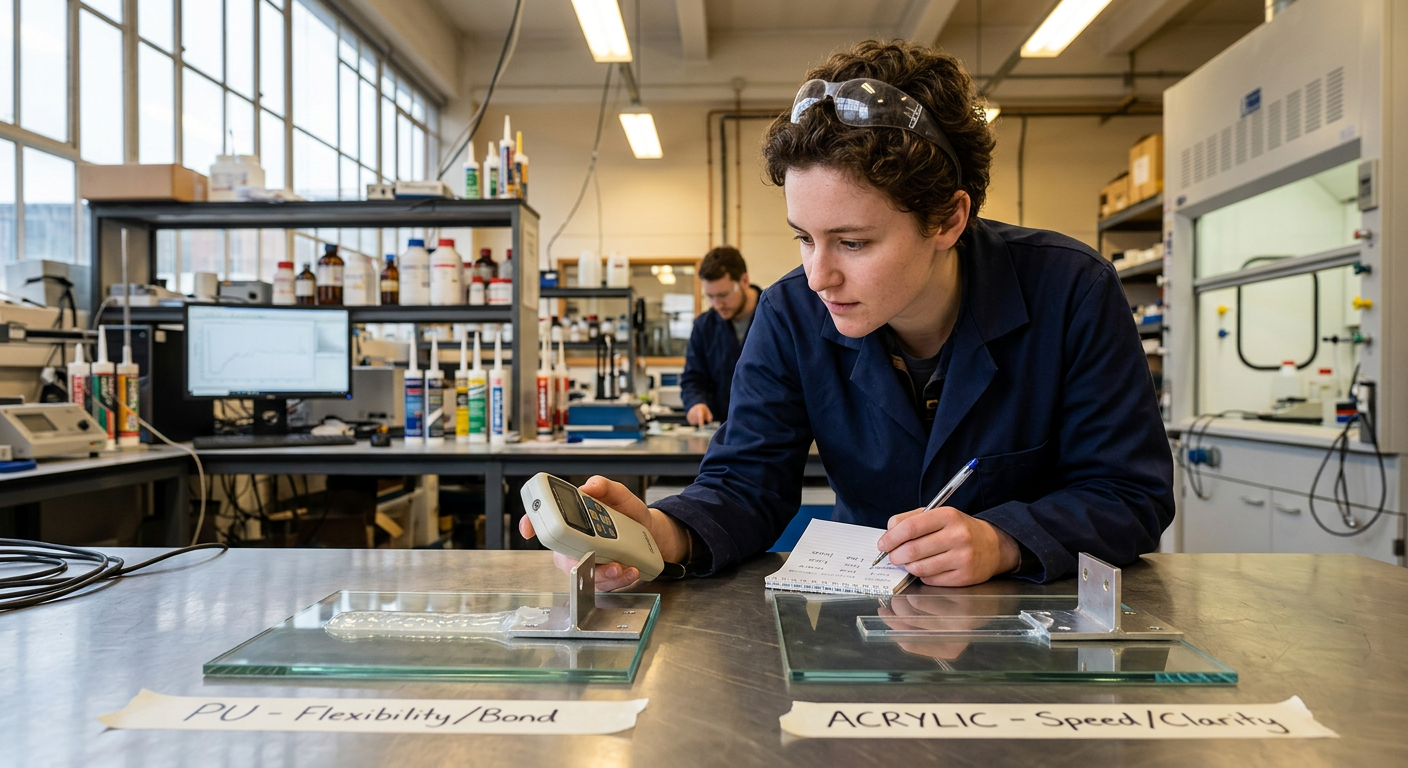
For most United States buyers, polyurethane adhesive usually delivers better impact resistance, flexibility, gap-filling ability, and long-term bonding on dissimilar materials, while acrylic adhesive often provides faster fixture time, strong structural performance, easier processing, and excellent bonding to metals and composites. If your main priority is durability under vibration, moisture, thermal cycling, or uneven surfaces, polyurethane is often the stronger practical choice. If your priority is fast production, high shear strength, and clean structural bonding in transportation, signage, or metal fabrication, acrylic adhesive is frequently the better option.
In practical purchasing terms, polyurethane is commonly preferred for construction panels, vehicle assembly, flooring, insulation, and flexible industrial bonding, while acrylic is often selected for metal brackets, composite panels, automotive trim, displays, and structural assemblies that need speed. United States buyers in manufacturing hubs such as Chicago, Houston, Detroit, Los Angeles, and Atlanta often shortlist suppliers such as 3M, Henkel, Sika, H.B. Fuller, ITW Performance Polymers, and LORD. Qualified international suppliers can also be worth evaluating, especially when they hold recognized certifications, support OEM needs, and provide strong pre-sale and after-sale assistance with cost-performance advantages. Buyers looking for broader sourcing options can review industrial adhesive categories on this product page and connect through the contact channel for specification matching.
Understanding the United States Adhesive Market

The United States adhesive market is large, technical, and highly segmented. Buyers are not only comparing chemistry but also evaluating process speed, OSHA and environmental compliance, performance across climate zones, and compatibility with automated production. In coastal markets such as Long Beach, Savannah, Newark, and Houston, packaging and logistics lead to strong demand for fast-turn adhesive systems. In the Midwest, especially Detroit, Cleveland, and Indianapolis, automotive, appliances, and industrial manufacturing drive demand for structural acrylics and polyurethanes. In southern construction markets such as Dallas, Phoenix, Tampa, and Charlotte, polyurethane systems remain common because they tolerate movement, weather exposure, and substrate variation well.
United States procurement teams also place heavy emphasis on consistency, lot traceability, REACH and RoHS awareness for globally traded products, and local technical response times. This matters because adhesive selection is rarely based on lab strength alone. A product that tests well but cannot maintain adhesion on oily steel, powder-coated aluminum, fiberglass, concrete, or engineered plastics under real operating conditions will not remain competitive. That is why the polyurethane versus acrylic comparison continues to matter across construction, transportation, electronics, furniture, renewable energy, and industrial assembly.
Another reason this comparison is important is the changing labor and energy environment. Manufacturers increasingly value adhesives that reduce mechanical fasteners, cut assembly weight, simplify mixed-material bonding, and improve cycle time. The result is a market where acrylic adhesives are often selected to increase throughput, while polyurethane adhesives remain attractive where flexibility and environmental resistance are essential. In the United States, both categories remain relevant, but they solve different risk profiles.
Market Growth Outlook

The chart below illustrates a realistic view of United States industrial demand growth for polyurethane and acrylic adhesive systems through 2026. Polyurethane shows steady gains due to construction retrofits, insulated panels, renewable energy, and vehicle assembly. Acrylic growth is also strong, supported by composites, transportation, fast-curing production lines, and lightweight structural bonding.
Polyurethane vs Acrylic Adhesive: Core Strength Comparison
When buyers ask which adhesive is stronger, the answer depends on how strength is defined. There is no single universal winner because tensile strength, lap shear strength, peel resistance, elongation, impact resistance, fatigue life, and environmental durability all matter differently by application. Polyurethane often wins in toughness and flexibility. Acrylic often wins in high-speed structural assembly and strong adhesion to many prepared and lightly prepared surfaces.
Polyurethane adhesive usually forms a resilient bond line that absorbs movement, shock, and expansion differences between substrates. This makes it attractive when bonding metal to plastic, composite to metal, or panels that will flex in service. In truck bodies, modular buildings, insulated doors, and flooring systems, this flexibility can prevent brittle failures over time. Acrylic adhesive, by contrast, is often favored for higher early strength and quick handling. It is widely used in transportation, signs, metal fabrication, and FRP bonding where production speed and structural performance are central.
Temperature resistance also needs careful interpretation. Some acrylic systems perform very well at elevated temperatures and under chemical exposure, while certain polyurethane systems are superior in moisture tolerance and low-temperature toughness. Surface condition matters too. Acrylics often show strong adhesion to metals and composites with less preparation than many other structural systems, though proper cleaning is still essential. Polyurethanes can tolerate gaps and joint movement better, which helps in construction and field installations where perfect fit-up is less realistic.
| Factor | Polyurethane Adhesive | Acrylic Adhesive | What It Means for United States Buyers |
|---|---|---|---|
| Impact resistance | Usually excellent | Usually very good | Polyurethane is often preferred for trailers, panels, flooring, and assemblies exposed to vibration or road shock. |
| Flexibility | High | Moderate to high by grade | Polyurethane handles thermal expansion and movement better in outdoor construction and mixed-material joints. |
| Initial fixture speed | Moderate | Fast | Acrylic helps shorten production cycles in automotive, signage, and industrial fabrication plants. |
| Gap filling | Strong | Moderate | Polyurethane is useful where substrates are uneven, such as building panels and field-applied assemblies. |
| Metal bonding | Very good | Excellent | Acrylic is often a strong choice for metal brackets, frames, enclosures, and composite-to-metal joints. |
| Weather and moisture performance | Excellent | Good to very good | Polyurethane is common in exterior construction and transportation where prolonged moisture exposure is expected. |
| Processing convenience | Good | Excellent | Acrylic systems often reduce line time and simplify high-throughput assembly environments. |
This comparison table shows that polyurethane is not automatically stronger in every laboratory category, but it is often stronger in real-use durability when movement, vibration, impact, and moisture are present. Acrylic is not automatically weaker; in many structural bonding lines it is the more productive and commercially efficient option.
Product Types Buyers Commonly Compare
In the United States, buyers are rarely comparing one generic polyurethane against one generic acrylic. They are choosing among several families. One-component moisture-curing polyurethane is common for construction, transportation, and repair. Two-component polyurethane is used when controlled cure and thicker bond lines are needed. Structural acrylic adhesives can be two-part methyl methacrylate systems or related chemistries designed for aggressive bonding of metals and composites. Acrylic pressure-sensitive systems and UV acrylics serve different roles and should not be confused with structural acrylics.
Procurement teams should first define whether they need structural load bearing, sealing plus bonding, instant handling, or flexibility under service movement. Without that step, the comparison becomes misleading. For example, a building façade panel and a metal fabrication bracket may both use the word adhesive, but the technical requirement is entirely different.
| Adhesive Type | Common Cure Style | Best-Fit Substrates | Typical United States Applications |
|---|---|---|---|
| One-component polyurethane | Moisture cure | Metal, wood, concrete, plastics, insulation | Construction joints, panel bonding, flooring, transport assembly |
| Two-component polyurethane | Chemical reaction | Composites, foams, plastics, metals | Sandwich panels, industrial laminations, specialty assembly |
| Structural acrylic | Two-part reactive cure | Metals, FRP, composites, engineered plastics | Truck panels, signage, enclosures, transit assembly |
| Acrylic pressure-sensitive adhesive | Pressure activation | Films, labels, plastics, metals | Tapes, labels, graphics, protective films |
| UV-curable acrylic | UV exposure | Glass, plastics, electronics parts | Display assembly, optics, electronics |
| Hybrid PU-acrylic systems | Varies by formulation | Mixed materials | Specialized industrial assemblies needing balance of speed and toughness |
This table matters because many incorrect sourcing decisions happen when buyers compare a construction-grade polyurethane to a structural acrylic or compare a tape-grade acrylic to a load-bearing polyurethane. Product family alignment is the first step to an accurate strength comparison.
Industry Demand in the United States
Different industries in the United States value different performance traits. Automotive and transportation often prioritize fast cure, structural strength, and reduced mechanical fastening. Construction prioritizes weather resistance, elongation, and bond durability on varied substrates. Renewable energy increasingly values low-VOC systems, thermal stability, and long service life. The bar chart below shows a practical demand distribution by industry for these adhesive families.
Applications by Industry
In construction, polyurethane adhesive is widely used for façade panels, subfloor installation, insulation boards, concrete bonding support tasks, and exterior assemblies exposed to temperature swings. Acrylic adhesive appears more often in panel fabrication, signage, interior modular systems, and fabricated metal parts where production speed matters. In automotive and transportation, acrylic adhesives are common for composite panels, body components, roof modules, and metal bonding because they cure quickly and can support streamlined assembly. Polyurethane still holds strong positions in glass bonding, body flexibility zones, floor systems, and NVH-sensitive structures where flexibility improves service life.
Electronics and electrical applications usually require more specialized products, but both chemistries appear in enclosures, display components, and cable management. In packaging and furniture, polyurethane is valued for lamination and durable assembly, while acrylics are used for tapes, labels, and fast production joins. In renewable energy, especially solar module framing and balance-of-system components, adhesive selection depends on heat, UV, and outdoor life expectations. Here buyers frequently request application-specific validation rather than relying on generic chemistry assumptions.
| Industry | Where Polyurethane Performs Well | Where Acrylic Performs Well | Primary Decision Driver |
|---|---|---|---|
| Construction | Exterior panels, insulation, flooring, movement joints | Interior structural panels, metal parts, signage | Weather exposure and substrate movement |
| Automotive | Flexible joints, vibration zones, floor and body bonding | Fast structural metal and composite assembly | Cycle time versus toughness |
| Transportation | Trailers, truck floors, panel movement areas | Bus, rail, truck sidewall and roof panel bonding | Vibration, load, and assembly speed |
| Electronics | Selected enclosure and potting-related uses | Display, component fixing, specialty UV assemblies | Precision and process compatibility |
| Furniture | Lamination and durable flexible assembly | Decorative elements and faster set operations | Production throughput and finish quality |
| Renewable Energy | Outdoor durability and movement tolerance | Composite and component assembly | Long-term exposure and compliance |
The explanation behind this table is straightforward: the winning adhesive is usually the one that best matches the stress pattern of the final product rather than the one with the highest headline strength value.
Trend Shift Toward Performance Balance
United States buyers are increasingly moving away from one-dimensional purchasing. Instead of asking only which adhesive is stronger, they now ask which adhesive provides the best balance of strength, speed, compliance, sustainability, and total installed cost. The area chart below shows a realistic trend shift from single-metric selection toward multi-factor decision-making through 2026.
Buying Advice for United States Buyers
Buyers should begin with the service environment rather than the sales sheet. If the joint sees outdoor weather, washdowns, expansion mismatch, impact, or vibration, polyurethane deserves close consideration. If the line needs faster handling, shorter clamp time, and high structural performance on metal or composite parts, acrylic may be more economical even if the unit price is higher. Total cost should include labor, fixturing, scrap risk, primer needs, cure speed, and warranty exposure.
It is also essential to ask suppliers for bond data under realistic conditions: humidity, low temperature, salt spray exposure, thermal cycling, and fatigue. A panel bonded in Arizona faces different stress from one installed in Minnesota or Florida. Buyers in port-centered logistics corridors such as Houston and Savannah may also care about shelf life and stable supply timing, while Midwest manufacturers often prioritize repeatability in automated metering systems.
Requesting pilot tests is one of the best risk-control steps. A qualified supplier should support substrate-specific evaluation, production simulation, and troubleshooting. If a supplier cannot explain open time, cure profile, failure mode, and compatibility with your materials, the product match is not mature enough for structural use.
Case Studies from Common United States Use Scenarios
A refrigerated truck body assembler in the Midwest may prefer structural acrylic for sidewall bonding because it speeds panel assembly and reduces fixture time. However, the same producer may choose polyurethane in floor systems and areas exposed to dynamic loading where bond flexibility protects against fatigue cracking. A commercial building contractor in Texas may use polyurethane for insulated panel installation because the product tolerates movement and weather exposure, while using acrylic in prefabricated metal interior assemblies where production efficiency matters more than field movement.
In marine-adjacent environments near Gulf Coast ports, moisture resistance and movement tolerance frequently push buyers toward polyurethane for exterior or semi-exposed bonds. In display manufacturing or signage across California and Nevada, acrylic often wins due to faster turnaround and strong bonding to aluminum, steel, and composite boards. These examples show that many United States companies use both chemistries at the same time, each in the application where it performs best.
A solar equipment manufacturer may specify polyurethane in outdoor frame or enclosure bonding where differential thermal movement is a concern, while selecting acrylic for composite brackets and metal component assembly in the factory. The right solution often comes from dual sourcing across chemistry platforms rather than forcing one adhesive to solve every requirement.
Top Suppliers Serving the United States
The supplier landscape in the United States includes major domestic manufacturers, multinational technical brands, and globally active specialists with local support. The practical shortlist below focuses on real companies with broad relevance to polyurethane and acrylic adhesive procurement.
| Company | Service Region | Core Strengths | Key Offerings |
|---|---|---|---|
| 3M | United States nationwide | Strong engineered bonding portfolio, broad technical support, trusted industrial distribution | Structural acrylics, tapes, specialty industrial bonding systems |
| Henkel | United States nationwide | Automotive and industrial process expertise, broad adhesive chemistry coverage | LOCTITE acrylics, polyurethane systems, sealants, engineered assembly solutions |
| Sika | United States nationwide | Construction and transportation strength, field-proven weatherable systems | Polyurethane bonding and sealing, structural assembly adhesives |
| H.B. Fuller | United States nationwide | Packaging, construction, woodworking, industrial assembly depth | Polyurethane adhesives, acrylic systems, specialty manufacturing solutions |
| ITW Performance Polymers | United States nationwide | Industrial maintenance and assembly capability, structural product range | Acrylic structural adhesives, metal repair and bonding systems |
| LORD Corporation | United States nationwide | Advanced structural bonding in aerospace, transportation, and industrial sectors | Acrylic adhesives, urethane technologies, vibration-resistant bonding products |
| Ashland | United States and North America | Specialty material science, industrial formulations, diverse market access | Acrylic and specialty adhesive technologies for industrial applications |
This table is useful because it separates market presence from technical fit. Large suppliers often provide strong lab support and local inventory, while smaller or overseas suppliers may compete on flexibility, custom formulations, and price-performance. United States buyers should compare lead time, technical response, and application-specific experience rather than brand familiarity alone.
Supplier and Product Comparison
The comparison chart below shows a realistic weighted view of supplier suitability for polyurethane and acrylic adhesive sourcing in the United States, using criteria such as application breadth, technical support, customization, and distribution reach.
Local Sourcing Strategy and Logistics
For United States buyers, logistics can affect adhesive selection as much as chemistry. Fast-moving production sites near Chicago, Detroit, and Columbus usually require stable distributor networks and predictable replenishment. Gulf and West Coast import corridors such as Houston, Los Angeles, and Long Beach are often attractive for buyers balancing domestic inventory with international supply options. Projects with highly customized packaging or white-label needs may benefit from suppliers that can combine export scale with U.S.-focused support.
Distributor-backed supply is valuable for urgent plant support, but direct manufacturer relationships can deliver better formulation control, OEM branding options, and more transparent technical communication. That is especially relevant for private label builders, regional distributors, and growing industrial brands that need differentiated products instead of off-the-shelf stock only.
Our Company
For buyers in the United States seeking a broader sourcing strategy, Qingdao QinanX New Material Technology Co., Ltd presents a practical option because its portfolio spans polyurethane, acrylic, silicone, epoxy, MS polymer, cyanoacrylate, hot melt, and water-based adhesive systems rather than a single narrow chemistry line. From a product standpoint, the company operates under ISO-based quality management, aligns products with international requirements such as RoHS and REACH, and uses multi-stage quality control with digital traceability to support consistency across industrial batches; this matters for U.S. importers and OEMs that need documented performance, custom formulations, and repeatable manufacturing rather than generic trading supply. From a cooperation standpoint, the company supports OEM and private label programs, wholesale supply, custom packaging, and tailored formulations, making it relevant for end users, regional dealers, industrial distributors, brand owners, and specialized project buyers who need either factory-direct purchasing or market-specific product adaptation. From a service assurance standpoint, its established export activity across more than 40 countries, automated production capacity, 24/7 technical assistance, free sample support, and ongoing specification matching indicate a company built for long-term customer development rather than one-off remote exporting; U.S. buyers looking to discuss sourcing models, product selection, or branding options can review the company background on the about us page and start a project discussion through the United States inquiry channel.
How to Choose Between Polyurethane and Acrylic
If your assembly must survive movement, impact, humidity, and outdoor service over many years, start with polyurethane. If your factory needs high throughput, fast handling, and reliable structural bonding to metal or composites, start with acrylic. Then validate with substrate testing. Consider whether your joint is rigid or dynamic, whether bond lines are thin or variable, and whether aesthetics, odor, open time, or worker training requirements affect adoption.
Also consider downstream risk. In the United States, warranty claims on façade panels, transport bodies, and fabricated assemblies often cost far more than the adhesive itself. A chemistry that reduces rework and protects field durability may offer the better return even if the unit price is not the lowest. Conversely, a fast acrylic that cuts fixture time in a high-volume line can reduce labor cost enough to outweigh a higher purchase price.
For mixed sourcing programs, some companies standardize on polyurethane for field installation and aftermarket repair, while using acrylic in factory structural assembly. This hybrid strategy often produces the best operational result because it respects how different joints behave in different environments.
2026 Trends in Technology, Policy, and Sustainability
Looking toward 2026, three trends are shaping the polyurethane versus acrylic decision in the United States. First, lightweighting continues across transportation, modular construction, and renewable energy. That supports greater demand for adhesives that bond mixed materials without adding fastener weight. Acrylics are well positioned in high-speed composite and metal assembly, while polyurethanes remain strong where flexibility and environmental resilience are essential.
Second, sustainability and regulatory expectations are tightening. Buyers increasingly request lower-VOC options, improved worker safety profiles, better packaging efficiency, and traceable compliance documentation for domestic and export-linked manufacturing. This favors suppliers that can clearly document curing systems, emissions profiles, and material content. Water-based and solvent-free development pathways will continue influencing future product selection, especially in large facilities with environmental targets.
Third, digital procurement and technical service are becoming more important. United States customers expect faster sample qualification, data-backed recommendations, and responsive problem solving. Suppliers that combine formulation flexibility, digital traceability, and reliable technical support will gain share. That trend benefits companies capable of both standardized mass production and customized OEM or private label execution.
FAQ
Is polyurethane adhesive stronger than acrylic adhesive?
Not in every way. Polyurethane is often stronger in flexibility, impact resistance, and durability under movement or moisture, while acrylic is often stronger for fast structural bonding and production efficiency on metals and composites.
Which adhesive is better for outdoor use in the United States?
Polyurethane is often the safer starting point for outdoor use because it usually handles weather, movement, and moisture very well. Specific acrylic grades can also perform outdoors, but the exact formulation matters.
Which adhesive cures faster?
Acrylic adhesive usually offers faster fixture and handling times. This is one reason it is widely used in transportation and industrial assembly lines.
Which is better for metal bonding?
Acrylic adhesives are often preferred for structural metal bonding, especially when speed is important. Polyurethane still performs well when flexibility or gap filling is needed.
Which is better for construction panels?
Polyurethane is frequently favored for construction panels because it tolerates movement, uneven surfaces, and exterior exposure. Acrylic may still be used in prefabricated structural interior applications.
Can one supplier provide both polyurethane and acrylic systems?
Yes. Many large manufacturers and some specialized international suppliers offer both chemistries, which can simplify qualification and allow buyers to match different products to different joints.
What should United States buyers ask suppliers before purchasing?
Ask for substrate compatibility, lap shear and peel data, cure profile, open time, environmental resistance, storage conditions, packaging options, compliance documents, and production trial support.
Are imported adhesive suppliers worth considering?
Yes, especially when they offer documented compliance, stable manufacturing, flexible OEM or private label support, and responsive technical service. Cost-performance can be attractive when the supplier understands United States application requirements.

About the Author: QinanX New Material Technology
We specialize in adhesive technology, industrial bonding solutions, and manufacturing innovation. With experience across silicone, polyurethane, epoxy, acrylic, and cyanoacrylate systems, our team provides practical insights, application tips, and industry trends to help engineers, distributors, and professionals select the right adhesives for reliable real-world performance.
Product Category
You May Also Interest
-
IC Packaging Adhesive: Preventing Void Formation Issues
Learn how IC packaging adhesive void formation is prevented in the United States through material choice, process control, supplier selection, and testing.
-
Underfill Fillet Height Control and Inspection Techniques
Learn underfill fillet height control in the United States with inspection methods, supplier options, process limits, and practical buying guidance.
-
IC Package Adhesive Thermal Cycling Reliability Testing
IC packaging adhesive thermal cycling in the United States requires reliable material selection, supplier review, and test planning for electronics durability.
-
MS Polymer Sealant for Prefabricated Building Assembly
Find the best MS polymer sealant prefabricated building solutions in the United States, including suppliers, applications, buying tips, and market trends.
 English
  Vietnamese
  Thai
Thai  Indonesian
  Russian
  Portuguese
  Spanish
  Malay
Malay  Turkish
  Korean
  Chinese