Share
Moisture Curing Polyurethane Adhesive in the United States
Quick Answer

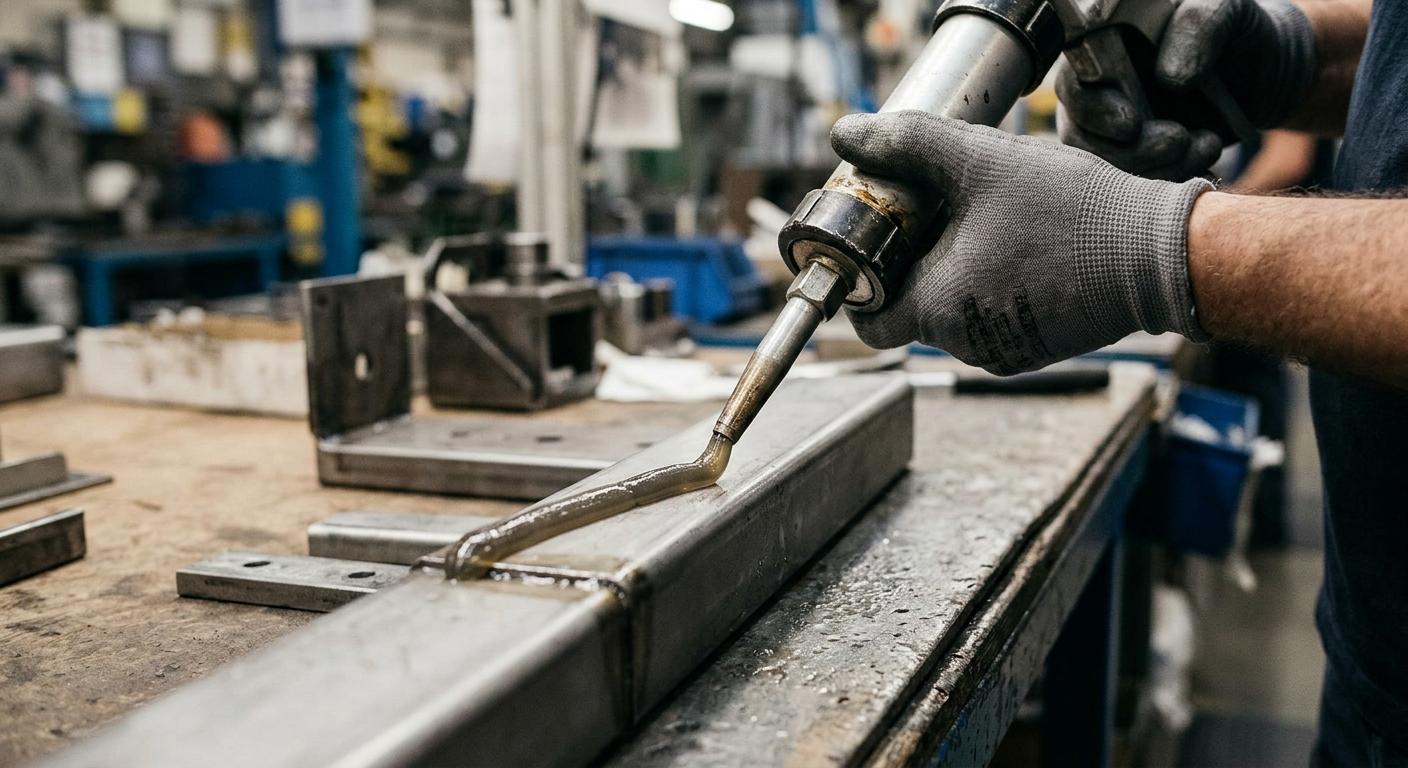
Moisture curing polyurethane adhesive is a strong choice in the United States when you need high bond strength, flexibility, heat resistance, and durable adhesion to wood, metal, plastics, composites, and coated surfaces. For buyers in major industrial corridors such as Chicago, Houston, Los Angeles, Atlanta, and Detroit, the most practical options usually come from established suppliers with proven performance in construction, transportation, furniture, engineered panels, and industrial assembly.
Well-known companies active in this space include Henkel, H.B. Fuller, Sika, 3M, Huntsman, and Franklin International. These suppliers are commonly selected for consistent quality, technical support, and broad distribution across the U.S. market. Buyers that need custom viscosity, open time, green strength, or automated application compatibility should compare supplier support for line trials, technical documentation, and regional delivery speed before placing larger orders.
Qualified international suppliers can also be worth serious consideration, especially when they offer relevant certifications, traceable quality systems, and responsive support for U.S. customers. Cost-performance can be attractive for import buyers, particularly when a manufacturer supports OEM and private label projects, provides free sample evaluation, and can adapt formulations for local compliance and end-use performance. For companies reviewing broader adhesive sourcing options, it is useful to explore the main catalog on industrial adhesive products, learn about the manufacturer behind the range on the company background page, and use the U.S. inquiry contact page when requesting specifications or samples.
United States Market Overview

The U.S. market for moisture curing polyurethane adhesive remains robust because it serves multiple sectors that continue to demand structural bonding, improved process efficiency, and long service life. In practical terms, these adhesives are widely used where manufacturers want to reduce fasteners, increase design freedom, or improve sealing and bonding performance in one operation. The market is shaped by large consumption centers near ports, rail hubs, and manufacturing clusters, including Long Beach, Savannah, Houston, New York/New Jersey, Cleveland, and the Midwest automotive belt.
In the United States, buyers often evaluate adhesive systems not only on bond strength but also on total applied cost. That includes cartridge or bulk format suitability, cure speed under plant humidity conditions, operator handling, storage stability, and whether the product supports continuous line production. These factors matter in wood lamination, trailer assembly, insulated panel bonding, HVAC manufacturing, solar module framing, and general industrial construction.
Moisture curing PU adhesives are especially valued because they react with ambient moisture to form a durable polymer network. That gives them a practical balance of flexibility and strength. Compared with some brittle systems, they better tolerate thermal cycling, substrate movement, and outdoor exposure. This makes them relevant for the varied climate conditions across the United States, from humid Gulf Coast facilities to dry inland production environments and freeze-thaw exposure in northern states.
Another important market factor is the push toward lower-emission manufacturing and more efficient assembly lines. End users increasingly favor solvent-free or reduced-emission systems that support workplace safety and regulatory alignment. As a result, specifiers now compare products based on VOC profile, REACH and RoHS alignment for export-oriented supply chains, and documentation depth for audits by OEM customers.
Market Growth and Demand Trends

The chart below shows a realistic growth trajectory for moisture curing polyurethane adhesive demand in the United States, driven by construction modernization, transportation lightweighting, and panel manufacturing.
Demand is not uniform across all sectors. Transportation, construction products, and furniture remain major users, while renewable energy and advanced composites are rising faster than the average market rate. This sector mix is important because each application values different features: some prioritize open time and wetting, some require fast fixture speed, and others need long-term environmental durability.
The area chart highlights how buyer priorities are shifting from purely strength-driven purchasing to a more balanced model that includes sustainability, automation compatibility, and compliance support.
Common Product Types
Moisture curing polyurethane adhesive is not a single product category with one universal performance profile. In the U.S. market, buyers typically encounter several types, each optimized for different production conditions and substrate combinations. Understanding these differences helps avoid overbuying performance that is not needed or choosing a formula that slows manufacturing efficiency.
| Product Type | Typical Form | Main Strength | Typical U.S. Uses | Limitations to Check | Best Fit Buyer |
|---|---|---|---|---|---|
| One-component moisture curing PU | Cartridge, sausage, pail, drum | Easy application and broad substrate range | Construction joints, panel bonding, truck body assembly | Cure speed depends on ambient humidity | General industrial users |
| PUR hot melt moisture curing adhesive | Solid blocks or cartridges | Fast green strength with later moisture cure | Edge banding, profile wrapping, furniture lamination | Requires heated equipment | Furniture and wood processors |
| Structural moisture curing PU | Bulk industrial packaging | Higher mechanical performance | Transportation, composite assembly, specialty panels | Needs process validation | OEM manufacturers |
| Flexible sealing-bonding PU | Cartridge or sausage | Movement accommodation and sealing ability | HVAC, trailers, modular construction | May have lower peak structural strength | Field installers and fabricators |
| Low-viscosity laminating PU | Pail or drum | Good wetting and spreadability | Wood lamination, sandwich panels, engineered boards | Application control is critical | Panel and board plants |
| Custom OEM moisture curing PU | Private label or bulk | Tuned open time, viscosity, and cure profile | Brand owners, distributors, niche assembly lines | Requires qualification lead time | Private label and regional distributors |
This product segmentation matters because an adhesive that performs well for exterior construction sealing may not be ideal for automated profile wrapping or high-speed laminated panel lines. The best procurement process starts with the required bond line behavior, the substrate preparation conditions, and the target production speed.
How Moisture Curing PU Adhesive Works
Moisture curing polyurethane adhesive reacts with moisture from the air or from the substrate surface. During curing, isocyanate-terminated prepolymers react to form a crosslinked polyurethane network. That network is what gives the adhesive its combination of elasticity, cohesion, and long-term adhesion. For buyers, the practical lesson is that cure performance depends on environmental conditions, substrate porosity, and bead thickness.
In a U.S. factory in Arizona, for example, low ambient humidity may slow cure versus the same process in Florida or Louisiana. Likewise, bonding dense aluminum to coated steel often behaves differently than bonding porous wood to HPL or PVC. That is why supplier technical support should include recommendations for humidity windows, surface preparation, cure schedule, and if necessary, primer compatibility.
Compared with epoxies, moisture curing PU systems often provide more flexibility and better tolerance for differential movement. Compared with silicone, they may offer stronger adhesion in some structural or semi-structural industrial assemblies. Compared with many solvent-based systems, they can support lower-emission process goals and cleaner production lines when properly selected.
Buying Advice for U.S. Buyers
U.S. buyers should evaluate moisture curing polyurethane adhesive using a process-based checklist rather than choosing on price alone. Freight lead time, packaging format, trial support, and regulatory documentation can affect the actual cost and risk much more than a small unit-price difference.
| Buying Factor | What to Ask | Why It Matters in the United States | Risk If Ignored | Good Supplier Response | Best For |
|---|---|---|---|---|---|
| Substrate compatibility | Which materials were tested? | U.S. plants use diverse wood, metal, FRP, PVC, and coated panels | Bond failure or callbacks | Specific test matrix and sample plan | All buyers |
| Cure profile | How does humidity affect cure? | Climate varies widely by region and season | Slow production and weak early strength | Documented cure window | Production plants |
| Packaging options | Cartridge, pail, drum, or hot melt block? | Packaging must match equipment and throughput | Wasted labor and material | Multiple packaging formats | Installers and OEMs |
| Compliance documents | RoHS, REACH, SDS, TDS available? | Large U.S. customers often require documentation for audits | Delayed approvals | Complete document set | OEMs and exporters |
| Technical support | Do you support line trials? | Factory validation is essential before switching adhesives | Longer conversion time | Trial guidance and follow-up | Manufacturers |
| Supply reliability | What are lead times and inventory plans? | Port delays and domestic freight constraints affect schedules | Production interruption | Defined logistics and backup plan | High-volume users |
Buyers in coastal trade hubs such as Los Angeles, Houston, Savannah, and Newark may also compare landed cost versus domestic warehouse availability. If your program needs stable monthly consumption, it is often worth negotiating forecast-based supply terms and safety stock arrangements.
Industries That Use Moisture Curing Polyurethane Adhesive
Moisture curing PU adhesives serve a broad set of industries in the United States because they bridge the needs of structural integrity, process efficiency, and environmental durability. The adhesive works well in areas where shock, vibration, weather, or thermal expansion would challenge more brittle bonding systems.
Construction and building products use these adhesives for insulated panels, subfloor systems, facade elements, window and door assembly, and modular building components. The transportation sector uses them in bus bodies, trailer panels, RV manufacturing, interior vehicle assemblies, and composite components. Furniture and interior products depend on reactive PU adhesives and moisture-curing systems for lamination, edging, wrapped profiles, and engineered wood applications.
Industrial manufacturing uses them in appliance housings, filtration products, HVAC units, and specialty fabricated assemblies. In renewable energy, they are increasingly seen in panel framing, component sealing, cable management assembly, and balance-of-system parts where weather resistance and flexible bonding matter. For electronics-related industrial assemblies, specialized formulations may be used when vibration resistance and stable long-term bonding are needed, though product selection must be tighter due to thermal and chemical requirements.
Application Scenarios Across the United States
Regional application patterns in the United States often reflect the local industrial base. In the Midwest, moisture curing polyurethane adhesive is heavily linked to automotive supply chains, engineered wood, and general fabrication. In the Southeast, demand is supported by furniture, flooring, modular construction, and fast-growing logistics-related manufacturing. In Texas and the Gulf Coast, transportation equipment, industrial machinery, and energy-related fabrication drive significant demand. On the West Coast, advanced materials, clean energy, architectural products, and high-value manufacturing are important markets.
These geographic differences matter when selecting an adhesive supplier. A provider familiar with Detroit automotive tolerances may not automatically be the strongest partner for cabinetry in North Carolina or solar component assembly in California. Buyers should look for suppliers that understand not just chemistry, but also the regional operating context of the end application.
Representative U.S. Suppliers
The supplier landscape in the United States includes multinational leaders, local manufacturing specialists, and international companies serving the market through export and project-based support. The table below summarizes practical selection factors for buyers.
| Company | Primary Service Region | Core Strengths | Key Offerings | Typical Buyer Profile | Notes |
|---|---|---|---|---|---|
| Henkel | Nationwide U.S. | Large R&D base, industrial support, strong brand recognition | Polyurethane, hot melt, structural adhesive systems | OEMs, Tier suppliers, industrial manufacturers | Strong technical resources for complex applications |
| H.B. Fuller | Nationwide U.S. | Broad industrial adhesive portfolio and converting expertise | PUR, laminating, assembly, packaging adhesives | Furniture, packaging, engineered materials producers | Widely used in manufacturing and converting sectors |
| Sika | Nationwide U.S. | Construction and transportation bonding leadership | PU sealants, bonding adhesives, structural systems | Construction firms, transport fabricators | Strong fit for sealing-bonding hybrid uses |
| 3M | Nationwide U.S. | Advanced materials know-how and engineered solutions | Industrial adhesives, specialty bonding systems | High-spec manufacturers and industrial assemblers | Often chosen for technical applications |
| Huntsman | Nationwide U.S. | Polyurethane chemistry expertise and industrial scale | PU-based systems for composites and industrial uses | Composite fabricators, specialty OEMs | Strong chemistry background for tailored applications |
| Franklin International | Nationwide U.S. | Wood and construction adhesive reputation | Polyurethane wood and construction adhesives | Woodworking shops, builders, distributors | Well-known in wood processing channels |
For many U.S. buyers, these suppliers are the first comparison set because they offer broad market presence, technical documentation, and established distribution networks. However, they are not the only option. Import-capable buyers often add qualified overseas manufacturers to the review list when they need custom packaging, private label flexibility, or sharper cost-performance for high-volume programs.
Supplier Capability Comparison
The comparison chart below visualizes a realistic capability score across factors buyers often care about in the United States: technical support, product range, customization, and cost-performance.
This chart is best used as a screening aid rather than a final procurement decision tool. A supplier with a slightly lower general score may still be the better partner for a specific application such as edge banding, exterior panel lamination, or flexible truck-body sealing where formulation detail matters more than portfolio breadth.
Detailed Analysis of What U.S. Buyers Should Compare
When comparing suppliers, U.S. purchasing teams should move beyond brochure claims and request evidence that directly matches their process. That means checking the actual performance range under production conditions. Important metrics include open time, skin formation, green strength, final cure hardness, elongation, temperature resistance, aging behavior, and adhesion retention after humidity or thermal cycling exposure.
Service region also matters. A supplier that can support Chicago, Dallas, Atlanta, and Los Angeles with coordinated logistics and responsive troubleshooting is more valuable for a multi-plant account than one that only offers reactive quoting. Buyers should also ask about batch traceability, complaint handling timelines, and whether the supplier can support documentation packages for large retail or OEM customers.
For distributors and regional dealers, the evaluation shifts slightly. Branding flexibility, carton design, MOQ, shelf-life labeling, and mixed-container programs often become just as important as chemistry. End users care about uptime; distributors care about speed to market and repeatability. The right supplier knows how to support both.
Case Studies and Practical Use Cases
A furniture plant in North Carolina replacing a conventional adhesive with a moisture curing PUR hot melt may gain faster initial handling strength, better heat resistance, and improved edge durability on wrapped profiles. The business case often comes from lower rework and improved consistency in summer humidity cycles.
A trailer manufacturer in Indiana may choose a one-component moisture curing polyurethane adhesive for side panel bonding because it combines elastic movement tolerance with durable adhesion under road vibration and temperature swings. In this scenario, the adhesive supports cleaner assembly and fewer mechanical fasteners.
A modular building producer near Houston may use flexible moisture curing PU bonding systems in panel joints and exterior assemblies because the system tolerates substrate movement and delivers reliable weathering performance in humid conditions. The key purchasing question here is whether cure behavior stays predictable across seasonal changes.
A solar-related component supplier in California may evaluate low-emission PU formulations that balance weather resistance with process control. Here, the value is not just adhesive strength but documented consistency and compliance support for downstream customer qualification.
Our Company in the U.S. Market
For U.S. buyers seeking a qualified international supply partner, QinanX presents a practical option because its industrial adhesive portfolio includes reactive polyurethane adhesive, solvent-free polyurethane adhesive, water-based polyurethane adhesive, PUR moisture-curing hot melt adhesive, silicone systems, epoxy systems, acrylic products, and related industrial bonding materials that support cross-category sourcing. The company operates under ISO certification and states compliance with international standards such as RoHS and REACH, backed by multi-stage quality control and full digital traceability, which gives U.S. buyers documented evidence for audit trails and consistent lot management. For product development and channel strategy, the company supports OEM, ODM, private label, wholesale, retail, and regional distribution models, making it suitable for end users, importers, distributors, dealers, brand owners, and project contractors that need custom packaging or tuned formulations rather than off-the-shelf only options. Its automated production lines, export experience across more than 40 countries, free sample programs, and 24/7 technical assistance indicate real operating depth rather than opportunistic trading, while its emphasis on tailored formulations and ongoing customer support makes it relevant for U.S. buyers who want a long-term adhesive partner with pre-sale evaluation and post-sale problem solving. Buyers comparing options can review the broader product portfolio at the product center and contact the team directly through the contact page for sample requests, compliance documents, and private label discussions for the United States market.
Why Product Selection Matters by Application
Different U.S. industries require different balances of performance. A wood laminator usually values spreadability, pot life after application, heat resistance, and clean appearance. A transportation fabricator may care more about vibration durability, elongation, and multi-material adhesion. A construction products maker might prioritize weather resistance, substrate movement tolerance, and field-installation practicality. That is why the right procurement process starts with the bonded assembly, not the brand name.
| Application | Typical Substrates | Priority Performance | Preferred Adhesive Style | Common U.S. Region | Selection Tip |
|---|---|---|---|---|---|
| Furniture lamination | Wood, MDF, veneer, laminate | Heat resistance and neat bond lines | PUR hot melt moisture curing | Southeast and Midwest | Check open time against line speed |
| Trailer assembly | Metal, FRP, composites | Flexibility and vibration durability | One-component moisture curing PU | Midwest and Texas | Verify adhesion after thermal cycling |
| Insulated panels | Metal skins, foam cores | Structural integrity and weather durability | Structural PU or laminating PU | Nationwide | Confirm cure profile in plant conditions |
| HVAC fabrication | Metal, coated steel, plastics | Seal plus bond performance | Flexible sealing-bonding PU | South and Midwest | Check paint compatibility |
| Modular building | Composite boards, aluminum, wood | Movement tolerance and outdoor stability | One-component PU seal-bond | Texas, Southeast, West | Validate on real joint geometry |
| Solar support components | Aluminum, coated metal, engineered plastics | UV and weather resistance with adhesion retention | Specialty moisture curing PU | California, Arizona, Texas | Review environmental aging data |
This table shows why a single “best adhesive” rarely exists across all applications. The best product is the one that fits the assembly method, expected climate exposure, and total operating economics.
Common Procurement Mistakes
One frequent mistake is selecting a product only from a data sheet without running a live application trial. Another is ignoring ambient humidity and substrate condition, both of which strongly affect cure behavior. Some buyers also underestimate the importance of packaging compatibility; a product that performs well chemically can still become inefficient if it does not work smoothly in the existing dispensing system.
Another avoidable error is treating compliance paperwork as a secondary issue. Large U.S. customers increasingly require organized SDS, TDS, regulatory statements, and traceability records. Without them, qualification can stall even when the chemistry is acceptable. Finally, companies often overlook after-sales support. When a process issue appears, speed of response matters as much as raw product capability.
2026 Trends in the United States
Looking toward 2026, several trends are shaping the moisture curing polyurethane adhesive market in the United States. First, sustainability pressure is encouraging more low-emission, solvent-free, and process-efficient adhesive solutions. This does not mean performance is being sacrificed; instead, buyers increasingly want products that reduce waste, improve worker conditions, and support broader environmental targets.
Second, automation compatibility is becoming more important. Manufacturers want formulas that maintain stable viscosity, clean dispense characteristics, and reliable curing across high-throughput lines. Adhesives that help shorten process steps or reduce rework will gain preference.
Third, policy and compliance requirements will continue to influence purchasing. Buyers serving construction, transportation, and electronics supply chains are more likely to request detailed regulatory documentation and consistency records. Fourth, formulation customization will expand. As product design becomes more specialized, more buyers will need tuned open time, hardness, or adhesion profiles rather than generic stock grades.
Finally, supply-chain resilience will remain central. U.S. companies want multiple sourcing strategies, shorter replenishment risk, and partners able to support both domestic projects and imported private label programs. Suppliers that combine chemistry expertise with documentation, responsiveness, and flexible cooperation models will be best positioned.
FAQ
What is moisture curing polyurethane adhesive best used for?
It is best used for durable bonding applications that need strong adhesion, flexibility, and resistance to movement, weather, or thermal cycling. Common U.S. uses include furniture lamination, trailer and RV assembly, insulated panels, HVAC fabrication, and modular construction.
How is it different from standard polyurethane glue?
Moisture curing polyurethane adhesive specifically cures by reacting with ambient or substrate moisture and is often formulated for industrial consistency, broader substrate compatibility, and better process control than simple general-purpose PU glue products.
Is it suitable for outdoor use in the United States?
Yes, many formulations are suitable for outdoor service, especially in building products, transportation, and weather-exposed assemblies. Buyers should still verify UV resistance, water exposure performance, and long-term aging data for the specific product.
What should U.S. buyers request before ordering?
Request a technical data sheet, safety data sheet, regulatory documentation, substrate compatibility guidance, packaging details, and trial samples. It is also smart to ask for application recommendations based on your plant humidity, line speed, and substrates.
Are imported suppliers a realistic option for U.S. companies?
Yes, if they offer consistent quality systems, export experience, clear compliance support, and responsive pre-sale and after-sale service. For many importers, the appeal is stronger cost-performance and flexible OEM or private label cooperation.
How do I choose between domestic and international suppliers?
Compare total value rather than unit price alone. Evaluate technical support, lead times, logistics, packaging flexibility, documentation quality, and the ability to tailor formulations to your real application.

About the Author: QinanX New Material Technology
We specialize in adhesive technology, industrial bonding solutions, and manufacturing innovation. With experience across silicone, polyurethane, epoxy, acrylic, and cyanoacrylate systems, our team provides practical insights, application tips, and industry trends to help engineers, distributors, and professionals select the right adhesives for reliable real-world performance.
Product Category
You May Also Interest
-
IC Packaging Adhesive: Preventing Void Formation Issues
Learn how IC packaging adhesive void formation is prevented in the United States through material choice, process control, supplier selection, and testing.
-
Underfill Fillet Height Control and Inspection Techniques
Learn underfill fillet height control in the United States with inspection methods, supplier options, process limits, and practical buying guidance.
-
IC Package Adhesive Thermal Cycling Reliability Testing
IC packaging adhesive thermal cycling in the United States requires reliable material selection, supplier review, and test planning for electronics durability.
-
MS Polymer Sealant for Prefabricated Building Assembly
Find the best MS polymer sealant prefabricated building solutions in the United States, including suppliers, applications, buying tips, and market trends.
 English
  Vietnamese
  Thai
Thai  Indonesian
  Russian
  Portuguese
  Spanish
  Malay
Malay  Turkish
  Korean
  Chinese