Share
Conformal Coating Defects: Bubble and Crack Control in the United States
Quick Answer

In the United States, the fastest way to reduce conformal coating defects such as bubbles, cracks, fisheyes, poor wetting, and edge pullback is to match the coating chemistry to the operating environment, tighten surface preparation, verify cure windows, and audit application parameters at the line level. For most electronics manufacturers, the practical shortlist of proven suppliers and process partners includes HumiSeal, Chase Corporation, Dymax, MG Chemicals, Electrolube, and Dow, all of which are widely recognized in North American electronics manufacturing for conformal coating materials or supporting technologies.
If your main defect is bubbles, check moisture in the substrate, trapped solvent, excessive coating thickness, and spray atomization first. If your main defect is cracking, verify thermal expansion mismatch, over-curing, under-curing, rapid temperature cycling, and excessive film build. If delamination is the issue, focus on ionic contamination, low surface energy plastics, silicone transfer, and incomplete cleaning. In U.S. hubs such as San Jose, Austin, Phoenix, Chicago, and Boston, buyers usually get the best results by asking suppliers for application data, cure profiles, compatibility testing, and failure-analysis support before ordering volume lots.
Qualified international suppliers can also be worth considering, especially when they hold recognized compliance credentials and offer strong technical communication, OEM flexibility, and responsive after-sales support. For American buyers balancing reliability and cost-performance, this can be a useful option for contract manufacturing, private label programs, regional distribution, and high-mix industrial sourcing.
Why Bubbles and Cracks Matter in the U.S. Electronics Market

Conformal coating is intended to create a thin, uniform protective layer over printed circuit boards and sensitive electronic assemblies. In the United States, this matters across automotive electronics in Michigan, aerospace electronics in Washington and Texas, medical devices in Minnesota and Massachusetts, industrial controls in Ohio, energy systems in California, and telecom infrastructure across major metro regions. When bubbles or cracks appear, the coating stops acting as a dependable environmental barrier. Moisture can penetrate, condensation can gather in weak points, and corrosive contaminants may attack exposed conductors or component leads.
U.S. manufacturers often face wider operating expectations than simple room-temperature use. A coating may need to survive warehouse storage in humid Gulf Coast conditions, field operation in Arizona heat, winter thermal shock in the Midwest, or vibration in vehicle and rail applications. Defects that seem cosmetic in incoming inspection can become warranty failures after shipment. That is why experienced procurement teams in the United States increasingly evaluate coatings not only on datasheet dielectric strength, but also on defect resistance, rework behavior, cure robustness, process window, and support quality from the supplier.
Another factor is the structure of the American supply chain. OEMs, EMS providers, defense subcontractors, renewable energy system builders, and maintenance operations all buy differently. Some need MIL-oriented documentation and long qualification cycles, while others prioritize short lead times through domestic distributors near Los Angeles, Houston, Newark, Savannah, or Atlanta. That reality makes supplier selection and process design just as important as chemistry selection.
Common Conformal Coating Defects and Root Causes

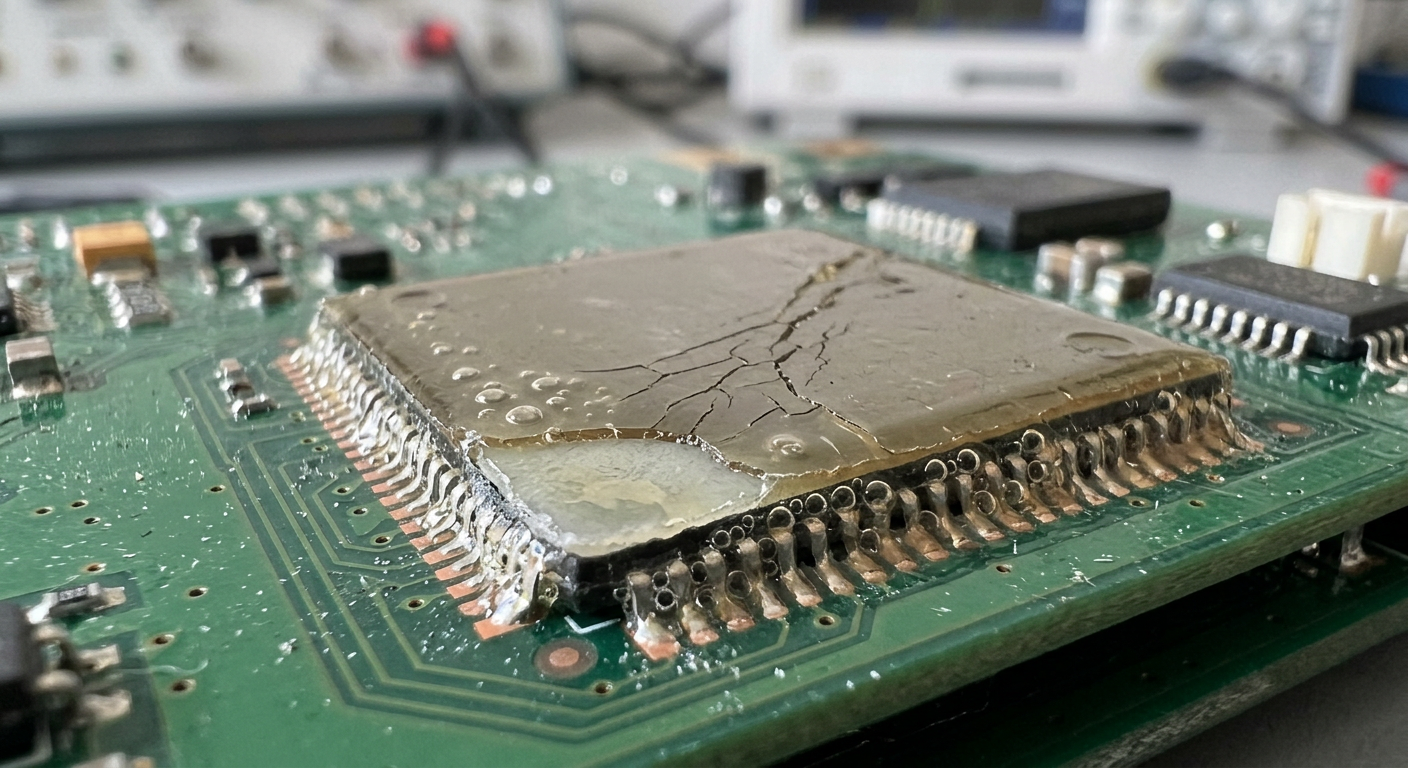
The phrase conformal coating defects bubbles cracks covers several related failure modes. Bubbles are usually voids created by trapped air, solvent release, moisture interaction, or foaming during application. Cracks often result from thermal stress, brittle film formation, excessive thickness, or poor flexibility. Delamination is separation from the substrate, often caused by contamination, poor surface energy, or incompatible underfill, flux residue, or handling agents. Orange peel, fisheyes, pinholes, and dewetting often appear earlier in the line and can be early warnings of larger reliability problems.
In practical U.S. production settings, defects usually arise from the interaction of five variables: board cleanliness, coating formulation, equipment setup, cure profile, and service environment. For example, a silicone coating may tolerate expansion better than an acrylic, but if the board carries cleaning residue or moisture, even a flexible coating can show bubbles or adhesion failure. Likewise, a urethane may offer strong chemical resistance but can crack if the cure profile and film thickness are not aligned with thermal cycling demands.
| Defect | Typical Appearance | Primary Root Causes | Most Affected Processes | Likely Operational Risk | First Corrective Action |
|---|---|---|---|---|---|
| Bubbles | Raised voids or trapped pockets | Moisture, solvent entrapment, over-agitation, fast flashing | Spray, dip, selective coating | Moisture ingress and weak insulation | Reduce thickness and verify pre-dry |
| Cracks | Hairline or visible film fractures | CTE mismatch, brittle cure, over-thick film, thermal shock | Thermal cure and field operation | Loss of barrier continuity | Switch to flexible chemistry or lower build |
| Delamination | Peeling or lifting from board surface | Contamination, low surface energy, poor adhesion | All application methods | Large exposed areas and corrosion | Improve cleaning and adhesion test |
| Fisheyes | Circular dewetting spots | Silicone contamination, oils, mold release transfer | Spray and manual coat | Uncoated islands | Trace contamination source |
| Pinholes | Tiny through-film openings | Air release, particulates, poor flow, insufficient coverage | Spray and atomized coat | Localized exposure | Adjust viscosity and atomization |
| Edge Pullback | Thin coating at corners or edges | Surface tension imbalance, contamination, low wetting | Selective and spray coating | Weak protection on critical edges | Review chemistry and surface prep |
This table is useful because it separates visible symptoms from actual root causes. In many American plants, teams replace the coating too early without first checking wash quality, material age, line humidity, or cure ramp. A disciplined root-cause approach usually saves more time and money than changing product families immediately.
U.S. Market Conditions for Conformal Coating
The American conformal coating market is shaped by electronics miniaturization, EV growth, aerospace reliability demands, domestic semiconductor investment, and stricter field-life expectations. Regions such as Silicon Valley, Austin, Detroit, Raleigh, Phoenix, and Seattle continue to influence material demand through electronics design, automotive integration, industrial automation, and defense-related production. Ports and logistics hubs including Los Angeles, Long Beach, Houston, Savannah, and Newark also matter because raw materials, finished coatings, and imported boards move through these channels.
Buyers in the United States increasingly ask whether the coating supports low-VOC preferences, RoHS alignment, REACH awareness, UV traceability, selective coating compatibility, and rework practicality. By 2026, sustainability and process efficiency are expected to influence buying decisions more strongly, especially where large OEMs are asking suppliers to lower solvent handling burdens, improve traceability, and provide better process data.
The line chart shows a realistic demand trend rather than an exact published market total. It illustrates a pattern many U.S. buyers recognize: steady growth driven by automotive electronics, industrial controls, connected devices, and renewable energy systems. The practical implication is that procurement pressure will continue to rise, making supplier reliability and technical support more important than price alone.
Product Types and Defect Behavior
Different conformal coating chemistries fail differently. Acrylics are popular for ease of application and rework, but can show solvent-related bubbling if applied too heavily. Silicones usually handle thermal cycling well and are often chosen for LED, power electronics, and harsh environments, yet contamination control remains essential. Urethanes offer strong chemical resistance but may be less forgiving in rework and cure control. Epoxies can provide robust mechanical protection, although brittleness can increase the risk of cracking under severe thermal stress. Parylene is a specialty option for ultra-uniform vapor deposition but involves higher cost and more specialized processing.
In U.S. contract manufacturing environments, the chemistry choice often depends on end-use profile more than on theoretical performance. A board destined for a medical diagnostic unit in Boston may prioritize cleanliness, documentation, and predictable inspection. A power control assembly for a Texas energy system may prioritize thermal resistance and moisture protection. A Midwest automotive module may need stronger endurance under vibration and temperature swings.
| Coating Type | Typical U.S. Use Cases | Strengths | Common Defect Pattern | Rework Difficulty | Best Fit |
|---|---|---|---|---|---|
| Acrylic | General electronics, industrial boards | Easy application, easy rework, good cost balance | Bubbles from solvent trap, edge pullback | Low | High-mix EMS lines |
| Silicone | LED drivers, power supplies, automotive electronics | High flexibility, strong thermal cycling performance | Adhesion issues on contaminated surfaces | Medium | Harsh thermal environments |
| Urethane | Outdoor controls, chemical exposure areas | Chemical resistance, durable barrier | Cracking if cure and thickness are mismanaged | Medium to high | Industrial and outdoor exposure |
| Epoxy | Rigid protection, selected harsh-duty assemblies | Mechanical toughness, strong adhesion | Brittle cracking under thermal stress | High | Low-flex rigid assemblies |
| Parylene | Medical, aerospace, fine-pitch assemblies | Uniform ultra-thin coverage, excellent penetration | Adhesion sensitivity without proper surface prep | High | High-spec protection |
| UV-Cure Hybrid | Fast-cycle automated production | Fast tack-free process, automation friendly | Shadow cure problems, localized defects | Medium | Volume lines needing throughput |
This comparison matters because many bubble and crack issues are not universal defects; they are chemistry-process mismatches. A buyer should ask not only which coating is “best,” but which coating is least likely to fail under the actual substrate, cure, and field environment in the United States.
Buying Advice for American Manufacturers and Distributors
For U.S. buyers, good purchasing starts with the assembly, not with the catalog. The right request for quotation should include board type, component density, masking strategy, cure method, expected film thickness, use temperature range, moisture exposure, required standards, and whether rework is expected in service. Buyers in regulated sectors such as aerospace, defense, transportation, and medical electronics should also ask about lot traceability, process validation assistance, and long-term supply continuity.
Distributors and regional dealers should pay close attention to packaging formats and shelf-life management. Aerosols, pails, drums, syringes, and selective coating reservoirs all fit different customer bases. End users usually want a stable technical platform with fast defect troubleshooting. Brand owners may want private label options. Contract manufacturers may need application support and line-side optimization. Individual repair users, meanwhile, often value manageable pack sizes and easier rework.
It is also wise to evaluate where the supplier can support you physically. In the United States, proximity to warehousing, technical staff, or authorized distribution can shorten downtime and reduce scrap. In busy freight corridors near Chicago, Dallas, Atlanta, and New Jersey, buyers often gain an operational advantage from suppliers that can respond quickly with replacement lots, troubleshooting, or adjusted packaging.
The bar chart highlights where defect-resistant conformal coating programs matter most in the United States. Automotive, industrial, and renewable energy stand out because they combine volume with harsh operating demands. That mix is why buyers in these sectors usually prioritize process support and field performance over lowest initial cost.
Industries and Applications Across the United States
In automotive electronics, coatings protect control units, sensors, battery management systems, charging modules, and lighting assemblies. Bubbles and cracks are especially dangerous here because of vibration, under-hood heat, and seasonal thermal cycling. In aerospace and defense, the risk is magnified by low repair tolerance and stringent qualification requirements. In medical electronics, even minor coating failure can be unacceptable if it affects signal integrity or creates corrosion pathways in long-service devices.
Industrial automation depends on reliable coated assemblies in motor drives, PLCs, relays, control cabinets, and outdoor instrumentation. Telecom and networking systems need coating stability where condensation, salt-laden air, or wide ambient shifts are present. Renewable energy systems, especially solar inverters, storage controls, and wind electronics, place constant stress on protective coatings through heat, humidity, and electrical load variation.
Applications vary by geography as well. Coastal users around Florida, Louisiana, and the Carolinas worry more about humidity and salt exposure. Desert deployments in Nevada and Arizona worry more about thermal cycling and dust. Northern states worry more about condensation from cold-to-warm transitions. The right coating program should reflect that local reality.
Top Suppliers Serving the U.S. Market
The conformal coating supply base in the United States includes both domestic manufacturers and international companies with strong North American channels. The suppliers below are relevant because they are recognized by engineers, buyers, or production teams for electronics coating materials, curing systems, or technical support capabilities in the U.S. market.
| Company | Service Region | Core Strengths | Key Offerings | Best For | Buyer Notes |
|---|---|---|---|---|---|
| HumiSeal | Nationwide U.S., strong EMS and OEM presence | Longstanding electronics coating specialization | Acrylic, urethane, silicone, UV-curable coatings | Qualified industrial and electronics programs | Often considered for established coating lines |
| Chase Corporation | United States and broader North America | Industrial materials depth and electronics protection | Conformal coatings, sealants, specialty materials | Industrial and demanding protection needs | Good fit where broader materials portfolio helps |
| Dymax | U.S. manufacturing and technical support network | Light-curable process expertise and fast curing | UV/LED-curable coatings and curing equipment | Automated production and throughput-focused users | Strong where cure speed is critical |
| MG Chemicals | Widely distributed across the U.S. | Accessible range for repair and production users | Acrylic, silicone, urethane, epoxy coatings | MRO, prototyping, and smaller production programs | Easy availability through distribution channels |
| Electrolube | North American distribution and technical support | Broad electronics chemicals portfolio | Conformal coatings, cleaners, thermal materials | Users wanting integrated cleaning and coating approach | Useful when process chemistry alignment matters |
| Dow | Strong U.S. industrial footprint | Silicone science and harsh-environment capability | Silicone conformal coatings and related materials | High-reliability thermal and environmental demands | Often shortlisted for durability and flexibility |
| Henkel | Nationwide through industrial and electronics channels | Large-scale materials capability and engineering support | Protective materials, adhesives, process solutions | OEMs seeking integrated materials support | Best when buyers need broad manufacturing coordination |
This table gives a practical supplier view rather than abstract market categories. U.S. buyers can use it to narrow discussions based on process style, required chemistry, and support expectations. The most useful next step is to compare not just product names, but line compatibility, cure method, defect history, and response speed when troubleshooting starts.
Detailed Supplier Comparison
Not every supplier fits every buyer type. A large automotive electronics manufacturer in Detroit may want deep validation support and long-term product continuity. A contract manufacturer in California may prioritize dispensing compatibility and short cycle time. A regional distributor in Texas may need private label flexibility or easier stock-keeping formats.
The area chart reflects a trend already visible in the American market: buyers are steadily moving toward cleaner processing, better traceability, and automation-friendly coatings. This trend matters for defect control because more traceable and more stable processes typically produce fewer bubbles, cracks, and cure inconsistencies.
| Supplier | Typical Customer Type | Preferred Application Style | Defect Support Value | Regional Fit | Commercial Flexibility |
|---|---|---|---|---|---|
| HumiSeal | OEMs, EMS providers, engineering-led buyers | Spray, selective coating, dip | High for process-led evaluations | Strong across major U.S. manufacturing hubs | Good for structured qualification programs |
| Chase Corporation | Industrial manufacturers, specialty electronics | Production coating and broader protective systems | High where multi-material coordination is needed | Good for Midwest and East Coast industrial users | Solid for long-cycle industrial projects |
| Dymax | Automation-heavy factories, high-speed lines | UV and LED curing | High for throughput and cure optimization | Well suited to fast-moving electronics clusters | Strong for engineered process packages |
| MG Chemicals | Repair users, labs, smaller manufacturers | Manual coat, spray, bench-scale production | Moderate and accessible | Strong through broad U.S. distribution | Flexible for smaller order volumes |
| Electrolube | Process engineers seeking cleaner-coating pairing | Integrated chemistry programs | High where contamination causes coating failure | Useful in multi-site industrial accounts | Good for technical consultative sales |
| Dow | Harsh-environment electronics users | Production silicone applications | High for thermal and environmental durability | Strong where reliability outweighs rework ease | Better for established technical specifications |
This comparison is helpful because it translates supplier names into procurement logic. The right choice depends on whether your challenge is chemistry, automation, contamination control, lead time, or commercial flexibility.
How to Prevent Bubbles, Cracks, and Delamination
Prevention begins with cleaning verification. Flux residues, oils, ionic contamination, silicone transfer, and operator handling residues are common hidden causes of poor adhesion and fisheyes. U.S. plants that run no-clean processes should still validate whether the residue profile is compatible with the selected coating. The next step is environmental control. High humidity during coating, insufficient board preheat, or cold substrates can trigger bubble formation. Thickness control is equally important. More coating does not automatically mean more protection; it often means slower solvent escape and higher internal stress.
Cure control deserves special attention. Rapid thermal ramps can lock in stress, especially on dense assemblies with mixed components and shadowed regions. UV systems must be checked for shadow areas and secondary cure needs. Material age, viscosity drift, and pot life also matter. Finally, qualification should include actual use-case testing, not just a visual pass after application. Thermal cycling, humidity aging, adhesion checks, dielectric verification, and cross-section analysis all provide more reliable evidence than appearance alone.
Case Studies from Realistic U.S. Use Scenarios
A contract manufacturer near San Jose coating mixed industrial boards saw bubble defects after moving to a faster takt time. The root cause was not the coating brand but reduced flash-off time combined with cooler incoming boards from a climate-controlled storage area. After adding substrate conditioning and adjusting film thickness, defects dropped sharply without changing chemistry.
An automotive electronics supplier in the Detroit area encountered cracking in a urethane-based film after temperature-cycle testing. Investigation found that the applied thickness was consistently above target in corner pooling zones. The company revised dispense parameters and evaluated a more flexible formulation, reducing crack initiation during cycling.
A Gulf Coast energy controls maker experienced intermittent delamination in field returns. Salt-laden humidity exposure accelerated corrosion at poorly wetted regions near connectors. Audit work revealed contamination from upstream handling gloves and inconsistent cleaning maintenance. Once contamination control improved, coating adhesion stabilized and field complaints declined.
These examples underline the same lesson: defect names are visible symptoms, but the real solution usually sits in process discipline, chemistry fit, and end-use understanding.
Our Company
For American buyers looking for a cost-competitive but technically structured partner, QinanX presents a practical option because its electronics and industrial adhesive portfolio is backed by ISO-based manufacturing discipline, RoHS and REACH compliance alignment, multi-stage quality control, and digital traceability that supports lot accountability expected by U.S. sourcing teams. The company’s range includes electronic silicone, UV-curable adhesive technologies, epoxy systems, polyurethane materials, acrylic formulations, and related industrial products, which is useful when a buyer needs coating-adjacent compatibility rather than a single standalone product. In commercial terms, QinanX supports end users, distributors, dealers, brand owners, and smaller-volume buyers through OEM/ODM projects, wholesale supply, private label programs, and regional partnership models, allowing different U.S. customer types to source under their preferred business structure. For buyers wanting proof of market commitment rather than a remote export relationship, the company combines established service to more than 40 countries with around-the-clock technical assistance, free sample support, custom packaging options, and pre-sale and after-sale coordination that fits U.S. qualification workflows; buyers can review its broader product range, learn more about the company, or reach out through its U.S.-oriented contact channel for project discussions.
How to Evaluate a Supplier Before Purchase
Ask for a controlled sample plan. A good supplier should be able to recommend specific test boards, target film thickness, cure method, and defect checks. Ask whether they support acrylic, silicone, urethane, epoxy, or UV systems relevant to your line. Request data on dielectric properties, thermal endurance, moisture resistance, and chemical compatibility, but also ask for processing guidance, because coating failures often happen in the gap between datasheet promise and shop-floor reality.
Buyers in the United States should also check lead times, available pack sizes, technical responsiveness during local business hours, and whether the supplier understands the application category. A supplier that supports industrial controls may not automatically be the best fit for miniature medical electronics. Finally, clarify whether the supplier can support long-term reformulation risk, regulatory changes, and sustainability documentation. These issues will matter even more in 2026 as procurement standards tighten.
This comparison chart is not a universal ranking; it is a practical buying framework based on how well suppliers generally align with U.S. needs around support, process fit, and commercial usability. Buyers should still validate performance with real assemblies, especially when bubble, crack, or delamination risks are already known.
2026 Trends: Technology, Policy, and Sustainability
Looking ahead to 2026, three trends are likely to shape conformal coating decisions in the United States. The first is process intelligence. More manufacturers are linking selective coating machines, inspection systems, and quality data into traceable workflows. This makes it easier to correlate defects with humidity, viscosity, cure output, and operator changes. The second is regulatory and customer-driven sustainability. Lower-VOC systems, reduced solvent exposure, better packaging efficiency, and cleaner material declarations will become more important, especially for large OEM supply chains. The third is application-specific formulation. As electronics move into harsher, more compact, and more electrified systems, buyers will expect coatings that combine flexibility, fast cure, and chemical resistance without raising crack risk.
American manufacturers also continue to balance reshoring, nearshoring, and global sourcing. That means suppliers able to combine compliance, technical support, and flexible commercial models will be in a stronger position. Local warehousing, responsive troubleshooting, and customization for OEM and private label needs will increasingly matter alongside material performance.
Frequently Asked Questions
What causes bubbles in conformal coating most often?
The most common causes are trapped solvent, moisture on the board, excessive coating thickness, poor flash-off time, and overly aggressive spray settings. In many U.S. factories, humidity control and board conditioning solve more bubble problems than changing brands.
Why does conformal coating crack after thermal cycling?
Cracking usually happens when the cured film is too brittle, too thick, or poorly matched to substrate expansion. Cure schedule, chemistry selection, and pooling around corners are common contributors.
Is silicone better than acrylic for crack resistance?
Silicone often performs better in thermal cycling and high-temperature environments because it remains more flexible. However, acrylic may still be the better choice where easy rework, simpler processing, and cost control matter more. The right answer depends on the application.
Can delamination be fixed by recoating?
Sometimes, but not reliably unless the root cause is removed. If contamination, poor cleaning, or incompatible residues remain on the assembly, recoating may only hide the problem temporarily.
Which U.S. industries care most about conformal coating defects?
Automotive, aerospace, medical electronics, industrial automation, telecom infrastructure, and renewable energy are among the most sensitive because they combine harsh service conditions with high reliability expectations.
Should U.S. buyers only purchase from domestic suppliers?
No. Domestic suppliers can offer proximity and fast support, but qualified international manufacturers with recognized compliance practices, strong documentation, responsive communication, and clear service commitments can also be effective, especially for cost-sensitive or custom programs.
What should I ask a supplier before approving a coating?
Ask for recommended thickness, cure conditions, adhesion guidance, compatibility with your cleaning process, humidity exposure limits, rework method, shelf life, packaging options, and test support using your actual assemblies.
Final Takeaway
For U.S. buyers dealing with conformal coating defects bubbles cracks, the best results come from treating the issue as a system problem rather than a single-material problem. Start with contamination control, thickness and cure discipline, and chemistry alignment to the operating environment. Then shortlist suppliers with real U.S. support logic, clear technical documentation, and proven relevance to your industry. Whether you source from established American brands or qualified international partners, the winning approach is the same: validate on real boards, insist on traceability, and choose a supplier that can help prevent failures before they become field returns.

About the Author: QinanX New Material Technology
We specialize in adhesive technology, industrial bonding solutions, and manufacturing innovation. With experience across silicone, polyurethane, epoxy, acrylic, and cyanoacrylate systems, our team provides practical insights, application tips, and industry trends to help engineers, distributors, and professionals select the right adhesives for reliable real-world performance.

Product Category
You May Also Interest
-
IC Packaging Adhesive: Preventing Void Formation Issues
Learn how IC packaging adhesive void formation is prevented in the United States through material choice, process control, supplier selection, and testing.
-
Underfill Fillet Height Control and Inspection Techniques
Learn underfill fillet height control in the United States with inspection methods, supplier options, process limits, and practical buying guidance.
-
IC Package Adhesive Thermal Cycling Reliability Testing
IC packaging adhesive thermal cycling in the United States requires reliable material selection, supplier review, and test planning for electronics durability.
-
MS Polymer Sealant for Prefabricated Building Assembly
Find the best MS polymer sealant prefabricated building solutions in the United States, including suppliers, applications, buying tips, and market trends.
 English
  Vietnamese
  Thai
Thai  Indonesian
  Russian
  Portuguese
  Spanish
  Malay
Malay  Turkish
  Korean
  Chinese