Share
No-Flow Underfill Material SMT Suppliers in the United States
Quick Answer

If you need no-flow underfill material SMT solutions in the United States, the most practical starting shortlist includes Henkel, NAMICS USA, Master Bond, AI Technology, Zymet, and Panasonic Connect North America for selected electronics materials channels. These companies are widely relevant for U.S. electronics manufacturing in regions such as California, Texas, Arizona, Illinois, New York, and the broader EMS corridor serving automotive electronics, consumer devices, industrial controls, and advanced packaging. For buyers who want a fast procurement path, Henkel and NAMICS are often preferred for high-volume SMT lines, while Master Bond, AI Technology, and Zymet are frequently evaluated for specialty performance, engineering support, and niche packaging requirements.
For immediate action, buyers should compare reflow compatibility, voiding behavior, capillary flow control, cure profile, flux interaction, warpage resistance, dispense consistency, and MSL-sensitive component reliability before approving a material. In parallel, qualified international suppliers can also be considered when they hold relevant certifications such as ISO, RoHS, and REACH compliance and provide strong pre-sales and after-sales support for the U.S. market. This is especially relevant when cost-performance, OEM labeling, flexible packaging, and responsive technical customization are important.
United States Market Overview

The market for no-flow underfill material in SMT assembly in the United States is closely tied to long-term growth in automotive electronics, medical devices, aerospace modules, communications infrastructure, industrial controls, and compact consumer electronics. Demand is strongest in manufacturing clusters connected to Silicon Valley, Austin, Phoenix, San Diego, Boston, Chicago, and the Southeast electronics corridor. In these locations, assemblers are under constant pressure to improve drop reliability, thermal cycling durability, and assembly throughput while controlling rework loss and field failure rates.
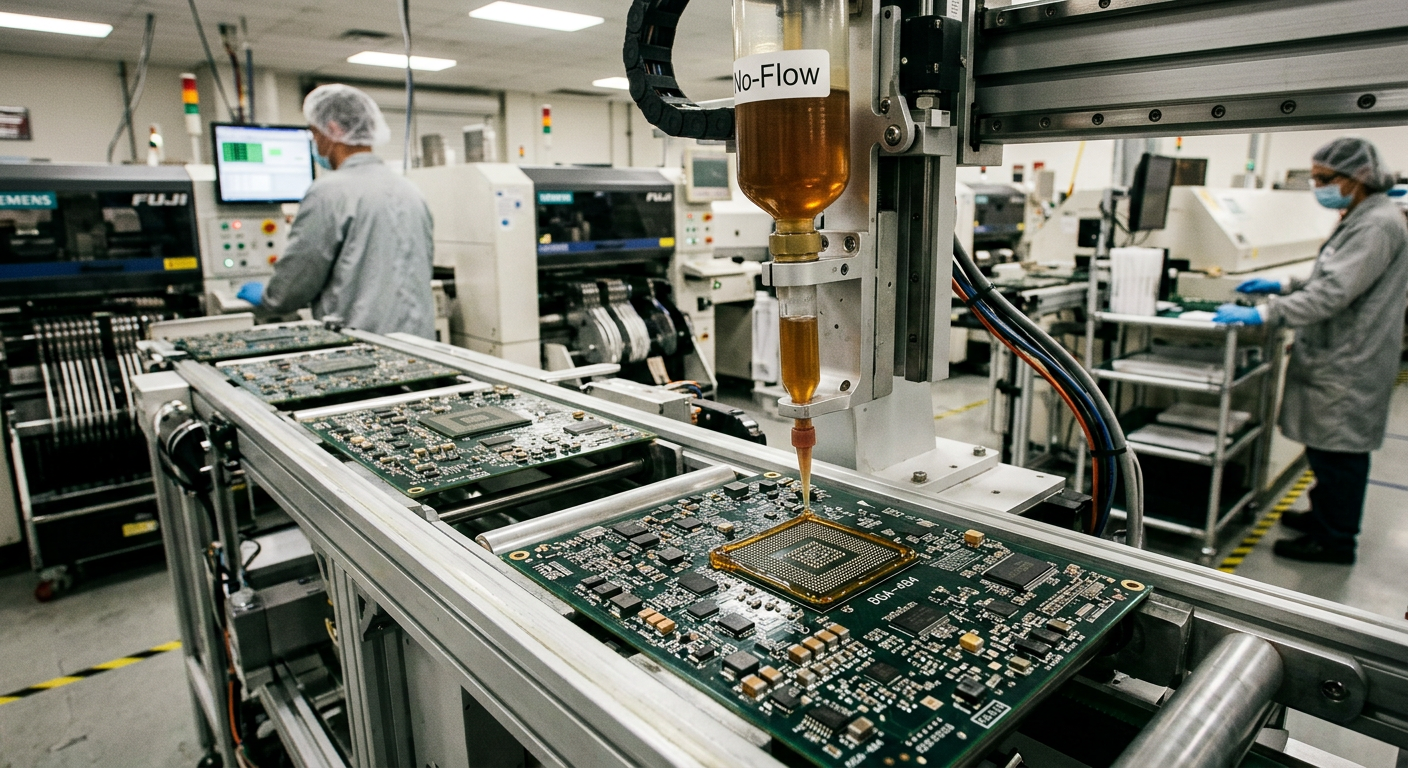
No-flow underfill materials are designed to be placed before component attachment and cured during or after the reflow process, depending on the formulation. This makes them attractive for high-volume SMT environments because they reduce separate post-assembly underfill steps and help reinforce solder joints in area-array packages such as CSP, flip chip, and some fine-pitch BGA structures. In the United States, the strongest pull comes from manufacturers that are balancing throughput with reliability in products exposed to thermal shock, vibration, and repeated on-off cycles.
Recent sourcing behavior shows that U.S. buyers increasingly want a supplier that can do more than ship adhesive drums or syringes. They expect lot traceability, incoming QC consistency, application guidance, profile optimization support, and documentation aligned with customer audits. For this reason, local technical support matters almost as much as published datasheet performance. Buyers in ports and logistics hubs such as Los Angeles, Long Beach, Houston, Savannah, and New York/New Jersey also tend to value shorter replenishment cycles and safety stock planning, especially for high-volume EMS programs.
Market Growth Trend

The following chart illustrates a realistic growth pattern for U.S. demand for SMT no-flow underfill materials, driven by EV electronics, miniaturized industrial devices, and higher board-level reliability requirements.
Why This Material Matters in SMT
In conventional electronics assembly, solder joints absorb a large share of mechanical stress and thermal mismatch between the package and PCB. With smaller packages and higher I/O density, the strain on joints can become a major reliability risk. No-flow underfill material helps by creating a supportive polymer matrix under the package during assembly, reducing crack propagation and improving resistance to shock and thermal fatigue.
For U.S. manufacturers serving automotive, avionics, industrial automation, and rugged handheld equipment, this matters because warranty exposure is high and field failures can be expensive. A suitable no-flow underfill compound can improve first-pass quality when the process window is tuned correctly, but a poor material choice can create voids, incomplete wetting, excessive residue interaction, or rework challenges. That is why supplier selection should be tied directly to the package architecture, PCB surface finish, reflow profile, and downstream reliability targets.
Common Product Types
Although many buyers use the phrase no-flow underfill material SMT as a single category, the market includes several practical variations. These are usually differentiated by viscosity, cure behavior, filler content, reflow tolerance, and the intended component family.
| Product Type | Typical Use | Key Benefit | Main Limitation | Common U.S. Industries | Best Fit |
|---|---|---|---|---|---|
| Epoxy no-flow underfill | Flip chip, CSP, micro-BGA | Strong mechanical reinforcement | Profile sensitivity | Automotive, industrial, medical | High-reliability SMT lines |
| Low-viscosity no-flow underfill | Fine gap packages | Better package penetration | May increase bleed risk | Consumer electronics, telecom | Miniaturized boards |
| Fast-cure no-flow underfill | High-throughput assembly | Shorter takt time | Narrower process window | EMS, wearables | Volume production |
| High Tg no-flow underfill | Harsh temperature exposure | Improved thermal stability | Can be more brittle | Aerospace, power control | Severe thermal cycling |
| Low-stress flexible underfill | Sensitive die or substrates | Better stress absorption | May reduce rigidity | Medical and sensor modules | Delicate package structures |
| Halogen-conscious specialty grades | Compliance-driven programs | Easier environmental alignment | Fewer options in some niches | OEM export products | Global compliance projects |
This table is useful because it shows that material selection should not start from price alone. Buyers should first identify the package geometry, reliability target, and reflow constraints, then narrow down the chemistry family.
Industry Demand in the United States
Demand in the United States is uneven across sectors. Automotive electronics and industrial controls currently create the most consistent pull because they require durable interconnects and long service life. Medical devices and aerospace electronics also matter, though qualification cycles are slower and documentation expectations are more demanding.
How Buyers Should Evaluate No-Flow Underfill Materials
Procurement teams and process engineers in the United States usually get the best results when they evaluate no-flow underfill materials through a joint commercial and technical screen. The most common mistake is treating underfill like a simple consumable rather than a reliability-critical process material. A better approach is to match the adhesive to real board conditions, package stand-off, flux system, and expected mission profile.
| Evaluation Factor | What to Check | Why It Matters | Risk if Ignored | Who Owns the Decision | Typical U.S. Buyer Priority |
|---|---|---|---|---|---|
| Reflow compatibility | Material behavior during heating | Prevents voids and misalignment | Open joints, inconsistent cure | Process engineering | Very high |
| Viscosity control | Batch consistency and dispense profile | Ensures repeatable placement | Bleed, insufficient coverage | Manufacturing engineering | High |
| Thermal cycling reliability | Cycle test data and failure mode | Predicts field durability | Premature solder fatigue | Quality and reliability teams | Very high |
| Storage and shelf life | Cold chain, out-time, lot stability | Supports production planning | Waste and line stoppage | Supply chain | High |
| Certification and compliance | RoHS, REACH, QC traceability | Reduces audit risk | Customer rejection | Quality and sourcing | High |
| Technical support response | Onsite and remote troubleshooting | Shortens qualification time | Slow launch and yield loss | Program management | Very high |
This framework is practical because it mirrors how real U.S. production teams work. The right supplier is usually the one that can support process qualification, lot consistency, and troubleshooting under production pressure rather than the one with the lowest quote alone.
Applications Across U.S. Industries
No-flow underfill materials are used in several board-level applications where solder joint reinforcement improves operational reliability. In U.S. automotive plants and Tier suppliers, they are commonly evaluated for engine control modules, ADAS electronics, lighting controls, battery management systems, and compact sensor boards. In industrial manufacturing, they support motor drives, PLC modules, power converters, and factory automation boards that face vibration, thermal variation, and long operating hours.
Medical device manufacturers may use these materials in portable monitoring devices, imaging subassemblies, and compact control boards where size reduction must not compromise durability. In consumer and communications products, they are relevant in RF modules, wearables, routers, camera modules, and dense handheld devices where the PCB footprint is small and board flex can stress interconnects.
Because the United States also has a strong aerospace and defense electronics base, specialized underfill usage appears in ruggedized modules, though those programs often involve more extensive validation, material documentation, and long qualification windows. Even where volumes are smaller, the need for consistent mechanical performance is much higher.
Trend Shift in Material Preferences
The U.S. market is shifting from generic reinforcement materials toward more process-specific formulations that support miniaturization, cleaner reflow behavior, and environmental compliance. Faster line speeds and tighter component spacing are moving demand toward lower-voiding and better-controlled rheology systems.
Top Suppliers Serving the United States
The supplier landscape for no-flow underfill material SMT in the United States includes large global materials companies, specialized adhesive formulators, and engineering-focused niche suppliers. The table below highlights practical sourcing options with real company names and a buyer-oriented perspective.
| Company | Service Region | Core Strength | Key Offerings | Typical Buyer Fit | Notes |
|---|---|---|---|---|---|
| Henkel | Nationwide U.S., strong presence in major manufacturing hubs | Large-scale electronics materials portfolio and process support | Underfills, SMT adhesives, thermal materials, encapsulants | Automotive, EMS, industrial OEMs | Often shortlisted for high-volume and qualification-intensive projects |
| NAMICS USA | U.S. electronics manufacturing regions | Semiconductor packaging and underfill expertise | Underfill materials, conductive and specialty packaging materials | Advanced packaging and precision assemblies | Strong technical credibility in fine-pitch applications |
| Master Bond | Northeast U.S. and national distribution | Custom-engineered adhesive systems and technical support | Epoxies, underfills, potting compounds, electrically tailored materials | Medical, aerospace, industrial electronics | Well suited for specialty requirements and consultation-heavy projects |
| AI Technology | U.S. and international electronics customers | Microelectronics and specialty packaging materials | Underfills, die attach, conductive adhesives, encapsulants | Hybrid circuits, sensors, advanced assemblies | Appeals to engineering teams needing niche formulations |
| Zymet | United States, especially engineering-led projects | Electronics adhesives and low-stress formulations | Underfills, sealants, staking and encapsulation materials | Medical, automotive modules, rugged electronics | Good option when stress management is a key design issue |
| Panasonic Connect North America channels | Selective U.S. industrial and electronics networks | Brand recognition and electronics ecosystem relevance | Electronic materials through channel-specific sourcing paths | Established OEM programs | Availability depends on channel and application scope |
This supplier comparison helps buyers distinguish between broad-portfolio companies and specialty engineering providers. In practice, broad-portfolio suppliers are often easier for nationwide account support, while smaller specialists can be stronger in custom technical alignment.
Supplier Comparison by Decision Criteria
The next chart provides a simplified comparison of supplier suitability from a buyer perspective in the United States. These values represent relative evaluation strength across common sourcing criteria rather than formal published ratings.
Buying Advice for U.S. Importers and Domestic OEMs
When buying no-flow underfill material for SMT assembly in the United States, start by requesting application-specific data rather than only generic datasheets. Ask for thermal cycling results, recommended dispense volumes, reflow profile guidance, and storage requirements for the exact package family you use. If your assembly line is in California, Texas, or Arizona and runs high-mix production, confirm whether the supplier can support frequent changeovers and small-lot engineering trials without disrupting volume programs.
For buyers using contract manufacturers around Dallas, San Jose, Irvine, Phoenix, or Chicago, it is wise to involve the EMS process team before final material approval. The same underfill may perform well in one line and poorly in another if stencil design, placement accuracy, board finish, or oven profile differ. Also verify whether the supplier can support PPAP-style documentation, lot traceability, and customer audits if your end market includes automotive or industrial controls.
If importing, consider not only tariff and lead time exposure but also packaging format, cold storage handling, and local technical response capability. The best overseas suppliers are not simply low-cost vendors; they act like regional partners with fast sample support, stable specifications, and responsive troubleshooting.
Case Studies from U.S.-Relevant Applications
A Midwest industrial controls manufacturer producing compact motor-drive boards evaluated a no-flow underfill to reduce solder fatigue failures in temperature-cycling tests. The original assembly without underfill showed corner-joint cracking after repeated field-simulated cycling. After switching to a tuned no-flow epoxy system and optimizing dispense volume, the manufacturer improved cycling durability and reduced failure concentration at package corners. The key lesson was that profile tuning mattered as much as material choice.
An automotive electronics program in the South required improved vibration tolerance for compact power management assemblies. The buyer initially tested a standard material that produced inconsistent fillet behavior around certain package sizes. A second supplier proposed a lower-viscosity formulation with tighter process guidance and onsite engineering assistance. Qualification succeeded because the supplier addressed not just the chemistry but the placement, preheat, and reflow interaction in a structured manner.
A medical device maker in the Northeast needed reinforcement for a miniaturized sensor board with limited rework tolerance. Instead of selecting the hardest material, the engineering team prioritized lower stress transfer and traceable lot documentation. The chosen supplier won the business because it could provide both application guidance and a stable documentation package for quality review.
Local Supplier Considerations by Region
Regional logistics matter in the United States. West Coast programs often prioritize speed from Southern California distribution and access to engineering support tied to electronics ecosystems in San Jose, Fremont, Irvine, and San Diego. Southwest manufacturers in Arizona and Texas often emphasize automotive-grade support, supply continuity, and scalable volume planning. Northeast buyers are more likely to prioritize documentation, specialty applications, and close technical interaction for medical and industrial projects. Midwest buyers often focus on rugged electronics and lifecycle consistency. Southeast buyers, especially near expanding EV and appliance manufacturing corridors, increasingly seek a balance of price, validation support, and dependable replenishment.
| U.S. Region | Main Electronics Focus | Typical Underfill Priority | Logistics Preference | Supplier Advantage | Common Concern |
|---|---|---|---|---|---|
| West Coast | Consumer, telecom, design-led devices | Miniaturization and fast engineering response | California warehousing | Rapid sample and technical access | Fast design change cycles |
| Southwest | Automotive and EMS | Volume stability and reliability | Texas and Arizona distribution | Scale and qualification support | Production continuity |
| Midwest | Industrial controls and automotive | Thermal cycling durability | Central replenishment | Rugged application knowledge | Long product life requirements |
| Northeast | Medical, industrial, aerospace | Documentation and specialty engineering | Short domestic transit time | Technical consultation depth | Audit and validation burden |
| Southeast | Appliance, EV supply chain, industrial | Cost-performance balance | Regional stocking | Flexible supply models | Ramp-up speed |
| National OEM networks | Multi-site manufacturing | Specification consistency | Multi-warehouse coverage | Account management scale | Cross-site process alignment |
This regional view matters because the best supplier for a San Diego prototype line may not be the best fit for a high-volume automotive EMS plant in Texas or a medical electronics assembler in Massachusetts.
Our Company in the U.S. Market
For buyers seeking an additional sourcing path beyond legacy domestic brands, QinanX brings a practical combination of electronics adhesive manufacturing capability, compliance discipline, and flexible commercial support that aligns well with U.S. market expectations. The company operates with ISO-based quality systems and supplies products built under multi-stage QC with digital traceability, while also supporting compliance expectations such as RoHS and REACH that are routinely requested by U.S. OEMs, importers, and contract manufacturers. Its broader adhesive portfolio across epoxy, silicone, polyurethane, acrylic, cyanoacrylate, hot melt, and water-based chemistries demonstrates formulation depth rather than single-category trading, which is important when customers need adjacent materials for potting, sealing, bonding, or board-level protection from one source. For cooperation models, QinanX serves end users, distributors, dealers, brand owners, and private-label programs through OEM, ODM, wholesale, retail-oriented packaging options, and regional distribution partnerships, giving local U.S. buyers flexibility whether they need direct industrial supply, house-brand packaging, or long-term channel development. From a service assurance perspective, the company’s export experience across more than 40 countries, automated production scale, free sample programs, 24/7 technical assistance, and tailored formulation support provide concrete buyer protection for U.S. customers who need responsive pre-sale validation and after-sale troubleshooting instead of a distant transactional exporter. Buyers can review the broader product catalog, learn more on the company page, or request technical discussion through the U.S. inquiry contact channel.
How to Compare Domestic and International Suppliers
For U.S. buyers, the decision is rarely just domestic versus imported. It is usually a balance among validation speed, unit economics, application support, and supply resilience. Domestic suppliers often have an advantage in local technical presence, shorter communication loops, and established approval history. International suppliers may offer stronger cost-performance ratios, more flexible OEM packaging, and a broader willingness to customize. The best choice depends on whether your program values immediate field engineering access, broad product ecosystem integration, or aggressive cost targets tied to large production volumes.
A sensible strategy is to dual-source where possible. Keep one proven domestic option for urgent production support and qualify one international source for cost optimization and continuity planning. This is particularly relevant for programs serving EV electronics, smart appliances, portable devices, and industrial modules where annual volume can change quickly.
Future Trends Through 2026
By 2026, the U.S. market for no-flow underfill material SMT will likely be shaped by three major forces. First is technology: more compact packaging, heterogeneous integration, and higher thermal density will push demand toward lower-voiding materials with tighter rheology control and improved compatibility with advanced substrates. Second is policy and supply chain localization: manufacturers will continue diversifying sources to reduce disruption risk, with more emphasis on traceability, regional stocking, and documentation readiness. Third is sustainability: customers will increasingly ask about restricted substances, waste reduction, packaging efficiency, and materials that support cleaner, more stable assembly windows.
Another clear trend is the growing expectation that adhesive suppliers participate in process optimization, not just product delivery. Buyers want data-backed recommendations, reflow guidance, and rapid troubleshooting. Suppliers that invest in technical sales engineering, sample responsiveness, and stable quality records will gain share in the United States. This is especially true in automotive, medical, and industrial electronics where reliability requirements are non-negotiable.
Frequently Asked Questions
What is the main benefit of a no-flow underfill material in SMT?
It reinforces solder joints under area-array packages and improves resistance to thermal cycling, drop, vibration, and mechanical stress while fitting into streamlined SMT processes.
Which U.S. industries use these materials most?
Automotive electronics, industrial automation, medical devices, telecom hardware, aerospace modules, and compact consumer electronics are among the most active users.
Are domestic U.S. suppliers always better than imported suppliers?
Not always. Domestic suppliers often provide faster local support, but qualified international suppliers can be very competitive when they offer strong certifications, stable quality systems, customization, and reliable after-sales service.
What should I request before approving a supplier?
Ask for technical datasheets, SDS, compliance statements, lot traceability details, storage guidance, sample material, reflow recommendations, and application-specific reliability data.
Can no-flow underfill reduce process steps?
Yes. Compared with some post-assembly capillary underfill methods, it can simplify workflow because the material is placed before component attach, though process tuning remains essential.
What is the biggest qualification risk?
The biggest risk is assuming the material will behave the same across different board finishes, component stand-offs, flux systems, and reflow profiles. On-line validation is essential.
How important is local support in the United States?
Very important. Fast troubleshooting support can save significant time during line ramp-up, especially for high-volume programs or reliability-critical assemblies.
Final Takeaway
For companies sourcing no-flow underfill material SMT in the United States, the best suppliers are the ones that align chemistry, process support, documentation, and regional supply reliability. Henkel, NAMICS USA, Master Bond, AI Technology, and Zymet are strong names to evaluate first, especially for buyers in California, Texas, Arizona, Illinois, New York, and other major manufacturing centers. At the same time, buyers should not ignore qualified international manufacturers that combine certification-backed production, customization, export experience, and responsive U.S.-oriented support. In a market where reliability and throughput matter equally, the winning sourcing decision is usually the one that reduces both field risk and operational friction.

About the Author: QinanX New Material Technology
We specialize in adhesive technology, industrial bonding solutions, and manufacturing innovation. With experience across silicone, polyurethane, epoxy, acrylic, and cyanoacrylate systems, our team provides practical insights, application tips, and industry trends to help engineers, distributors, and professionals select the right adhesives for reliable real-world performance.

Product Category
You May Also Interest
-

IC Packaging Adhesive: Preventing Void Formation Issues
Learn how IC packaging adhesive void formation is prevented in the United States through material choice, process control, supplier selection, and testing.
-

Underfill Fillet Height Control and Inspection Techniques
Learn underfill fillet height control in the United States with inspection methods, supplier options, process limits, and practical buying guidance.
-
IC Package Adhesive Thermal Cycling Reliability Testing
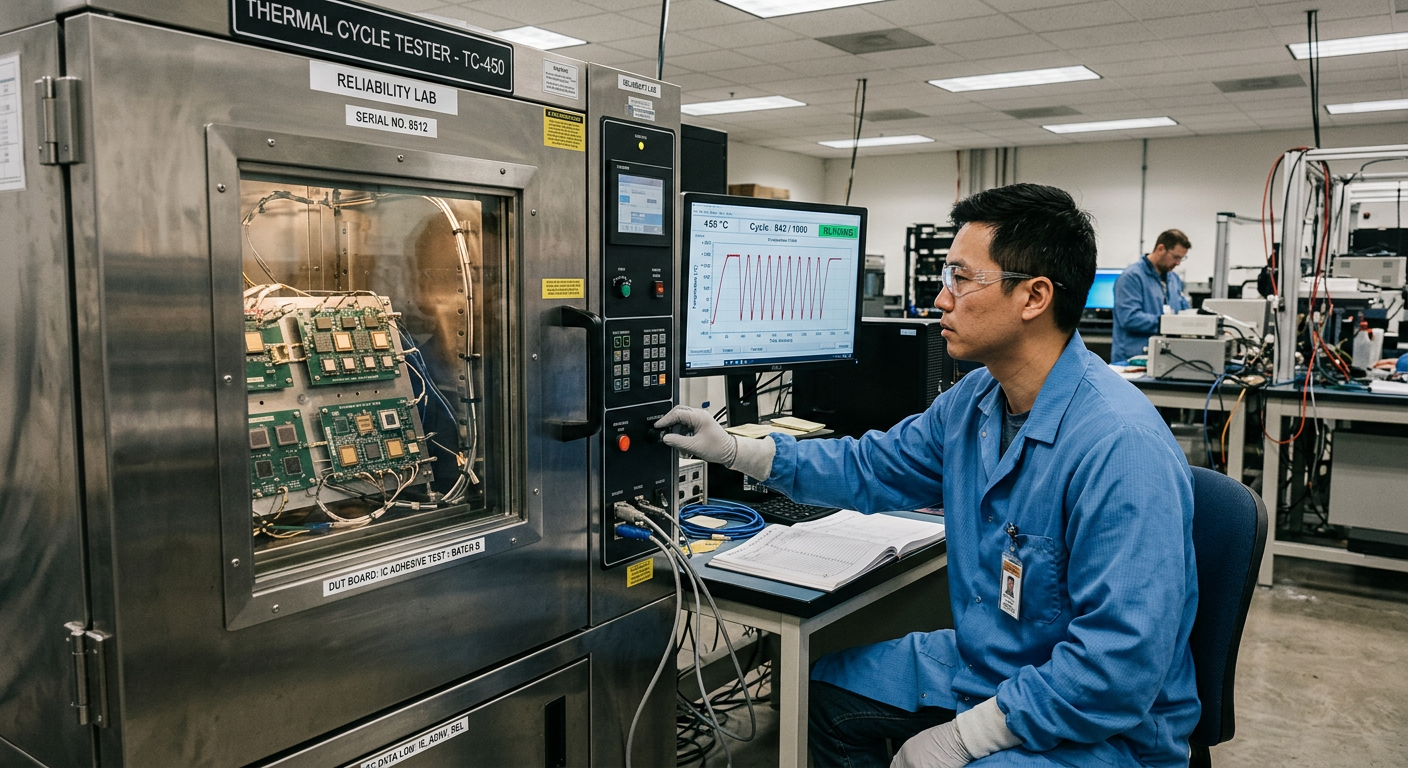
IC packaging adhesive thermal cycling in the United States requires reliable material selection, supplier review, and test planning for electronics durability.
-

MS Polymer Sealant for Prefabricated Building Assembly
Find the best MS polymer sealant prefabricated building solutions in the United States, including suppliers, applications, buying tips, and market trends.
 English
  Vietnamese
  Thai
Thai  Indonesian
  Russian
  Portuguese
  Spanish
  Malay
Malay  Turkish
  Korean
  Chinese