Share
Compressible Thermal Gap Filler PCB Suppliers in the United States
Quick Answer

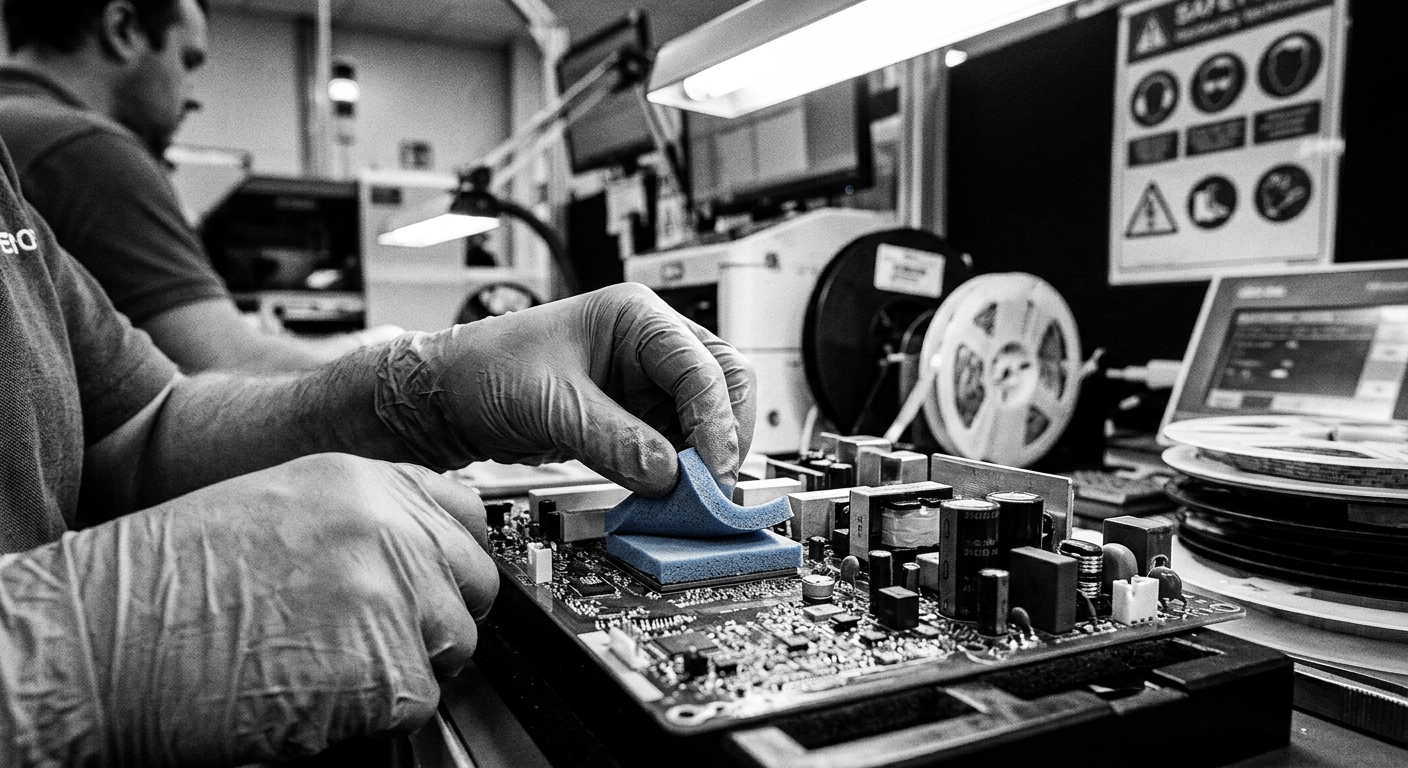
If you need a compressible thermal gap filler for PCB assemblies in the United States, the most practical options usually come from established thermal interface material suppliers with local engineering support, fast sampling, and clear data on thermal conductivity, compression force, dielectric strength, and long-term reliability. For uneven board topography, stacked components, shielding cans, power modules, and enclosure-to-board heat transfer, the most commonly evaluated names in the U.S. market include Parker Chomerics, Henkel Bergquist, Laird Thermal Materials, Boyd, 3M, and Momentive. These companies are widely used across electronics, automotive, telecom, industrial controls, and energy systems because they offer gap pads, dispensable gap fillers, and specialty silicone or non-silicone materials designed to conform to height variation on populated PCB surfaces.
For buyers in cities such as San Jose, Austin, Boston, Chicago, and Phoenix, the right choice depends less on brand popularity and more on the actual stack-up: gap distance, clamping load, rework needs, UL and dielectric requirements, and operating temperature. In many cases, U.S.-based distributors and fabricators can support rapid qualification, while qualified international suppliers can also be a strong option when they provide RoHS and REACH compliance, documented QC, stable export experience, and responsive pre-sales and after-sales support. For cost-performance programs, especially private label, OEM, and volume supply projects, experienced Chinese manufacturers with relevant certifications and practical engineering support can be worth considering alongside domestic sources.
United States Market Overview

The United States market for PCB thermal management materials is driven by rising power density, compact product design, and stricter expectations for reliability across electronics. A compressible thermal gap filler PCB solution is especially important when designers need to bridge uneven mechanical interfaces between hot components and heat spreaders, metal housings, lids, or cold plates. Unlike rigid thermal shims or simple grease layers, these materials absorb tolerance variation caused by component height differences, board warpage, enclosure mismatch, and assembly tolerances.
Demand is strongest in technology corridors such as Silicon Valley, Austin, Raleigh, Seattle, and the greater Detroit automotive belt. These hubs are supported by major logistics routes and ports including Los Angeles, Long Beach, Savannah, Houston, and New York-New Jersey, which influence lead times for imported thermal interface materials. U.S. buyers often balance three competing factors: thermal performance, softness or compressibility, and manufacturability at scale. In practice, higher conductivity often brings higher density or compression force, so engineering teams must validate the actual assembly pressure and contact quality rather than rely only on datasheet headline numbers.
Another notable market factor is the shift from single-material specification to application-based specification. Instead of asking only for a 3 W/mK or 6 W/mK pad, buyers increasingly ask whether the gap filler can survive vibration, pass dielectric isolation targets, avoid silicone bleed, resist pump-out, and remain stable after thermal cycling. This trend is visible across EV electronics, telecom base stations, battery management systems, industrial drives, LED power assemblies, and edge computing hardware.
The chart above illustrates a realistic growth trajectory for U.S. demand. Growth is supported by higher board-level heat loads, reshoring in selected electronics categories, and continued investment in electric mobility and smart infrastructure. Even where end-product volumes fluctuate, thermal design requirements tend to become more demanding, which keeps thermal gap filler selection strategically important.
Product Types for Uneven PCB Surfaces

Not every compressible material fits every board design. The best solution depends on assembly geometry, target thermal path, service temperature, electrical isolation requirements, and automation level.
| Product Type | Typical Form | Best Use | Main Advantage | Main Limitation | Typical U.S. Buyers |
|---|---|---|---|---|---|
| Soft silicone gap pad | Die-cut sheet or roll | General PCB to housing contact | Easy handling and rework | May require higher thickness inventory | EMS, controls, telecom |
| Ultra-soft gap pad | Low-durometer pad | Fragile components and low clamping force | Protects solder joints and packages | Can tear during aggressive handling | Consumer, sensors, medical |
| High conductivity gap pad | Engineered pad | Power modules and hotspots | Better heat transfer | Often higher compression force and cost | Automotive, industrial power |
| Dispensable gap filler | Two-part liquid or paste | Complex 3D topography | Excellent conformity and automation potential | Cure control and dispensing equipment required | High-volume electronics lines |
| Non-silicone gap filler | Pad or dispensable compound | Silicone-sensitive environments | Reduces contamination concerns | Smaller material selection in some ranges | Optics, specialty electronics |
| Phase-change style interface with compliance layer | Hybrid format | Tight thermal path with moderate compliance | Lower interface resistance in some designs | Less forgiving for large gap variation | Servers, power conversion |
This table shows why buyers should start from the application rather than the catalog. Uneven PCB surfaces with coils, MOSFETs, inductors, transformers, memory packages, or shielding features often benefit from ultra-soft pads or dispensable compounds. By contrast, assemblies with more predictable tolerances and rework needs often favor die-cut pads.
What Engineers Mean by Compressible Thermal Gap Filler PCB
In practical sourcing language, this keyword usually refers to a thermal interface material designed to sit between a populated printed circuit board and a mating heat-dissipating structure. The material must compress enough to accommodate variation in component heights while still transferring heat efficiently. In U.S. engineering teams, common related search phrases include thermal gap pad for PCB, conformable thermal interface for board-level cooling, soft thermal pad for electronics enclosure, and dispensable gap filler for uneven electronics assemblies.
The key performance factors include thermal conductivity, hardness, compression set, outgassing behavior, dielectric strength, flammability rating, operating temperature, tack level, and thickness tolerance. Buyers in regulated applications may also request UL recognition, RoHS and REACH compliance, lot traceability, and data on aging after humidity and thermal shock.
Buying Advice for U.S. Projects
For buyers in the United States, the best sourcing process starts with the thermal path, not the price sheet. First define where the heat originates and where it must go. Then measure the minimum and maximum gap across the board under real assembly conditions. After that, validate the allowable compression force so the filler does not crack ceramic components, deform the PCB excessively, or disturb solder joints.
Another critical point is thickness selection. Many design teams over-specify thickness to absorb worst-case tolerance, only to discover that the resulting contact pressure is too low or the thermal path becomes inefficient. Conversely, choosing a thin, high-conductivity material without enough compliance can leave air pockets over lower components. This is why prototype fitting with pressure-sensitive film, thermal imaging, and post-compression measurement is often more valuable than simply comparing datasheets.
Lead time strategy also matters. If the program launches in the United States and assembly occurs in Mexico or Southeast Asia, buyers should confirm whether the chosen supplier can support multi-region inventory, die-cut conversion, and change control. For long-life industrial or transportation products, continuity of supply is often as important as thermal performance.
| Buying Factor | Why It Matters | What to Ask Supplier | Risk If Ignored | Best Fit Scenario | Typical Decision Owner |
|---|---|---|---|---|---|
| Gap range | Determines compression window | What thickness and compression ratio are validated? | Poor contact or overstress | Mixed-height PCB assemblies | Mechanical engineer |
| Thermal conductivity | Affects heat transfer | Is the value bulk or tested in application? | Hotspots remain unresolved | Power electronics | Thermal engineer |
| Compression force | Protects board and components | What force at target deflection? | Board bowing and joint fatigue | Thin PCBs, delicate packages | Design engineer |
| Electrical insulation | Supports safety and spacing needs | What dielectric strength is documented? | Shorting or safety failure | High-voltage control boards | Compliance engineer |
| Manufacturing method | Impacts throughput and scrap | Can you supply die-cut, kiss-cut, or dispensable format? | Assembly inefficiency | Scaled production | Operations manager |
| Supply continuity | Prevents line stoppage | What are lead times, dual-source options, and lot controls? | Launch delays | Automotive and industrial OEMs | Procurement manager |
The table above is useful because it connects material selection with internal stakeholders. In most successful sourcing decisions, engineering, quality, and procurement evaluate the material together rather than working in isolation.
Industries Driving Demand
Compressible thermal gap filler materials are no longer limited to a narrow segment of consumer electronics. In the United States, multiple industries now depend on board-level thermal compliance materials to support miniaturization and reliability.
The bar chart highlights where demand is strongest. Automotive electronics lead due to EV power electronics, onboard chargers, battery management systems, ADAS modules, and LED lighting controls. Industrial controls remain close behind, especially in motor drives, inverters, power supplies, and factory automation cabinets where heat must move from components to metal enclosures. Telecom demand remains steady because 5G and edge networking equipment rely on compact thermal paths. Renewable energy is gaining ground thanks to solar inverters, energy storage systems, and grid electronics.
Common Applications on PCB Assemblies
The application determines the correct filler behavior. A shielding can over a board has very different needs from a power transistor bonded to a liquid-cooled plate. Understanding the actual use case helps narrow suppliers more effectively.
| Application | Heat Source | Mating Surface | Preferred Material Style | Why It Works | Common U.S. End Market |
|---|---|---|---|---|---|
| PCB to aluminum housing | Power ICs and regulators | Machined enclosure wall | Soft gap pad | Balances rework and conformity | Industrial controls |
| Board to heat spreader plate | Memory and processors | Stamped or machined plate | High-performance pad | Consistent thermal bridge | Networking and servers |
| Irregular component field | Mixed-height packages | Top cover or lid | Dispensable gap filler | Fills complex 3D gaps | Automotive ECUs |
| Power module interface | MOSFETs and IGBTs | Cold plate or sink | Higher conductivity pad | Supports hotspot transfer | Energy and drives |
| Sensitive optical electronics | Low-power localized heat | Precision frame | Non-silicone filler | Helps manage contamination risk | Medical and optics |
| Low-clamp portable device | Battery and PMIC area | Stamped shield or cover | Ultra-soft gap pad | Reduces mechanical stress | Portable electronics |
This table is important because it links filler style to assembly reality. When boards have severe height variation, dispensable materials often outperform pads because they eliminate trapped air and adapt to irregular geometry. When serviceability matters, pad-based formats usually remain easier to manage.
Case Studies from Typical U.S. Use Scenarios
A Texas-based industrial controls manufacturer needed to cool a densely populated motor drive PCB mounted inside a powder-coated aluminum cabinet. The original design used a medium-hard pad that transferred heat acceptably in the lab but caused intermittent field issues after vibration and thermal cycling. Switching to a softer compressible thermal gap filler with a lower compression force reduced board stress, improved contact over tall and short components, and lowered hotspot temperatures by several degrees Celsius during steady-state operation.
An automotive electronics integrator in Michigan evaluated both pad and dispensable materials for a vehicle control module with large topography variation. The pad option was simpler for rework, but the dispensable gap filler produced better thermal uniformity and reduced assembly stack tolerance concerns. After pilot validation, the company selected the dispensable format for high-volume production and retained a pad option for service replacement kits.
A telecom equipment assembler in California faced a common issue: a machined lid contacted a populated board with RF shielding structures, connectors, and power regulation zones. A single hardness material could not balance all interface heights effectively. The final design used two gap filler grades in different zones, demonstrating that mixed-material strategies can often outperform one-size-fits-all sourcing.
These examples reflect a broader lesson in the United States market: the best thermal gap filler is often application-specific, and supplier engineering support is a real differentiator.
Top Suppliers in the United States
The following supplier list focuses on companies commonly considered in the U.S. market for compressible thermal gap filler PCB applications. Availability can vary by series, converter, or distribution channel, but these names are relevant for practical sourcing discussions.
| Company | Service Region | Core Strengths | Key Offerings | Best For | Notes |
|---|---|---|---|---|---|
| Parker Chomerics | United States nationwide | Strong EMI and thermal engineering portfolio | Thermally conductive gap pads and interface materials | Aerospace, defense, industrial electronics | Often chosen for demanding engineered applications |
| Henkel Bergquist | United States and North America | Well-known thermal management brand | GAP PAD, dispensable gap fillers, phase change materials | Automotive, consumer, industrial OEMs | Broad specification range and strong recognition |
| Laird Thermal Materials | United States, Mexico support, global supply | Wide material portfolio and converting capability | Tflex gap fillers, soft pads, custom formats | Telecom, automotive, data infrastructure | Commonly specified in electronics assemblies |
| Boyd | United States with engineering network | Integrated thermal system design | Gap pads, liquid cooling interfaces, custom thermal parts | EV, medical, power electronics | Useful when thermal materials are part of a larger system |
| 3M | United States and broad distribution | Trusted materials science reputation | Thermally conductive interface pads and tapes | General electronics and industrial accounts | Strong channel availability |
| Momentive | United States and international | Silicone materials expertise | Thermally conductive silicone gap filler solutions | Electronics requiring silicone performance | Relevant for customized thermal silicone programs |
| Fischer Elektronik via U.S. channels | Selected U.S. regions through distribution | Heat sink and interface integration | Gap pads matched with thermal hardware | Industrial and embedded systems | Useful when hardware and TIM are sourced together |
This table offers a practical snapshot rather than a one-size-fits-all ranking. Henkel Bergquist and Laird are often short-listed for mainstream electronics programs. Parker Chomerics is frequently considered where compliance, shielding integration, or harsher operating conditions matter. Boyd is especially relevant if the thermal filler is part of a more complex cooling architecture. 3M is often attractive where channel accessibility and purchasing convenience matter. Momentive remains relevant for silicone-heavy programs and custom chemistry discussions.
Detailed Supplier Comparison
Comparing suppliers on paper can be misleading because datasheet methods vary. Still, buyers need a practical framework for screening options before prototype testing.
This comparison chart represents a realistic composite score based on portfolio breadth, engineering support, converting flexibility, and suitability for PCB thermal gap filler programs in the United States. It should not replace application testing, but it shows why Henkel Bergquist, Laird, and Parker Chomerics frequently appear early in supplier evaluations.
Trend Shift in Material Preferences
U.S. buyers are moving from basic pad selection toward more nuanced decisions based on automation, sustainability, and contamination control. The trend is not linear across every sector, but the overall direction is clear.
The area chart indicates a growing preference for dispensable gap fillers and custom-converted materials. This shift is especially visible in automotive modules, battery systems, and high-density electronics where irregular topography and automated assembly lines favor liquid-applied conformity. At the same time, reworkable soft pads remain essential in service-sensitive industrial and telecom designs.
How to Evaluate Local Suppliers and Distributors
In the United States, many buyers do not purchase directly from a global manufacturer at first. They often work through local converters, regional distributors, or value-added engineering partners. This can improve speed, especially when die-cut shapes, laminated constructions, or small-to-mid volume pilot runs are involved. Buyers in California and Texas often prioritize sample speed and field engineering access, while buyers in the Midwest may focus more on PPAP-style documentation, change control, and multi-site supply assurance.
A strong local supplier relationship should include application review, prototype support, and documented quality controls. The distributor or converter should be able to explain not just what material they carry, but why one option fits your gap, force, dielectric, and process profile better than another. If they cannot discuss compression set, contact resistance trends, thermal cycling, and practical assembly behavior, they are acting only as traders rather than technical partners.
Natural sourcing paths can also begin through the product catalog when buyers want to compare broader adhesive and thermal interface options, or by reviewing a manufacturer’s company background before requesting qualification documents. For projects that need direct engineering feedback, it is more efficient to contact the supplier team early with board drawings, gap measurements, and temperature targets than to request generic samples without context.
Our Company
For buyers in the United States evaluating alternatives beyond the biggest legacy brands, Qingdao QinanX New Material Technology Co., Ltd presents a practical option for thermal management and adjacent electronics material programs because its manufacturing system is built around internationally recognized controls rather than informal export trading. The company operates with ISO-based quality management, RoHS and REACH compliance, multi-stage QC, and full digital traceability, which gives U.S. purchasers the documentation needed for regulated and repeat-order programs. Its broader adhesive and electronic materials experience across silicone, polyurethane, acrylic, epoxy, MS, and specialty formulations also matters because thermal gap filler selection often interacts with potting, sealing, encapsulation, and enclosure assembly decisions. On the commercial side, QinanX supports end users, distributors, dealers, brand owners, and private-label buyers through OEM, ODM, wholesale, customized packaging, and regional partnership models, making it suitable for both direct factory sourcing and channel development. For U.S. customers, the company’s proven export record across more than 40 countries, free sample support, automated production, and 24/7 technical assistance function as concrete service safeguards, while its established experience with global compliance expectations and long-term program supply demonstrates market commitment beyond one-off remote shipments.
How to Choose Between U.S. and International Supply
The decision is often not either-or. Many successful United States buyers qualify a domestic source for fast engineering support and a qualified international source for cost optimization or second-source resilience. This is especially useful in programs with long product life, price pressure, or multi-plant production footprints. Domestic suppliers typically offer faster turnaround, local warehousing, and easier communication during early-stage validation. International manufacturers can bring stronger cost-performance ratios, custom branding support, and flexible OEM configurations, especially when volumes increase.
The key is to require the same discipline from every candidate: compliance data, thermal test evidence, compression force curves, lot controls, sample turnaround, and written change-notification procedures. A lower unit price is not meaningful if the material causes line scrap, assembly stress, or field failures.
Applications by Industry Segment
Different industries use compressible thermal gap filler PCB materials for different reasons, and the design priorities vary substantially.
In automotive electronics, vibration resistance, long-term thermal aging, and supply consistency are often prioritized. In industrial drives and automation controls, dielectric performance and service life in hot enclosures matter more. In telecom and data equipment, engineers focus on heat density, mechanical tolerance, and the ability to maintain contact over large board areas. Medical devices may emphasize contamination sensitivity, reliability, and traceability. Renewable energy systems increasingly require materials that perform in outdoor or semi-rugged conditions with wide temperature swings.
This diversity is why the strongest suppliers in the U.S. market are those that can match material softness, thermal conductivity, conversion method, and documentation package to each end market rather than pushing a single flagship product into every design.
2026 Trends in Technology, Policy, and Sustainability
Looking toward 2026, the compressible thermal gap filler PCB market in the United States is expected to shift in four important ways. First, higher power density in AI hardware, edge computing, EV electronics, and energy storage will raise demand for materials that combine greater thermal performance with lower compression stress. Second, automated dispensing solutions will continue gaining share where board topography is highly irregular and manufacturers want tighter process control.
Third, policy and compliance expectations will become more visible in sourcing decisions. U.S. buyers increasingly ask for clear RoHS and REACH declarations, controlled substance reporting, and traceability aligned with broader ESG and supplier governance frameworks. This does not necessarily eliminate silicone-based materials, but it does push suppliers to provide more transparent material data and lifecycle documentation.
Fourth, sustainability will move from brand language to engineering practice. Buyers will pay more attention to scrap reduction, optimized die-cut yield, packaging efficiency, and longer service life. Materials that help lower field failure rates and reduce thermal overdesign can support sustainability goals just as meaningfully as changes in raw material profile. Suppliers that combine performance data with cleaner logistics, stable packaging, and traceable manufacturing will likely gain an advantage in competitive bids.
Practical Qualification Workflow
A practical qualification workflow for a compressible thermal gap filler PCB project in the United States typically starts with six steps. Gather thermal maps of the hot components. Measure assembled gap variation under realistic clamping. Short-list two to four materials with different hardness and conductivity profiles. Prototype both thermal and mechanical behavior. Run cycling and environmental checks relevant to the end market. Then lock down part format, thickness, and supply plan. This process is more reliable than selecting by datasheet alone.
It is also wise to check adjacent needs early. For example, if the same assembly uses potting, enclosure gasketing, or threadlocking, a supplier with expertise across those chemistries may streamline compatibility and sourcing. That is one reason why companies with broader electronic materials portfolios can be valuable even when the immediate purchase is only a thermal filler.
FAQ
What is the main advantage of a compressible thermal gap filler on PCB assemblies?
Its main advantage is the ability to bridge uneven gaps between heat-generating components on a populated board and a heat sink, lid, chassis, or enclosure surface without demanding perfect flatness or identical component heights.
When should I choose a pad instead of a dispensable gap filler?
Choose a pad when you need cleaner handling, easier rework, simpler inventory control, or faster manual assembly. Choose a dispensable filler when board topography is highly irregular, air entrapment is a concern, or automated dispensing can improve consistency.
Is higher thermal conductivity always better?
No. Higher conductivity can come with higher stiffness, higher cost, or increased compression force. A slightly lower conductivity material with better conformity may outperform a stiffer high-conductivity option in the actual assembly.
What thickness is best for uneven PCB surfaces?
The best thickness depends on the true assembled gap range and compression target. It should be thick enough to maintain contact at maximum gap and compress appropriately at minimum gap without overstressing components.
Do U.S. buyers usually require RoHS and REACH documentation?
Yes, especially for multinational OEMs, electronics manufacturers, and customers with formal compliance systems. Even when not legally mandatory for every application, these documents are commonly expected during supplier qualification.
Can international suppliers compete with U.S. brands for this category?
Yes, particularly when they provide strong compliance documentation, stable manufacturing controls, export experience, fast sample response, and reliable technical communication. Many buyers use international suppliers for cost-performance or second-source strategies.
Which U.S. regions have the most demand?
Strong demand is concentrated in California, Texas, Michigan, Arizona, Massachusetts, North Carolina, and Washington, supported by electronics, automotive, telecom, industrial, and medical manufacturing activity.
How do I start a supplier discussion efficiently?
Share the board drawing, heat source list, target temperatures, enclosure interface, expected gap range, dielectric needs, operating temperature, annual volume, and whether you need die-cut pads, bulk sheets, or dispensable material.
Conclusion
For compressible thermal gap filler PCB sourcing in the United States, the best solution is the one that balances thermal transfer, softness, dielectric safety, assembly efficiency, and supply reliability for your exact design. Parker Chomerics, Henkel Bergquist, Laird, Boyd, 3M, and Momentive are all relevant names for serious evaluation, especially when local support and established U.S. channels matter. At the same time, qualified international manufacturers with RoHS and REACH compliance, traceable production, and flexible OEM support can offer meaningful value for private label, volume procurement, and dual-source programs. The most successful buyers validate materials under real compression and real heat loads, rather than choosing by conductivity claim alone.

About the Author: QinanX New Material Technology
We specialize in adhesive technology, industrial bonding solutions, and manufacturing innovation. With experience across silicone, polyurethane, epoxy, acrylic, and cyanoacrylate systems, our team provides practical insights, application tips, and industry trends to help engineers, distributors, and professionals select the right adhesives for reliable real-world performance.

Product Category
You May Also Interest
-
Low Stress IC Packaging Adhesive for Thin Die Bonding
Find low stress IC packaging adhesive thin die solutions in the United States, with supplier comparisons, material options, buying advice, and 2026 market trends.
-
High Refractive Index Adhesive for LED Lens Attachment
Discover high refractive index adhesive LED lens solutions in United States, top suppliers, product types, applications, and sourcing advice for reliable optical bonding.
-
Ceramic Filled Thermal Adhesive for High Voltage Parts
Find ceramic filled thermal adhesive options in the United States, compare suppliers, product types, applications, and sourcing tips for high-voltage parts.
-

ASTM C920 Construction Sealant: Specification Compliance
了解美国ASTM C920密封胶合规要求、产品类型、应用行业与供应商选择要点。本文解析ASTM C920 construction sealant compliance在美国采购实务。
 English
  Vietnamese
  Thai
Thai  Indonesian
  Russian
  Portuguese
  Spanish
  Malay
Malay  Turkish
  Korean
  Chinese