
Share
Adhesive Semiconductor Packaging in the United States
Quick Answer

If you need adhesive semiconductor packaging solutions in the United States, the most practical approach is to source from suppliers that already support advanced electronics, chip assembly, underfill, die attach, encapsulation, and thermal management programs for domestic manufacturing sites in states such as Arizona, Texas, California, New York, and Oregon. For buyers seeking proven capability, the most recognized names in the U.S. market include Henkel, DuPont, H.B. Fuller, Master Bond, Panacol, and DELO for high-reliability electronic adhesive systems used across semiconductor packaging workflows.
For immediate action, shortlist suppliers based on package type, reliability target, and production scale. Henkel is widely used for die attach, underfill, and thermal interface materials. DuPont is strong in advanced materials for semiconductor integration and electronics manufacturing. H.B. Fuller serves electronics assembly with practical process support. Master Bond is often selected for specialty epoxies in demanding environments. Panacol and DELO are relevant for UV-curing and precision bonding applications. In addition, qualified international suppliers, including Chinese manufacturers with strong certifications, export experience, and responsive technical support, can also be considered when cost-performance and flexible OEM supply are important.
United States Market Overview

The United States remains one of the most strategic markets for semiconductor packaging adhesives because it combines advanced R&D, high-value chip design, reshoring investments, and a growing push to localize critical electronics supply chains. Demand is strongest around manufacturing and technology corridors such as Phoenix, Austin, Silicon Valley, Portland, Albany, and the broader Northeast semiconductor ecosystem. Ports including Los Angeles, Long Beach, Houston, Savannah, and New York-New Jersey also matter because imported raw materials, specialty chemicals, and finished electronics components often move through these gateways before reaching assembly or integration sites.
In practical sourcing terms, adhesive semiconductor packaging in the United States is no longer limited to conventional die attach materials. Buyers now ask for products that support flip-chip, wafer-level packaging, fan-out packaging, system-in-package, sensor modules, automotive electronics, power devices, miniaturized consumer electronics, and AI infrastructure hardware. This shifts evaluation criteria from simple bond strength toward a wider matrix that includes low outgassing, ionic cleanliness, thermal conductivity, low stress, CTE management, cure profile, moisture resistance, reworkability, and process compatibility with automated dispensing lines.
Federal support for domestic chip manufacturing is also influencing procurement behavior. New investments tied to fabrication, advanced packaging, and electronics assembly are increasing preference for suppliers that can provide documentation, consistent lot control, and long-term technical support. U.S. buyers increasingly expect material suppliers to understand qualification pathways, EHS standards, traceability, and the specific needs of regulated sectors such as automotive, aerospace, medical electronics, and industrial controls.
The result is a market where globally recognized chemical companies and specialized adhesive formulators both play important roles. Large suppliers often lead in scale, qualification breadth, and direct support to major OEMs. Mid-sized and specialty suppliers often win where customization, speed, or niche formulations matter most. This creates room for domestic and international suppliers that can prove process stability, documentation quality, and practical support for engineers and purchasing teams.
The growth pattern reflected above is consistent with what buyers are seeing in the field: more semiconductor packaging projects, more packaging complexity, and stronger pressure on materials performance. The strongest growth drivers are advanced computing, EV power electronics, 5G infrastructure, defense electronics, and edge AI hardware. These categories demand adhesives that not only bond but also protect, dissipate heat, resist harsh environments, and maintain electrical integrity over long service life.
Top Suppliers Serving the United States

The table below focuses on suppliers that are meaningful to U.S. buyers. It combines local relevance, recognized product capability, and practical value for semiconductor packaging or adjacent high-reliability electronics assembly.
| Company | Service Region | Core Strengths | Key Offerings | Typical Fit |
|---|---|---|---|---|
| Henkel | United States nationwide, with strong electronics presence in Arizona, California, Texas, and global support | Broad semiconductor materials portfolio, deep OEM engagement, process engineering support | Die attach, underfill, thermal interface materials, encapsulants, conductive adhesives | Large-scale advanced packaging and automotive electronics |
| DuPont | United States and global semiconductor hubs | Advanced materials expertise, integration with electronics manufacturing supply chains | Electronic materials, specialty adhesives, packaging support materials | High-end electronics, chip packaging, integrated device manufacturing |
| H.B. Fuller | North America with established industrial distribution channels | Process-focused support, scalable manufacturing, diverse adhesive chemistries | Electronics adhesives, assembly materials, specialty bonding systems | Industrial electronics, contract manufacturing, balanced cost-performance projects |
| Master Bond | United States with custom and specialty project support | Engineered epoxy systems, niche formulation strength, high-reliability use cases | Epoxy die attach, encapsulants, thermally conductive compounds, low outgassing systems | Aerospace, defense, medical, specialty semiconductor packaging |
| DELO | United States and global electronics manufacturing regions | Precision bonding, high-speed curing, microelectronics capability | Light-curing adhesives, electronic assembly adhesives, specialty package bonding materials | Sensor packaging, precision optics-electronics, compact assemblies |
| Panacol | United States via technical sales channels and international support | UV and dual-cure expertise, microelectronic packaging suitability | UV-curable adhesives, conductive adhesives, encapsulation systems | Fine-feature bonding, medical electronics, precision semiconductor modules |
| Qingdao QinanX New Material Technology Co., Ltd | United States import supply, distributor cooperation, OEM and project-based support | Flexible custom formulation, industrial adhesive breadth, export experience across 40+ countries | Electronic silicone, epoxy resin adhesives, UV-curable adhesive, polyurethane systems, potting compounds | Cost-conscious sourcing, private label programs, distributor expansion, custom industrial electronics projects |
This supplier mix matters because not every semiconductor packaging project requires the same commercial model. Large integrated manufacturers may need extensive qualification support and globally harmonized documentation. Regional assemblers or brand owners may place higher value on lower MOQ, custom packaging, private labeling, or faster formulation adjustments. The right supplier is therefore the one that matches both process requirements and commercial reality.
Product Types Used in Semiconductor Packaging
Semiconductor packaging adhesives in the United States typically fall into several practical categories. Each category supports a different reliability or assembly requirement, and buyers should align the chemistry with the package architecture instead of selecting by price alone.
| Product Type | Main Function | Common Chemistry | Typical Use in Packaging | Key Selection Factor |
|---|---|---|---|---|
| Die Attach Adhesive | Bonds semiconductor die to substrate or leadframe | Epoxy, silver-filled epoxy, silicone | Power devices, logic chips, sensors | Thermal conductivity and bond reliability |
| Underfill | Protects solder joints and redistributes stress | Capillary flow epoxy, no-flow epoxy | Flip-chip, CSP, BGA assemblies | CTE matching and flow performance |
| Encapsulant | Protects components from moisture, shock, and contamination | Epoxy, silicone, hybrid resin | IC packages, sensor modules, power modules | Environmental resistance and low stress |
| Thermal Interface Adhesive | Transfers heat between package and heat sink | Silicone, epoxy, filled polymer systems | Power electronics, AI servers, telecom hardware | Thermal conductivity and pump-out resistance |
| Conductive Adhesive | Provides electrical path while bonding | Silver-filled epoxy, isotropic conductive adhesive | RF modules, specialty chip interconnects | Electrical conductivity and curing profile |
| UV or Dual-Cure Adhesive | Fast fixation and selective processing | Acrylic, epoxy-acrylate hybrid | Optoelectronics, micro-sensors, precise module bonding | Cure speed and shadow-area performance |
| Potting and Gap Filling Material | Protects and stabilizes assembled electronics | Epoxy, polyurethane, silicone | Control modules, industrial electronics, automotive subsystems | Shock resistance and thermal cycling durability |
The table shows why “adhesive semiconductor packaging” should be treated as a family of materials rather than a single product. In many U.S. projects, more than one adhesive is used in the same package: die attach for mounting, underfill for stress control, and thermal interface material for cooling. Buyers who specify only bond strength often miss critical failure points related to moisture sensitivity, cure shrinkage, contamination, or thermal cycling.
How Industry Demand Is Shifting
Demand in the United States is not evenly distributed. Automotive electrification, defense electronics, AI computing, and industrial automation are producing strong requirements for packaging materials that can survive higher heat, more vibration, and longer service intervals. Consumer electronics still matter, but volume growth is increasingly paired with pressure for miniaturization and low-cost high-throughput assembly.
The strongest near-term pull is from power electronics and high-density computing. EV inverters, battery management systems, charging modules, and high-power control electronics all need adhesives with reliable thermal performance. AI server boards and accelerated computing hardware need materials that can help manage dense heat loads while remaining stable during rapid thermal cycling. This is why thermally conductive die attach, encapsulants, and TIM systems receive so much attention in supplier evaluations.
Buying Advice for U.S. Procurement Teams
When sourcing semiconductor packaging adhesives in the United States, start by asking whether the adhesive is required to conduct heat, conduct electricity, absorb stress, seal against moisture, or simply hold alignment through assembly. This sounds basic, but it prevents a common sourcing mistake: selecting one product to solve several incompatible engineering demands.
Next, evaluate the process window. Some buyers focus on final cured performance but ignore line realities such as dispense stability, viscosity drift, shelf life, thaw time, tack profile, open time, cure speed, and void behavior. In advanced packaging, these process details strongly affect yield. A material that looks good in a data sheet but behaves inconsistently in production can create hidden cost far above the purchase price of the adhesive itself.
Documentation also matters. U.S. buyers should request TDS, SDS, storage conditions, recommended cure profiles, lot traceability details, compliance status, and any available reliability test data covering thermal shock, humidity, high-temperature storage, and electrical performance. For export suppliers, ask how they handle repeatability across lots and whether they can support qualification samples, pilot runs, and corrective action processes if issues arise.
Commercially, buyers should compare not only unit price but also total cost of ownership. A lower-cost imported adhesive may be attractive if the supplier can offer stable quality, fast communication, and consistent lead times. Conversely, a premium-priced product may still be cheaper overall if it reduces line defects or improves package reliability. This is why dual sourcing strategies are becoming more common in the United States, especially for contract manufacturers and regional electronics assemblers.
Supplier Comparison Factors
The following comparison table is designed to make supplier evaluation more practical for purchasing and engineering teams. It highlights what matters when comparing domestic specialists, multinational leaders, and qualified international suppliers.
| Evaluation Factor | What to Check | Why It Matters | Best For | Typical Risk if Ignored |
|---|---|---|---|---|
| Thermal Performance | Conductivity rating, thermal cycling data, heat aging stability | Critical for power modules and high-density packages | EV, telecom, AI hardware | Overheating and early failure |
| Mechanical Stress Control | Modulus, CTE, cure shrinkage, crack resistance | Protects delicate interconnects and chips | Flip-chip, sensor packaging | Delamination and solder fatigue |
| Process Compatibility | Viscosity, dispense behavior, cure schedule, automation fit | Directly affects line yield and takt time | Contract manufacturing, high-volume assembly | Voids, rework, throughput loss |
| Compliance and Traceability | RoHS, REACH, QC records, batch tracking | Supports audits and regulated supply chains | Automotive, medical, defense-adjacent projects | Qualification delays and sourcing rejection |
| Technical Support | Application engineering, troubleshooting response, sample program | Reduces trial-and-error during scale-up | New product introduction teams | Longer launch cycles |
| Commercial Flexibility | MOQ, OEM/ODM support, package sizes, distributor terms | Important for private label and regional expansion | Distributors, brand owners, smaller OEMs | Excess inventory or inflexible supply |
| Lead Time and Logistics | U.S. inventory support, port routing, forecast handling | Prevents production disruption | All buyer types | Line stoppage and costly expediting |
The table reinforces a central point: the best adhesive supplier is the one that can support the full chain from specification through production stability. In the U.S. market, that usually means technical credibility, quality documentation, and dependable communication are valued just as highly as chemistry itself.
Industries Driving Adhesive Semiconductor Packaging
Multiple sectors in the United States are expanding demand for advanced packaging adhesives. Automotive is one of the strongest, especially in EV platforms, ADAS modules, radar systems, and battery electronics. Aerospace and defense programs need low-outgassing, reliable, and traceable materials. Medical device makers require clean, stable materials for diagnostics, imaging, and wearable electronics. Industrial automation increasingly uses semiconductor-rich control systems that must survive vibration, contaminants, and changing temperatures.
Consumer electronics still brings scale, especially in smart devices, audio modules, camera modules, and compact connectivity hardware. Telecom infrastructure remains a durable source of demand because 5G and edge networks need robust high-frequency and high-power electronics. Data centers and AI accelerators are now creating an additional layer of pressure for better heat transfer and package reliability.
Application Scenarios in the United States
U.S. applications vary widely by region. In Arizona and Texas, power electronics and automotive-linked projects often focus on heat-resistant die attach and encapsulation materials. In California, optoelectronics, sensors, and compact device assemblies create demand for precise UV-curable and low-stress adhesive systems. In New York and the Northeast, research-driven packaging and specialty electronics often require highly tailored formulations, pilot support, and detailed process documentation. Along the Pacific coast, electronics imports and re-export flows shape distributor inventory planning and quick-turn supply for assemblers.
In practical terms, common applications include chip-on-board bonding, sensor package sealing, underfill for flip-chip packages, thermal interface bonding in power modules, encapsulation of communication modules, and potting of industrial control boards. These are not interchangeable processes, and each places different emphasis on cure method, conductivity, flexibility, environmental resistance, or chemical purity.
Trend Shift in Material Preferences
Material preferences are changing as package architectures become denser and more thermally demanding. The shift is moving away from simple general-purpose epoxies toward engineered systems that balance thermal performance, low stress, and automated process compatibility.
This trend reflects three realities in the U.S. market. First, smaller packages amplify mechanical stress and make underfill and encapsulant behavior more important. Second, higher performance chips create thermal bottlenecks that ordinary adhesives cannot manage. Third, supply chains now expect more sustainability and compliance transparency, pushing suppliers to improve formulation control and documentation. Buyers that adjust early can reduce redesign cycles and qualification delays.
Case Studies and Real-World Purchasing Patterns
A contract electronics manufacturer in Texas producing control boards for industrial automation typically needs semiconductor packaging adhesives that perform reliably without requiring an overly complex process change. In that situation, H.B. Fuller or Master Bond may be evaluated for balanced process support and application-specific formulations, while a qualified international supplier may be reviewed for cost-sensitive programs where private labeling or distributor packaging is required.
An EV subsystem integrator in Michigan or Tennessee may prioritize thermally conductive die attach and encapsulation materials with stronger thermal shock performance. Here, Henkel or DuPont often enters the discussion early because of broad data availability and program support. However, procurement may still maintain a second-source strategy to improve resilience and bargaining leverage.
A California sensor startup building compact modules with optical or MEMS elements may prefer precision adhesives from DELO or Panacol because cure speed and fine dispensing are critical. For lower-volume production, a specialty supplier with fast iteration can be more valuable than a large supplier with a slower approval process.
A regional distributor serving electronics customers around Chicago, Dallas, and Atlanta may want a partner capable of OEM labeling, flexible packaging sizes, and broad adhesive categories so the distributor can cross-sell electronics adhesives into adjacent industrial markets. In this scenario, a manufacturer with a wide industrial portfolio and wholesale cooperation model may be commercially attractive even if the initial semiconductor volume is modest.
Local and International Supply Options
U.S. buyers often assume that the safest path is always a domestic brand, but supply strategy is more nuanced. Domestic and multinational suppliers offer familiarity, direct field support, and broader installed references. International suppliers can offer better cost-performance, flexible formulation work, private label programs, and broader chemistry coverage across multiple industrial adhesive families. The strongest procurement teams compare both lanes rather than using geography as the only filter.
| Supply Model | Main Advantage | Best Buyer Type | Typical Challenge | How to Manage It |
|---|---|---|---|---|
| Large U.S. or multinational brand | Qualification depth and direct application support | Large OEMs and regulated industries | Higher cost and less flexibility | Use for critical programs and benchmark performance |
| U.S. specialty formulator | Customization and niche technical expertise | R&D teams and specialty electronics makers | Limited scale in some categories | Confirm capacity and second-source plan |
| International manufacturer with U.S. distributor support | Cost-performance and faster commercial adaptation | Distributors, mid-sized OEMs, private label brands | Documentation or logistics gaps | Audit compliance files and forecast inventory |
| Direct import OEM/ODM supplier | Custom packaging, branding, formulation flexibility | Brand owners, dealers, regional distributors | Longer transport chain | Plan lead time and establish safety stock |
| Hybrid dual-source strategy | Supply resilience and pricing leverage | Most mature procurement organizations | Qualification complexity | Standardize testing and approve backup materials early |
| Project-based specialty sourcing | Best fit for unusual package or environmental requirements | Medical, aerospace, advanced sensors | Higher engineering workload | Run structured pilot validation before launch |
This table makes one point very clearly: supplier choice should follow the business model as well as the package requirement. The right source for a Fortune 500 automotive electronics program may not be the right source for a distributor building a private label portfolio.
Our Company in the U.S. Supply Context
For U.S. buyers looking for a flexible partner beyond the largest multinational brands, Qingdao QinanX New Material Technology Co., Ltd brings a practical combination of product breadth and export discipline. The company manufactures electronic silicone, epoxy resin adhesives, electronic potting compounds, UV-curable adhesives, polyurethane systems, cyanoacrylate adhesives, hot melt adhesives, acrylic materials, and modified silane products, giving purchasing teams a wider chemistry base when semiconductor packaging projects overlap with board assembly, encapsulation, sealing, thermal management, or industrial electronics protection. Its ISO-certified production system, alignment with RoHS and REACH, multi-stage quality control, and digital traceability provide concrete evidence that batches are managed to internationally recognized standards rather than sold as unverified commodity materials. Commercially, QinanX supports OEM, ODM, wholesale, retail, private label, and regional distribution cooperation, which is particularly useful for U.S. distributors, dealers, brand owners, contract manufacturers, and end users that need custom packaging, mixed-volume supply, or project-specific formulations. The company’s automated production lines and export history across more than 40 countries demonstrate scale and real operating experience in cross-border supply, while its free sample program, 24/7 technical assistance, and tailored formulation support give U.S. buyers practical pre-sale and after-sale protection for qualification and repeat ordering. Buyers can review the broader product range, learn more about the manufacturer, or reach the team through the U.S. inquiry channel when exploring custom or distributor-oriented adhesive supply.
What to Ask Before You Place an Order
Before ordering semiconductor packaging adhesives in the United States, buyers should request a clear statement on application scope. Ask whether the material is intended for die attach, package sealing, underfill, potting, or heat transfer. Ask for cure recommendations under your exact process conditions. Ask how the supplier controls lot variation and what testing is performed before shipment. If the material is imported, ask how inventory continuity is handled during freight disruptions and whether emergency replacement stock can be arranged through U.S. partners or regional distributors.
Also review packaging sizes. Lab quantities, pilot quantities, and production quantities often need different packaging to reduce waste and preserve shelf life. If you are a distributor or private label buyer, confirm branding options, carton labeling, language requirements, and batch documentation before launch. This is especially important when serving U.S. industrial customers who expect immediate documentation access during audits or site inspections.
2026 Outlook: Technology, Policy, and Sustainability
Looking toward 2026, adhesive semiconductor packaging in the United States will be shaped by three linked trends. The first is technical escalation. More heterogeneous integration, chiplet-based design, AI accelerators, and power-dense electronics will require adhesives with better thermal performance, lower stress, and tighter process control. Suppliers that cannot support increasingly demanding package architectures will lose relevance.
The second trend is policy-driven localization. U.S. industrial policy and strategic supply-chain planning will continue to encourage domestic manufacturing, local warehousing, and stronger material traceability. This does not mean imported adhesives will disappear. Instead, it means international suppliers will need stronger documentation, clearer support models, and more visible local market commitment if they want to grow in the United States.
The third trend is sustainability and EHS performance. Buyers are already asking more questions about solvent content, hazardous substance control, cleaner formulations, and waste reduction in electronics manufacturing. By 2026, sustainability will be less about marketing language and more about procurement gatekeeping. Suppliers that can combine performance with compliance transparency will have a stronger advantage in approved-vendor programs.
Supplier and Product Comparison Snapshot
This final chart provides a simple comparison view of how different solution categories are commonly valued in current U.S. purchasing decisions.
The comparison illustrates a real sourcing pattern in the United States. Large multinational suppliers remain strongest in qualification depth and broad acceptance. Specialty U.S. suppliers perform well where application customization is essential. Qualified international suppliers often stand out in cost efficiency, private label capability, and commercial flexibility, especially when they have solid documentation and dependable technical support.
FAQ
What is the most common adhesive used in semiconductor packaging?
Epoxy-based materials remain the most common, especially for die attach, underfill, and encapsulation. However, silicone, polyurethane, acrylic, and hybrid systems are also used depending on heat, flexibility, cure speed, and environmental resistance requirements.
Are U.S. buyers limited to domestic adhesive suppliers?
No. Many U.S. buyers use a mix of domestic, multinational, and international suppliers. The key is whether the supplier can provide the required certifications, stable quality, technical support, and reliable logistics for the intended packaging process.
What matters most when comparing adhesive semiconductor packaging suppliers?
The most important factors are application fit, process compatibility, reliability data, compliance documentation, lot traceability, and support responsiveness. Price should be judged only after these points are validated.
Can one adhesive handle all semiconductor packaging needs?
Usually not. A package may require separate materials for die attach, underfill, sealing, and thermal transfer. Using one material across all steps can create performance trade-offs and reliability risks.
Why do imported suppliers remain relevant in the U.S. market?
Because many offer attractive cost-performance, flexible OEM or ODM cooperation, and broad chemistry portfolios. When backed by certifications, export experience, and strong support, they can be a practical option for distributors, brand owners, and industrial users.
What should I request before approving a new adhesive supplier?
Ask for technical data sheets, safety data sheets, compliance statements, sample support, cure guidelines, storage recommendations, lot traceability details, and any available reliability test data matched to your application.

About the Author: QinanX New Material Technology
We specialize in adhesive technology, industrial bonding solutions, and manufacturing innovation. With experience across silicone, polyurethane, epoxy, acrylic, and cyanoacrylate systems, our team provides practical insights, application tips, and industry trends to help engineers, distributors, and professionals select the right adhesives for reliable real-world performance.

Product Category
You May Also Interest
-
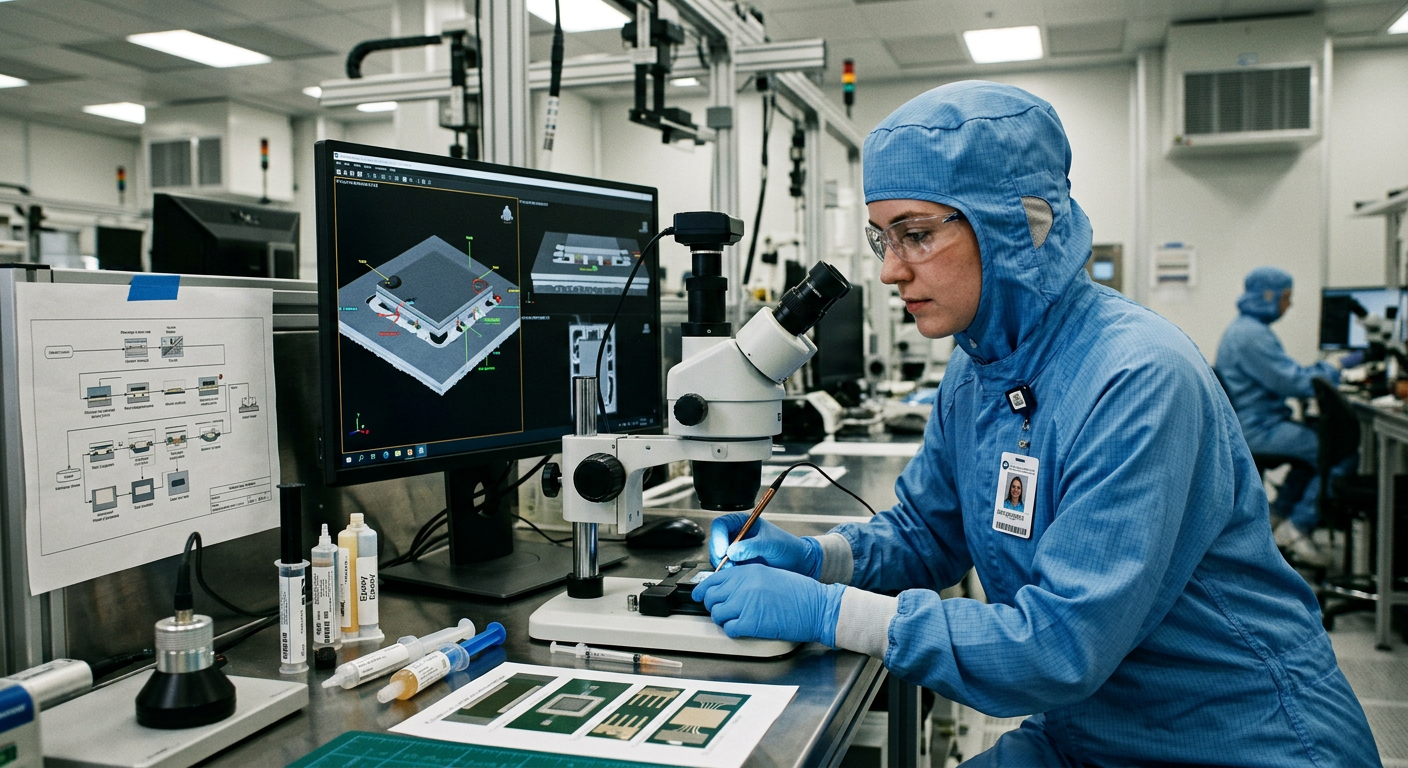
IC Packaging Adhesive: Preventing Void Formation Issues
Learn how IC packaging adhesive void formation is prevented in the United States through material choice, process control, supplier selection, and testing.
-
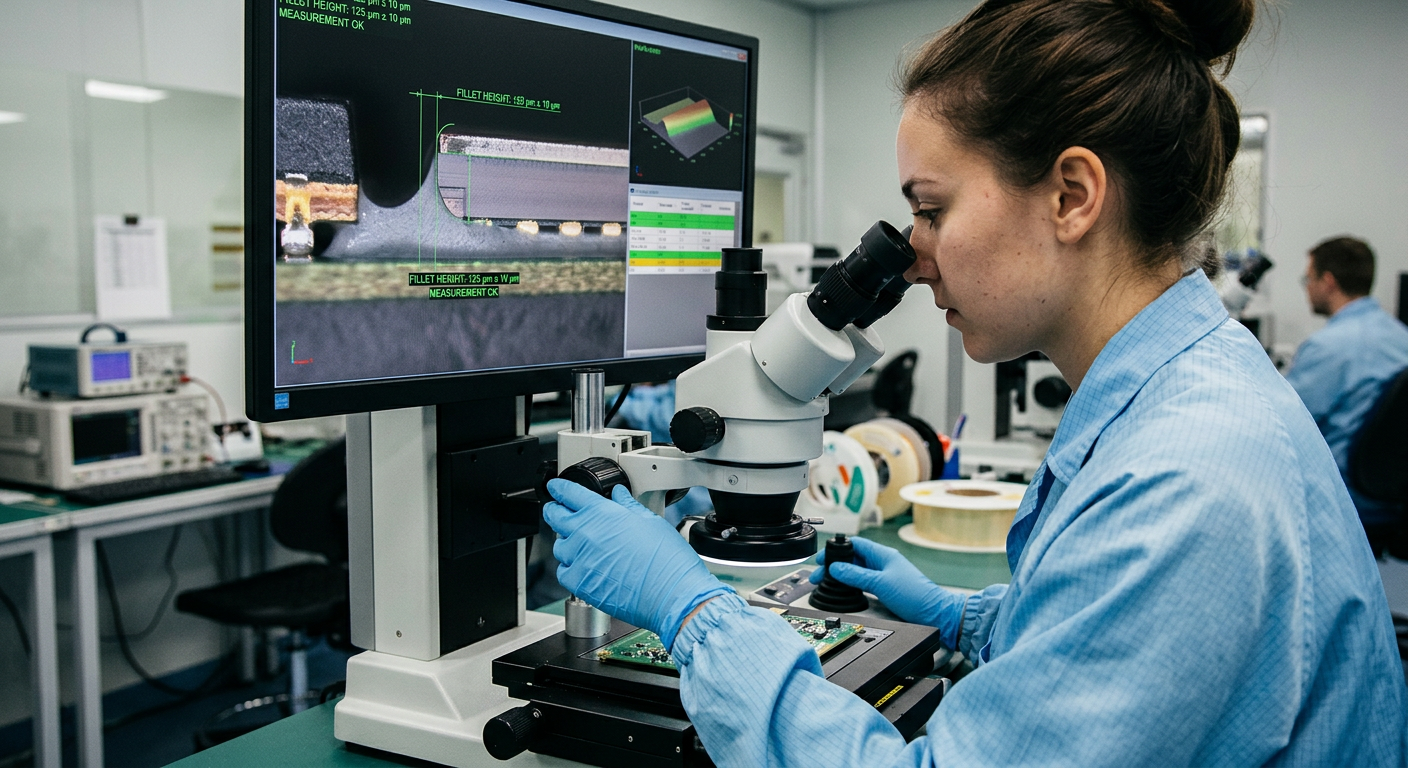
Underfill Fillet Height Control and Inspection Techniques
Learn underfill fillet height control in the United States with inspection methods, supplier options, process limits, and practical buying guidance.
-
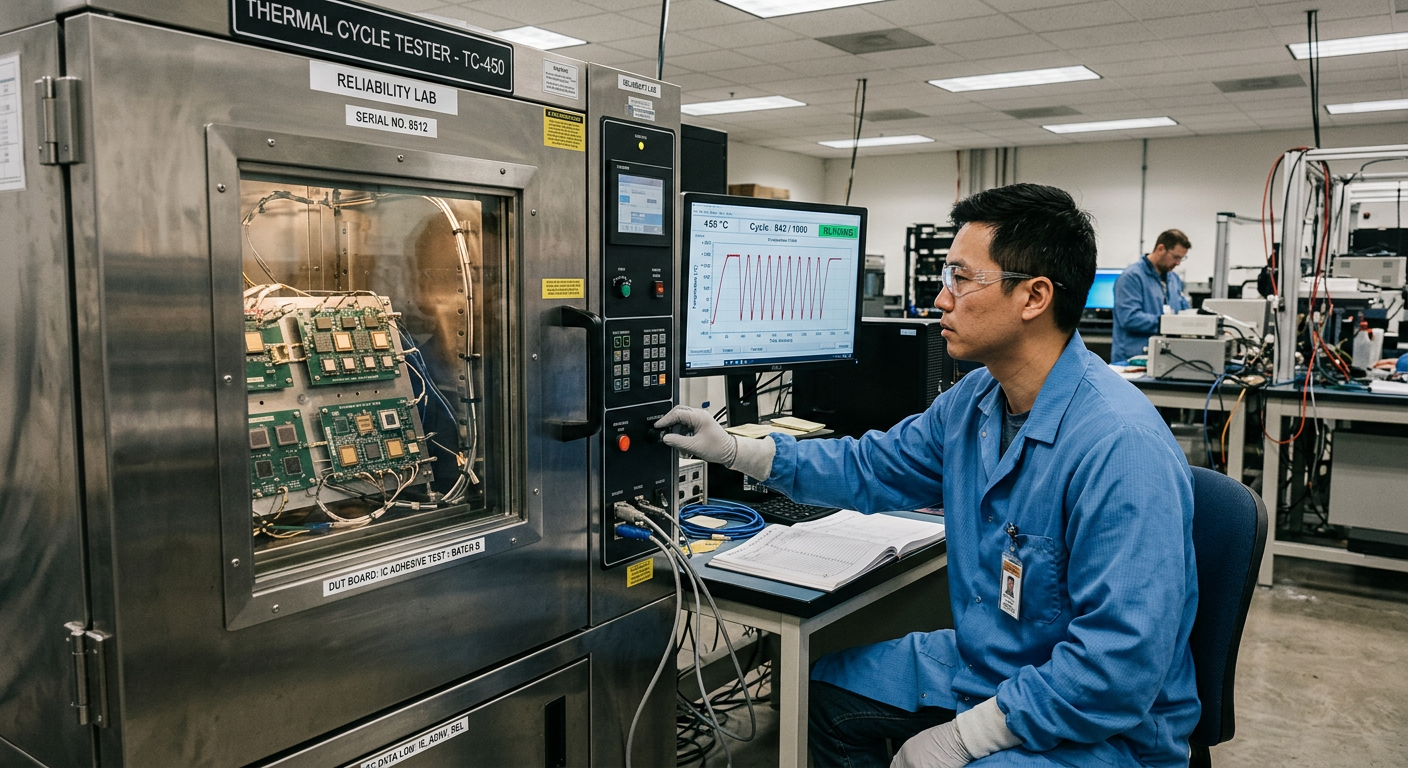
IC Package Adhesive Thermal Cycling Reliability Testing
IC packaging adhesive thermal cycling in the United States requires reliable material selection, supplier review, and test planning for electronics durability.
-

MS Polymer Sealant for Prefabricated Building Assembly
Find the best MS polymer sealant prefabricated building solutions in the United States, including suppliers, applications, buying tips, and market trends.
 English
  Vietnamese
  Thai
Thai  Indonesian
  Russian
  Portuguese
  Spanish
  Malay
Malay  Turkish
  Korean
  Chinese