Share
Acrylic Adhesive in the United States: Practical Guide for Buyers and Users
Quick Answer

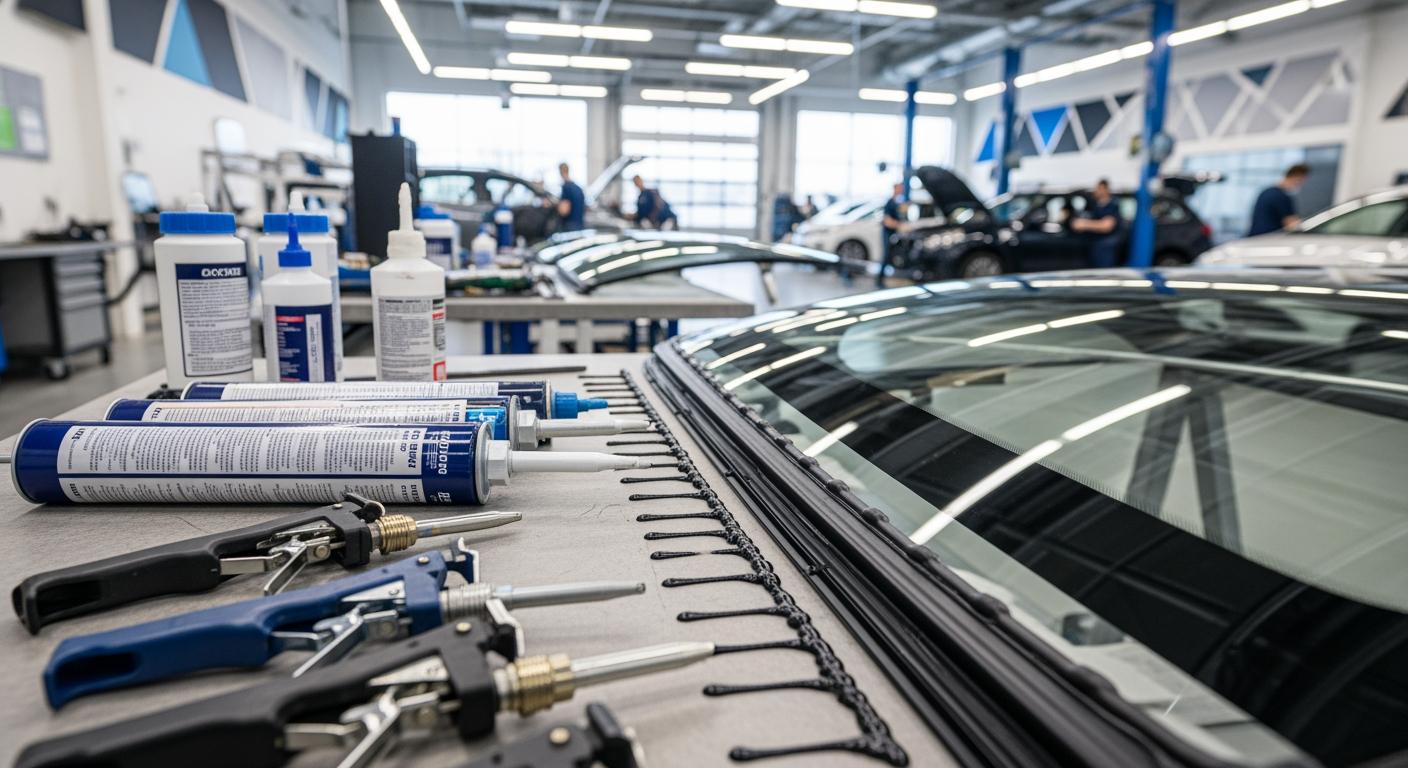
Acrylic adhesive is one of the most versatile bonding materials used in the United States because it delivers strong adhesion, fast processing, good weather resistance, and compatibility with plastics, metals, glass, composites, and painted surfaces. For buyers in the U.S., the best choice depends on the application: pressure-sensitive acrylics are common for labels, tapes, and films; structural acrylics are preferred for automotive, transportation, and industrial assembly; UV-curable acrylics suit electronics and precision bonding; and water-based acrylic systems are often selected for packaging and lower-VOC requirements.
If you need actionable supplier direction in the U.S., commonly recognized companies in or serving this market include 3M, Henkel, H.B. Fuller, Avery Dennison, Sika, and Arkema. These suppliers are widely used across manufacturing hubs such as Chicago, Houston, Los Angeles, Detroit, and Atlanta due to technical support, established distribution, and application-specific product lines. Qualified international suppliers can also be worth evaluating, especially Chinese manufacturers with ISO-based production, RoHS and REACH compliance, custom formulation capability, and strong pre-sales and after-sales support, because they may offer an attractive cost-performance balance for private label, OEM, and bulk industrial procurement.
- Best for tapes and labels: water-based or solvent acrylic pressure-sensitive adhesive
- Best for durable assembly: two-part structural acrylic adhesive
- Best for clear precision bonding: UV-curable acrylic adhesive
- Best for threaded metal locking: acrylic-based threadlocker
- Best for lower-emission packaging lines: water-based acrylic emulsion systems
United States Market Overview

The U.S. acrylic adhesive market remains important because the country combines large-scale manufacturing, advanced packaging, automotive production, electronics assembly, construction renovation, and renewable energy growth. Demand is spread across industrial regions including the Midwest manufacturing corridor, the Gulf Coast chemical base, West Coast electronics and medical device clusters, and East Coast converting and packaging operations. Ports such as Los Angeles, Long Beach, Houston, Savannah, and New York-New Jersey support import flows for raw materials, specialty monomers, and finished adhesive systems, while domestic production capacity supports local supply security.
In practical terms, acrylic adhesive demand in the United States is shaped by four forces. First, manufacturers want reliable bonding performance across mixed substrates without slowing down line speed. Second, distributors and converters want broad inventory coverage, from general-purpose acrylic emulsions to specialty structural systems. Third, procurement teams increasingly weigh compliance, VOC profile, worker safety, and sustainability claims. Fourth, buyers want technical support close to their plant locations, especially when converting from mechanical fasteners or solvent-heavy chemistries.
Compared with some other adhesive families, acrylic systems remain attractive because they balance adhesion, flexibility, weatherability, and process adaptability. They also fit a wide spread of form factors, including liquids, tapes, films, emulsions, syringes, cartridges, dual cartridges, bulk drums, and pails. This allows a single material family to serve label stock manufacturers in Ohio, trailer fabricators in Texas, sign makers in California, electronics plants in Arizona, and construction component suppliers in the Carolinas.
The chart above shows a realistic market growth index for acrylic adhesive demand in the United States. Growth is not explosive, but it is steady and supported by replacement of mechanical fastening, growth in high-performance tapes, lightweight vehicle design, and packaging automation. This kind of steady expansion makes supplier reliability and formulation fit more important than simply chasing the lowest unit price.
Core Product Types of Acrylic Adhesive

Acrylic adhesive is not a single product. In the U.S. market, it covers multiple chemistries and cure mechanisms. Buyers often get better results when they classify requirements by substrate, cure speed, service environment, dispensing method, and regulatory constraints rather than starting with brand preference alone.
| Type | Typical Form | Main Strengths | Common U.S. Uses | Limitations | Best Buyer Profile |
|---|---|---|---|---|---|
| Water-based acrylic PSA | Emulsion, coating grade | Low odor, good film clarity, cost-effective | Labels, tapes, graphics, packaging | Slower ultimate dry under some conditions | Converters and packaging plants |
| Solvent acrylic PSA | Solution polymer | Strong initial tack, broad substrate wet-out | Industrial tapes, specialty films | VOC and solvent handling considerations | High-performance tape manufacturers |
| Structural acrylic adhesive | Two-part cartridge or bulk | High strength, impact resistance, bonds metals and composites | Automotive, transport, industrial assembly | Odor, mixing control, exotherm in bulk | Fabricators and OEMs |
| UV-curable acrylic | Single-component liquid | Fast cure, clear bond line, precise dispensing | Electronics, optics, medical devices | Requires light access | Precision manufacturers |
| Acrylic threadlocker | Low-viscosity liquid | Vibration resistance, leak prevention | Fasteners, pumps, machinery | Application-specific surface prep may be needed | MRO and equipment makers |
| Acrylic emulsion adhesive | Water-based bulk liquid | Easy coating, economical, scalable | Lamination, paper converting, general assembly | Not ideal for every high-heat environment | High-volume industrial users |
This table matters because acrylic adhesive buying mistakes usually happen when users confuse pressure-sensitive acrylics with structural acrylics. A label converter in New Jersey needs coating consistency, peel values, and aging resistance. A bus body assembler in Indiana needs gap tolerance, shear strength, and fatigue resistance. Both are using acrylic adhesive, but the technical selection logic is completely different.
Properties That Matter in Real Applications
In U.S. purchasing and engineering teams, acrylic adhesive evaluation usually goes beyond a simple claim of strong bonding. Real performance depends on several measurable properties. Adhesion to low- and medium-surface-energy plastics is important in appliance and consumer products. Shear and peel strength matter in tapes and graphics. Elongation and impact resistance matter in transportation. UV stability and weathering matter in exterior signage, solar installations, and architectural applications. Cure speed and open time matter on automated lines, especially when labor cost is high.
Temperature resistance is another key factor. Acrylic formulations can perform well in many indoor and outdoor environments, but not every formulation suits prolonged exposure to heat cycling, engine compartment conditions, or chemical washdown. For this reason, U.S. buyers often request real test data under ASTM-style conditions or validated in-application trials.
Durability under humidity is especially relevant in Gulf Coast states such as Texas and Louisiana, while freeze-thaw performance may matter more in the Midwest and Northeast. Outdoor-facing applications in Arizona, Nevada, and Southern California also place extra emphasis on UV exposure and dimensional stability. The best acrylic adhesive choice is therefore geographic as well as technical.
| Property | Why It Matters | High Priority Industries | Typical Test Focus | Failure Risk if Ignored | Buyer Note |
|---|---|---|---|---|---|
| Peel strength | Measures removal resistance on surfaces | Labels, tapes, graphics | 180-degree peel, dwell time | Edge lifting or delamination | Important for films and signage |
| Shear strength | Shows load resistance over time | Assembly, tapes, laminates | Static shear, creep | Slip under constant load | Key for vertical applications |
| Impact resistance | Handles shock and vibration | Automotive, rail, equipment | Drop or dynamic loading | Brittle fracture | Critical in transport assembly |
| UV resistance | Supports outdoor durability | Construction, solar, signs | Weatherometer exposure | Yellowing and bond loss | Needed for exterior use |
| Cure speed | Defines line efficiency | Electronics, OEM assembly | Fixture time, full cure time | Production bottlenecks | Balance speed and work life |
| Chemical resistance | Protects against oils, cleaners, fluids | Industrial, automotive, electronics | Fluid immersion | Softening or bond degradation | Check actual fluid exposure |
The table above gives a practical screening framework. It is useful because many purchasing teams receive several quotations that look similar on paper. Once these six property areas are mapped to your real application environment, weak options are easier to eliminate before plant trials begin.
How Acrylic Adhesive Is Used Across U.S. Industries
In the United States, acrylic adhesive is deeply embedded in both everyday products and advanced manufacturing. Packaging users rely on acrylic systems for labels, cartons, flexible converting, and pallet marking. Automotive and transportation producers use structural acrylics to reduce weight, distribute stress, and bond dissimilar materials. Electronics manufacturers use UV-curable acrylics and specialty acrylic systems for sensor assembly, wire positioning, module bonding, and compact component fixing.
Construction is also a major field. Acrylic adhesive appears in façade components, trim attachment, insulation laminates, architectural signage, glazing-related accessories, and flooring systems. In furniture and interiors, acrylic-based systems serve decorative surfaces, laminates, and edge applications. Renewable energy is another growth area, with acrylic materials appearing in solar module manufacturing, mounting components, cable management, weather-resistant assemblies, and battery system support structures.
This bar chart illustrates where acrylic adhesive demand is most concentrated in the U.S. Packaging remains the largest category because volumes are high and product turnover is constant. Automotive, construction, and electronics follow closely because these sectors prioritize material efficiency, durability, and cleaner assembly methods over older fastening techniques.
Applications Buyers Commonly Ask About
U.S. buyers often approach suppliers with application language rather than chemistry language. They may ask for an adhesive for metal-to-plastic trim, a clear adhesive for display components, a tape adhesive for rough surfaces, or a weather-resistant system for exterior signage. Turning those requests into the right acrylic adhesive recommendation requires clarity on substrate, service temperature, speed, and end-use certification requirements.
Typical applications include bonding ABS to powder-coated metal in appliances, mounting emblems on vehicle bodies, adhering decorative films to glass, assembling compact electronics, fixing solar accessories, applying foam tapes for HVAC and construction, and coating labels that must stay in place during moisture, refrigeration, or outdoor exposure. Acrylic systems are particularly valuable when users want a balance of strength and processing flexibility without the brittleness that some other chemistries can show.
Buying Advice for United States Importers, OEMs, and Distributors
For U.S. buyers, selection should start with the conversion or assembly process, not the product brochure. Ask whether the adhesive must be hand-applied, automatically dispensed, roll-coated, slot-die coated, sprayed, or UV-cured. Confirm whether the bonding line runs in Arizona dry heat, Florida humidity, Midwest winter conditions, or Gulf Coast marine environments. Then determine whether the product must meet customer-specific specifications related to odor, VOC, flame behavior, or restricted substances.
Commercially, there are four common buying models in the United States. Large OEMs usually buy directly from major adhesive producers or authorized industrial distributors with technical support. Mid-sized fabricators often work through regional adhesive specialists who can support trials and inventory. Brand owners and private label firms may source from international manufacturers with OEM/ODM capability and tailored packaging. Small businesses and maintenance teams typically buy through local industrial supply networks or e-commerce channels.
Price comparison should not focus only on dollars per gallon or cartridge. The true cost includes rework, cure time, line speed, shelf life, packaging waste, technician training, and failure risk in the field. Sometimes a slightly higher-cost acrylic adhesive lowers total installed cost because it reduces primer use, cuts fixture time, or improves yield.
| Buying Factor | What to Verify | Why It Matters in the U.S. | Warning Sign | Recommended Action | Who Should Care Most |
|---|---|---|---|---|---|
| Substrate match | Plastic, metal, glass, composite compatibility | Mixed-material manufacturing is common | Supplier offers only generic data | Request application-specific test panels | OEMs and fabricators |
| Compliance status | RoHS, REACH, VOC, SDS completeness | Needed for audits and regulated sectors | Documents are outdated | Request current compliance package | Distributors and exporters |
| Packaging format | Drum, pail, cartridge, syringe, tote | Impacts labor and dispensing efficiency | Packaging does not fit equipment | Confirm line compatibility early | Production managers |
| Lead time | Domestic stock vs import replenishment | Port delays can affect planning | No safety stock strategy | Ask for forecast-based supply plan | Purchasing teams |
| Technical support | Trial support, troubleshooting, reformulation | Speeds qualification in complex plants | Only sales support, no technical team | Test supplier responsiveness before rollout | All industrial buyers |
| Total cost of use | Waste, cure time, yield, rework | Labor and downtime are expensive | Quote focuses only on unit price | Run total cost comparison | Finance and operations |
This table helps buyers avoid the most common sourcing mistake in the acrylic adhesive category: choosing based on nominal price rather than line performance and compliance readiness. In the U.S. market, labor, downtime, and warranty exposure usually outweigh small material price differences.
Leading Suppliers Serving the United States
The following companies are widely recognized in the U.S. acrylic adhesive landscape. Some are domestic leaders, while others are international groups with strong U.S. distribution and technical resources. The list is useful for shortlisting because it covers packaging, assembly, electronics, construction, and industrial maintenance needs.
| Company | Service Region | Core Strengths | Key Acrylic Offerings | Best Fit | Buyer Comment |
|---|---|---|---|---|---|
| 3M | Nationwide United States | Deep R&D, strong tape and bonding technology, established U.S. support | Acrylic foam tapes, transfer adhesives, structural acrylic systems | Automotive, signage, industrial converting | Strong choice for validated high-performance bonding |
| Henkel | Nationwide with major U.S. industrial reach | Broad industrial portfolio, engineering support, manufacturing scale | LOCTITE acrylic structural adhesives and threadlockers | Assembly, maintenance, electronics, automotive | Well suited for process-driven manufacturing |
| H.B. Fuller | Across U.S. converting and industrial hubs | Packaging leadership, customization, broad market coverage | Water-based acrylics, PSAs, specialty assembly adhesives | Packaging, hygiene, converting, industrial users | Good option when supply continuity matters |
| Avery Dennison | Strong U.S. label and graphics footprint | Pressure-sensitive technology, labelstock expertise, graphics systems | Acrylic PSA technologies for labels, tapes, and films | Converters, label printers, graphics firms | Especially relevant in packaging and identification |
| Sika | United States with strong construction and transport coverage | Construction chemistry, transportation bonding, technical specification support | Structural acrylic and related bonding systems | Building products, transport fabrication | Useful for engineered assembly environments |
| Arkema | North America including U.S. industrial markets | Raw material science, specialty adhesives, global manufacturing | Acrylic adhesive technologies and specialty formulations | Industrial processors and specialty applications | Relevant for advanced materials and custom needs |
| Scapa | United States industrial tape channels | Adhesive-coated products, engineered tapes, conversion support | Acrylic adhesive tapes for industrial and medical uses | Tape converters and OEM users | Often considered for functional tape builds |
This supplier comparison is practical because it maps each company to real use cases rather than reputation alone. A packaging converter may naturally start with H.B. Fuller or Avery Dennison, while a maintenance-heavy factory may prefer Henkel, and an automotive trim or bonding project may lean toward 3M or Sika depending on the performance target.
The supplier comparison chart shows a broad performance index based on range, support, and market reach rather than a single technical parameter. It is a purchasing tool, not a laboratory ranking. Buyers should still request application-specific data because the best supplier depends heavily on use case.
Case Examples from U.S. End Uses
A Midwest transportation fabricator replacing rivets in interior assemblies may move to structural acrylic adhesive to reduce weight and improve stress distribution across dissimilar substrates. The result can be cleaner assembly, fewer corrosion points, and more design freedom. In a West Coast electronics facility, UV-curable acrylic may cut cycle time because the bond can be fixed rapidly once components are aligned. In a Southeastern packaging plant, water-based acrylic adhesive can support higher-speed coating with lower odor and more manageable compliance positioning.
Another common case is architectural signage in cities such as Dallas, Phoenix, and Orlando. Exterior signage needs weather resistance, visual cleanliness, and bonding stability across temperature swings. Acrylic adhesive tapes and liquid systems are often preferred because they reduce visible fasteners and support smoother finishing. In solar-related projects in California and Texas, acrylic materials may be specified for weather-resistant accessory bonding where reliable outdoor aging is required.
Trend Shift in the U.S. Acrylic Adhesive Market
One of the clearest trends is movement away from older solvent-heavy or mechanically intensive assembly methods toward cleaner, faster, and more automated acrylic systems. Buyers want less post-processing, more predictable curing, and easier integration into robotic production lines. They also want products that help support ESG goals, lower emissions, and cleaner worker environments without sacrificing durability.
The area chart reflects a realistic rise in demand for water-based, lower-emission, and process-efficient acrylic products. This trend is reinforced by customer audits, worker exposure considerations, and pressure from downstream brands that want more documented sustainability data from suppliers.
2026 Outlook: Technology, Policy, and Sustainability
By 2026, the U.S. acrylic adhesive market is likely to become more segmented rather than simply larger. High-volume users will keep pushing for stable supply and lower total process cost, while advanced manufacturers will ask for more specific performance windows, tighter tolerances, and cleaner formulations. Automated dispensing, inline quality monitoring, and digital traceability are expected to matter more in sectors such as electronics, automotive subassembly, battery systems, and engineered building materials.
On the policy side, environmental compliance and documentation discipline will become even more important. Buyers will continue to ask for updated SDS files, restricted substance statements, traceable raw material control, and clearer VOC positioning. Sustainability will shape both product design and purchasing. More attention will go to water-based acrylic systems, solvent reduction, packaging optimization, and the total carbon impact of shipping and manufacturing. At the same time, resilience will stay central: U.S. buyers want suppliers that can support inventory planning, formulation continuity, and regional service instead of simply quoting export prices.
Our Company in the United States Supply Context
Qingdao QinanX New Material Technology Co., Ltd fits the U.S. acrylic adhesive supply chain as a manufacturing-focused partner with verified industrial depth rather than a trading-only source. Its polyacrylate range includes acrylic structure AB adhesive, UV-curable adhesive, and threadlocker, backed by ISO-based quality management, compliance with RoHS and REACH, multi-stage quality control, and digital traceability that supports buyers needing dependable documentation and repeatability. For U.S. end users, distributors, dealers, brand owners, and even smaller private label programs, the company works through flexible OEM/ODM, wholesale, custom branding, and regional partnership models, which is especially relevant for firms seeking differentiated packaging or specification-driven formulations without building their own adhesive plant. Through automated production lines, continuous R&D, export experience across more than 40 countries, free sample support, and 24/7 technical assistance, the company offers the kind of pre-sale trial guidance and after-sale troubleshooting that U.S. buyers typically expect from long-term partners. Buyers exploring custom acrylic products can review the wider portfolio on the product page, while procurement or formulation discussions can be started directly through the U.S.-focused inquiry channel or via the main company website.
How to Compare Local and International Supply Options
U.S. buyers do not always need to choose between domestic and international supply in absolute terms. In many cases, the best strategy is a dual-source model. Domestic suppliers can support urgent trials, line validation, and local inventory, while qualified international manufacturers can improve cost structure, enable private labeling, or provide custom formulations that large global groups may not prioritize for smaller accounts.
The critical point is to compare on evidence. That includes compliance files, lot consistency, production scale, packaging options, lead-time planning, technical response speed, and experience in your target application. A U.S. distributor in Illinois and a manufacturer in Shandong can both be viable options if the supply model, testing discipline, and support structure are clear. Buyers should avoid vague marketing language and instead request sample plans, technical data sheets, shelf-life information, and trial support commitments.
Common Mistakes When Selecting Acrylic Adhesive
One frequent mistake is assuming all acrylic adhesive products offer the same weather resistance. Another is ignoring surface preparation, especially on low-energy plastics, oily metals, or powder-coated surfaces. Some buyers also underestimate fixture time and cure dependence, which can disrupt production. In labels and tapes, a common mistake is evaluating only initial tack instead of long-term shear and aging. In structural assembly, users may focus on lap shear while ignoring impact resistance and differential thermal movement.
There is also a supply-chain mistake: choosing a source with weak document control. In the U.S. market, especially for electronics, automotive-related parts, and branded consumer products, procurement teams often need strong traceability and current compliance documentation. If a supplier cannot provide that, even a technically good adhesive may create downstream commercial risk.
Frequently Asked Questions
What is acrylic adhesive best used for in the United States?
Acrylic adhesive is best used for tapes, labels, laminating, industrial assembly, transportation bonding, electronics, signage, and construction-related applications where weather resistance and versatile substrate bonding are important.
Is acrylic adhesive stronger than rubber-based adhesive?
In many long-term applications, acrylic systems offer better aging, UV resistance, and temperature stability than rubber-based systems. Rubber may provide aggressive initial tack in some tape uses, but acrylic often performs better over time.
Can acrylic adhesive bond metal and plastic together?
Yes. Many structural acrylic adhesives are specifically selected for bonding metal to plastic, metal to composite, and other mixed-material assemblies. Surface condition and exact formulation still matter.
What U.S. industries use structural acrylic adhesive the most?
Automotive, truck and trailer manufacturing, industrial equipment, construction components, marine-adjacent fabrication, and renewable energy equipment are among the most common users.
Are water-based acrylic adhesives suitable for packaging?
Yes. Water-based acrylic adhesives are widely used in the U.S. packaging and converting market for labels, tapes, paper applications, and flexible processes where lower odor and scalable coating are important.
How do I choose between a domestic supplier and an overseas manufacturer?
Compare lead time, local stock availability, compliance support, total landed cost, customization flexibility, and technical service quality. For many buyers, a combined sourcing strategy works best.
Do acrylic adhesives support sustainability goals?
They can, especially in water-based and lower-solvent formulations. Sustainability value depends on VOC profile, manufacturing control, waste reduction in assembly, and packaging efficiency.
What should I request before placing a large order?
Ask for technical data sheets, safety data sheets, compliance statements, shelf-life details, recommended storage conditions, sample material for trial, and guidance for your specific substrate combination.
Final Takeaway
For the United States market, acrylic adhesive remains one of the most practical and scalable bonding categories because it serves everything from labels and tapes to structural assembly and electronics. The right product depends on application detail, but the overall buying logic is consistent: match the chemistry to the substrate and process, verify performance with real test data, and select a supplier that can support documentation, consistency, and technical troubleshooting. Whether you source from major U.S. brands or evaluate qualified international manufacturers with proven compliance and customization capability, the best outcome comes from evidence-based selection rather than generic claims.

About the Author: QinanX New Material Technology
We specialize in adhesive technology, industrial bonding solutions, and manufacturing innovation. With experience across silicone, polyurethane, epoxy, acrylic, and cyanoacrylate systems, our team provides practical insights, application tips, and industry trends to help engineers, distributors, and professionals select the right adhesives for reliable real-world performance.

Product Category
You May Also Interest
-
Acrylic vs Silicone Conformal Coating for Electronics
Compare acrylic vs silicone conformal coating in the United States with buying tips, supplier options, industry uses, and selection guidance for electronics protection.
-
Conductive Die Attach Adhesive for Power Device Bonding
Find conductive die attach adhesive options in the United States, compare suppliers, materials, applications, and sourcing advice for reliable power device bonding.
-
IC Packaging Adhesive: Types, Properties, and Selection
Explore IC packaging adhesive options in the United States, including types, properties, supplier choices, and practical selection tips for electronics packaging buyers.
-
Polyurethane vs Epoxy Adhesive for Structural Assembly
面向美国市场,本文详解聚氨酯胶与环氧胶的差异、应用与采购要点,帮助您完成结构装配选型,并评估本地与国际供应商。
 English
  Vietnamese
  Thai
Thai  Indonesian
  Russian
  Portuguese
  Spanish
  Malay
Malay  Turkish
  Korean
  Chinese