Share
UV Curing Adhesive Display Touch Panel Solutions in the United States
Quick Answer

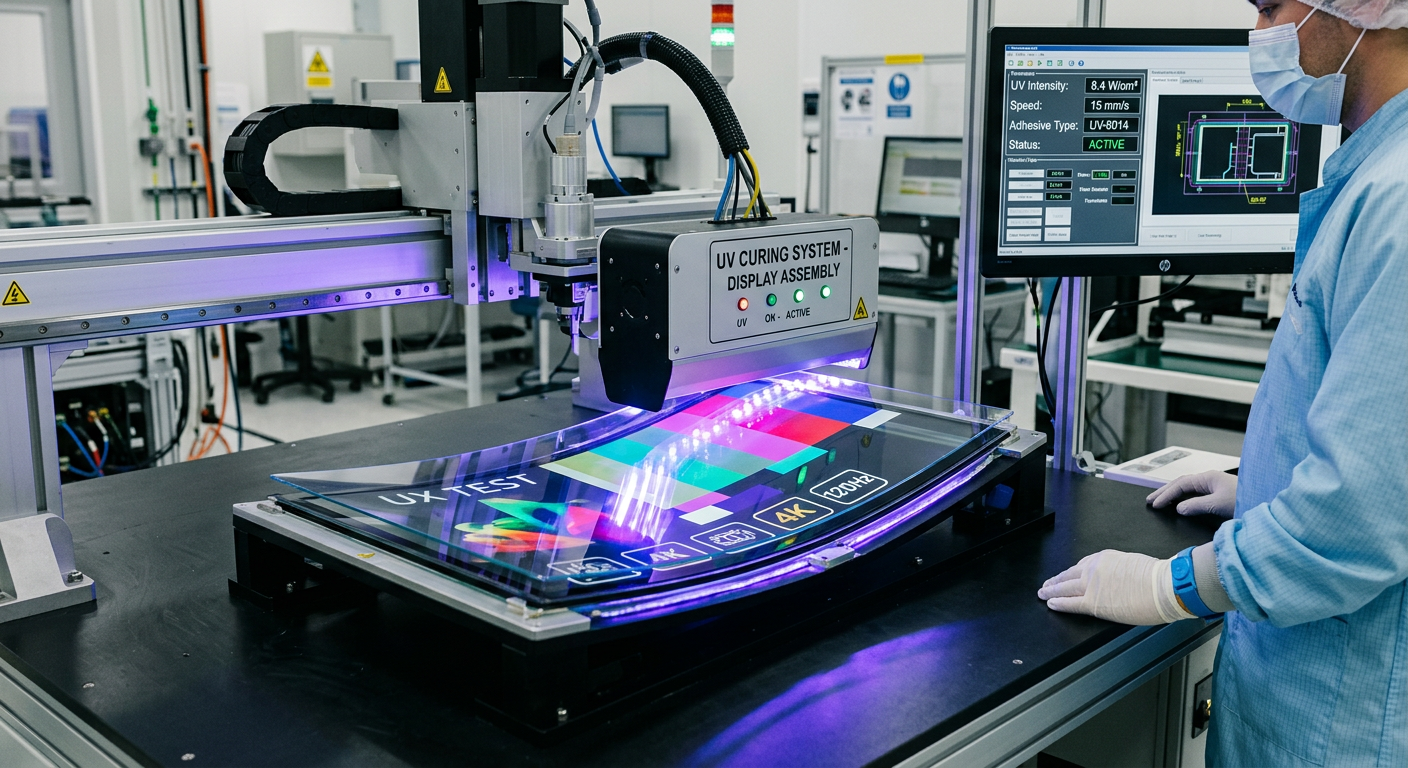
If you need UV curing adhesive for display and touch panel assembly in the United States, the most practical approach is to shortlist proven suppliers with electronics bonding experience, optical-grade product lines, and responsive technical support for pilot runs and scale-up. For many buyers, the strongest immediate options include Henkel, Dymax, 3M, DELO Industrial Adhesives, and Panacol, all of which are active in electronics bonding and support demanding assembly environments tied to displays, sensors, cover lenses, and touch modules.
For buyers focused on fast qualification, low haze, strong glass-to-glass or glass-to-plastic adhesion, and stable UV curing performance, these companies are widely considered among the most relevant names serving the U.S. market:
- Henkel – strong U.S. technical presence and broad LOCA and electronics adhesive expertise
- Dymax – well known for light-curing systems, dispensing integration, and rapid process support
- 3M – trusted for electronics materials, assembly consistency, and broad converter network
- DELO Industrial Adhesives – recognized for precision display bonding and engineering support
- Panacol – established in UV adhesive solutions for electronics, medical, and optical assembly
Qualified international suppliers can also be a smart option, especially when buyers need better cost-performance without compromising compliance or process control. In particular, Chinese manufacturers with relevant certifications, export experience, and strong pre-sales and after-sales support can be considered for U.S. programs when they can document RoHS and REACH alignment, batch consistency, traceability, and dependable technical response during validation and production.
Market Overview in the United States

The U.S. market for display and touch panel adhesives is shaped by consumer electronics design cycles, automotive cockpit digitization, medical device interfaces, industrial HMI upgrades, and demand for thinner, brighter, and more durable screens. Procurement teams in hubs such as San Jose, Austin, Boston, Detroit, and Irvine often evaluate UV-curable optical bonding materials not only on price, but also on optical transmission, yellowing resistance, thermal cycling stability, reworkability, and compatibility with automated assembly.
In the United States, sourcing decisions are also influenced by logistics and continuity planning. Buyers close to major ports and trade gateways such as Los Angeles, Long Beach, Savannah, Houston, and New York/New Jersey often balance domestic stock availability with imported alternatives that can reduce overall unit cost. For contract manufacturers serving OEM programs, the adhesive decision can directly affect yield, touchscreen sensitivity, bubble control, edge finish, and long-term field reliability.
Another notable trend is the convergence of display bonding requirements across industries. A tablet display, an automotive center stack, a factory control panel, and a handheld diagnostic device may all require different qualification protocols, yet they increasingly share core requirements: high clarity, low shrinkage, controlled viscosity, fast cure, and robust adhesion to glass, ITO, PMMA, PC, or coated films.
Because of this, U.S. buyers usually compare suppliers on process fit rather than on chemistry alone. A good UV curing adhesive for display touch panel work must perform under real production conditions, including line speed, lamp output, part geometry, storage conditions, and substrate cleanliness. This is why supplier engineering support often matters as much as the datasheet.
U.S. Market Growth Trend

The display and touch bonding segment in the United States has shown steady expansion, supported by EV dashboard growth, premium consumer devices, medical electronics, and industrial digitalization. The line chart below illustrates a realistic directional view of market demand growth for UV-curable adhesive use in display and touch panel assembly.
Top Suppliers Serving the U.S. Market
The table below compares concrete supplier options relevant to buyers in the United States. It focuses on service region, core strengths, and key offerings for display and touch panel bonding rather than general adhesive marketing language. Buyers should still request application-specific validation based on substrate stack-up, cure energy, and reliability targets.
| Company | Service Region | Core Strengths | Key Offerings | Best Fit |
|---|---|---|---|---|
| Henkel | United States nationwide | Electronics materials expertise, broad technical support, strong qualification capability | UV-curable optical bonding materials, electronics assembly adhesives, process support | Large OEMs, automotive electronics, consumer devices |
| Dymax | United States, Canada, Mexico | Light-curing specialization, dispensing and curing system integration, fast process engineering | UV/visible light-curable adhesives, curing equipment, assembly support | High-speed assembly lines and precision bonding |
| 3M | United States and global | Strong materials science base, converter ecosystem, reliable industrial supply | Electronics bonding materials, optical films, assembly solutions | Programs requiring broad sourcing stability |
| DELO Industrial Adhesives | United States with global technical support | Precision optical bonding, engineering-led qualification, advanced curing know-how | UV and dual-cure adhesives for electronics and display assembly | Complex module assemblies and premium display systems |
| Panacol | United States and North America | Specialty UV adhesives, electronics and optical assembly focus | Light-curing adhesives, conductive and non-conductive bonding products | Medical, sensor, and compact display devices |
| Master Bond | United States nationwide | Custom formulation depth, technical responsiveness, specialty material options | UV-curable and hybrid adhesive systems for demanding assemblies | Niche builds and engineered customization |
| Qingdao QinanX New Material Technology Co., Ltd | United States export supply with long-term market service orientation | Cost-performance balance, OEM/ODM flexibility, broad industrial adhesive platform | UV-curable adhesive, acrylic systems, silicone, epoxy, PU, and private label support | Importers, distributors, private-label brands, cost-sensitive OEMs |
This supplier mix reflects how U.S. buyers actually build sourcing pipelines: they often keep one premium technical benchmark supplier, one process-driven fast-response supplier, and one cost-competitive qualified alternative to reduce risk and improve negotiating power.
Product Types for Display and Touch Panel Assembly
UV curing adhesive in display applications is not a single category. Buyers need to match the chemistry and processing method to the structure of the module. In the United States, common use cases range from optical bonding between cover lens and display layers to edge bonding, sensor fixation, reinforcement, and encapsulation around fragile electronic interfaces.
| Product Type | Typical Use | Main Advantages | Common Limitations | Typical U.S. Buyer Focus |
|---|---|---|---|---|
| LOCA UV adhesive | Full-surface optical bonding | High clarity, reduced internal reflection, improved display readability | Requires bubble control and precise dispense pattern | Smart devices, medical displays, automotive screens |
| Edge bonding UV adhesive | Frame or perimeter bonding | Faster handling, lower material consumption, simpler cleanup | Less suited for full optical gap filling | Industrial HMIs and compact modules |
| Dual-cure UV adhesive | Shadow-area bonding | UV speed plus secondary cure in blocked regions | More complex process setup | Assemblies with bezels or partial light blockage |
| Low-viscosity optical adhesive | Thin-gap filling | Good flow, improved wetting, smooth optical layer formation | Can be harder to contain at edges | Thin consumer electronics displays |
| High-viscosity UV adhesive | Gap retention and edge control | Better positioning and lower run-off | May need slower dispense or leveling time | Complex geometries and thicker panels |
| Flexible UV adhesive | Stress-sensitive bonding | Better impact resistance and thermal stress absorption | May trade off hardness or modulus | Automotive and ruggedized devices |
| Hardcoat-compatible UV adhesive | Coated display parts | Designed for treated surfaces and coated substrates | Needs thorough compatibility checks | Premium screens with special coatings |
For U.S. production teams, the table shows why asking only for “UV curing adhesive display touch panel” is not enough. The real purchasing question is which optical, mechanical, and process properties your assembly needs over the lifetime of the product.
Industry Demand by Application Segment
Demand differs sharply by end-use sector. Automotive and medical programs usually impose stricter reliability and documentation requirements, while consumer electronics often prioritize throughput, cost control, and appearance. Industrial HMI projects often need balanced performance with long service life under harsh conditions.
How to Buy the Right Adhesive
U.S. procurement teams usually get the best result when they evaluate adhesive performance in a structured sequence rather than selecting solely by price or brand reputation. Start with the substrate stack. Bonding glass to glass, glass to PMMA, glass to PC, or cover lens to display each creates different wetting, stress, and cure challenges.
Next, define the optical target. If sunlight readability, low haze, and anti-bubble performance matter, ask suppliers for transmission data, refractive index alignment guidance, yellowing resistance data, and long-term aging results. Then review the process window: dispense speed, self-leveling behavior, cure intensity requirements, shadow areas, tack-free surface condition, and rework constraints.
For United States projects, buyers should also ask about inventory strategy and line support. A cheaper imported material can become expensive if lot transition management is weak or lead times are unstable. On the other hand, a premium domestic option may be more expensive than necessary for a non-critical application where a qualified international supplier can achieve the same result.
It is also wise to require a pilot checklist covering these points:
- Adhesion on each substrate after cure and after aging
- Bubble performance under actual dispensing and lamination conditions
- Thermal cycling, humidity aging, and UV exposure resistance
- Touch sensitivity and display optical performance after bonding
- Lot-to-lot consistency and shelf-life stability
- Packaging suitability for manual, semi-automatic, or fully automatic use
Buyer Evaluation Criteria Table
The following table helps U.S. teams compare supplier offers in a more disciplined way. Instead of treating all UV adhesives as interchangeable, it links commercial decisions to production reality.
| Evaluation Factor | Why It Matters | What to Ask Suppliers | Risk If Ignored | Priority Level |
|---|---|---|---|---|
| Optical clarity | Directly affects screen brightness and readability | Transmission, haze, refractive index data | Visible quality defects and poor viewing performance | Very high |
| Adhesion reliability | Prevents delamination in field use | Substrate-specific adhesion results before and after aging | Warranty failures and returns | Very high |
| Cure speed | Determines takt time and line throughput | Recommended UV intensity and full cure time | Slow production or incomplete cure | High |
| Yellowing resistance | Critical for long-life display aesthetics | Accelerated aging and color stability data | Visual degradation over time | High |
| Process compatibility | Must fit existing dispensing and lamination equipment | Viscosity range, leveling behavior, cleanup method | Yield loss and line instability | High |
| Supply continuity | Reduces interruption risk | Lead time, safety stock, alternate packaging options | Production delays | Medium to high |
| Compliance | Supports market access and customer audits | RoHS, REACH, ISO-related documentation | Audit issues and approval delays | High |
For U.S. buyers, this framework is especially useful when comparing domestic and imported options side by side. It encourages a total-cost view instead of a simple drum or syringe price comparison.
Industries Using UV-Curable Display Adhesives
Several major U.S. industries are driving demand for advanced display bonding materials. In automotive, the move toward larger in-vehicle displays, passenger information screens, and integrated touch surfaces is raising the bar for optical quality and temperature durability. In medical devices, bonded screens are valued for cleanability, readability, and compact design. In industrial automation, touch panels are increasingly used in factory interfaces where durability matters as much as clarity.
Consumer electronics remains a major demand engine, especially around tablets, wearables, smart home interfaces, and accessories. Retail technology such as self-service kiosks and digital payment terminals also continues to use display assemblies where impact resistance and appearance are important. Aerospace and defense applications, although smaller in volume, often require specialized reliability and qualification protocols.
Common Applications
Within these industries, the same UV adhesive family can be adapted across multiple use cases. Common applications in the U.S. market include bonding cover glass to LCD or OLED modules, fixing touch sensors, sealing display edges, reinforcing frame-mounted screens, integrating compact optical modules, and supporting transparent assemblies where minimal visual distortion is required.
Applications also vary by environment. Outdoor kiosks in Phoenix or Dallas face very different heat and UV exposure conditions than indoor medical monitors in Boston or Seattle. Automotive screens qualified for Michigan winter cycles and Nevada summer heat require tighter verification than many indoor consumer assemblies. This is why practical testing with local operating assumptions remains essential.
Trend Shift in Adhesive Selection
The U.S. market is gradually shifting from simple cure-speed selection toward a broader balance of clarity, durability, sustainability, and process control. The area chart below shows a realistic trend in how buyer priorities are changing through 2026.
Case Studies and Practical Buying Scenarios
A U.S. medical device assembler in Minnesota may need a low-yellowing, low-odor UV adhesive with excellent optical stability for a handheld diagnostic screen. In that case, documentation, clean processing, and aging performance are often more important than the lowest material price.
An automotive Tier supplier in Detroit may need a dual-cure or highly durable optical adhesive for center-stack modules that face vibration, heat, and prolonged UV exposure. Here, validation against thermal shock, humidity, and substrate combinations becomes the key issue.
A contract manufacturer in Southern California building short-run consumer electronics may prioritize fast cure, easy dispensing, reliable supply, and competitive cost. In this environment, buyers often qualify one premium domestic brand and one strong imported alternative so they can scale quickly while protecting margin.
An industrial HMI builder in Texas may need a more forgiving adhesive with strong impact tolerance and long service life rather than the absolute highest optical specification. Such buyers often value responsive technical support and flexible packaging sizes because production volumes vary widely.
Local and Regional Supplier Landscape
The United States has a strong adhesive distribution and technical support network, but local availability varies by region. The West Coast, especially around California, benefits from electronics ecosystem proximity and major Pacific logistics routes. The Midwest is strong in automotive and industrial qualification culture. The Northeast has concentration in medical, instrumentation, and specialized manufacturing. The South, including Texas and surrounding states, continues to grow as an electronics and assembly destination.
For buyers that prefer to start with U.S.-accessible channels, visiting supplier application labs, requesting on-site process support, and validating packaging compatibility can accelerate approval. At the same time, international suppliers shipping through Los Angeles, Long Beach, Houston, or Savannah can remain competitive if they offer strong documentation and reliable communication.
Supplier and Product Comparison
The comparison chart below gives a practical scoring snapshot based on overall suitability for U.S. display touch panel sourcing, blending factors such as technical support, optical bonding capability, supply confidence, and cost-performance.
Detailed Supplier Notes
| Company | Likely U.S. Buyer Type | Service Advantage | Notable Offering Style | Commercial Consideration |
|---|---|---|---|---|
| Henkel | Large OEMs and Tier suppliers | Broad support network and qualification depth | Reliable, engineered materials for electronics assembly | Often premium priced but strong in validation support |
| Dymax | Manufacturers needing rapid curing integration | Adhesive and curing equipment alignment | Process-centered UV systems approach | Very attractive where line speed matters |
| 3M | Programs wanting a global industrial partner | Brand trust and distribution depth | Materials ecosystem with broad industrial backing | May require careful product matching by application |
| DELO Industrial Adhesives | Precision display and optics users | Engineering-led application support | High-performance bonding for technical assemblies | Best suited to demanding assemblies |
| Panacol | Specialty electronics and medical customers | Niche UV adhesive expertise | Targeted formulations for compact precision devices | Useful when standard options are too generic |
| Master Bond | Low- to medium-volume technical buyers | Customization and specialist response | Engineered material flexibility | Strong option for unusual requirements |
| Qingdao QinanX New Material Technology Co., Ltd | Importers, distributors, brand owners, and cost-focused manufacturers | Flexible cooperation models and broad product platform | UV-curable adhesive plus complementary adhesive categories for bundled sourcing | Best evaluated through sample validation and supply planning |
This comparison is useful because different supplier styles solve different procurement problems. Some buyers need deep engineering support, some need local responsiveness, and others need a scalable value alternative for recurring volume orders.
Our Company
For buyers in the United States looking for a qualified international partner, Qingdao QinanX New Material Technology Co., Ltd brings a practical combination of compliance, manufacturing discipline, and commercial flexibility to display and touch panel adhesive sourcing. Its UV-curable adhesive offering sits within a broader industrial adhesive platform supported by ISO-certified operations, multi-stage quality control, digital batch traceability, and compliance with RoHS and REACH expectations that U.S. electronics buyers routinely request during supplier approval. The company’s automated production lines and formulation capability allow it to support both standard and tailored requirements, while its export experience across more than 40 countries demonstrates real operating familiarity with international documentation, packaging, and consistency demands. For the U.S. market, it can serve end users, distributors, dealers, private-label brand owners, and smaller individual buyers through OEM, ODM, wholesale, retail, and regional partnership models, making it relevant whether the project requires a house brand, contract supply, or recurring volume procurement. Buyers exploring a long-term source can review its adhesive range through the product catalog, learn more about its manufacturing background on the company page, and coordinate samples or technical discussion through the U.S.-oriented contact channel, where pre-sale selection support and after-sale follow-up function as concrete safeguards for qualification, repeat orders, and ongoing application optimization.
What Makes a Supplier Trustworthy in the U.S. Market
Trustworthiness in this category is not just about brand visibility. U.S. buyers usually look for documented consistency, technical responsiveness, and a credible path from sample to production. This includes clear COA practices, lot traceability, packaging integrity, shelf-life control, and a willingness to support troubleshooting when lamination bubbles, edge overflow, or cure inconsistency appear during ramp-up.
It also helps when the supplier understands the operational realities of U.S. manufacturing. These include engineering sign-off timelines, customer PPAP-style expectations in automotive-adjacent programs, strict returns management, and the need for fast digital communication when pilot builds are underway. A supplier with export discipline and technical follow-through often performs better in practice than a cheaper supplier that only ships product without process support.
Future Trends Through 2026
Looking ahead to 2026, three trends are likely to shape UV curing adhesive display touch panel sourcing in the United States. The first is technology: displays are becoming thinner, larger, brighter, and more integrated with sensors, which will increase demand for lower haze, better stress management, and compatibility with coated and mixed-material interfaces. The second is policy and compliance: buyers are tightening expectations around chemical transparency, documentation, and sustainable sourcing, even in cases where formal regulation is not yet uniform across all categories. The third is sustainability: more customers are asking about solvent reduction, waste minimization, energy-efficient curing, and longer product life that reduces field replacement frequency.
Another trend is supply chain resilience. U.S. manufacturers are now more likely to maintain dual-source strategies, balancing domestic inventory access with overseas cost advantages. Suppliers that can provide stable lead times, consistent packaging, and reliable communication across time zones will be more competitive. This is particularly true for electronics programs near growth corridors such as Austin, Phoenix, and the Southeast manufacturing belt.
Finally, the line between adhesive supplier and process partner will continue to blur. Buyers increasingly value suppliers that can help tune dispensing, cure profile, substrate preparation, and defect reduction rather than simply sell material by part number.
FAQ
What is the main advantage of UV curing adhesive in display and touch panel assembly?
The main advantage is fast curing combined with strong adhesion and excellent optical performance. In many display assemblies, UV-curable materials improve clarity, support higher throughput, and help maintain a thin, clean bond line.
How do I choose between domestic U.S. suppliers and imported suppliers?
Choose based on total cost, technical support, lead time, compliance documentation, and pilot performance. Domestic suppliers may offer faster onsite support, while qualified imported suppliers can offer stronger cost-performance if traceability and service are reliable.
Is LOCA always better than edge bonding?
No. LOCA is often better when full optical bonding is needed for clarity and readability, but edge bonding can be more economical and simpler for certain module designs where full gap filling is unnecessary.
Which U.S. industries are growing fastest for these adhesives?
Automotive displays, industrial HMI, medical devices, and premium consumer electronics are among the most active segments, with especially strong momentum from digital dashboards and touch-based interfaces.
What certifications or compliance documents should I ask for?
Ask for relevant quality system information, RoHS and REACH alignment where applicable, batch traceability details, technical datasheets, safety documentation, and any substrate-specific validation data available.
Can a Chinese supplier be a serious option for the United States?
Yes. A Chinese supplier can be a serious option if it provides documented compliance, stable quality, responsive technical support, and dependable export experience. For many U.S. buyers, the right international supplier is part of a smart dual-source strategy.
What should I test before approving a supplier?
Test optical clarity, adhesion, bubble behavior, cure speed, yellowing resistance, environmental aging, and line compatibility with your real dispensing and curing process. Lab results alone are not enough without production-like validation.
Final Buying Perspective
For the United States market, the best UV curing adhesive display touch panel decision usually comes from matching the adhesive to the application, not from choosing the biggest brand by default. Henkel, Dymax, 3M, DELO, Panacol, and other established suppliers remain strong benchmarks for technical confidence. At the same time, qualified international manufacturers such as Qingdao QinanX New Material Technology Co., Ltd can offer attractive value, OEM flexibility, and scalable support when U.S. buyers need to balance performance, continuity, and cost.
If your project involves consumer devices, vehicle displays, medical interfaces, or industrial touch panels, the smartest next move is to compare at least three suppliers using the criteria above, validate them on real assemblies, and build a sourcing strategy that protects both product quality and long-term margin.

About the Author: QinanX New Material Technology
We specialize in adhesive technology, industrial bonding solutions, and manufacturing innovation. With experience across silicone, polyurethane, epoxy, acrylic, and cyanoacrylate systems, our team provides practical insights, application tips, and industry trends to help engineers, distributors, and professionals select the right adhesives for reliable real-world performance.
Product Category
You May Also Interest
-
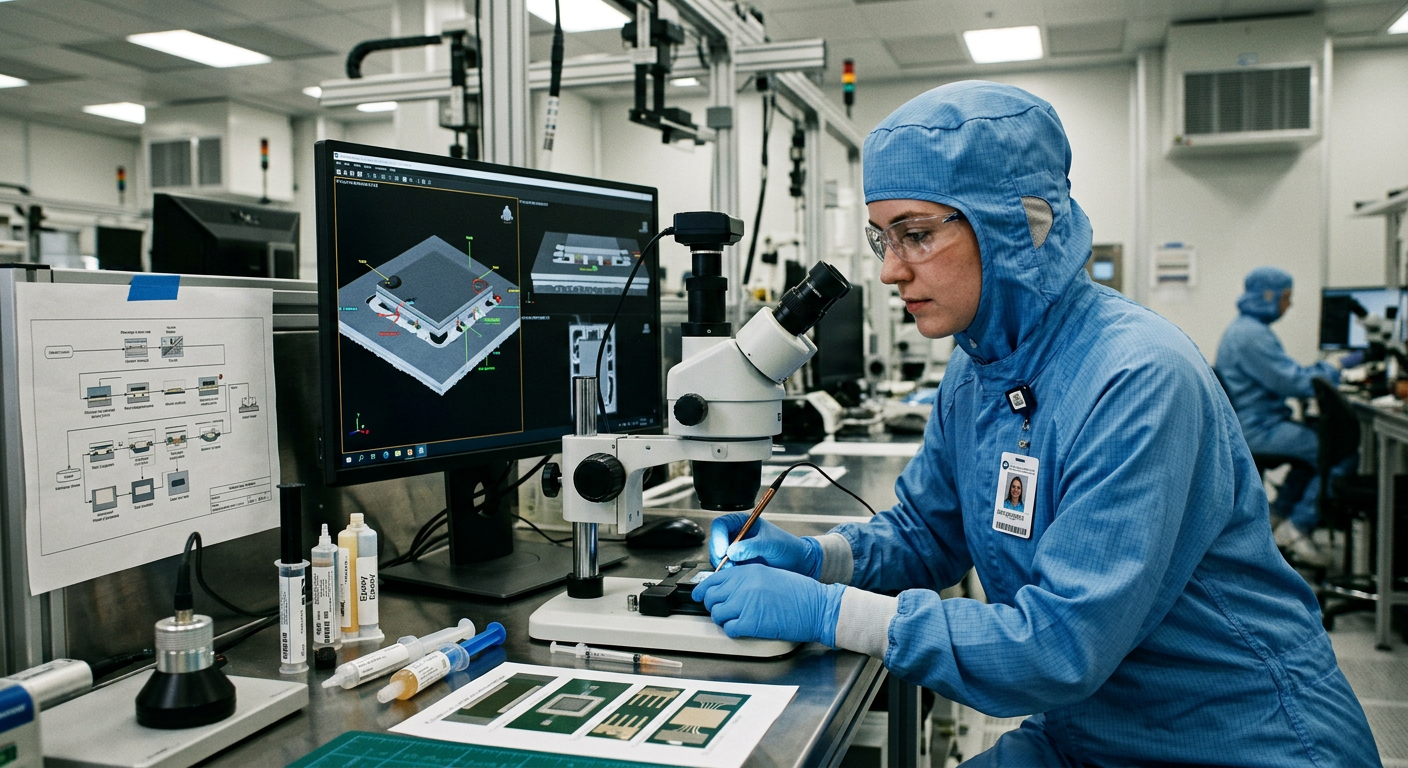
IC Packaging Adhesive: Preventing Void Formation Issues
Learn how IC packaging adhesive void formation is prevented in the United States through material choice, process control, supplier selection, and testing.
-
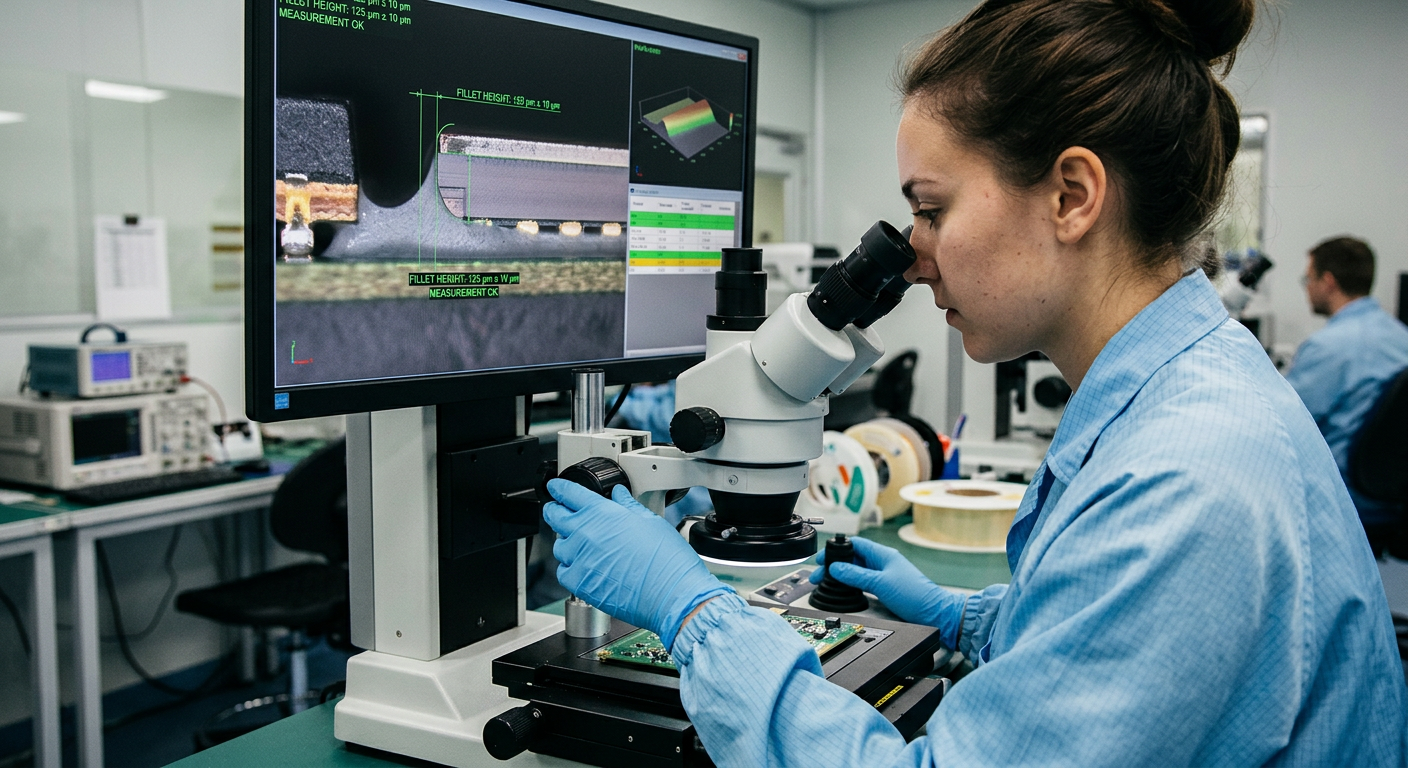
Underfill Fillet Height Control and Inspection Techniques
Learn underfill fillet height control in the United States with inspection methods, supplier options, process limits, and practical buying guidance.
-
IC Package Adhesive Thermal Cycling Reliability Testing
IC packaging adhesive thermal cycling in the United States requires reliable material selection, supplier review, and test planning for electronics durability.
-
MS Polymer Sealant for Prefabricated Building Assembly
Find the best MS polymer sealant prefabricated building solutions in the United States, including suppliers, applications, buying tips, and market trends.
 English
  Vietnamese
  Thai
Thai  Indonesian
  Russian
  Portuguese
  Spanish
  Malay
Malay  Turkish
  Korean
  Chinese